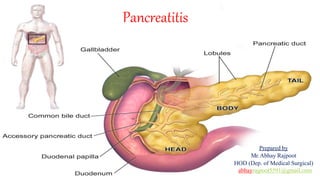
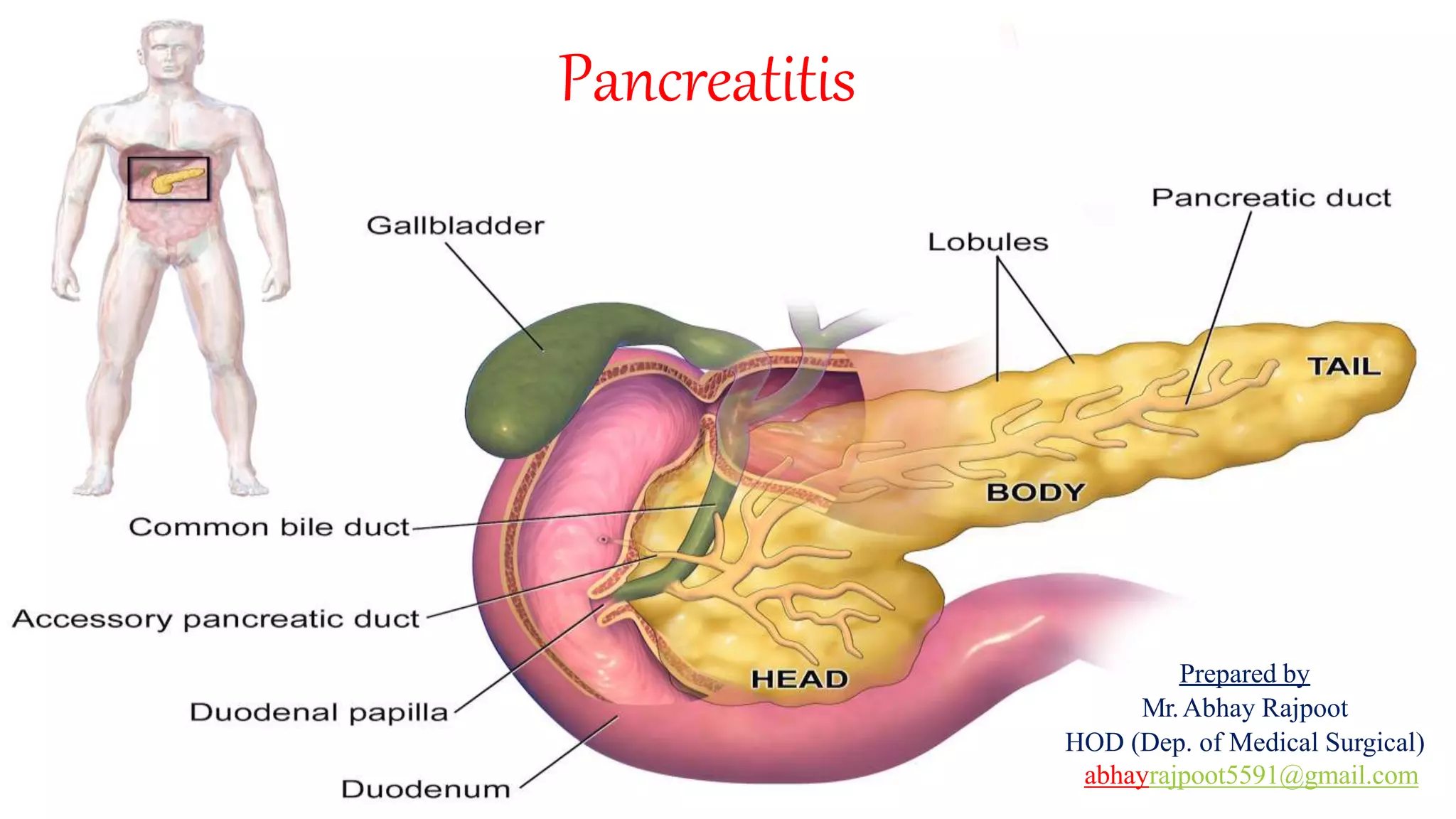


Pancreatitis
Prepared by
Mr.Abhay Rajpoot
HOD (Dep. of Medical Surgical)
abhayrajpoot5591@gmail.com
INTRODUCTION
Pancreatitis is inflammation in the pancreas. The pancreas is a long,
flat gland that sits tucked behind the stomach in the upper abdomen.
The pancreas produces enzymes that help digestion and hormones that
help regulate the way your body processes sugar (glucose).
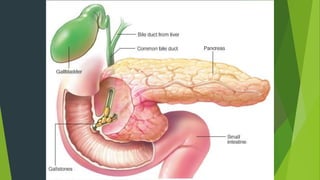
Gallstones are a common cause of pancreatitis. Gallstones, produced in
the gallbladder, can block the bile duct, stopping pancreatic enzymes
from traveling to the small intestine and forcing them back into the
pancreas. The enzymes then begin to irritate the cells of the pancreas,
causing the inflammation associated with pancreatitis.
DEFINITION
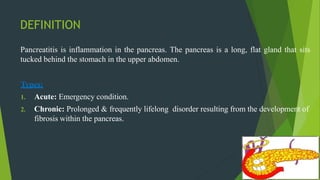
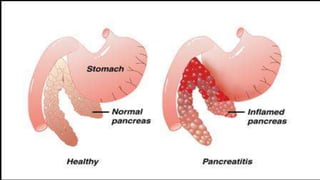
Pancreatitis is inflammation in the pancreas. The pancreas is a long, flat gland that sits
tucked behind the stomach in the upper abdomen.
Types:
1. Acute: Emergency condition.
2. Chronic: Prolonged & frequently lifelong disorder resulting from the development of
fibrosis within the pancreas.
Acute Pancreatitis
Acute condition of diffuse pancreatic inflammation & autodigestion,
presents with abdominal pain, and is usually associated with raised
pancreatic enzyme levels in the blood & urine.
INCIDENCE
• Acute pancreatitis accounts for 3% of all cases of abdominal pain
among patients admitted to hospital in the UK.
• Affect 2 – 28 per 100 000 of population.
• It may occur at any age, peak incidence is between 50 and
60 years.
• Women are affected more the men, but men are more likely to
suffer recurrent attacks.
RISK FACTOR
• Excessive alcohol consumption. Research shows that heavy alcohol users
(people who consume four to five drinks a day) are at increased risk of
pancreatitis.
• Cigarette smoking. Smokers are on average three times more likely to develop
chronic pancreatitis, compared with nonsmokers. The good news is quitting
smoking decreases the risk by about half.
• Obesity. You're more likely to get pancreatitis if you're obese.
• Family history of pancreatitis. The role of genetics is becoming increasingly
recognized in chronic pancreatitis. If you have family members with the
condition, your odds increase — especially when combined with other risk
factors
CAUSES
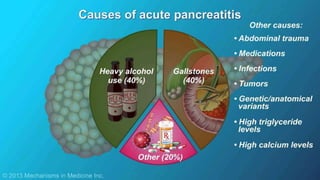
• 80% of the cases are due to gallstones & alcohol.
• The remaining 20 % of cases are due to:
1. Congenital: Pancreatic divisor
2. Metabolic: Hyperlipidemia, Hypercalcemia.
3. Toxic: Scorpion venom
4. Infective: Mumps
Conditions that can lead to pancreatitis include:
 Alcoholism
 Gallstones
 Abdominal surgery
 Certain medications
 Cigarette smoking
 Cystic fibrosis
 Family history of pancreatitis
 High calcium levels in the blood (hypercalcemia), which may be caused by an overactive
parathyroid gland (hyperparathyroidism)
 High triglyceride levels in the blood (hypertriglyceridemia)
 Infection
 Injury to the abdomen
 Pancreatic cancer
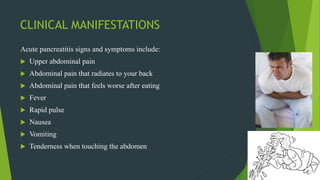
CLINICAL MANIFESTATIONS
Acute pancreatitis signs and symptoms include:
 Upper abdominal pain
 Abdominal pain that radiates to your back
 Abdominal pain that feels worse after eating
 Fever
 Rapid pulse
 Nausea
 Vomiting
 Tenderness when touching the abdomen
Chronic pancreatitis signs and symptoms include:
 Upper abdominal pain
 Losing weight without trying
 Oily, smelly stools (steatorrhea)
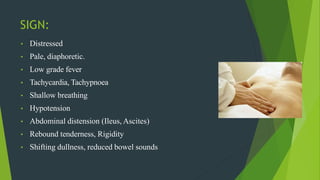
SIGN:
• Distressed
• Pale, diaphoretic.
• Low grade fever
• Tachycardia, Tachypnoea
• Shallow breathing
• Hypotension
• Abdominal distension (Ileus, Ascites)
• Rebound tenderness, Rigidity
• Shifting dullness, reduced bowel sounds
Cullen’s Sign Grey Turner’s Sign
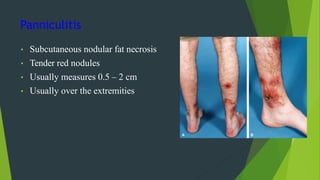
Panniculitis
• Subcutaneous nodular fat necrosis
• Tender red nodules
• Usually measures 0.5 – 2 cm
• Usually over the extremities
DIAGNOSTIC TEST
Tests and procedures used to diagnose pancreatitis include:
 Blood tests to look for elevated levels of pancreatic enzymes
 Stool tests in chronic pancreatitis to measure levels of fat that could suggest your
digestive system isn't absorbing nutrients adequately
 Computerized tomography (CT) scan to look for gallstones and assess the extent
of pancreas inflammation
 Abdominal ultrasound to look for gallstones and pancreas inflammation
 Endoscopic ultrasound to look for inflammation and blockages in the pancreatic
duct or bile duct
 Magnetic resonance imaging (MRI) to look for abnormalities in the gallbladder,
pancreas and duct.
COMPLICATIONS
Pancreatitis can cause serious complications, including:
 Pseudocyst
 Infection
 Kidney failure
 Breathing problems
 Diabetes
 Malnutrition
 Pancreatic cancer
MANAGEMENT
• Gain IV access, obtain blood sample, rapid fluid resuscitation & electrolytes
replacement.
• Give analgesics (IM pethidine).
• Give Anti-emetics.
• Keep the patient NPO (until pain free/2-3 days).
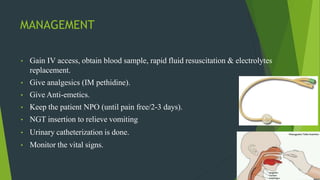
• NGT insertion to relieve vomiting
• Urinary catheterization is done.
• Monitor the vital signs.
• Injection Ranitidine 50 mg IV 8 hourly, or Omeprazole 40 mg
IV BD.
• Somatostatin or octreotide (pancreatic secretions inhibitors).
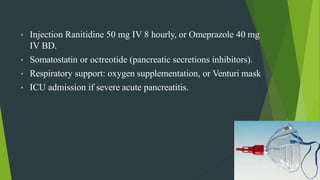
• Respiratory support: oxygen supplementation, or Venturi mask
• ICU admission if severe acute pancreatitis.
SURGICAL MANAGEMENT
• Gallbladder surgery. If gallstones caused your pancreatitis, your
doctor may recommend surgery to remove your gallbladder
(cholecystectomy).
• Pancreas surgery. Surgery may be necessary to drain fluid from the
pancreas or to remove diseased tissue.
Acute Pancreatitis

Acute Pancreatitis

  • 1.
    Pancreatitis Prepared by Mr.Abhay Rajpoot HOD(Dep. of Medical Surgical) abhayrajpoot5591@gmail.com
  • 2.
    INTRODUCTION Pancreatitis is inflammationin the pancreas. The pancreas is a long, flat gland that sits tucked behind the stomach in the upper abdomen. The pancreas produces enzymes that help digestion and hormones that help regulate the way your body processes sugar (glucose). Gallstones are a common cause of pancreatitis. Gallstones, produced in the gallbladder, can block the bile duct, stopping pancreatic enzymes from traveling to the small intestine and forcing them back into the pancreas. The enzymes then begin to irritate the cells of the pancreas, causing the inflammation associated with pancreatitis.
  • 4.
    DEFINITION Pancreatitis is inflammationin the pancreas. The pancreas is a long, flat gland that sits tucked behind the stomach in the upper abdomen. Types: 1. Acute: Emergency condition. 2. Chronic: Prolonged & frequently lifelong disorder resulting from the development of fibrosis within the pancreas.
  • 5.
    Acute Pancreatitis Acute conditionof diffuse pancreatic inflammation & autodigestion, presents with abdominal pain, and is usually associated with raised pancreatic enzyme levels in the blood & urine.
  • 7.
    INCIDENCE • Acute pancreatitisaccounts for 3% of all cases of abdominal pain among patients admitted to hospital in the UK. • Affect 2 – 28 per 100 000 of population. • It may occur at any age, peak incidence is between 50 and 60 years. • Women are affected more the men, but men are more likely to suffer recurrent attacks.
  • 8.
    RISK FACTOR • Excessivealcohol consumption. Research shows that heavy alcohol users (people who consume four to five drinks a day) are at increased risk of pancreatitis. • Cigarette smoking. Smokers are on average three times more likely to develop chronic pancreatitis, compared with nonsmokers. The good news is quitting smoking decreases the risk by about half. • Obesity. You're more likely to get pancreatitis if you're obese. • Family history of pancreatitis. The role of genetics is becoming increasingly recognized in chronic pancreatitis. If you have family members with the condition, your odds increase — especially when combined with other risk factors
  • 9.
    CAUSES • 80% ofthe cases are due to gallstones & alcohol. • The remaining 20 % of cases are due to: 1. Congenital: Pancreatic divisor 2. Metabolic: Hyperlipidemia, Hypercalcemia. 3. Toxic: Scorpion venom 4. Infective: Mumps
  • 10.
    Conditions that canlead to pancreatitis include:  Alcoholism  Gallstones  Abdominal surgery  Certain medications  Cigarette smoking  Cystic fibrosis  Family history of pancreatitis  High calcium levels in the blood (hypercalcemia), which may be caused by an overactive parathyroid gland (hyperparathyroidism)  High triglyceride levels in the blood (hypertriglyceridemia)  Infection  Injury to the abdomen  Pancreatic cancer
  • 12.
    CLINICAL MANIFESTATIONS Acute pancreatitissigns and symptoms include:  Upper abdominal pain  Abdominal pain that radiates to your back  Abdominal pain that feels worse after eating  Fever  Rapid pulse  Nausea  Vomiting  Tenderness when touching the abdomen
  • 13.
    Chronic pancreatitis signsand symptoms include:  Upper abdominal pain  Losing weight without trying  Oily, smelly stools (steatorrhea)
  • 14.
    SIGN: • Distressed • Pale,diaphoretic. • Low grade fever • Tachycardia, Tachypnoea • Shallow breathing • Hypotension • Abdominal distension (Ileus, Ascites) • Rebound tenderness, Rigidity • Shifting dullness, reduced bowel sounds
  • 15.
    Cullen’s Sign GreyTurner’s Sign
  • 16.
    Panniculitis • Subcutaneous nodularfat necrosis • Tender red nodules • Usually measures 0.5 – 2 cm • Usually over the extremities
  • 17.
    DIAGNOSTIC TEST Tests andprocedures used to diagnose pancreatitis include:  Blood tests to look for elevated levels of pancreatic enzymes  Stool tests in chronic pancreatitis to measure levels of fat that could suggest your digestive system isn't absorbing nutrients adequately  Computerized tomography (CT) scan to look for gallstones and assess the extent of pancreas inflammation  Abdominal ultrasound to look for gallstones and pancreas inflammation  Endoscopic ultrasound to look for inflammation and blockages in the pancreatic duct or bile duct  Magnetic resonance imaging (MRI) to look for abnormalities in the gallbladder, pancreas and duct.
  • 18.
    COMPLICATIONS Pancreatitis can causeserious complications, including:  Pseudocyst  Infection  Kidney failure  Breathing problems  Diabetes  Malnutrition  Pancreatic cancer
  • 19.
    MANAGEMENT • Gain IVaccess, obtain blood sample, rapid fluid resuscitation & electrolytes replacement. • Give analgesics (IM pethidine). • Give Anti-emetics. • Keep the patient NPO (until pain free/2-3 days). • NGT insertion to relieve vomiting • Urinary catheterization is done. • Monitor the vital signs.
  • 20.
    • Injection Ranitidine50 mg IV 8 hourly, or Omeprazole 40 mg IV BD. • Somatostatin or octreotide (pancreatic secretions inhibitors). • Respiratory support: oxygen supplementation, or Venturi mask • ICU admission if severe acute pancreatitis.
  • 21.
    SURGICAL MANAGEMENT • Gallbladdersurgery. If gallstones caused your pancreatitis, your doctor may recommend surgery to remove your gallbladder (cholecystectomy). • Pancreas surgery. Surgery may be necessary to drain fluid from the pancreas or to remove diseased tissue.