Overview
 A stroke occurs when the blood supply to
part of your brain is interrupted or reduced,
depriving brain tissue of oxygen and
nutrients
 A stroke is a medical emergency
 Strokes can be treated and prevented
Epidemiology
 Global Perspective
 13.7 million new strokes each year
5.5 million people die of stroke annually
70% acute stroke caused by ischaemic event
 Indian Perspective
Prevelance 90-222 per 100,000 (Dalal 2007)
102,620 million deaths (Nongkynrih 2004)
1.44 – 1.64 million new cases every year (WHO
2005)
Symptoms
 Trouble with speaking and understanding
 Paralysis or numbness of the face, arm or
leg
 Trouble with seeing in one or both eyes
 Headache
 Trouble with walking
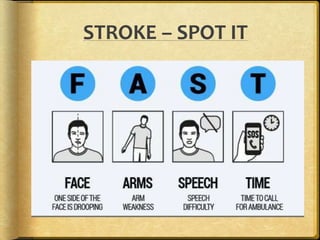
STROKE – SPOT IT
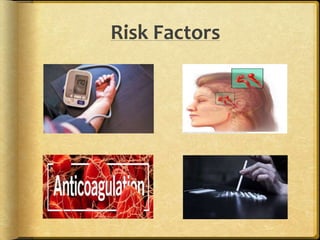
Risk Factors
Risk Factors
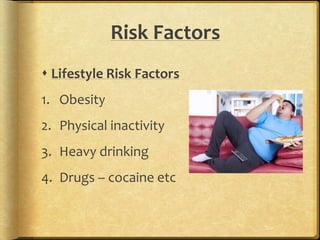
 Lifestyle Risk Factors
1. Obesity
2. Physical inactivity
3. Heavy drinking
4. Drugs – cocaine etc
Risk Factors
 Medical Risk Factors
1. Hypertension
2. Smoking
3. Diabetes
4. High cholesterol
5. Cardiovascular disease
6. Obstructive Sleep
Apnea
7. Family history
 Other Factors
1. Age > 55
2. Sex – Men>Women
3. Race – African
American
4. Hormones - OCP
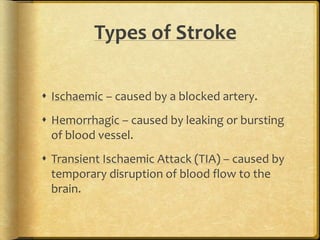
Types of Stroke
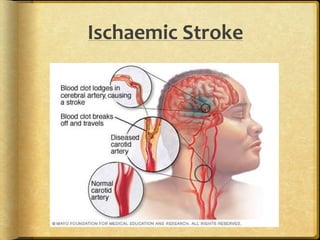
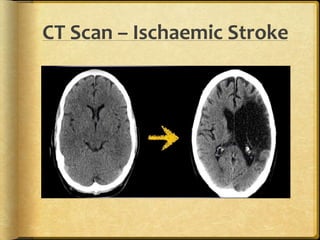
 Ischaemic – caused by a blocked artery.
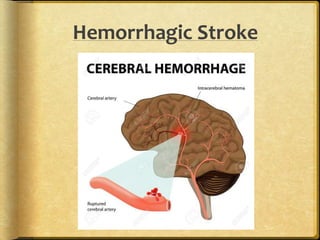
 Hemorrhagic – caused by leaking or bursting
of blood vessel.
 Transient Ischaemic Attack (TIA) – caused by
temporary disruption of blood flow to the
brain.
Ischaemic Stroke
CT Scan – Ischaemic Stroke
Hemorrhagic Stroke
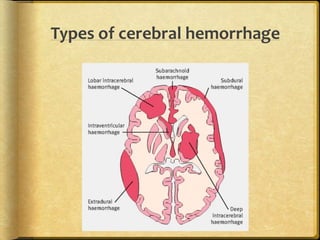
Types of cerebral hemorrhage
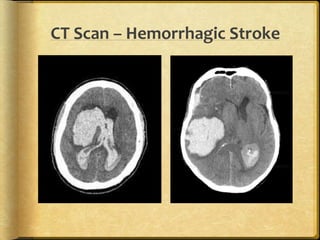
CT Scan – Hemorrhagic Stroke
Diagnosis
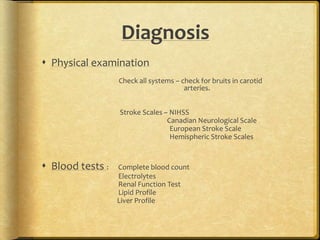
 Physical examination
Check all systems – check for bruits in carotid
arteries.
Stroke Scales – NIHSS
Canadian Neurological Scale
European Stroke Scale
Hemispheric Stroke Scales
 Blood tests : Complete blood count
Electrolytes
Renal Function Test
Lipid Profile
Liver Profile
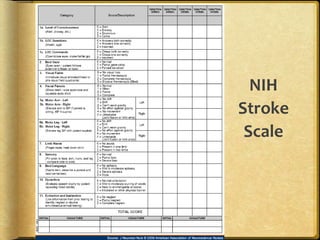
NIH
Stroke
Scale
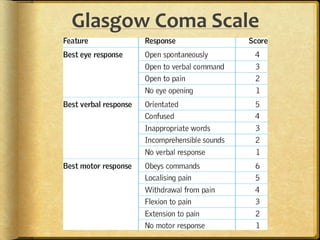
Glasgow Coma Scale
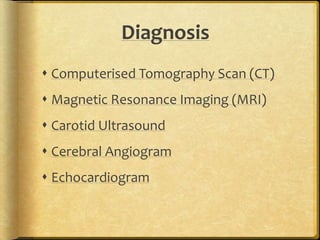
Diagnosis
 Computerised Tomography Scan (CT)
 Magnetic Resonance Imaging (MRI)
 Carotid Ultrasound
 Cerebral Angiogram
 Echocardiogram
Treatment
A
B
C
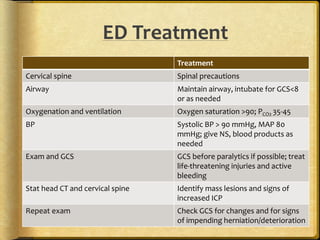
ED Treatment
Treatment
Cervical spine Spinal precautions
Airway Maintain airway, intubate for GCS<8
or as needed
Oxygenation and ventilation Oxygen saturation >90; PCO2 35-45
BP Systolic BP > 90 mmHg, MAP 80
mmHg; give NS, blood products as
needed
Exam and GCS GCS before paralytics if possible; treat
life-threatening injuries and active
bleeding
Stat head CT and cervical spine Identify mass lesions and signs of
increased ICP
Repeat exam Check GCS for changes and for signs
of impending herniation/deterioration
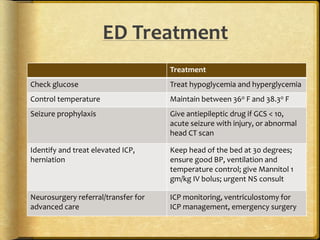
ED Treatment
Treatment
Check glucose Treat hypoglycemia and hyperglycemia
Control temperature Maintain between 36o F and 38.3o F
Seizure prophylaxis Give antiepileptic drug if GCS < 10,
acute seizure with injury, or abnormal
head CT scan
Identify and treat elevated ICP,
herniation
Keep head of the bed at 30 degrees;
ensure good BP, ventilation and
temperature control; give Mannitol 1
gm/kg IV bolus; urgent NS consult
Neurosurgery referral/transfer for
advanced care
ICP monitoring, ventriculostomy for
ICP management, emergency surgery
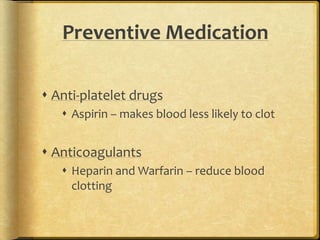
Preventive Medication
 Anti-platelet drugs
 Aspirin – makes blood less likely to clot
 Anticoagulants
 Heparin and Warfarin – reduce blood
clotting
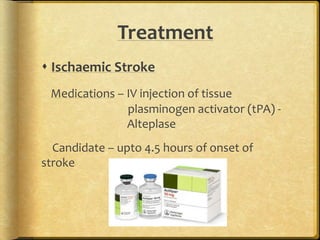
Treatment
 Ischaemic Stroke
Medications – IV injection of tissue
plasminogen activator (tPA) -
Alteplase
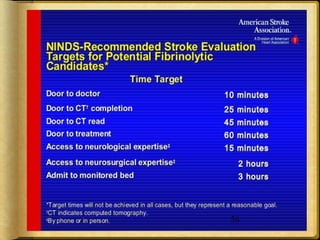
Candidate – upto 4.5 hours of onset of
stroke symp
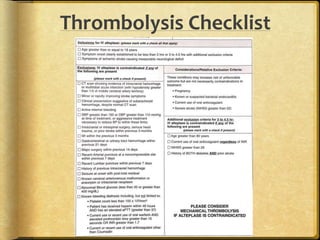
Thrombolysis Checklist
Treatment
(Ischaemic Stroke cont.)
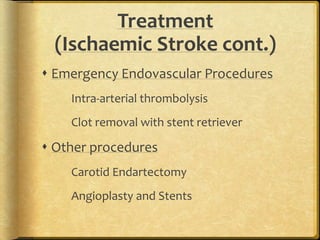
 Emergency Endovascular Procedures
Intra-arterial thrombolysis
Clot removal with stent retriever
 Other procedures
Carotid Endartectomy
Angioplasty and Stents
Treatment
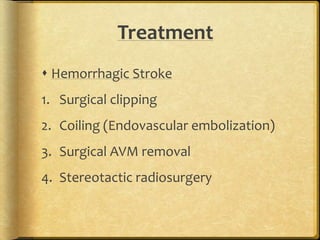
 Hemorrhagic Stroke
1. Surgical clipping
2. Coiling (Endovascular embolization)
3. Surgical AVM removal
4. Stereotactic radiosurgery
Complications
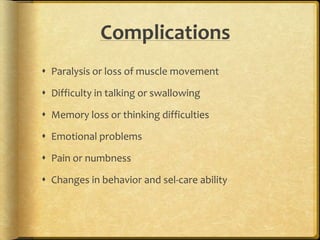
 Paralysis or loss of muscle movement
 Difficulty in talking or swallowing
 Memory loss or thinking difficulties
 Emotional problems
 Pain or numbness
 Changes in behavior and sel-care ability
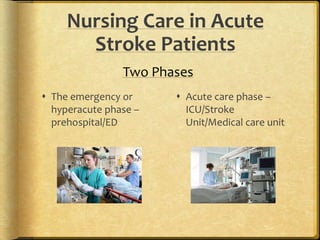
Nursing Care in Acute
Stroke Patients
 The emergency or
hyperacute phase –
prehospital/ED
 Acute care phase –
ICU/Stroke
Unit/Medical care unit
Two Phases
Nursing Care – Acute Phase
 Bleeding assessment of post thrombolysis patient –
check for raised ICH
 Monitor Blood Pressure
 Check Temperature
 Cardiac Monitoring
 Monitor Oxygen Saturation
 Identification of Seizures
Nursing Goals
(Planning Patient Recovery)
 Improved mobility
 Avoidance of shoulder pain
 Achievement of self care
 Relief of sensory and
perceptual deprivation
 Prevention of aspiration
 Continence of bowel and
bladder
 Improved thought
processes
 Achievement of a form of
communication
 Maintenance of skin
integrity
 Restoration of family
functioning
 Absence of complications
Stroke Recovery and
Rehabilitation
 Neurologist
 Rehabilitation doctor
 Nurse
 Dietitian
 Physical therapist
 Occupational therapist
 Recreational therapist
 Speech therapist
 Social worker
 Psychologist/Psychiatrist
 Case manager
 Chaplain
Take Home Message
 Stroke is treatable
 Remember FAST – Recognise Stroke
 Early treatment – better outcome
 Nursing care – second to none
 Stroke recovery – Team effort
Thank You..!!

Cerebrovascular Accident

  • 2.
    Overview  A strokeoccurs when the blood supply to part of your brain is interrupted or reduced, depriving brain tissue of oxygen and nutrients  A stroke is a medical emergency  Strokes can be treated and prevented
  • 3.
    Epidemiology  Global Perspective 13.7 million new strokes each year 5.5 million people die of stroke annually 70% acute stroke caused by ischaemic event  Indian Perspective Prevelance 90-222 per 100,000 (Dalal 2007) 102,620 million deaths (Nongkynrih 2004) 1.44 – 1.64 million new cases every year (WHO 2005)
  • 4.
    Symptoms  Trouble withspeaking and understanding  Paralysis or numbness of the face, arm or leg  Trouble with seeing in one or both eyes  Headache  Trouble with walking
  • 5.
  • 6.
  • 7.
    Risk Factors  LifestyleRisk Factors 1. Obesity 2. Physical inactivity 3. Heavy drinking 4. Drugs – cocaine etc
  • 8.
    Risk Factors  MedicalRisk Factors 1. Hypertension 2. Smoking 3. Diabetes 4. High cholesterol 5. Cardiovascular disease 6. Obstructive Sleep Apnea 7. Family history  Other Factors 1. Age > 55 2. Sex – Men>Women 3. Race – African American 4. Hormones - OCP
  • 9.
    Types of Stroke Ischaemic – caused by a blocked artery.  Hemorrhagic – caused by leaking or bursting of blood vessel.  Transient Ischaemic Attack (TIA) – caused by temporary disruption of blood flow to the brain.
  • 10.
  • 11.
    CT Scan –Ischaemic Stroke
  • 12.
  • 13.
  • 14.
    CT Scan –Hemorrhagic Stroke
  • 15.
    Diagnosis  Physical examination Checkall systems – check for bruits in carotid arteries. Stroke Scales – NIHSS Canadian Neurological Scale European Stroke Scale Hemispheric Stroke Scales  Blood tests : Complete blood count Electrolytes Renal Function Test Lipid Profile Liver Profile
  • 16.
  • 17.
  • 18.
    Diagnosis  Computerised TomographyScan (CT)  Magnetic Resonance Imaging (MRI)  Carotid Ultrasound  Cerebral Angiogram  Echocardiogram
  • 19.
  • 20.
    ED Treatment Treatment Cervical spineSpinal precautions Airway Maintain airway, intubate for GCS<8 or as needed Oxygenation and ventilation Oxygen saturation >90; PCO2 35-45 BP Systolic BP > 90 mmHg, MAP 80 mmHg; give NS, blood products as needed Exam and GCS GCS before paralytics if possible; treat life-threatening injuries and active bleeding Stat head CT and cervical spine Identify mass lesions and signs of increased ICP Repeat exam Check GCS for changes and for signs of impending herniation/deterioration
  • 21.
    ED Treatment Treatment Check glucoseTreat hypoglycemia and hyperglycemia Control temperature Maintain between 36o F and 38.3o F Seizure prophylaxis Give antiepileptic drug if GCS < 10, acute seizure with injury, or abnormal head CT scan Identify and treat elevated ICP, herniation Keep head of the bed at 30 degrees; ensure good BP, ventilation and temperature control; give Mannitol 1 gm/kg IV bolus; urgent NS consult Neurosurgery referral/transfer for advanced care ICP monitoring, ventriculostomy for ICP management, emergency surgery
  • 22.
    Preventive Medication  Anti-plateletdrugs  Aspirin – makes blood less likely to clot  Anticoagulants  Heparin and Warfarin – reduce blood clotting
  • 23.
    Treatment  Ischaemic Stroke Medications– IV injection of tissue plasminogen activator (tPA) - Alteplase Candidate – upto 4.5 hours of onset of stroke symp
  • 24.
  • 26.
    Treatment (Ischaemic Stroke cont.) Emergency Endovascular Procedures Intra-arterial thrombolysis Clot removal with stent retriever  Other procedures Carotid Endartectomy Angioplasty and Stents
  • 27.
    Treatment  Hemorrhagic Stroke 1.Surgical clipping 2. Coiling (Endovascular embolization) 3. Surgical AVM removal 4. Stereotactic radiosurgery
  • 28.
    Complications  Paralysis orloss of muscle movement  Difficulty in talking or swallowing  Memory loss or thinking difficulties  Emotional problems  Pain or numbness  Changes in behavior and sel-care ability
  • 29.
    Nursing Care inAcute Stroke Patients  The emergency or hyperacute phase – prehospital/ED  Acute care phase – ICU/Stroke Unit/Medical care unit Two Phases
  • 30.
    Nursing Care –Acute Phase  Bleeding assessment of post thrombolysis patient – check for raised ICH  Monitor Blood Pressure  Check Temperature  Cardiac Monitoring  Monitor Oxygen Saturation  Identification of Seizures
  • 31.
    Nursing Goals (Planning PatientRecovery)  Improved mobility  Avoidance of shoulder pain  Achievement of self care  Relief of sensory and perceptual deprivation  Prevention of aspiration  Continence of bowel and bladder  Improved thought processes  Achievement of a form of communication  Maintenance of skin integrity  Restoration of family functioning  Absence of complications
  • 32.
    Stroke Recovery and Rehabilitation Neurologist  Rehabilitation doctor  Nurse  Dietitian  Physical therapist  Occupational therapist  Recreational therapist  Speech therapist  Social worker  Psychologist/Psychiatrist  Case manager  Chaplain
  • 33.
    Take Home Message Stroke is treatable  Remember FAST – Recognise Stroke  Early treatment – better outcome  Nursing care – second to none  Stroke recovery – Team effort
  • 34.