SEIZURES DISORDER
Mr.Sachin Dwivedi
M.SC. Medical surgical Nursing
K.G.M.U Institute of Nursing , Lucknow
SEIZURE
An abnormal electrical discharge in the
brain that interrupt normal function.
Seizures are episodes of abnormal motor,
sensory, autonomic, or psychic activity (or a
combination of these) resulting from sudden
excessive discharge from cerebral neurons.
DEFINITION
A seizure can be defined as abnormal,
uncontrolled electrical activity in brain
cells.
Nerve cells transmit signals to and from the
brain in two ways by—
 Altering the concentrations of salts
(sodium, potassium, calcium) within the cell
 Releasing chemicals called
neurotransmitters (gamma aminobutyric
acid).
Causes
idiopathic (genetic defects)
Acquired:
 Hypoxemia.
 fever (childhood).
 Head injury.
 Stroke
 Central nervous system infections.
 Metabolic and toxic conditions.
 Brain tumor.
 Drug and alcohol withdrawal.
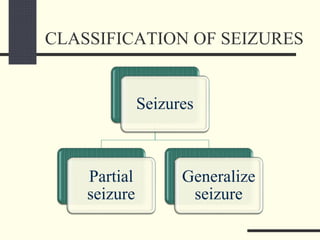
CLASSIFICATION OF SEIZURES
Seizures
Partial
seizure
Generalize
seizure
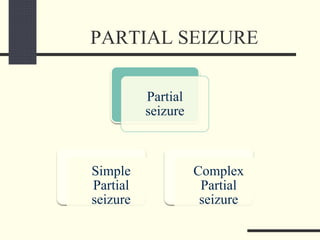
PARTIAL SEIZURE
Partial
seizure
Simple
Partial
seizure
Complex
Partial
seizure
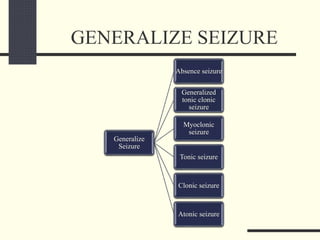
GENERALIZE SEIZURE
Generalize
Seizure
Absence seizure
Generalized
tonic clonic
seizure
Myoclonic
seizure
Tonic seizure
Clonic seizure
Atonic seizure
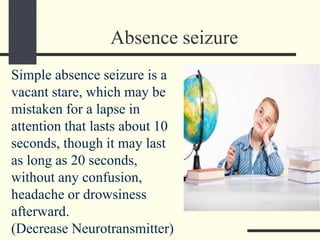
Absence seizure
Simple absence seizure is a
vacant stare, which may be
mistaken for a lapse in
attention that lasts about 10
seconds, though it may last
as long as 20 seconds,
without any confusion,
headache or drowsiness
afterward.
(Decrease Neurotransmitter)
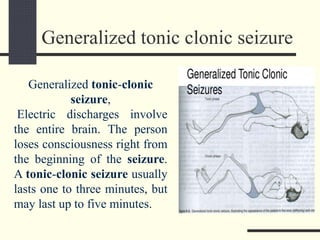
Generalized tonic clonic seizure
Generalized tonic-clonic
seizure,
Electric discharges involve
the entire brain. The person
loses consciousness right from
the beginning of the seizure.
A tonic-clonic seizure usually
lasts one to three minutes, but
may last up to five minutes.
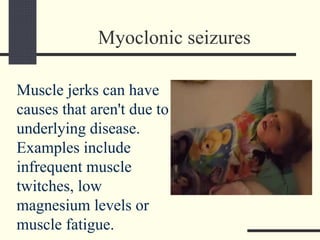
Myoclonic seizures
Muscle jerks can have
causes that aren't due to
underlying disease.
Examples include
infrequent muscle
twitches, low
magnesium levels or
muscle fatigue.
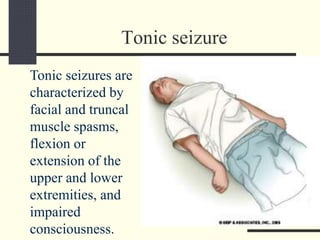
Tonic seizure
Tonic seizures are
characterized by
facial and truncal
muscle spasms,
flexion or
extension of the
upper and lower
extremities, and
impaired
consciousness.
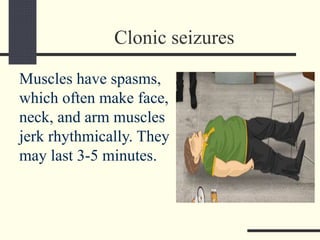
Clonic seizures
Muscles have spasms,
which often make face,
neck, and arm muscles
jerk rhythmically. They
may last 3-5 minutes.
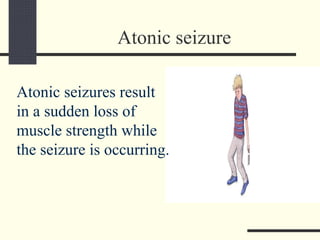
Atonic seizure
Atonic seizures result
in a sudden loss of
muscle strength while
the seizure is occurring.
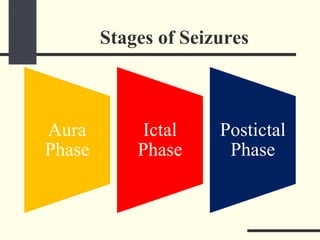
Stages of Seizures
Aura
Phase
Ictal
Phase
Postictal
Phase
Aura Phase
This phase happens right before a seizure
starts. over 5 to 20 minutes, and usually last
60 minutes. If you have an aura-
 Vision problems
 Dizziness
 Numbness or “pins and needles” Headache
 Nausea
 Feelings of intense fear
Ictal Phase
This is a stage of seizure. During it, intense
electrical changes happen in brain.
 Some common signs of this stage are:
 Loss of awareness (blacking out)
 Feeling confused
 Seeing flashing lights
 Trouble speaking
 Loss of muscle control
 Repeated movements (lip, arms)
Postictal Phase
During this final stage, brain tries to get
nerve cells to stop misfiring body begins to
relax. The physical aftereffects of the
seizure also set in.
The postictal phase can last for seconds,
minutes, hours, and sometimes even days.
Most commonly experience-
 Drowsiness
 Confusion
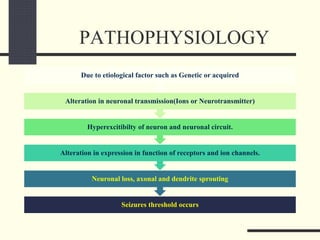
PATHOPHYSIOLOGY
Seizures threshold occurs
Neuronal loss, axonal and dendrite sprouting
Alteration in expression in function of receptors and ion channels.
Hyperexcitibilty of neuron and neuronal circuit.
Alteration in neuronal transmission(Ions or Neurotransmitter)
Due to etiological factor such as Genetic or acquired
CLINICAL MANIFESTATION
Impaired consciousness
Disturbed muscle tone or movement.
Disturbance of behavior
Mood Swing
Sensation or perception disturbance
Uncontrollable jerking movements of the arms and
legs.
Psychic symptoms—out-of-body feelings or not
feeling “in the moment”
Memory lapses.
DIAGNOSTIC EVALUATION
History:-
Physical examination:-
Blood test
LP
CT and MRI
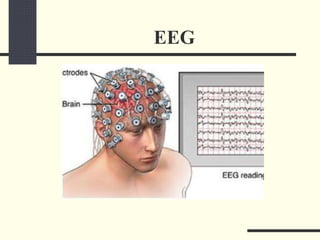
EEG
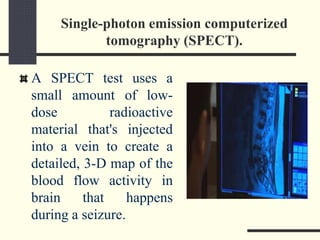
Single-photon emission computerized
tomography (SPECT).
EEG
Single-photon emission computerized
tomography (SPECT).
A SPECT test uses a
small amount of low-
dose radioactive
material that's injected
into a vein to create a
detailed, 3-D map of the
blood flow activity in
brain that happens
during a seizure.
EMERGENCY MANAGEMENT
To maintain a patent airway and prevent
aspiration.
Patient is placed in the side-lying position
Seizure precautions are maintained, (suction
catheter and oral airway).
Provide Oxygenation
Prevent complications (eg, aspiration, injury).
The bed is placed in a low position with side rails
up and padded.
seizure and for a short time thereafter.
PHARMACOLOGICAL MANAGEMENT
Anticonvulsant- Carbamezapine 500 mg
Valproic acid.
Antiseizures : Phenytoin 50 mg IV
SURGICAL MANAGEMENT
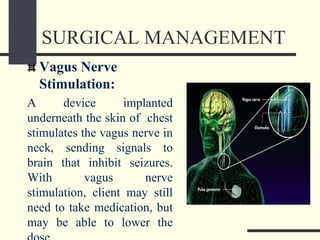
Vagus Nerve
Stimulation:
A device implanted
underneath the skin of chest
stimulates the vagus nerve in
neck, sending signals to
brain that inhibit seizures.
With vagus nerve
stimulation, client may still
need to take medication, but
may be able to lower the
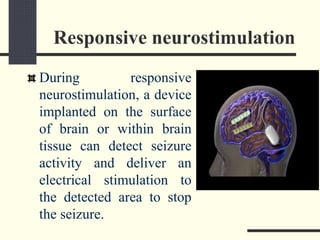
Responsive neurostimulation
During responsive
neurostimulation, a device
implanted on the surface
of brain or within brain
tissue can detect seizure
activity and deliver an
electrical stimulation to
the detected area to stop
the seizure.
Nursing Management
Ineffective airway clearance
Risk for injury related to seizures activity.
Anxiety related to change in activities.
Ineffective coping related to social stigma
Thank
you

Seizures