CEMENT BOARDS
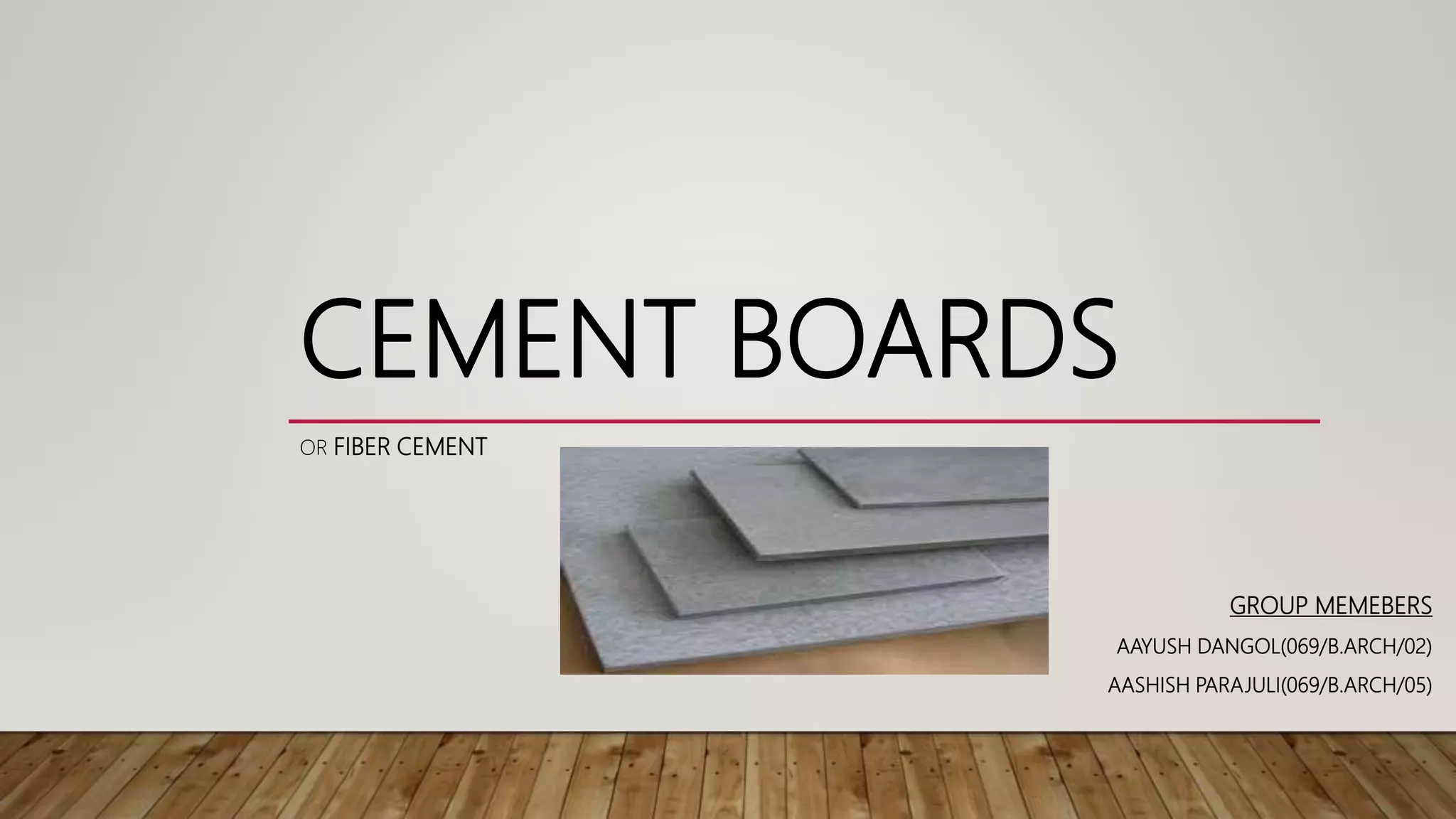
OR FIBER CEMENT
GROUP MEMEBERS
AAYUSH DANGOL(069/B.ARCH/02)
AASHISH PARAJULI(069/B.ARCH/05)
COMPOSITION
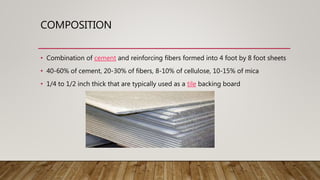
• Combination of cement and reinforcing fibers formed into 4 foot by 8 foot sheets
• 40-60% of cement, 20-30% of fibers, 8-10% of cellulose, 10-15% of mica
• 1/4 to 1/2 inch thick that are typically used as a tile backing board
DURABILITY
• They require very little maintenance once installed and painted
• Compared to wooden siding, fiber cement is not susceptible to termites or rot
INSTALLATION
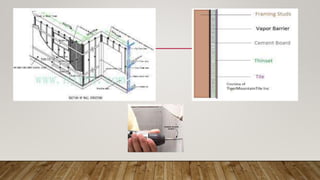
• Cement board is hung with corrosion resistant screws or ring-shank nails
• The boards are usually installed with a slight gap at joints in shower pans,
bathtubs, and each other
• Joints are then filled with silicone sealant or the manufacturer's taping
compounds before applying a finish
• The filled joints are taped like conventional gypsum board, but with fiberglass
tapes
SCOPE
IN THE CONTEXT OF NEPAL
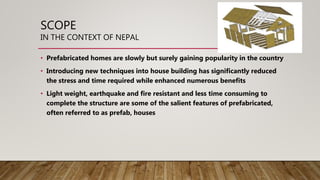
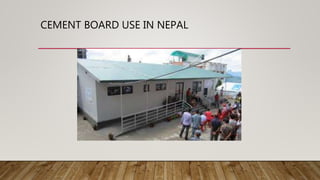
• Prefabricated homes are slowly but surely gaining popularity in the country
• Introducing new techniques into house building has significantly reduced
the stress and time required while enhanced numerous benefits
• Light weight, earthquake and fire resistant and less time consuming to
complete the structure are some of the salient features of prefabricated,
often referred to as prefab, houses
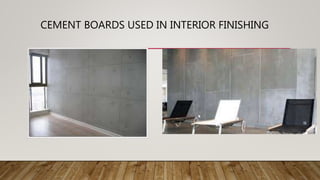
CEMENT BOARDS USED IN INTERIOR FINISHING
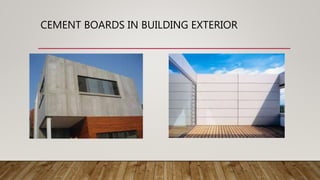
CEMENT BOARDS IN BUILDING EXTERIOR
CEMENT BOARD USE IN NEPAL
ADVANTAGES
• It has better long-term performance than paper-faced gypsum
• Labor cost saving: fewer workers, and build more fast.
• Sound insulation and absorption.
• Fast & Easy installation: 5 times faster than traditional brick installation
• It is highly resistant to absorbing moisture and has excellent drying properties
DISADVANTAGES
• One major disadvantage of cement board is the weight per square foot
• Due to its hardness, pre-drilling of fasteners is often recommended
• Cement board is initially more expensive than water resistant gypsum board but
may provide better long term value
• Health & Safety - Appropriate health and safety precautions must be adhered to
when working with this product
CONCLUSION
• Cement boards significantly reduce the exterior maintenance required for your
home
• Possesses high durability, good dimensional stability, acoustic and thermal
insulation properties and low production cost
• Making use of it in the building reduces the stress to the foundation eventually
reducing the cost and time. Hence it can replace the heavy bricks used as a major
masonry unit in the building.
THANKYOU

Cement Boards or Fiber Cement

  • 1.
    CEMENT BOARDS OR FIBERCEMENT GROUP MEMEBERS AAYUSH DANGOL(069/B.ARCH/02) AASHISH PARAJULI(069/B.ARCH/05)
  • 2.
    COMPOSITION • Combination ofcement and reinforcing fibers formed into 4 foot by 8 foot sheets • 40-60% of cement, 20-30% of fibers, 8-10% of cellulose, 10-15% of mica • 1/4 to 1/2 inch thick that are typically used as a tile backing board
  • 3.
    DURABILITY • They requirevery little maintenance once installed and painted • Compared to wooden siding, fiber cement is not susceptible to termites or rot
  • 4.
    INSTALLATION • Cement boardis hung with corrosion resistant screws or ring-shank nails • The boards are usually installed with a slight gap at joints in shower pans, bathtubs, and each other • Joints are then filled with silicone sealant or the manufacturer's taping compounds before applying a finish • The filled joints are taped like conventional gypsum board, but with fiberglass tapes
  • 6.
    SCOPE IN THE CONTEXTOF NEPAL • Prefabricated homes are slowly but surely gaining popularity in the country • Introducing new techniques into house building has significantly reduced the stress and time required while enhanced numerous benefits • Light weight, earthquake and fire resistant and less time consuming to complete the structure are some of the salient features of prefabricated, often referred to as prefab, houses
  • 7.
    CEMENT BOARDS USEDIN INTERIOR FINISHING
  • 8.
    CEMENT BOARDS INBUILDING EXTERIOR
  • 9.
  • 10.
    ADVANTAGES • It hasbetter long-term performance than paper-faced gypsum • Labor cost saving: fewer workers, and build more fast. • Sound insulation and absorption. • Fast & Easy installation: 5 times faster than traditional brick installation • It is highly resistant to absorbing moisture and has excellent drying properties
  • 11.
    DISADVANTAGES • One majordisadvantage of cement board is the weight per square foot • Due to its hardness, pre-drilling of fasteners is often recommended • Cement board is initially more expensive than water resistant gypsum board but may provide better long term value • Health & Safety - Appropriate health and safety precautions must be adhered to when working with this product
  • 12.
    CONCLUSION • Cement boardssignificantly reduce the exterior maintenance required for your home • Possesses high durability, good dimensional stability, acoustic and thermal insulation properties and low production cost • Making use of it in the building reduces the stress to the foundation eventually reducing the cost and time. Hence it can replace the heavy bricks used as a major masonry unit in the building.
  • 13.