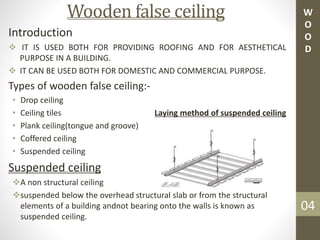
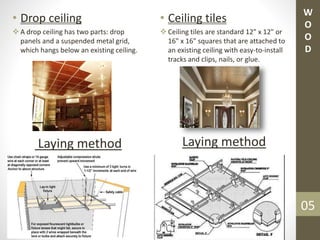
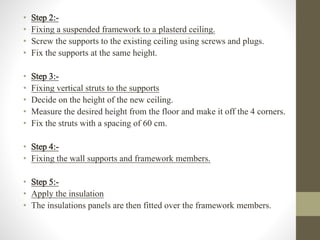
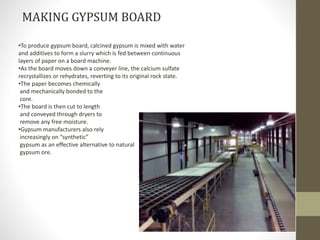
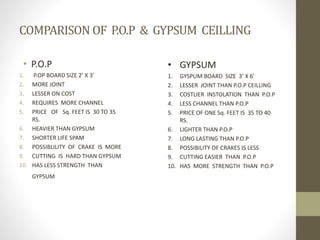
False ceilings, also known as dropped ceilings or suspended ceilings, were initially developed in the 14th century in Japan for aesthetic purposes. They later became popular in modern construction as a way to conceal wiring, ductwork, and other building elements above the ceiling. There are various types of false ceilings depending on the material used, such as wood, gypsum, thermocol, or PVC. False ceilings provide benefits like reducing room height, cooling rooms, and allowing for decorative lighting features. However, they also have disadvantages like reduced headroom, concealing functional building elements, and making maintenance and repairs more difficult. Common false ceiling installation methods involve setting up a framework to support ceiling tiles or panels made of various