What is a cell?
Parts of a plant cell
Parts of a animal cell
What is a cell?
-the smallest structural and functional unit of an
organism, typically microscopic and consisting of
cytoplasm and a nucleus enclosed in a membrane.
Microscopic organisms typically consist of a single cell,
which is either eukaryotic or prokaryotic
Two types of cell
 Prokaryotic
Eukaryotic
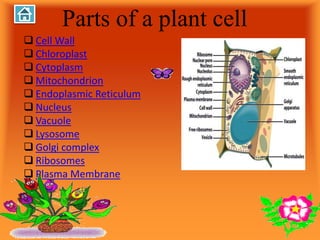
Parts of a plant cell
 Cell Wall
 Chloroplast
 Cytoplasm
 Mitochondrion
 Endoplasmic Reticulum
 Nucleus
 Vacuole
 Lysosome
 Golgi complex
 Ribosomes
 Plasma Membrane
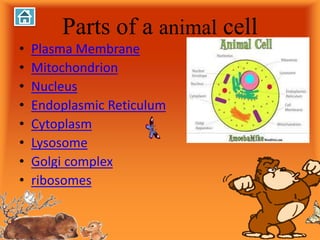
Parts of a animal cell
• Plasma Membrane
• Mitochondrion
• Nucleus
• Endoplasmic Reticulum
• Cytoplasm
• Lysosome
• Golgi complex
• ribosomes
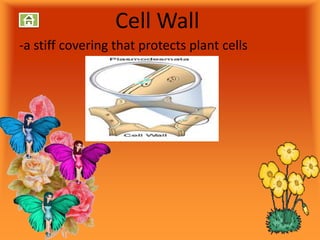
Cell Wall
-a stiff covering that protects plant cells
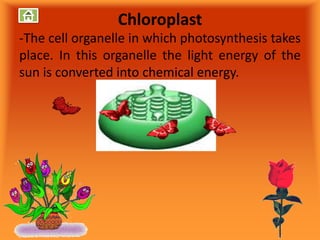
Chloroplast
-The cell organelle in which photosynthesis takes
place. In this organelle the light energy of the
sun is converted into chemical energy.
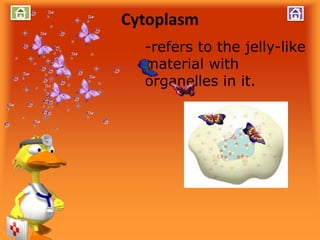
Cytoplasm
-refers to the jelly-like
material with
organelles in it.
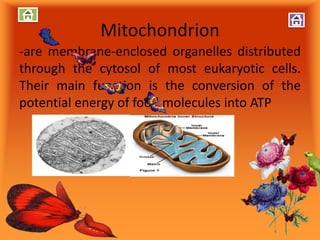
Mitochondrion
-are membrane-enclosed organelles distributed
through the cytosol of most eukaryotic cells.
Their main function is the conversion of the
potential energy of food molecules into ATP
Endoplasmic Reticulum
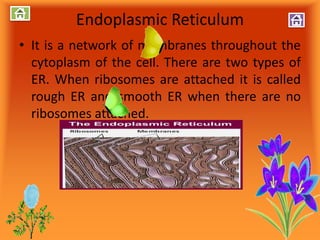
• It is a network of membranes throughout the
cytoplasm of the cell. There are two types of
ER. When ribosomes are attached it is called
rough ER and smooth ER when there are no
ribosomes attached.
Nucleus
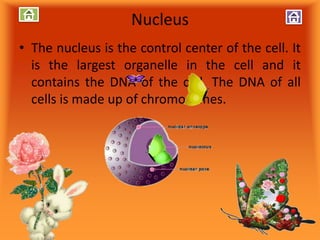
• The nucleus is the control center of the cell. It
is the largest organelle in the cell and it
contains the DNA of the cell. The DNA of all
cells is made up of chromosomes.
Vacuole
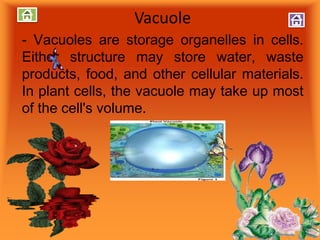
- Vacuoles are storage organelles in cells.
Either structure may store water, waste
products, food, and other cellular materials.
In plant cells, the vacuole may take up most
of the cell's volume.
Lysosomes
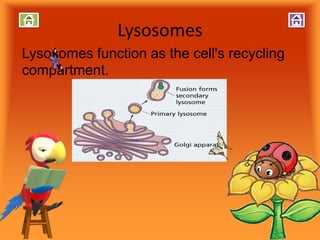
Lysosomes function as the cell's recycling
compartment.
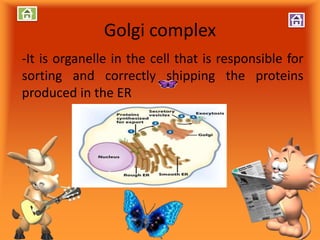
Golgi complex
-It is organelle in the cell that is responsible for
sorting and correctly shipping the proteins
produced in the ER
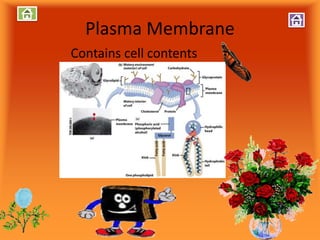
Plasma Membrane
Contains cell contents
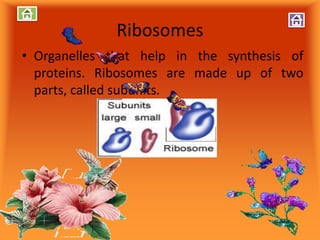
Ribosomes
• Organelles that help in the synthesis of
proteins. Ribosomes are made up of two
parts, called subunits.
Cell-Basic Unit of Life

Cell-Basic Unit of Life

  • 3.
    What is acell? Parts of a plant cell Parts of a animal cell
  • 4.
    What is acell? -the smallest structural and functional unit of an organism, typically microscopic and consisting of cytoplasm and a nucleus enclosed in a membrane. Microscopic organisms typically consist of a single cell, which is either eukaryotic or prokaryotic Two types of cell  Prokaryotic Eukaryotic
  • 5.
    Parts of aplant cell  Cell Wall  Chloroplast  Cytoplasm  Mitochondrion  Endoplasmic Reticulum  Nucleus  Vacuole  Lysosome  Golgi complex  Ribosomes  Plasma Membrane
  • 6.
    Parts of aanimal cell • Plasma Membrane • Mitochondrion • Nucleus • Endoplasmic Reticulum • Cytoplasm • Lysosome • Golgi complex • ribosomes
  • 7.
    Cell Wall -a stiffcovering that protects plant cells
  • 8.
    Chloroplast -The cell organellein which photosynthesis takes place. In this organelle the light energy of the sun is converted into chemical energy.
  • 9.
    Cytoplasm -refers to thejelly-like material with organelles in it.
  • 10.
    Mitochondrion -are membrane-enclosed organellesdistributed through the cytosol of most eukaryotic cells. Their main function is the conversion of the potential energy of food molecules into ATP
  • 11.
    Endoplasmic Reticulum • Itis a network of membranes throughout the cytoplasm of the cell. There are two types of ER. When ribosomes are attached it is called rough ER and smooth ER when there are no ribosomes attached.
  • 12.
    Nucleus • The nucleusis the control center of the cell. It is the largest organelle in the cell and it contains the DNA of the cell. The DNA of all cells is made up of chromosomes.
  • 13.
    Vacuole - Vacuoles arestorage organelles in cells. Either structure may store water, waste products, food, and other cellular materials. In plant cells, the vacuole may take up most of the cell's volume.
  • 14.
    Lysosomes Lysosomes function asthe cell's recycling compartment.
  • 15.
    Golgi complex -It isorganelle in the cell that is responsible for sorting and correctly shipping the proteins produced in the ER
  • 16.
  • 17.
    Ribosomes • Organelles thathelp in the synthesis of proteins. Ribosomes are made up of two parts, called subunits.