Cell is a basic unit of life
Inside the
uid float
hemicals
nd organelle
.
The cell is the
mallest part
f the
rganism that
etains
haracteristics
f the entire
rganism.
• For example, a cell can take in fuel, convert it
to energy, and eliminate wastes, just like the
organism as a whole can.
• But, the structures inside the cell cannot
perform these functions on their own, so the
cell is considered the lowest level.
• Each cell is capable of converting fuel to
useable energy.
• Therefore, cells not only make up living things;
they are living things.
• Cells are found in all plants, animals, and
bacteria.
• Many of the basic structures found inside all
types of cells, as well as the way those
structures work, fundamentally are very
similar, so the cell is said to be the
fundamental unit of life.
• The most important characteristic of a cell is
that it can reproduce by dividing.
• If cells did not reproduce, you or any other
living thing would not continue to live.
• Cell division is the process by which cells
duplicate and replace themselves.
• Increasingly more complex organisms are
made up of increasingly more groups of cells
(for example, in humans, groups of cells make
up each organ and muscle tissue), and the
organisms survive based on products that the
cells make.
• For example, cells in the pancreas make
insulin, which is necessary to ensure that the
blood glucose level doesnot skyrocket.
• Without insulin, the blood glucose can reach a
level that is lethal. So, without that cellular
product, you would die.
• Examining eukaryotes and prokaryotes
• Cells fall into two major categories: eukaryotes
and prokaryotes.
• Eukaryotes are organisms that contain
chromosomes, including plants and animals,
as well as fungi (like mushrooms), protozoa,
and most algae. Eukaryotes have the following
characteristics:
• They have a nucleus that stores their genetic
information.
• Animal cells have an organelle called
a mitochondria that effectively combines
oxygen and food to convert energy to a
useable form.
• Plant cells have chloroplasts, which use
energy from sunlight to create food for the
plant.
• Eukaryotic cells have internal membranes,
which create compartments inside the cells
that have different functions.
• Plants cells have a cell membrane and a cell
wall, which is rigid; animal cells have only a
cell membrane, which is soft.
• The cytoskeleton, which reinforces
the cytoplasm of the cell, controls cellular
movements.
• Prokaryotes are cellular organisms that do not
have a “true” nucleus.
• A nucleus is the control center of a cell.
• A nucleus contains the genetic material
packed into chromosomes, and it is associated
with other organelles that function in the
production of amino acids and proteins based
on what the genetic material dictates.
• Prokaryotes have some genetic material, but it
is not as well organized as it is in eukaryotes.
• Still, prokaryotes are able to reproduce.
Examples of these organisms include bacteria
and algae
Why cells are called basic unit of life?
• Cells are described as the basic unit of life
because all living things are made of cells.
• Cell theory which forms the basis for this
statement basically states three things:
**all living things or organisms are made of cells
and their products,
**new cells are created by old cells through
division, and
**that cells are the basic building blocks of life.
Cell size and shape
• There exist cells which have a variable shape,
such as the leukocytes, and some connective
tissue cells and cells with a stable shape, such
as the erythrocytes, epithelial cells, muscle
cells and nerve cells.
• These stable cells always have á typical more
or less fixed shape which is a specific
characteristic of each cell type.
• The shape of the cell depends partly on the
surface tension and viscosity of the cytoplasm,
the mechanical action which the adjoining
cells exert, the rigidity of the membrane and
the functional adaptation.
• Many cells when isolated in a liquid medium
tend to take a spherical form, obeying the
laws of surface tension.
• This is the case with the leukocyte which in
the circulating blood are spherical, but by the
influence of adequate stimuli can emit
pseudopodia (amoeboid movement) and
become completely irregular in shape.
• The cells of many plant and animal tissues
have a polyhedral shape, statistically more or
less constant, determined principally by
pressure from adjacent cells.
• In these cases, the original spherical form is
modified by contact with the other cells.
• Individual cells in a large mass appear to
behave like polyhedral solids of minimal
surface packed without gaps.
• All cells are similar to each other because they
all have the same basic structure inside.
• They all have a membrane that encloses the
jelly-like cytoplasm and a nucleus that controls
the cell.
• But apart from these similarities, cells can be
very different from each other.
• There are more than 200 different shapes and
sizes of cell in your body doing many different
jobs.
• Here are a few examples:
•
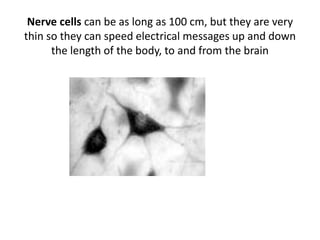
Nerve cells can be as long as 100 cm, but they are very
thin so they can speed electrical messages up and down
the length of the body, to and from the brain
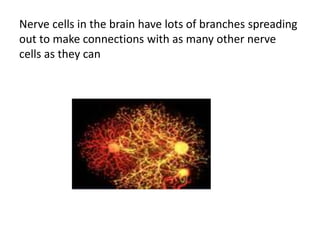
Nerve cells in the brain have lots of branches spreading
out to make connections with as many other nerve
cells as they can
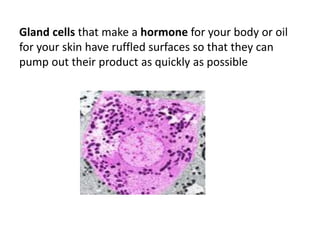
Gland cells that make a hormone for your body or oil
for your skin have ruffled surfaces so that they can
pump out their product as quickly as possible
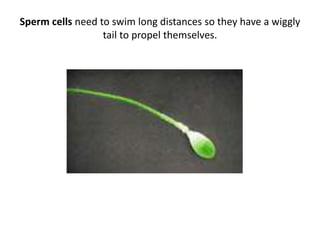
Sperm cells need to swim long distances so they have a wiggly
tail to propel themselves.
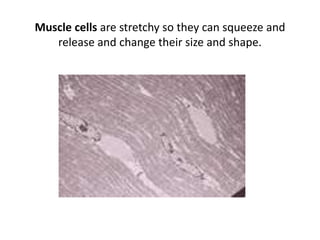
Muscle cells are stretchy so they can squeeze and
release and change their size and shape.

Cell is a_basic_unit_of_life[1]-1

  • 1.
    Cell is abasic unit of life Inside the uid float hemicals nd organelle . The cell is the mallest part f the rganism that etains haracteristics f the entire rganism.
  • 2.
    • For example,a cell can take in fuel, convert it to energy, and eliminate wastes, just like the organism as a whole can. • But, the structures inside the cell cannot perform these functions on their own, so the cell is considered the lowest level. • Each cell is capable of converting fuel to useable energy.
  • 3.
    • Therefore, cellsnot only make up living things; they are living things. • Cells are found in all plants, animals, and bacteria. • Many of the basic structures found inside all types of cells, as well as the way those structures work, fundamentally are very similar, so the cell is said to be the fundamental unit of life.
  • 4.
    • The mostimportant characteristic of a cell is that it can reproduce by dividing. • If cells did not reproduce, you or any other living thing would not continue to live. • Cell division is the process by which cells duplicate and replace themselves.
  • 5.
    • Increasingly morecomplex organisms are made up of increasingly more groups of cells (for example, in humans, groups of cells make up each organ and muscle tissue), and the organisms survive based on products that the cells make.
  • 6.
    • For example,cells in the pancreas make insulin, which is necessary to ensure that the blood glucose level doesnot skyrocket. • Without insulin, the blood glucose can reach a level that is lethal. So, without that cellular product, you would die.
  • 7.
    • Examining eukaryotesand prokaryotes • Cells fall into two major categories: eukaryotes and prokaryotes. • Eukaryotes are organisms that contain chromosomes, including plants and animals, as well as fungi (like mushrooms), protozoa, and most algae. Eukaryotes have the following characteristics:
  • 8.
    • They havea nucleus that stores their genetic information. • Animal cells have an organelle called a mitochondria that effectively combines oxygen and food to convert energy to a useable form. • Plant cells have chloroplasts, which use energy from sunlight to create food for the plant.
  • 9.
    • Eukaryotic cellshave internal membranes, which create compartments inside the cells that have different functions. • Plants cells have a cell membrane and a cell wall, which is rigid; animal cells have only a cell membrane, which is soft. • The cytoskeleton, which reinforces the cytoplasm of the cell, controls cellular movements.
  • 10.
    • Prokaryotes arecellular organisms that do not have a “true” nucleus. • A nucleus is the control center of a cell. • A nucleus contains the genetic material packed into chromosomes, and it is associated with other organelles that function in the production of amino acids and proteins based on what the genetic material dictates.
  • 11.
    • Prokaryotes havesome genetic material, but it is not as well organized as it is in eukaryotes. • Still, prokaryotes are able to reproduce. Examples of these organisms include bacteria and algae
  • 12.
    Why cells arecalled basic unit of life? • Cells are described as the basic unit of life because all living things are made of cells. • Cell theory which forms the basis for this statement basically states three things: **all living things or organisms are made of cells and their products, **new cells are created by old cells through division, and **that cells are the basic building blocks of life.
  • 13.
    Cell size andshape • There exist cells which have a variable shape, such as the leukocytes, and some connective tissue cells and cells with a stable shape, such as the erythrocytes, epithelial cells, muscle cells and nerve cells. • These stable cells always have á typical more or less fixed shape which is a specific characteristic of each cell type.
  • 14.
    • The shapeof the cell depends partly on the surface tension and viscosity of the cytoplasm, the mechanical action which the adjoining cells exert, the rigidity of the membrane and the functional adaptation. • Many cells when isolated in a liquid medium tend to take a spherical form, obeying the laws of surface tension.
  • 15.
    • This isthe case with the leukocyte which in the circulating blood are spherical, but by the influence of adequate stimuli can emit pseudopodia (amoeboid movement) and become completely irregular in shape. • The cells of many plant and animal tissues have a polyhedral shape, statistically more or less constant, determined principally by pressure from adjacent cells.
  • 16.
    • In thesecases, the original spherical form is modified by contact with the other cells. • Individual cells in a large mass appear to behave like polyhedral solids of minimal surface packed without gaps.
  • 17.
    • All cellsare similar to each other because they all have the same basic structure inside. • They all have a membrane that encloses the jelly-like cytoplasm and a nucleus that controls the cell. • But apart from these similarities, cells can be very different from each other.
  • 18.
    • There aremore than 200 different shapes and sizes of cell in your body doing many different jobs. • Here are a few examples: •
  • 19.
    Nerve cells canbe as long as 100 cm, but they are very thin so they can speed electrical messages up and down the length of the body, to and from the brain
  • 20.
    Nerve cells inthe brain have lots of branches spreading out to make connections with as many other nerve cells as they can
  • 21.
    Gland cells thatmake a hormone for your body or oil for your skin have ruffled surfaces so that they can pump out their product as quickly as possible
  • 22.
    Sperm cells needto swim long distances so they have a wiggly tail to propel themselves.
  • 23.
    Muscle cells arestretchy so they can squeeze and release and change their size and shape.