CELL
1
HISTORY OF A
2
3
HISTORY OF A CELL
ROBERT HOOKE
4
In 1838, Theodor Schwann and
Matthias Schleiden were
enjoying after-dinner coffee and
talking about their studies on
cells. It has been suggested
that when Schwann heard
Schleiden describe plant cells
with nuclei, he was struck by
the similarity of these plant
CELL THEORY DEVELOPMENT
5
THREE CONCLUSIONS
ABOUT CELLS :
1.The cell is the unit of structure,
physiology and organization in living
things.
2.The cell retains a dual existence as a
distinct entity and a building block in the
construction of organisms.
6
The third statement was denounced later when Rudolph
Virchow’s experiment made a powerful statement.
The salient features of Cell Theory in its
present form are:
1. All organisms are composed of one or
more cells.
2. All cells arise from pre-existing cells.
3. Cell is the basic structural as well as
7
CELL TYPES AND
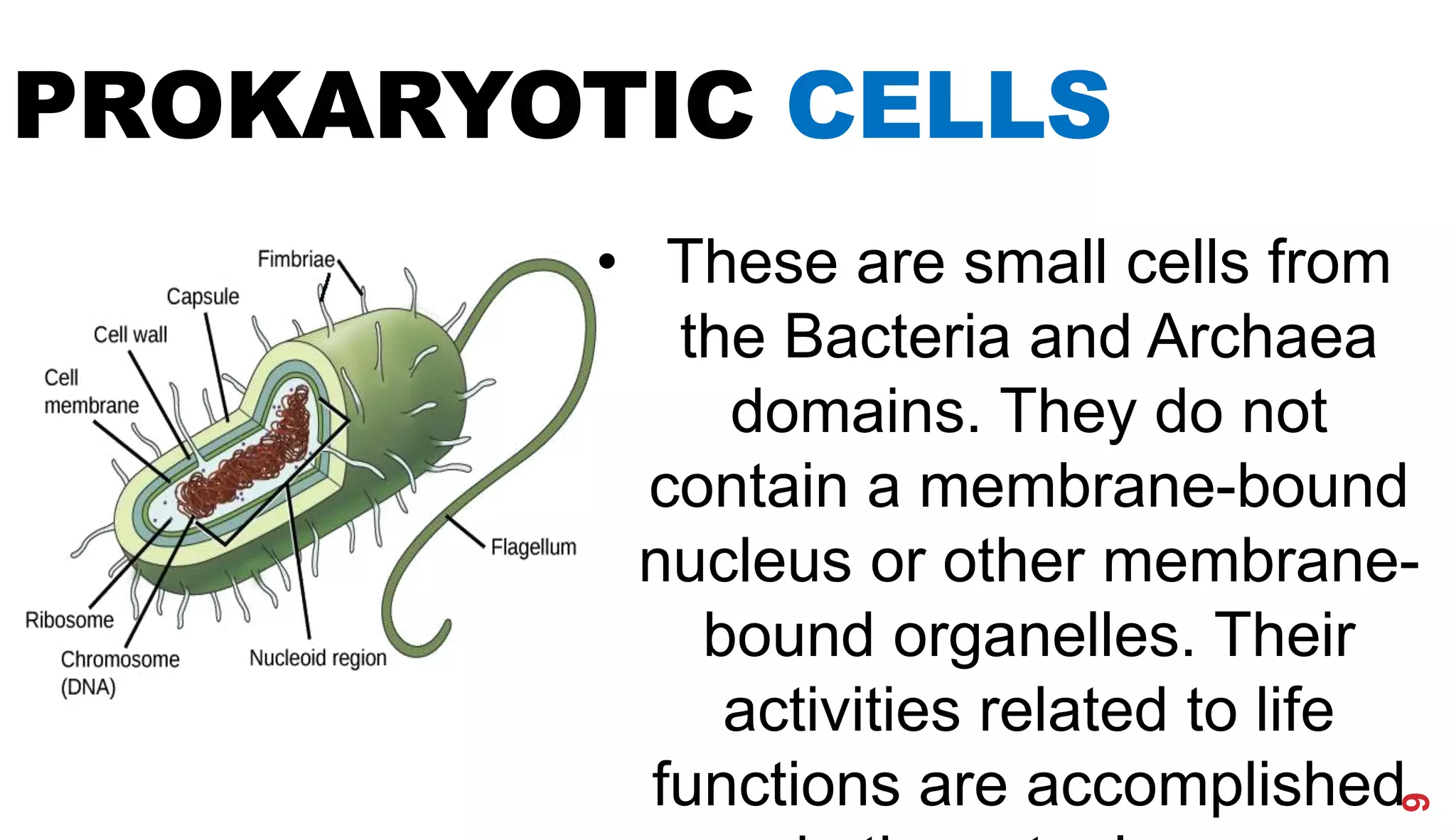
• These are small cells from
the Bacteria and Archaea
domains. They do not
contain a membrane-bound
nucleus or other membrane-
bound organelles. Their
activities related to life
functions are accomplished
9
PROKARYOTIC CELLS
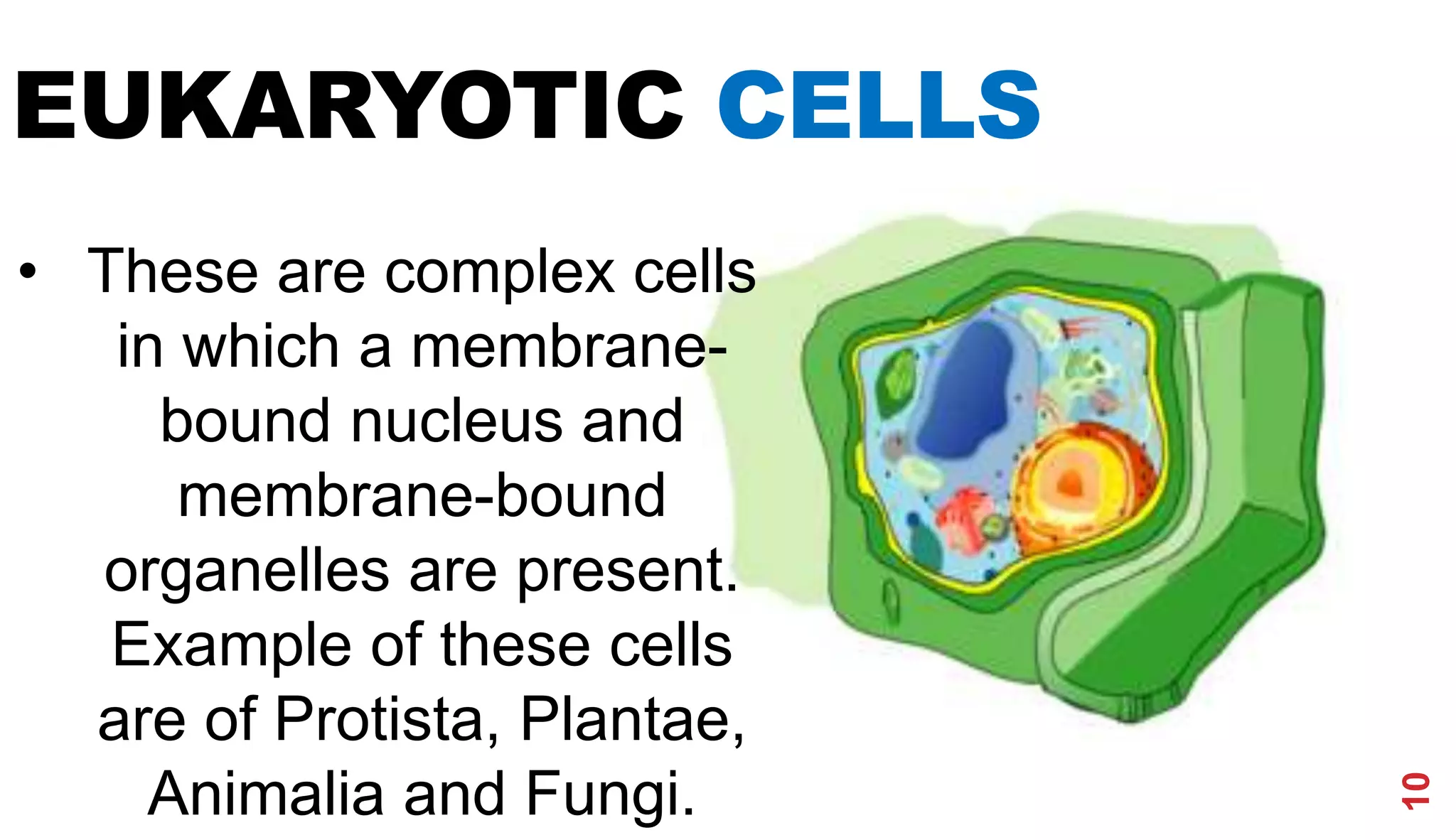
• These are complex cells
in which a membrane-
bound nucleus and
membrane-bound
organelles are present.
Example of these cells
are of Protista, Plantae,
Animalia and Fungi.
10
EUKARYOTIC CELLS
PARTS OF
ANIMAL AND PLANT
CELLS
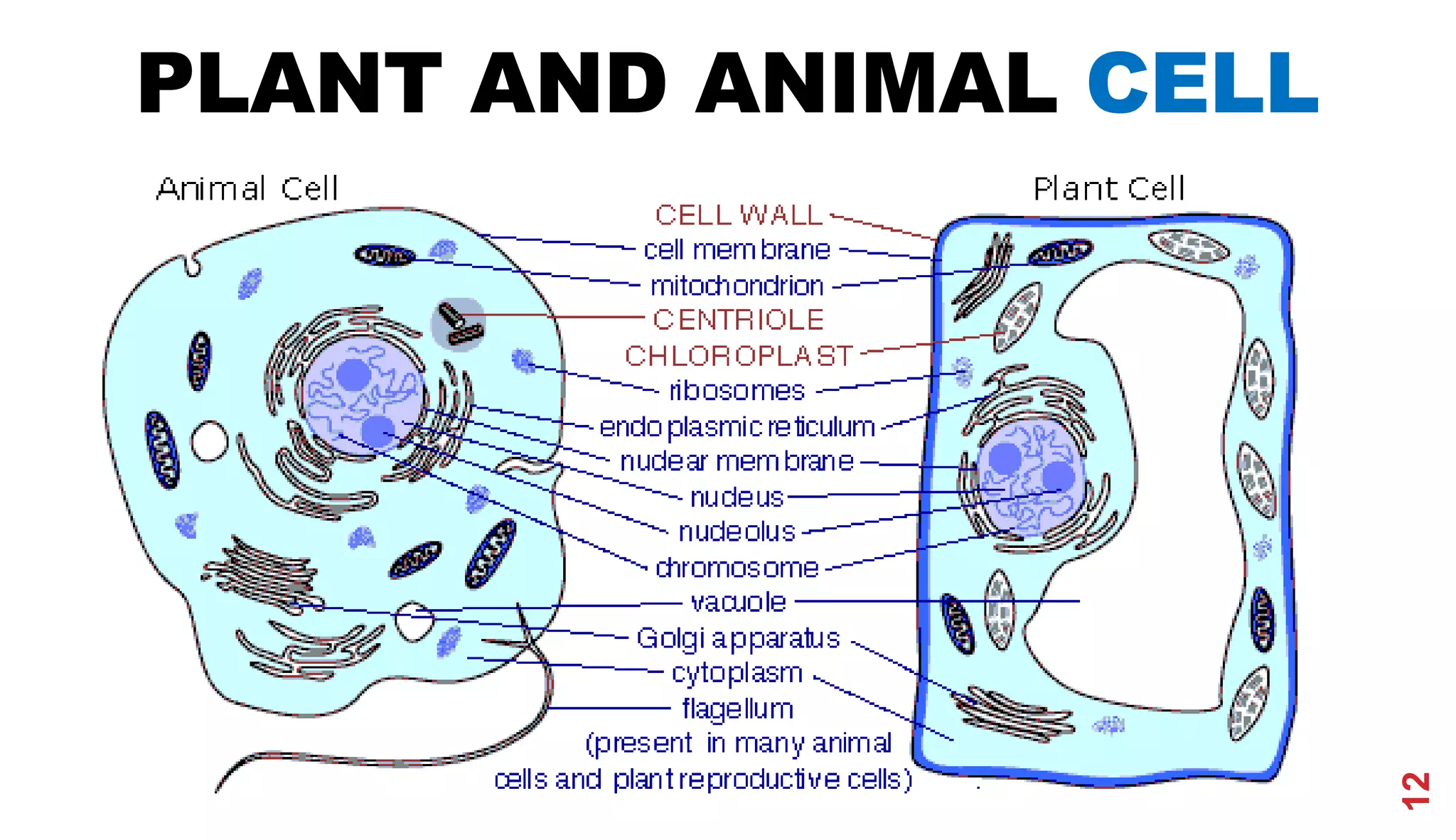
PLANT AND ANIMAL CELL
12
THREE BASIC STRUCTURES OF CELLS :
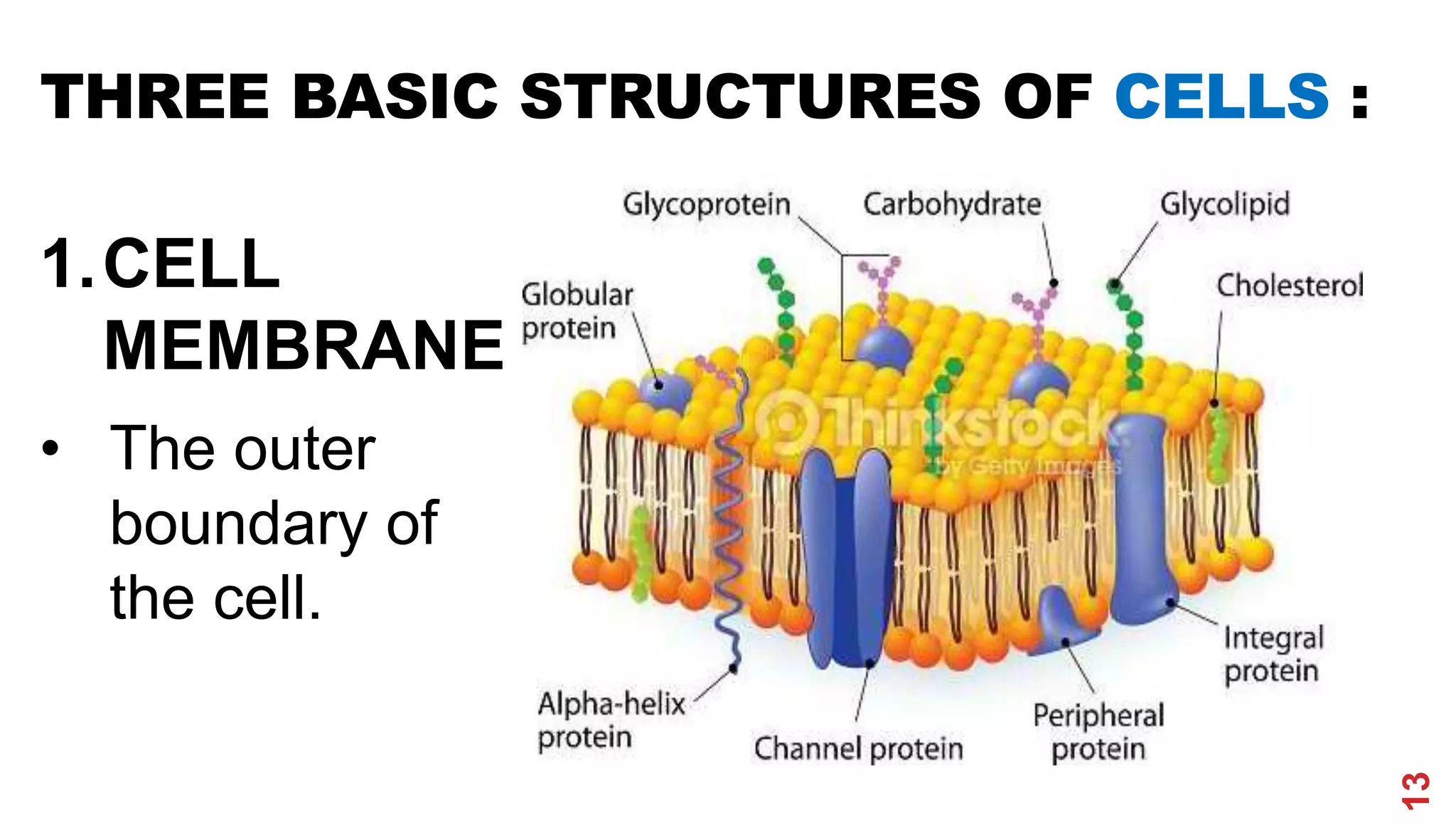
1.CELL
MEMBRANE
• The outer
boundary of
the cell.
13
THREE BASIC STRUCTURES OF CELLS :
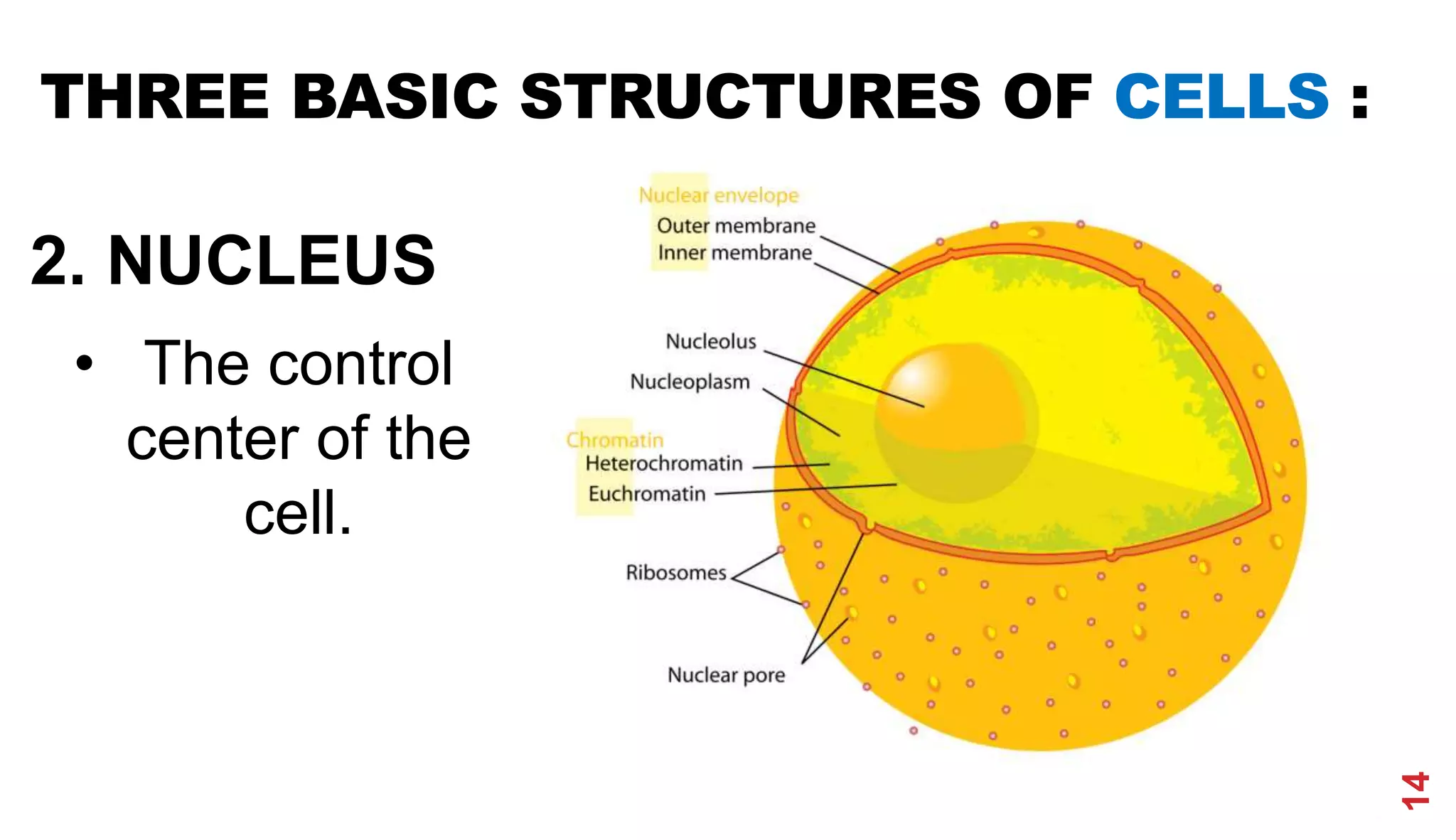
2. NUCLEUS
• The control
center of the
cell.
14
THREE BASIC STRUCTURES OF CELLS :
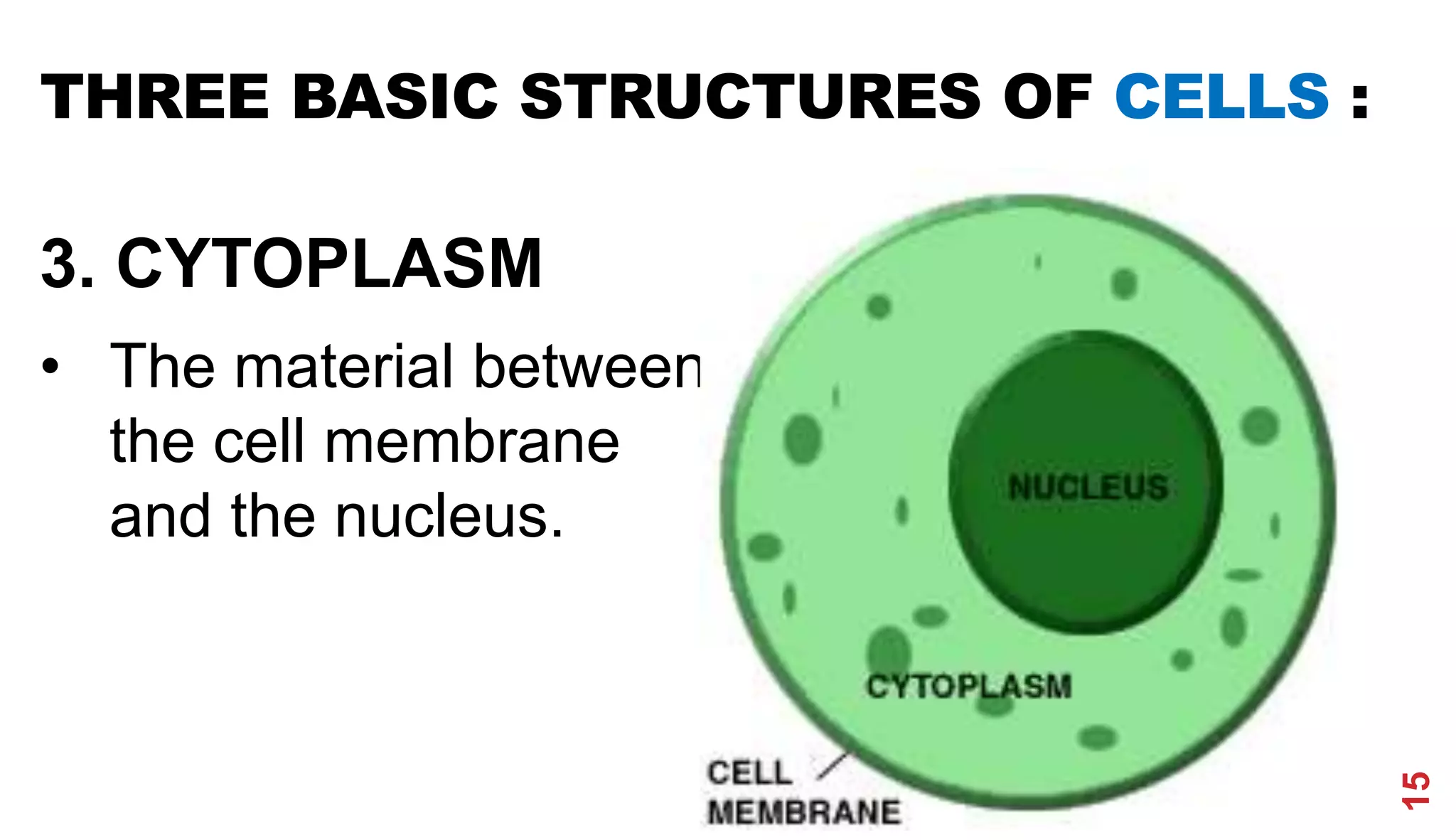
3. CYTOPLASM
• The material between
the cell membrane
and the nucleus.
15
16
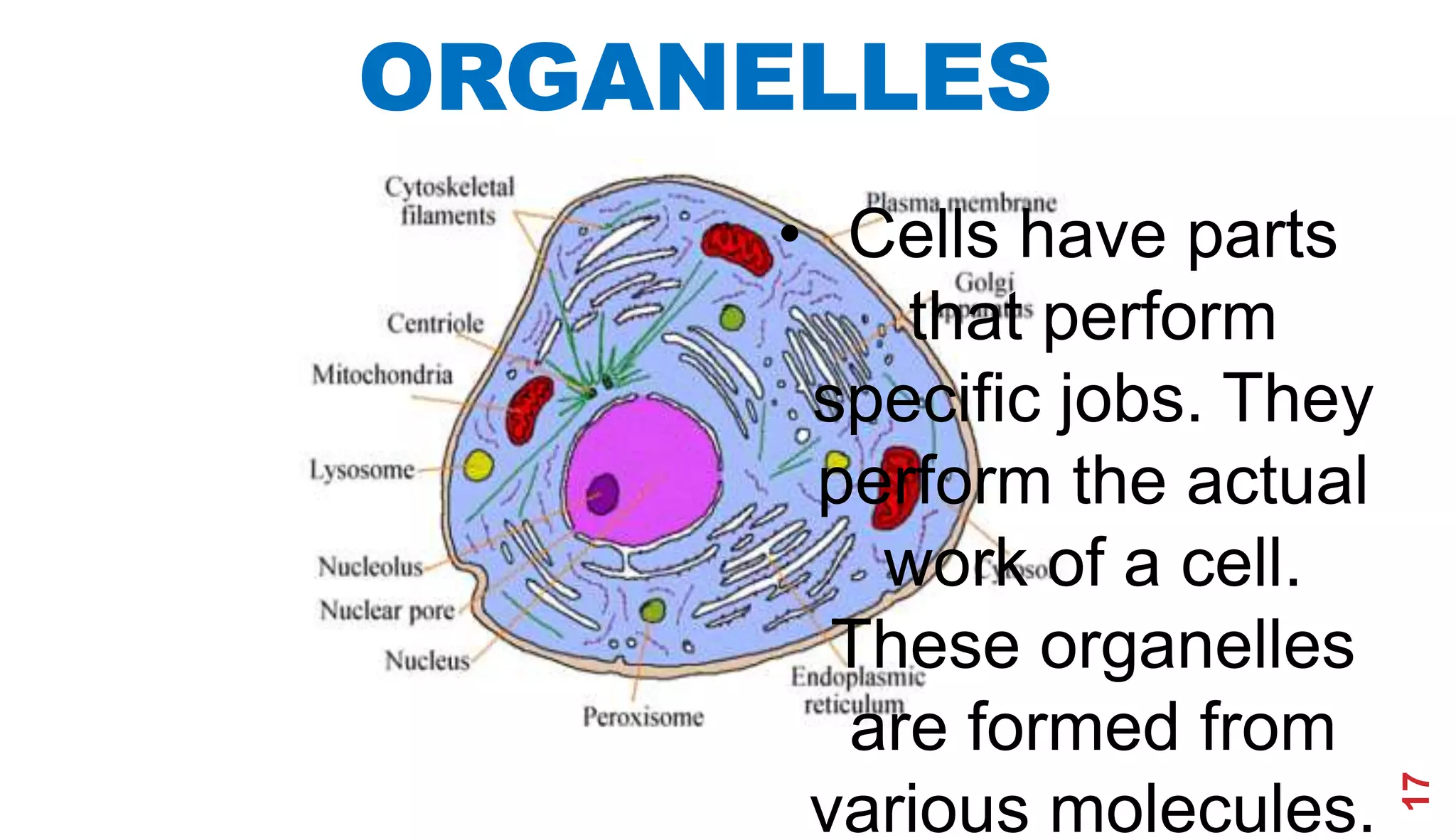
ORGANELLES
17
• Cells have parts
that perform
specific jobs. They
perform the actual
work of a cell.
These organelles
are formed from
various molecules.
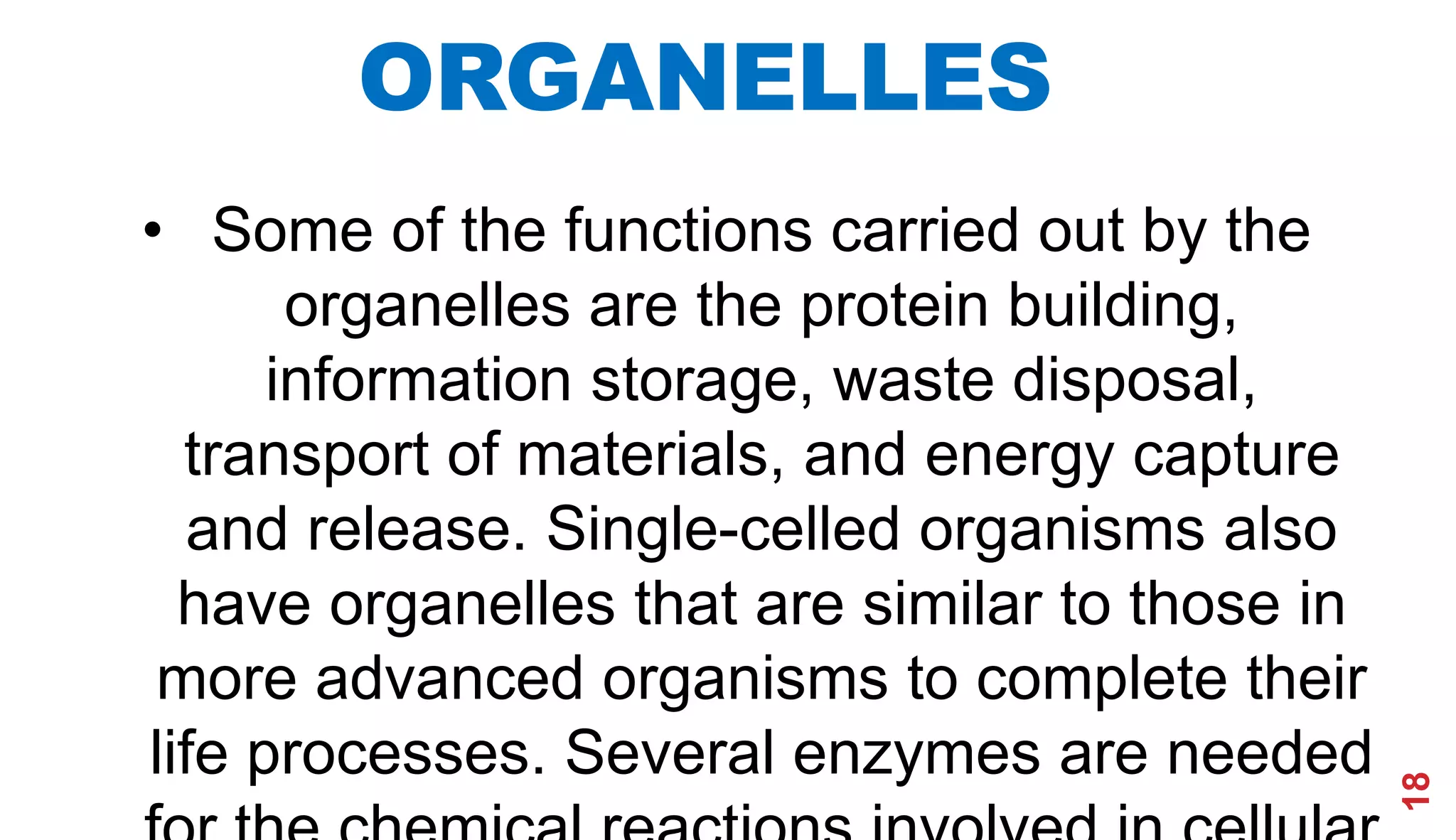
18
ORGANELLES
• Some of the functions carried out by the
organelles are the protein building,
information storage, waste disposal,
transport of materials, and energy capture
and release. Single-celled organisms also
have organelles that are similar to those in
more advanced organisms to complete their
life processes. Several enzymes are needed
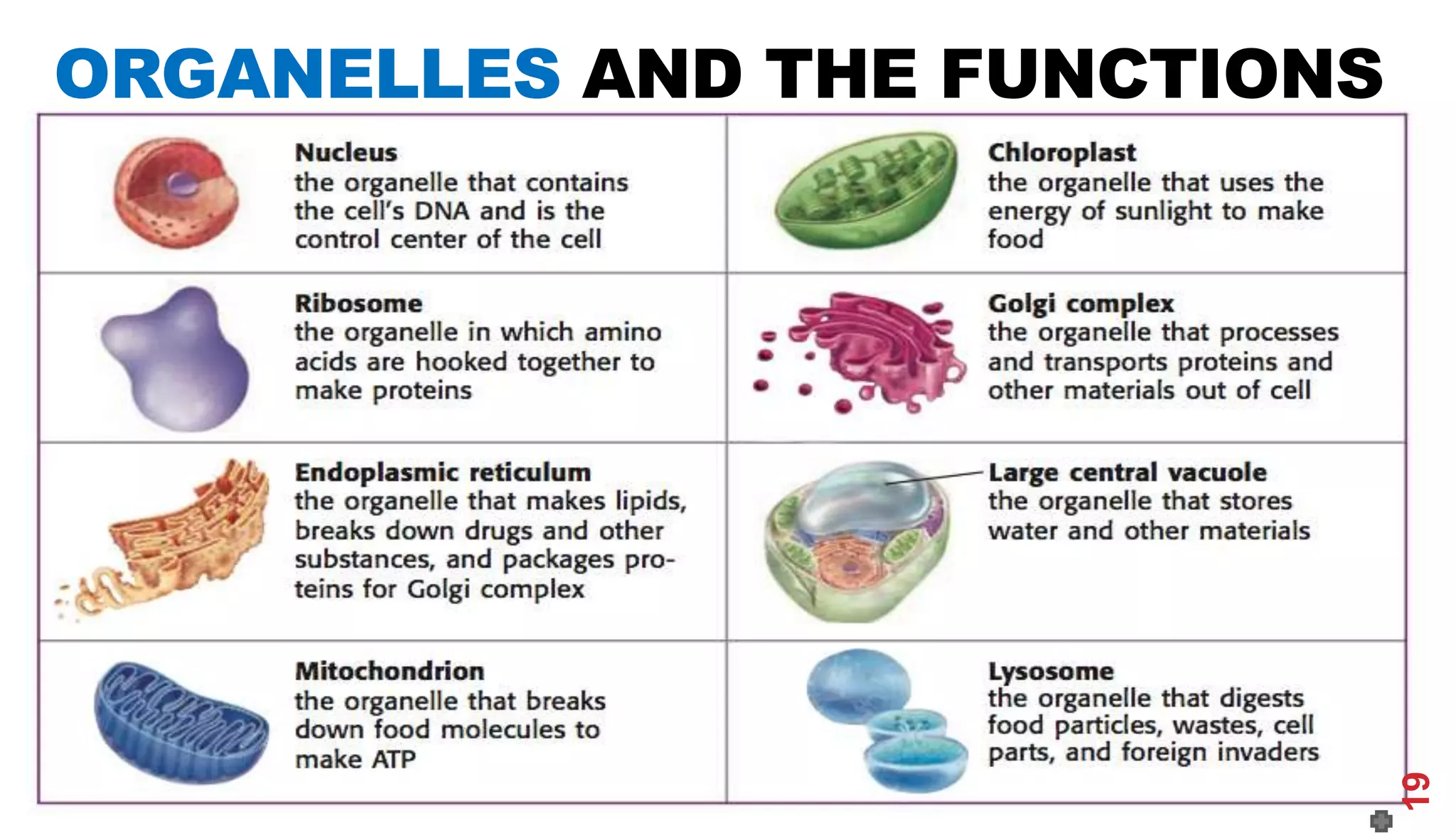
ORGANELLES AND THE FUNCTIONS
19
20
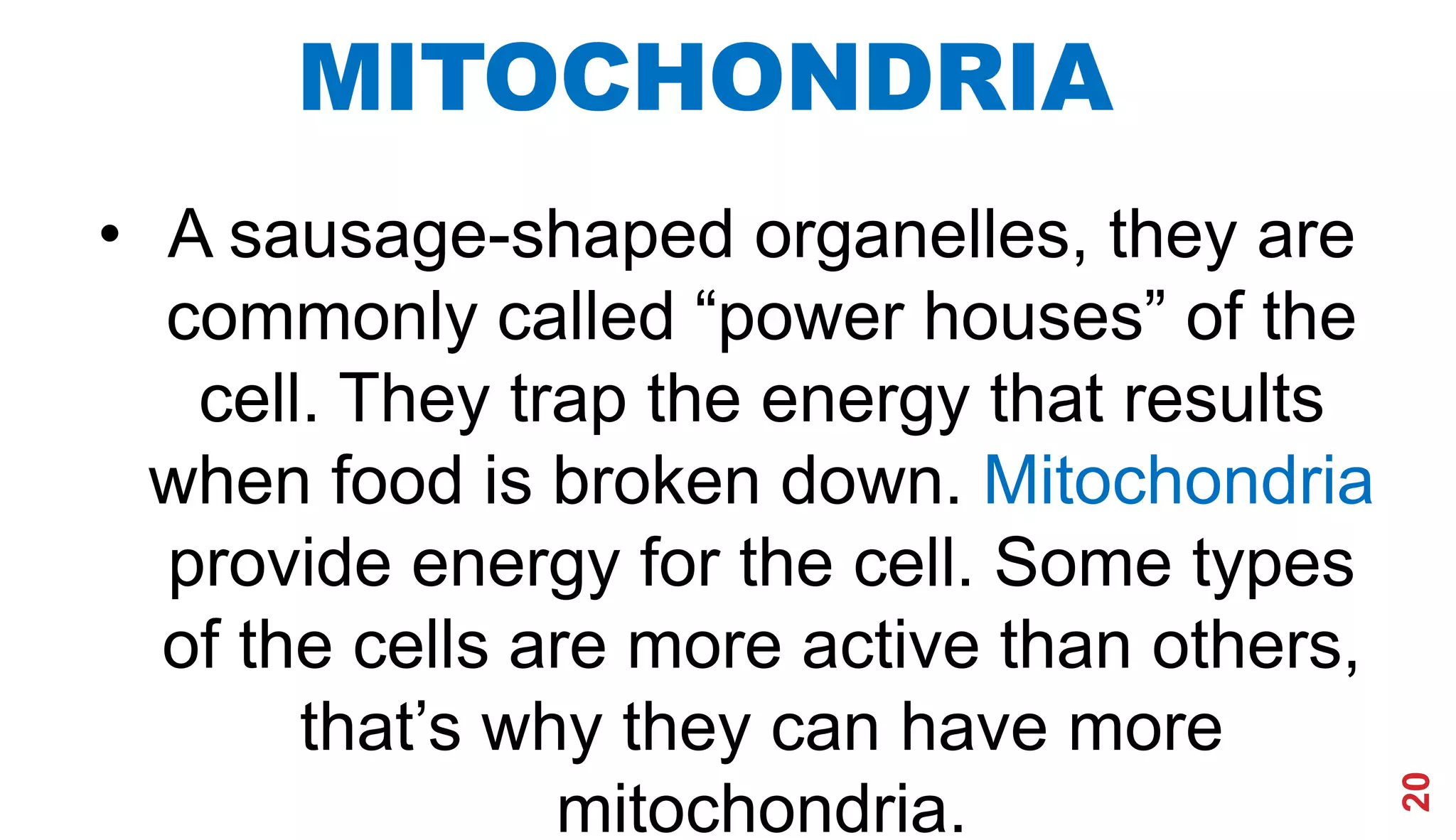
MITOCHONDRIA
• A sausage-shaped organelles, they are
commonly called “power houses” of the
cell. They trap the energy that results
when food is broken down. Mitochondria
provide energy for the cell. Some types
of the cells are more active than others,
that’s why they can have more
mitochondria.
21
THINK ABOUT THIS?
Why might a muscle cell have more
mitochondria than other cells?
• Muscle cells are always undergoing
some type of movement. Muscles are
also the ones exposed to strenuous
activities like doing some household
chores, running, walking, etc.
22
Do you know that cells also
produce wastes?
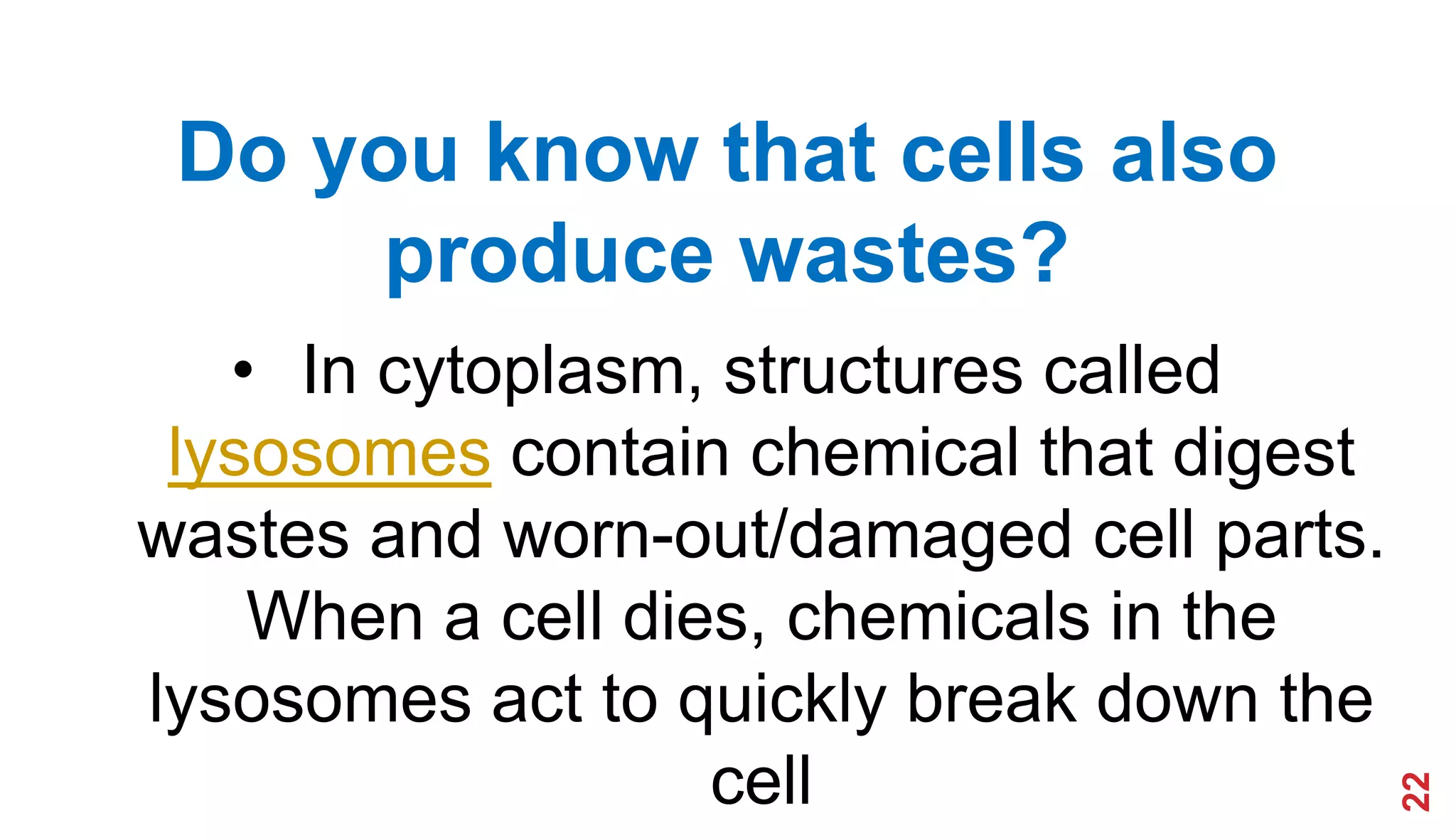
• In cytoplasm, structures called
lysosomes contain chemical that digest
wastes and worn-out/damaged cell parts.
When a cell dies, chemicals in the
lysosomes act to quickly break down the
cell
23
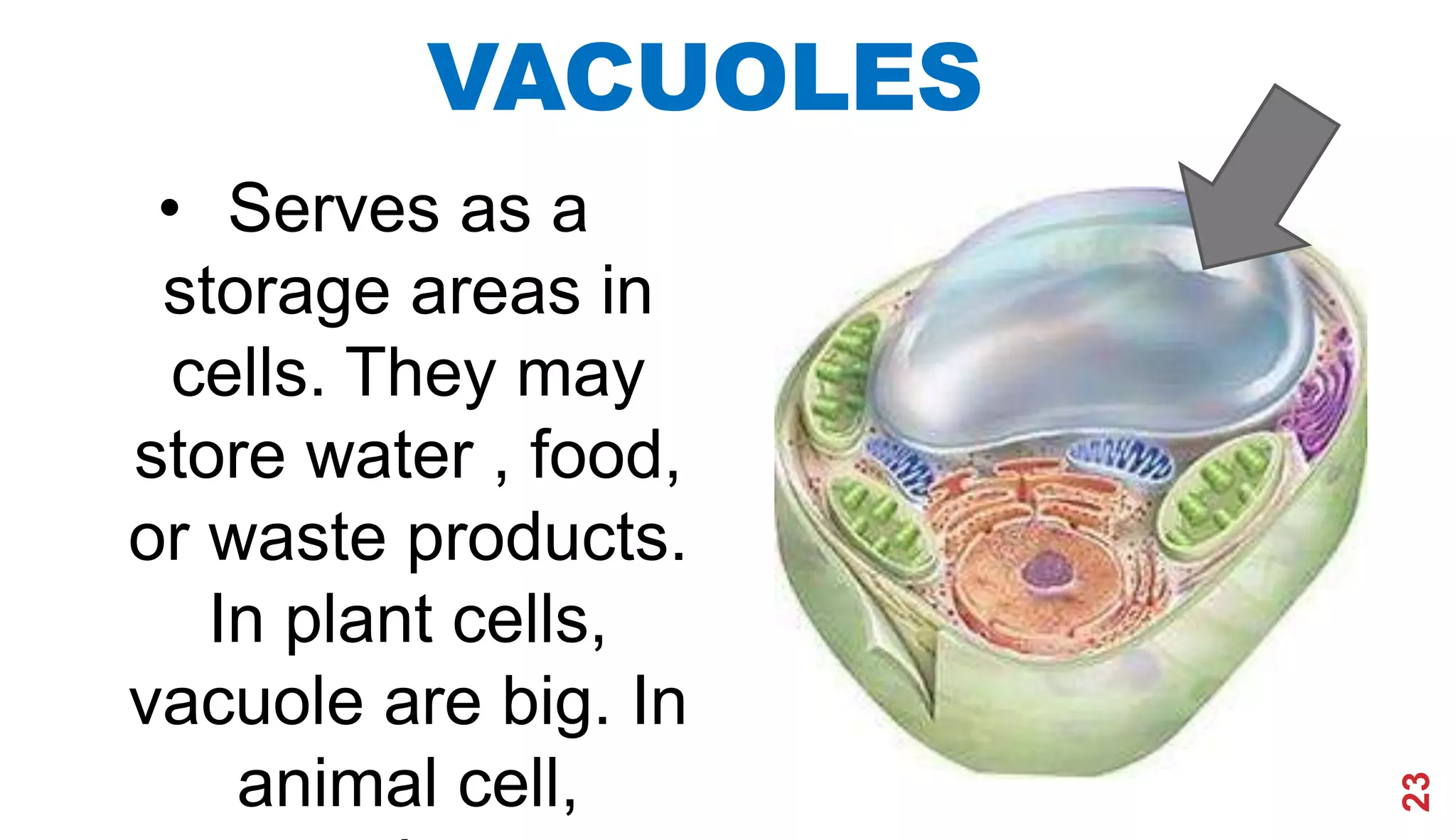
VACUOLES
• Serves as a
storage areas in
cells. They may
store water , food,
or waste products.
In plant cells,
vacuole are big. In
animal cell,
24
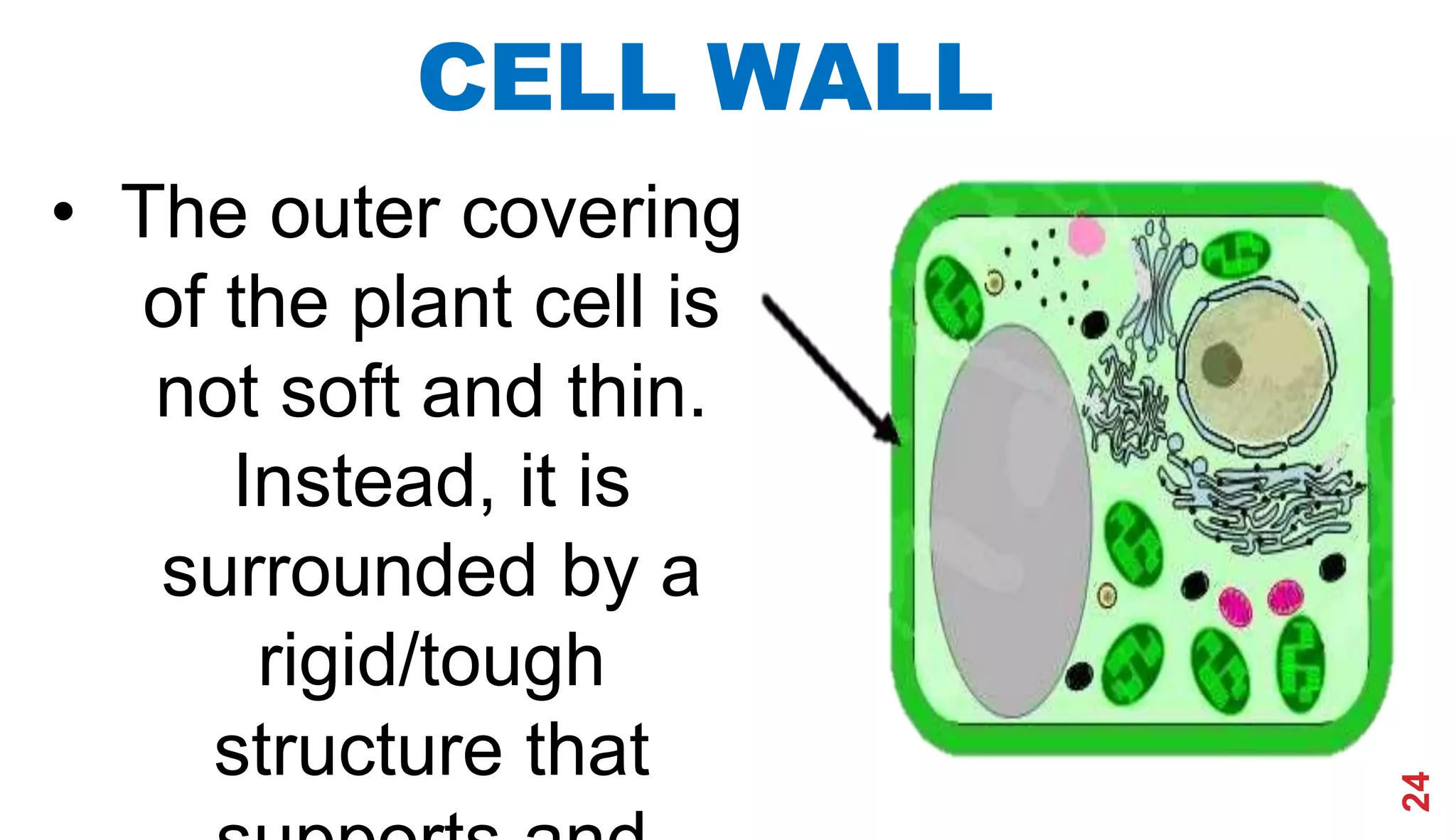
CELL WALL
• The outer covering
of the plant cell is
not soft and thin.
Instead, it is
surrounded by a
rigid/tough
structure that
25
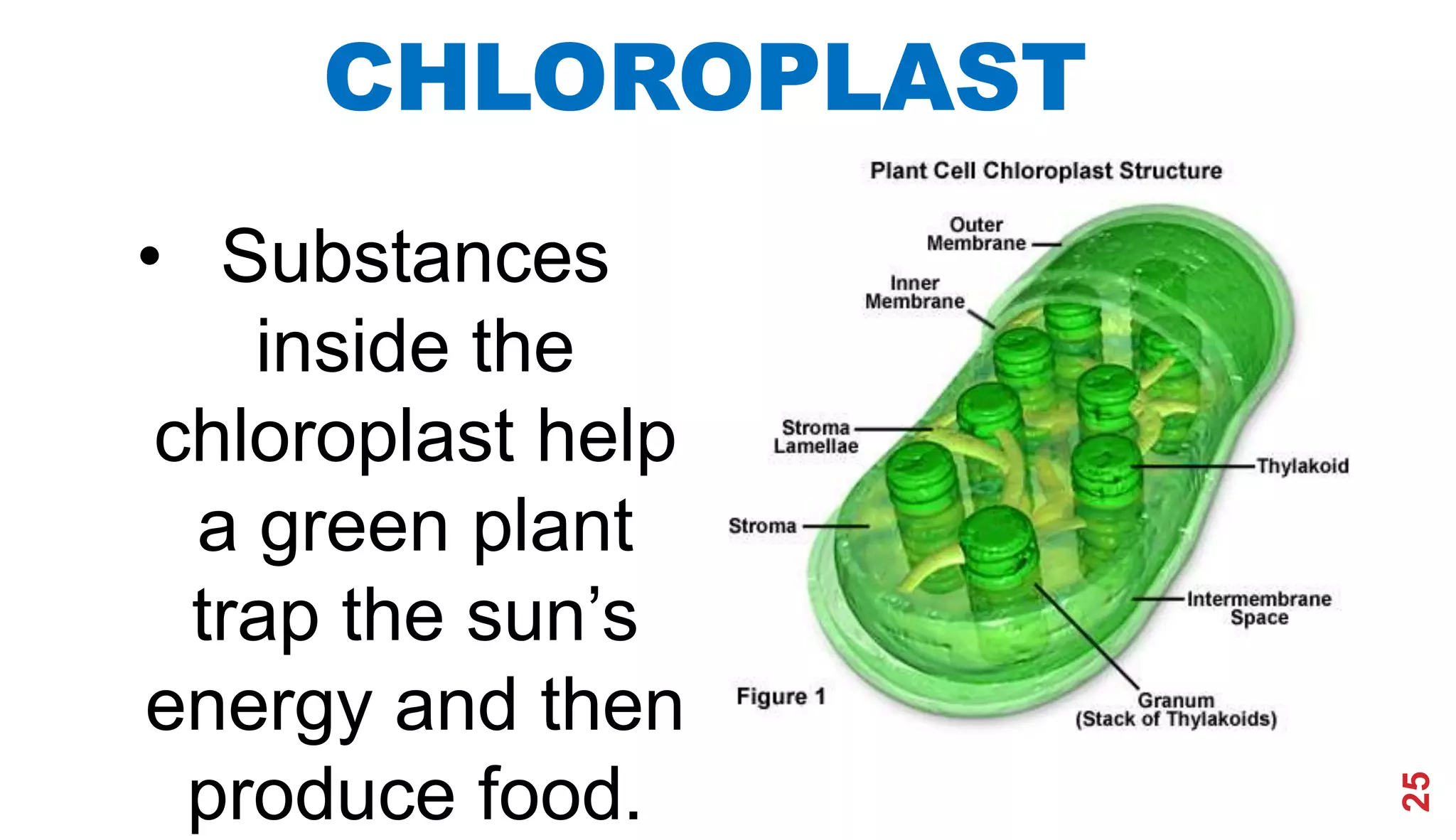
CHLOROPLAST
• Substances
inside the
chloroplast help
a green plant
trap the sun’s
energy and then
produce food.
WHY CELLS CALLED
THE BASIC UNIT OF
LIFE ?
27
WHY CELLS CALLED THE BASIC UNIT
OF LIFE ?
Cells make up the smallest level of a
living organism such as yourself and
other living things. The cellular level of an
organism is where the metabolic
processes occur that keep the organism
alive. That is why the cell is called the
28
• Humans need various systems for
circulation, coordination, digestion,
excretion, immunity, movement,
reproduction, and respiration. The
systems perform the life processes.
WHY CELLS CALLED THE BASIC UNIT
OF LIFE ?
DO YOU KNOW?
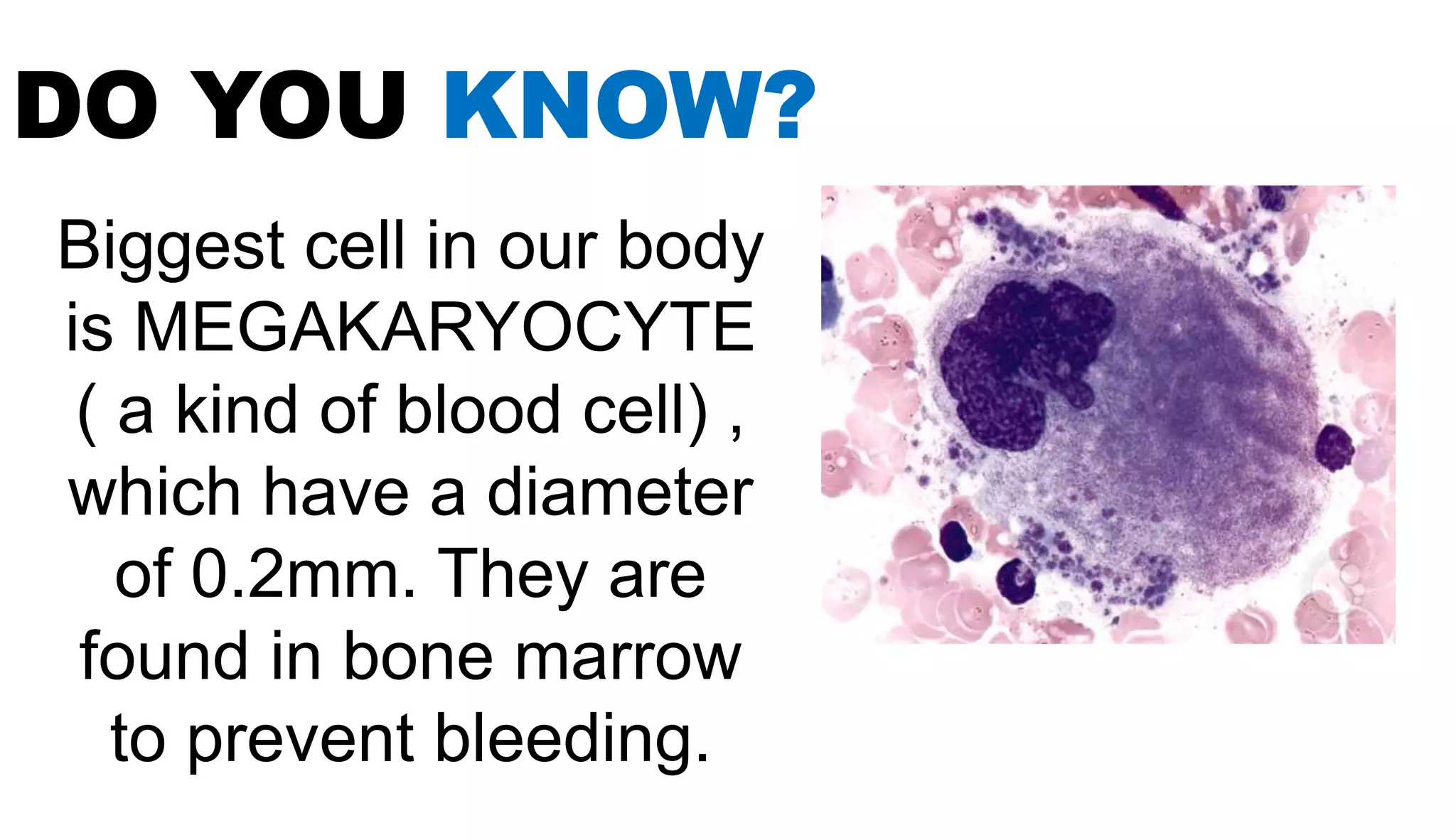
Biggest cell in our body
is MEGAKARYOCYTE
( a kind of blood cell) ,
which have a diameter
of 0.2mm. They are
found in bone marrow
to prevent bleeding.
The smallest and
longest living cell in
our body is the
brain cell
DO YOU KNOW?

Cell: The Basic Unit of Life

  • 1.
  • 2.
  • 3.
  • 4.
    HISTORY OF ACELL ROBERT HOOKE 4
  • 5.
    In 1838, TheodorSchwann and Matthias Schleiden were enjoying after-dinner coffee and talking about their studies on cells. It has been suggested that when Schwann heard Schleiden describe plant cells with nuclei, he was struck by the similarity of these plant CELL THEORY DEVELOPMENT 5
  • 6.
    THREE CONCLUSIONS ABOUT CELLS: 1.The cell is the unit of structure, physiology and organization in living things. 2.The cell retains a dual existence as a distinct entity and a building block in the construction of organisms. 6
  • 7.
    The third statementwas denounced later when Rudolph Virchow’s experiment made a powerful statement. The salient features of Cell Theory in its present form are: 1. All organisms are composed of one or more cells. 2. All cells arise from pre-existing cells. 3. Cell is the basic structural as well as 7
  • 8.
  • 9.
    • These aresmall cells from the Bacteria and Archaea domains. They do not contain a membrane-bound nucleus or other membrane- bound organelles. Their activities related to life functions are accomplished 9 PROKARYOTIC CELLS
  • 10.
    • These arecomplex cells in which a membrane- bound nucleus and membrane-bound organelles are present. Example of these cells are of Protista, Plantae, Animalia and Fungi. 10 EUKARYOTIC CELLS
  • 11.
  • 12.
  • 13.
    THREE BASIC STRUCTURESOF CELLS : 1.CELL MEMBRANE • The outer boundary of the cell. 13
  • 14.
    THREE BASIC STRUCTURESOF CELLS : 2. NUCLEUS • The control center of the cell. 14
  • 15.
    THREE BASIC STRUCTURESOF CELLS : 3. CYTOPLASM • The material between the cell membrane and the nucleus. 15
  • 16.
  • 17.
    ORGANELLES 17 • Cells haveparts that perform specific jobs. They perform the actual work of a cell. These organelles are formed from various molecules.
  • 18.
    18 ORGANELLES • Some ofthe functions carried out by the organelles are the protein building, information storage, waste disposal, transport of materials, and energy capture and release. Single-celled organisms also have organelles that are similar to those in more advanced organisms to complete their life processes. Several enzymes are needed
  • 19.
    ORGANELLES AND THEFUNCTIONS 19
  • 20.
    20 MITOCHONDRIA • A sausage-shapedorganelles, they are commonly called “power houses” of the cell. They trap the energy that results when food is broken down. Mitochondria provide energy for the cell. Some types of the cells are more active than others, that’s why they can have more mitochondria.
  • 21.
    21 THINK ABOUT THIS? Whymight a muscle cell have more mitochondria than other cells? • Muscle cells are always undergoing some type of movement. Muscles are also the ones exposed to strenuous activities like doing some household chores, running, walking, etc.
  • 22.
    22 Do you knowthat cells also produce wastes? • In cytoplasm, structures called lysosomes contain chemical that digest wastes and worn-out/damaged cell parts. When a cell dies, chemicals in the lysosomes act to quickly break down the cell
  • 23.
    23 VACUOLES • Serves asa storage areas in cells. They may store water , food, or waste products. In plant cells, vacuole are big. In animal cell,
  • 24.
    24 CELL WALL • Theouter covering of the plant cell is not soft and thin. Instead, it is surrounded by a rigid/tough structure that
  • 25.
    25 CHLOROPLAST • Substances inside the chloroplasthelp a green plant trap the sun’s energy and then produce food.
  • 26.
    WHY CELLS CALLED THEBASIC UNIT OF LIFE ?
  • 27.
    27 WHY CELLS CALLEDTHE BASIC UNIT OF LIFE ? Cells make up the smallest level of a living organism such as yourself and other living things. The cellular level of an organism is where the metabolic processes occur that keep the organism alive. That is why the cell is called the
  • 28.
    28 • Humans needvarious systems for circulation, coordination, digestion, excretion, immunity, movement, reproduction, and respiration. The systems perform the life processes. WHY CELLS CALLED THE BASIC UNIT OF LIFE ?
  • 29.
    DO YOU KNOW? Biggestcell in our body is MEGAKARYOCYTE ( a kind of blood cell) , which have a diameter of 0.2mm. They are found in bone marrow to prevent bleeding.
  • 30.
    The smallest and longestliving cell in our body is the brain cell DO YOU KNOW?

Editor's Notes

  • #2 …five simple rules for creating world-changing presentations.
  • #3 Rule number 4: Practice design, not decoration.
  • #4 …and propel
  • #5 …global causes.
  • #9 Give them those things in a clear, easily understandable way…
  • #12 The first rule is: Treat your audience as king.
  • #30 MEGAKARYOCYTE is young immature platelet cell. Platelet cell are used for blood clothing.