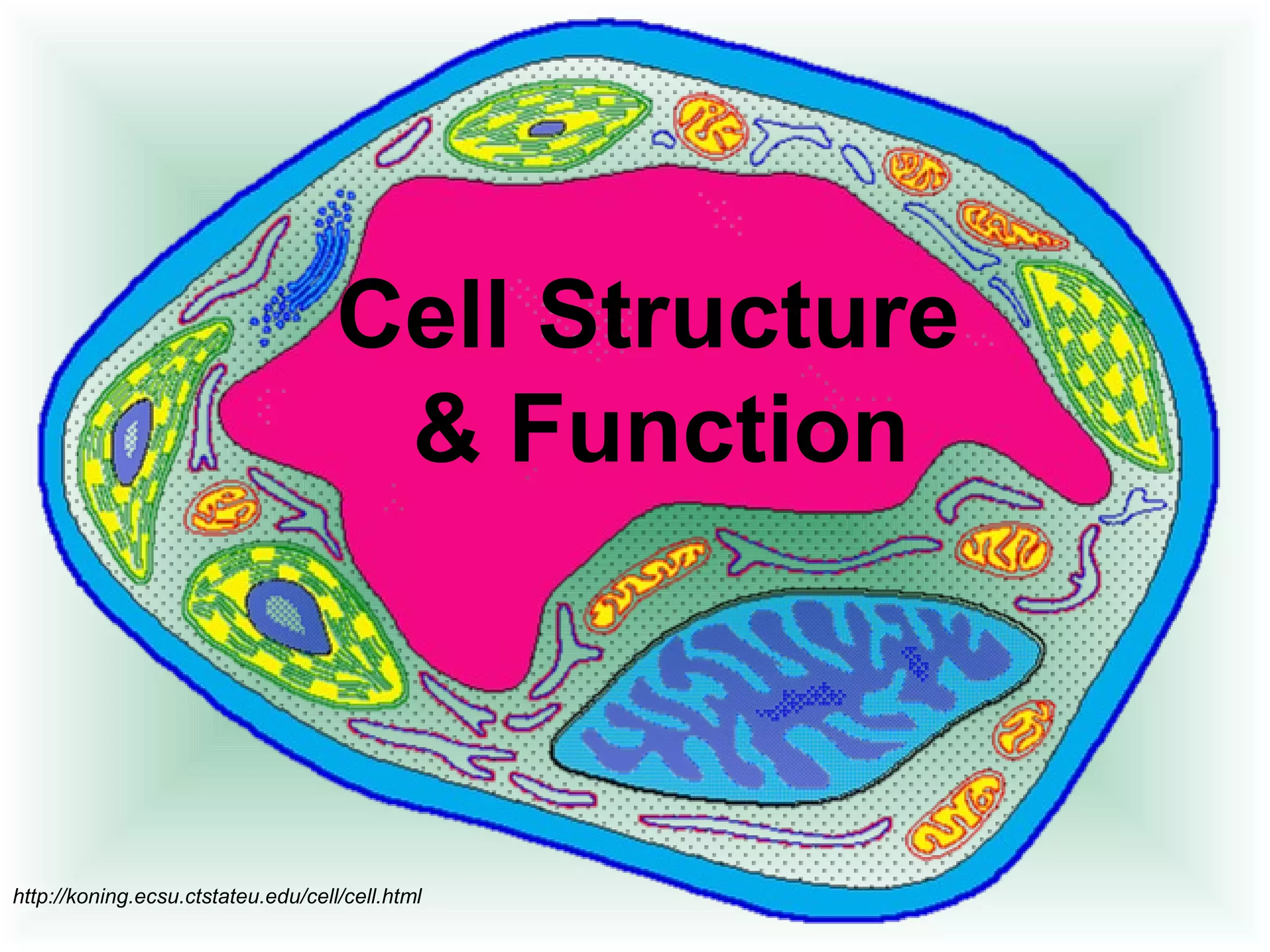
Cell Structure 
& Function 
http://koning.ecsu.ctstateu.edu/cell/cell.html
Definition of Cell 
A cell is the smallest unit that is 
capable of performing life 
functions.
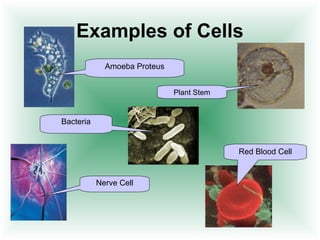
Examples of Cells 
Amoeba Proteus 
Plant Stem 
Red Blood Cell 
Nerve Cell 
Bacteria
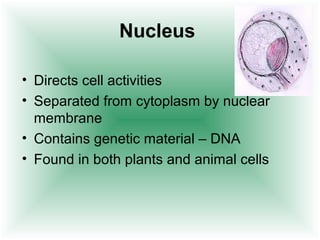
Nucleus 
• Directs cell activities 
• Separated from cytoplasm by nuclear 
membrane 
• Contains genetic material – DNA 
• Found in both plants and animal cells
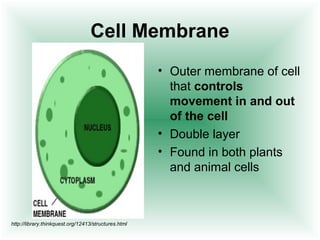
Cell Membrane 
• Outer membrane of cell 
that controls 
movement in and out 
of the cell 
• Double layer 
• Found in both plants 
and animal cells 
http://library.thinkquest.org/12413/structures.html
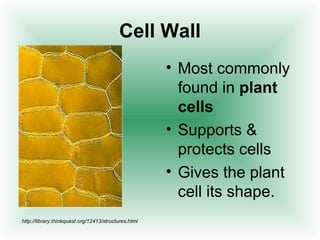
Cell Wall 
• Most commonly 
found in plant 
cells 
• Supports & 
protects cells 
• Gives the plant 
cell its shape. 
http://library.thinkquest.org/12413/structures.html
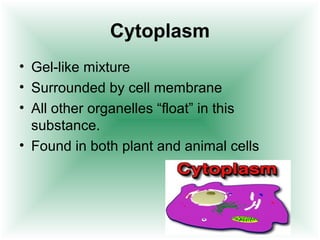
Cytoplasm 
• Gel-like mixture 
• Surrounded by cell membrane 
• All other organelles “float” in this 
substance. 
• Found in both plant and animal cells
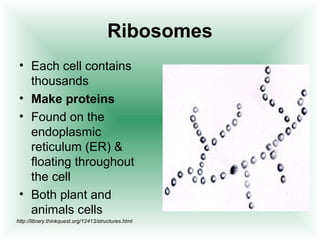
Ribosomes 
• Each cell contains 
thousands 
• Make proteins 
• Found on the 
endoplasmic 
reticulum (ER) & 
floating throughout 
the cell 
• Both plant and 
animals cells 
http://library.thinkquest.org/12413/structures.html
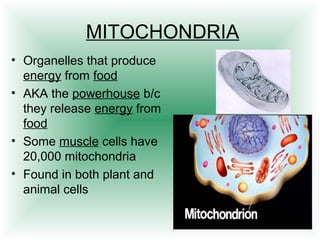
MITOCHONDRIA 
• Organelles that produce 
energy from food 
• AKA the powerhouse b/c 
they release energy from 
food 
• Some muscle cells have 
20,000 mitochondria 
• Found in both plant and 
animal cells
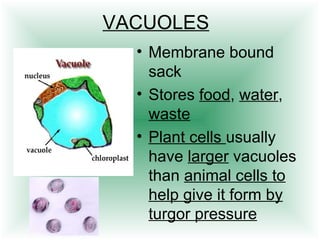
VACUOLES 
• Membrane bound 
sack 
• Stores food, water, 
waste 
• Plant cells usually 
have larger vacuoles 
than animal cells to 
help give it form by 
turgor pressure
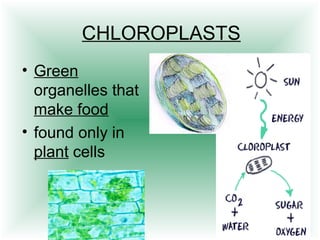
CHLOROPLASTS 
• Green 
organelles that 
make food 
• found only in 
plant cells
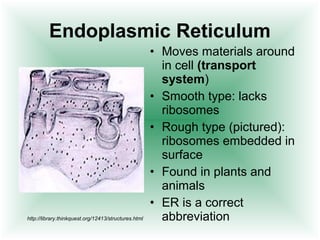
Endoplasmic Reticulum 
• Moves materials around 
in cell (transport 
system) 
• Smooth type: lacks 
ribosomes 
• Rough type (pictured): 
ribosomes embedded in 
surface 
• Found in plants and 
animals 
• ER is a correct 
http://library.thinkquest.org/12413/structures.html abbreviation
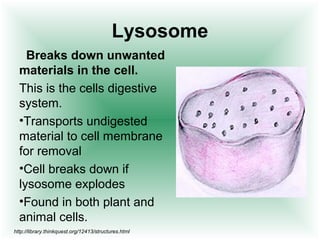
Lysosome 
Breaks down unwanted 
materials in the cell. 
This is the cells digestive 
system. 
•Transports undigested 
material to cell membrane 
for removal 
•Cell breaks down if 
lysosome explodes 
•Found in both plant and 
animal cells. 
http://library.thinkquest.org/12413/structures.html
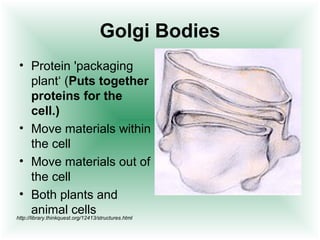
Golgi Bodies 
• Protein 'packaging 
plant‘ (Puts together 
proteins for the 
cell.) 
• Move materials within 
the cell 
• Move materials out of 
the cell 
• Both plants and 
animal cells 
http://library.thinkquest.org/12413/structures.html
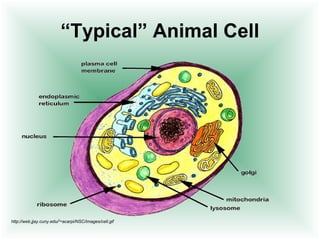
“Typical” Animal Cell 
http://web.jjay.cuny.edu/~acarpi/NSC/images/cell.gif
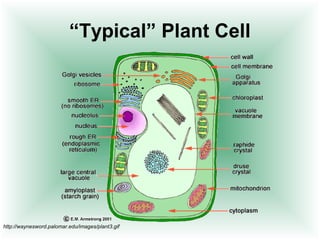
“Typical” Plant Cell 
http://waynesword.palomar.edu/images/plant3.gif

Cell Structure and Function

  • 1.
    Cell Structure &Function http://koning.ecsu.ctstateu.edu/cell/cell.html
  • 2.
    Definition of Cell A cell is the smallest unit that is capable of performing life functions.
  • 3.
    Examples of Cells Amoeba Proteus Plant Stem Red Blood Cell Nerve Cell Bacteria
  • 4.
    Nucleus • Directscell activities • Separated from cytoplasm by nuclear membrane • Contains genetic material – DNA • Found in both plants and animal cells
  • 5.
    Cell Membrane •Outer membrane of cell that controls movement in and out of the cell • Double layer • Found in both plants and animal cells http://library.thinkquest.org/12413/structures.html
  • 6.
    Cell Wall •Most commonly found in plant cells • Supports & protects cells • Gives the plant cell its shape. http://library.thinkquest.org/12413/structures.html
  • 7.
    Cytoplasm • Gel-likemixture • Surrounded by cell membrane • All other organelles “float” in this substance. • Found in both plant and animal cells
  • 8.
    Ribosomes • Eachcell contains thousands • Make proteins • Found on the endoplasmic reticulum (ER) & floating throughout the cell • Both plant and animals cells http://library.thinkquest.org/12413/structures.html
  • 9.
    MITOCHONDRIA • Organellesthat produce energy from food • AKA the powerhouse b/c they release energy from food • Some muscle cells have 20,000 mitochondria • Found in both plant and animal cells
  • 10.
    VACUOLES • Membranebound sack • Stores food, water, waste • Plant cells usually have larger vacuoles than animal cells to help give it form by turgor pressure
  • 11.
    CHLOROPLASTS • Green organelles that make food • found only in plant cells
  • 12.
    Endoplasmic Reticulum •Moves materials around in cell (transport system) • Smooth type: lacks ribosomes • Rough type (pictured): ribosomes embedded in surface • Found in plants and animals • ER is a correct http://library.thinkquest.org/12413/structures.html abbreviation
  • 13.
    Lysosome Breaks downunwanted materials in the cell. This is the cells digestive system. •Transports undigested material to cell membrane for removal •Cell breaks down if lysosome explodes •Found in both plant and animal cells. http://library.thinkquest.org/12413/structures.html
  • 14.
    Golgi Bodies •Protein 'packaging plant‘ (Puts together proteins for the cell.) • Move materials within the cell • Move materials out of the cell • Both plants and animal cells http://library.thinkquest.org/12413/structures.html
  • 15.
    “Typical” Animal Cell http://web.jjay.cuny.edu/~acarpi/NSC/images/cell.gif
  • 16.
    “Typical” Plant Cell http://waynesword.palomar.edu/images/plant3.gif