CELL
-The cell is the structural and functional unit of all known
living organisms. It is the smallest unit of an organism that is
classified as living, and is often called the building block of
life. Some organisms, such as most bacteria, are unicellular
(consist of a single cell). Other organisms, such as humans,
are multicellular.
-Eukaryotic cells are about 10 times the size of a typical
prokaryote and can be as much as 1000 times greater in
volume. The major difference between prokaryotes and
eukaryotes is that eukaryotic cells contain membrane-bound
compartments in which specific metabolic activities take
place. Most important among these is the presence of a
cell nucleus, a membrane-delineated compartment that
houses the eukaryotic cell's DNA. It is this nucleus that gives
the eukaryote its name, which means "true nucleus." Other
differences include
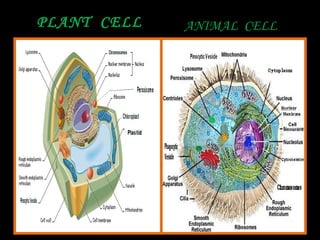
PLANT CELL   ANIMAL CELL
Animal Cell                 Plant Cell

    Cell wall             none                        yes
    Plastids               no                         yes
    Vacuole        One or more small       One, large central vacuole
                       vacuoles              taking up 90% of cell
                                                    volume

     Shape                round                   rectangular
  Glyoxysomes              no                Some plant cells have
                                                glyoxysomes

   Centrioles        Always present          Only present in lower
                                                  plant forms

   Lysosomes       Occur in cytoplasm         Usually not evident
Plasma Membrane    Only cell membrane      Cell membrane & cell wall
  Chloroplast     Don’t have chloroplast       Have chloroplast
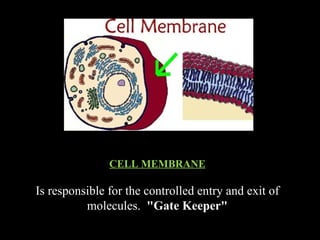
CELL MEMBRANE

Is responsible for the controlled entry and exit of
          molecules. "Gate Keeper"
PLANT CELL

Provides and maintains the shape of cells and serves as a
                  protective barrier.
CHLOROPLAST

Contains the plant cell's chlorophyll. Produces food, turns
          sunlight into food. "Food Factory"
CHROMOSOMES

Is a structure of DNA that carries the genes and functions of
                          the cell.
CYTOPLASM

Controls cell metabolism including signal pathways,
        intercellular receptor. "Cell Jello"
CYTOSKELETON

Helps maintain the cell shape, motility and internal movement.
                        "Framework"
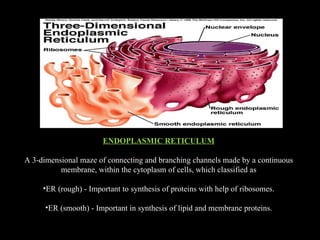
ENDOPLASMIC RETICULUM

A 3-dimensional maze of connecting and branching channels made by a continuous
          membrane, within the cytoplasm of cells, which classified as

     •ER (rough) - Important to synthesis of proteins with help of ribosomes.

      •ER (smooth) - Important in synthesis of lipid and membrane proteins.
GOLGI APPARATUS

Important for packaging macromolecules for transport around the
                      cell. "Packagers"
LYSOSOME

Intercellular digestion that also
kills bacteria. "Suicide Sacs"
MITOCHONDRIA

Provides the energy a cell needs.
        "Powerhouse"
NUCLEUS

Is where DNA, which responsible for providing the cell with its
          unique characteristics, is located. "Brain"
NUCLEAR MEMBRANE

A structure that binds the nucleus
         within the cell.
•Produces ribosomes, moves the rough ER and is critical in protein synthesis.


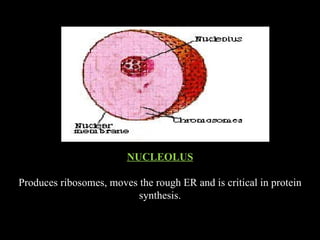
                                  NUCLEOLUS

Produces ribosomes, moves the rough ER and is critical in protein
                          synthesis.
PEROXISOME

Responsible for protecting the cell from its own production of
                       toxic peroxide.
PINOCYTIC VESICLE

Stores water for the cell.
VACUOLE

Plays a role in intracellular digestion and the release of cellular waste
                          products. "Storage"
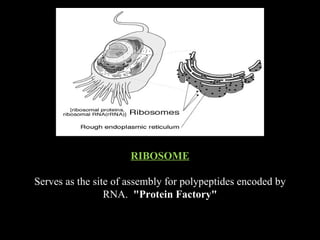
RIBOSOME

Serves as the site of assembly for polypeptides encoded by
                 RNA. "Protein Factory"
PLASTIDS

The synthesis and storage of food.
Plant Cell.Ppt.Final

Plant Cell.Ppt.Final

  • 1.
    CELL -The cell isthe structural and functional unit of all known living organisms. It is the smallest unit of an organism that is classified as living, and is often called the building block of life. Some organisms, such as most bacteria, are unicellular (consist of a single cell). Other organisms, such as humans, are multicellular. -Eukaryotic cells are about 10 times the size of a typical prokaryote and can be as much as 1000 times greater in volume. The major difference between prokaryotes and eukaryotes is that eukaryotic cells contain membrane-bound compartments in which specific metabolic activities take place. Most important among these is the presence of a cell nucleus, a membrane-delineated compartment that houses the eukaryotic cell's DNA. It is this nucleus that gives the eukaryote its name, which means "true nucleus." Other differences include
  • 3.
    PLANT CELL ANIMAL CELL
  • 4.
    Animal Cell Plant Cell Cell wall none yes Plastids no yes Vacuole One or more small One, large central vacuole vacuoles taking up 90% of cell volume Shape round rectangular Glyoxysomes no Some plant cells have glyoxysomes Centrioles Always present Only present in lower plant forms Lysosomes Occur in cytoplasm Usually not evident Plasma Membrane Only cell membrane Cell membrane & cell wall Chloroplast Don’t have chloroplast Have chloroplast
  • 5.
    CELL MEMBRANE Is responsiblefor the controlled entry and exit of molecules. "Gate Keeper"
  • 6.
    PLANT CELL Provides andmaintains the shape of cells and serves as a protective barrier.
  • 7.
    CHLOROPLAST Contains the plantcell's chlorophyll. Produces food, turns sunlight into food. "Food Factory"
  • 8.
    CHROMOSOMES Is a structureof DNA that carries the genes and functions of the cell.
  • 9.
    CYTOPLASM Controls cell metabolismincluding signal pathways, intercellular receptor. "Cell Jello"
  • 10.
    CYTOSKELETON Helps maintain thecell shape, motility and internal movement. "Framework"
  • 11.
    ENDOPLASMIC RETICULUM A 3-dimensionalmaze of connecting and branching channels made by a continuous membrane, within the cytoplasm of cells, which classified as •ER (rough) - Important to synthesis of proteins with help of ribosomes. •ER (smooth) - Important in synthesis of lipid and membrane proteins.
  • 12.
    GOLGI APPARATUS Important forpackaging macromolecules for transport around the cell. "Packagers"
  • 13.
    LYSOSOME Intercellular digestion thatalso kills bacteria. "Suicide Sacs"
  • 14.
    MITOCHONDRIA Provides the energya cell needs. "Powerhouse"
  • 15.
    NUCLEUS Is where DNA,which responsible for providing the cell with its unique characteristics, is located. "Brain"
  • 16.
    NUCLEAR MEMBRANE A structurethat binds the nucleus within the cell.
  • 17.
    •Produces ribosomes, movesthe rough ER and is critical in protein synthesis. NUCLEOLUS Produces ribosomes, moves the rough ER and is critical in protein synthesis.
  • 18.
    PEROXISOME Responsible for protectingthe cell from its own production of toxic peroxide.
  • 19.
  • 20.
    VACUOLE Plays a rolein intracellular digestion and the release of cellular waste products. "Storage"
  • 21.
    RIBOSOME Serves as thesite of assembly for polypeptides encoded by RNA. "Protein Factory"
  • 22.