Prepared by:
Aditya Sharma
M.S. (Pharm)
Pharmaceutical Analysis
NIPER Guwahati
Roll No. PA/2020-3/049
Cell Organelle Staining Dyes
1
Introduction
Mitochondria Staining Dyes
Lysosome Staining Dyes
Cell Membrane Staining Dyes
Cytoskeleton Staining Dyes
Golgi Complex Staining Dyes
Cytoplasm Staining Dyes
Endoplasmic Reticulum Staining Dyes
Nucleus Staining Dyes
Conclusion
References
CONTENT
2
• Eukaryotic cells contain subcellular structures responsible for carrying out
essential functions for cell survival.
• Due to their specialized functions and well-defined nature, it is often useful in cell
biology studies to label key organelles, such as the cell membrane, nucleus,
cytoplasm, mitochondria, lysosomes, endoplasmic reticulum (ER), Golgi
apparatus, and cytoskeleton proteins (e.g., actin).
• Many fluorescent dyes and markers highly specific for diverse organelles that can
be used to monitor cell health, cell death, metabolic activity, autophagy, cell
tracking, and cell migration and invasion.
3
INTRODUCTION
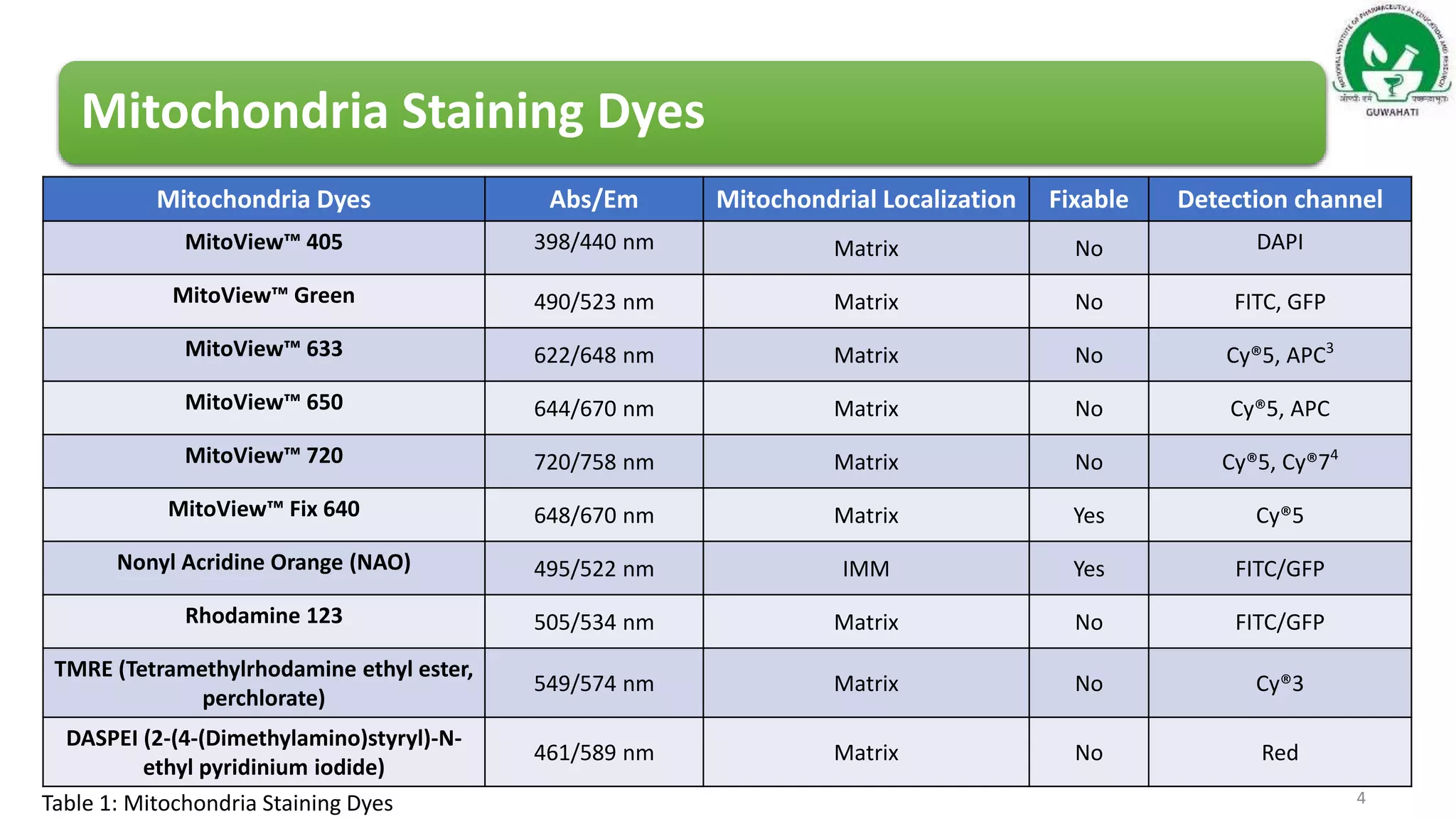
Mitochondria Dyes Abs/Em Mitochondrial Localization Fixable Detection channel
MitoView™ 405 398/440 nm Matrix No DAPI
MitoView™ Green 490/523 nm Matrix No FITC, GFP
MitoView™ 633 622/648 nm Matrix No Cy®5, APC3
MitoView™ 650 644/670 nm Matrix No Cy®5, APC
MitoView™ 720 720/758 nm Matrix No Cy®5, Cy®74
MitoView™ Fix 640 648/670 nm Matrix Yes Cy®5
Nonyl Acridine Orange (NAO) 495/522 nm IMM Yes FITC/GFP
Rhodamine 123 505/534 nm Matrix No FITC/GFP
TMRE (Tetramethylrhodamine ethyl ester,
perchlorate)
549/574 nm Matrix No Cy®3
DASPEI (2-(4-(Dimethylamino)styryl)-N-
ethyl pyridinium iodide)
461/589 nm Matrix No Red
Mitochondria Staining Dyes
4
Table 1: Mitochondria Staining Dyes
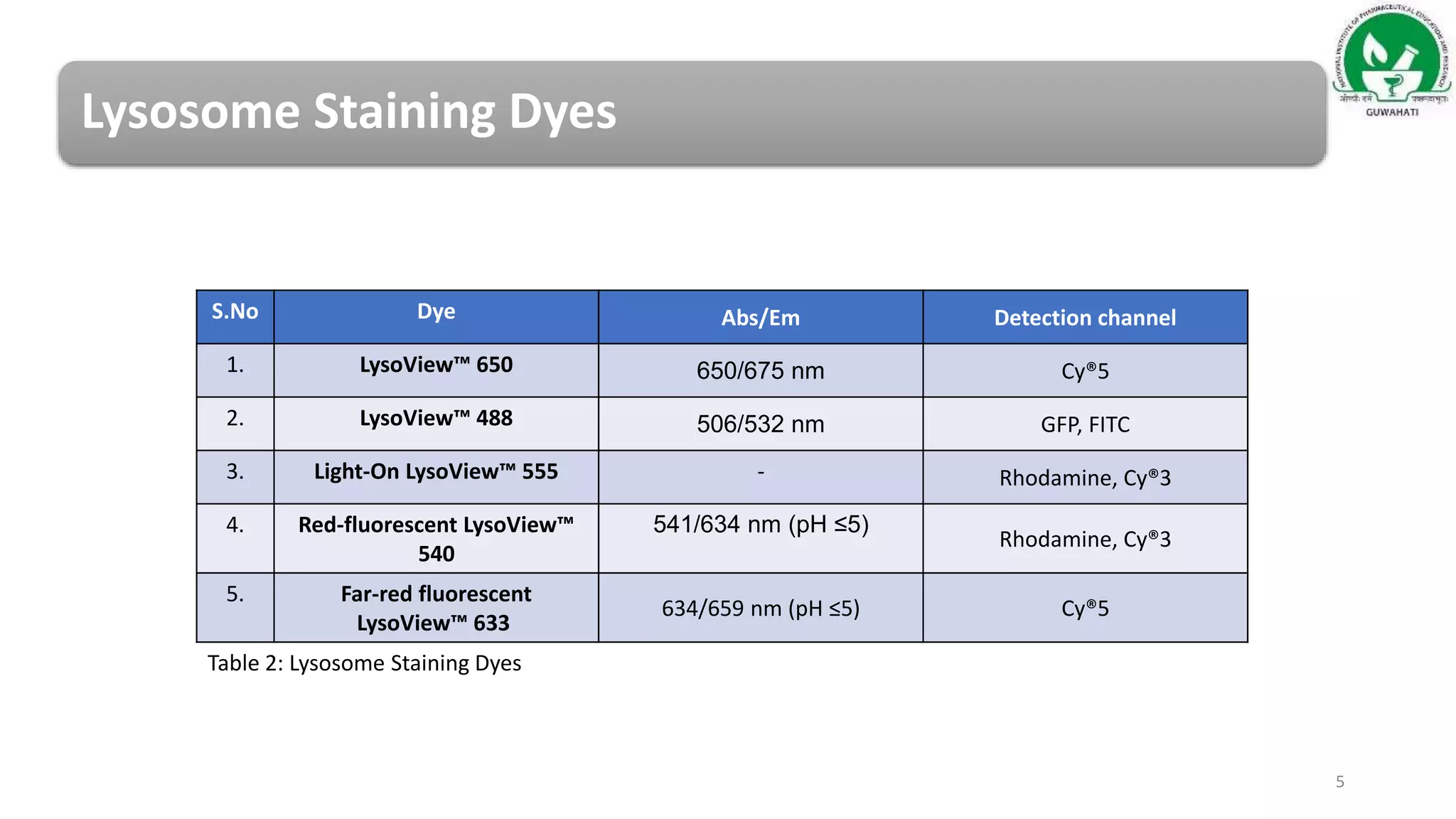
S.No Dye Abs/Em Detection channel
1. LysoView™ 650 650/675 nm Cy®5
2. LysoView™ 488 506/532 nm GFP, FITC
3. Light-On LysoView™ 555 - Rhodamine, Cy®3
4. Red-fluorescent LysoView™
540
541/634 nm (pH ≤5)
Rhodamine, Cy®3
5. Far-red fluorescent
LysoView™ 633
634/659 nm (pH ≤5) Cy®5
Lysosome Staining Dyes
5
Table 2: Lysosome Staining Dyes
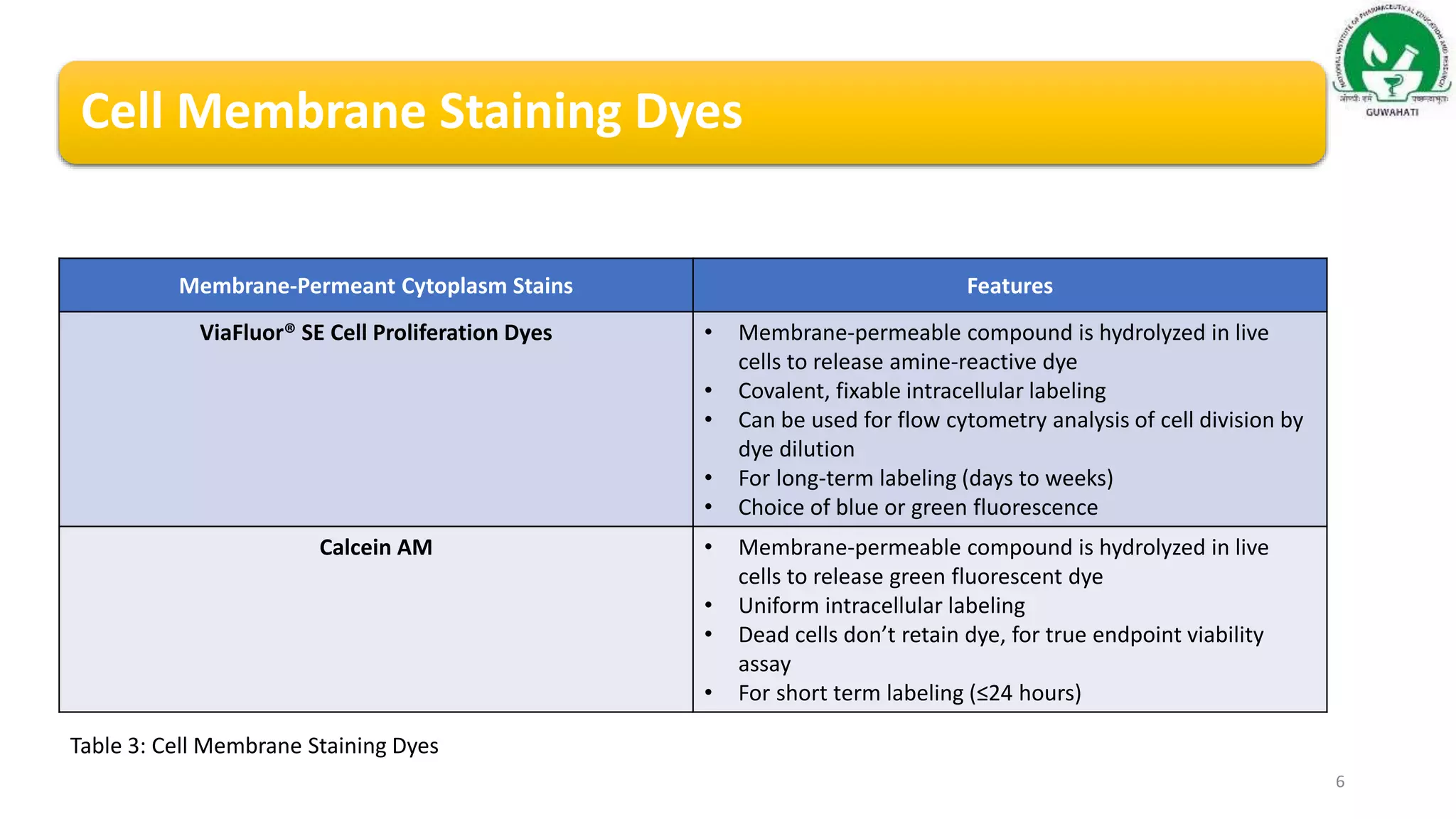
Membrane-Permeant Cytoplasm Stains Features
ViaFluor® SE Cell Proliferation Dyes • Membrane-permeable compound is hydrolyzed in live
cells to release amine-reactive dye
• Covalent, fixable intracellular labeling
• Can be used for flow cytometry analysis of cell division by
dye dilution
• For long-term labeling (days to weeks)
• Choice of blue or green fluorescence
Calcein AM • Membrane-permeable compound is hydrolyzed in live
cells to release green fluorescent dye
• Uniform intracellular labeling
• Dead cells don’t retain dye, for true endpoint viability
assay
• For short term labeling (≤24 hours)
Cell Membrane Staining Dyes
6
Table 3: Cell Membrane Staining Dyes
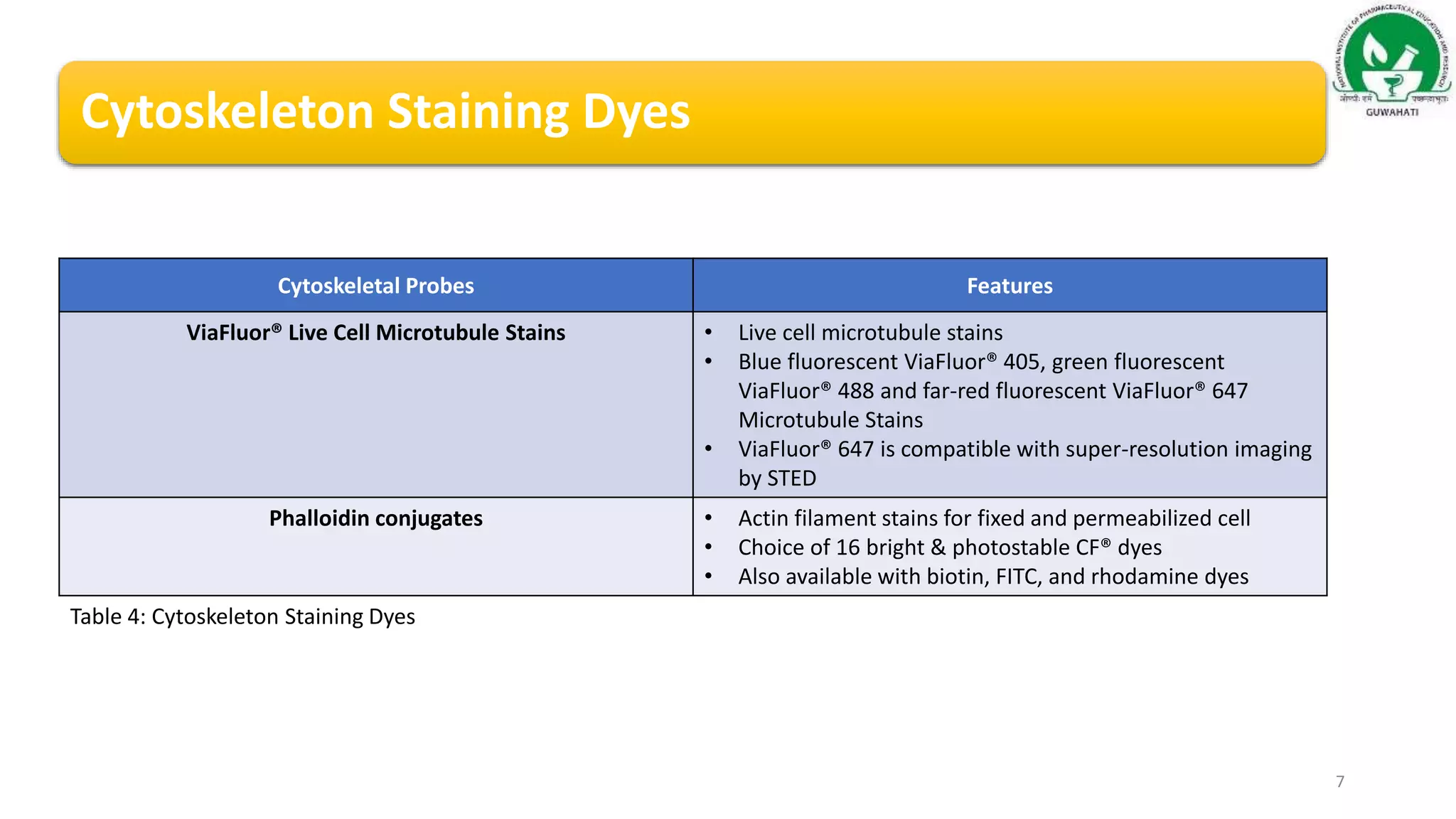
Cytoskeletal Probes Features
ViaFluor® Live Cell Microtubule Stains • Live cell microtubule stains
• Blue fluorescent ViaFluor® 405, green fluorescent
ViaFluor® 488 and far-red fluorescent ViaFluor® 647
Microtubule Stains
• ViaFluor® 647 is compatible with super-resolution imaging
by STED
Phalloidin conjugates • Actin filament stains for fixed and permeabilized cell
• Choice of 16 bright & photostable CF® dyes
• Also available with biotin, FITC, and rhodamine dyes
Cytoskeleton Staining Dyes
7
Table 4: Cytoskeleton Staining Dyes
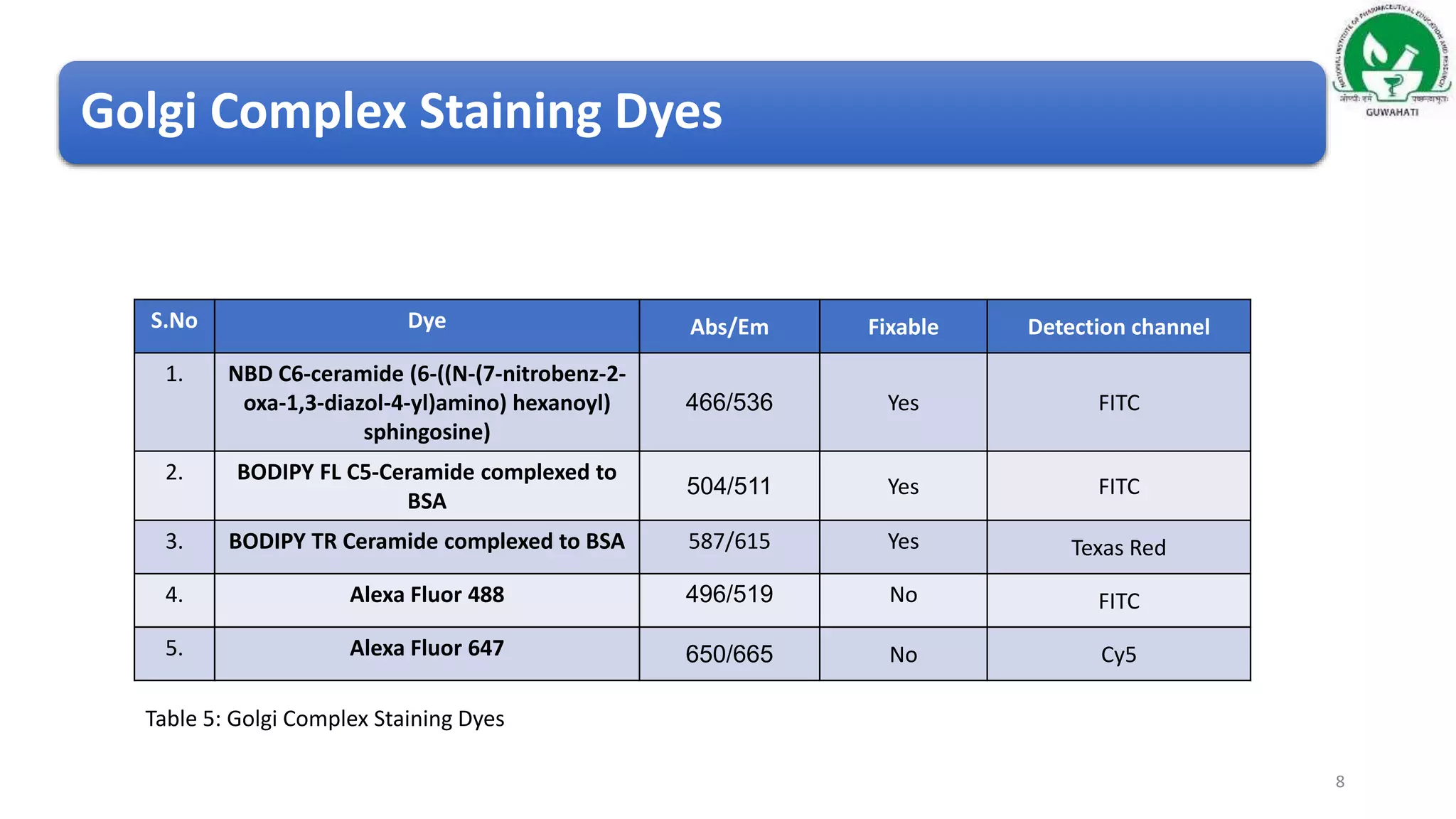
S.No Dye Abs/Em Fixable Detection channel
1. NBD C6-ceramide (6-((N-(7-nitrobenz-2-
oxa-1,3-diazol-4-yl)amino) hexanoyl)
sphingosine)
466/536 Yes FITC
2. BODIPY FL C5-Ceramide complexed to
BSA
504/511 Yes FITC
3. BODIPY TR Ceramide complexed to BSA 587/615 Yes Texas Red
4. Alexa Fluor 488 496/519 No FITC
5. Alexa Fluor 647 650/665 No Cy5
Golgi Complex Staining Dyes
8
Table 5: Golgi Complex Staining Dyes
S.No Dye Abs/Em Fixable Application
1. DRAQ9TM(far-red, cell-
permeant dye) 655/697 Yes
• Fluorescence Microscopy
• Live Imaging Microscopy
• ICC/IF
2. CyTRAK Orange™( an orange
fluorescent dye)
510/610 Yes
• Fluorescence Microscopy
• Live Imaging Microscopy
• Flow Cytometry
• ICC/IF
Cytoplasm Staining Dyes
9
Table 6: Cytoplasm Staining Dyes
S.No Dye Abs/Em Fixable Detection channel
1. ER-Tracker™ Green (BODIPY™ FL
Glibenclamide), for live-cell imaging
504/511 Yes FITC
2. ER-Tracker™ Red (BODIPY™ TR
Glibenclamide), for live-cell imaging
587/615 Yes Texas Red
3. Alexa Fluor 594 561/594 No Texas Red
4. Alexa Fluor 488 496/519 No FITC
Endoplasmic Reticulum Staining Dyes
10
Table 7: Endoplasmic Reticulum Staining Dyes
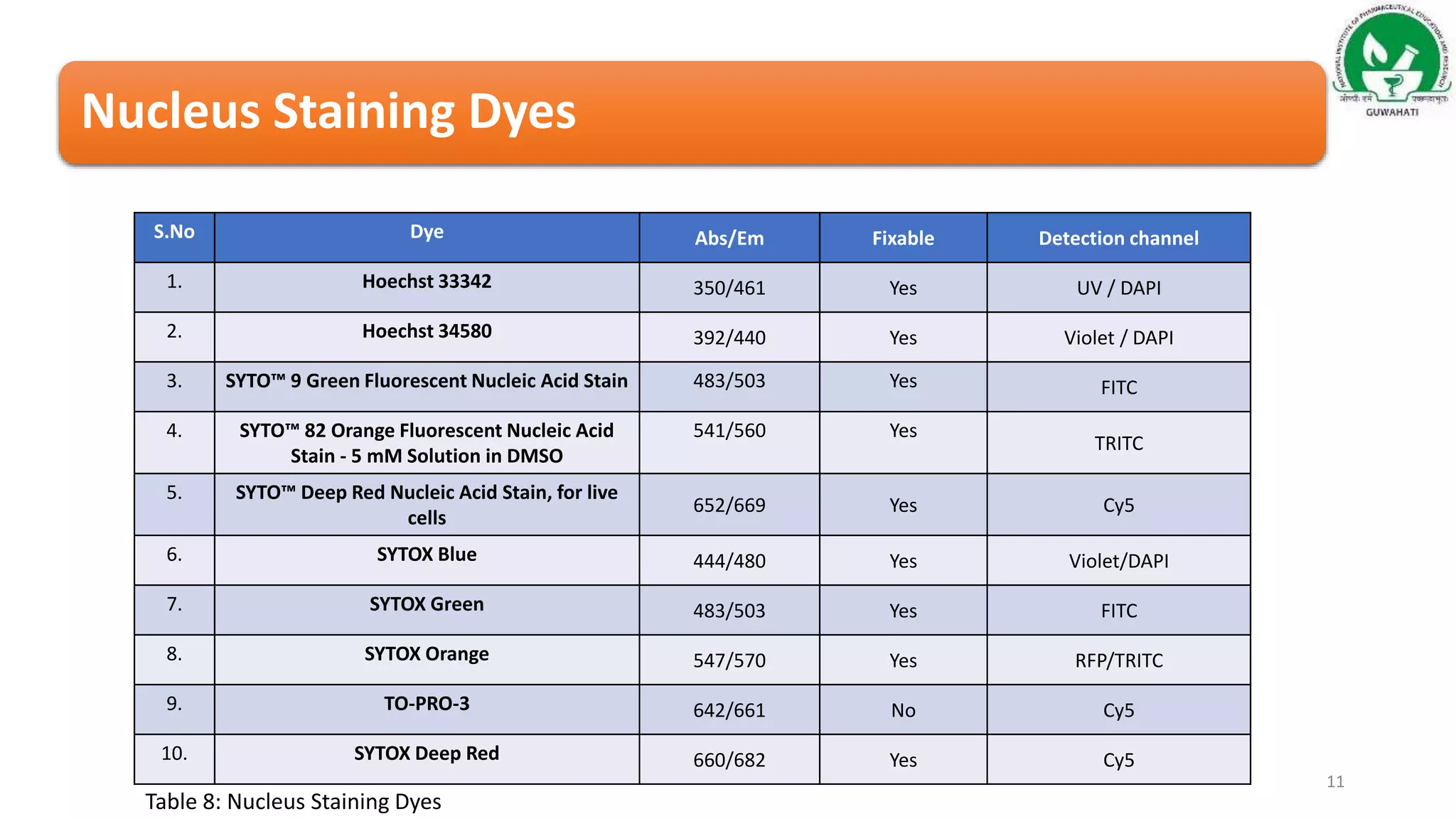
S.No Dye Abs/Em Fixable Detection channel
1. Hoechst 33342 350/461 Yes UV / DAPI
2. Hoechst 34580 392/440 Yes Violet / DAPI
3. SYTO™ 9 Green Fluorescent Nucleic Acid Stain 483/503 Yes FITC
4. SYTO™ 82 Orange Fluorescent Nucleic Acid
Stain - 5 mM Solution in DMSO
541/560 Yes
TRITC
5. SYTO™ Deep Red Nucleic Acid Stain, for live
cells
652/669 Yes Cy5
6. SYTOX Blue 444/480 Yes Violet/DAPI
7. SYTOX Green 483/503 Yes FITC
8. SYTOX Orange 547/570 Yes RFP/TRITC
9. TO-PRO-3 642/661 No Cy5
10. SYTOX Deep Red 660/682 Yes Cy5
Nucleus Staining Dyes
11
Table 8: Nucleus Staining Dyes
• Restricting cell culture imaging techniques to fixed tissues and cells limits the
information a researcher can obtain about the system of interest, as the observer
is only able to capture a moment in cellular time.
• Live cell fluorescent organelle dyes permit the selective staining of specific
organelles without increased cytotoxicity.
• Organelle staining in live cells can help researchers to confirm the identity of
specific proteins or targets within cells and provide a better understanding of
cellular processes
12
Conclusion
• https://www.novusbio.com/products/nuclear-cytosolic-staining. Accessed on: 05-May 2021
• https://www.sigmaaldrich.com/technical-documents/articles/biology/cell-culture/organelle-dyes-and-stains.html. Accessed on:
05-May 2021
• https://biotium.com/technology/cellular-stains/. Accessed on: 06-May 2021
• https://www.thermofisher.com/in/en/home/life-science/cell-analysis/cell-tracing-tracking-and-morphology/cell-tracking.html.
Accessed on: 06-May 2021
• https://www.thermofisher.com/in/en/home/life-science/cell-analysis/cell-structure/golgi.html. Accessed on: 06-May 2021
• https://www.thermofisher.com/in/en/home/life-science/cell-analysis/cell-structure/mitochondria.html. Accessed on: 07-May
2021
• https://www.thermofisher.com/in/en/home/life-science/cell-analysis/cell-structure/plasma-membrane.html. Accessed on: 07-
May 2021
• Grimm F, Nizamov S, Belov V. Green‐Emitting Rhodamine Dyes for Vital Labeling of Cell Organelles Using STED Super‐Resolution
Microscopy. ChemBioChem. 2019;20(17):2248-2254.
• Davies E. Use of Fluorescent Dyes for Measurement and Localization of Organelles Associated with Ca2+Store Release in Human
Neutrophils. Cell biology international. 1997;21(10):655-663.
• Terasaki M, Loew L, Lippincott‐Schwartz J, Zaal K. Fluorescent Staining of Subcellular Organelles: ER, Golgi Complex, and
Mitochondria. Current Protocols in Cell Biology. 1998;00(1).
References
13

Cell Organelle Staining Dyes

  • 1.
    Prepared by: Aditya Sharma M.S.(Pharm) Pharmaceutical Analysis NIPER Guwahati Roll No. PA/2020-3/049 Cell Organelle Staining Dyes 1
  • 2.
    Introduction Mitochondria Staining Dyes LysosomeStaining Dyes Cell Membrane Staining Dyes Cytoskeleton Staining Dyes Golgi Complex Staining Dyes Cytoplasm Staining Dyes Endoplasmic Reticulum Staining Dyes Nucleus Staining Dyes Conclusion References CONTENT 2
  • 3.
    • Eukaryotic cellscontain subcellular structures responsible for carrying out essential functions for cell survival. • Due to their specialized functions and well-defined nature, it is often useful in cell biology studies to label key organelles, such as the cell membrane, nucleus, cytoplasm, mitochondria, lysosomes, endoplasmic reticulum (ER), Golgi apparatus, and cytoskeleton proteins (e.g., actin). • Many fluorescent dyes and markers highly specific for diverse organelles that can be used to monitor cell health, cell death, metabolic activity, autophagy, cell tracking, and cell migration and invasion. 3 INTRODUCTION
  • 4.
    Mitochondria Dyes Abs/EmMitochondrial Localization Fixable Detection channel MitoView™ 405 398/440 nm Matrix No DAPI MitoView™ Green 490/523 nm Matrix No FITC, GFP MitoView™ 633 622/648 nm Matrix No Cy®5, APC3 MitoView™ 650 644/670 nm Matrix No Cy®5, APC MitoView™ 720 720/758 nm Matrix No Cy®5, Cy®74 MitoView™ Fix 640 648/670 nm Matrix Yes Cy®5 Nonyl Acridine Orange (NAO) 495/522 nm IMM Yes FITC/GFP Rhodamine 123 505/534 nm Matrix No FITC/GFP TMRE (Tetramethylrhodamine ethyl ester, perchlorate) 549/574 nm Matrix No Cy®3 DASPEI (2-(4-(Dimethylamino)styryl)-N- ethyl pyridinium iodide) 461/589 nm Matrix No Red Mitochondria Staining Dyes 4 Table 1: Mitochondria Staining Dyes
  • 5.
    S.No Dye Abs/EmDetection channel 1. LysoView™ 650 650/675 nm Cy®5 2. LysoView™ 488 506/532 nm GFP, FITC 3. Light-On LysoView™ 555 - Rhodamine, Cy®3 4. Red-fluorescent LysoView™ 540 541/634 nm (pH ≤5) Rhodamine, Cy®3 5. Far-red fluorescent LysoView™ 633 634/659 nm (pH ≤5) Cy®5 Lysosome Staining Dyes 5 Table 2: Lysosome Staining Dyes
  • 6.
    Membrane-Permeant Cytoplasm StainsFeatures ViaFluor® SE Cell Proliferation Dyes • Membrane-permeable compound is hydrolyzed in live cells to release amine-reactive dye • Covalent, fixable intracellular labeling • Can be used for flow cytometry analysis of cell division by dye dilution • For long-term labeling (days to weeks) • Choice of blue or green fluorescence Calcein AM • Membrane-permeable compound is hydrolyzed in live cells to release green fluorescent dye • Uniform intracellular labeling • Dead cells don’t retain dye, for true endpoint viability assay • For short term labeling (≤24 hours) Cell Membrane Staining Dyes 6 Table 3: Cell Membrane Staining Dyes
  • 7.
    Cytoskeletal Probes Features ViaFluor®Live Cell Microtubule Stains • Live cell microtubule stains • Blue fluorescent ViaFluor® 405, green fluorescent ViaFluor® 488 and far-red fluorescent ViaFluor® 647 Microtubule Stains • ViaFluor® 647 is compatible with super-resolution imaging by STED Phalloidin conjugates • Actin filament stains for fixed and permeabilized cell • Choice of 16 bright & photostable CF® dyes • Also available with biotin, FITC, and rhodamine dyes Cytoskeleton Staining Dyes 7 Table 4: Cytoskeleton Staining Dyes
  • 8.
    S.No Dye Abs/EmFixable Detection channel 1. NBD C6-ceramide (6-((N-(7-nitrobenz-2- oxa-1,3-diazol-4-yl)amino) hexanoyl) sphingosine) 466/536 Yes FITC 2. BODIPY FL C5-Ceramide complexed to BSA 504/511 Yes FITC 3. BODIPY TR Ceramide complexed to BSA 587/615 Yes Texas Red 4. Alexa Fluor 488 496/519 No FITC 5. Alexa Fluor 647 650/665 No Cy5 Golgi Complex Staining Dyes 8 Table 5: Golgi Complex Staining Dyes
  • 9.
    S.No Dye Abs/EmFixable Application 1. DRAQ9TM(far-red, cell- permeant dye) 655/697 Yes • Fluorescence Microscopy • Live Imaging Microscopy • ICC/IF 2. CyTRAK Orange™( an orange fluorescent dye) 510/610 Yes • Fluorescence Microscopy • Live Imaging Microscopy • Flow Cytometry • ICC/IF Cytoplasm Staining Dyes 9 Table 6: Cytoplasm Staining Dyes
  • 10.
    S.No Dye Abs/EmFixable Detection channel 1. ER-Tracker™ Green (BODIPY™ FL Glibenclamide), for live-cell imaging 504/511 Yes FITC 2. ER-Tracker™ Red (BODIPY™ TR Glibenclamide), for live-cell imaging 587/615 Yes Texas Red 3. Alexa Fluor 594 561/594 No Texas Red 4. Alexa Fluor 488 496/519 No FITC Endoplasmic Reticulum Staining Dyes 10 Table 7: Endoplasmic Reticulum Staining Dyes
  • 11.
    S.No Dye Abs/EmFixable Detection channel 1. Hoechst 33342 350/461 Yes UV / DAPI 2. Hoechst 34580 392/440 Yes Violet / DAPI 3. SYTO™ 9 Green Fluorescent Nucleic Acid Stain 483/503 Yes FITC 4. SYTO™ 82 Orange Fluorescent Nucleic Acid Stain - 5 mM Solution in DMSO 541/560 Yes TRITC 5. SYTO™ Deep Red Nucleic Acid Stain, for live cells 652/669 Yes Cy5 6. SYTOX Blue 444/480 Yes Violet/DAPI 7. SYTOX Green 483/503 Yes FITC 8. SYTOX Orange 547/570 Yes RFP/TRITC 9. TO-PRO-3 642/661 No Cy5 10. SYTOX Deep Red 660/682 Yes Cy5 Nucleus Staining Dyes 11 Table 8: Nucleus Staining Dyes
  • 12.
    • Restricting cellculture imaging techniques to fixed tissues and cells limits the information a researcher can obtain about the system of interest, as the observer is only able to capture a moment in cellular time. • Live cell fluorescent organelle dyes permit the selective staining of specific organelles without increased cytotoxicity. • Organelle staining in live cells can help researchers to confirm the identity of specific proteins or targets within cells and provide a better understanding of cellular processes 12 Conclusion
  • 13.
    • https://www.novusbio.com/products/nuclear-cytosolic-staining. Accessedon: 05-May 2021 • https://www.sigmaaldrich.com/technical-documents/articles/biology/cell-culture/organelle-dyes-and-stains.html. Accessed on: 05-May 2021 • https://biotium.com/technology/cellular-stains/. Accessed on: 06-May 2021 • https://www.thermofisher.com/in/en/home/life-science/cell-analysis/cell-tracing-tracking-and-morphology/cell-tracking.html. Accessed on: 06-May 2021 • https://www.thermofisher.com/in/en/home/life-science/cell-analysis/cell-structure/golgi.html. Accessed on: 06-May 2021 • https://www.thermofisher.com/in/en/home/life-science/cell-analysis/cell-structure/mitochondria.html. Accessed on: 07-May 2021 • https://www.thermofisher.com/in/en/home/life-science/cell-analysis/cell-structure/plasma-membrane.html. Accessed on: 07- May 2021 • Grimm F, Nizamov S, Belov V. Green‐Emitting Rhodamine Dyes for Vital Labeling of Cell Organelles Using STED Super‐Resolution Microscopy. ChemBioChem. 2019;20(17):2248-2254. • Davies E. Use of Fluorescent Dyes for Measurement and Localization of Organelles Associated with Ca2+Store Release in Human Neutrophils. Cell biology international. 1997;21(10):655-663. • Terasaki M, Loew L, Lippincott‐Schwartz J, Zaal K. Fluorescent Staining of Subcellular Organelles: ER, Golgi Complex, and Mitochondria. Current Protocols in Cell Biology. 1998;00(1). References 13