Imaging Techniques in
Pharmacological Research
Mr. Payaam Vohra
M.S.(Pharma) Pharmacology and Toxicology
NIPER MOHALI
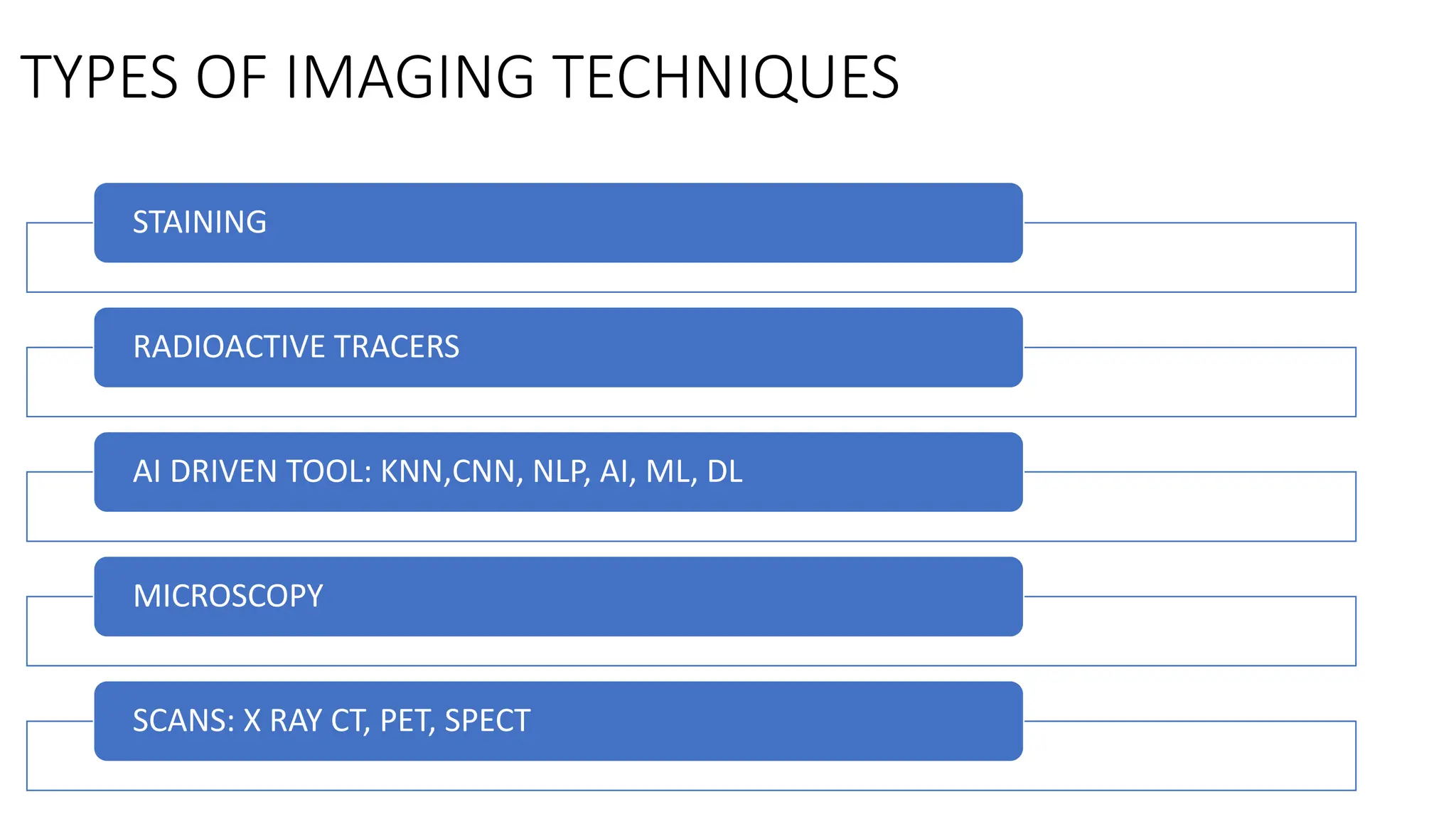
TYPES OF IMAGING TECHNIQUES
STAINING
RADIOACTIVE TRACERS
AI DRIVEN TOOL: KNN,CNN, NLP, AI, ML, DL
MICROSCOPY
SCANS: X RAY CT, PET, SPECT
WHAT CAN BE OBSERVED IN IMAGING
TOOLS
ORGANS
TISSUES
CELLS
ORGANELLES
Digital DIAGNSOIS: RADIOMICS
AI-powered applications provide personalized
therapeutic interventions and diagnosis for
various medical conditions, offering virtual
support and guidance.
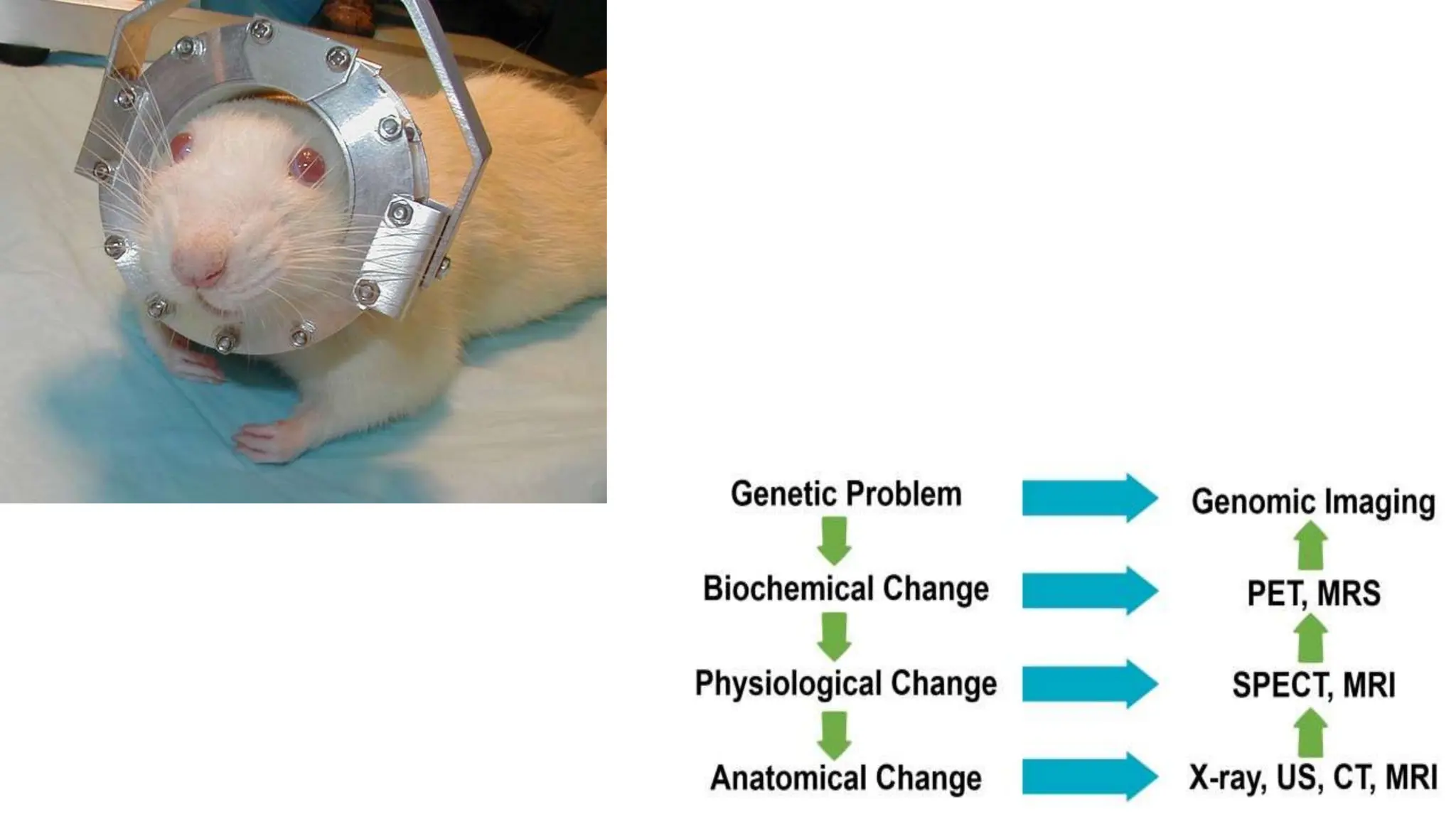
Routine pinhole collimator fitted with custom-made plastic
adaptor. Using dorsal skin grasp and immobilization
against adaptor makes high-quality imaging possible
without need for sedation and with standardization of
distance and orientation toward pinhole aperture.
SHARED DECISION MAKING IN
EARLY DIAGNOSIS OF DISEASES
https://youtu.be/iiRlVM_M7i0
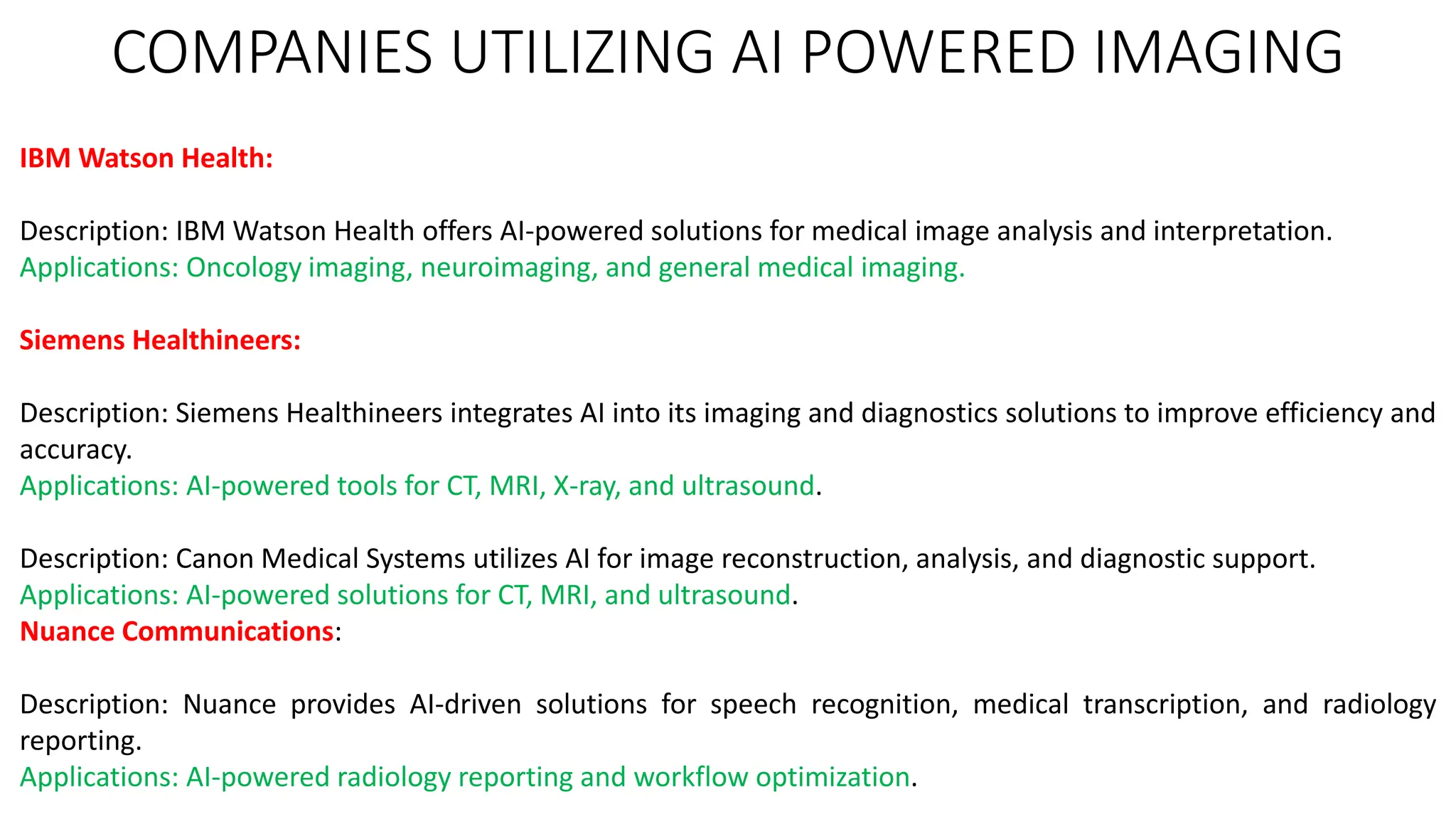
COMPANIES UTILIZING AI POWERED IMAGING
IBM Watson Health:
Description: IBM Watson Health offers AI-powered solutions for medical image analysis and interpretation.
Applications: Oncology imaging, neuroimaging, and general medical imaging.
Siemens Healthineers:
Description: Siemens Healthineers integrates AI into its imaging and diagnostics solutions to improve efficiency and
accuracy.
Applications: AI-powered tools for CT, MRI, X-ray, and ultrasound.
Description: Canon Medical Systems utilizes AI for image reconstruction, analysis, and diagnostic support.
Applications: AI-powered solutions for CT, MRI, and ultrasound.
Nuance Communications:
Description: Nuance provides AI-driven solutions for speech recognition, medical transcription, and radiology
reporting.
Applications: AI-powered radiology reporting and workflow optimization.
Chest X-ray and CT Scan Analysis:
Application: Detection of Pulmonary Abnormalities
AI Functionality: Algorithms can analyze chest X-rays or CT scans to identify patterns indicative of conditions like pneumonia, lung nodules, or
other pulmonary diseases.
MRI Brain Image Analysis:
Application: Neurological Disorders Diagnosis
AI Functionality: AI algorithms can assist in the analysis of brain MRI images to detect abnormalities such as tumors, aneurysms, or signs of
neurodegenerative diseases.
Mammography and Breast Ultrasound:
Application: Breast Cancer Screening
AI Functionality: early detection of breast cancer by analyzing mammograms and breast ultrasound images, identifying potential lesions
Dermatology Imaging:
Application: Skin Cancer Detection
AI Functionality: Photographs or dermoscopy images, can be analyzed by AI algorithms to detect features associated with skin cancer.
Ophthalmic Imaging (Retinal Scans):
Application: Diabetic Retinopathy Detection
AI Functionality: AI-powered tools can analyze retinal scans to identify signs of diabetic retinopathy, macular degeneration, or other eye
conditions, supporting early intervention.
Application: Organ Abnormalities and Tumor Detection
AI Functionality: AI algorithms can analyze abdominal imaging to detect abnormalities in organs such as the liver, kidneys, or
pancreas, as well as identify tumors or cysts.
Cardiac Imaging (Echocardiography, CT, MRI):
Application: Cardiovascular Disease Diagnosis
AI Functionality: AI assists in analyzing cardiac imaging data to assess heart function, detect structural abnormalities, and
identify signs of cardiovascular diseases.
Musculoskeletal Imaging (MRI, X-ray):
Application: Bone and Joint Disorders
AI Functionality: AI algorithms can analyze musculoskeletal imaging to identify fractures, arthritis, or other bone and joint
disorders, assisting in diagnosis and treatment planning.
Computed Tomography Angiography (CTA):
Application: Vascular Abnormalities
AI Functionality: AI can analyze CTA scans to detect vascular abnormalities, such as aneurysms, stenosis, or other conditions
affecting blood vessels.
Prostate Imaging (MRI, Ultrasound):
Application: Prostate Cancer Diagnosis
AI Functionality: AI-powered imaging analysis can assist in the detection and characterization of prostate cancer using MRI or
ultrasound data.
Histology
• Histos: Tissue Logia to study or learn
• Histology, branch of biology concerned with the composition and
structure of tissues in relation to their specialized functions
• Histological Studies examine quantities of tissue that have been
removed from the living body; these tissues are cut into very thin,
almost transparent slices using a special cutting instrument known as
a microtome.
• Bears a close relationship to several other biological sciences like
anatomy , physiology, biochemistry
There are multiple steps involved in Tissue
preparation followed by sectioning and
staining. After staining we counter stain the
sections and observe under microscope
Tissue Preparation
Fixation: Helps to
avoid autolysis
Done by Chemicals
(Formaldehyde/glut
eraldehyde)
Dehydration and
clearing: to remove
water as paraffin is
immiscible in water
Clearing is done by
immersing the tissue
in xylene which
infiltrate the tissues
Embedding using
paraffin or resins
provides rigid
consistency to tissue
Sectioning
Mounting and
Staining
Mouse Brain with Barium sulfate
Fluorescent Microscopy
• Fluorescence emission (this light is
non-coherent and is emitted over a
spherical volume surrounding the
fluorophore) is captured by the
objective and directed back through
the dichromatic mirror, which in turn
reflects most of the contaminating
excitation light back toward the light
source.
• Emission wavelengths passing through
the dichromatic mirror are further
purified by another filter of defined
bandpass, the emission filter, before
traveling to the eyepieces or the
camera image plane.
• fluorochrome refers to a molecule that exhibits fluorescence,
whereas fluorophore is used to identify a fluorochrome that is
attached to a binding partner that enables it to target a specific
biological entity.
• The key to fluorescence microscopy is the use of appropriate filters to
segregate the intense excitation light from the much weaker
secondary emission generated by fluorophores.
• Fluorescent filters are used
A basic principle in fluorescence microscopy is the highly specific
visualization of cellular components with the help of a fluorescent agent.
This can be a fluorescent protein – for example GFP – genetically
linked to the protein of interest. If cloning is impossible – for instance in
histologic samples – techniques such as immunofluorescence
staining are used to visualize the protein of interest.
For this purpose, antibodies are utilized, which are linked to distinct
fluorescent dyes and bind to the adequate target structure either directly
or indirectly. With the help of fluorescent dyes, fluorescence microscopy
is not only restricted to proteins but can also be used to detect nucleic
acids, glycans and other structures.
You can even use an application-specific variety of live cell
dyes available that allow for organelle visualization with organelle-
selective stains (e.g. ER, mitochondria, Golgi) or function assays
like, e.g. live cell tracking, labeling, cell proliferation, or live dead assays,
where fluorescence is the way of read-out. Even non-biological
substances like Calcium ions can be detected.
This article provides an introduction to the commonly used fluorescent
agents.
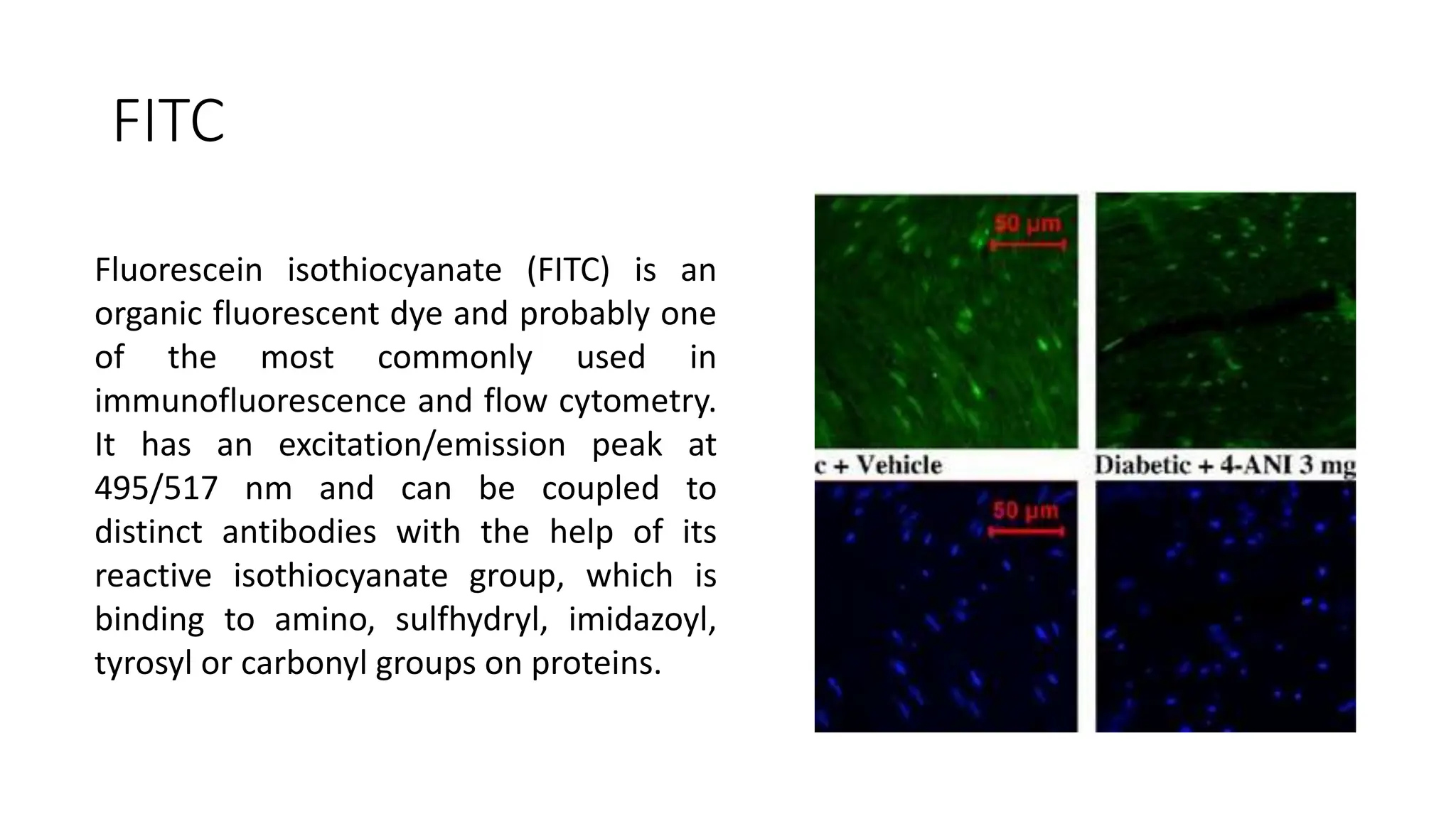
FITC
Fluorescein isothiocyanate (FITC) is an
organic fluorescent dye and probably one
of the most commonly used in
immunofluorescence and flow cytometry.
It has an excitation/emission peak at
495/517 nm and can be coupled to
distinct antibodies with the help of its
reactive isothiocyanate group, which is
binding to amino, sulfhydryl, imidazoyl,
tyrosyl or carbonyl groups on proteins.
• A dye very often used in combination with
FITC is TRITC (Tetramethylrhodamine-5-(and
6)-isothiocyanate). In contrast to FITC, TRITC
is not a fluorescein but a derivate of the
Rhodamine family.
• Rhodamines also have a large conjugated
aromatic electron system, what leads to
their fluorescent behavior. TRITC is excited
with light in the green spectrum with a
maximum at 550 nm.
• Its emission maximum is lying at 573 nm.
The bond to proteins (e.g. antibodies) is also
based on a reactive isothiocyanate group.
Cyanines
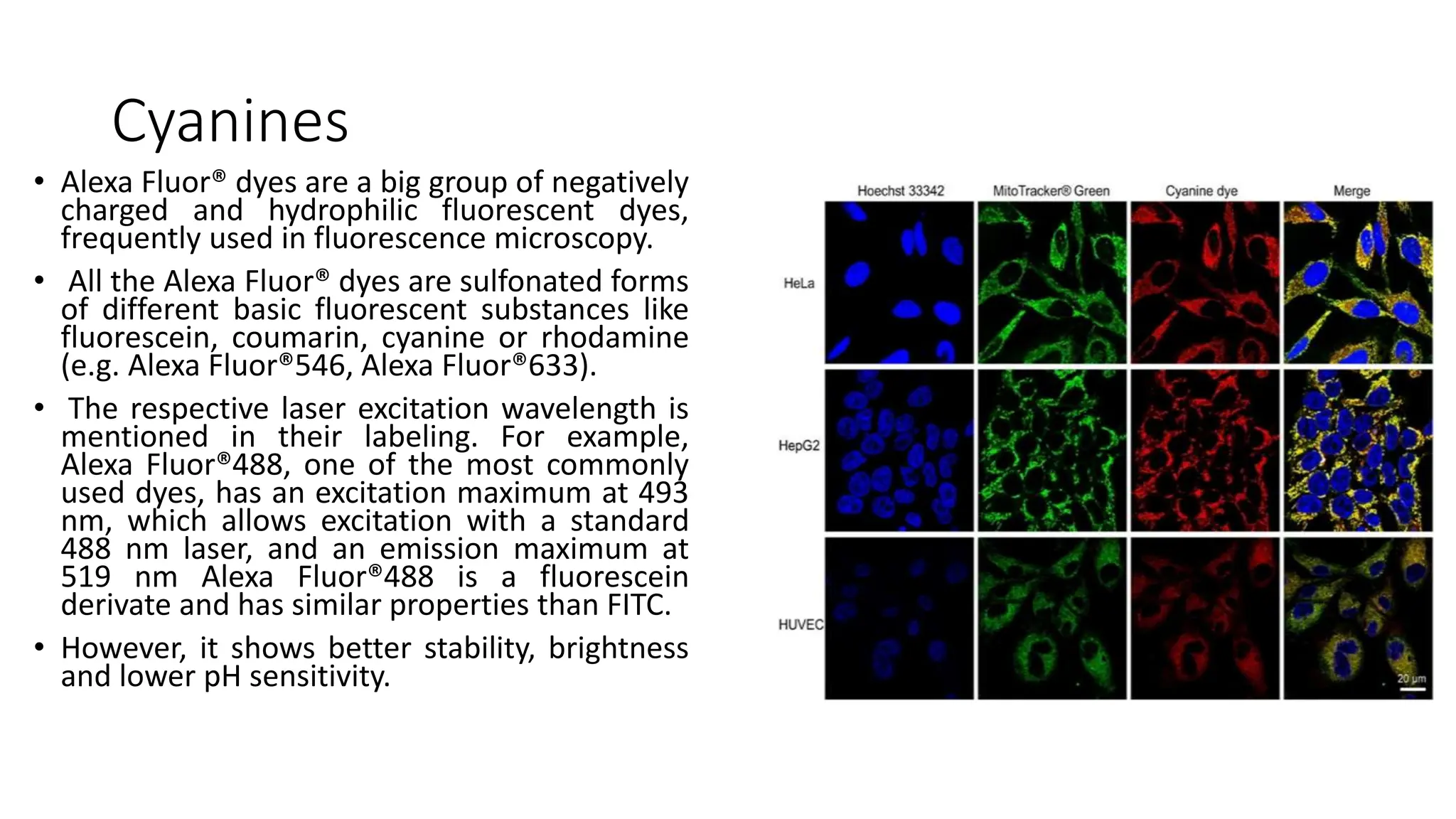
• Alexa Fluor® dyes are a big group of negatively
charged and hydrophilic fluorescent dyes,
frequently used in fluorescence microscopy.
• All the Alexa Fluor® dyes are sulfonated forms
of different basic fluorescent substances like
fluorescein, coumarin, cyanine or rhodamine
(e.g. Alexa Fluor®546, Alexa Fluor®633).
• The respective laser excitation wavelength is
mentioned in their labeling. For example,
Alexa Fluor®488, one of the most commonly
used dyes, has an excitation maximum at 493
nm, which allows excitation with a standard
488 nm laser, and an emission maximum at
519 nm Alexa Fluor®488 is a fluorescein
derivate and has similar properties than FITC.
• However, it shows better stability, brightness
and lower pH sensitivity.
DNA staining
• DAPI (4',6-diamidino-2-phenylindole)
which binds to A-T rich regions of the DNA
double helix. DAPI fluorescence intensity
increases if attached to DNA compared to
its unbound state.
• It is excited by UV-light with a maximum
at 358 nm. Emission spectrum is broad
and peaks at 461 nm.
• A weak fluorescence can also be detected
for RNA binding. In this case, emission
shifts to 500 nm. Interestingly, DAPI is
able to permeate an intact plasma
membrane which makes it useful for fixed
and living cells.
• A membrane-impermeable DNA
stain is Propidium-Iodide which is
often used to differentiate between
living and dead cells in a cell culture
because it cannot enter an intact
cell.
• Propidium-Iodide is also an
intercalating agent but with no
binding preference for distinct
bases. In the nucleic acid bound
state, its excitation maximum is at
538 nm. Highest emission is at
617 nm.
• A dye which is capable to make a difference
between DNA and RNA without previous
manipulation is Acridine Orange. Its
excitation/emission maximum pair is
502 nm/525 nm in the DNA bound version
and turns to 460 nm/650 nm in the RNA
bound state. Furthermore, it can enter acidic
compartments like lysosomes where the
cationic dye is protonated. In this acidic
surrounding Acridine Orange is excited by
light in the blue spectrum, whereas emission
is strongest in the orange region. It is often
used to identify apoptotic cells, as they have
a lot of engulfed acidic compartments
Compartment and organelle specific dyes
• To observe mitochondria is the utilization
of MitoTracker®. This is a cell permeable dye with a
mildly thiol-reactive chloromethyl moiety used to
bind to matrix proteins covalently by reacting with
free thiol groups of cysteine residues.
• LysoTracker is a group of dyes available in different
colors used to stain acidic compartments such as
lysosomes. These are membrane permeable weak
bases linked to a fluorophore.
• The Endoplasmic Reticulum (ER) is usually stained
when studying protein secretion. One classical dye to
stain this compartment is DiOC6(3) which has a
preference for the ER but still binds to other
membranes like those of mitochondria. Another way
to specifically stain the ER is to use ER-Trackers like
ER-Tracker Green and Red.
LysoTracker® Blue DND-22 is a blue fluorescent
dye that stains acidic compartments in live cells
Ion Imaging
• In the case of neuronal studies, gene
activity or cellular movement it is of
interest to study the ion concentration of
the cell.
• Sodium, calcium, chloride or magnesium
ions have a deep impact on many different
cellular events.
Typically, ions can be trapped with the help of fluorescently labeled chelators that change
their spectral properties when bound to the appropriate ions. One example of labelled
chelators are the calcium indicators fura-2, indo-1, fluo-3, fluo-4 and Calcium-Green. For
sodium detection, SBFI (sodium-binding benzofurzanisophthalate) or Sodium Green are
commonly used. PBFI (potassium-binding benzofurzanisophthalate) detects potassium ions.
• Confocal microscopy is widely used
for fluorescence imaging in the life
sciences.
• In last few years we have seen
advances in illumination sources,
detectors, fluorescent probes, optics,
and sample preparation techniques,
which provide improvements in
different combinations of speed,
depth, and resolution.
THANK YOU

Imaging Techniques in Pharmacology MAIN.pptx

  • 1.
    Imaging Techniques in PharmacologicalResearch Mr. Payaam Vohra M.S.(Pharma) Pharmacology and Toxicology NIPER MOHALI
  • 3.
    TYPES OF IMAGINGTECHNIQUES STAINING RADIOACTIVE TRACERS AI DRIVEN TOOL: KNN,CNN, NLP, AI, ML, DL MICROSCOPY SCANS: X RAY CT, PET, SPECT
  • 4.
    WHAT CAN BEOBSERVED IN IMAGING TOOLS ORGANS TISSUES CELLS ORGANELLES
  • 5.
    Digital DIAGNSOIS: RADIOMICS AI-poweredapplications provide personalized therapeutic interventions and diagnosis for various medical conditions, offering virtual support and guidance.
  • 12.
    Routine pinhole collimatorfitted with custom-made plastic adaptor. Using dorsal skin grasp and immobilization against adaptor makes high-quality imaging possible without need for sedation and with standardization of distance and orientation toward pinhole aperture.
  • 16.
    SHARED DECISION MAKINGIN EARLY DIAGNOSIS OF DISEASES
  • 18.
  • 20.
    COMPANIES UTILIZING AIPOWERED IMAGING IBM Watson Health: Description: IBM Watson Health offers AI-powered solutions for medical image analysis and interpretation. Applications: Oncology imaging, neuroimaging, and general medical imaging. Siemens Healthineers: Description: Siemens Healthineers integrates AI into its imaging and diagnostics solutions to improve efficiency and accuracy. Applications: AI-powered tools for CT, MRI, X-ray, and ultrasound. Description: Canon Medical Systems utilizes AI for image reconstruction, analysis, and diagnostic support. Applications: AI-powered solutions for CT, MRI, and ultrasound. Nuance Communications: Description: Nuance provides AI-driven solutions for speech recognition, medical transcription, and radiology reporting. Applications: AI-powered radiology reporting and workflow optimization.
  • 21.
    Chest X-ray andCT Scan Analysis: Application: Detection of Pulmonary Abnormalities AI Functionality: Algorithms can analyze chest X-rays or CT scans to identify patterns indicative of conditions like pneumonia, lung nodules, or other pulmonary diseases. MRI Brain Image Analysis: Application: Neurological Disorders Diagnosis AI Functionality: AI algorithms can assist in the analysis of brain MRI images to detect abnormalities such as tumors, aneurysms, or signs of neurodegenerative diseases. Mammography and Breast Ultrasound: Application: Breast Cancer Screening AI Functionality: early detection of breast cancer by analyzing mammograms and breast ultrasound images, identifying potential lesions Dermatology Imaging: Application: Skin Cancer Detection AI Functionality: Photographs or dermoscopy images, can be analyzed by AI algorithms to detect features associated with skin cancer. Ophthalmic Imaging (Retinal Scans): Application: Diabetic Retinopathy Detection AI Functionality: AI-powered tools can analyze retinal scans to identify signs of diabetic retinopathy, macular degeneration, or other eye conditions, supporting early intervention.
  • 22.
    Application: Organ Abnormalitiesand Tumor Detection AI Functionality: AI algorithms can analyze abdominal imaging to detect abnormalities in organs such as the liver, kidneys, or pancreas, as well as identify tumors or cysts. Cardiac Imaging (Echocardiography, CT, MRI): Application: Cardiovascular Disease Diagnosis AI Functionality: AI assists in analyzing cardiac imaging data to assess heart function, detect structural abnormalities, and identify signs of cardiovascular diseases. Musculoskeletal Imaging (MRI, X-ray): Application: Bone and Joint Disorders AI Functionality: AI algorithms can analyze musculoskeletal imaging to identify fractures, arthritis, or other bone and joint disorders, assisting in diagnosis and treatment planning. Computed Tomography Angiography (CTA): Application: Vascular Abnormalities AI Functionality: AI can analyze CTA scans to detect vascular abnormalities, such as aneurysms, stenosis, or other conditions affecting blood vessels. Prostate Imaging (MRI, Ultrasound): Application: Prostate Cancer Diagnosis AI Functionality: AI-powered imaging analysis can assist in the detection and characterization of prostate cancer using MRI or ultrasound data.
  • 23.
    Histology • Histos: TissueLogia to study or learn • Histology, branch of biology concerned with the composition and structure of tissues in relation to their specialized functions • Histological Studies examine quantities of tissue that have been removed from the living body; these tissues are cut into very thin, almost transparent slices using a special cutting instrument known as a microtome. • Bears a close relationship to several other biological sciences like anatomy , physiology, biochemistry
  • 26.
    There are multiplesteps involved in Tissue preparation followed by sectioning and staining. After staining we counter stain the sections and observe under microscope
  • 27.
    Tissue Preparation Fixation: Helpsto avoid autolysis Done by Chemicals (Formaldehyde/glut eraldehyde) Dehydration and clearing: to remove water as paraffin is immiscible in water Clearing is done by immersing the tissue in xylene which infiltrate the tissues Embedding using paraffin or resins provides rigid consistency to tissue Sectioning Mounting and Staining
  • 32.
    Mouse Brain withBarium sulfate
  • 41.
    Fluorescent Microscopy • Fluorescenceemission (this light is non-coherent and is emitted over a spherical volume surrounding the fluorophore) is captured by the objective and directed back through the dichromatic mirror, which in turn reflects most of the contaminating excitation light back toward the light source. • Emission wavelengths passing through the dichromatic mirror are further purified by another filter of defined bandpass, the emission filter, before traveling to the eyepieces or the camera image plane.
  • 42.
    • fluorochrome refersto a molecule that exhibits fluorescence, whereas fluorophore is used to identify a fluorochrome that is attached to a binding partner that enables it to target a specific biological entity. • The key to fluorescence microscopy is the use of appropriate filters to segregate the intense excitation light from the much weaker secondary emission generated by fluorophores. • Fluorescent filters are used
  • 43.
    A basic principlein fluorescence microscopy is the highly specific visualization of cellular components with the help of a fluorescent agent. This can be a fluorescent protein – for example GFP – genetically linked to the protein of interest. If cloning is impossible – for instance in histologic samples – techniques such as immunofluorescence staining are used to visualize the protein of interest. For this purpose, antibodies are utilized, which are linked to distinct fluorescent dyes and bind to the adequate target structure either directly or indirectly. With the help of fluorescent dyes, fluorescence microscopy is not only restricted to proteins but can also be used to detect nucleic acids, glycans and other structures. You can even use an application-specific variety of live cell dyes available that allow for organelle visualization with organelle- selective stains (e.g. ER, mitochondria, Golgi) or function assays like, e.g. live cell tracking, labeling, cell proliferation, or live dead assays, where fluorescence is the way of read-out. Even non-biological substances like Calcium ions can be detected. This article provides an introduction to the commonly used fluorescent agents.
  • 44.
    FITC Fluorescein isothiocyanate (FITC)is an organic fluorescent dye and probably one of the most commonly used in immunofluorescence and flow cytometry. It has an excitation/emission peak at 495/517 nm and can be coupled to distinct antibodies with the help of its reactive isothiocyanate group, which is binding to amino, sulfhydryl, imidazoyl, tyrosyl or carbonyl groups on proteins.
  • 45.
    • A dyevery often used in combination with FITC is TRITC (Tetramethylrhodamine-5-(and 6)-isothiocyanate). In contrast to FITC, TRITC is not a fluorescein but a derivate of the Rhodamine family. • Rhodamines also have a large conjugated aromatic electron system, what leads to their fluorescent behavior. TRITC is excited with light in the green spectrum with a maximum at 550 nm. • Its emission maximum is lying at 573 nm. The bond to proteins (e.g. antibodies) is also based on a reactive isothiocyanate group.
  • 46.
    Cyanines • Alexa Fluor®dyes are a big group of negatively charged and hydrophilic fluorescent dyes, frequently used in fluorescence microscopy. • All the Alexa Fluor® dyes are sulfonated forms of different basic fluorescent substances like fluorescein, coumarin, cyanine or rhodamine (e.g. Alexa Fluor®546, Alexa Fluor®633). • The respective laser excitation wavelength is mentioned in their labeling. For example, Alexa Fluor®488, one of the most commonly used dyes, has an excitation maximum at 493 nm, which allows excitation with a standard 488 nm laser, and an emission maximum at 519 nm Alexa Fluor®488 is a fluorescein derivate and has similar properties than FITC. • However, it shows better stability, brightness and lower pH sensitivity.
  • 47.
    DNA staining • DAPI(4',6-diamidino-2-phenylindole) which binds to A-T rich regions of the DNA double helix. DAPI fluorescence intensity increases if attached to DNA compared to its unbound state. • It is excited by UV-light with a maximum at 358 nm. Emission spectrum is broad and peaks at 461 nm. • A weak fluorescence can also be detected for RNA binding. In this case, emission shifts to 500 nm. Interestingly, DAPI is able to permeate an intact plasma membrane which makes it useful for fixed and living cells.
  • 48.
    • A membrane-impermeableDNA stain is Propidium-Iodide which is often used to differentiate between living and dead cells in a cell culture because it cannot enter an intact cell. • Propidium-Iodide is also an intercalating agent but with no binding preference for distinct bases. In the nucleic acid bound state, its excitation maximum is at 538 nm. Highest emission is at 617 nm.
  • 49.
    • A dyewhich is capable to make a difference between DNA and RNA without previous manipulation is Acridine Orange. Its excitation/emission maximum pair is 502 nm/525 nm in the DNA bound version and turns to 460 nm/650 nm in the RNA bound state. Furthermore, it can enter acidic compartments like lysosomes where the cationic dye is protonated. In this acidic surrounding Acridine Orange is excited by light in the blue spectrum, whereas emission is strongest in the orange region. It is often used to identify apoptotic cells, as they have a lot of engulfed acidic compartments
  • 50.
    Compartment and organellespecific dyes • To observe mitochondria is the utilization of MitoTracker®. This is a cell permeable dye with a mildly thiol-reactive chloromethyl moiety used to bind to matrix proteins covalently by reacting with free thiol groups of cysteine residues. • LysoTracker is a group of dyes available in different colors used to stain acidic compartments such as lysosomes. These are membrane permeable weak bases linked to a fluorophore. • The Endoplasmic Reticulum (ER) is usually stained when studying protein secretion. One classical dye to stain this compartment is DiOC6(3) which has a preference for the ER but still binds to other membranes like those of mitochondria. Another way to specifically stain the ER is to use ER-Trackers like ER-Tracker Green and Red. LysoTracker® Blue DND-22 is a blue fluorescent dye that stains acidic compartments in live cells
  • 51.
    Ion Imaging • Inthe case of neuronal studies, gene activity or cellular movement it is of interest to study the ion concentration of the cell. • Sodium, calcium, chloride or magnesium ions have a deep impact on many different cellular events. Typically, ions can be trapped with the help of fluorescently labeled chelators that change their spectral properties when bound to the appropriate ions. One example of labelled chelators are the calcium indicators fura-2, indo-1, fluo-3, fluo-4 and Calcium-Green. For sodium detection, SBFI (sodium-binding benzofurzanisophthalate) or Sodium Green are commonly used. PBFI (potassium-binding benzofurzanisophthalate) detects potassium ions.
  • 52.
    • Confocal microscopyis widely used for fluorescence imaging in the life sciences. • In last few years we have seen advances in illumination sources, detectors, fluorescent probes, optics, and sample preparation techniques, which provide improvements in different combinations of speed, depth, and resolution.
  • 57.

Editor's Notes

  • #28 Formaldehyde reacts with the amine group NH2of tissue proteins. Fixation helpd to preserve the ultra structural details
  • #50 Normal and apoptotic cells stained by acridine orange-ethidium bromide (A and B) or TUNEL assay (C and D). (A) Normal cells are stained green by acridine; the scattered yellow granules visible in the cytoplasm are aggregated RNA granules. Magnification, ϫ 40. (B) Nuclei of cells in late apoptosis are stained bright yellow-orange by ethidium bromide. Magnification, ϫ 50. (C) Normal cells are stained red throughout the cytoplasm. Magnification, ϫ 100. (D) Apoptotic cells; localized green fluorescence within the nuclei is due to the incorporated fluorescein-12-dUTP. Magnification, ϫ 100.