COMPUTER GRAPHICS
NEHRUREVATHY
DEPARTMENT OF BCA
Computer Graphics-Definition:
• It is an art of drawing pictures on computer screens with the help of
programming.
• It involves computations, creation, and manipulation of data.
• It is also a rendering tool for the generation and manipulation of
images.
Cathode Ray
Tube
• The primary output device in a
graphical system is the video monitor.
• The main element of a video monitor
is the Cathode Ray Tube CRT.
operation of CRT :
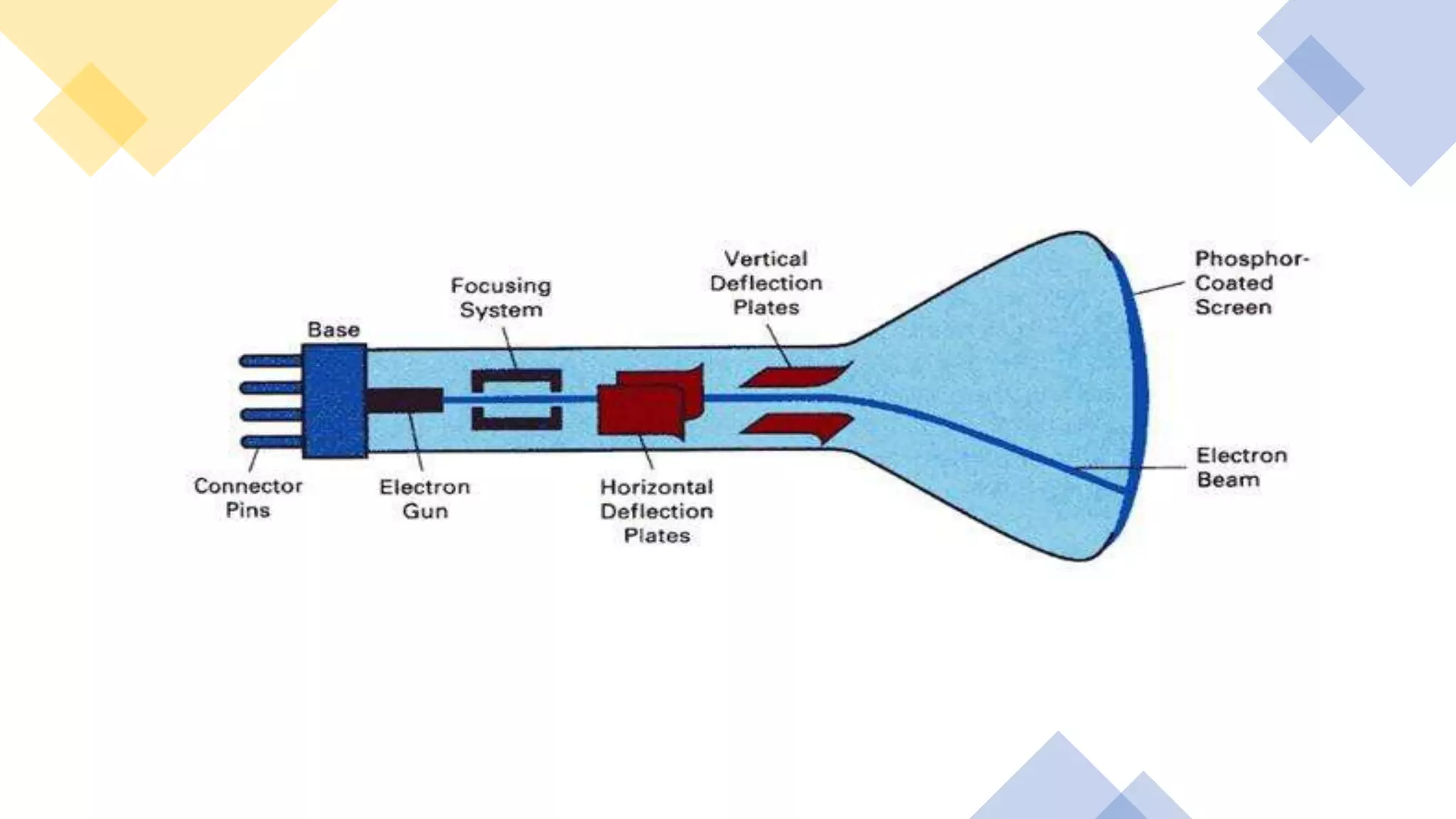
The electron gun emits a beam of
electrons Called cathode
The electron beam passes through
focusing and deflection systems that direct
it towards specified positions on the
phosphor-coated screen.
When the beam hits the screen, the
phosphor emits a small spot of light at
each position contacted by the electron
beam.
It redraws the picture by directing the
electron beam back over the same screen
points quickly –REFRESH CRT.
RASTER SCAN DISPLAY
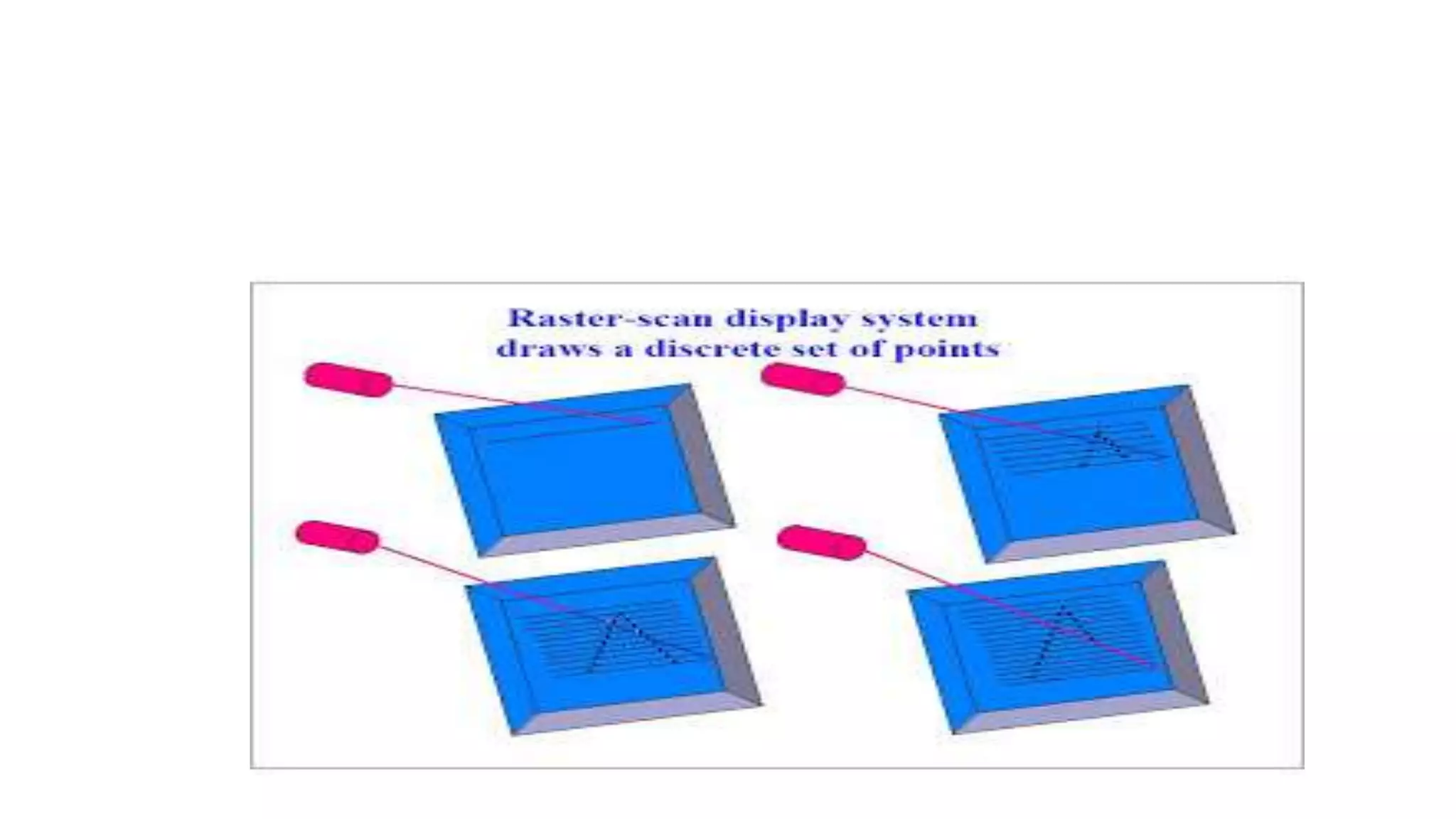
• In a raster scan system, the electron beam is swept across the screen.
one row at a time from top to bottom.
• As the electron beam moves across each row.
The beam intensity is turned on and off
To create a pattern of illuminated spots.
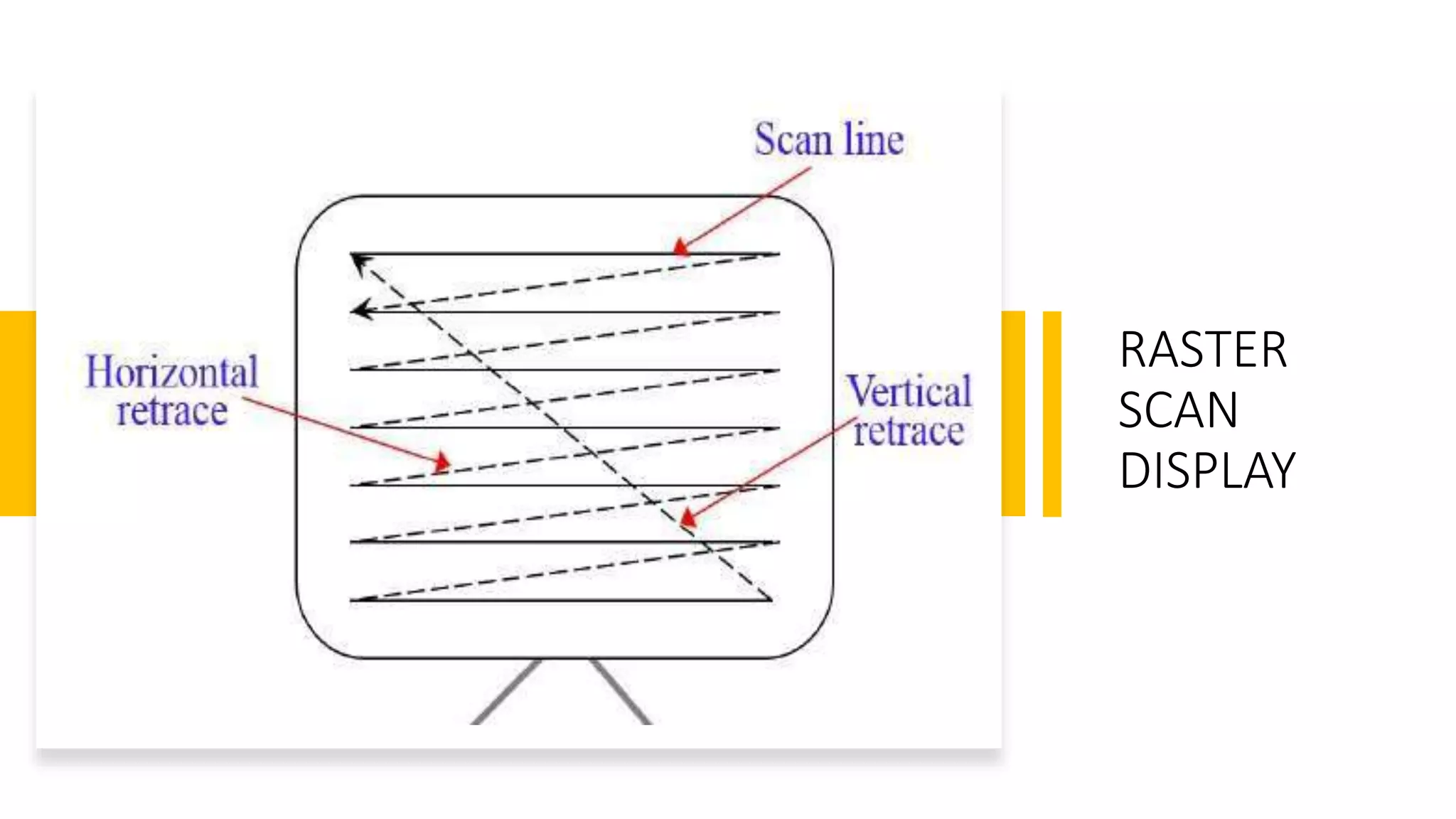
• At the end of each scan line, the electron beam returns to the left side of
the screen to begin displaying the next scan line.
REFRESH BUFFER
• Picture definition is stored in memory area called the Refresh Buffer or Frame
Buffer.
• This memory area holds the set of intensity values for all the screen points.
• Each screen point is referred to as a pixel .
• To avoid flickers,we use interlaced scan line.
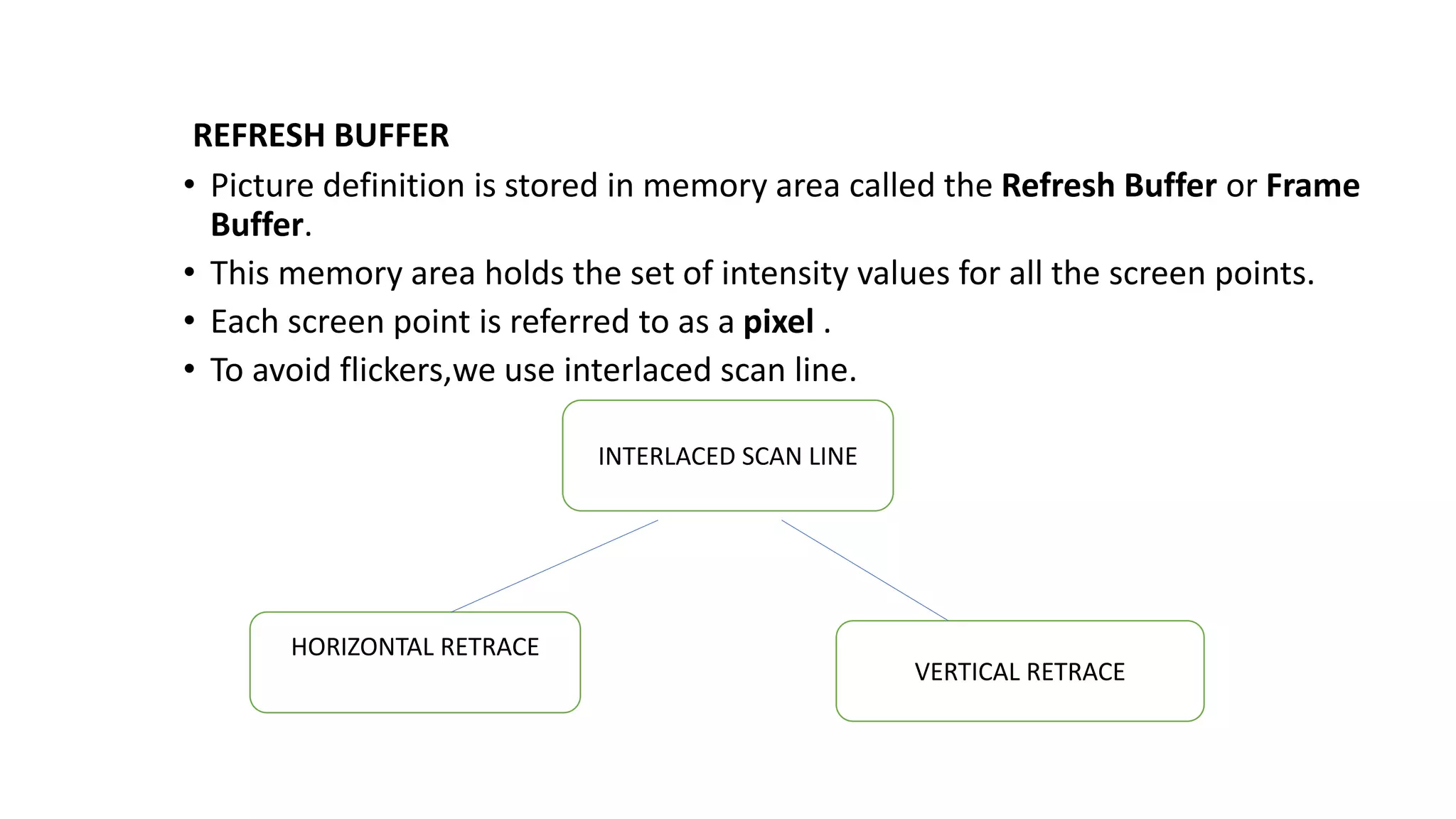
INTERLACED SCAN LINE
HORIZONTAL RETRACE
VERTICAL RETRACE
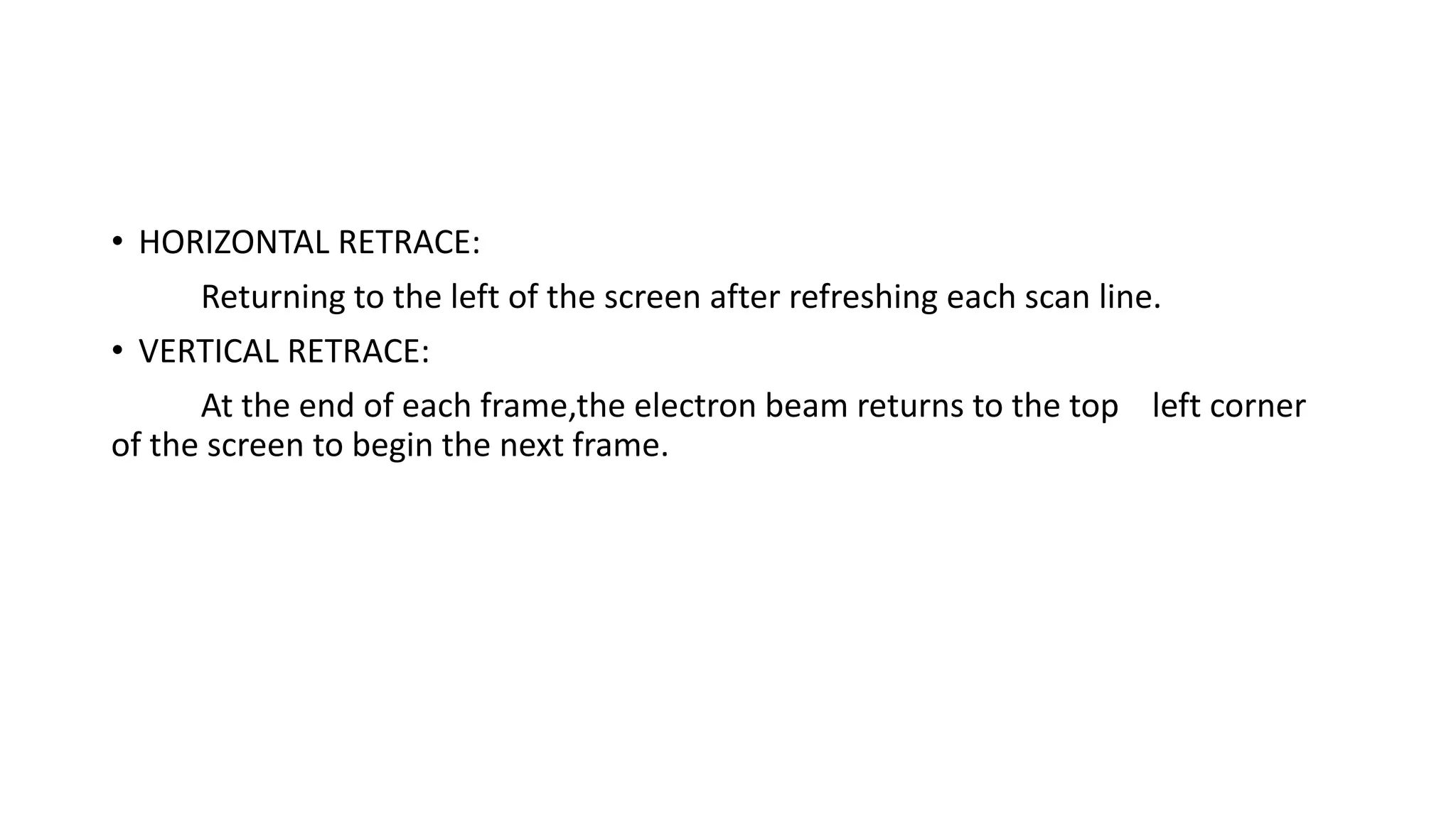
• HORIZONTAL RETRACE:
Returning to the left of the screen after refreshing each scan line.
• VERTICAL RETRACE:
At the end of each frame,the electron beam returns to the top left corner
of the screen to begin the next frame.
RASTER
SCAN
DISPLAY
• Advantages:
1. avoid flickers
2.realistic images
• Disadvantage:
1.low resolution
• Example:
Home television printer
RANDOM SCAN DISPLAY
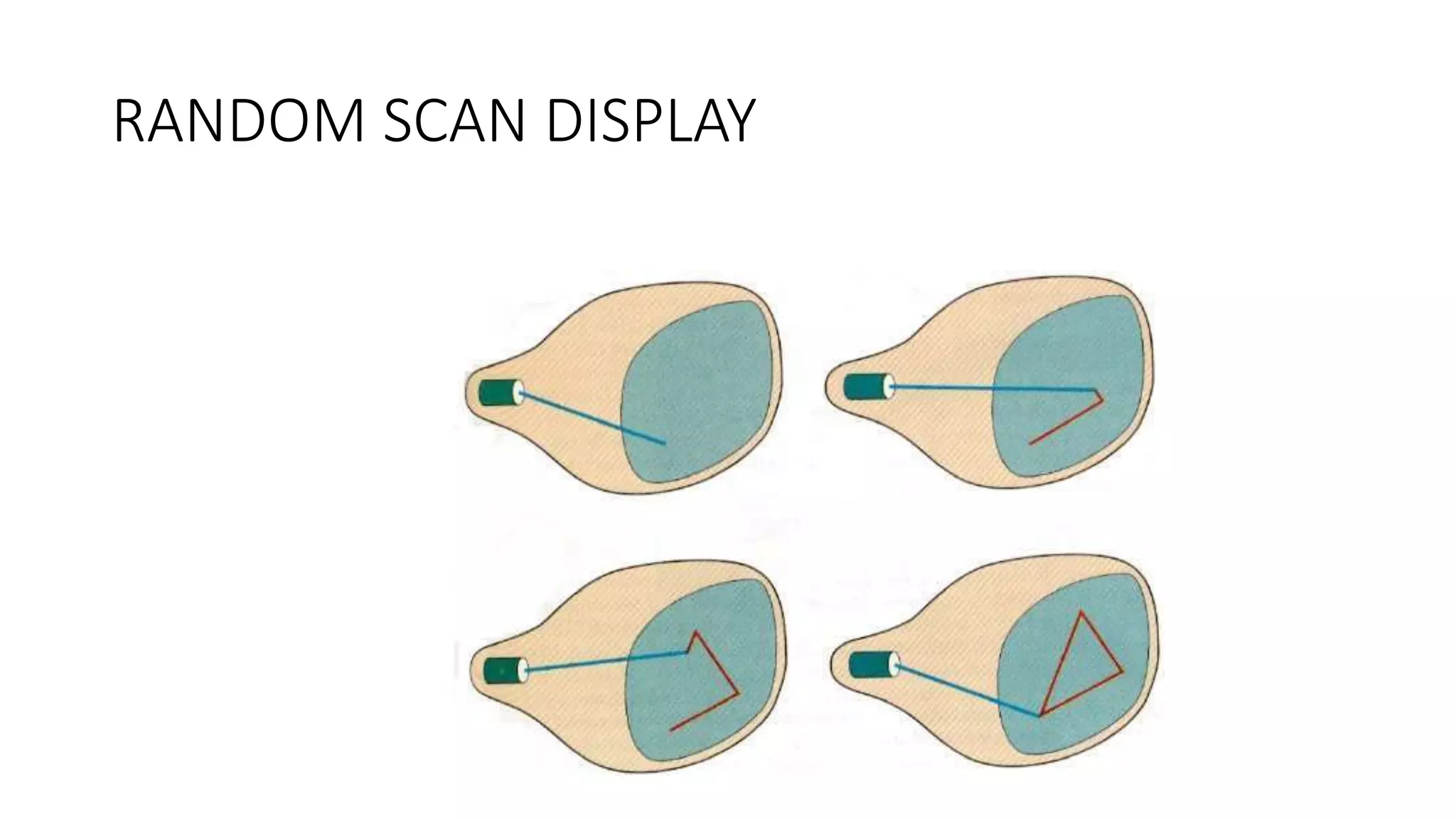
• The electron beam is directed only to the part of the screen where
the picture is to be drawn .
• It is also called vector display, stroke-writing display, or calligraphic
display.
• Picture definition is stored as a set of line-drawing commands in an
area of memory referred to as the refresh display file.
• Random-scan displays are designed to draw all the component lines
of a picture 30 to 60 times each second.
RANDOM SCAN DISPLAY
• Advantages:
1.high resolution
2.require little memory
3.produce smooth line drawings
4.require intelligent beam
• Disadvantages:
1.cannot draw a complex images
2. limited color capabilities:very expensive.
• Note:
1. used for line drawing applications
2.cannot be used to display shaded images.
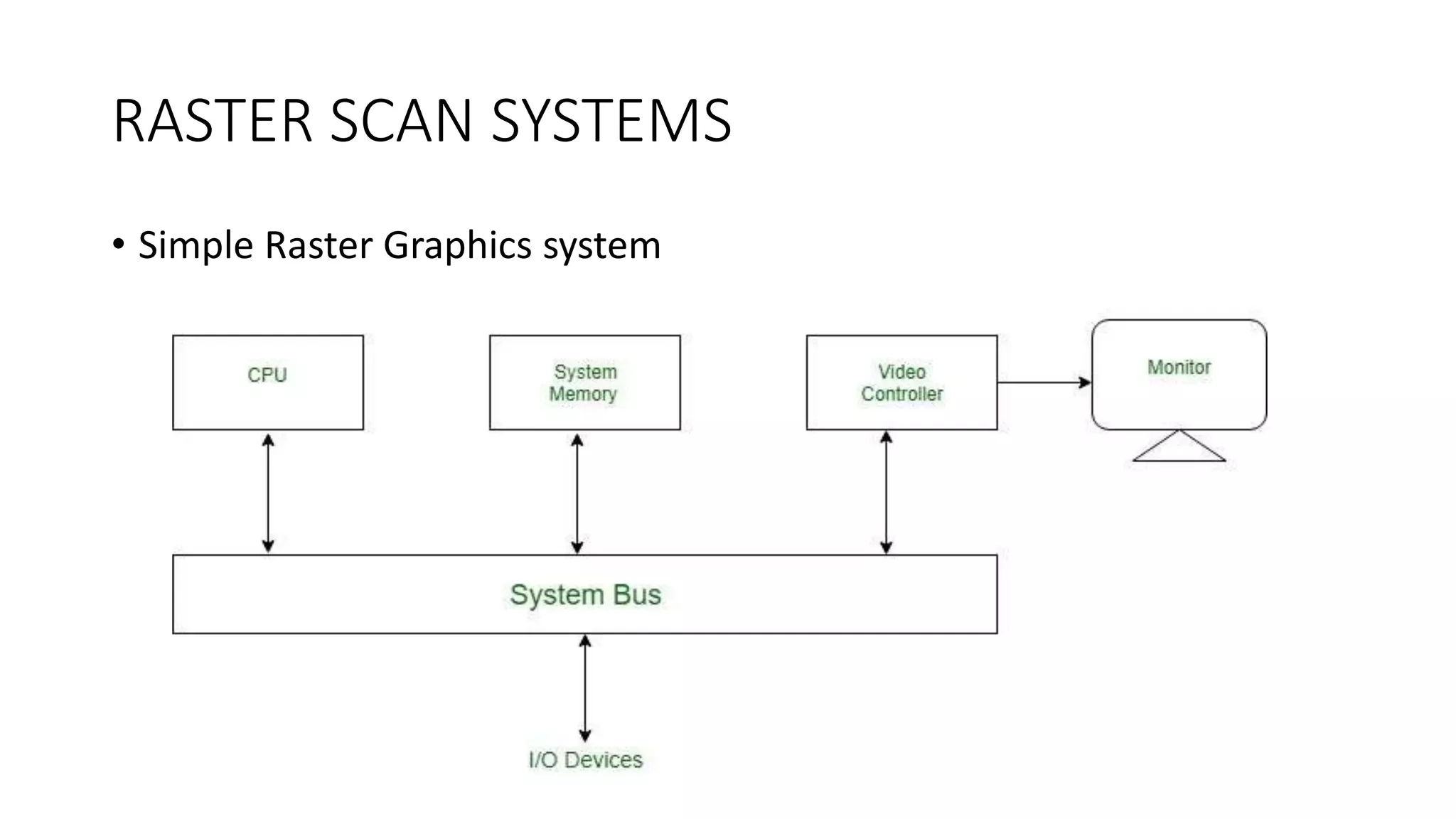
RASTER SCAN SYSTEMS
• Simple Raster Graphics system
RASTER SCAN SYSTEM
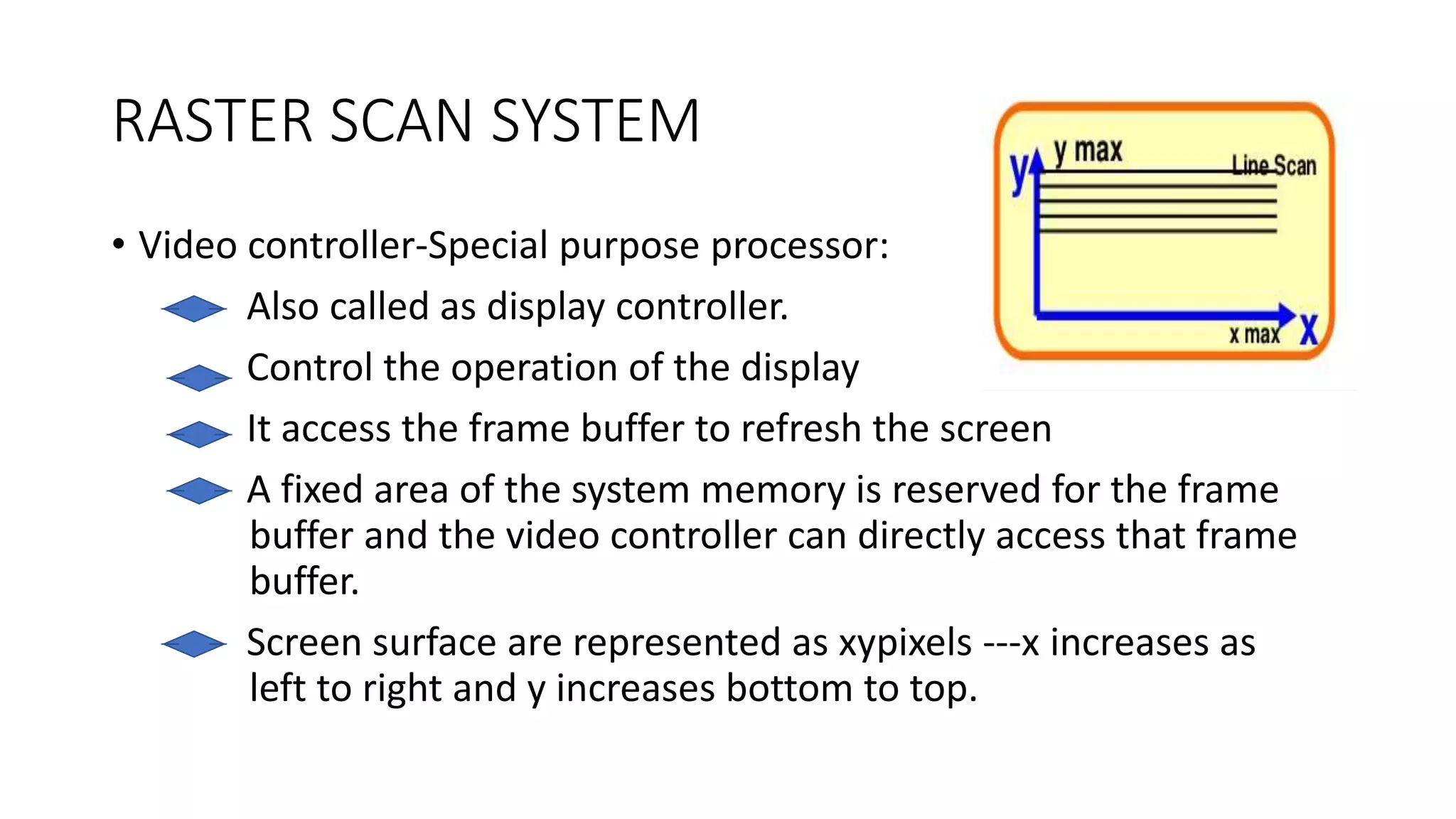
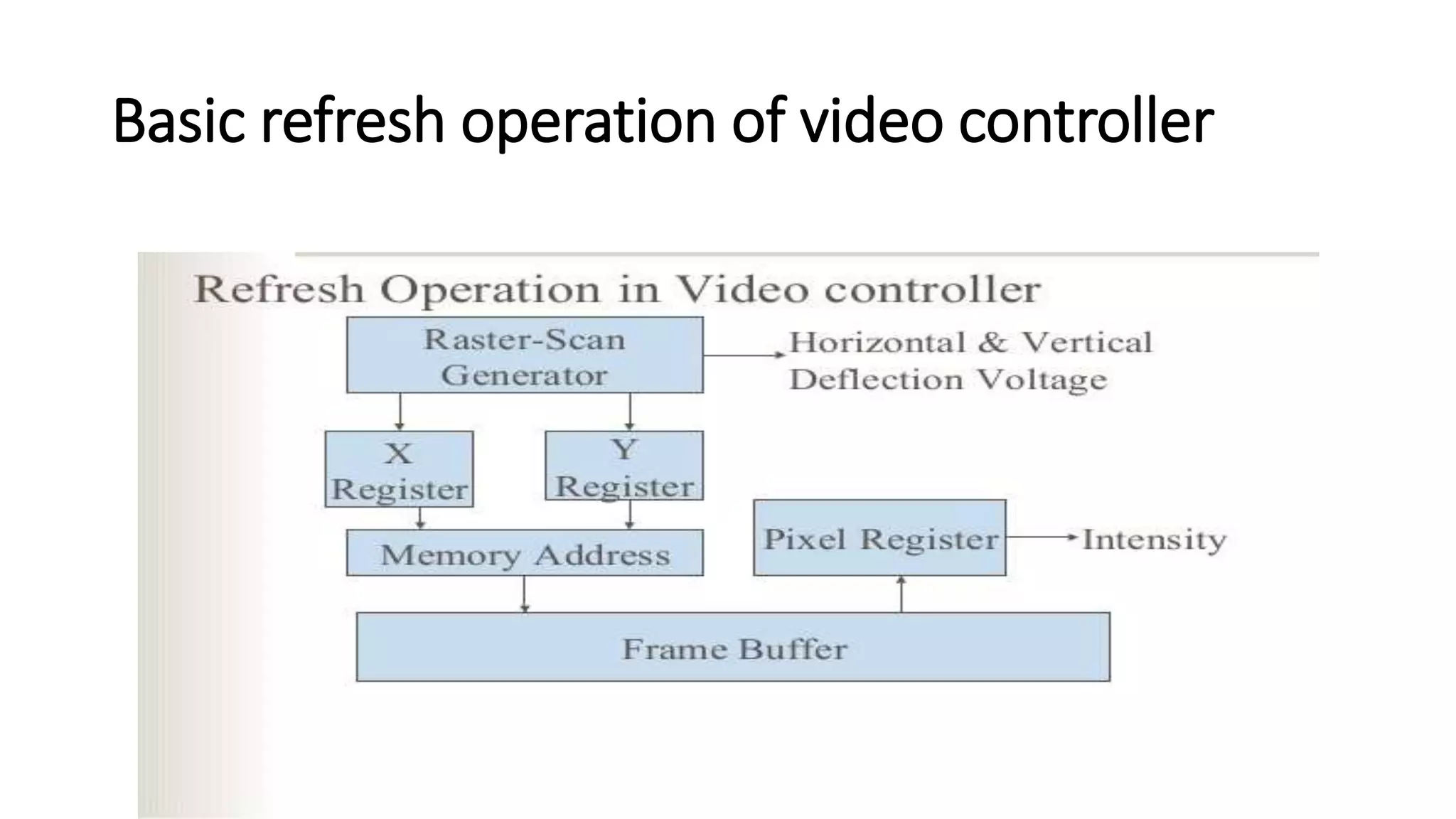
• Video controller-Special purpose processor:
Also called as display controller.
Control the operation of the display
It access the frame buffer to refresh the screen
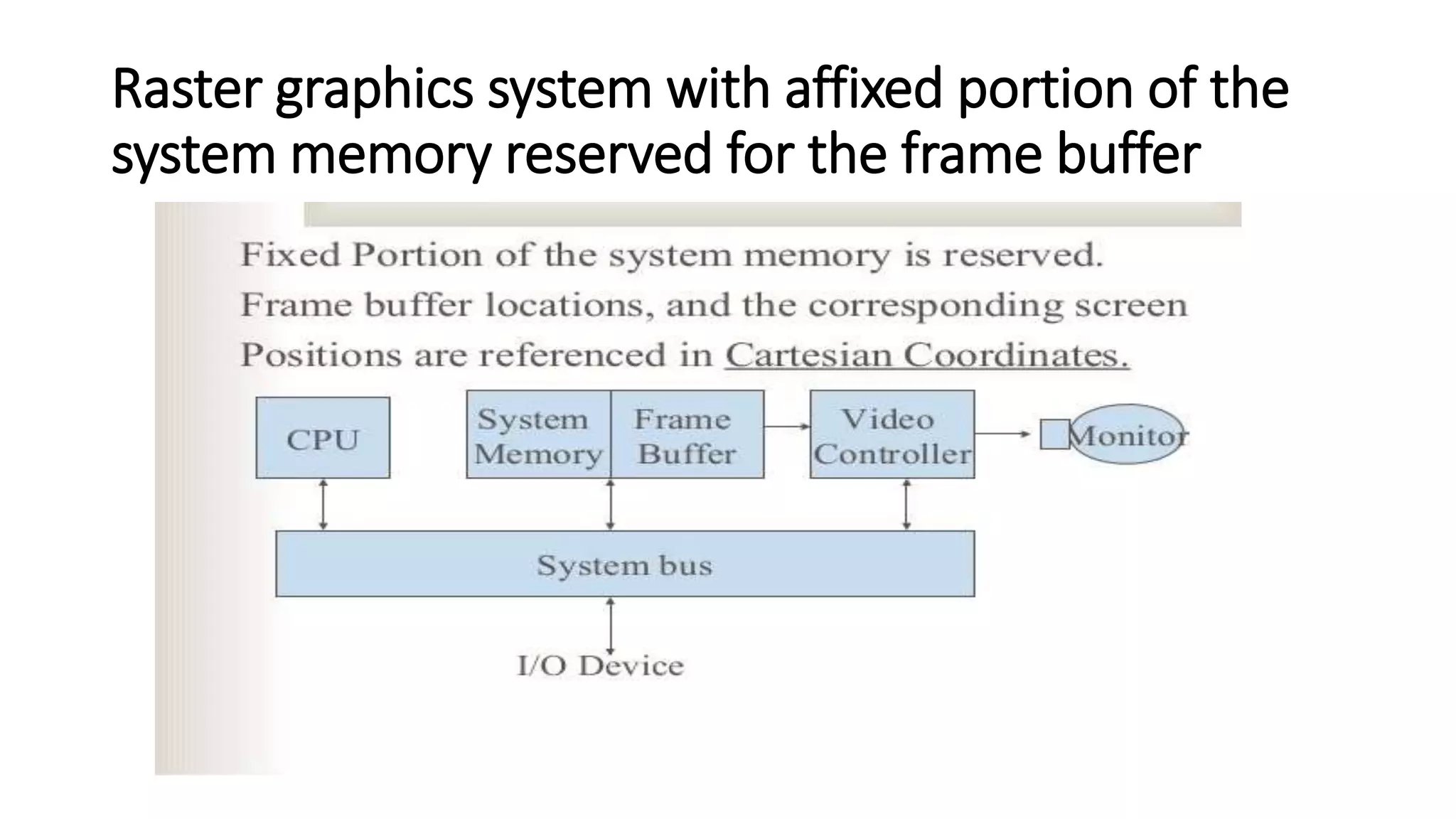
A fixed area of the system memory is reserved for the frame
buffer and the video controller can directly access that frame
buffer.
Screen surface are represented as xypixels ---x increases as
left to right and y increases bottom to top.
Raster graphics system with affixed portion of the
system memory reserved for the frame buffer
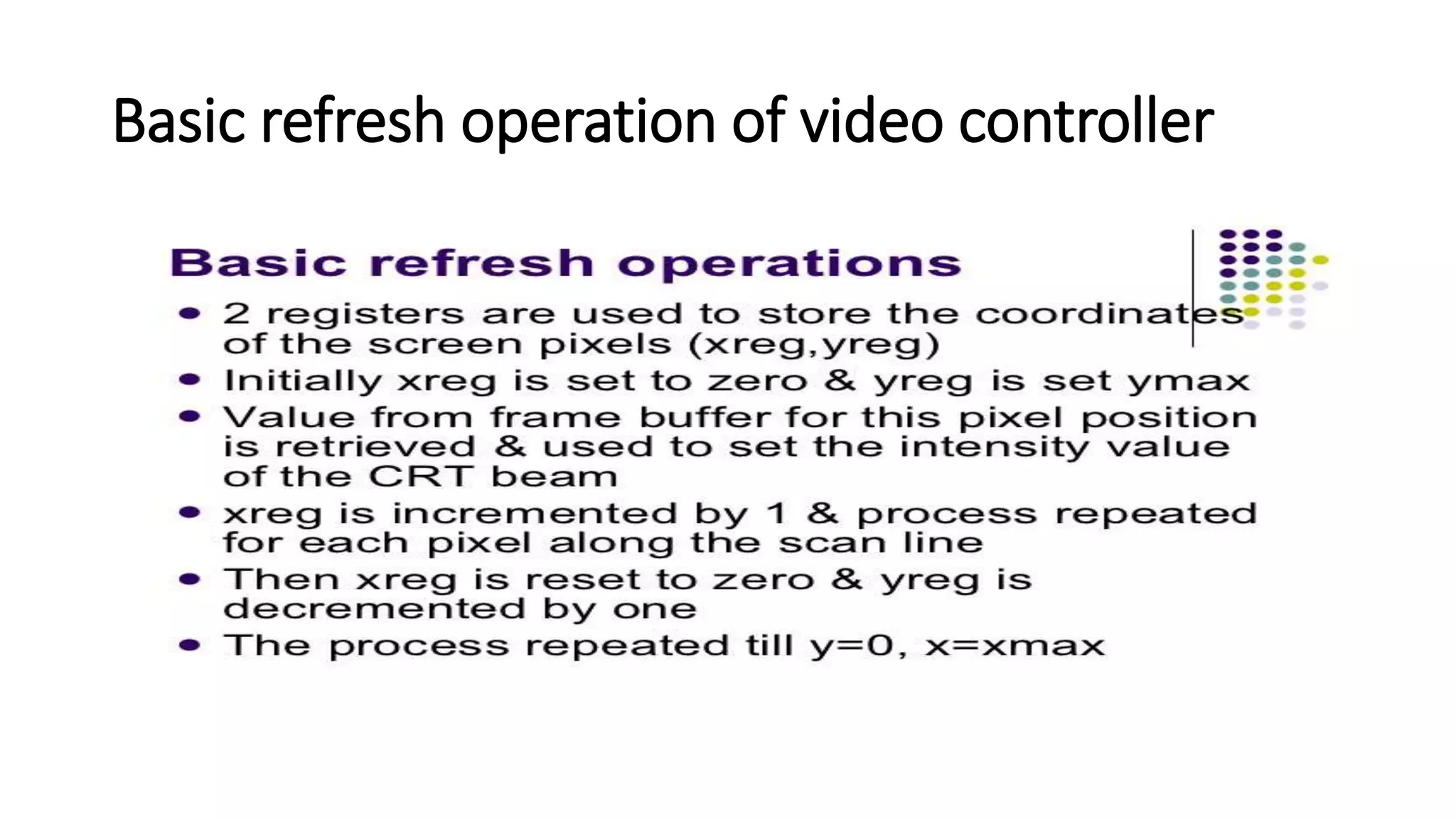
Basic refresh operation of video controller
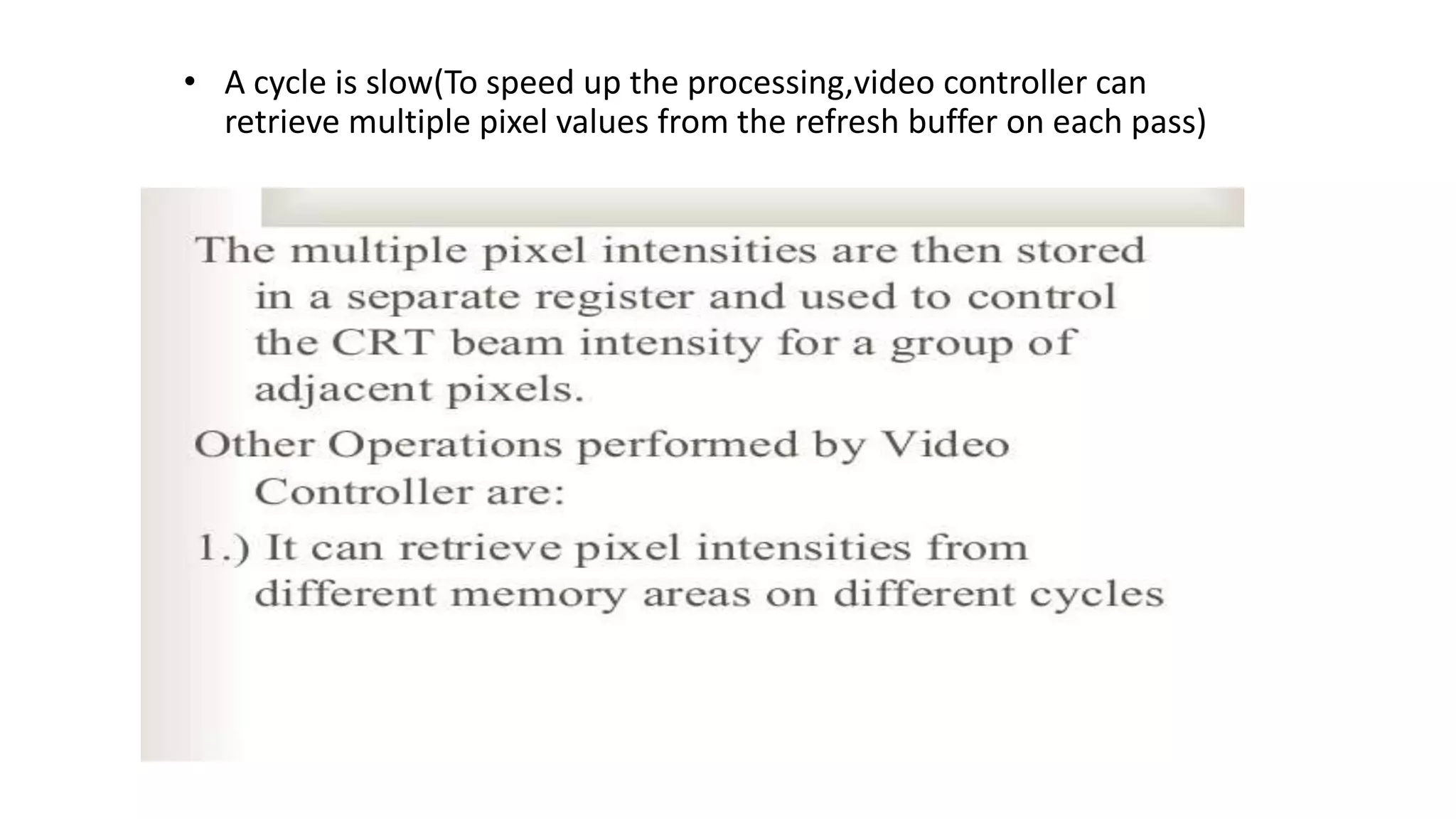
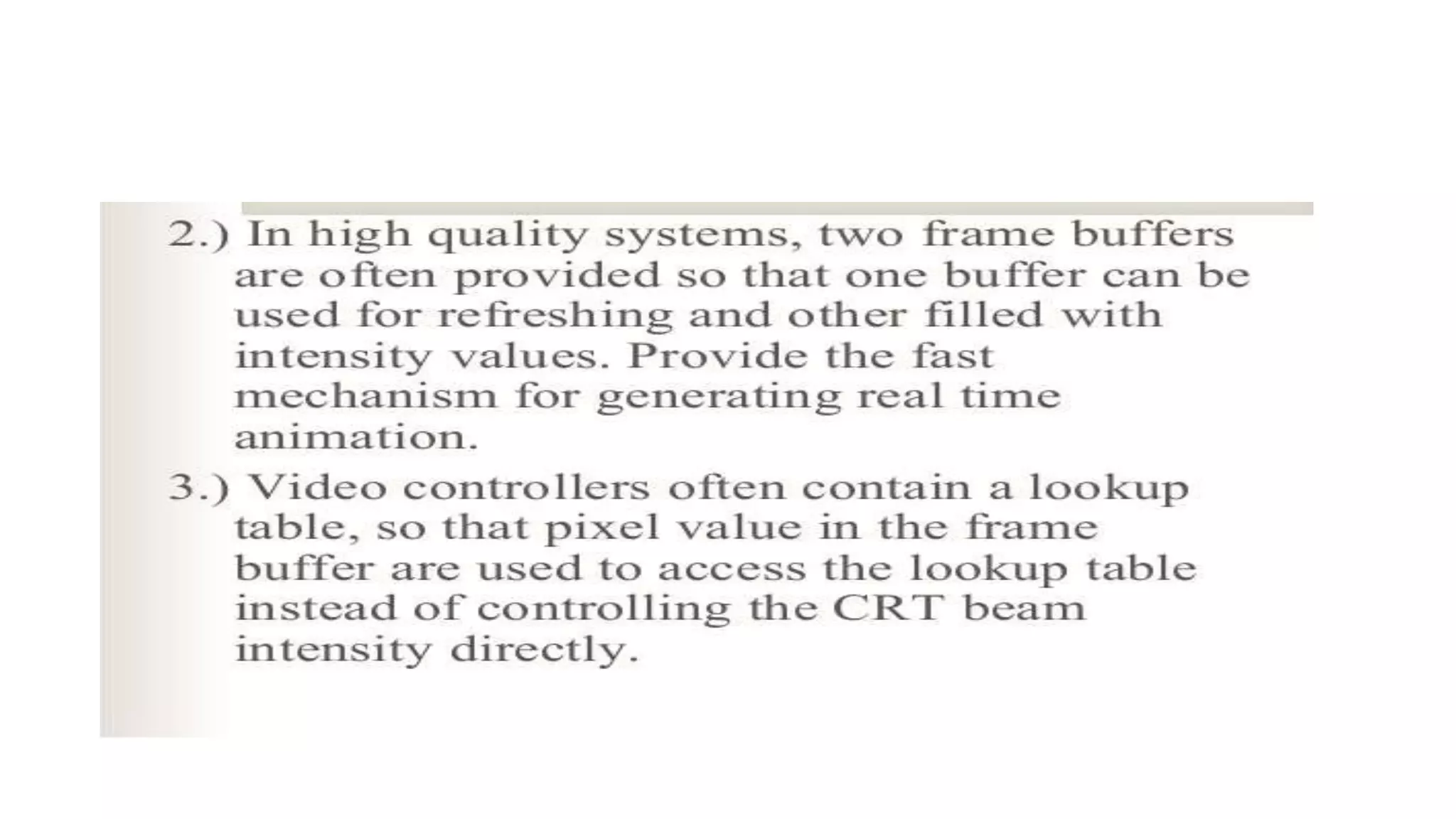
• A cycle is slow(To speed up the processing,video controller can
retrieve multiple pixel values from the refresh buffer on each pass)
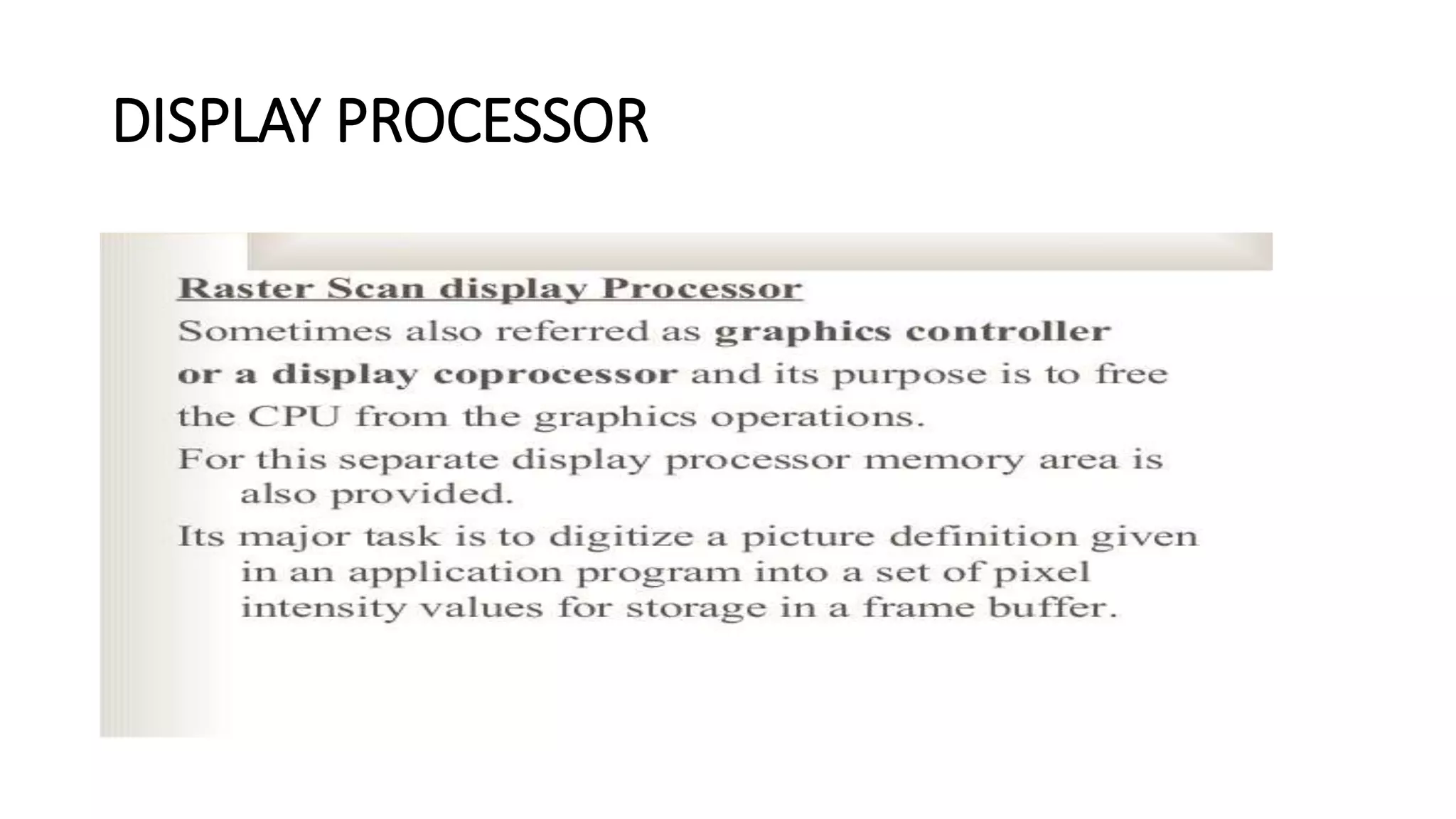
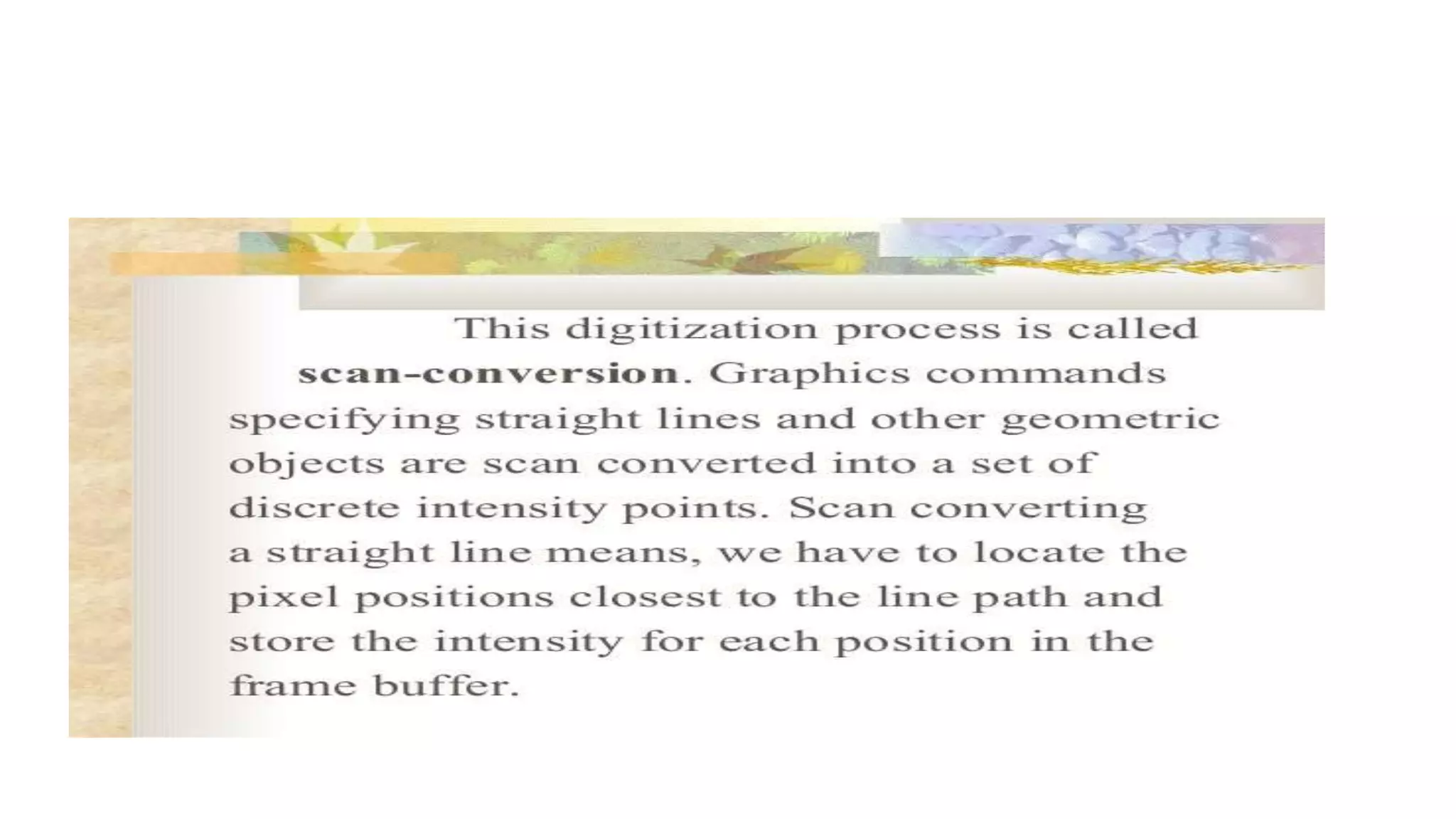
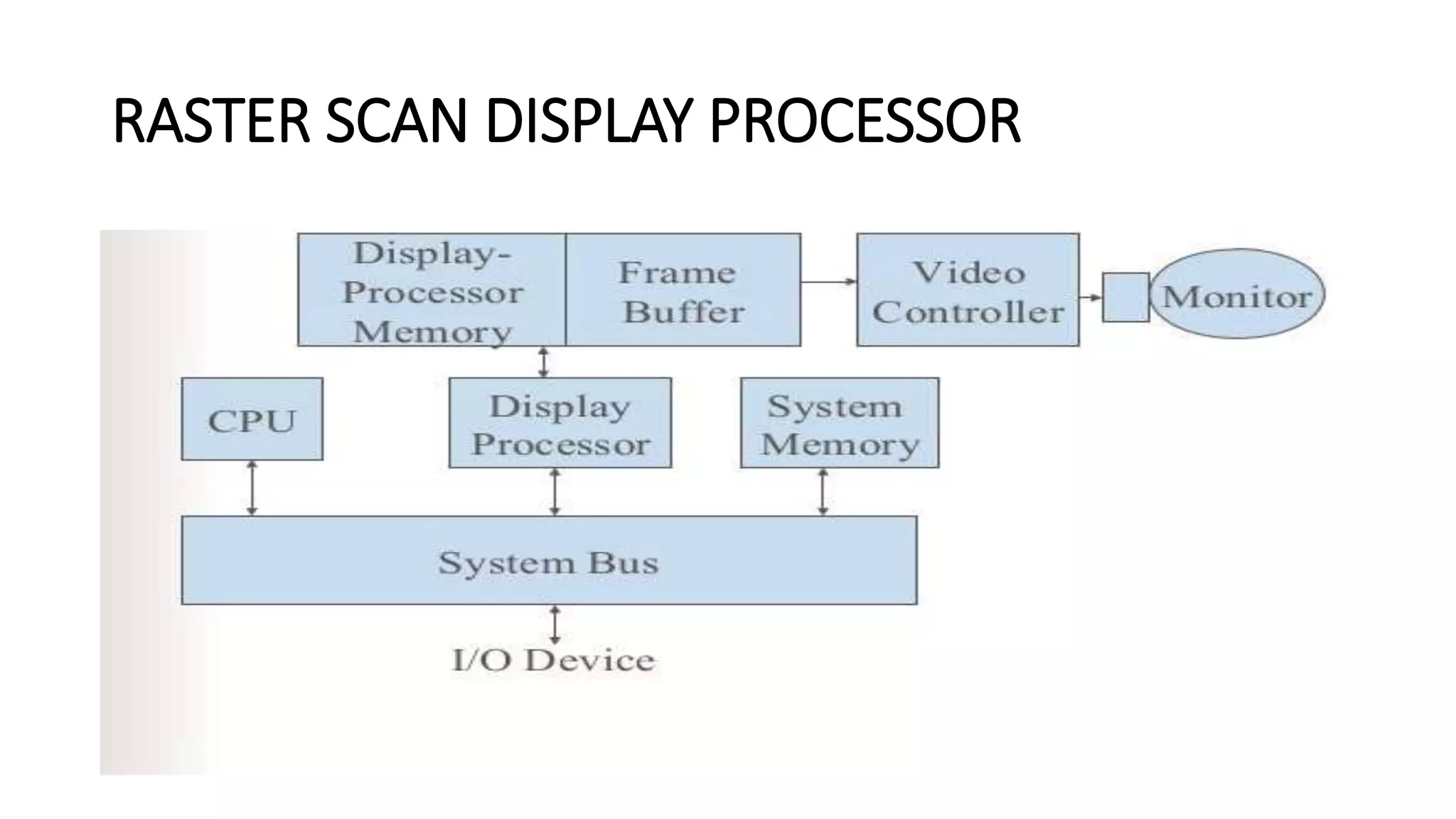
DISPLAY PROCESSOR
RASTER SCAN DISPLAY PROCESSOR
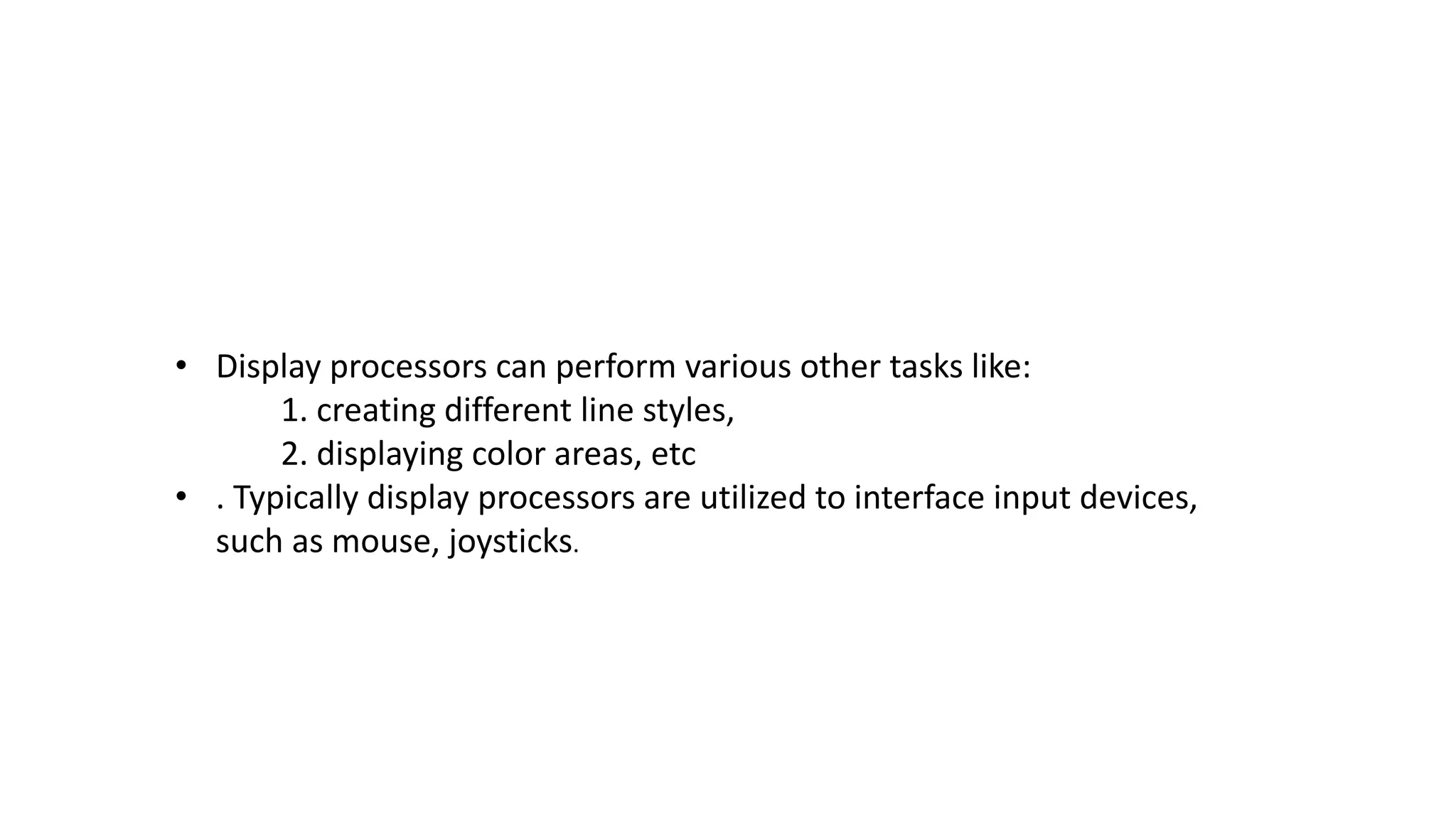
• Display processors can perform various other tasks like:
1. creating different line styles,
2. displaying color areas, etc
• . Typically display processors are utilized to interface input devices,
such as mouse, joysticks.
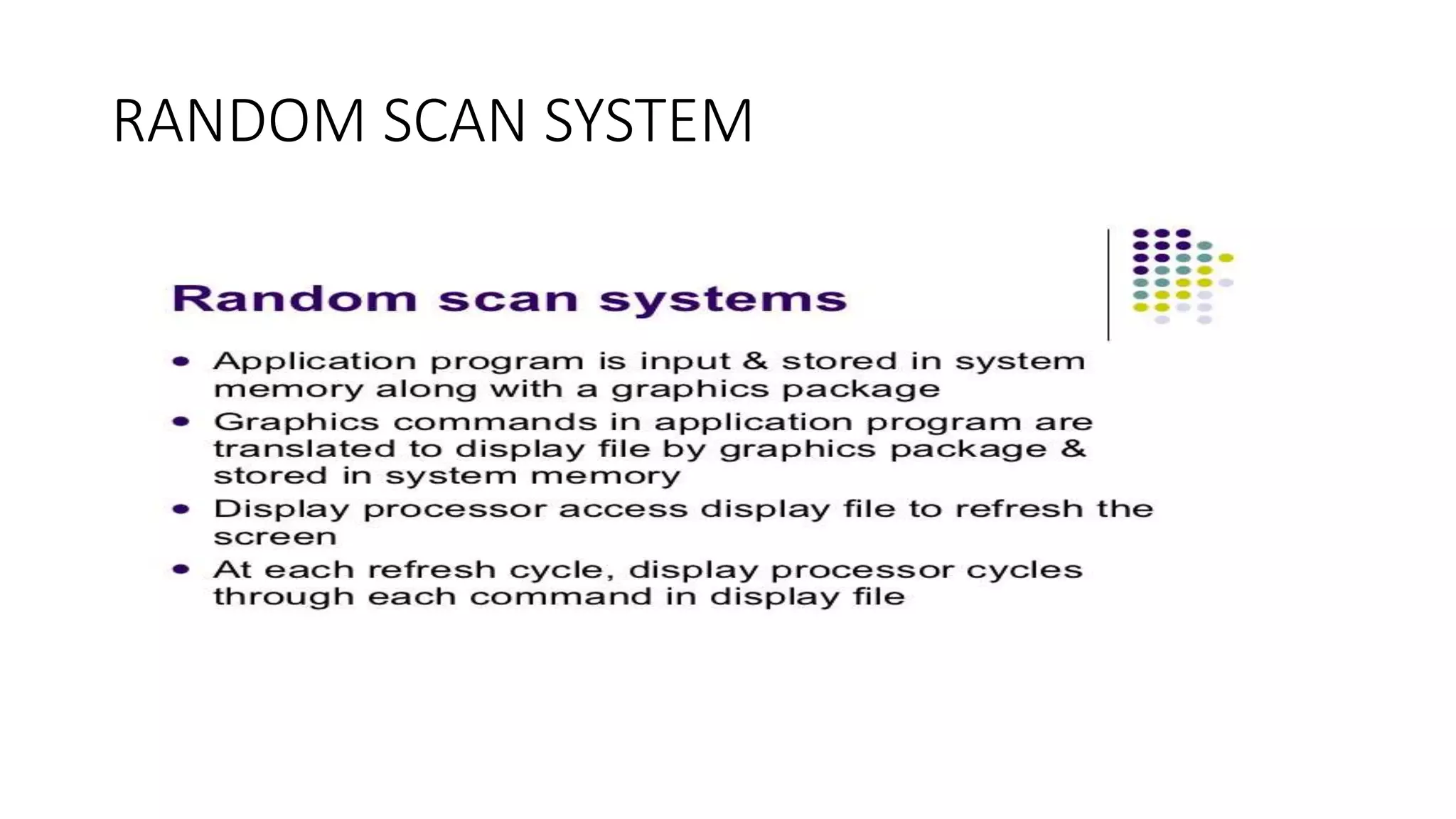
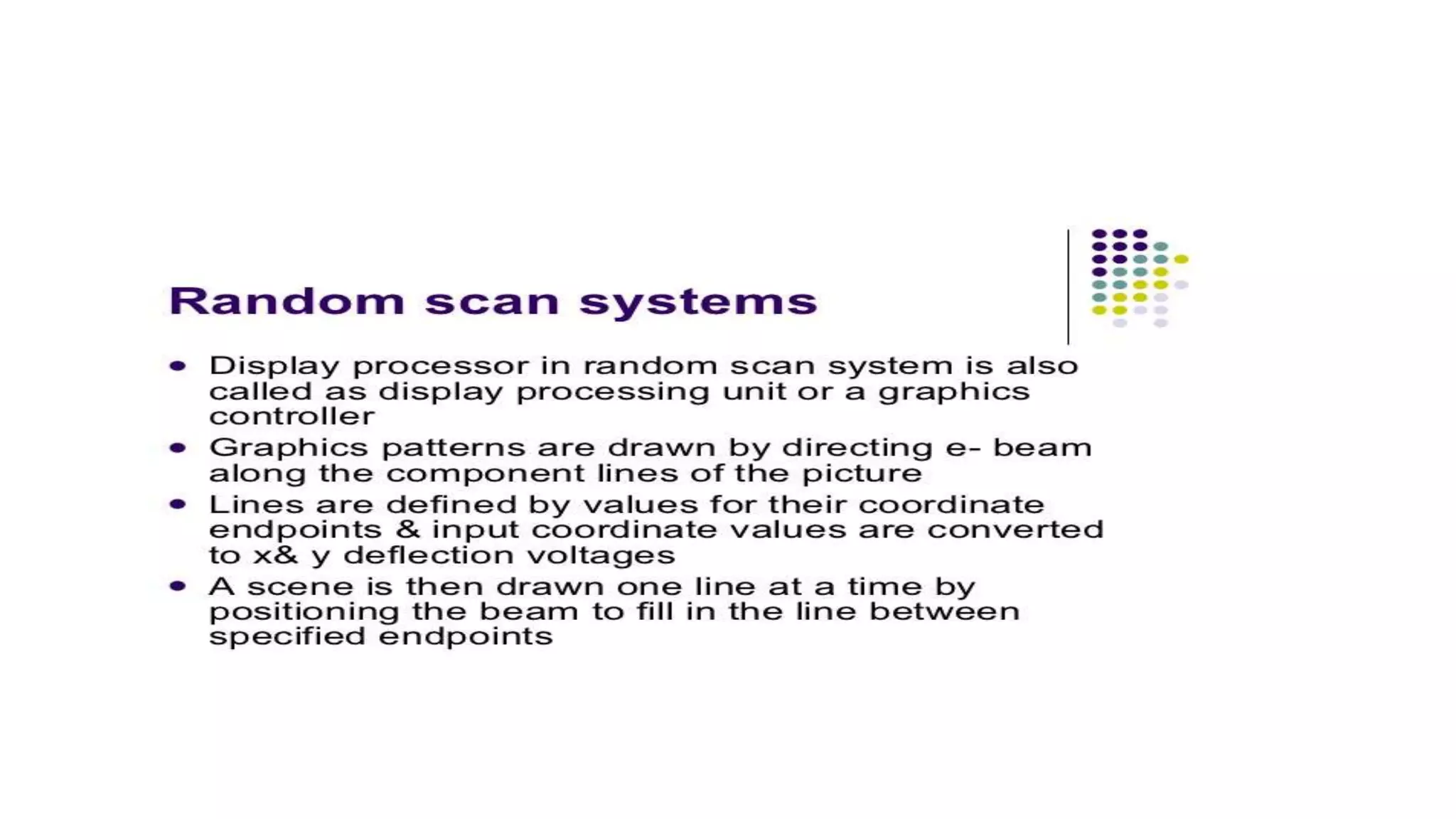
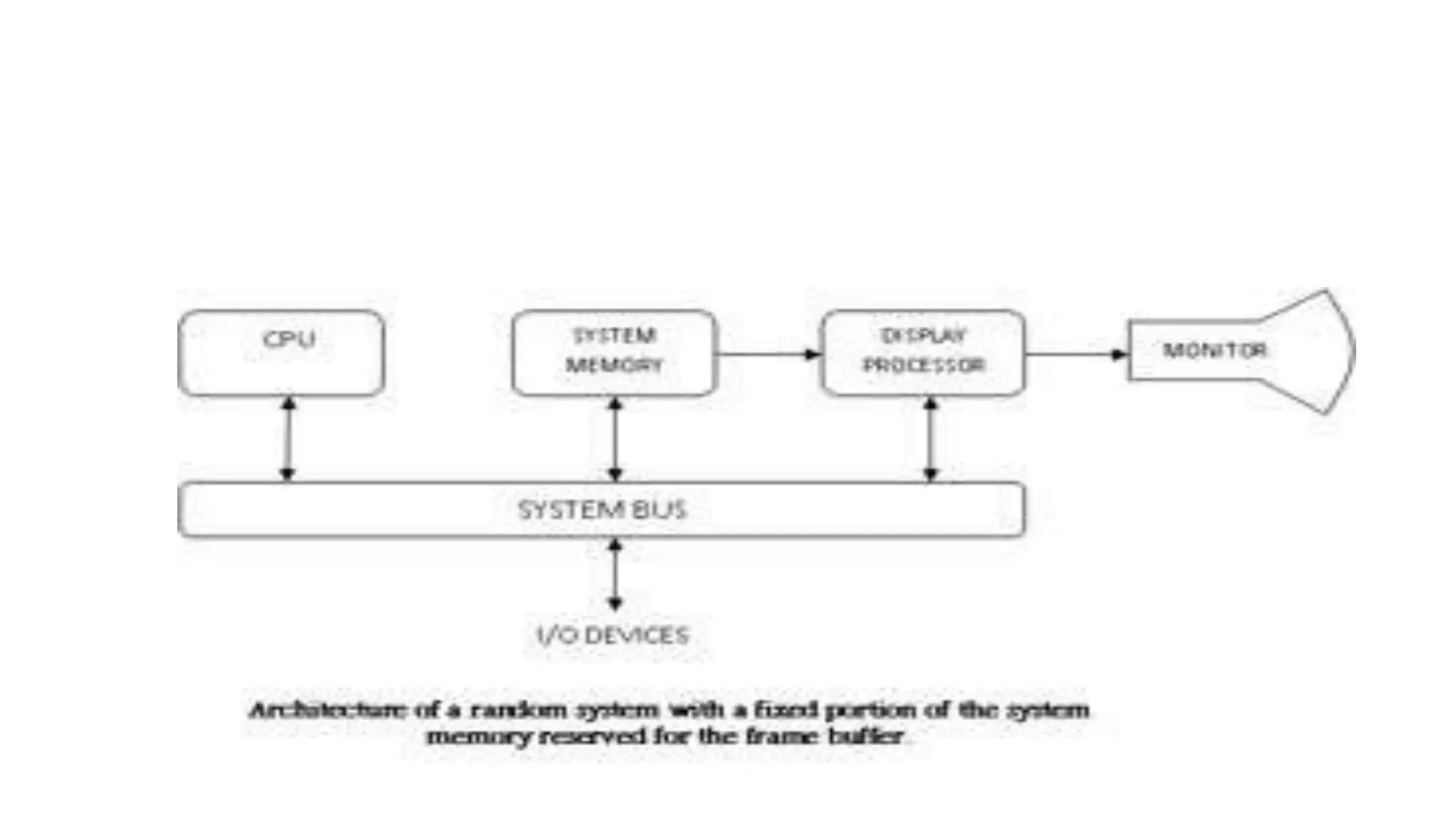
RANDOM SCAN SYSTEM
THANK YOU

CATHODE RAY TUBE IN COMPUTER GRAPHICS

  • 1.
  • 2.
    Computer Graphics-Definition: • Itis an art of drawing pictures on computer screens with the help of programming. • It involves computations, creation, and manipulation of data. • It is also a rendering tool for the generation and manipulation of images.
  • 3.
    Cathode Ray Tube • Theprimary output device in a graphical system is the video monitor. • The main element of a video monitor is the Cathode Ray Tube CRT. operation of CRT : The electron gun emits a beam of electrons Called cathode The electron beam passes through focusing and deflection systems that direct it towards specified positions on the phosphor-coated screen. When the beam hits the screen, the phosphor emits a small spot of light at each position contacted by the electron beam. It redraws the picture by directing the electron beam back over the same screen points quickly –REFRESH CRT.
  • 5.
    RASTER SCAN DISPLAY •In a raster scan system, the electron beam is swept across the screen. one row at a time from top to bottom. • As the electron beam moves across each row. The beam intensity is turned on and off To create a pattern of illuminated spots. • At the end of each scan line, the electron beam returns to the left side of the screen to begin displaying the next scan line.

  • 7.
    REFRESH BUFFER • Picturedefinition is stored in memory area called the Refresh Buffer or Frame Buffer. • This memory area holds the set of intensity values for all the screen points. • Each screen point is referred to as a pixel . • To avoid flickers,we use interlaced scan line. INTERLACED SCAN LINE HORIZONTAL RETRACE VERTICAL RETRACE
  • 8.
    • HORIZONTAL RETRACE: Returningto the left of the screen after refreshing each scan line. • VERTICAL RETRACE: At the end of each frame,the electron beam returns to the top left corner of the screen to begin the next frame.
  • 9.
  • 10.
    • Advantages: 1. avoidflickers 2.realistic images • Disadvantage: 1.low resolution • Example: Home television printer
  • 11.
    RANDOM SCAN DISPLAY •The electron beam is directed only to the part of the screen where the picture is to be drawn . • It is also called vector display, stroke-writing display, or calligraphic display. • Picture definition is stored as a set of line-drawing commands in an area of memory referred to as the refresh display file. • Random-scan displays are designed to draw all the component lines of a picture 30 to 60 times each second.
  • 12.
  • 13.
    • Advantages: 1.high resolution 2.requirelittle memory 3.produce smooth line drawings 4.require intelligent beam • Disadvantages: 1.cannot draw a complex images 2. limited color capabilities:very expensive. • Note: 1. used for line drawing applications 2.cannot be used to display shaded images.
  • 14.
    RASTER SCAN SYSTEMS •Simple Raster Graphics system
  • 15.
    RASTER SCAN SYSTEM •Video controller-Special purpose processor: Also called as display controller. Control the operation of the display It access the frame buffer to refresh the screen A fixed area of the system memory is reserved for the frame buffer and the video controller can directly access that frame buffer. Screen surface are represented as xypixels ---x increases as left to right and y increases bottom to top.
  • 16.
    Raster graphics systemwith affixed portion of the system memory reserved for the frame buffer
  • 17.
    Basic refresh operationof video controller
  • 18.
    Basic refresh operationof video controller
  • 19.
    • A cycleis slow(To speed up the processing,video controller can retrieve multiple pixel values from the refresh buffer on each pass)
  • 21.
  • 23.
  • 24.
    • Display processorscan perform various other tasks like: 1. creating different line styles, 2. displaying color areas, etc • . Typically display processors are utilized to interface input devices, such as mouse, joysticks.
  • 26.
  • 29.