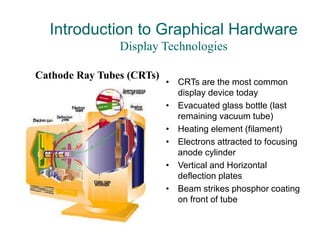
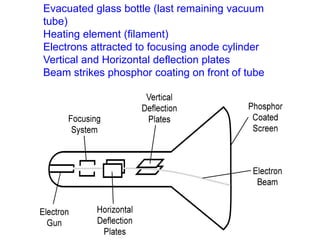
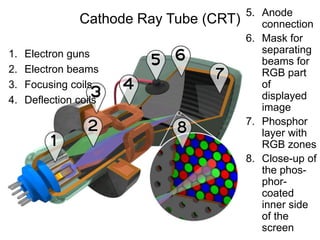
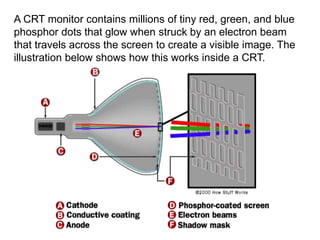
Cathode ray tubes (CRTs) were a common display technology that used electron beams to excite phosphors on the inside of an evacuated glass envelope. The electron beams were generated by electron guns and controlled by deflection plates and coils to scan across the phosphor-coated screen in a raster pattern, refreshing the image rapidly to prevent flickering. Different phosphors determined the persistence of the light emission and were used together with color masks and intensity control to generate color images on CRT displays. Random scan displays stored images as line drawings and refreshed all lines periodically rather than using a raster scan.