Capital Structure Decisions-B.V.Raghunandan, SVS College, Bantwal-Karnataka-India
Meaning & Definition of Capital StructureCapital Structure is, ”the permanent financing of the firm represented by long-term debt, preferred stock and networth”              -Weston & Brigham
Planning the Capital StructureFactors to be considered   1. Liquidity   2. Profitability   3. Ownership Control   4. Leverage   5. Nature of Industry   6. Funding Agencies’ Suggestions   7. Timing   8. Tax Planning   9. Growth Plans 10. Strategy
DebtAny source that gives the funding agency the creditorship statusIn the horizontal form of Corporate Balance Sheet, it is the sum of III and IV items(Secured Loans and Unsecured Loans) on the Liabilities side of the Balance SheetIn the vertical format, it is the II item (which again contains Secured Loans and Unsecured Loans) on the side of Sources of Funds
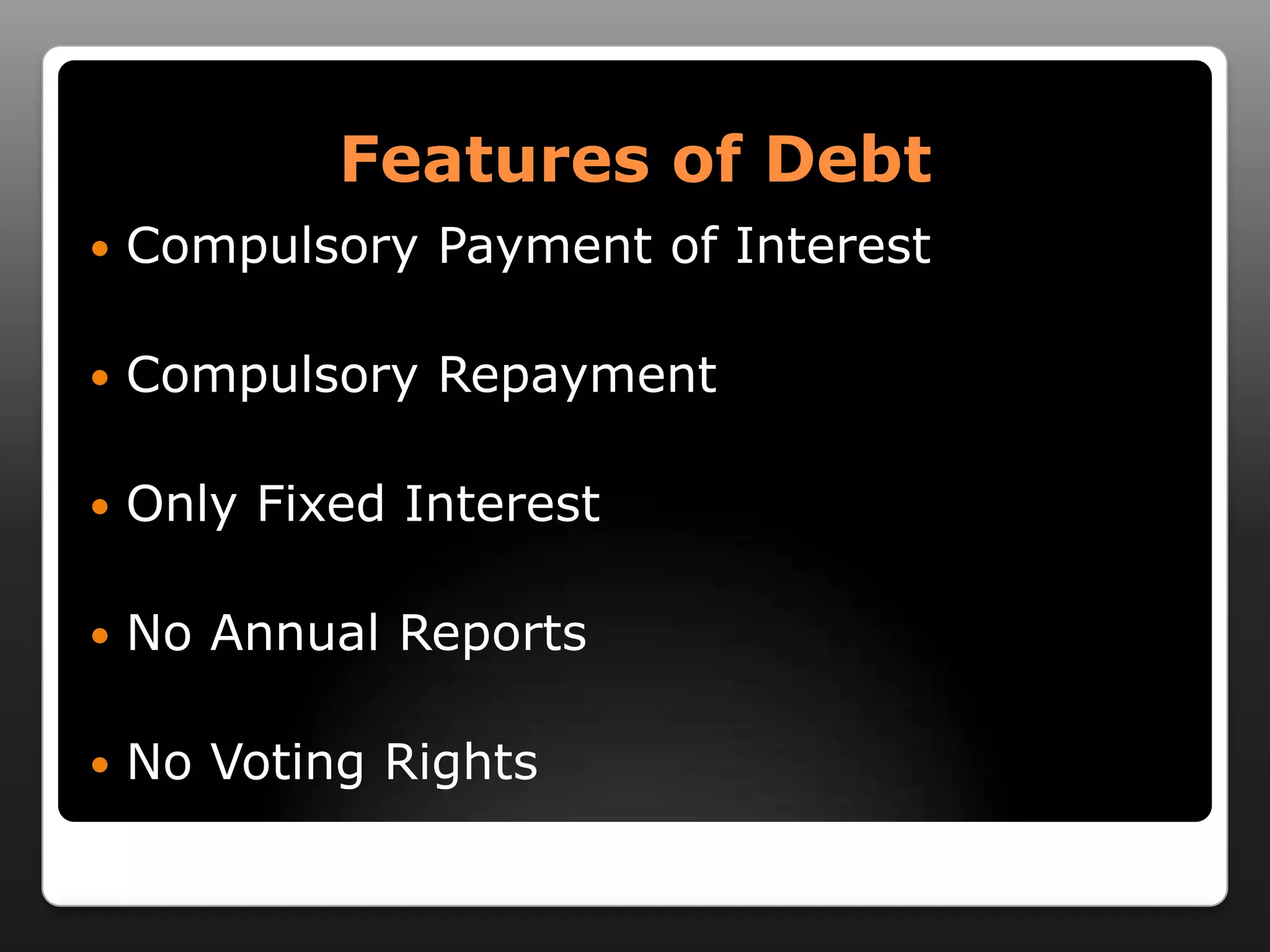
Features of DebtCompulsory Payment of InterestCompulsory RepaymentOnly Fixed InterestNo Annual ReportsNo Voting Rights
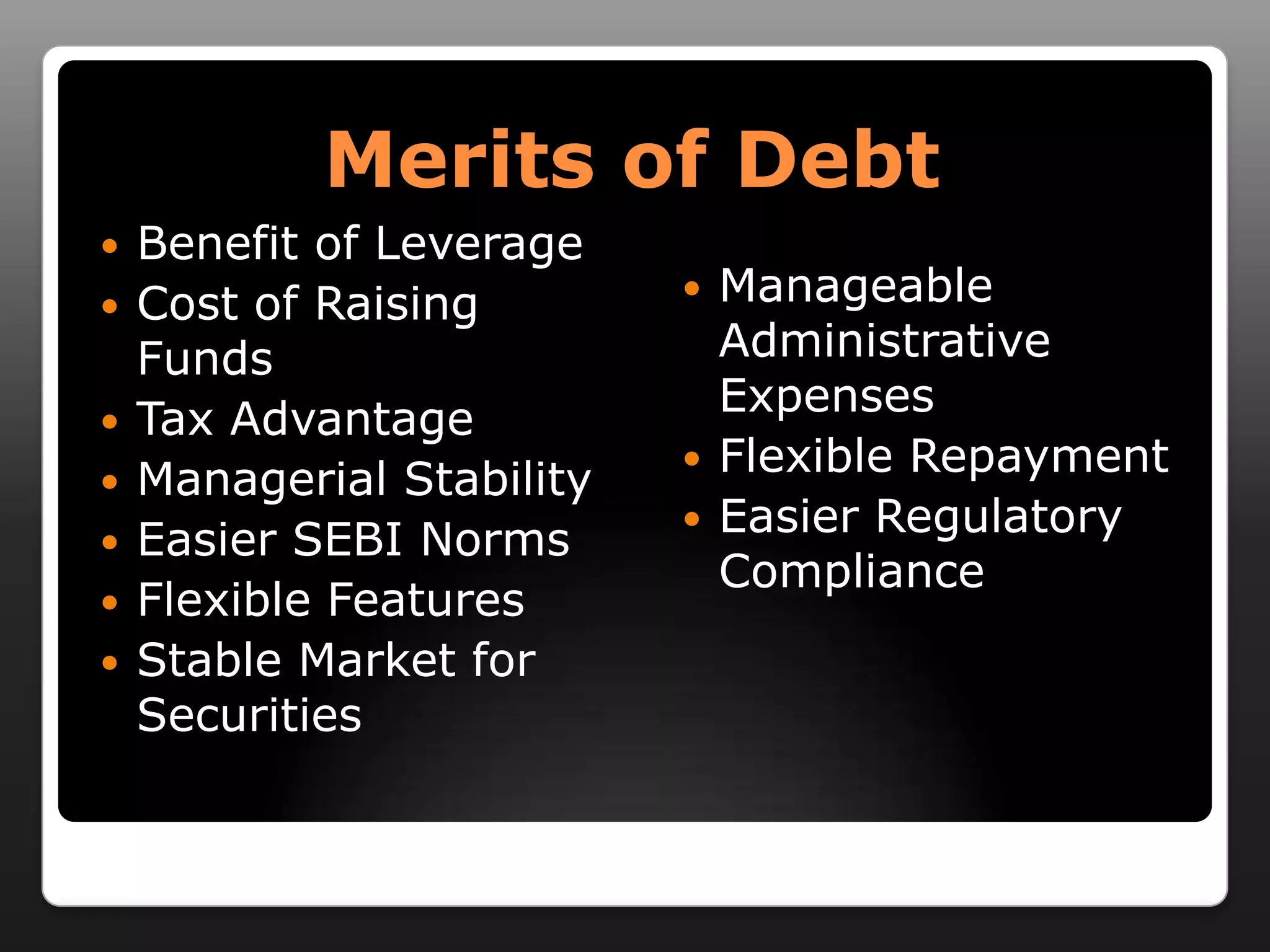
Merits of DebtBenefit of LeverageCost of Raising FundsTax AdvantageManagerial StabilityEasier SEBI NormsFlexible FeaturesStable Market for SecuritiesManageable Administrative ExpensesFlexible RepaymentEasier Regulatory Compliance
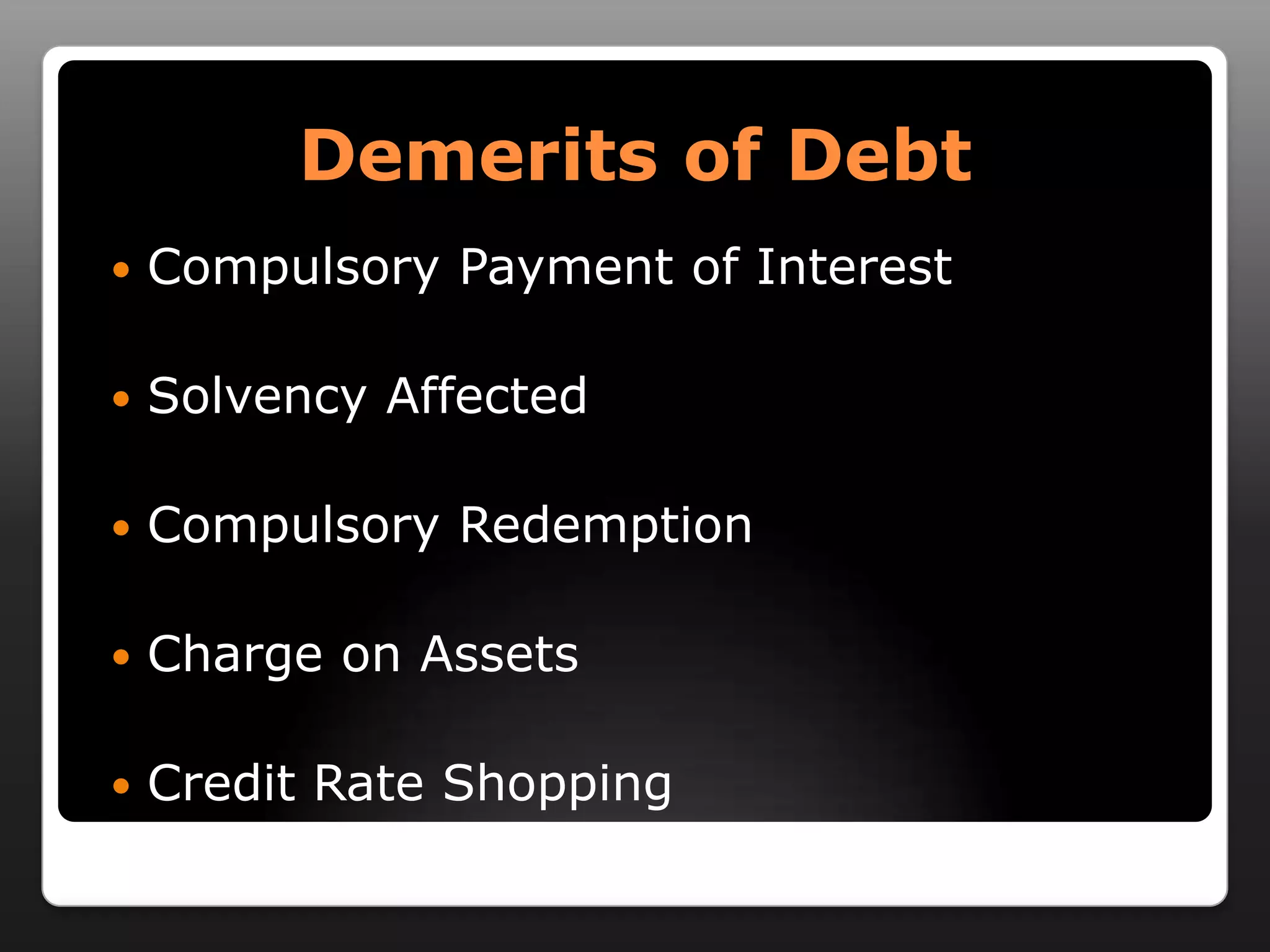
Demerits of DebtCompulsory Payment of InterestSolvency AffectedCompulsory RedemptionCharge on AssetsCredit Rate Shopping
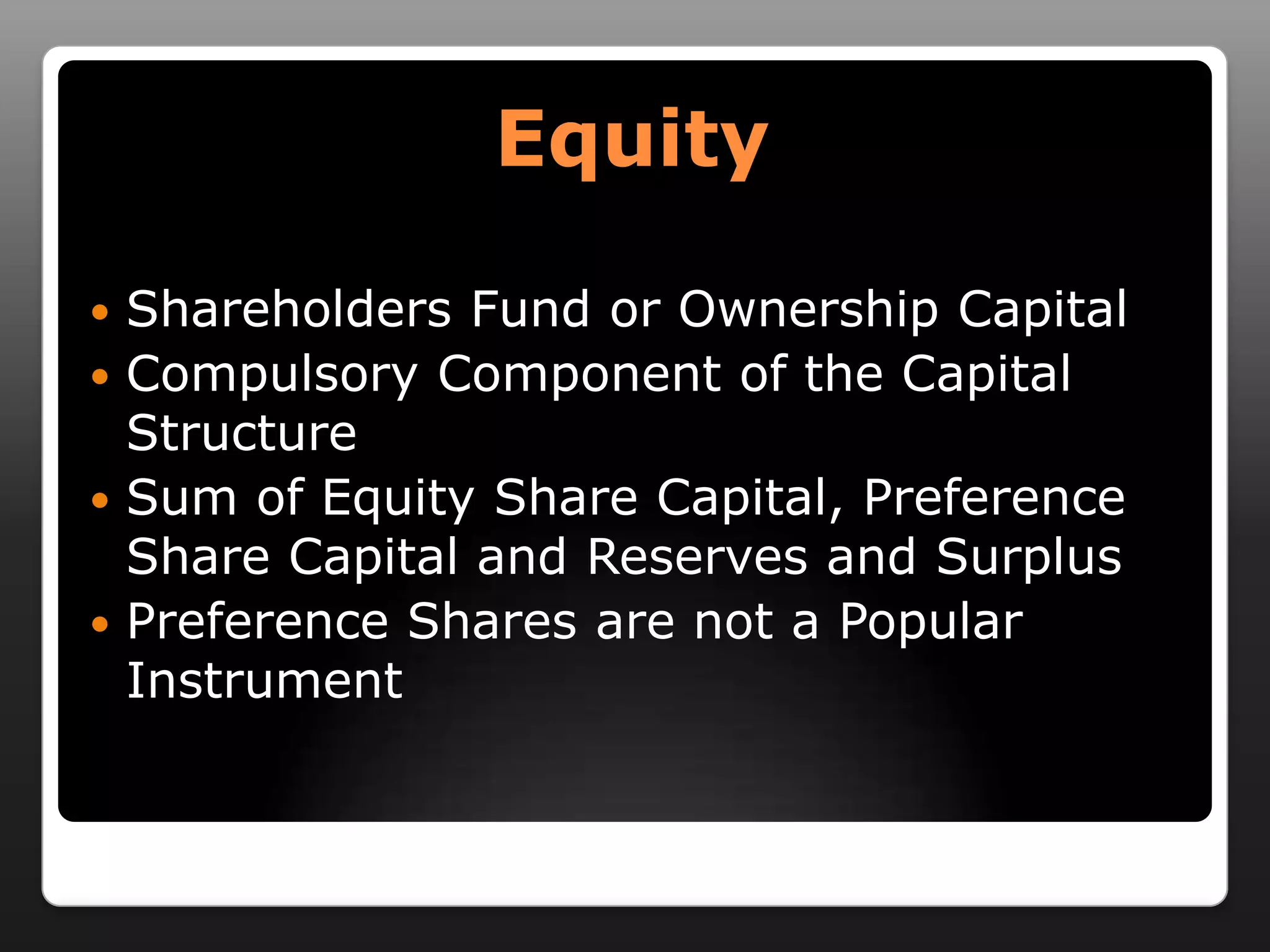
Equity Shareholders Fund or Ownership CapitalCompulsory Component of the Capital StructureSum of Equity Share Capital, Preference Share Capital and Reserves and SurplusPreference Shares are not a Popular Instrument
Equity SharesCommon Stock/Ordinary SharesFull Fledged OwnershipTotal Entitlement to the AssetsRepayment After the Satisfaction of Every Other ClaimPreemptive RightEntitlement for Dividend, Bonus Shares and Other Such Rewards
Benefits of Equity SharesBasic for Capital StructureBetter SolvencyGestation PeriodNo RedemptionNo Charge on AssetsNo Shopping for Credit RatingEvaluation of Share ValueBetter ImageCreation of ValuePublic Knowledge of Financial Information
Demerits of Equity SharesTax ImplicationManagement ControlHigh Rates of DividendLack of FlexibilityStringent SEBI NormsHuge Issue ExpensesHigh Volatility in the Stock MarketSpeculationComplex Shareholder- Management RelationRigid Corporate Governance
  Trading on EquityTrading on Equity is, "the use of borrowed funds or preferred stock for financing”          -Guthmann & Dougal
Significance of Trading on EquityA company having an ROI greater than the k can achieve a higher EPS for the equity shareholdersA company having a lower ROI than the k, will suffer financially because of inability to meet the fixed interest commitment
Preparation of Statement of IncomeLeverages: Operating Leverage, Financial Leverage and Combined LeverageDegree of LeveragesSignificance of Each Leverage:               -Sales-EBIT-EPS Relation              -Measurement of Risk Levels              -Behaviour of Costs
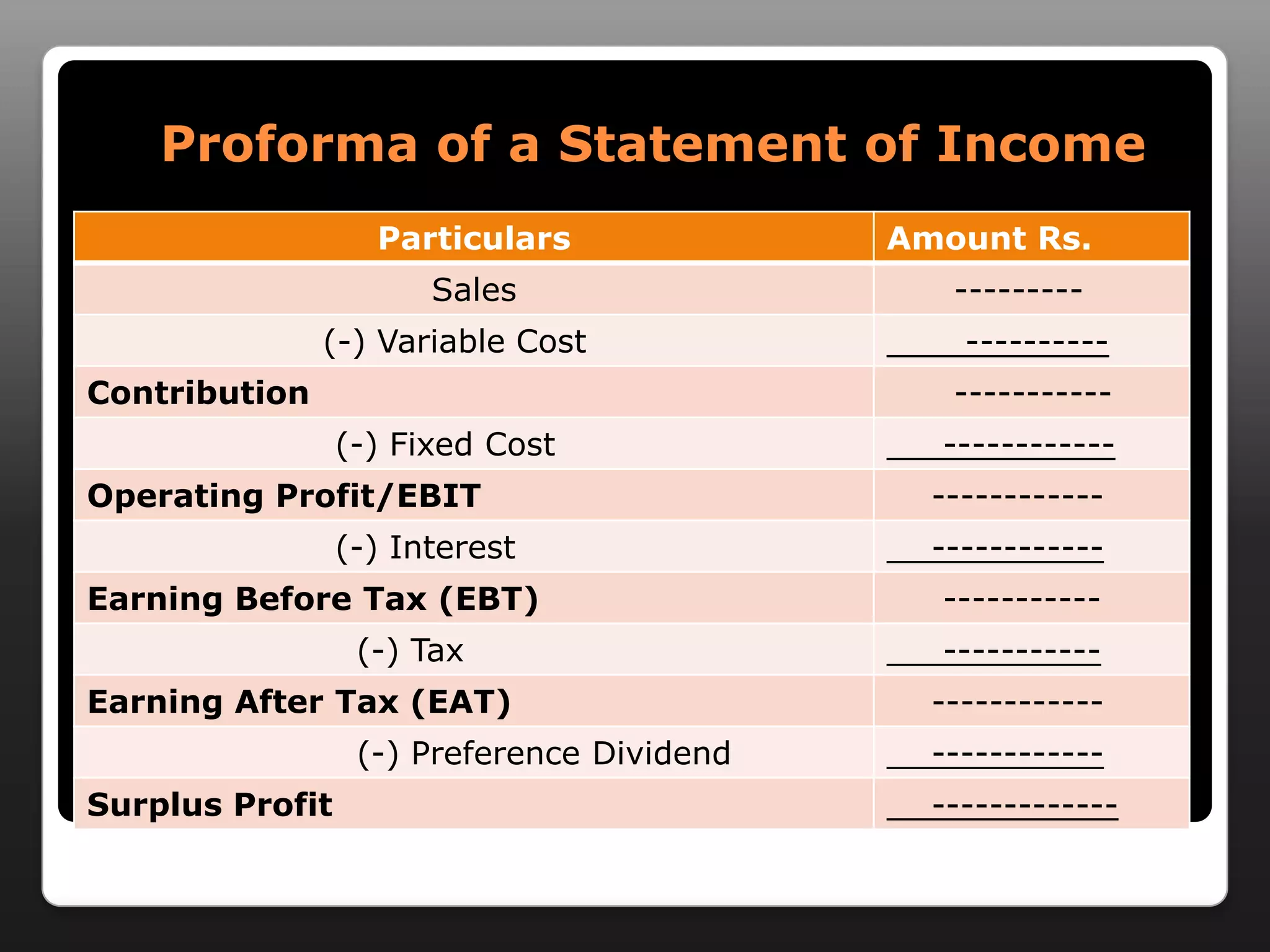
Proforma of a Statement of Income
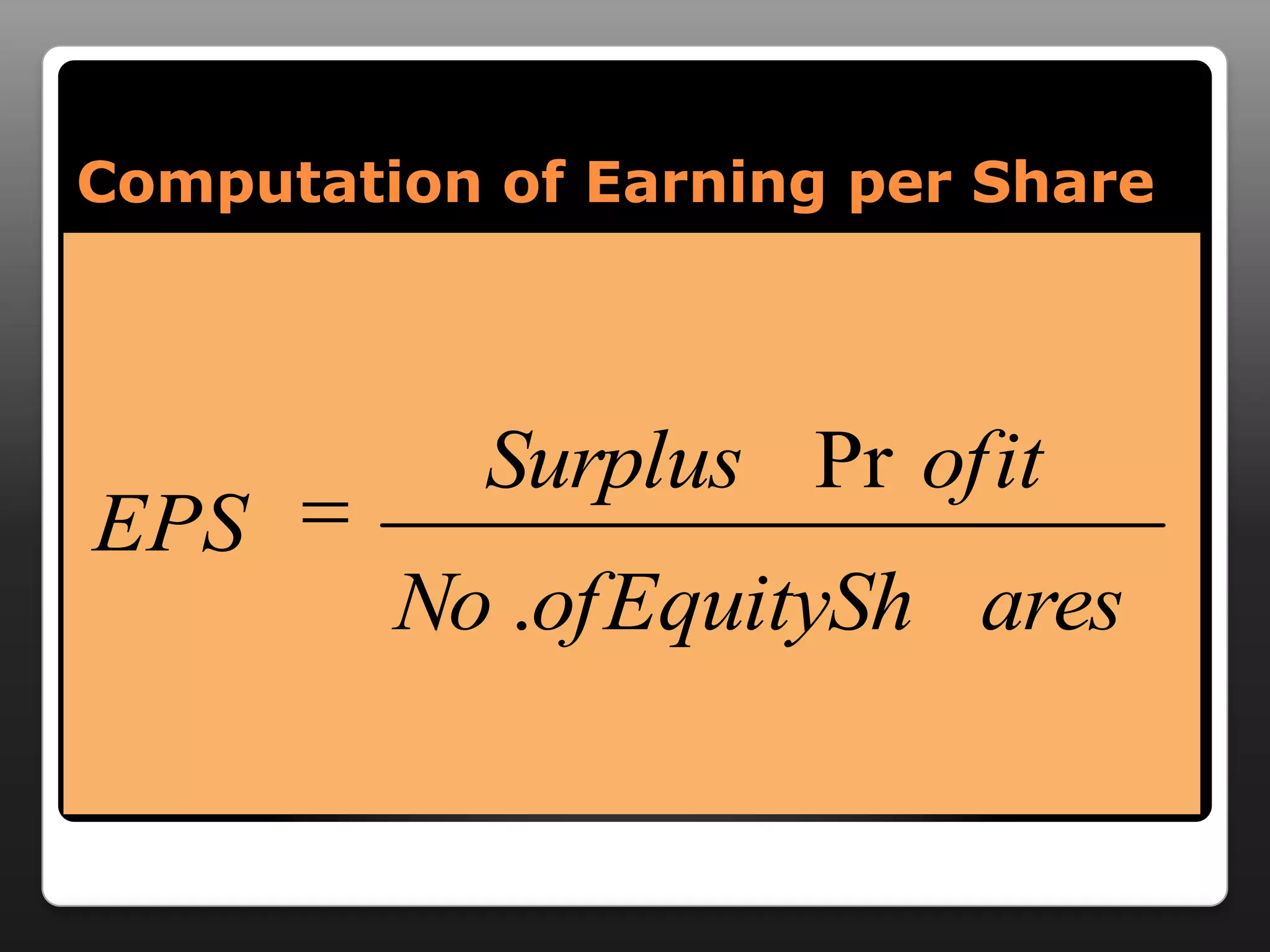
Computation of Earning per Share
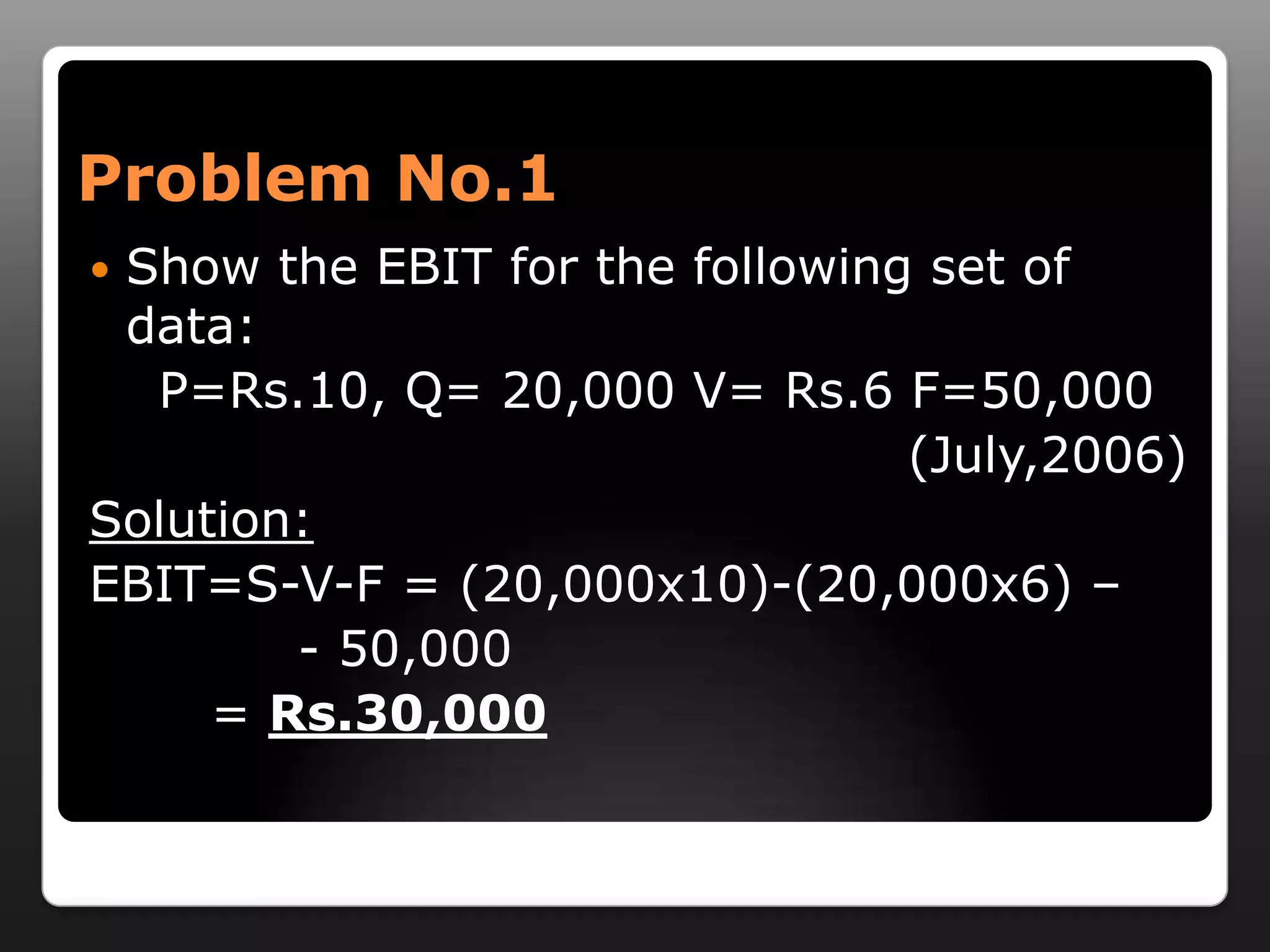
Problem No.1Show the EBIT for the following set of data:    P=Rs.10, Q= 20,000 V= Rs.6 F=50,000                     (July,2006)Solution:EBIT=S-V-F = (20,000x10)-(20,000x6) –                             - 50,000        = Rs.30,000
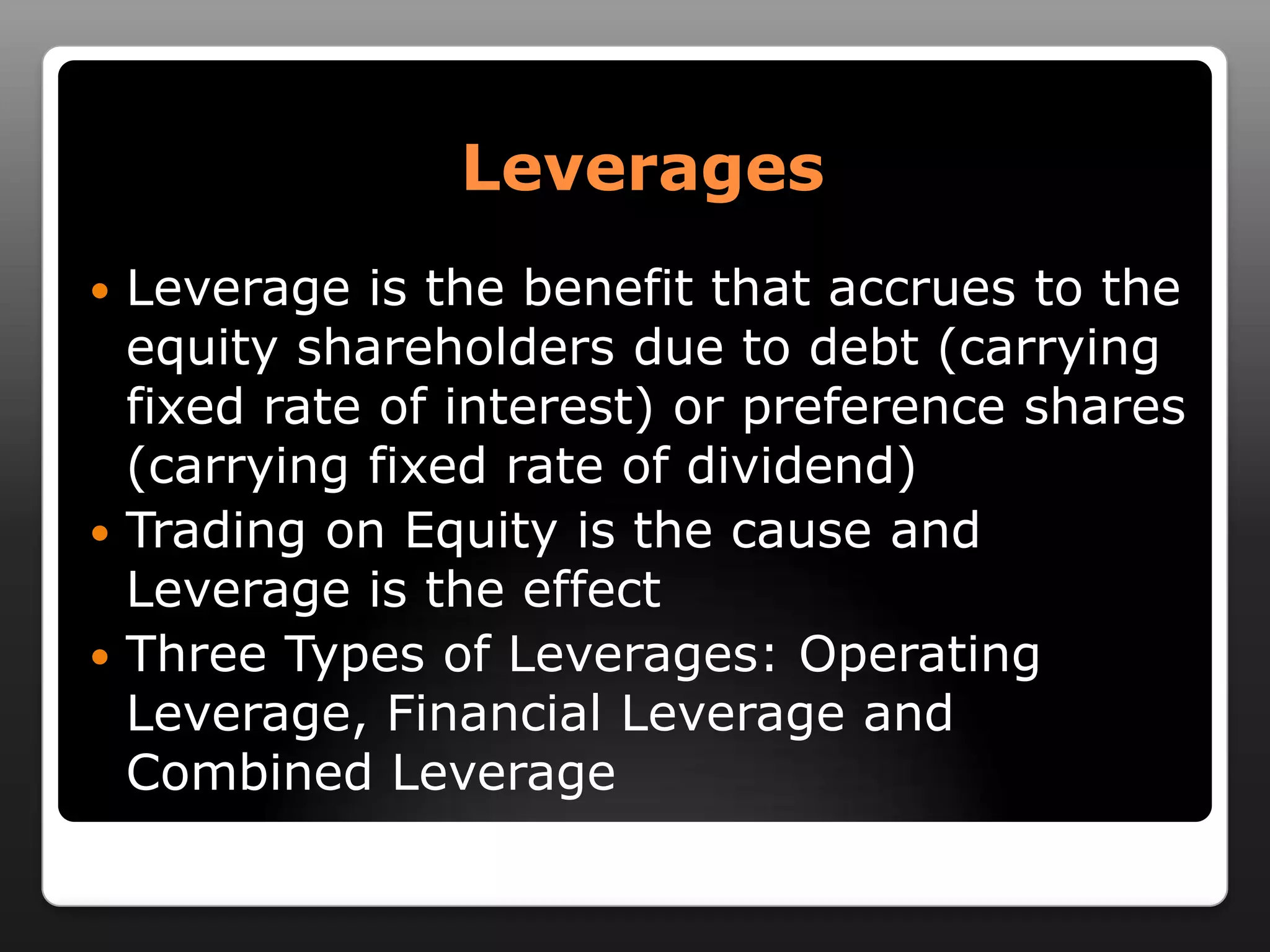
LeveragesLeverage is the benefit that accrues to the equity shareholders due to debt (carrying fixed rate of interest) or preference shares (carrying fixed rate of dividend)Trading on Equity is the cause and Leverage is the effectThree Types of Leverages: Operating Leverage, Financial Leverage and Combined Leverage
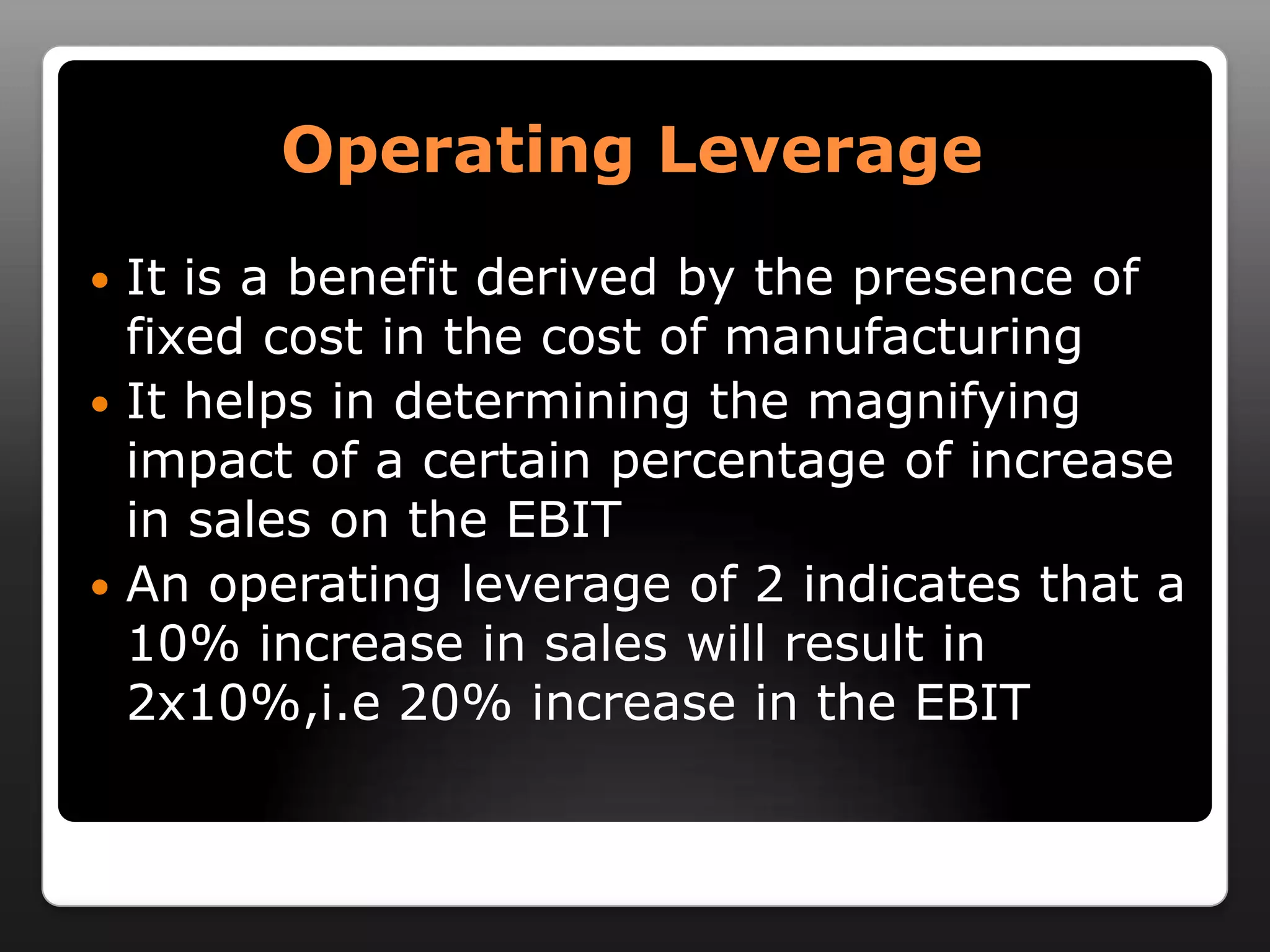
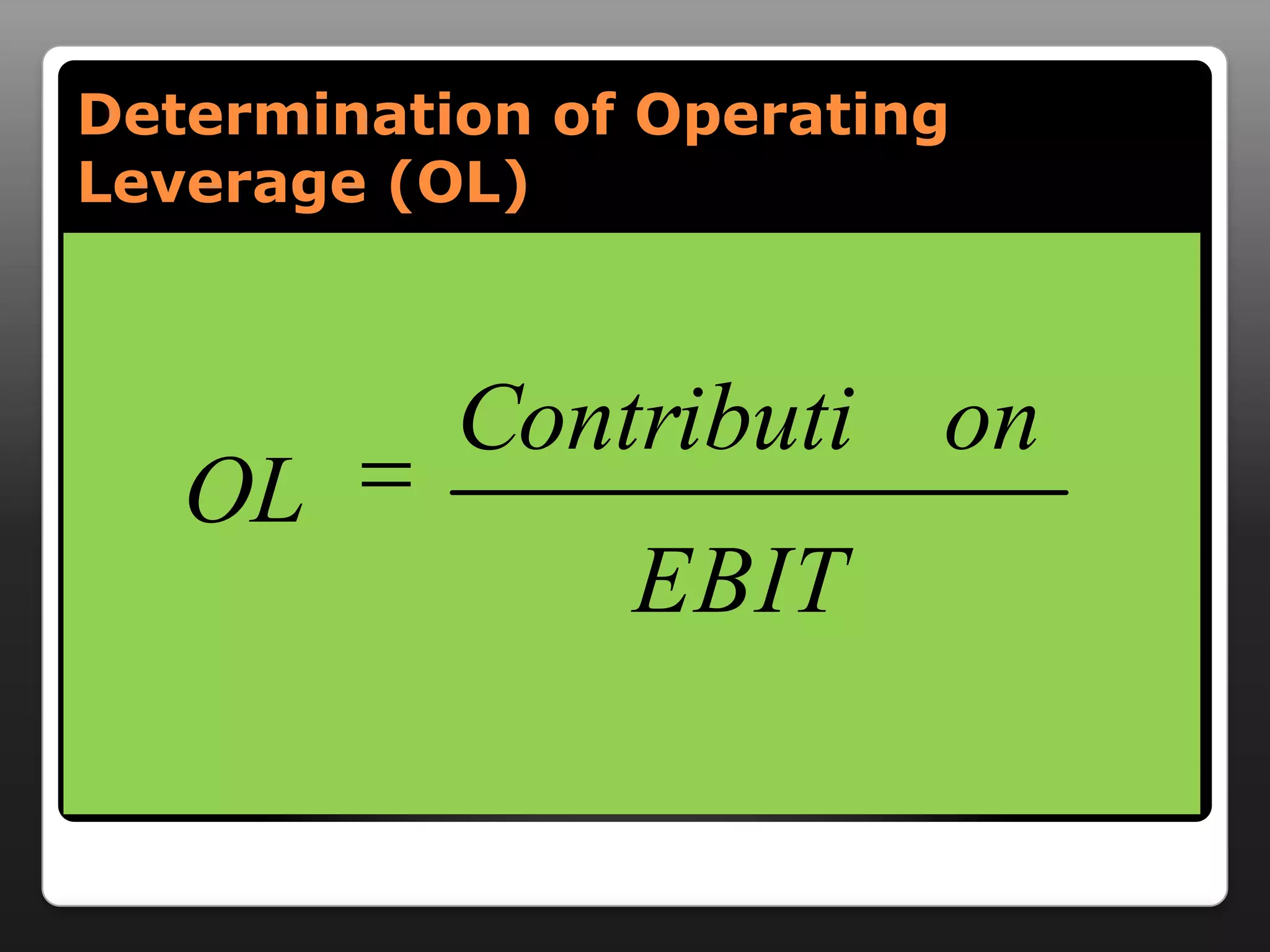
Operating LeverageIt is a benefit derived by the presence of fixed cost in the cost of manufacturingIt helps in determining the magnifying impact of a certain percentage of increase in sales on the EBITAn operating leverage of 2 indicates that a 10% increase in sales will result in 2x10%,i.e 20% increase in the EBIT
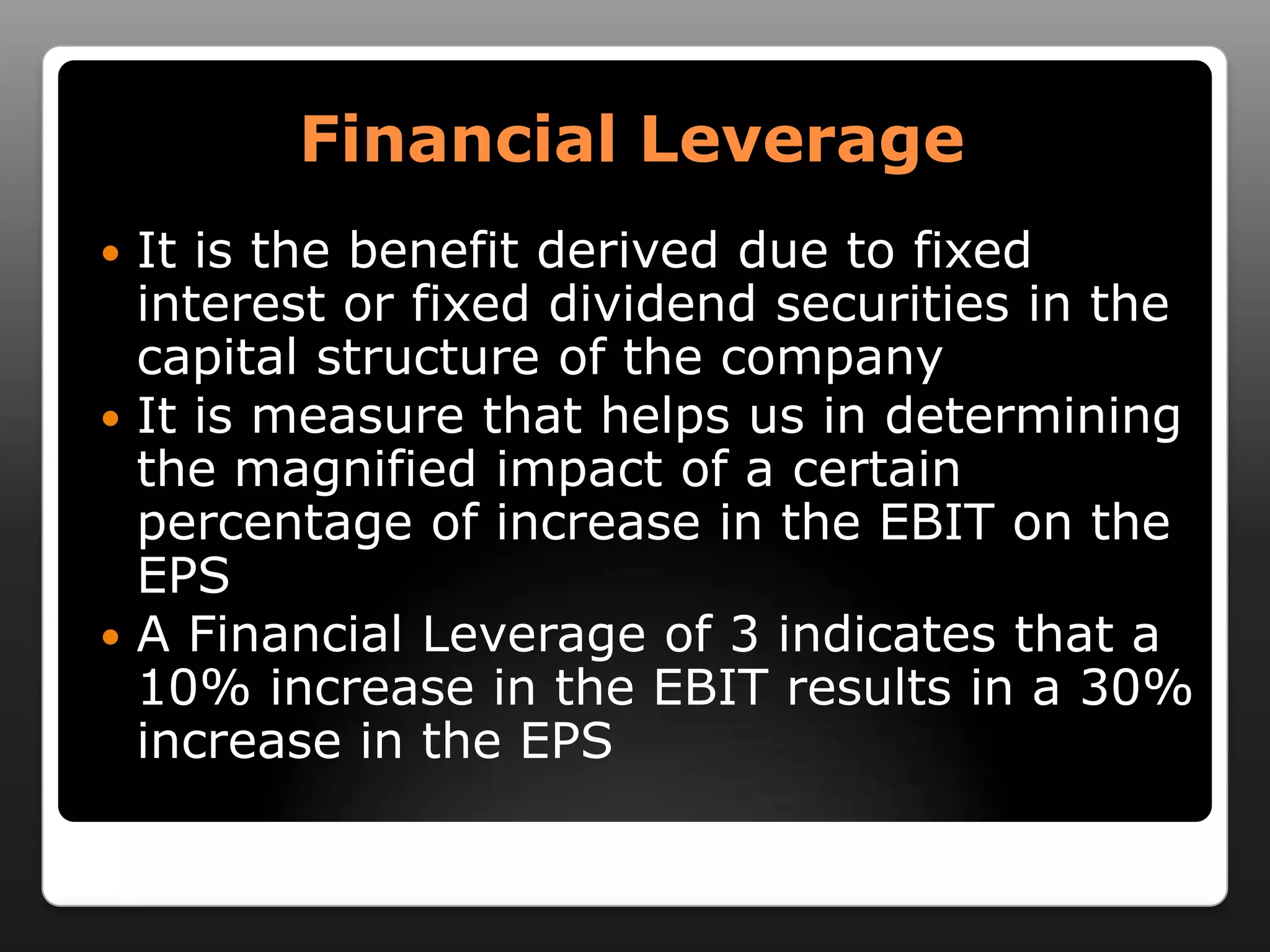
Financial LeverageIt is the benefit derived due to fixed interest or fixed dividend securities in the capital structure of the companyIt is measure that helps us in determining the magnified impact of a certain percentage of increase in the EBIT on the EPSA Financial Leverage of 3 indicates that a 10% increase in the EBIT results in a 30% increase in the EPS
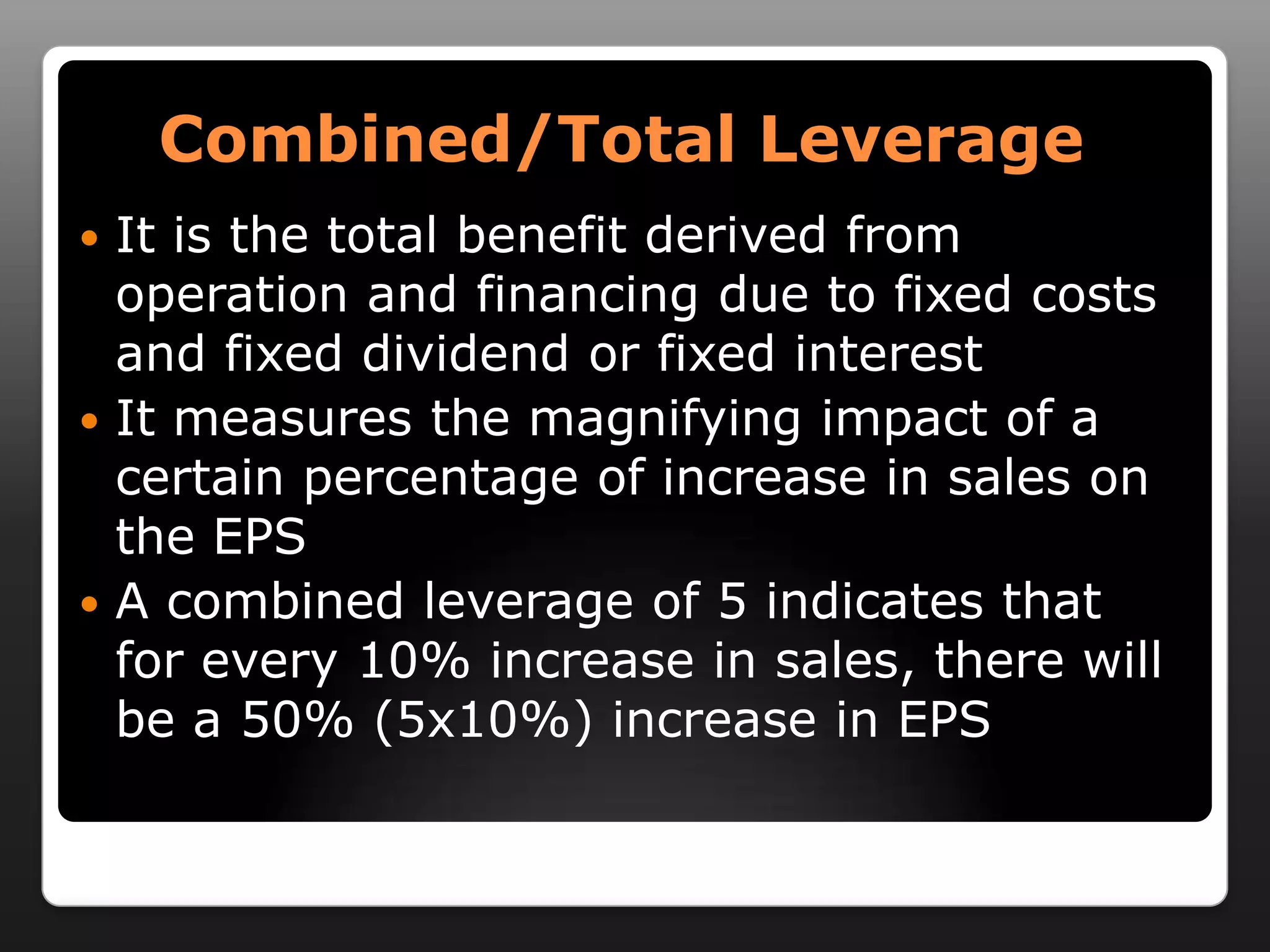
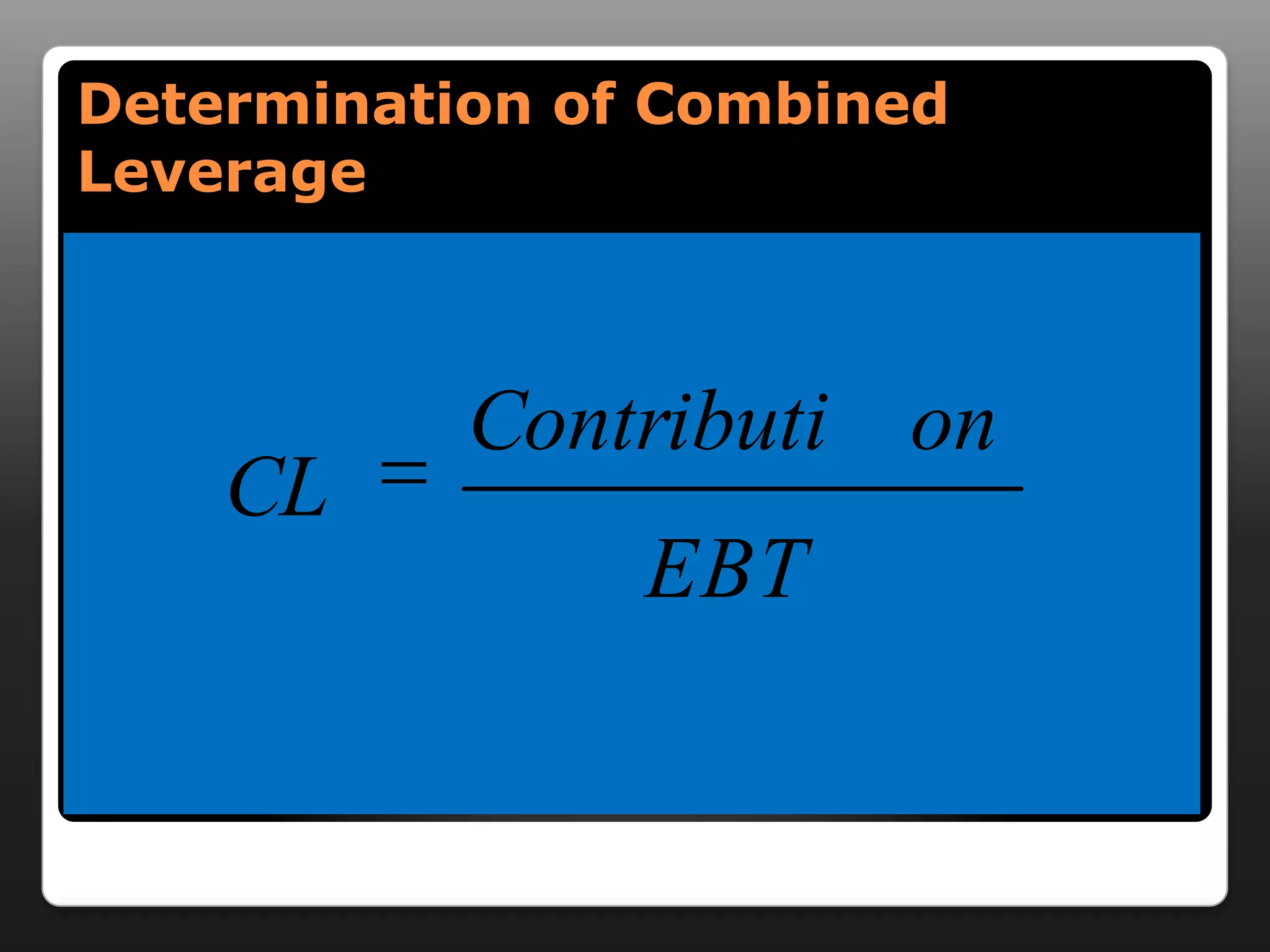
Combined/Total LeverageIt is the total benefit derived from operation and financing due to fixed costs and fixed dividend or fixed interestIt measures the magnifying impact of a certain percentage of increase in sales on the EPSA combined leverage of 5 indicates that for every 10% increase in sales, there will be a 50% (5x10%) increase in EPS
Determination of Operating Leverage (OL)
Determination of Financial Leverage (FL)
Determination of Combined Leverage
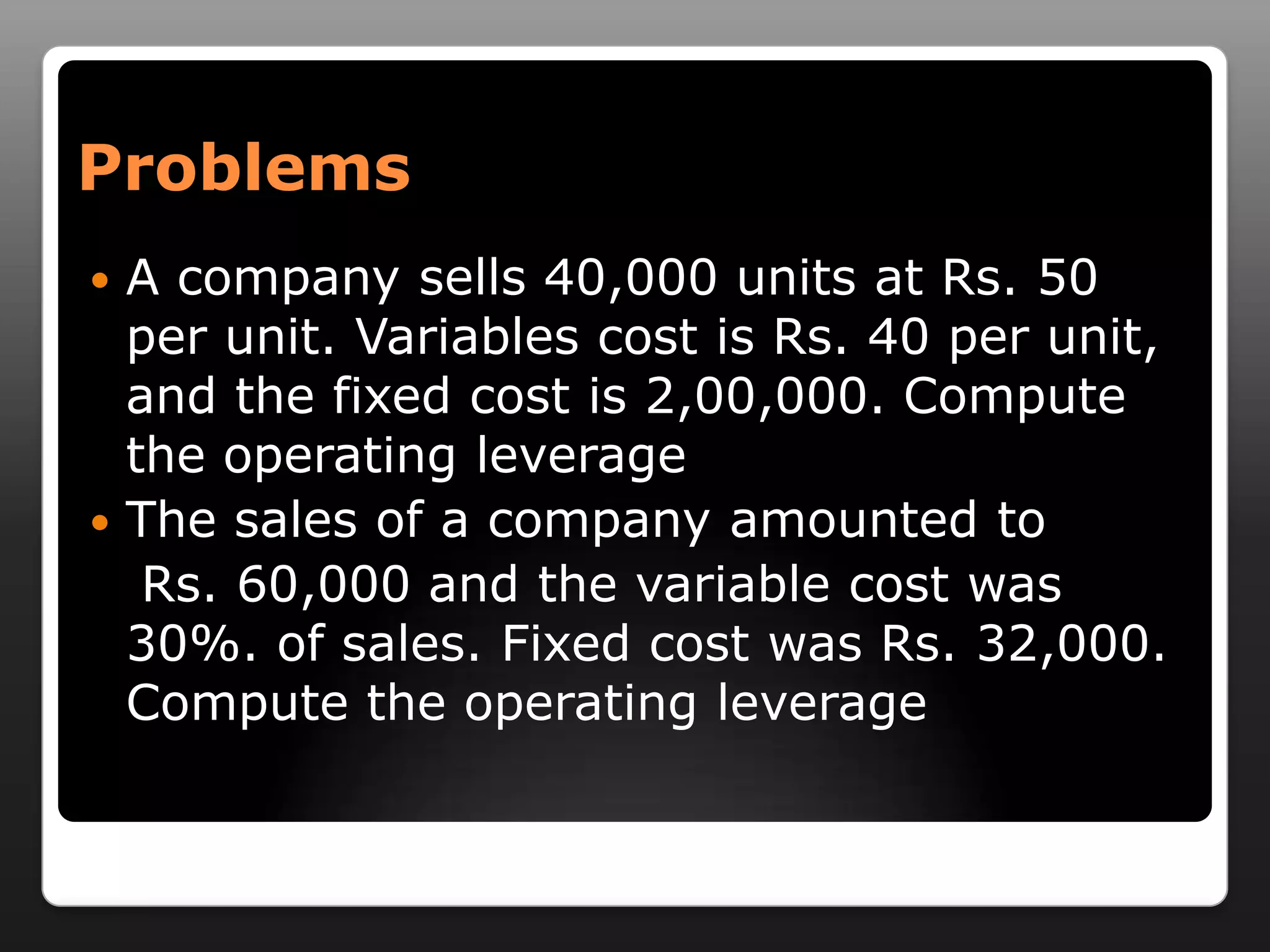
ProblemsA company sells 40,000 units at Rs. 50 per unit. Variables cost is Rs. 40 per unit, and the fixed cost is 2,00,000. Compute the operating leverageThe sales of a company amounted to    Rs. 60,000 and the variable cost was 30%. of sales. Fixed cost was Rs. 32,000. Compute the operating leverage
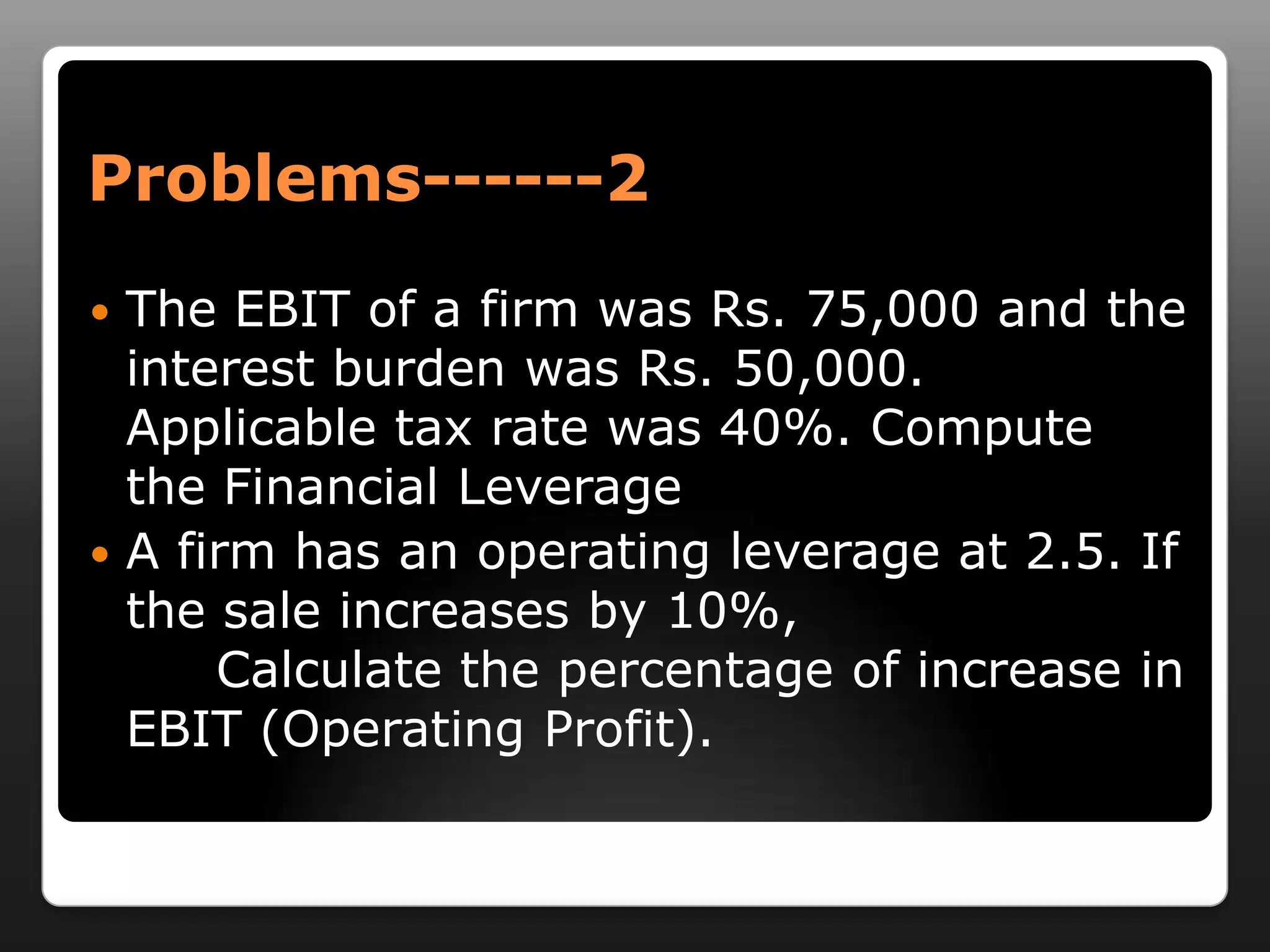
Problems------2The EBIT of a firm was Rs. 75,000 and the interest burden was Rs. 50,000. Applicable tax rate was 40%. Compute the Financial LeverageA firm has an operating leverage at 2.5. If the sale increases by 10%, 		Calculate the percentage of increase in EBIT (Operating Profit).
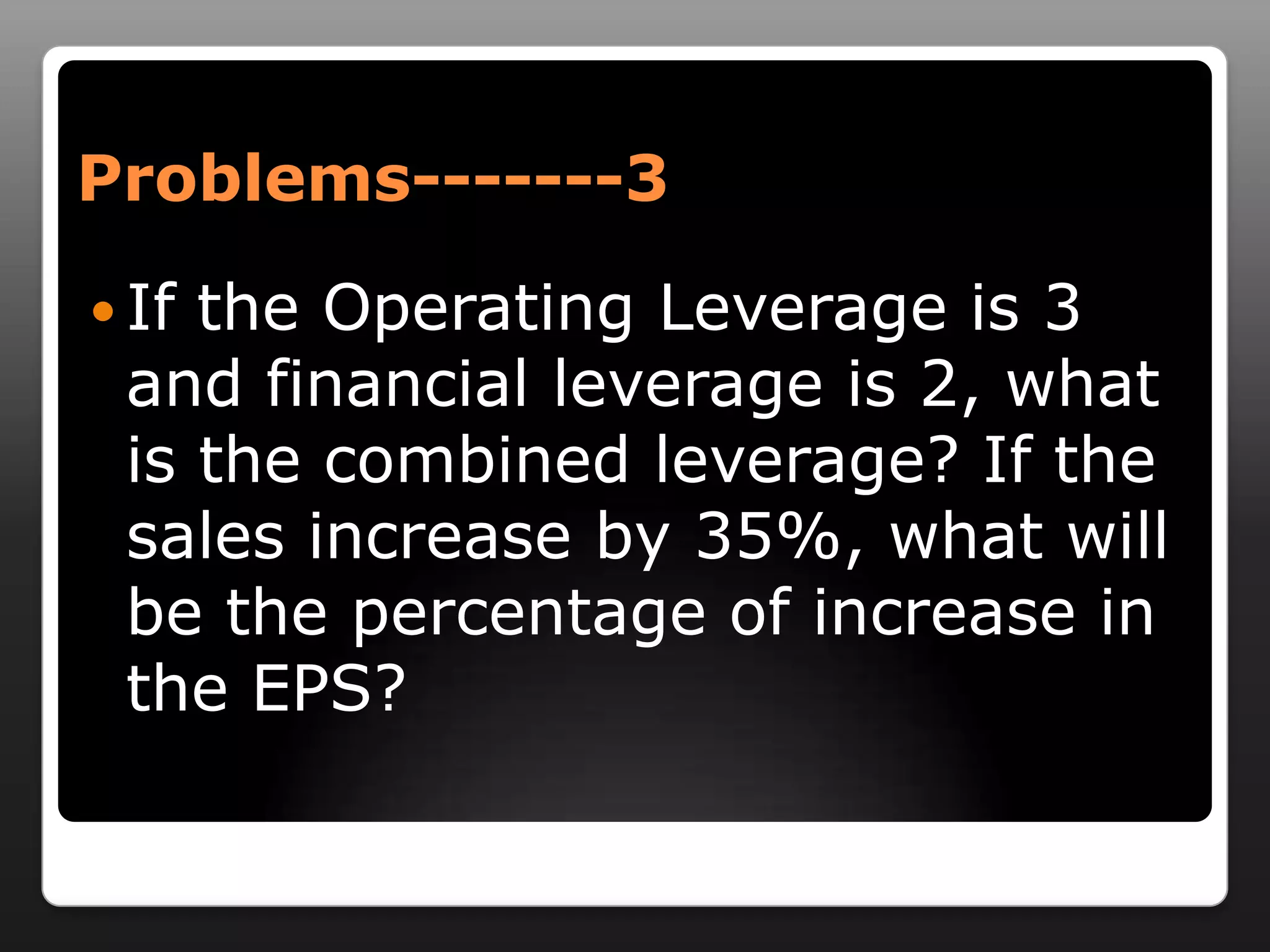
Problems-------3If the Operating Leverage is 3 and financial leverage is 2, what is the combined leverage? If the sales increase by 35%, what will be the percentage of increase in the EPS?
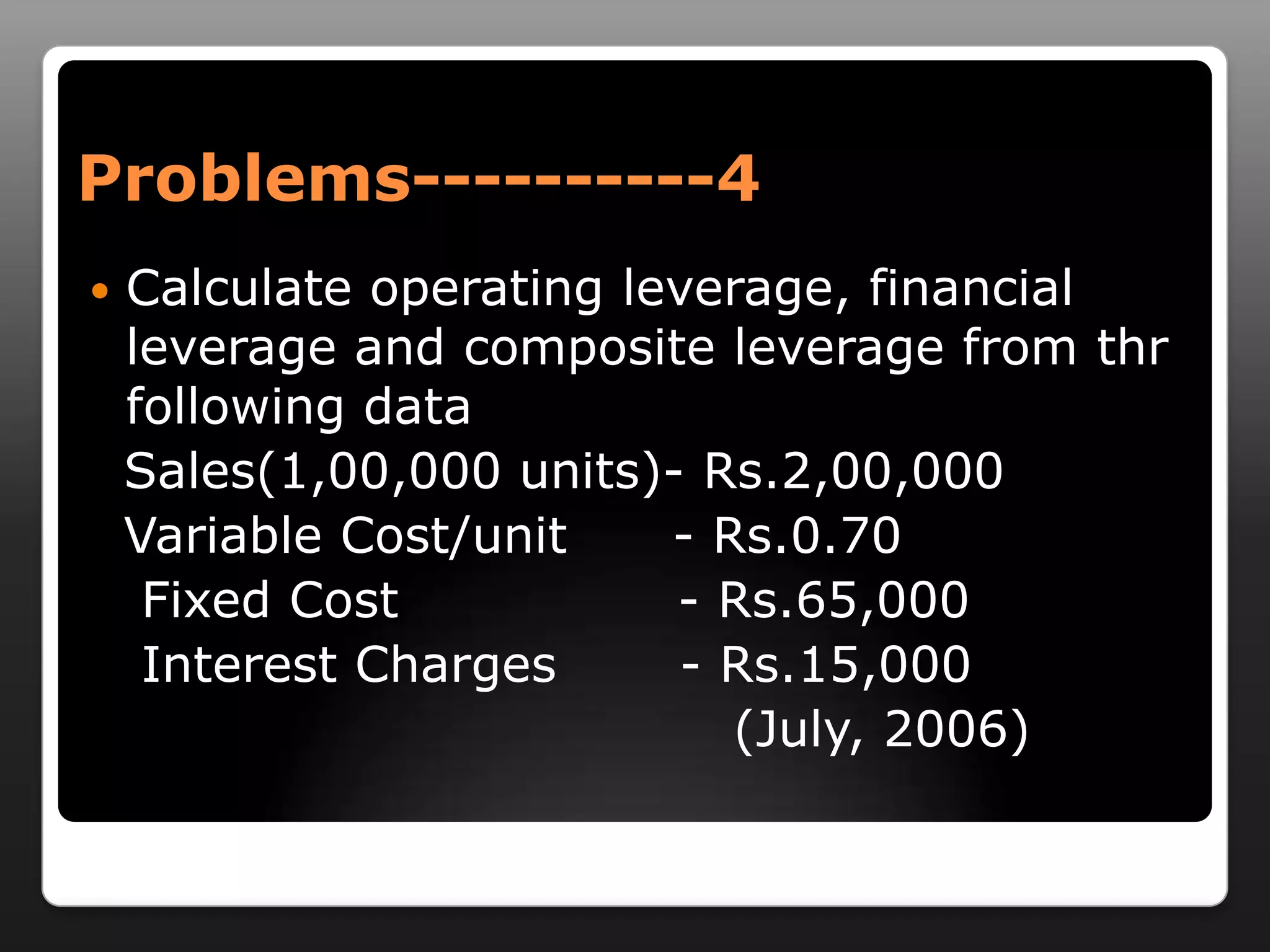
Problems----------4Calculate operating leverage, financial leverage and composite leverage from thr following data   Sales(1,00,000 units)- Rs.2,00,000  Variable Cost/unit      - Rs.0.70   Fixed Cost                - Rs.65,000   Interest Charges       - Rs.15,000                                     (July, 2006)
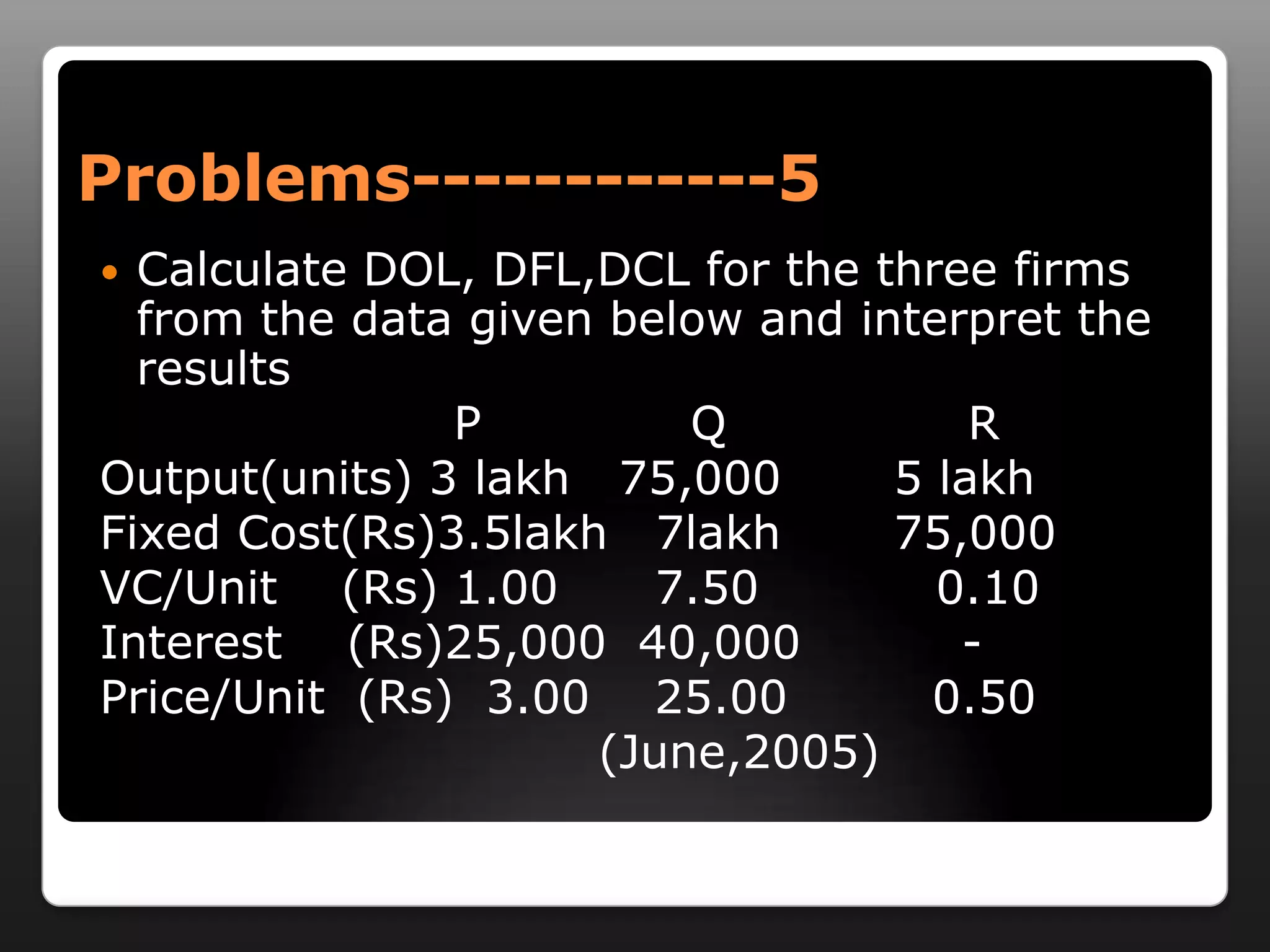
Problems------------5Calculate DOL, DFL,DCL for the three firms from the data given below and interpret the results                      P             Q               ROutput(units) 3 lakh   75,000       5 lakhFixed Cost(Rs)3.5lakh   7lakh       75,000VC/Unit    (Rs) 1.00      7.50           0.10Interest    (Rs)25,000  40,000          -Price/Unit  (Rs)  3.00    25.00         0.50                               (June,2005)
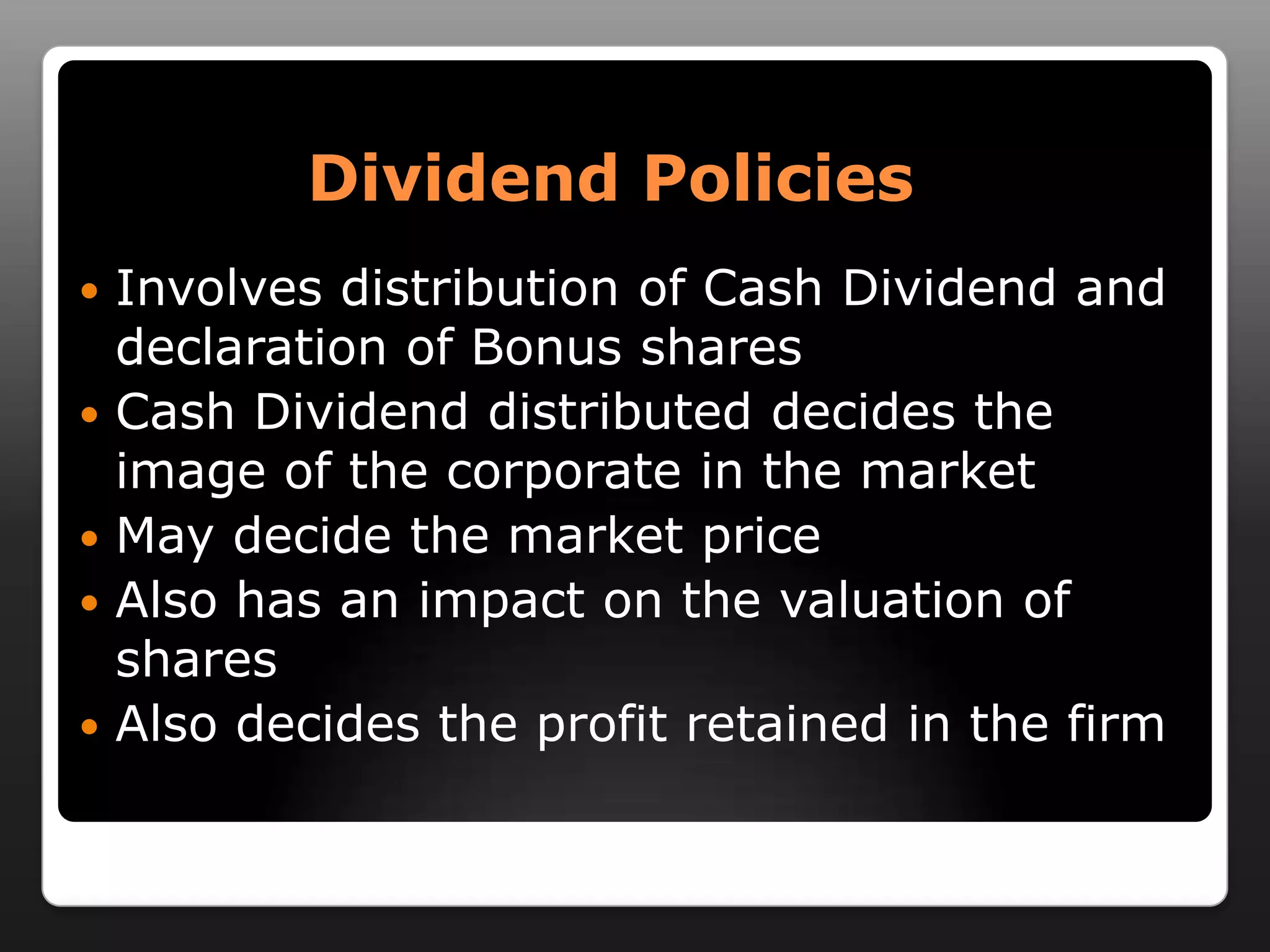
Dividend PoliciesInvolves distribution of Cash Dividend and declaration of Bonus sharesCash Dividend distributed decides the image of the corporate in the marketMay decide the market priceAlso has an impact on the valuation of sharesAlso decides the profit retained in the firm
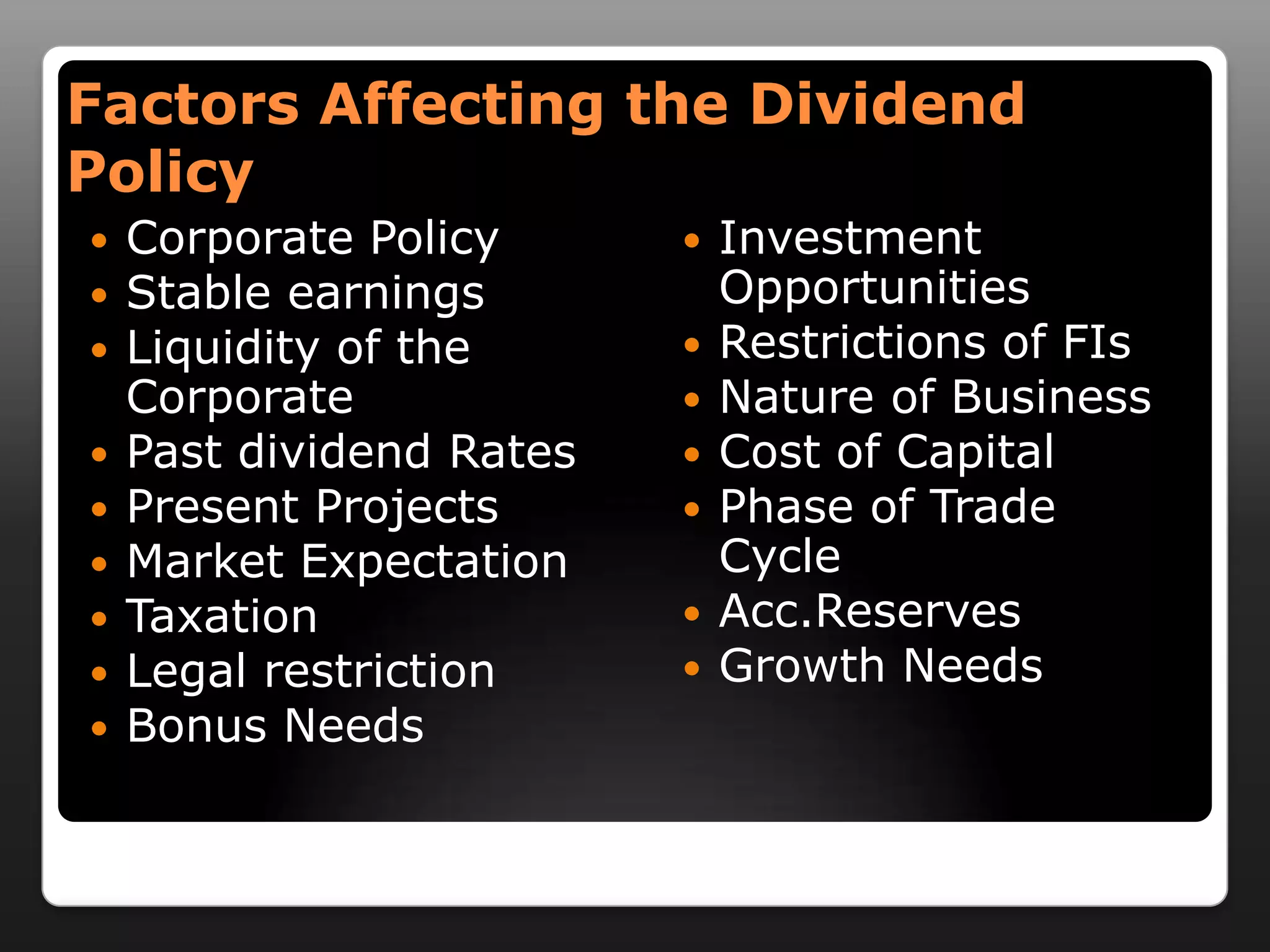
Factors Affecting the Dividend PolicyCorporate PolicyStable earningsLiquidity of the CorporatePast dividend RatesPresent ProjectsMarket ExpectationTaxationLegal restrictionBonus NeedsInvestment OpportunitiesRestrictions of FIsNature of BusinessCost of CapitalPhase of Trade CycleAcc.ReservesGrowth Needs
Types of Dividend PoliciesStable Dividend PolicyStable Dividend Pay-Out Policy
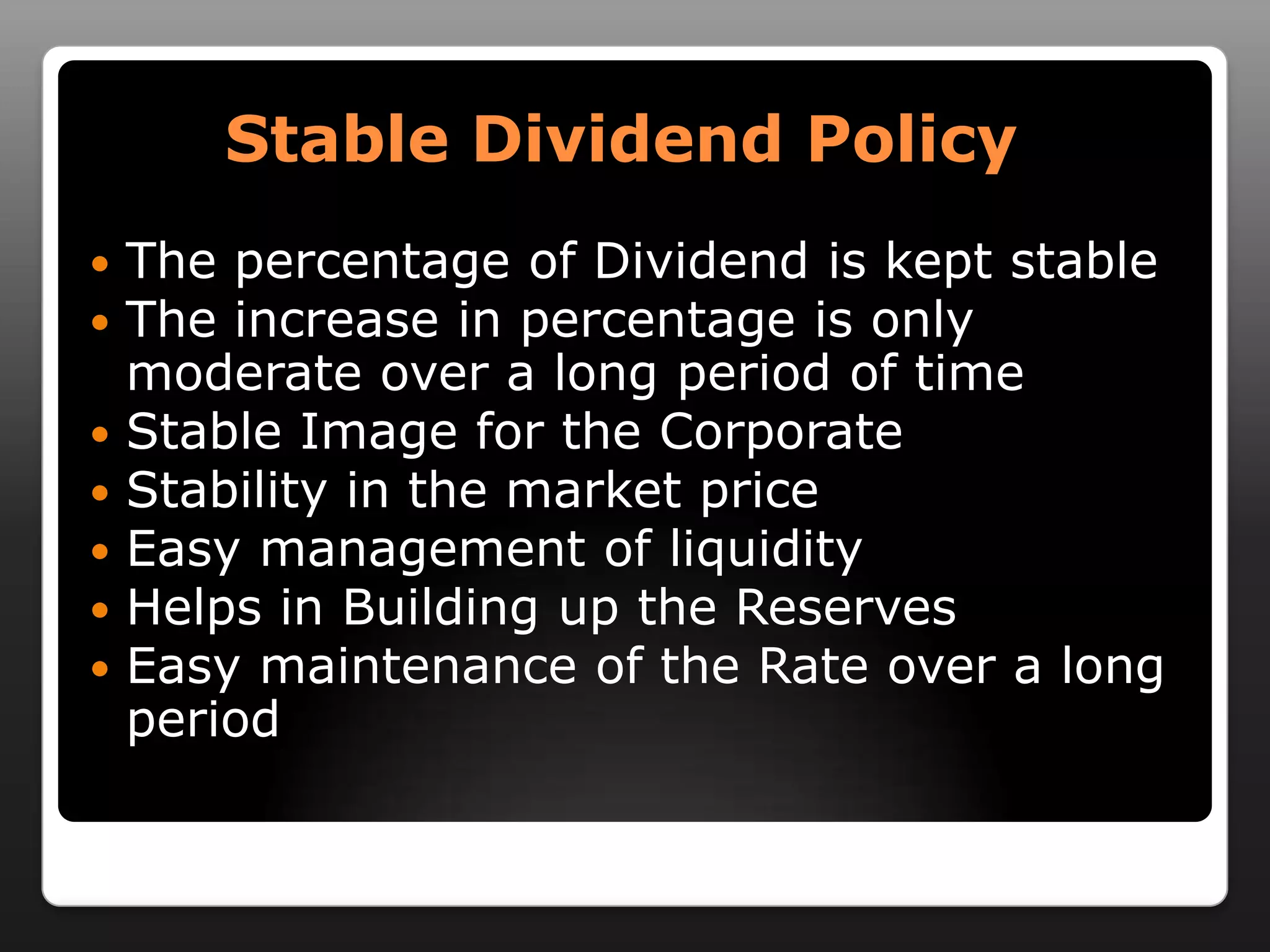
Stable Dividend PolicyThe percentage of Dividend is kept stableThe increase in percentage is only moderate over a long period of timeStable Image for the CorporateStability in the market priceEasy management of liquidityHelps in Building up the ReservesEasy maintenance of the Rate over a long period
Stable Dividend Pay-Out PolicyA certain percentage of the surplus profit is distributed year after yearHigher surplus results in a higher percentageShareholders enjoy during periods of growth and prosperity and suffer during recessionFluctuating market PriceLeading to Speculation in the trading in the shares
THANK YOU

Capital Structure Decisions-B.V.Raghunandan

  • 1.
    Capital Structure Decisions-B.V.Raghunandan,SVS College, Bantwal-Karnataka-India
  • 2.
    Meaning & Definitionof Capital StructureCapital Structure is, ”the permanent financing of the firm represented by long-term debt, preferred stock and networth” -Weston & Brigham
  • 3.
    Planning the CapitalStructureFactors to be considered 1. Liquidity 2. Profitability 3. Ownership Control 4. Leverage 5. Nature of Industry 6. Funding Agencies’ Suggestions 7. Timing 8. Tax Planning 9. Growth Plans 10. Strategy
  • 4.
    DebtAny source thatgives the funding agency the creditorship statusIn the horizontal form of Corporate Balance Sheet, it is the sum of III and IV items(Secured Loans and Unsecured Loans) on the Liabilities side of the Balance SheetIn the vertical format, it is the II item (which again contains Secured Loans and Unsecured Loans) on the side of Sources of Funds
  • 5.
    Features of DebtCompulsoryPayment of InterestCompulsory RepaymentOnly Fixed InterestNo Annual ReportsNo Voting Rights
  • 6.
    Merits of DebtBenefitof LeverageCost of Raising FundsTax AdvantageManagerial StabilityEasier SEBI NormsFlexible FeaturesStable Market for SecuritiesManageable Administrative ExpensesFlexible RepaymentEasier Regulatory Compliance
  • 7.
    Demerits of DebtCompulsoryPayment of InterestSolvency AffectedCompulsory RedemptionCharge on AssetsCredit Rate Shopping
  • 8.
    Equity Shareholders Fundor Ownership CapitalCompulsory Component of the Capital StructureSum of Equity Share Capital, Preference Share Capital and Reserves and SurplusPreference Shares are not a Popular Instrument
  • 9.
    Equity SharesCommon Stock/OrdinarySharesFull Fledged OwnershipTotal Entitlement to the AssetsRepayment After the Satisfaction of Every Other ClaimPreemptive RightEntitlement for Dividend, Bonus Shares and Other Such Rewards
  • 10.
    Benefits of EquitySharesBasic for Capital StructureBetter SolvencyGestation PeriodNo RedemptionNo Charge on AssetsNo Shopping for Credit RatingEvaluation of Share ValueBetter ImageCreation of ValuePublic Knowledge of Financial Information
  • 11.
    Demerits of EquitySharesTax ImplicationManagement ControlHigh Rates of DividendLack of FlexibilityStringent SEBI NormsHuge Issue ExpensesHigh Volatility in the Stock MarketSpeculationComplex Shareholder- Management RelationRigid Corporate Governance
  • 12.
    Tradingon EquityTrading on Equity is, "the use of borrowed funds or preferred stock for financing” -Guthmann & Dougal
  • 13.
    Significance of Tradingon EquityA company having an ROI greater than the k can achieve a higher EPS for the equity shareholdersA company having a lower ROI than the k, will suffer financially because of inability to meet the fixed interest commitment
  • 14.
    Preparation of Statementof IncomeLeverages: Operating Leverage, Financial Leverage and Combined LeverageDegree of LeveragesSignificance of Each Leverage: -Sales-EBIT-EPS Relation -Measurement of Risk Levels -Behaviour of Costs
  • 15.
    Proforma of aStatement of Income
  • 16.
  • 17.
    Problem No.1Show theEBIT for the following set of data: P=Rs.10, Q= 20,000 V= Rs.6 F=50,000 (July,2006)Solution:EBIT=S-V-F = (20,000x10)-(20,000x6) – - 50,000 = Rs.30,000
  • 18.
    LeveragesLeverage is thebenefit that accrues to the equity shareholders due to debt (carrying fixed rate of interest) or preference shares (carrying fixed rate of dividend)Trading on Equity is the cause and Leverage is the effectThree Types of Leverages: Operating Leverage, Financial Leverage and Combined Leverage
  • 19.
    Operating LeverageIt isa benefit derived by the presence of fixed cost in the cost of manufacturingIt helps in determining the magnifying impact of a certain percentage of increase in sales on the EBITAn operating leverage of 2 indicates that a 10% increase in sales will result in 2x10%,i.e 20% increase in the EBIT
  • 20.
    Financial LeverageIt isthe benefit derived due to fixed interest or fixed dividend securities in the capital structure of the companyIt is measure that helps us in determining the magnified impact of a certain percentage of increase in the EBIT on the EPSA Financial Leverage of 3 indicates that a 10% increase in the EBIT results in a 30% increase in the EPS
  • 21.
    Combined/Total LeverageIt isthe total benefit derived from operation and financing due to fixed costs and fixed dividend or fixed interestIt measures the magnifying impact of a certain percentage of increase in sales on the EPSA combined leverage of 5 indicates that for every 10% increase in sales, there will be a 50% (5x10%) increase in EPS
  • 22.
  • 23.
  • 24.
  • 25.
    ProblemsA company sells40,000 units at Rs. 50 per unit. Variables cost is Rs. 40 per unit, and the fixed cost is 2,00,000. Compute the operating leverageThe sales of a company amounted to Rs. 60,000 and the variable cost was 30%. of sales. Fixed cost was Rs. 32,000. Compute the operating leverage
  • 26.
    Problems------2The EBIT ofa firm was Rs. 75,000 and the interest burden was Rs. 50,000. Applicable tax rate was 40%. Compute the Financial LeverageA firm has an operating leverage at 2.5. If the sale increases by 10%, Calculate the percentage of increase in EBIT (Operating Profit).
  • 27.
    Problems-------3If the OperatingLeverage is 3 and financial leverage is 2, what is the combined leverage? If the sales increase by 35%, what will be the percentage of increase in the EPS?
  • 28.
    Problems----------4Calculate operating leverage,financial leverage and composite leverage from thr following data Sales(1,00,000 units)- Rs.2,00,000 Variable Cost/unit - Rs.0.70 Fixed Cost - Rs.65,000 Interest Charges - Rs.15,000 (July, 2006)
  • 29.
    Problems------------5Calculate DOL, DFL,DCLfor the three firms from the data given below and interpret the results P Q ROutput(units) 3 lakh 75,000 5 lakhFixed Cost(Rs)3.5lakh 7lakh 75,000VC/Unit (Rs) 1.00 7.50 0.10Interest (Rs)25,000 40,000 -Price/Unit (Rs) 3.00 25.00 0.50 (June,2005)
  • 30.
    Dividend PoliciesInvolves distributionof Cash Dividend and declaration of Bonus sharesCash Dividend distributed decides the image of the corporate in the marketMay decide the market priceAlso has an impact on the valuation of sharesAlso decides the profit retained in the firm
  • 31.
    Factors Affecting theDividend PolicyCorporate PolicyStable earningsLiquidity of the CorporatePast dividend RatesPresent ProjectsMarket ExpectationTaxationLegal restrictionBonus NeedsInvestment OpportunitiesRestrictions of FIsNature of BusinessCost of CapitalPhase of Trade CycleAcc.ReservesGrowth Needs
  • 32.
    Types of DividendPoliciesStable Dividend PolicyStable Dividend Pay-Out Policy
  • 33.
    Stable Dividend PolicyThepercentage of Dividend is kept stableThe increase in percentage is only moderate over a long period of timeStable Image for the CorporateStability in the market priceEasy management of liquidityHelps in Building up the ReservesEasy maintenance of the Rate over a long period
  • 34.
    Stable Dividend Pay-OutPolicyA certain percentage of the surplus profit is distributed year after yearHigher surplus results in a higher percentageShareholders enjoy during periods of growth and prosperity and suffer during recessionFluctuating market PriceLeading to Speculation in the trading in the shares
  • 35.