Micro analysis 
UUssee ooff tthhee CCaammeerraa
CCaammeerraa sshhoouulldd bbee 
aannaallyysseedd iinn ttwwoo wwaayyss:: 
Framing 
Movement
FFrraammiinngg 
Camera’s distance from the subject 
Camera angle in relation to the subject 
Point of view
DDiissttaannccee 
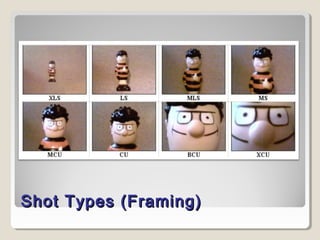
Extreme long shot 
Long shot 
Medium Long Shot 
Mid shot 
Medium Close Up 
Close up 
Big Close up 
Extreme close up
The following aarree eexxaammpplleess ooff 
bbaassiicc ffrraammiinngg tteecchhnniiqquueess……
SShhoott TTyyppeess (FFrraammiinngg)
Angle iinn rreellaattiioonn ttoo 
ssuubbjjeecctt 
High angle 
Low angle 
Wide Angle
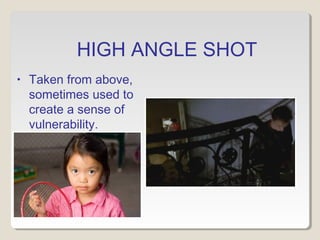
HIGH ANGLE SHOT 
• Taken from above, 
sometimes used to 
create a sense of 
vulnerability.
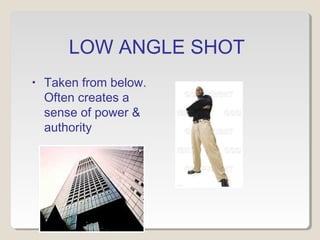
LOW ANGLE SHOT 
• Taken from below. 
Often creates a 
sense of power & 
authority
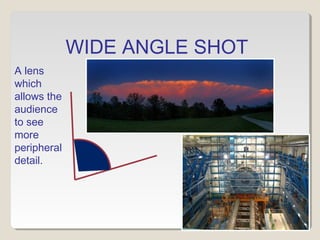
WIDE ANGLE SHOT 
A lens 
which 
allows the 
audience 
to see 
more 
peripheral 
detail.
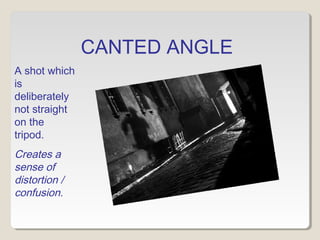
CANTED ANGLE 
A shot which 
is 
deliberately 
not straight 
on the 
tripod. 
Creates a 
sense of 
distortion / 
confusion.
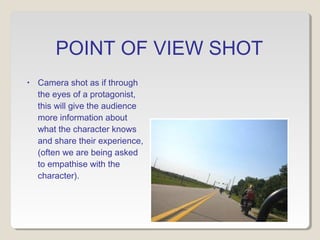
POINT OF VIEW SHOT 
• Camera shot as if through 
the eyes of a protagonist, 
this will give the audience 
more information about 
what the character knows 
and share their experience, 
(often we are being asked 
to empathise with the 
character).
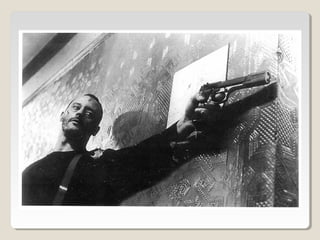
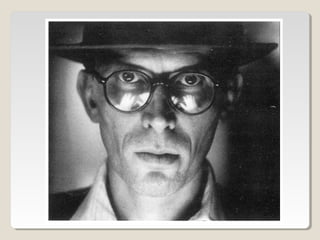
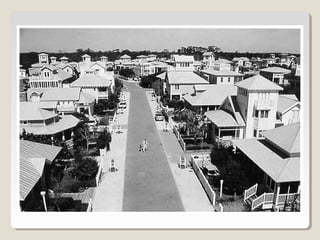
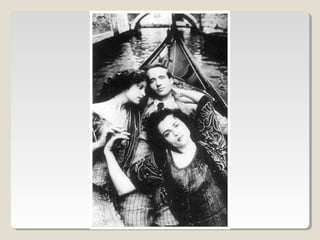
What type of shot is it? 
What elements of the image are being 
emphasised? 
What angles are being played upon in this 
image? 
Why do you think this image has been framed in 
this way? 
Look at tthhee ffoolllloowwiinngg ssttiillll
Look at the ffoolllloowwiinngg,, iinn eeaacchh 
ccaassee ssaayy…… 
What type of shot is it 
Why it has been framed in this way 
Remember you are describing 
composition and effect.
KKeeyy TTeerrmmss ((FFrraammiinngg)) 
 Extreme long shot (ELS) 
 Long shot (LS) 
 Medium Long Shot (MLS) 
 Mid shot (MS) 
 Medium Close Up (MCU) 
 Big Close Up (BCU) 
 Close-up (CU) 
 Extreme close-up (ECU) 
 High angle 
 Low angle 
 Wide Angle 
 Canted Angle 
 Point of view
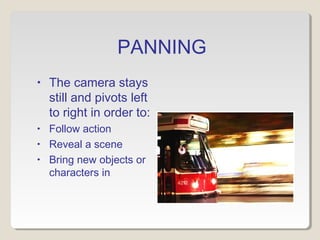
PANNING 
• The camera stays 
still and pivots left 
to right in order to: 
• Follow action 
• Reveal a scene 
• Bring new objects or 
characters in
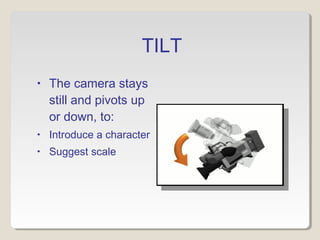
TILT 
• The camera stays 
still and pivots up 
or down, to: 
• Introduce a character 
• Suggest scale
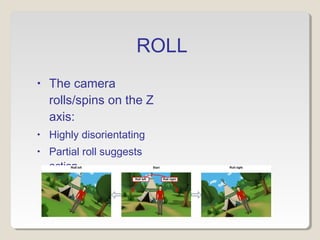
ROLL 
• The camera 
rolls/spins on the Z 
axis: 
• Highly disorientating 
• Partial roll suggests 
action
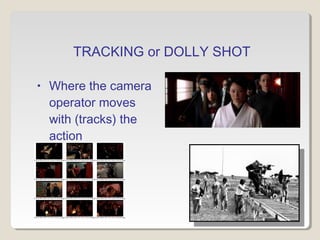
TRACKING or DOLLY SHOT 
• Where the camera 
operator moves 
with (tracks) the 
action.
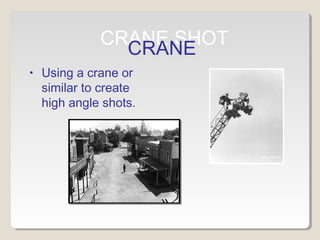
CRANE SHOT 
CRANE 
• Using a crane or 
similar to create 
high angle shots.
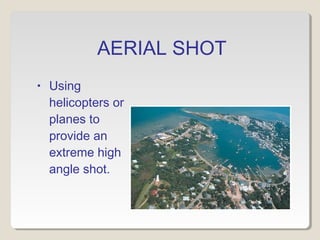
AERIAL SHOT 
• Using 
helicopters or 
planes to 
provide an 
extreme high 
angle shot.
KKeeyy TTeerrmmss 
((MMoovveemmeenntt)) 
Pan (Whip Pan) 
Tilt 
Roll 
Dolly/Tracking Shot 
Zoom 
Crane 
Steadicam / Handheld 
(Aerial Shot) Flying-Cam
There are a number of different shots which 
have specific functions within a film or TV 
programme: 
TTyyppeess ooff SShhoott
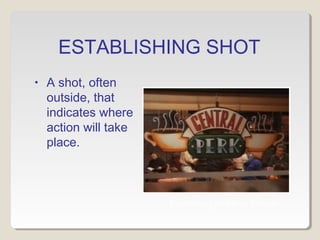
ESTABLISHING SHOT 
• A shot, often 
outside, that 
indicates where 
action will take 
place. 
Establishing shot from Friends
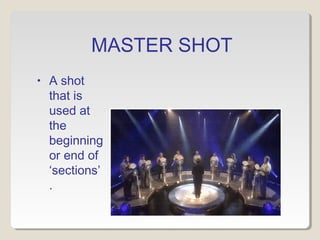
MASTER SHOT 
• A shot 
that is 
used at 
the 
beginning 
or end of 
‘sections’ 
. 
Master Shot from The Weakest Link
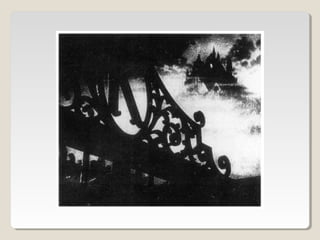
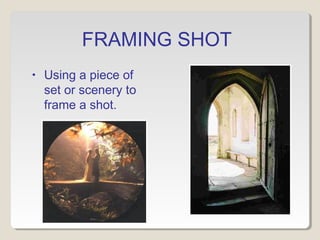
FRAMING SHOT 
• Using a piece of 
set or scenery to 
frame a shot.
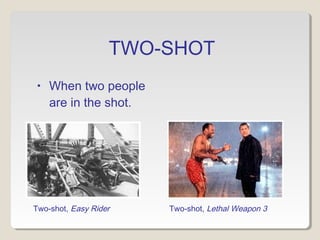
TWO-SHOT 
• When two people 
are in the shot. 
Two-shot, Easy Rider Two-shot, Lethal Weapon 3
Look at the following clip(s) and consider 
how the camera is adding meaning to 
events. 
EExxaammpplleess

Camera

  • 1.
    Micro analysis UUsseeooff tthhee CCaammeerraa
  • 2.
    CCaammeerraa sshhoouulldd bbee aannaallyysseedd iinn ttwwoo wwaayyss:: Framing Movement
  • 3.
    FFrraammiinngg Camera’s distancefrom the subject Camera angle in relation to the subject Point of view
  • 4.
    DDiissttaannccee Extreme longshot Long shot Medium Long Shot Mid shot Medium Close Up Close up Big Close up Extreme close up
  • 5.
    The following aarreeeexxaammpplleess ooff bbaassiicc ffrraammiinngg tteecchhnniiqquueess……
  • 6.
  • 7.
    Angle iinn rreellaattiioonnttoo ssuubbjjeecctt High angle Low angle Wide Angle
  • 8.
    HIGH ANGLE SHOT • Taken from above, sometimes used to create a sense of vulnerability.
  • 9.
    LOW ANGLE SHOT • Taken from below. Often creates a sense of power & authority
  • 10.
    WIDE ANGLE SHOT A lens which allows the audience to see more peripheral detail.
  • 11.
    CANTED ANGLE Ashot which is deliberately not straight on the tripod. Creates a sense of distortion / confusion.
  • 12.
    POINT OF VIEWSHOT • Camera shot as if through the eyes of a protagonist, this will give the audience more information about what the character knows and share their experience, (often we are being asked to empathise with the character).
  • 13.
    What type ofshot is it? What elements of the image are being emphasised? What angles are being played upon in this image? Why do you think this image has been framed in this way? Look at tthhee ffoolllloowwiinngg ssttiillll
  • 15.
    Look at theffoolllloowwiinngg,, iinn eeaacchh ccaassee ssaayy…… What type of shot is it Why it has been framed in this way Remember you are describing composition and effect.
  • 20.
    KKeeyy TTeerrmmss ((FFrraammiinngg))  Extreme long shot (ELS)  Long shot (LS)  Medium Long Shot (MLS)  Mid shot (MS)  Medium Close Up (MCU)  Big Close Up (BCU)  Close-up (CU)  Extreme close-up (ECU)  High angle  Low angle  Wide Angle  Canted Angle  Point of view
  • 21.
    PANNING • Thecamera stays still and pivots left to right in order to: • Follow action • Reveal a scene • Bring new objects or characters in
  • 22.
    TILT • Thecamera stays still and pivots up or down, to: • Introduce a character • Suggest scale
  • 23.
    ROLL • Thecamera rolls/spins on the Z axis: • Highly disorientating • Partial roll suggests action
  • 24.
    TRACKING or DOLLYSHOT • Where the camera operator moves with (tracks) the action.
  • 25.
    CRANE SHOT CRANE • Using a crane or similar to create high angle shots.
  • 26.
    AERIAL SHOT •Using helicopters or planes to provide an extreme high angle shot.
  • 27.
    KKeeyy TTeerrmmss ((MMoovveemmeenntt)) Pan (Whip Pan) Tilt Roll Dolly/Tracking Shot Zoom Crane Steadicam / Handheld (Aerial Shot) Flying-Cam
  • 28.
    There are anumber of different shots which have specific functions within a film or TV programme: TTyyppeess ooff SShhoott
  • 29.
    ESTABLISHING SHOT •A shot, often outside, that indicates where action will take place. Establishing shot from Friends
  • 30.
    MASTER SHOT •A shot that is used at the beginning or end of ‘sections’ . Master Shot from The Weakest Link
  • 31.
    FRAMING SHOT •Using a piece of set or scenery to frame a shot.
  • 32.
    TWO-SHOT • Whentwo people are in the shot. Two-shot, Easy Rider Two-shot, Lethal Weapon 3
  • 33.
    Look at thefollowing clip(s) and consider how the camera is adding meaning to events. EExxaammpplleess

Editor's Notes

  • #2 Submarine – Under The Bridge
  • #24 Crouching Tiger
  • #25 The Shining – Tracking / Dolly - https://www.youtube.com/watch?v=cy7ztJ3NUMI
  • #26 Link