Camera and Action!!!! Guilford County Sci. Vis. V204.01  part 3
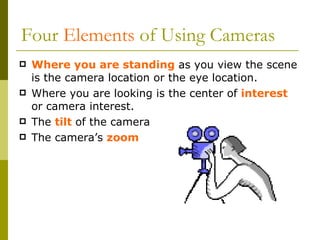
Four  Elements  of Using Cameras Where you are standing  as you view the scene is the camera location or the eye location.  Where you are looking is the center of  interest   or camera interest.  The  tilt   of the camera The camera’s  zoom
Free and Target  Cameras A  free  camera can point anywhere in a scene. It is more useful when  panning  a scene. A  target   camera points to an object and is used for tracking animation. Both the camera and the target can be animated separately.
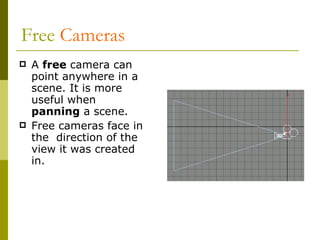
Free  Cameras A  free  camera can point anywhere in a scene. It is more useful when  panning  a scene. Free cameras face in the  direction of the view it was created in.
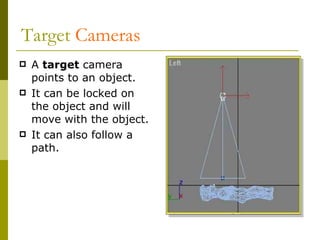
Target  Cameras A  target   camera points to an object. It can be locked on the object and will move with the object. It can also follow a path.
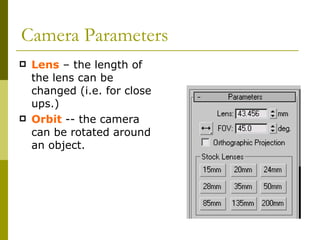
Camera Parameters Lens  – the length of the lens can be changed (i.e. for close ups.)  Orbit  -- the camera can be rotated around an object.
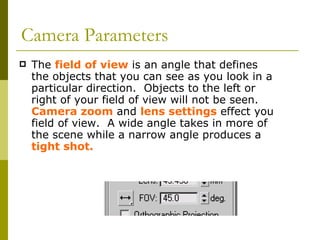
Camera Parameters The  field of view  is an angle that defines the objects that you can see as you look in a particular direction.  Objects to the left or right of your field of view will not be seen.  Camera zoom  and  lens settings  effect you field of view.  A wide angle takes in more of the scene while a narrow angle produces a  tight shot.
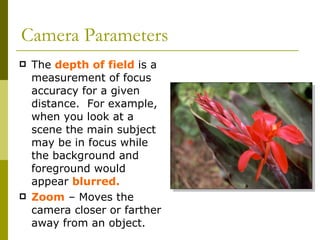
Camera Parameters The   depth of field   is a measurement of focus accuracy for a given distance.  For example, when you look at a scene the main subject may be in focus while the background and foreground would appear  blurred.  Zoom  – Moves the camera closer or farther away from an object.
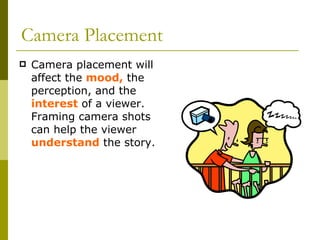
Camera Placement Camera placement will affect the  mood,  the perception, and the  interest  of a viewer. Framing camera shots can help the viewer  understand  the story.
Camera Placement- The 3 Shots Long shots  display the environment and are used to define the general area before the character is displayed or action begins. Medium  distance shots might be from a character’s waist or chest to their head and would be used to make gestures or movements clear. Close-ups  might show the individual parts of a cell, the rim of a test tube, or the opening of a book.
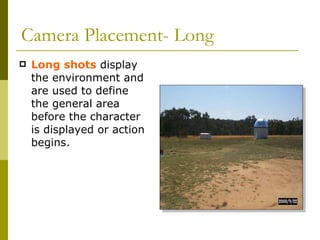
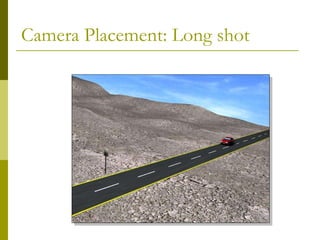
Camera Placement- Long Long shots  display the environment and are used to define the general area before the character is displayed or action begins.
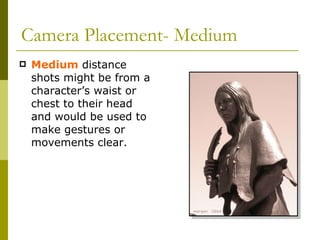
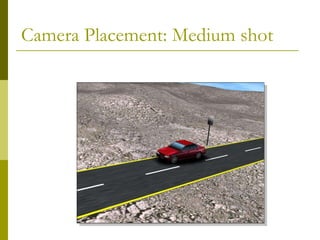
Camera Placement- Medium Medium  distance shots might be from a character’s waist or chest to their head and would be used to make gestures or movements clear.
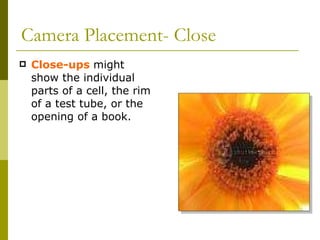
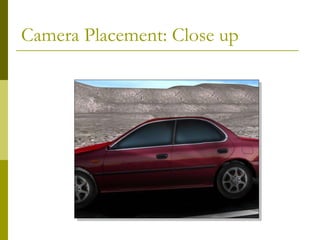
Camera Placement- Close Close-ups  might show the individual parts of a cell, the rim of a test tube, or the opening of a book.
Camera Placement An example of how  framing  might be used would be a scene where a car is traveling down a highway:  you first see it as a small object that is a part of its environment (long shot); it grows larger and the environment around it is reduced (medium shot); as it passes, only the individual elements of the vehicle are shown (close-up.)  The shots are reversed as the car moves away from you.
Camera Placement: Long shot
Camera Placement: Medium shot
Camera Placement: Close up
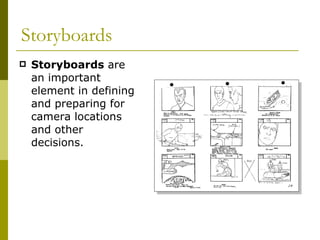
Storyboards Storyboards  are an important element in defining and preparing for camera locations and other decisions.

Camera and action!!!!

  • 1.
    Camera and Action!!!!Guilford County Sci. Vis. V204.01 part 3
  • 2.
    Four Elements of Using Cameras Where you are standing as you view the scene is the camera location or the eye location. Where you are looking is the center of interest or camera interest. The tilt of the camera The camera’s zoom
  • 3.
    Free and Target Cameras A free camera can point anywhere in a scene. It is more useful when panning a scene. A target camera points to an object and is used for tracking animation. Both the camera and the target can be animated separately.
  • 4.
    Free CamerasA free camera can point anywhere in a scene. It is more useful when panning a scene. Free cameras face in the direction of the view it was created in.
  • 5.
    Target CamerasA target camera points to an object. It can be locked on the object and will move with the object. It can also follow a path.
  • 6.
    Camera Parameters Lens – the length of the lens can be changed (i.e. for close ups.) Orbit -- the camera can be rotated around an object.
  • 7.
    Camera Parameters The field of view is an angle that defines the objects that you can see as you look in a particular direction. Objects to the left or right of your field of view will not be seen. Camera zoom and lens settings effect you field of view. A wide angle takes in more of the scene while a narrow angle produces a tight shot.
  • 8.
    Camera Parameters The depth of field is a measurement of focus accuracy for a given distance. For example, when you look at a scene the main subject may be in focus while the background and foreground would appear blurred. Zoom – Moves the camera closer or farther away from an object.
  • 9.
    Camera Placement Cameraplacement will affect the mood, the perception, and the interest of a viewer. Framing camera shots can help the viewer understand the story.
  • 10.
    Camera Placement- The3 Shots Long shots display the environment and are used to define the general area before the character is displayed or action begins. Medium distance shots might be from a character’s waist or chest to their head and would be used to make gestures or movements clear. Close-ups might show the individual parts of a cell, the rim of a test tube, or the opening of a book.
  • 11.
    Camera Placement- LongLong shots display the environment and are used to define the general area before the character is displayed or action begins.
  • 12.
    Camera Placement- MediumMedium distance shots might be from a character’s waist or chest to their head and would be used to make gestures or movements clear.
  • 13.
    Camera Placement- CloseClose-ups might show the individual parts of a cell, the rim of a test tube, or the opening of a book.
  • 14.
    Camera Placement Anexample of how framing might be used would be a scene where a car is traveling down a highway: you first see it as a small object that is a part of its environment (long shot); it grows larger and the environment around it is reduced (medium shot); as it passes, only the individual elements of the vehicle are shown (close-up.) The shots are reversed as the car moves away from you.
  • 15.
  • 16.
  • 17.
  • 18.
    Storyboards Storyboards are an important element in defining and preparing for camera locations and other decisions.