Film Language 
MISE EN SCÈNE
Mise en scène includes: 
•Costume 
•Lighting and colour 
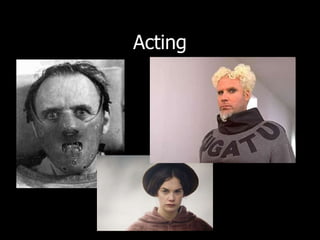
•Acting & Proxemics 
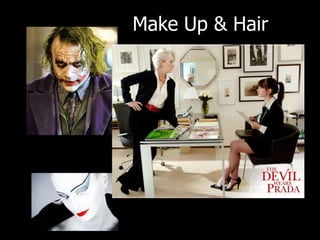
•Make up and hair 
•Props 
•Setting
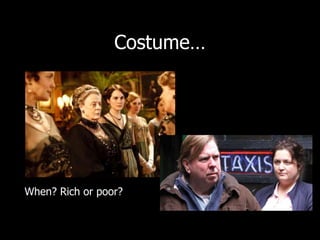
Costume… 
When? Rich or poor?
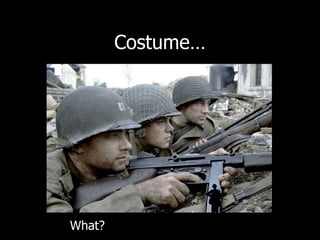
Costume… 
What?
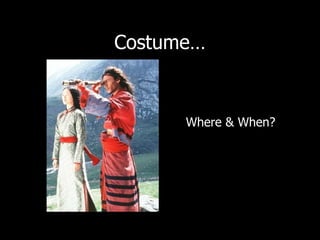
Costume… 
Where & When?
Lighting & Colour
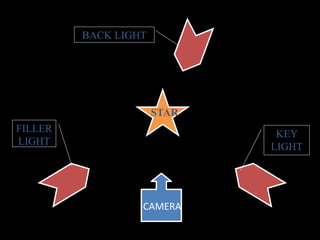
STAR 
BACK LIGHT 
CAMERA 
KEY 
LIGHT 
FILLER 
LIGHT
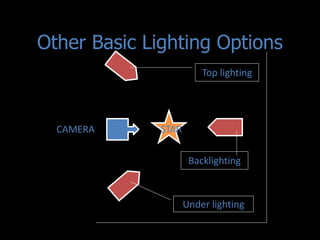
Other Basic Lighting Options 
CAMERA STAR 
Top lighting 
Backlighting 
Under lighting
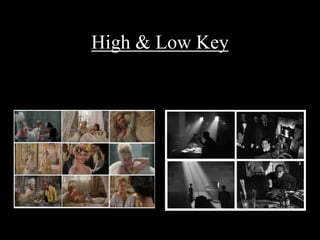
High & Low Key 
• High key lighting tries 
to create a naturalistic 
effect. 
• Low key lighting 
emphasises shadows, 
normally for effect.
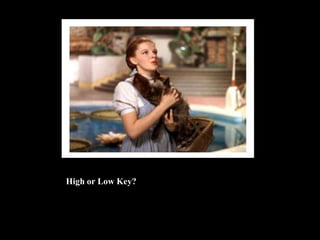
High or Low Key?
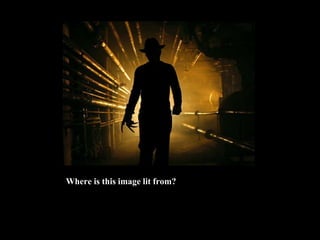
Where is this image lit from? 
What effect does this create?
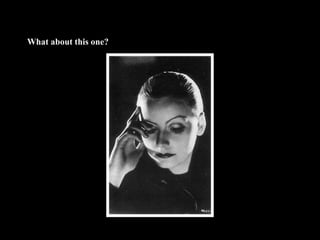
What about this one?
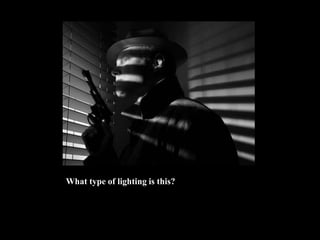
What type of lighting is this?
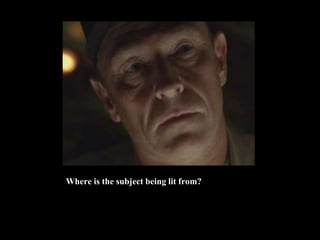
Where is the subject being lit from?
Key Terms for Lighting... 
• Key Light 
• Low key lighting 
• High key lighting 
• Back lighting 
• Top lighting 
• Under lighting
Extension
Film Noir & Chiaroscuro 
Lighting 
• Low Key Lighting 
– Creates a hard / sharp look with strong areas of 
contrast between light and dark 
– The faces of the actors lit in this way suggest a 
darker side to their personality 
– Have parts of the set casting shadows to create 
an air of fragmentation and mystery 
• Also enabled the use of cheap sets, as the lighting 
hide their faults
Acting
Make Up & Hair
Props
Setting
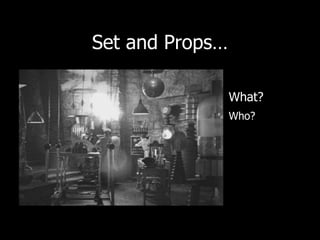
Set and Props… 
What? 
Who?
Look at the 
following 
image(s) and, 
thinking about 
mise-en-scène, 
answer the 
following 
questions:
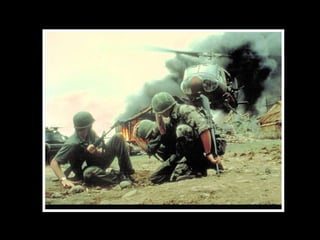
Where and when is this happening? 
What is the nature of this place?
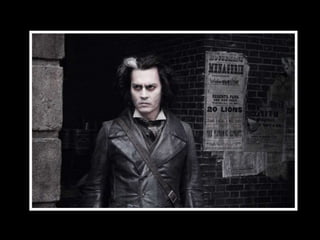
What is the nature of this character and how 
does mise-en-scene contribute to this reading?
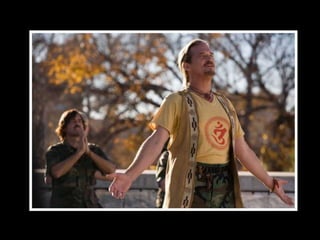
What juxtapositions (opposites placed side by 
side) are being explored in this still and what 
does this make us think about the characters
Mise en scene & lighting

Mise en scene & lighting