I am looking at the different camera shots, movements and
camera angles. This will help me have a variety of shots,
angles and movements in my film which will make my
trailer more enjoyable. From this I am looking for what will
best suit my trailer genre.
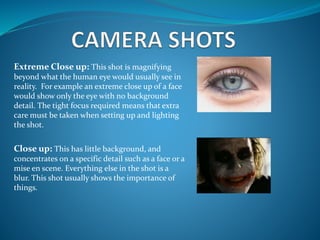
Extreme Close up: This shot is magnifying
beyond what the human eye would usually see in
reality. For example an extreme close up of a face
would show only the eye with no background
detail. The tight focus required means that extra
care must be taken when setting up and lighting
the shot.
Close up: This has little background, and
concentrates on a specific detail such as a face or a
mise en scene. Everything else in the shot is a
blur. This shot usually shows the importance of
things.
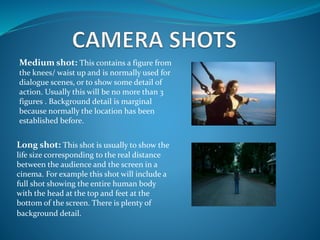
Medium shot: This contains a figure from
the knees/ waist up and is normally used for
dialogue scenes, or to show some detail of
action. Usually this will be no more than 3
figures . Background detail is marginal
because normally the location has been
established before.
Long shot: This shot is usually to show the
life size corresponding to the real distance
between the audience and the screen in a
cinema. For example this shot will include a
full shot showing the entire human body
with the head at the top and feet at the
bottom of the screen. There is plenty of
background detail.
Extreme long shot: This shot is taken from
as long as a quarter of a mile away. This shot is
normally used for scene setting and
establishing shot. There will little detail
visible in the shot, it’s meant to give a general
impression rather than specific information.
Over the shoulder shot: This is similar to a
medium shot, however it’s behind the
character looking over their shoulder.
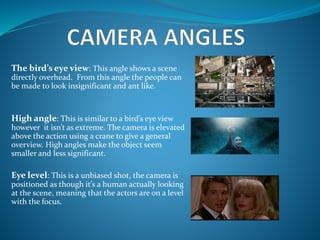
The bird’s eye view: This angle shows a scene
directly overhead. From this angle the people can
be made to look insignificant and ant like.
High angle: This is similar to a bird’s eye view
however it isn’t as extreme. The camera is elevated
above the action using a crane to give a general
overview. High angles make the object seem
smaller and less significant.
Eye level: This is a unbiased shot, the camera is
positioned as though it’s a human actually looking
at the scene, meaning that the actors are on a level
with the focus.
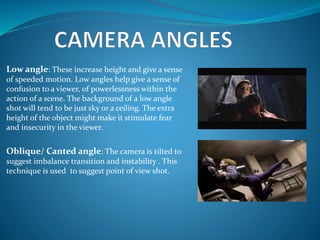
Low angle: These increase height and give a sense
of speeded motion. Low angles help give a sense of
confusion to a viewer, of powerlessness within the
action of a scene. The background of a low angle
shot will tend to be just sky or a ceiling. The extra
height of the object might make it stimulate fear
and insecurity in the viewer.
Oblique/ Canted angle: The camera is tilted to
suggest imbalance transition and instability . This
technique is used to suggest point of view shot.
Camera Movement
Pans: This is a movement shot which scans a scene horizontally. The camera
is placed on a tripod, which operates as a stationary axis point as the camera is
turned to follow a moving object, that is kept in the middle of the frame.
Tilts: This is a movement which scans the scene vertically, which is similar to a
panning shot.
Dolly Shots: This is when the audience are watching a moving figure or
object. For example the camera might attach on to a car to follow another car in
front. This show is a good way to portray movement.
Hand held shot: Is one in which the cameraman holds the camera and
moves through space while filming.
By Jordan Lake

Camera shots, angles and movements

  • 1.
    I am lookingat the different camera shots, movements and camera angles. This will help me have a variety of shots, angles and movements in my film which will make my trailer more enjoyable. From this I am looking for what will best suit my trailer genre.
  • 2.
    Extreme Close up:This shot is magnifying beyond what the human eye would usually see in reality. For example an extreme close up of a face would show only the eye with no background detail. The tight focus required means that extra care must be taken when setting up and lighting the shot. Close up: This has little background, and concentrates on a specific detail such as a face or a mise en scene. Everything else in the shot is a blur. This shot usually shows the importance of things.
  • 3.
    Medium shot: Thiscontains a figure from the knees/ waist up and is normally used for dialogue scenes, or to show some detail of action. Usually this will be no more than 3 figures . Background detail is marginal because normally the location has been established before. Long shot: This shot is usually to show the life size corresponding to the real distance between the audience and the screen in a cinema. For example this shot will include a full shot showing the entire human body with the head at the top and feet at the bottom of the screen. There is plenty of background detail.
  • 4.
    Extreme long shot:This shot is taken from as long as a quarter of a mile away. This shot is normally used for scene setting and establishing shot. There will little detail visible in the shot, it’s meant to give a general impression rather than specific information. Over the shoulder shot: This is similar to a medium shot, however it’s behind the character looking over their shoulder.
  • 5.
    The bird’s eyeview: This angle shows a scene directly overhead. From this angle the people can be made to look insignificant and ant like. High angle: This is similar to a bird’s eye view however it isn’t as extreme. The camera is elevated above the action using a crane to give a general overview. High angles make the object seem smaller and less significant. Eye level: This is a unbiased shot, the camera is positioned as though it’s a human actually looking at the scene, meaning that the actors are on a level with the focus.
  • 6.
    Low angle: Theseincrease height and give a sense of speeded motion. Low angles help give a sense of confusion to a viewer, of powerlessness within the action of a scene. The background of a low angle shot will tend to be just sky or a ceiling. The extra height of the object might make it stimulate fear and insecurity in the viewer. Oblique/ Canted angle: The camera is tilted to suggest imbalance transition and instability . This technique is used to suggest point of view shot.
  • 7.
    Camera Movement Pans: Thisis a movement shot which scans a scene horizontally. The camera is placed on a tripod, which operates as a stationary axis point as the camera is turned to follow a moving object, that is kept in the middle of the frame. Tilts: This is a movement which scans the scene vertically, which is similar to a panning shot. Dolly Shots: This is when the audience are watching a moving figure or object. For example the camera might attach on to a car to follow another car in front. This show is a good way to portray movement. Hand held shot: Is one in which the cameraman holds the camera and moves through space while filming. By Jordan Lake