cDNA ANDGENOMIC
LIBRARIES
V.Priya
I M.Sc Biotechnology
INTRODUCTION
 A DNA library is a collection of DNA clones ,gathered together as
a source of DNA for sequencing, gene discovery , or gene function
studies .
 There are two types of DNAlibraries:
1.DNA
2. Genomic
cDNA LIBRARY
 AcDNAlibrary is a set of cDNAclones prepared from the mRNAs
isolates from a particular type of tissue.
 The cDNA library contains only complementry DNAmolecules
synthesized from mRNA molecules in a cell.
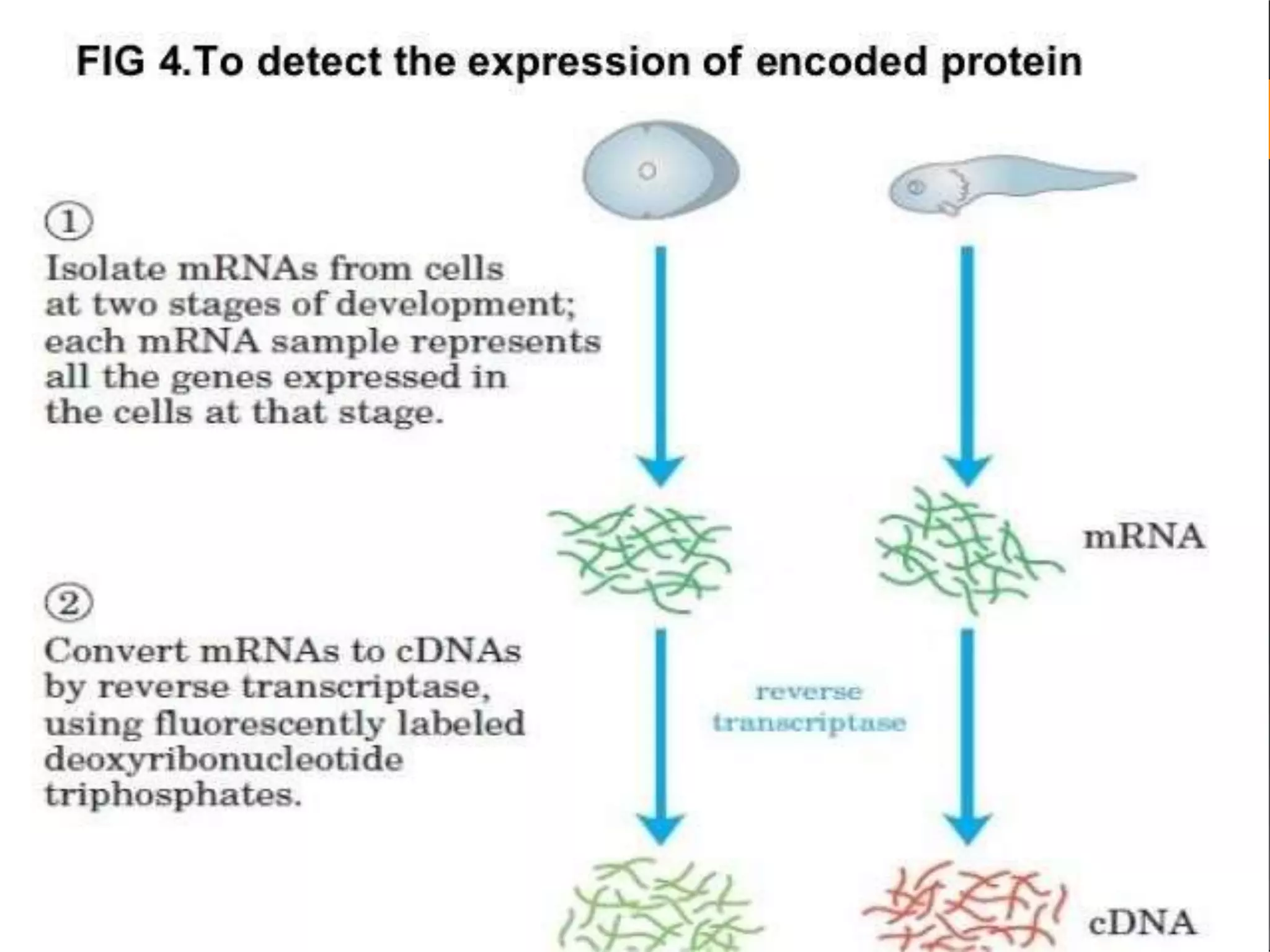
 This molecules represents all the gene that are expressed in the cell
at different stage of its development.
No cDNAwas made from
prokaryotic mRNA
 Prokaryotic mRNA is very unstable.
 Genomic libraries of prokaryotes are easier to make and contain
all the genome sequences.
cDNA Libraries Are VeryUseful
For Eukaryotic Gene Analysis
 Condensed protein encoded gene libraries,Have much less
junk sequences
 cDNAs have no introns→genes can be expressed in E. coli
directly
 Are very useful to identify new genes
 Tissue or cell type specific(differential expression of genes)
Synthesis of Cdna:
 FIRST STAND SYNTHESIS: materials as reverse
transcriptase, primer(oligo(dT) or hexanucleotides) and
dNTPs
 SECOUND STRAND SYNTHESIS: best way of making full-
length cDNA is to ‘tail’ the 3’- end of the first strand and then
use a complementary primer to make the secound.
CONSTRUCTION
cDNA libraries are constructed by synthesizing cDNA
from purified cellular mRNA via oligo(dT)-cellulose
chromatography.
This is done to recover the poly(A) mRNA so as to
anneal with the oligo(dT) chains .
SCREENING
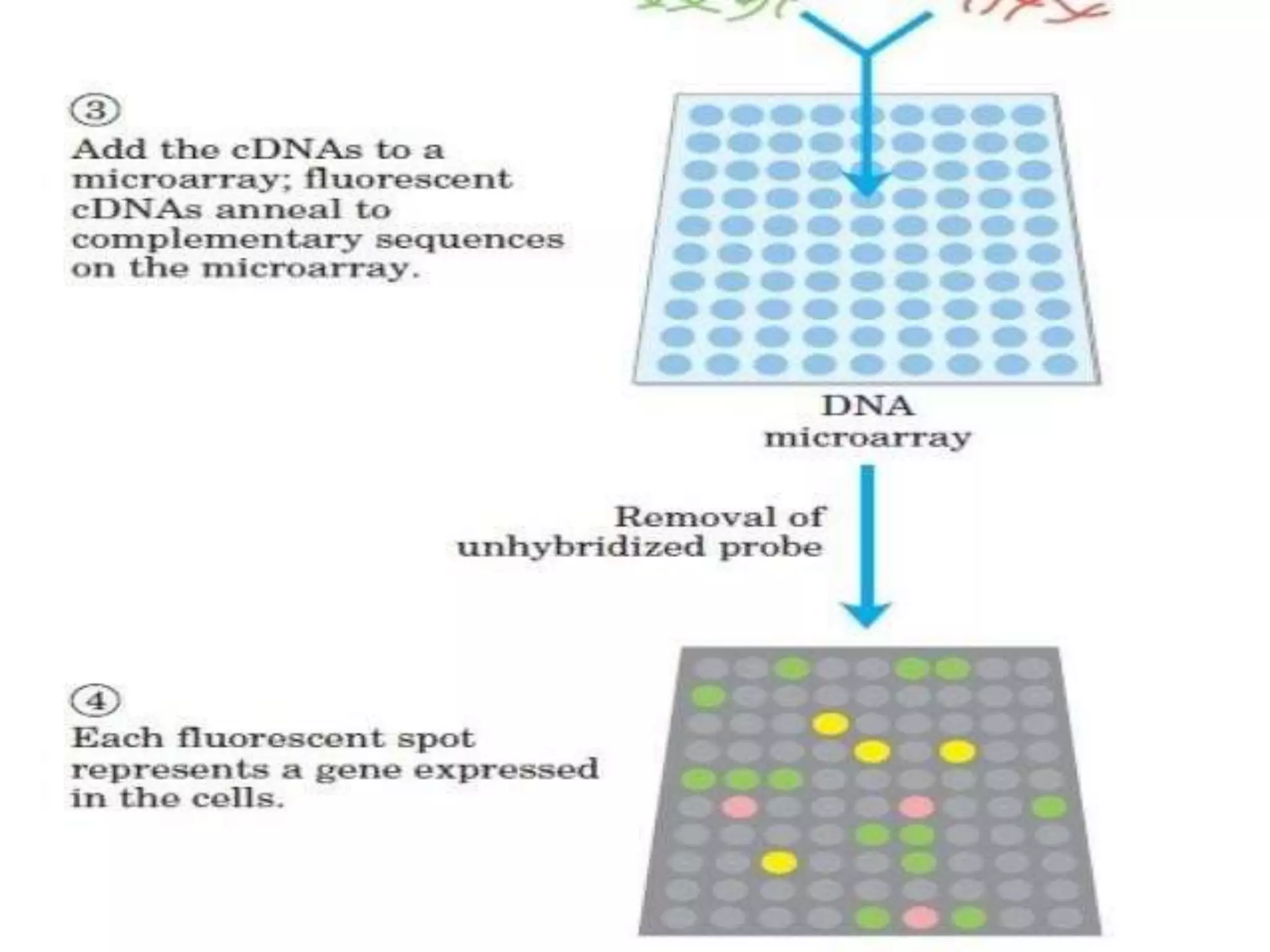
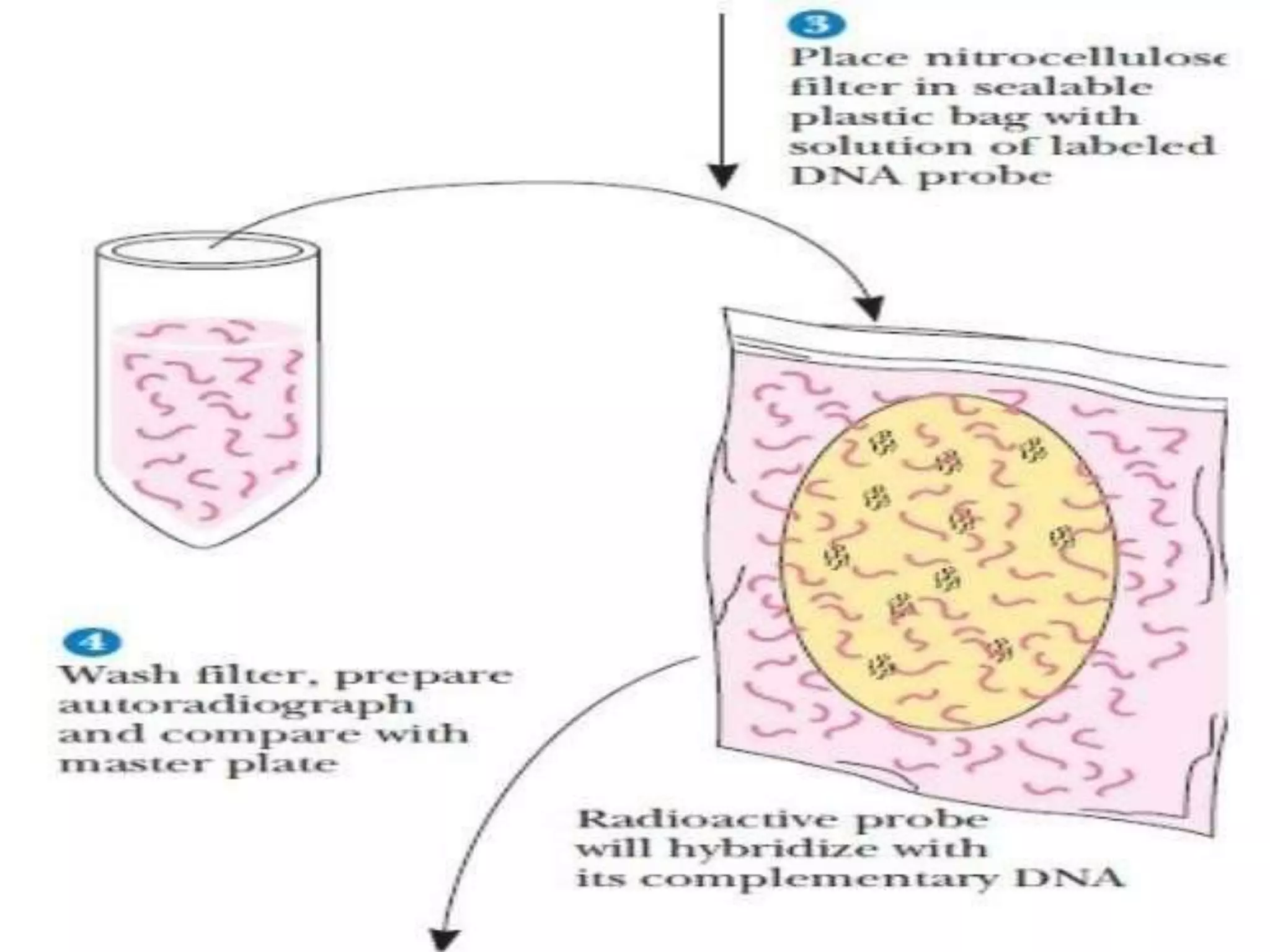
 A prope is a piece of DNA or RNA used to detect specific nucleic
acid sequence by hybridization ( binding of two nucleic acid chains
by base pairing). Oligonucleotide can be used as a probe.
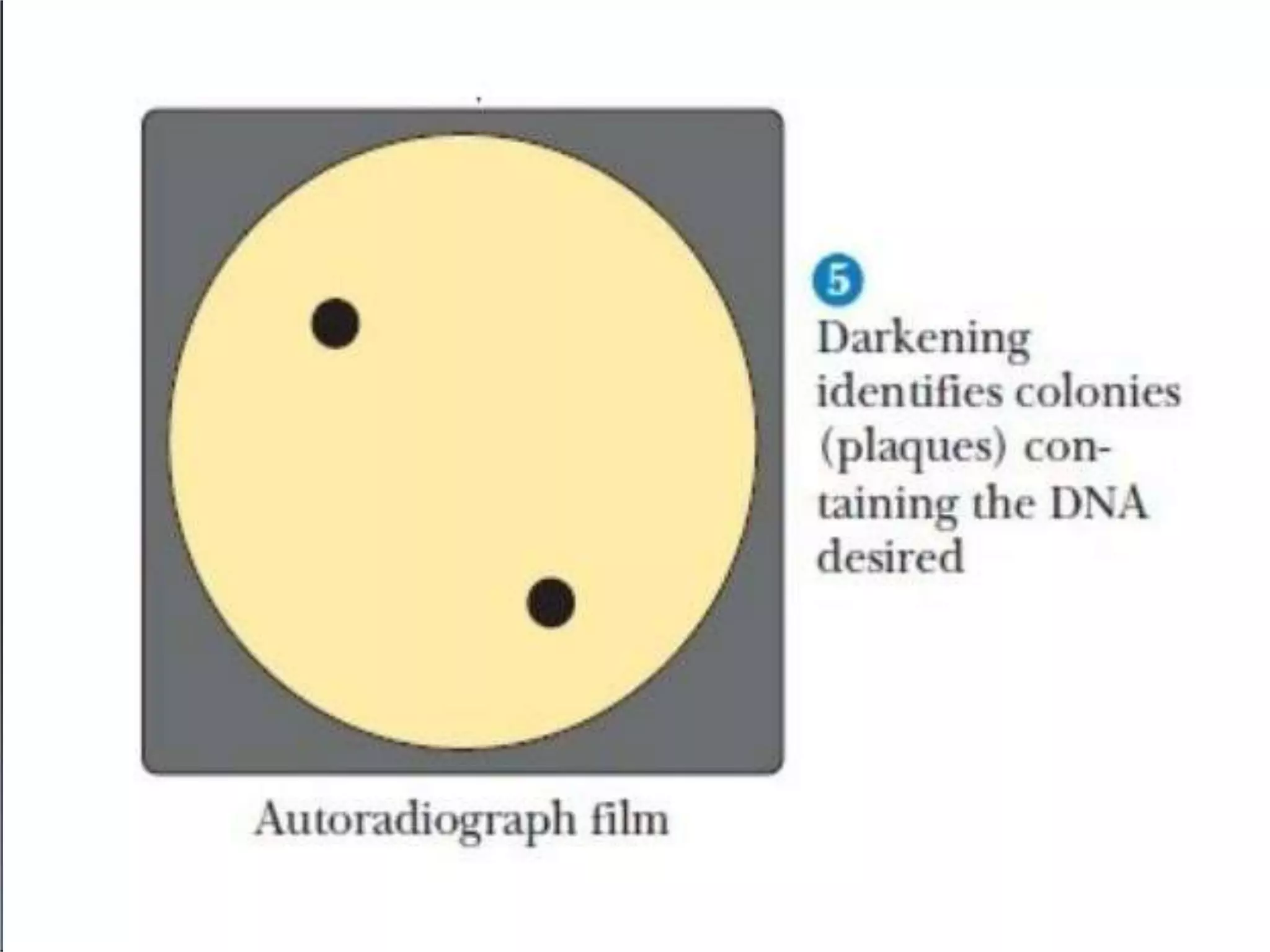
 They are radioactivity labeled so that the hybridized nucleicacid
can be identified by autoratiography.
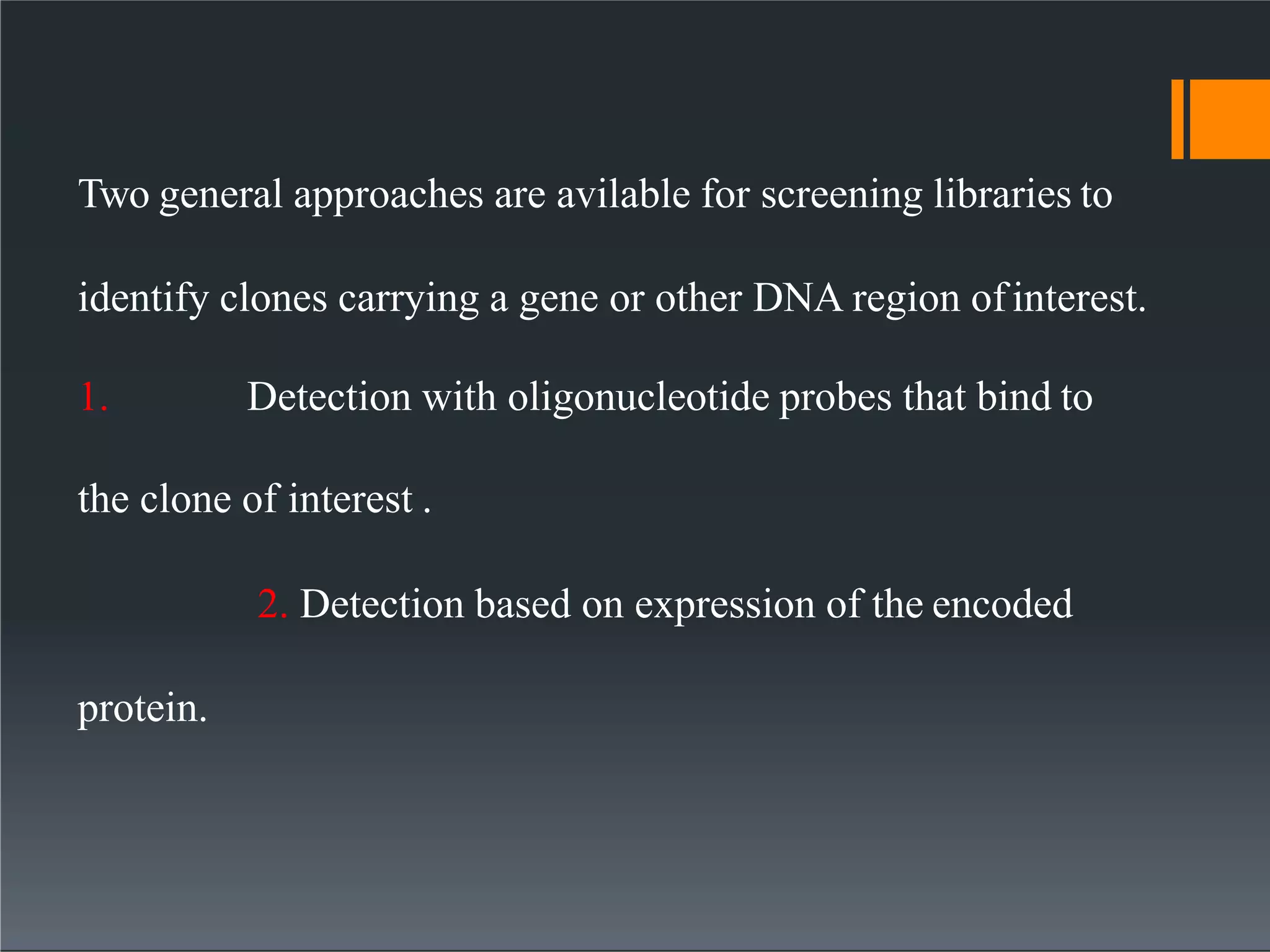
Two general approaches are avilable for screening libraries to
identify clones carrying a gene or other DNA region ofinterest.
1. Detection with oligonucleotide probes that bind to
the clone of interest .
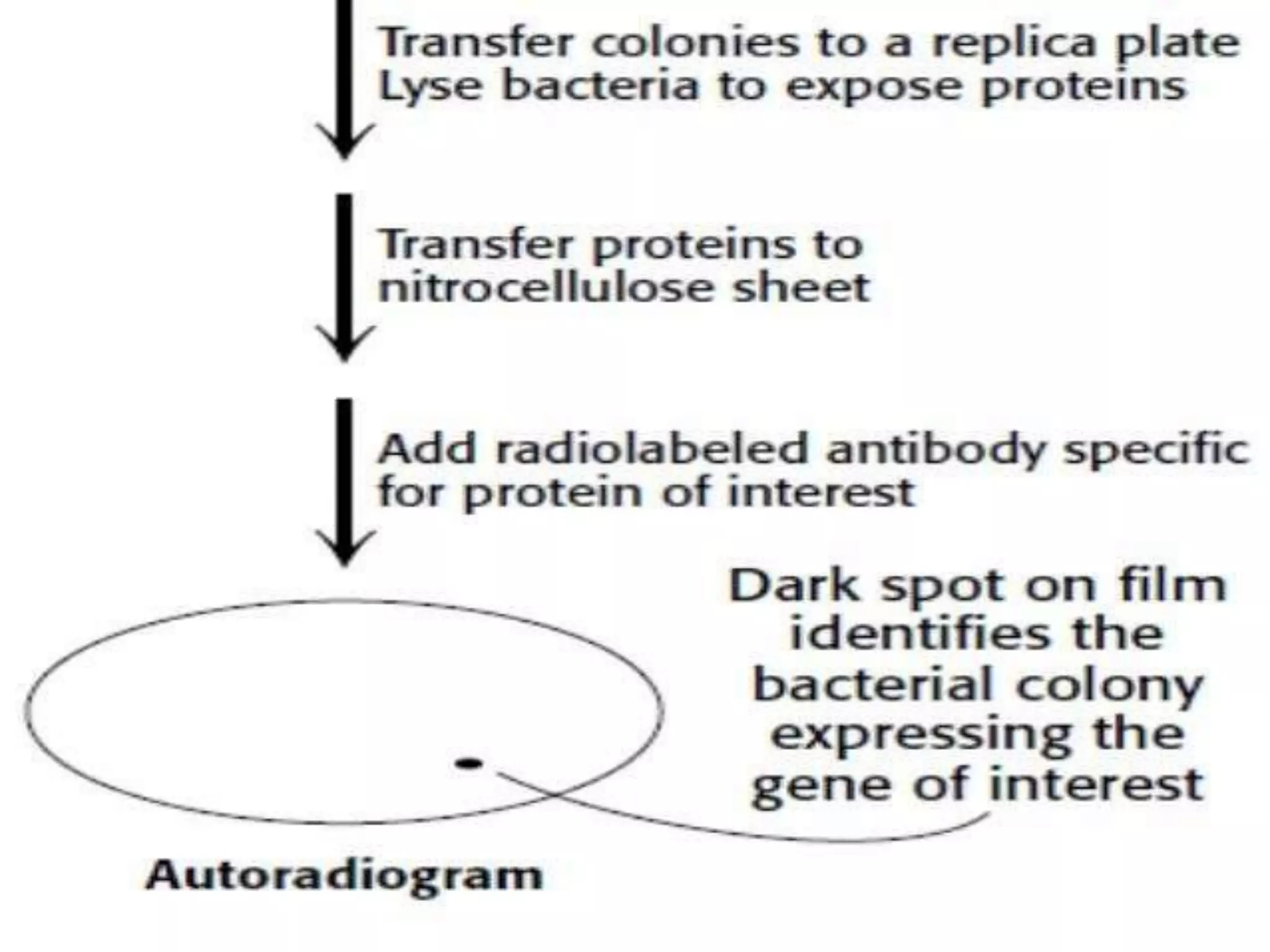
2. Detection based on expression of the encoded
protein.
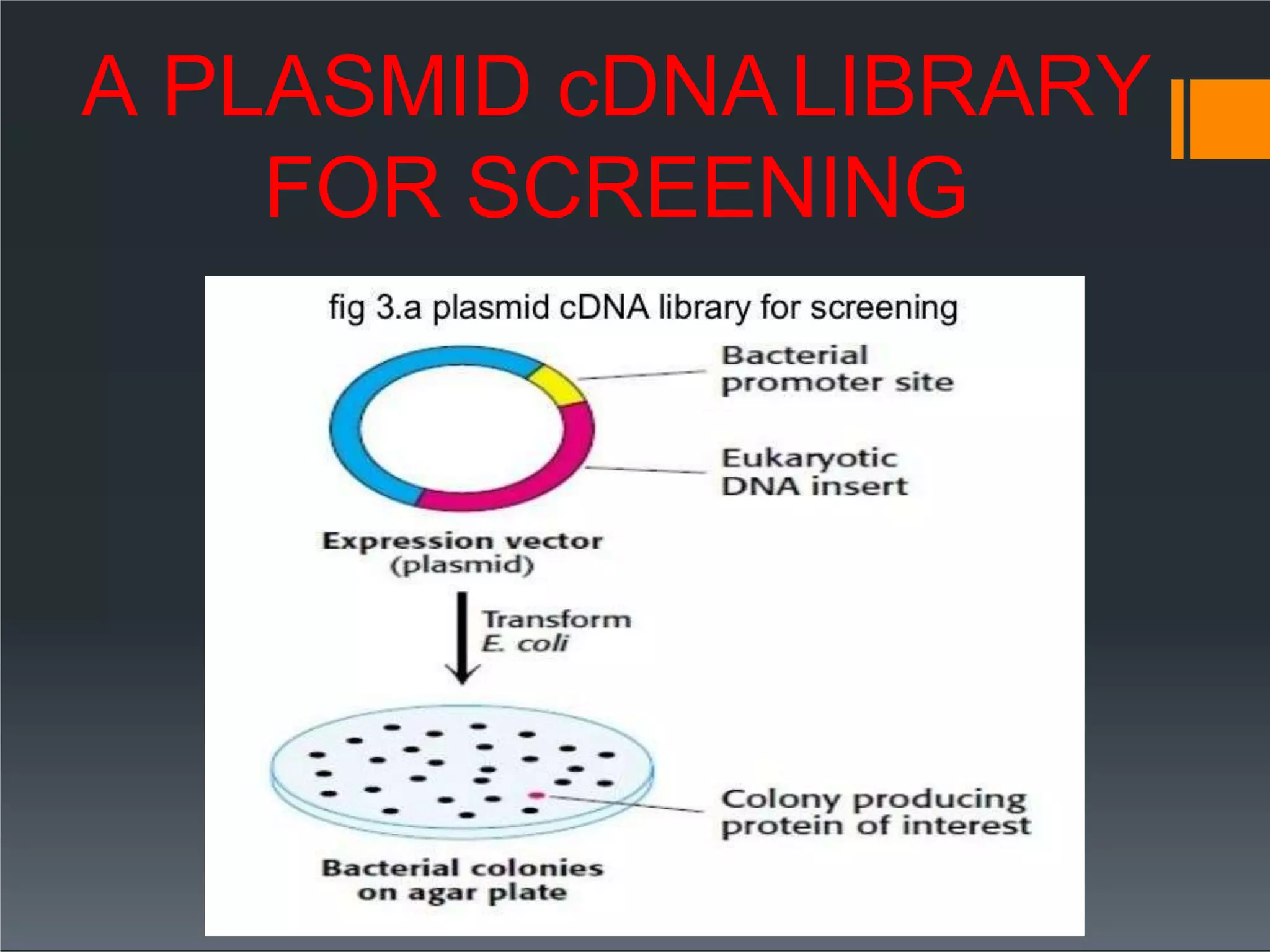
A PLASMID cDNA LIBRARY
FOR SCREENING
GENOMIC LIBRARY
 Is the largest type of library which consist of the complete
genome of a complete genome of a particular organism
which is cleaved into thousands of fragments, are all the
fragments are cloned by insertion into a cloning vector.
 A collection of clones that collectively represent all the DNA
sequences in the genome of a particular organism.
CONSTRUCTION
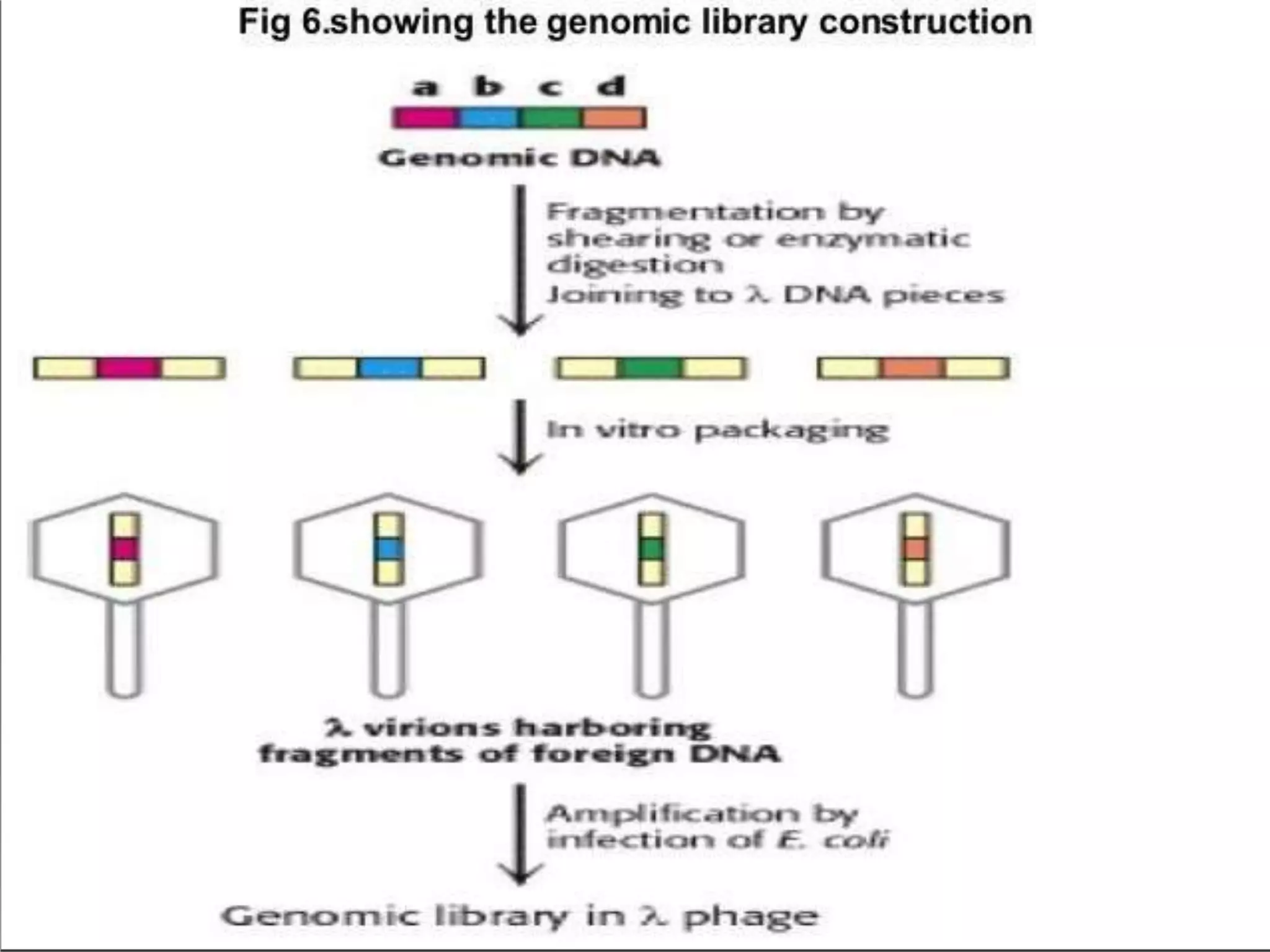
 The first step in preparing a genomic library is partial
digestion of the DNA by restriction endonucleases, such that
any given sequences will appear in fragments of a range of
sizes and is represented in the library.
 Secondly,the cloning vector ,such as a BAC or YAC plasmid
,is cleaved with the same restriction endonuclease and
ligated to the genomic DNAfragment.
 Thereafter ligated DNA mixture is then used to transform bacterial oryeast
cells to produce a library of cell types,each type harboring a different
recombinant DNAmolecule.
 Each transformed bacterium or yeast cell grows into a colony,or “clone”,of
identical cells,each cell bearing the same recombinant plasmid.
 The ability to clone such large DNA fragments raise the possibility ofthe
Genomic library,but it has been found that there is a problem as to what
number of clones are required to construct a genomiclibrary.
 A solution has been provided with thw use of afornuker:
N=ln(1-P)/ln(1-a/b)
 Which enchances the capacity of constructing a genomic library,and also
ease the problem of screening.(i.e..the higher the fragments,the smaller the
number of clones).
SCREENING
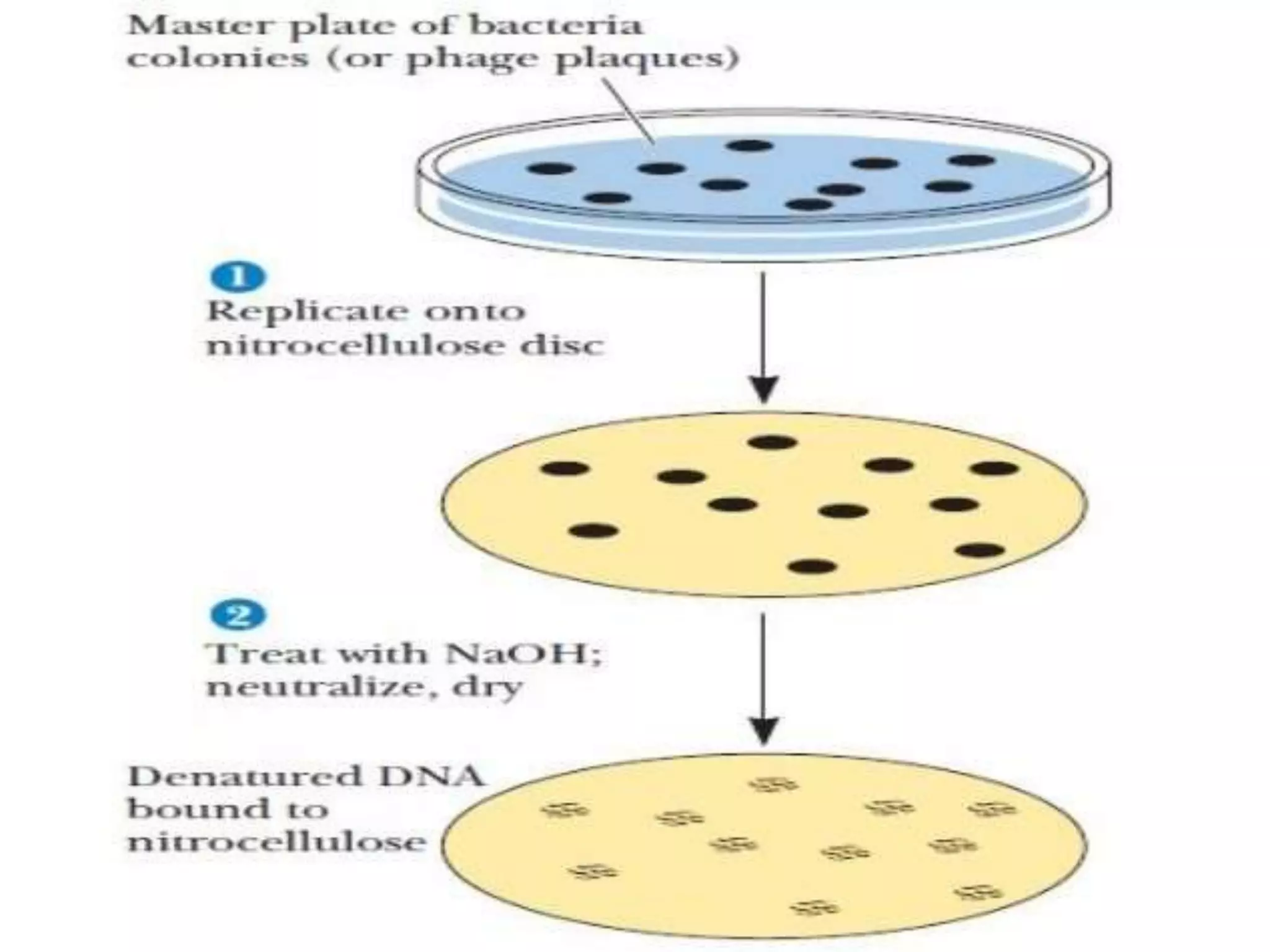
 A common method of screening is the plasmid- based genomic
libraries which is to carry out a colony hybridization experiment.
Host bacteria containing either a plasmid based or bacteriophage-
based library are plated out on petri dish and allowed to grow
overnight to form colonies.
CONCLUSION
 In conclusion, genomic DNA segments can be organized in librariesknown
as genomic libraries and cDNA libraries with a wide range of designs and
purposes.
THANK YOU

C dna and genomic libraries copy

  • 1.
  • 2.
    INTRODUCTION  A DNAlibrary is a collection of DNA clones ,gathered together as a source of DNA for sequencing, gene discovery , or gene function studies .  There are two types of DNAlibraries: 1.DNA 2. Genomic
  • 3.
    cDNA LIBRARY  AcDNAlibraryis a set of cDNAclones prepared from the mRNAs isolates from a particular type of tissue.  The cDNA library contains only complementry DNAmolecules synthesized from mRNA molecules in a cell.  This molecules represents all the gene that are expressed in the cell at different stage of its development.
  • 4.
    No cDNAwas madefrom prokaryotic mRNA  Prokaryotic mRNA is very unstable.  Genomic libraries of prokaryotes are easier to make and contain all the genome sequences.
  • 5.
    cDNA Libraries AreVeryUseful For Eukaryotic Gene Analysis  Condensed protein encoded gene libraries,Have much less junk sequences  cDNAs have no introns→genes can be expressed in E. coli directly  Are very useful to identify new genes  Tissue or cell type specific(differential expression of genes)
  • 6.
    Synthesis of Cdna: FIRST STAND SYNTHESIS: materials as reverse transcriptase, primer(oligo(dT) or hexanucleotides) and dNTPs  SECOUND STRAND SYNTHESIS: best way of making full- length cDNA is to ‘tail’ the 3’- end of the first strand and then use a complementary primer to make the secound.
  • 7.
    CONSTRUCTION cDNA libraries areconstructed by synthesizing cDNA from purified cellular mRNA via oligo(dT)-cellulose chromatography. This is done to recover the poly(A) mRNA so as to anneal with the oligo(dT) chains .
  • 8.
    SCREENING  A propeis a piece of DNA or RNA used to detect specific nucleic acid sequence by hybridization ( binding of two nucleic acid chains by base pairing). Oligonucleotide can be used as a probe.  They are radioactivity labeled so that the hybridized nucleicacid can be identified by autoratiography.
  • 9.
    Two general approachesare avilable for screening libraries to identify clones carrying a gene or other DNA region ofinterest. 1. Detection with oligonucleotide probes that bind to the clone of interest . 2. Detection based on expression of the encoded protein.
  • 10.
    A PLASMID cDNALIBRARY FOR SCREENING
  • 14.
    GENOMIC LIBRARY  Isthe largest type of library which consist of the complete genome of a complete genome of a particular organism which is cleaved into thousands of fragments, are all the fragments are cloned by insertion into a cloning vector.  A collection of clones that collectively represent all the DNA sequences in the genome of a particular organism.
  • 15.
    CONSTRUCTION  The firststep in preparing a genomic library is partial digestion of the DNA by restriction endonucleases, such that any given sequences will appear in fragments of a range of sizes and is represented in the library.  Secondly,the cloning vector ,such as a BAC or YAC plasmid ,is cleaved with the same restriction endonuclease and ligated to the genomic DNAfragment.
  • 16.
     Thereafter ligatedDNA mixture is then used to transform bacterial oryeast cells to produce a library of cell types,each type harboring a different recombinant DNAmolecule.  Each transformed bacterium or yeast cell grows into a colony,or “clone”,of identical cells,each cell bearing the same recombinant plasmid.  The ability to clone such large DNA fragments raise the possibility ofthe Genomic library,but it has been found that there is a problem as to what number of clones are required to construct a genomiclibrary.
  • 17.
     A solutionhas been provided with thw use of afornuker: N=ln(1-P)/ln(1-a/b)  Which enchances the capacity of constructing a genomic library,and also ease the problem of screening.(i.e..the higher the fragments,the smaller the number of clones).
  • 19.
    SCREENING  A commonmethod of screening is the plasmid- based genomic libraries which is to carry out a colony hybridization experiment. Host bacteria containing either a plasmid based or bacteriophage- based library are plated out on petri dish and allowed to grow overnight to form colonies.
  • 23.
    CONCLUSION  In conclusion,genomic DNA segments can be organized in librariesknown as genomic libraries and cDNA libraries with a wide range of designs and purposes.
  • 24.