Presenters
     Chris Osborn
     Vice President of Marketing
     cosborn@bizlibrary.com


     Jessica Batz
     Marketing Specialist
     jbatz@bizlibrary.com


@BizLibrary
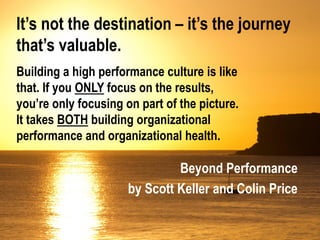
It’s not the destination – it’s the journey
that’s valuable.
Building a high performance culture is like
that. If you ONLY focus on the results,
you’re only focusing on part of the picture.
It takes BOTH building organizational
performance and organizational health.

                               Beyond Performance
                      by Scott Keller and Colin Price
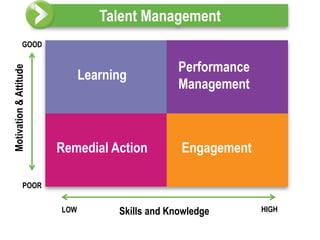
Talent Management
               GOOD


                                                 Performance
Motivation & Attitude


                              Learning
                                                 Management


                        Remedial Action          Engagement

                POOR


                        LOW         Skills and Knowledge       HIGH
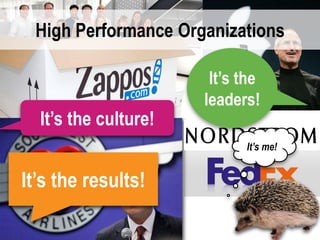
High Performance Organizations

                       It’s the
                      leaders!
  It’s the culture!
                            It’s me!


It’s the results!
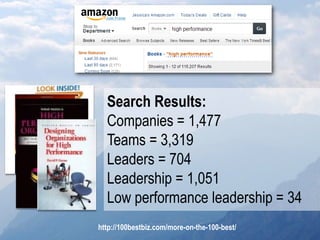
Search Results:
  Companies = 1,477
  Teams = 3,319
  Leaders = 704
  Leadership = 1,051
  Low performance leadership = 34
http://100bestbiz.com/more-on-the-100-best/
POLL QUESTION
                        A.   Ahead.
                        B.   About where we expect.
Where is your           C.   Behind.
company compared to     D.   Truthfully – we don’t
where you want to be?        know.
POLL QUESTION      A. We have well-defined goals and
                      measure progress towards them
                      each month.
How do you know?   B. We have goals and we look at
                      metrics about each quarter.
                   C. We look at metrics annually.
                   D. We do not have a well-defined
                      set of criteria to measure
                      organizational success.
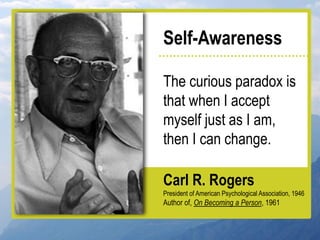
Self-Awareness

The curious paradox is
that when I accept
myself just as I am,
then I can change.

Carl R. Rogers
President of American Psychological Association, 1946
Author of, On Becoming a Person, 1961
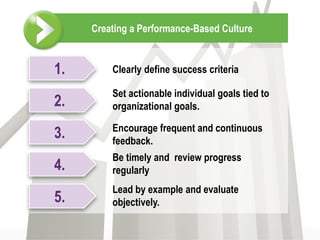
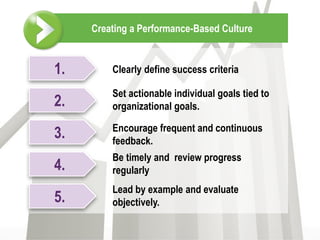
Creating a Performance-Based Culture


1.       Clearly define success criteria

         Set actionable individual goals tied to
2.       organizational goals.

         Encourage frequent and continuous
3.       feedback.
         Be timely and review progress
4.       regularly
         Lead by example and evaluate
5.       objectively.
Some organizations
perform better than
others.
• Can these reasons be
  explained beyond theory?
• Can my organization
  repeat or model some of
  them?!
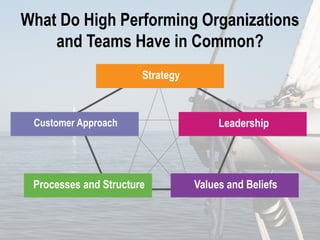
What Do High Performing Organizations
    and Teams Have in Common?
                       Strategy


 Customer Approach                     Leadership


 Processes and Structure          Values and Beliefs
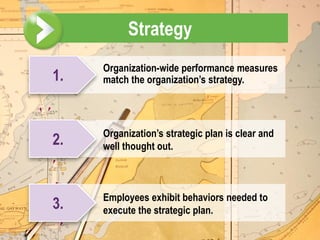
Strategy
     Organization-wide performance measures
1.   match the organization’s strategy.


     Organization’s strategic plan is clear and
2.   well thought out.


     Employees exhibit behaviors needed to
3.   execute the strategic plan.
Strategic Approach and Consistency

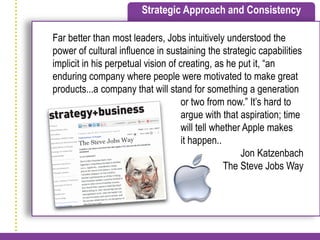
Far better than most leaders, Jobs intuitively understood the
power of cultural influence in sustaining the strategic capabilities
implicit in his perpetual vision of creating, as he put it, “an
enduring company where people were motivated to make great
products...a company that will stand for something a generation
                                     or two from now.” It’s hard to
                                     argue with that aspiration; time
w                                    will tell whether Apple makes
                                     it happen..
                                                      Jon Katzenbach
                                                  The Steve Jobs Way
Strategic Approach and Consistency
Customer Approach
       Customer information, needs and challenges are
1.     the most important factor for developing new
       products and services.


       Organization accurately targets its
2.     customers’ long-term needs.


       Organization exceeds customers’
3.     expectations.
Customer Approach


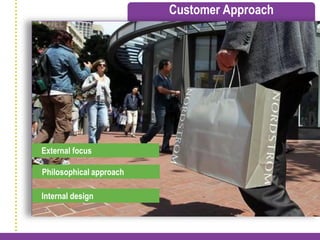
External focus

Philosophical approach

Internal design
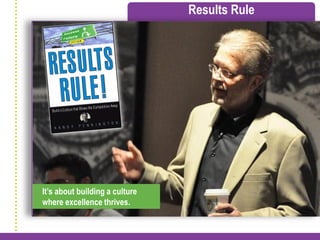
Results Rule


It’s about building a culture
where excellence thrives.
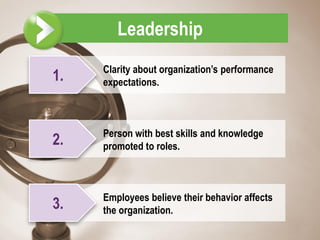
Leadership
     Clarity about organization’s performance
1.   expectations.


     Person with best skills and knowledge
2.   promoted to roles.


     Employees believe their behavior affects
3.   the organization.
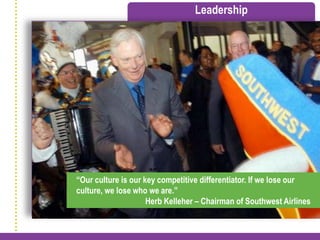
Leadership


“Our culture is our key competitive differentiator. If we lose our
culture, we lose who we are.”
                     Herb Kelleher – Chairman of Southwest Airlines
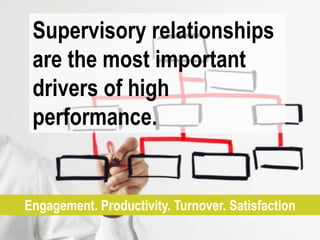
Supervisory relationships
 are the most important
 drivers of high
 performance.


Engagement. Productivity. Turnover. Satisfaction
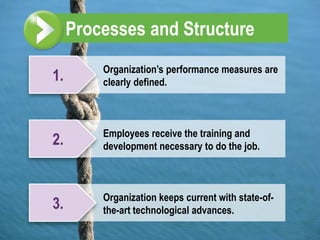
Processes and Structure
         Organization’s performance measures are
1.       clearly defined.


         Employees receive the training and
2.       development necessary to do the job.


         Organization keeps current with state-of-
3.       the-art technological advances.
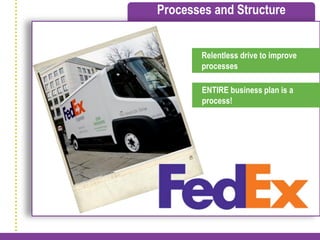
Processes and Structure


       Relentless drive to improve
       processes

        ENTIRE business plan is a
        process!
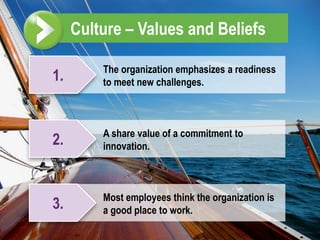
Culture – Values and Beliefs

         The organization emphasizes a readiness
1.       to meet new challenges.


         A share value of a commitment to
2.       innovation.


         Most employees think the organization is
3.       a good place to work.
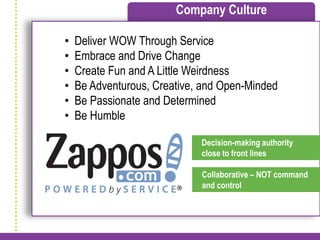
Company Culture

•   Deliver WOW Through Service
•   Embrace and Drive Change
•   Create Fun and A Little Weirdness
•   Be Adventurous, Creative, and Open-Minded
•   Be Passionate and Determined
•   Be Humble

                             Decision-making authority
                             close to front lines

                             Collaborative – NOT command
                             and control
Creating a Performance-Based Culture


1.       Clearly define success criteria

         Set actionable individual goals tied to
2.       organizational goals.

         Encourage frequent and continuous
3.       feedback.
         Be timely and review progress
4.       regularly
         Lead by example and evaluate
5.       objectively.
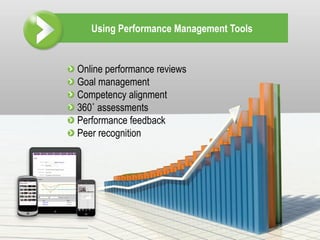
Using Performance Management Tools


Online performance reviews
Goal management
Competency alignment
360˚ assessments
Performance feedback
Peer recognition
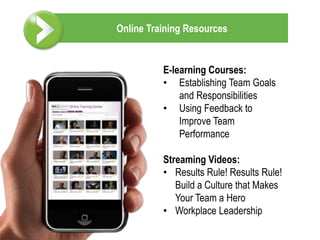
Online Training Resources


          E-learning Courses:
          • Establishing Team Goals
              and Responsibilities
          • Using Feedback to
              Improve Team
              Performance

          Streaming Videos:
          • Results Rule! Results Rule!
             Build a Culture that Makes
             Your Team a Hero
          • Workplace Leadership
Contact us
  Chris Osborn
  Vice President of Marketing
  cosborn@bizlibrary.com


  Jessica Batz
  Marketing Specialist
  jbatz@bizlibrary.com
Additional Resources
• The Dynamics of High Performing
  Organizations, Resource Development
  Systems
• Leading Change, John P. Kotter
• Leadership is an Art, Max DePree
• The Effective Executive, Peter Drucker
• The Steve Jobs Way, Strategy +
  Business, May 2012

Building a Performance-Based Culture [webinar 01.10.13]

  • 2.
    Presenters Chris Osborn Vice President of Marketing cosborn@bizlibrary.com Jessica Batz Marketing Specialist jbatz@bizlibrary.com @BizLibrary
  • 4.
    It’s not thedestination – it’s the journey that’s valuable. Building a high performance culture is like that. If you ONLY focus on the results, you’re only focusing on part of the picture. It takes BOTH building organizational performance and organizational health. Beyond Performance by Scott Keller and Colin Price
  • 5.
    Talent Management GOOD Performance Motivation & Attitude Learning Management Remedial Action Engagement POOR LOW Skills and Knowledge HIGH
  • 6.
    High Performance Organizations It’s the leaders! It’s the culture! It’s me! It’s the results!
  • 7.
    Search Results: Companies = 1,477 Teams = 3,319 Leaders = 704 Leadership = 1,051 Low performance leadership = 34 http://100bestbiz.com/more-on-the-100-best/
  • 8.
    POLL QUESTION A. Ahead. B. About where we expect. Where is your C. Behind. company compared to D. Truthfully – we don’t where you want to be? know.
  • 9.
    POLL QUESTION A. We have well-defined goals and measure progress towards them each month. How do you know? B. We have goals and we look at metrics about each quarter. C. We look at metrics annually. D. We do not have a well-defined set of criteria to measure organizational success.
  • 10.
    Self-Awareness The curious paradoxis that when I accept myself just as I am, then I can change. Carl R. Rogers President of American Psychological Association, 1946 Author of, On Becoming a Person, 1961
  • 11.
    Creating a Performance-BasedCulture 1. Clearly define success criteria Set actionable individual goals tied to 2. organizational goals. Encourage frequent and continuous 3. feedback. Be timely and review progress 4. regularly Lead by example and evaluate 5. objectively.
  • 12.
    Some organizations perform betterthan others. • Can these reasons be explained beyond theory? • Can my organization repeat or model some of them?!
  • 13.
    What Do HighPerforming Organizations and Teams Have in Common? Strategy Customer Approach Leadership Processes and Structure Values and Beliefs
  • 14.
    Strategy Organization-wide performance measures 1. match the organization’s strategy. Organization’s strategic plan is clear and 2. well thought out. Employees exhibit behaviors needed to 3. execute the strategic plan.
  • 15.
    Strategic Approach andConsistency Far better than most leaders, Jobs intuitively understood the power of cultural influence in sustaining the strategic capabilities implicit in his perpetual vision of creating, as he put it, “an enduring company where people were motivated to make great products...a company that will stand for something a generation or two from now.” It’s hard to argue with that aspiration; time w will tell whether Apple makes it happen.. Jon Katzenbach The Steve Jobs Way
  • 16.
  • 17.
    Customer Approach Customer information, needs and challenges are 1. the most important factor for developing new products and services. Organization accurately targets its 2. customers’ long-term needs. Organization exceeds customers’ 3. expectations.
  • 18.
  • 19.
    Results Rule It’s aboutbuilding a culture where excellence thrives.
  • 20.
    Leadership Clarity about organization’s performance 1. expectations. Person with best skills and knowledge 2. promoted to roles. Employees believe their behavior affects 3. the organization.
  • 21.
    Leadership “Our culture isour key competitive differentiator. If we lose our culture, we lose who we are.” Herb Kelleher – Chairman of Southwest Airlines
  • 22.
    Supervisory relationships arethe most important drivers of high performance. Engagement. Productivity. Turnover. Satisfaction
  • 23.
    Processes and Structure Organization’s performance measures are 1. clearly defined. Employees receive the training and 2. development necessary to do the job. Organization keeps current with state-of- 3. the-art technological advances.
  • 24.
    Processes and Structure Relentless drive to improve processes ENTIRE business plan is a process!
  • 25.
    Culture – Valuesand Beliefs The organization emphasizes a readiness 1. to meet new challenges. A share value of a commitment to 2. innovation. Most employees think the organization is 3. a good place to work.
  • 26.
    Company Culture • Deliver WOW Through Service • Embrace and Drive Change • Create Fun and A Little Weirdness • Be Adventurous, Creative, and Open-Minded • Be Passionate and Determined • Be Humble Decision-making authority close to front lines Collaborative – NOT command and control
  • 27.
    Creating a Performance-BasedCulture 1. Clearly define success criteria Set actionable individual goals tied to 2. organizational goals. Encourage frequent and continuous 3. feedback. Be timely and review progress 4. regularly Lead by example and evaluate 5. objectively.
  • 28.
    Using Performance ManagementTools Online performance reviews Goal management Competency alignment 360˚ assessments Performance feedback Peer recognition
  • 30.
    Online Training Resources E-learning Courses: • Establishing Team Goals and Responsibilities • Using Feedback to Improve Team Performance Streaming Videos: • Results Rule! Results Rule! Build a Culture that Makes Your Team a Hero • Workplace Leadership
  • 31.
    Contact us Chris Osborn Vice President of Marketing cosborn@bizlibrary.com Jessica Batz Marketing Specialist jbatz@bizlibrary.com
  • 32.
    Additional Resources • TheDynamics of High Performing Organizations, Resource Development Systems • Leading Change, John P. Kotter • Leadership is an Art, Max DePree • The Effective Executive, Peter Drucker • The Steve Jobs Way, Strategy + Business, May 2012