Creating High Performance Teams
Trigger a positive change in team performance
Create synergies across the organisation 
Foster a culture of continuous improvement
Richard Lee
richardlee63@icloud.com
How would you define management?
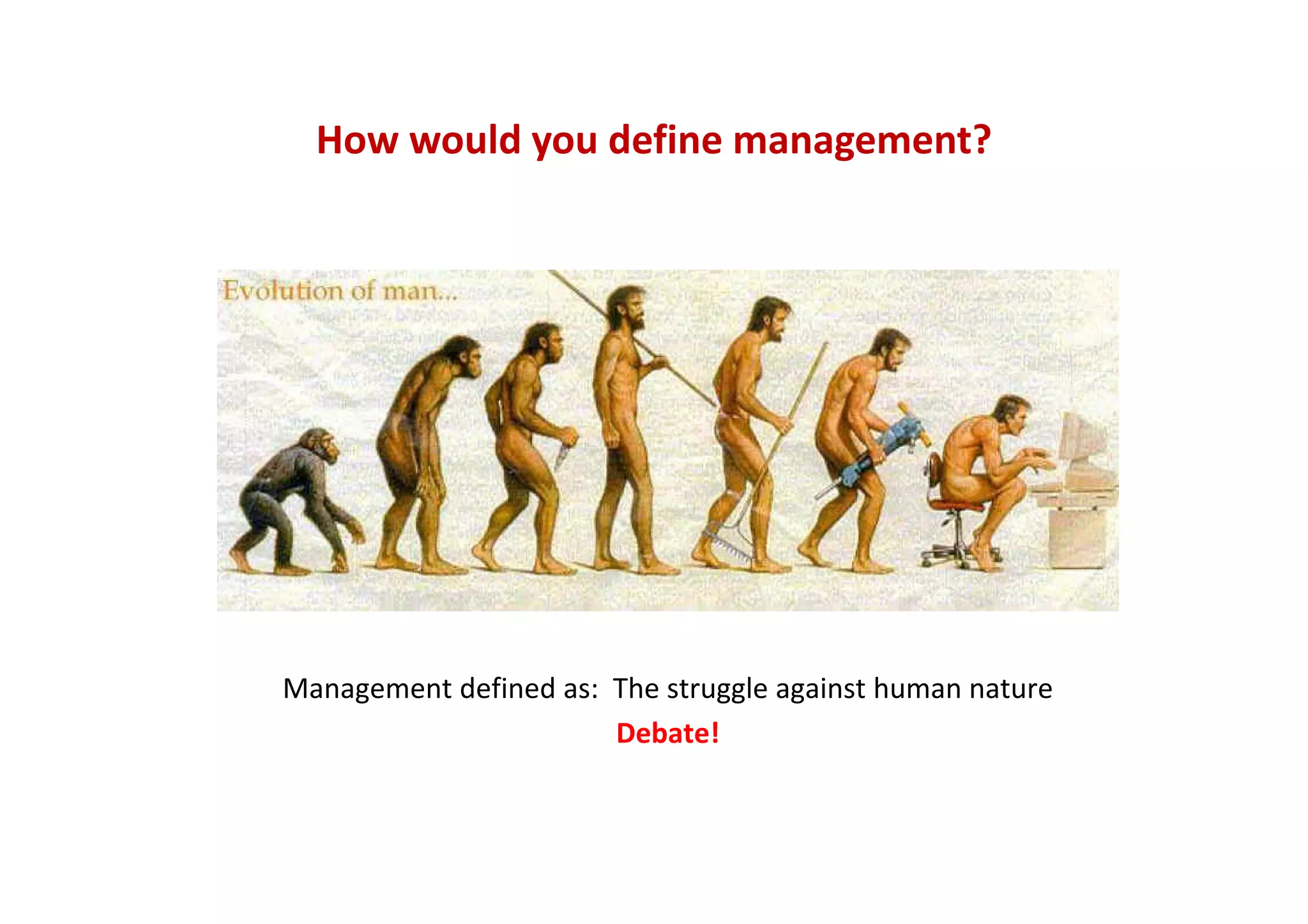
Management defined as:  The struggle against human nature
Debate!
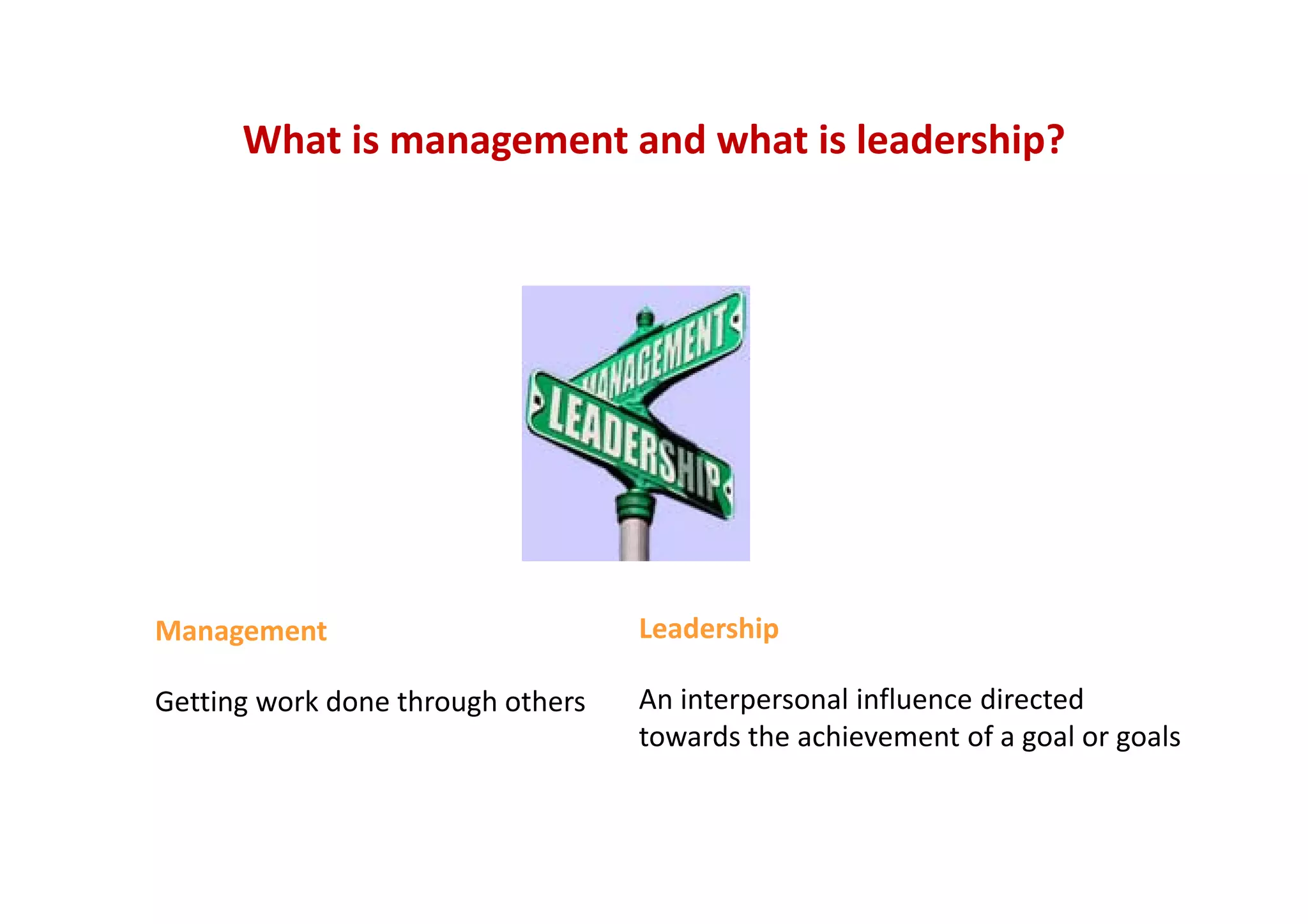
What is management and what is leadership?
Management
Getting work done through others
Leadership
An interpersonal influence directed
towards the achievement of a goal or goals
Characteristics of a successful manager
• Who are the successful managers you can think of, and what makes 
them so successful?
1. Approachable and open
2. Observant
3. Actively listens
4. Asks thought provoking questions
5. Gives honest feedback
6. Keeps the tone positive
7. Well prepared and focused
8. Manages their time effectively
9. Good networker and builds rapport
10. Emotionally intelligent and self aware
Becoming a great manager
What is at the heart of a manager’s role?
To raise individual and team performance
Stepping up from team player to team manager
Managing expectations
• Your expectations
• Don’t put yourself under pressure, as stress affects decision making
• Take time out to review your progress and what you have learnt
• Ask for help when you need it (before a situation gets out of hand)
• Your team’s expectations
• Understand their expectations (separate expectations from wishes)
• Be open and honest
• Assign responsibility and hold people to account
• Hold frequent individual and team discussions
• Your manager’s expectations
• Learn what they expect from you (go beyond the job description/targets)
• Frequent communication (including pre and post sign off of your decisions)
What is a team and what is a high performance team? 
TEAM
• A group working together 
towards a common goal
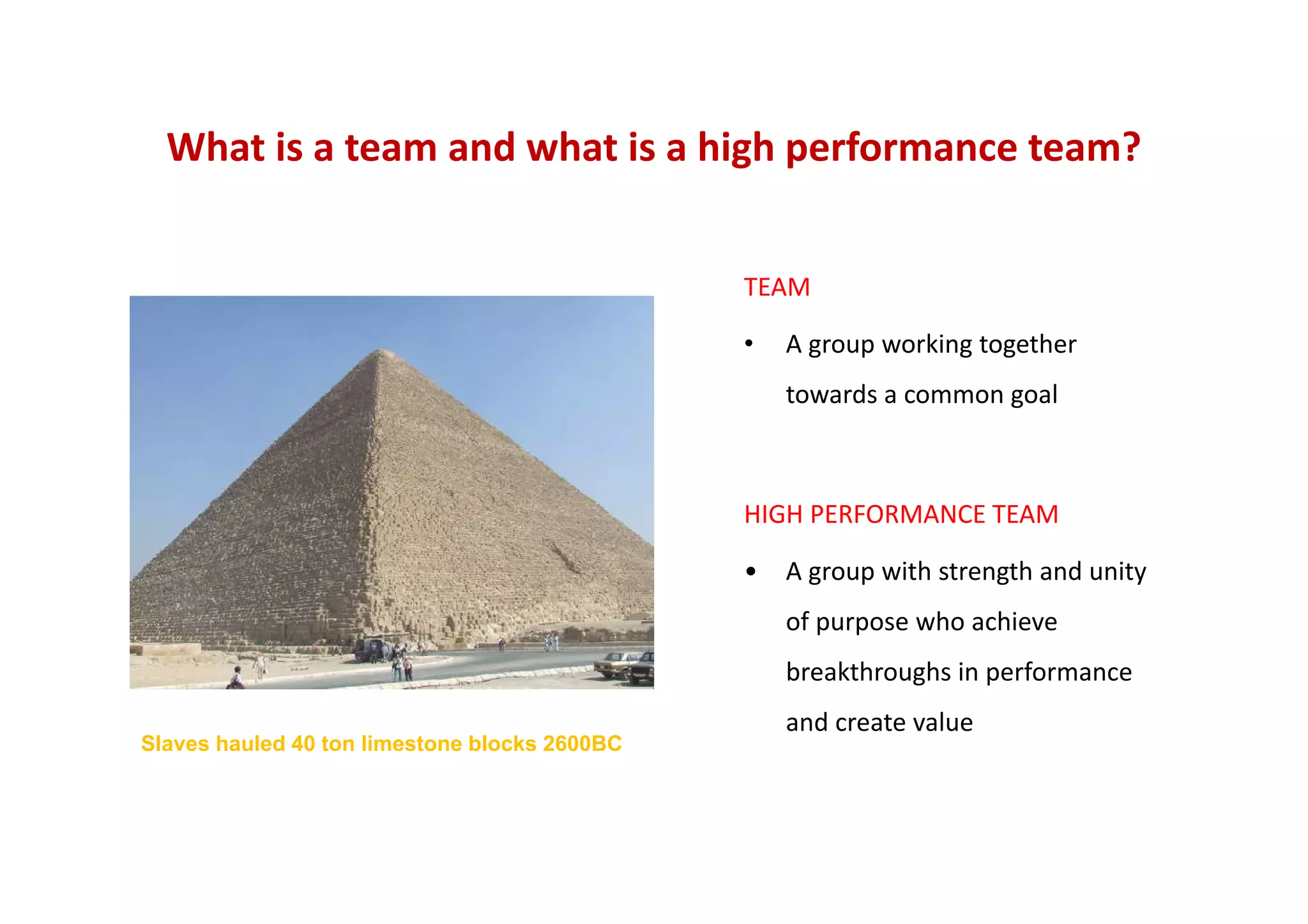
Slaves hauled 40 ton limestone blocks 2600BC
HIGH PERFORMANCE TEAM
• A group with strength and unity 
of purpose who achieve 
breakthroughs in performance 
and create value
What is a team and what is a high performance team? 
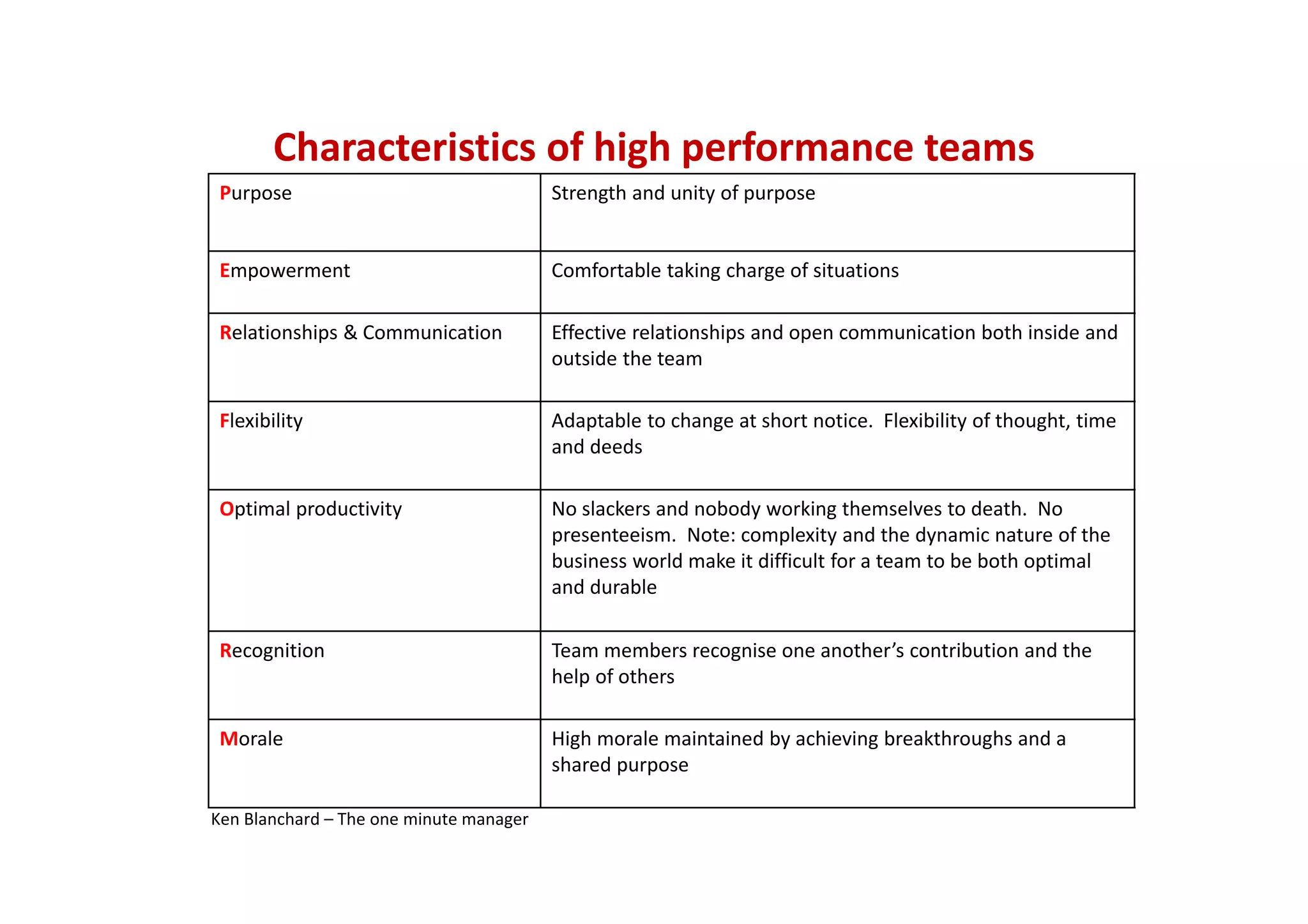
Characteristics of high performance teams
Purpose Strength and unity of purpose
Empowerment Comfortable taking charge of situations
Relationships & Communication Effective relationships and open communication both inside and 
outside the team
Flexibility Adaptable to change at short notice.  Flexibility of thought, time 
and deeds
Optimal productivity No slackers and nobody working themselves to death.  No 
presenteeism.  Note: complexity and the dynamic nature of the 
business world make it difficult for a team to be both optimal 
and durable
Recognition Team members recognise one another’s contribution and the 
help of others
Morale High morale maintained by achieving breakthroughs and a 
shared purpose
Ken Blanchard – The one minute manager
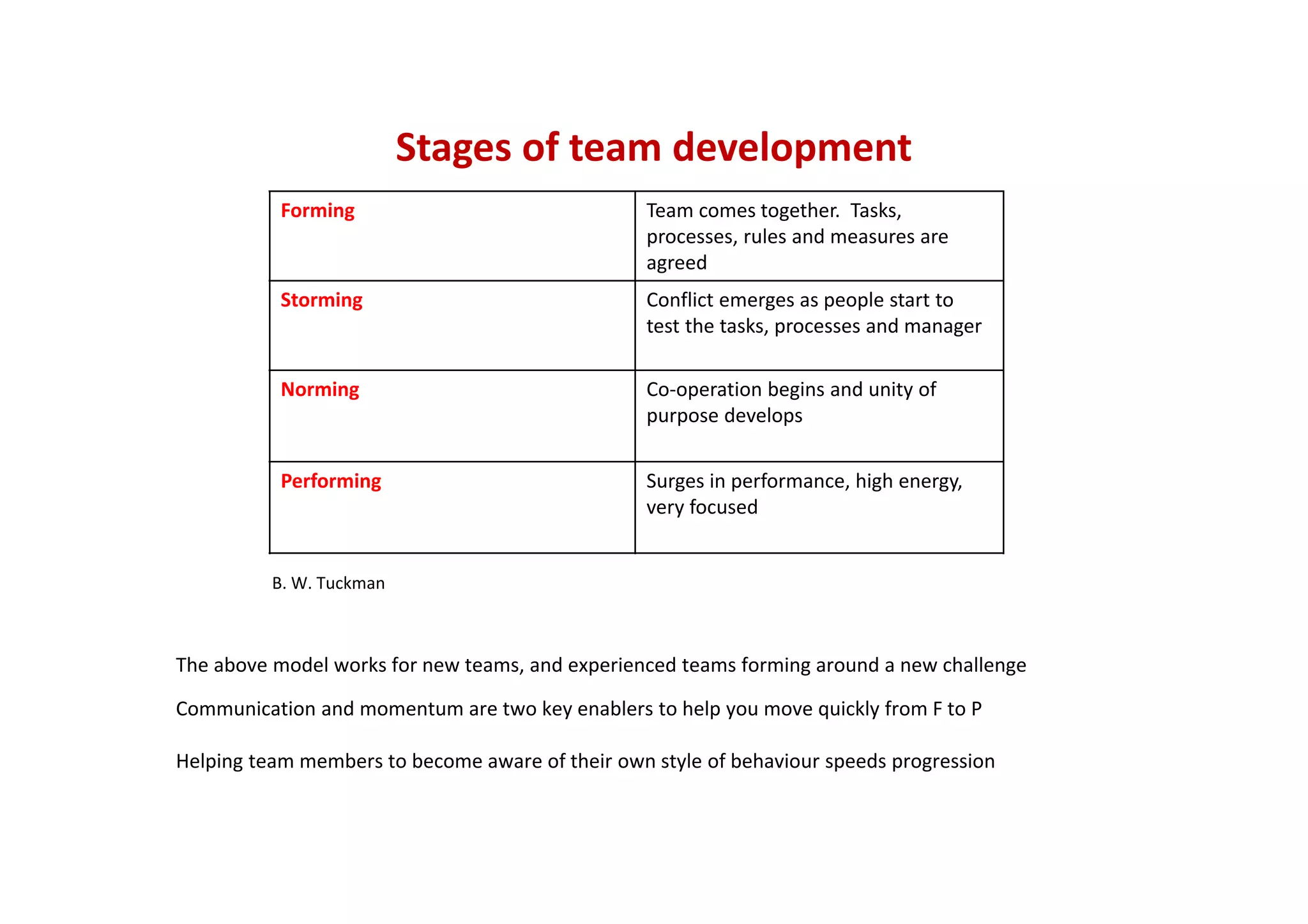
Stages of team development
Forming Team comes together.  Tasks, 
processes, rules and measures are 
agreed
Storming Conflict emerges as people start to 
test the tasks, processes and manager
Norming Co‐operation begins and unity of 
purpose develops
Performing Surges in performance, high energy, 
very focused
B. W. Tuckman
The above model works for new teams, and experienced teams forming around a new challenge
Communication and momentum are two key enablers to help you move quickly from F to P
Helping team members to become aware of their own style of behaviour speeds progression
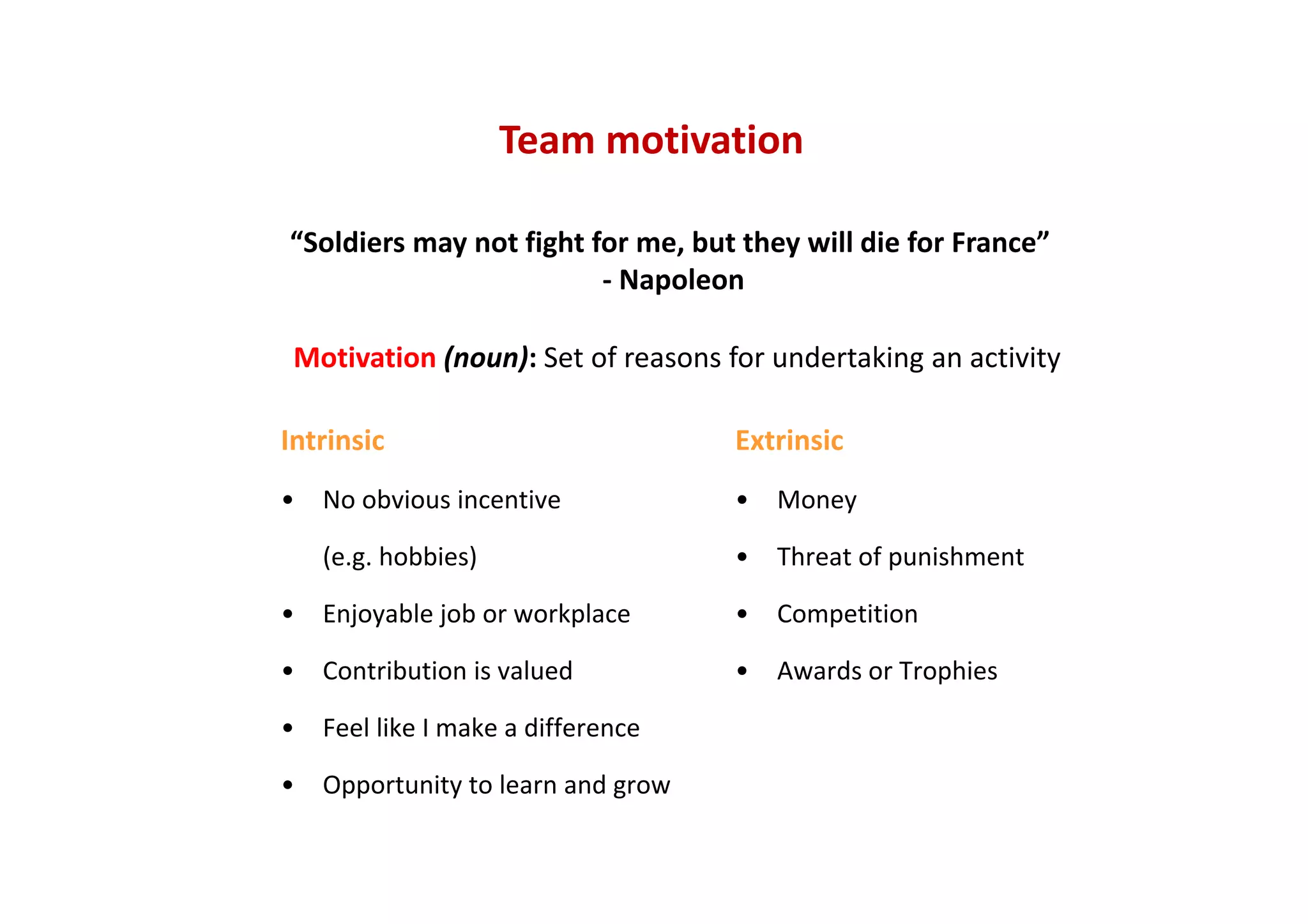
Team motivation
“Soldiers may not fight for me, but they will die for France”
‐ Napoleon
Motivation (noun): Set of reasons for undertaking an activity
Extrinsic
• Money
• Threat of punishment
• Competition
• Awards or Trophies
Intrinsic
• No obvious incentive 
(e.g. hobbies)
• Enjoyable job or workplace
• Contribution is valued
• Feel like I make a difference
• Opportunity to learn and grow
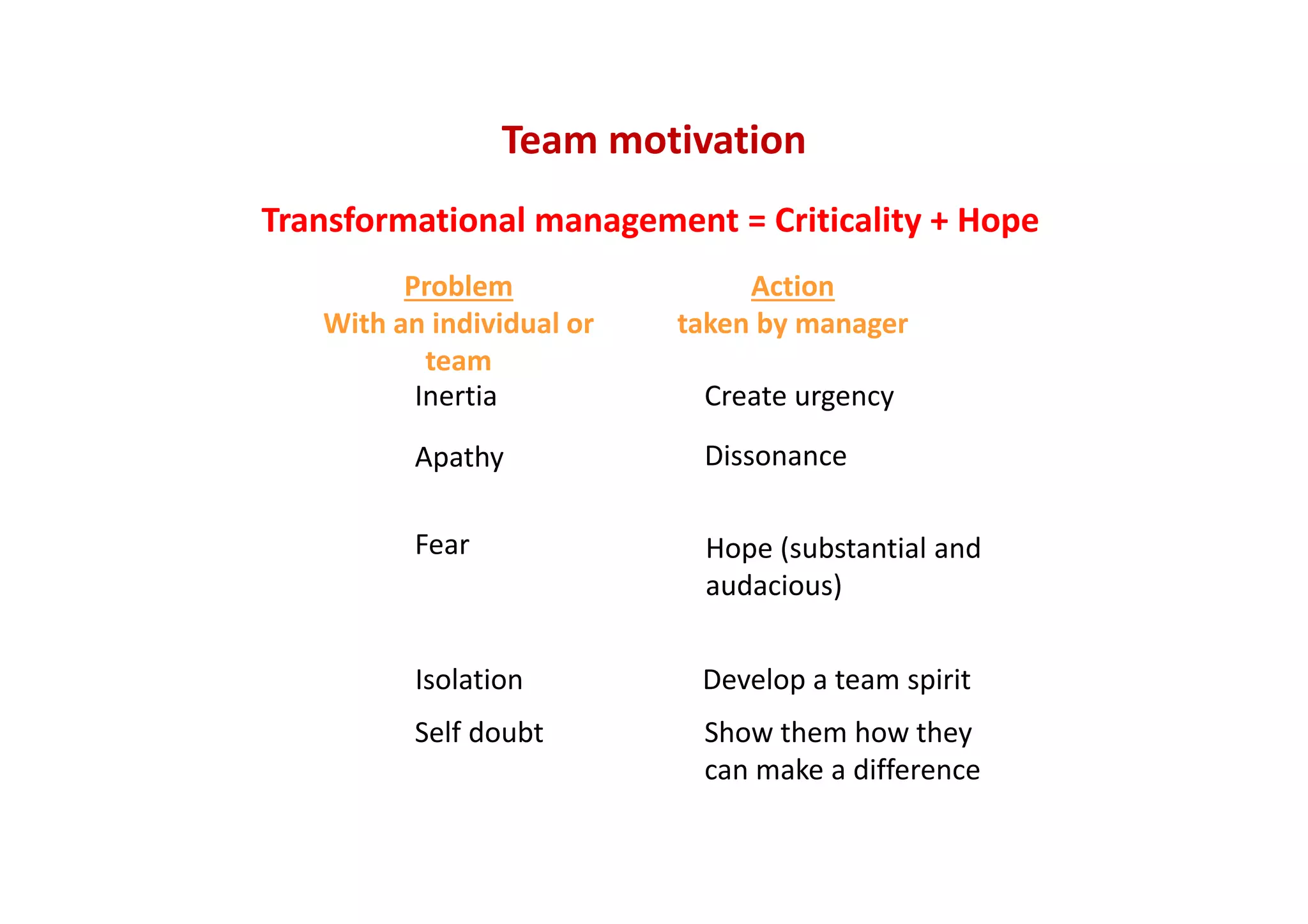
Problem
With an individual or 
team 
Action
taken by manager
Fear
Self doubt
Apathy
Inertia  Create urgency
Show them how they 
can make a difference
Hope (substantial and 
audacious)
Dissonance
Isolation Develop a team spirit
Transformational management = Criticality + Hope
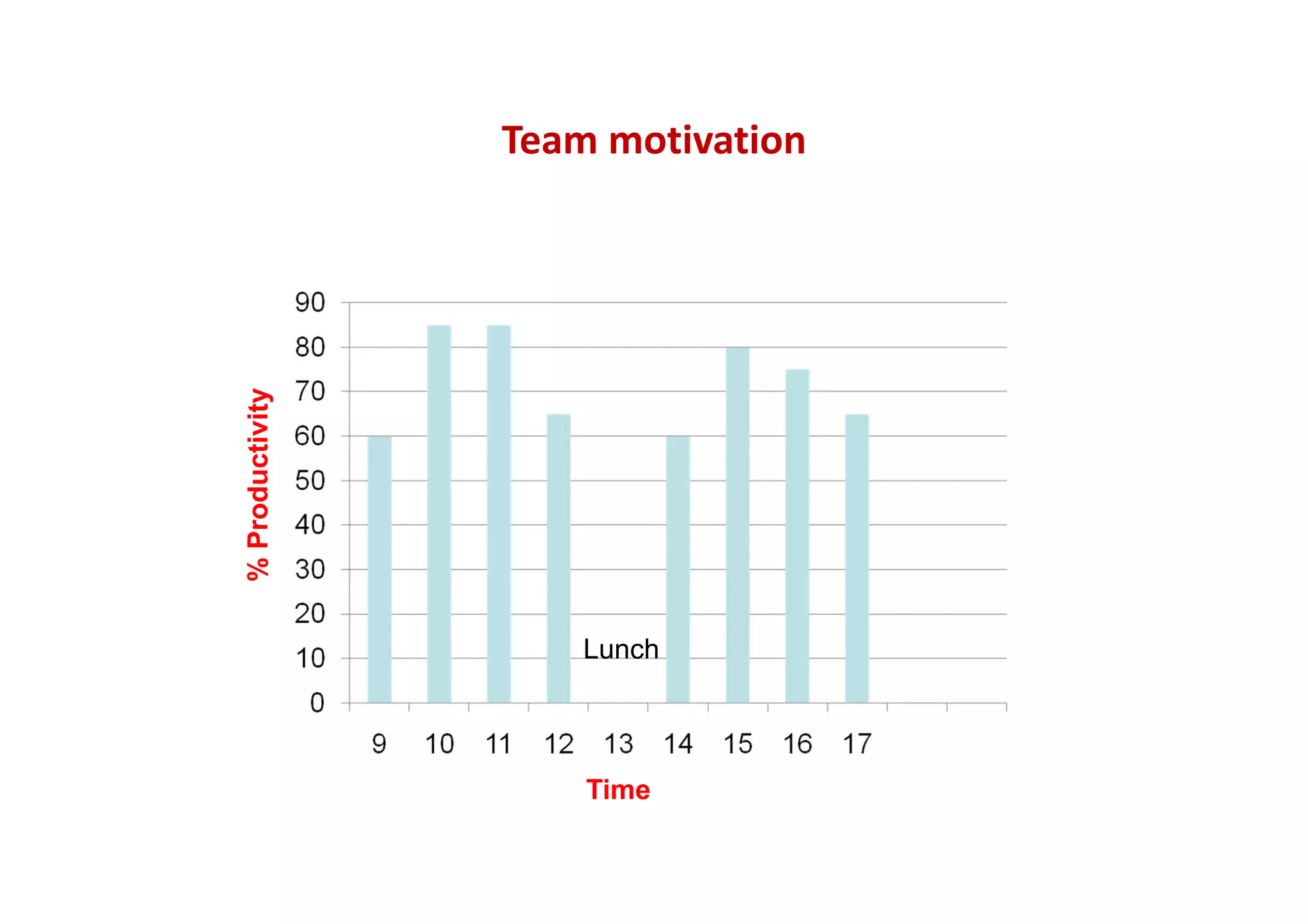
Team motivation
Time
%Productivity
Lunch
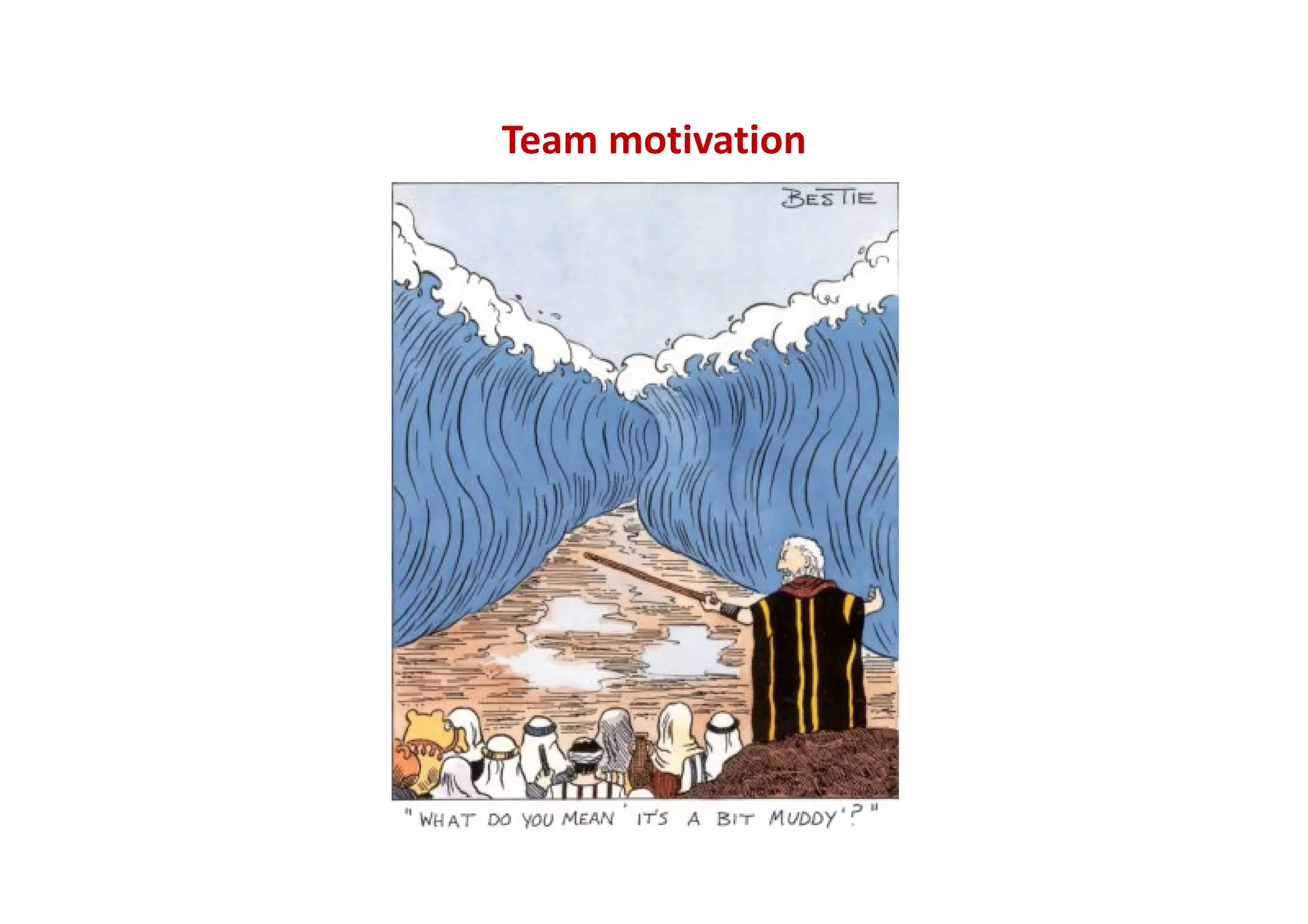
Team motivation
Team motivation
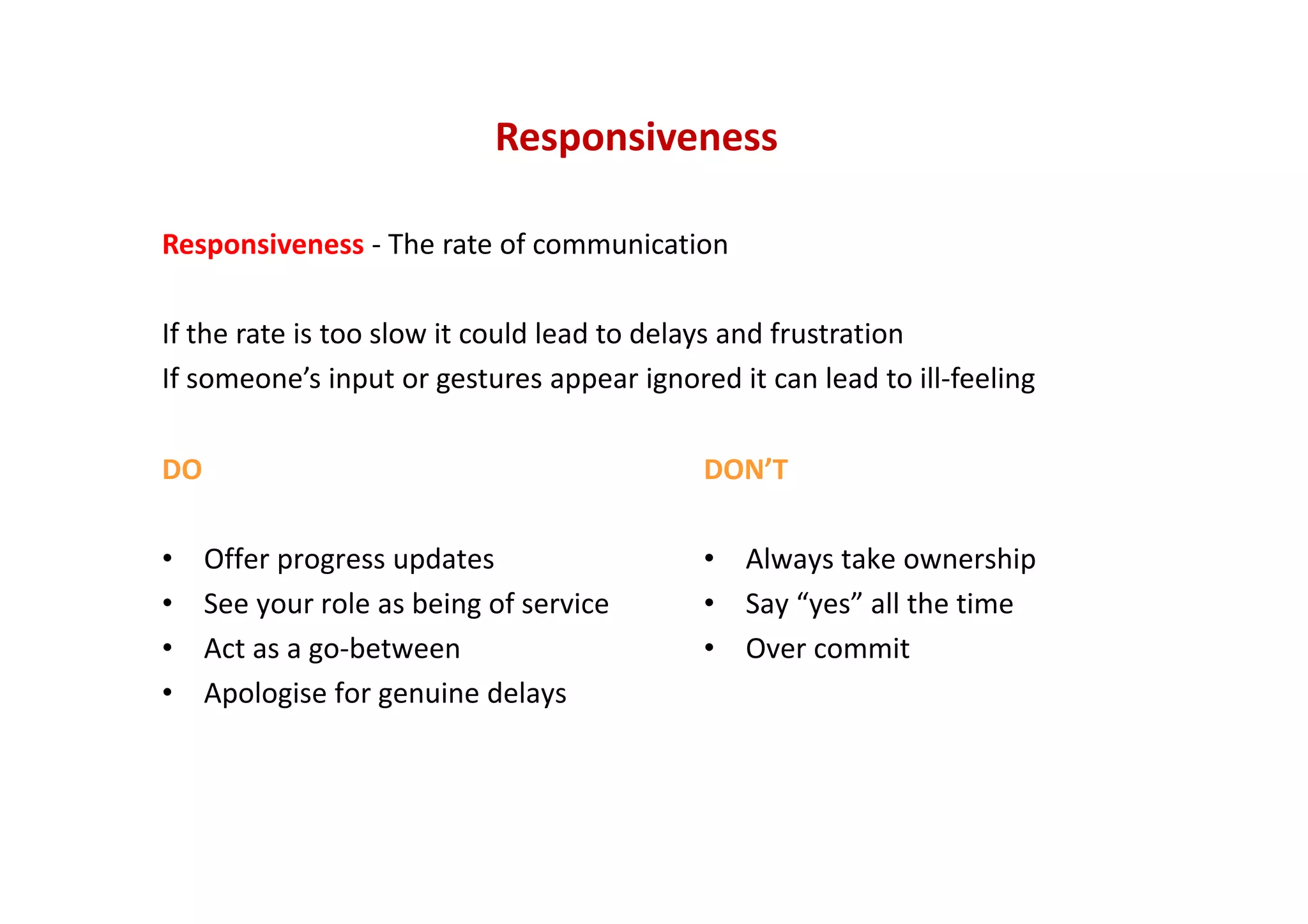
Responsiveness
Responsiveness ‐ The rate of communication
If the rate is too slow it could lead to delays and frustration
If someone’s input or gestures appear ignored it can lead to ill‐feeling
DO
• Offer progress updates
• See your role as being of service
• Act as a go‐between
• Apologise for genuine delays
DON’T
• Always take ownership
• Say “yes” all the time
• Over commit
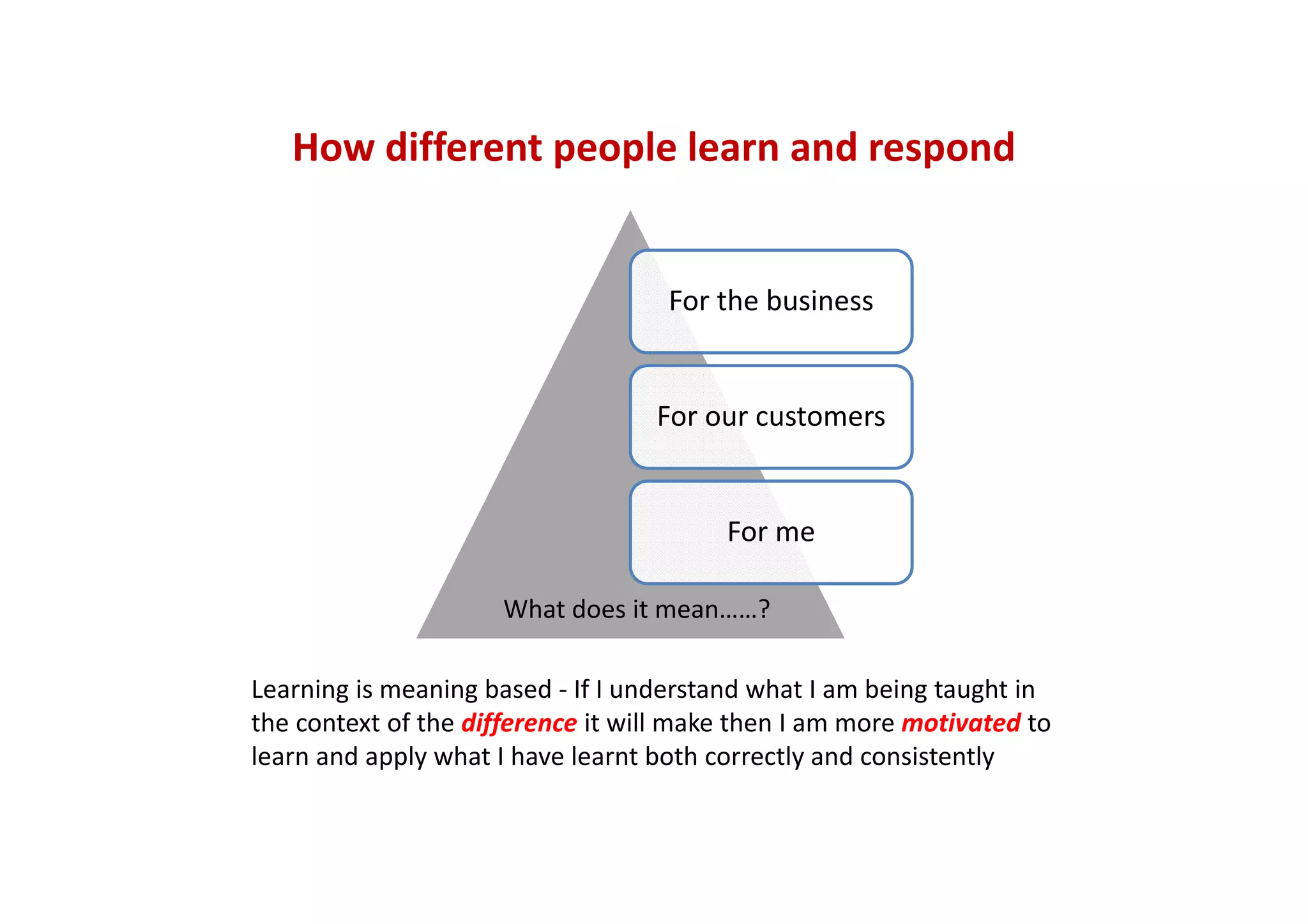
How different people learn and respond
Learning is meaning based ‐ If I understand what I am being taught in 
the context of the difference it will make then I am more motivated to 
learn and apply what I have learnt both correctly and consistently
For the business
For our customers
For me
What does it mean……?

Creating high performance teams