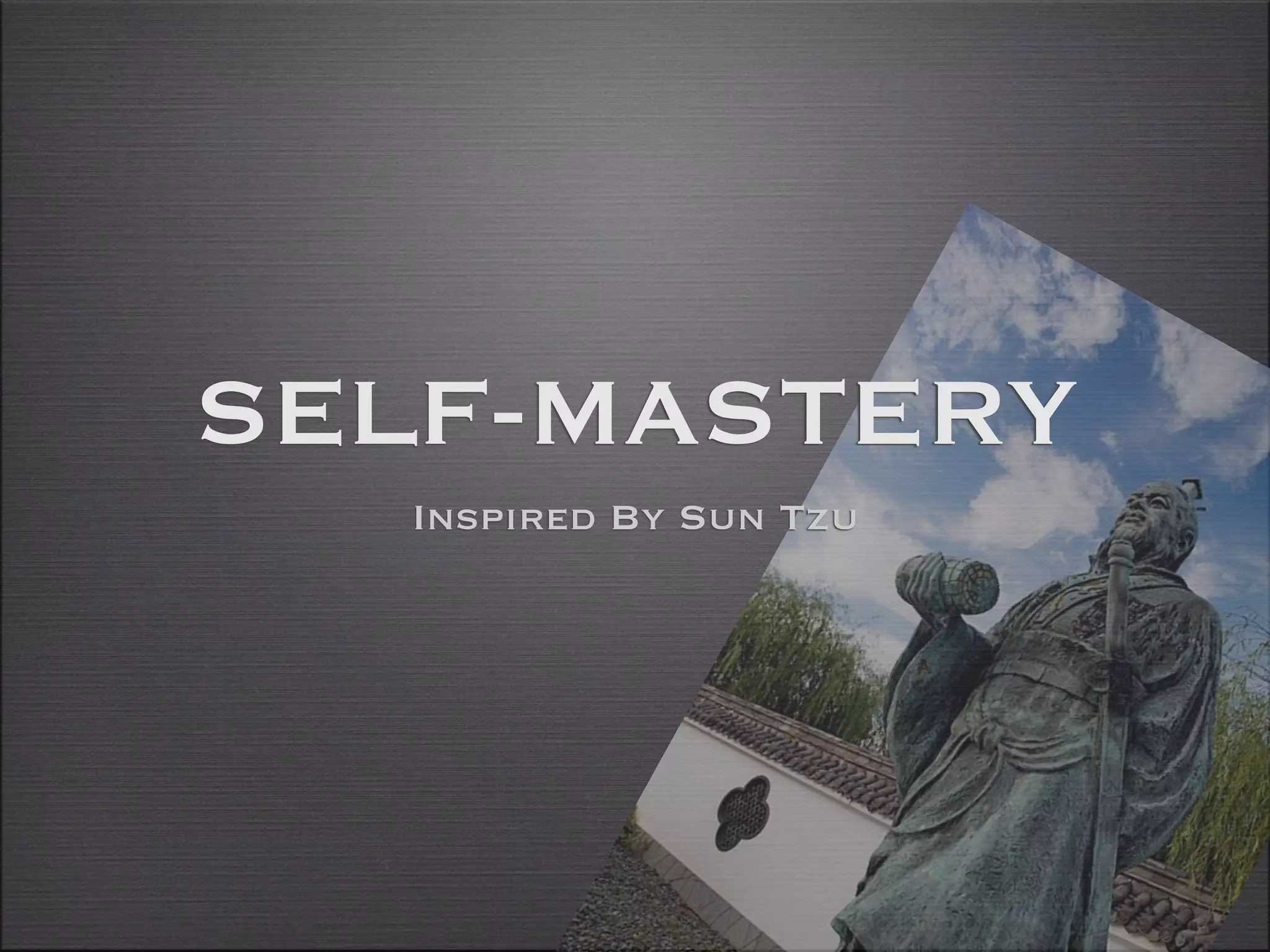
SELF-MASTERY
  Inspired By Sun Tzu
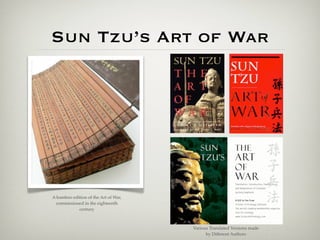
Sun Tzu’s Art of War


A bamboo edition of the Art of War,
 commissioned in the eighteenth
            century


                                      Various Translated Versions made
                                            by Different Authors
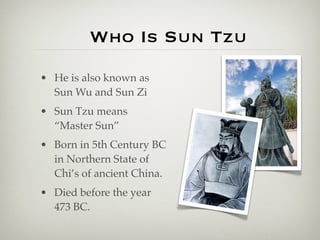
Who Is Sun Tzu
• He is also known as
  Sun Wu and Sun Zi
• Sun Tzu means
  “Master Sun”
• Born in 5th Century BC
  in Northern State of
  Chi’s of ancient China.
• Died before the year
  473 BC.
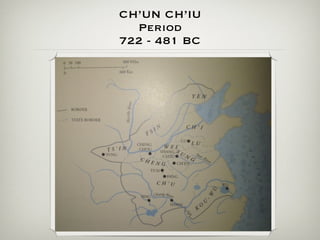
CH’UN CH’IU
  Period
722 - 481 BC
Sun Tzu On War
• The moral strength and intellectual faculty of man were
  decisive in war, and that if these were properly applied
  war could be waged with certain success.
• He was aware of implications of war. (inflated prices,
  rates of wastage, difficulties of supply, etc.)
• His principles on war:
  • shortest possible time
  • at the least possible cost in lives and effort;
  • with infliction on the enemy of the fewest possible
• All warfare is based on deception
Art of War

• Is a series of military treatise written by
  Sun Tzu in the 6th Century.
• Composed of thirteen (13) chapters
• Teach us to know ourself, to know our
  strengths, our weaknesses, and what
  are we capable of doing.
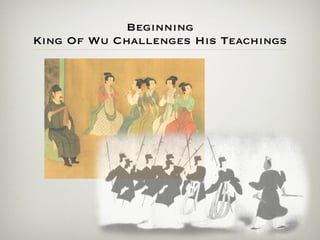
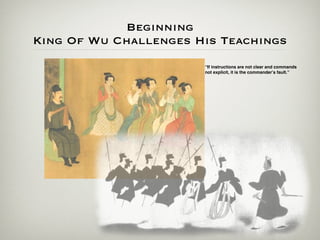
Beginning
King Of Wu Challenges His Teachings
Beginning
King Of Wu Challenges His Teachings
                       “If instructions are not clear and commands
                       not explicit, it is the commanderʼs fault.”
Beginning
King Of Wu Challenges His Teachings
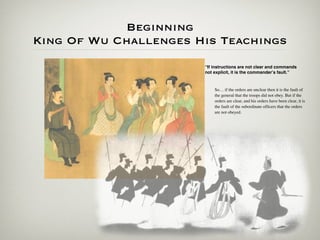
                       “If instructions are not clear and commands
                       not explicit, it is the commanderʼs fault.”


                           So… if the orders are unclear then it is the fault of
                           the general that the troops did not obey. But if the
                           orders are clear, and his orders have been clear, it is
                           the fault of the subordinate officers that the orders
                           are not obeyed.
3 Key Principles that
  unify his teachings
• “Know your enemy and know yourself
  and in 100 battles you will never be in
  peril.”
• “To win 100 battles is not the height of
  skill – To subdue the enemy without
  fighting is.”
• “Avoid what is strong. Attack what is
  weak.”
Video from National Geographic
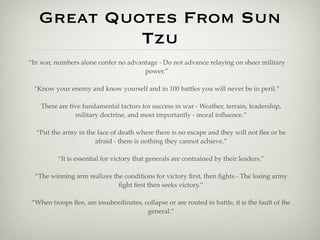
Great Quotes From Sun
            Tzu
“In war, numbers alone confer no advantage - Do not advance relaying on sheer military
                                      power.”

 “Know your enemy and know yourself and in 100 battles you will never be in peril.”

    There are five fundamental factors for success in war - Weather, terrain, leadership,
               military doctrine, and most importantly - moral influence.”

  “Put the army in the face of death where there is no escape and they will not flee or be
                      afraid - there is nothing they cannot achieve.”

          “It is essential for victory that generals are contrained by their leaders.”

  “The winning arm realizes the conditions for victory first, then fights - The losing army
                              fight first then seeks victory.”

 “When troops flee, are insubordinates, collapse or are routed in battle, it is the fault of the
                                        general.”
END

St self mastery

  • 1.
  • 2.
    Sun Tzu’s Artof War A bamboo edition of the Art of War, commissioned in the eighteenth century Various Translated Versions made by Different Authors
  • 4.
    Who Is SunTzu • He is also known as Sun Wu and Sun Zi • Sun Tzu means “Master Sun” • Born in 5th Century BC in Northern State of Chi’s of ancient China. • Died before the year 473 BC.
  • 5.
    CH’UN CH’IU Period 722 - 481 BC
  • 6.
    Sun Tzu OnWar • The moral strength and intellectual faculty of man were decisive in war, and that if these were properly applied war could be waged with certain success. • He was aware of implications of war. (inflated prices, rates of wastage, difficulties of supply, etc.) • His principles on war: • shortest possible time • at the least possible cost in lives and effort; • with infliction on the enemy of the fewest possible • All warfare is based on deception
  • 7.
    Art of War •Is a series of military treatise written by Sun Tzu in the 6th Century. • Composed of thirteen (13) chapters • Teach us to know ourself, to know our strengths, our weaknesses, and what are we capable of doing.
  • 8.
    Beginning King Of WuChallenges His Teachings
  • 9.
    Beginning King Of WuChallenges His Teachings “If instructions are not clear and commands not explicit, it is the commanderʼs fault.”
  • 10.
    Beginning King Of WuChallenges His Teachings “If instructions are not clear and commands not explicit, it is the commanderʼs fault.” So… if the orders are unclear then it is the fault of the general that the troops did not obey. But if the orders are clear, and his orders have been clear, it is the fault of the subordinate officers that the orders are not obeyed.
  • 11.
    3 Key Principlesthat unify his teachings • “Know your enemy and know yourself and in 100 battles you will never be in peril.” • “To win 100 battles is not the height of skill – To subdue the enemy without fighting is.” • “Avoid what is strong. Attack what is weak.”
  • 13.
  • 14.
    Great Quotes FromSun Tzu “In war, numbers alone confer no advantage - Do not advance relaying on sheer military power.” “Know your enemy and know yourself and in 100 battles you will never be in peril.” There are five fundamental factors for success in war - Weather, terrain, leadership, military doctrine, and most importantly - moral influence.” “Put the army in the face of death where there is no escape and they will not flee or be afraid - there is nothing they cannot achieve.” “It is essential for victory that generals are contrained by their leaders.” “The winning arm realizes the conditions for victory first, then fights - The losing army fight first then seeks victory.” “When troops flee, are insubordinates, collapse or are routed in battle, it is the fault of the general.”
  • 15.

Editor's Notes