Brucellosis
Table of contents
01
04
02
05
03
06
The disease and its
symptoms
Etiology and
pathothophysiology
Diagnosis
Complication and
Prognosis
Available treatments Disease prevention
and control
• Brucellosis is a zoonotic infectious disease
caused by bacteria of the genus Brucella
• Also known as ( Malta Fever, Mediterranean
Fever, or Undulant Fever
Introduction to the
disease
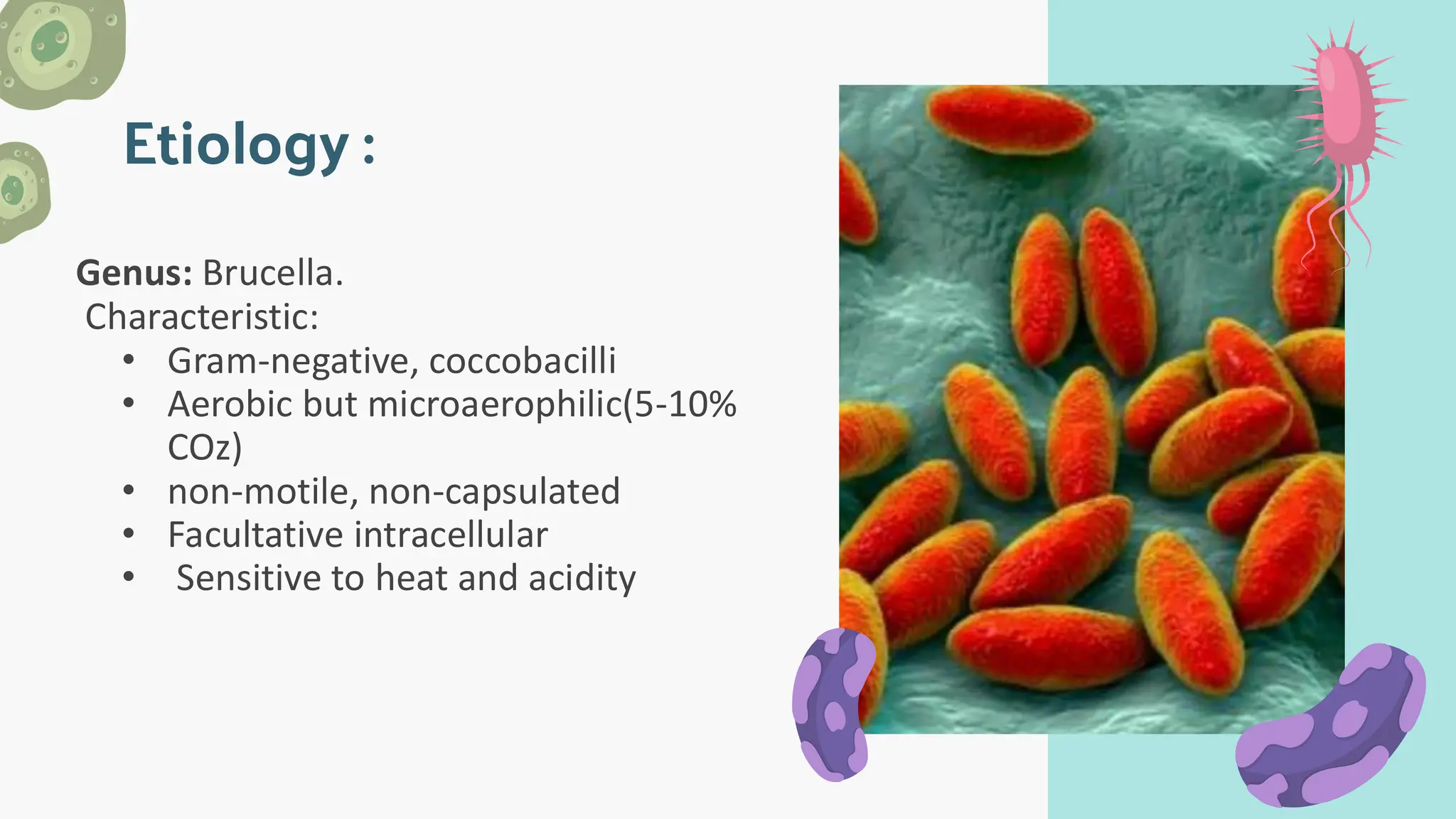
Etiology :
Genus: Brucella.
Characteristic:
• Gram-negative, coccobacilli
• Aerobic but microaerophilic(5-10%
COz)
• non-motile, non-capsulated
• Facultative intracellular
• Sensitive to heat and acidity
Species/Reservoir:
1.Brucella melitensis (from sheep and goats)
2.Brucella abortus(from cattel)
3.Brucella suis(from pigs)
4.Brucella canis (from dogs)
B. melitensis is the most virulent species for humans
Pathogenesis
Incubation period 1_ 4weeks.
-Brucella organisms entry via direct contact, ingestion, inhalation.
-Get Phagocytosed by macrophages in the mucosa of the gastrointestinal tract.
-Survive and replicate.
-Macrophages carry it to the lymphatic system and then to the bloodstream
(septicemia).
-Via blood, it reaches all organs, & specifically the reticuloendothelial system.
-Chronic inflammation results in cellular infiltration, necrosis, granuloma
formation, fibrosis, and abscess.
Virulence factors:
1-Smooth lipopolysaccharide (LPS): inhabits the fusion between
phagosome and lysosome
2- Type IV secretion system (TSS): inject effector proteins into host
cells, manipulating the host cells
3- Intracellular survival & replication: helps it survive inside
macrophages
4- Urease production: helps it survive in acidic environments
(stomach)
The adaptive immune system is critical for controlling Brucella
infection.
T-cell responses: CD4+ T-helper cells release IFN-y, which activates
macrophages to kill intracellular bacteria, CD8+ cytotoxic T cells
may also directly kill infected cells.
Humoral Immunity: B cells produce antibodies (IgM, IgG) against
Immune response :
Epidemiology
Brucellosis is a major zoonotic
disease with 500,000 new cases
annually, mainly in endemic
regions like the Mediterranean,
Middle East, Africa, Latin America,
and Asia.
It is rare in developed countries
due to animal vaccination and
pasteurization
In Africa,
brucellosisisendemic, with
highprevalencein
livestock(>30%)and
humans(5-15%), especially
in East, West, and North
Africa.
In Sudan
brucellosis affects 10-30%
of livestock and 5-20% of
humans,especiallyin
Darfur,Kordofan,and
Eastern Sudan.
Transmission
1. Direct Contact:
• Handling infected animal tissues, blood, or
secretions (e.g., placenta, aborted fetuses, or uterine
discharges).
• Common among veterinarians, farmers, and
slaughterhouse workers.
2. Ingestion:
• Consuming unpasteurized dairy products (milk,
cheese)
contaminated with Brucella.
• A significant mode of transmission in endemic
areas.
Clinical presentation
Acute Phase Symptoms:
1. Fever (halkmark symtom)
2. Headache
3. Night sweats
4. Musculoskeletal Symptoms:
Arthralgia and myalgia are common.
5-Lymphadenopathy
6-Abdominal Pain
7-Cough or Respirat or Symptoms(rare)
Chronic Phase Symptoms:
when untreated or inadequately treated
1-Chronic Fatigue
2-Arthritis or Spondylitis
3-Hepatomegaly and Splenomegaly
5-Endocarditis
6 -meningitis, encephalitis, or peripheral neuropathy
Patient History
Exposure to Animals:
-Contact with livestock (e.g., cattle, sheep, goats) or
animal products.
-Occupational risks such as working in slaughterhouses
or veterinary settings.
Travel History:
Visits to brucellosis-endemic regions.
Diagonsis
Serologic Tests
1. Rose Bengal Test (RBT)
- Rapid serologic test for Brucella antibodies.
2. Brucella Agglutination Test (SAT).
Detects specific antibodies against Brucella.
Considered the gold standard for diagnosis.
3. Enzyme-Linked Immunosorbent Assay (ELISA)
- Identifies IgM and IgG antibodies against Brucella.
Blood Cultures
1. Blood Cultures
Gold standard for definitive diagnosis of brucellosis.
Note: Slow-growing nature of Brucella may delay
results, making it less useful in acute cases.
2. Bone Marrow Culture
- Recommended when blood cultures are negative
but clinical suspicion remains high.
Molecular Diagnosis
Polymerase Chain Reaction (PCR)
- Highly sensitive method for detecting
Brucella DNA, aiding in rapid diagnosis.
Radiological Findings
Imaging Studies (X-ray & MRI)
Essential in suspected musculoskeletal
involvement.
Can reveal joint or bone inflammation,
abscesses, or spondylitis.
Complication
1. Osteoarticular
Most common, affecting joints (arthritis),
spine (spondylitis), and sacroiliac joints
(sacroillitis).
2. Cardiovascular ::
Endocarditis, though rare, is a leading cause of
mortality.
3. Neurological :
Neurobrucellosis includes meningiti
4. Genitourinary :
• Orchitis or epididymitis in men and pelvic
inflammation in women.
5.Other Issues:
• Hepatosplenomegaly, anemia, and skin
lesions.
Prognosis :
1. Factors Affecting Prognosis:
Early diagnosis and adherence to treatment
improve outcomes.
Delayed treatment increases the risk of chronic
brucellosis or relapses (5-10%).
2. Potential Long-term Effects:
Chronic fatigue syndrome.
Persistent musculoskeletal pain.
Permanent joint damage from osteoarticular
complications.
Treatment of Brucellosis
The World Health Organization (WHO)
and various guidelines recommend
specific regimens depending on the
patient's age, pregnancy status, and
disease severity.
1. Doxycycline and Rifampicin (First-line treatment)
-Doxycycline: 100 mg orally, twice dally for 6 weeks.
-Rifampicin: 600-900 mg orally, once daily for 6 weeks.
•This regimen is highly effective for uncomplicated cases
of brucellosis.
Treatment Regimens for Adults:
2. Doxycycline and Streptomycin (Alternative for severe or localized forms,
e.g., neurobrucellosis)
Doxycycline: 100 mg orally, twice daily for 6 weeks.
Streptomycin: 1 g intramuscularly, once daily for 2-3 weeks.
•Streptomycin is preferred in cases where rifampicin resistance is a
concern.
3. Trimethoprim-Sulfamethoxazole
(TMP-SMX)-based Regimen (Alternative in special cases)
• TMP-SMX: 160/800 mg (1 double-strength tablet) orally, twice daily
for 6 weeks.
• Often used in children or pregnant women, combined with rifampicin or
gentamicin depending on the severity.
Regimens for Children
Under 8 years of age:
Avoid doxycycline due to risks of teeth discoloration.
-TMP-SMX: 5 mg/kg (based on trimethoprim) orally,
twice daily for 6 weeks.
-Gentamicin: 5-7.5 mg/kg intramuscularly, once daily
for 7-10 days, if indicated for severe cases.
Over 8 years of age:
Can follow the adult regimen of doxycycline end
rifampicin.
Treatment in Pregnancy:
Rifampicin is the drug of choice, as it is
considered safer during pregnancy:
-Rifampicin: 600 mg orally, once daily for 6
weeks.
• In severe cases, TMP-SMX may be added
after the first trimester.
•Neurobrucellosis: Combination therapy with at least three drugs:
-Doxycycline: 100 mg orally, twice daily.
-Rifampicin: 600 mg orally, once daily.
-Ceftriaxone: 2 g intravenously, once daily for 6 weeks or longer.
•Endocarditis: Requires prolonged multi-drug regimens and often
surgical intervention.
Severe or Complicated Cases:
Supportive Care:
•Use of antipyretics (e.g., paracetamol) and non-
steroidal anti-inflammatory drugs (NSAIDs, e.g.,
ibuprofen) to reduce fever, joint pain, and
inflammation.
•Encouraging rest and recovery due to the
debilitating nature of the disease.
Prevention:
1. Primordial Prevention
• Raising awareness
2. Primary Prevention
-Immunization of cattle, sheep, and goats
-.Adequate cooking of meat products and pasteurization of dairy Products
3. Secondary Prevention
-Surveillance programs
-Laboratory safety protocols
4. Tertiary Prevention
• Medical treatment and rehabilitation
Animal Vaccines
1. Strain 19 Vaccine:
Used for cattle, particularly against Brucella abortus.
Reduces infection rates in animals and prevents transmission to humans.
2. Rev-1 Vaccine:
Designed for sheep and goats against Brucella melitensis.
Helps control the spread of brucellosis in endemic areas.
Vaccination
Human Vaccines
-Currently, no licensed human vaccine is
available.
- Research is ongoing to create vaccines
for humans,
Current Research and Technology.
• In endemic areas everything can be due to brucellosis until proven
different.
• The disease is hugely underestimated due to undiagnosed or
misdiagnosed cases.
• Eradication of the disease is not possible due to the lack of adequate
vaccines for humans and the impossibility for global eradication of
brucellosis in animals.
• There are only limited vaccines because:
a-Any alteration to the carrier host might lead to adverse health
outcomes in humans. Mosquitoes # livestock.
. B-The developed vaccines are extremely expensive and the ones in
the future will also be expensive. (Brucellosis is a disease of poverty, so it
will not be applicable in poor countries).
c-The available live attenuated vaccines are only for animals, and can
cause serious side effects, such as abortion in target and non target
animals, can be shed by immunized animals, and can still cause
brucellosis in humans.
There's a call to create a vaccine with a prize for the first licensed vaccine.
Molecular epidemiology in brucellosis is difficult; it's difficult to keep the
bacterial strains alive once they retrieve the sample.
Current breakthroughs in molecular epidemiology:
Solvent inactivated bacteria by bioMèrieux VITEK system.
Multilocus sequence typing (MLST).
Multiple locus variable number tandem repeat analyst (MLVA).
• Both a and b track B.melitensis and B.abortus across the world through
animal trade-> eliminate the source.
Questions
Time
1- what the brucella specie cause sever human illness and
specie often associate with abscess formation ?
2-what the type of fever caused by brucella infection?
3-what common test used in endemics areas?
4-what regimen use to treat adult with non localized
disease ?
5- in which organs the organims latent that survive for
long periods?
6-what the virulence factor's of organisms to avoid
destruction by immune system?
Case 1
A_ 35 year old man with history of raising animals
complained of undulating fever night sweating, malaise,
anorexia, headache, myalgia and arthralgia for week
.when he admitted to aclinic have normal blood pressure
the doctor asked blood test for malaria and dengue fever
but was found negative ,the doctor prescribed
antipyretic and analgesics but his symptoms getting
worse by times and noticed that decrease in his weight.
on examination : BP (90/50mmhg ), hepatosplenomegaly
What's your suggestion diagnosis and what other
investigations needs to confirm your diagnosis?
What the treatment?
Case 2
A_40 years old man from turkey presents with a history of
chronic back pain and fever. on examination an MRI scan
shows sarcoiliiti he has a long history of consuming
unpasteurised milk and the initial work _up includes testing
with a serum agglutination test, Which comes back positive
at high titre whate would been an appropriate initial
antimicrobial regimen?
A doxycycline, rifampicin and gentamycin.
B_ flucloxacilin with rifampicin.
C_ fluconazole with flucytosine.
D imipenem followed by Doxycycline and co-trimoxazole.
E_streptomycin with chloramphenicol
Resources
Murray, P. R., Rosenthal, K. S., & Pfaller, M. A.
Medical Microbiology. 9th Edition, Elsevier, 2020.
Herrison’s principal of internal medicine
https://journals.plos.org/plosntds/article?id=10.1371/journal.pntd.0012405
https://www.who.int/news-room/fact-sheets/detail/brucellosis.
https://www.cdc.gov/brucellosis/
https://drive.google.com/file/d/1cNJdwsPS99yMaXTSfjQj0hMpM5yKOP
https://drive.google.com/file/d/1cZ_elROqmyyhblVILRZjstq7|pB3HqQ
https://drive.google.com/file/d/1cN/37KVqqGMfzHE_6ty5ajhKPuU56p92
Prepared by:-
.1
‫جمال‬
‫حسن‬
‫بشير‬
‫سيد‬
‫احمد‬
.2
‫حامد‬
‫آدم‬
‫ادريس‬
‫عبدهللا‬
.3
‫حسام‬
‫ايهاب‬
‫كامل‬
‫يوسف‬
.4
‫حفصه‬
‫يحيى‬
‫زكريا‬
‫هارون‬
.5
‫حمد‬
‫النيل‬
‫محمد‬
‫عبيد‬
‫عبدهللا‬
.6
‫خليفة‬
‫جبارة‬
‫خليفة‬
‫محمد‬
.7
‫ردينة‬
‫عبدالرازق‬
‫جباره‬
‫بابكر‬
.8
‫رغد‬
‫عبدهللا‬
‫احمد‬
‫طاهر‬
.9
‫رماز‬
‫عبدالحافظ‬
‫عبدالرحيم‬
‫بادي‬
.10
‫رهام‬
‫الباقر‬
‫محمد‬
‫األمين‬
.11
‫رهف‬
‫عبدهللا‬
‫احمد‬
‫عبدهللا‬
.12
‫روان‬
‫عامر‬
‫ابراهيم‬
‫احمد‬
Thanks

Tropical Brucellosis Presentation group2.pdf

  • 1.
  • 2.
    Table of contents 01 04 02 05 03 06 Thedisease and its symptoms Etiology and pathothophysiology Diagnosis Complication and Prognosis Available treatments Disease prevention and control
  • 3.
    • Brucellosis isa zoonotic infectious disease caused by bacteria of the genus Brucella • Also known as ( Malta Fever, Mediterranean Fever, or Undulant Fever Introduction to the disease
  • 4.
    Etiology : Genus: Brucella. Characteristic: •Gram-negative, coccobacilli • Aerobic but microaerophilic(5-10% COz) • non-motile, non-capsulated • Facultative intracellular • Sensitive to heat and acidity
  • 5.
    Species/Reservoir: 1.Brucella melitensis (fromsheep and goats) 2.Brucella abortus(from cattel) 3.Brucella suis(from pigs) 4.Brucella canis (from dogs) B. melitensis is the most virulent species for humans
  • 6.
    Pathogenesis Incubation period 1_4weeks. -Brucella organisms entry via direct contact, ingestion, inhalation. -Get Phagocytosed by macrophages in the mucosa of the gastrointestinal tract. -Survive and replicate. -Macrophages carry it to the lymphatic system and then to the bloodstream (septicemia). -Via blood, it reaches all organs, & specifically the reticuloendothelial system. -Chronic inflammation results in cellular infiltration, necrosis, granuloma formation, fibrosis, and abscess.
  • 7.
    Virulence factors: 1-Smooth lipopolysaccharide(LPS): inhabits the fusion between phagosome and lysosome 2- Type IV secretion system (TSS): inject effector proteins into host cells, manipulating the host cells 3- Intracellular survival & replication: helps it survive inside macrophages 4- Urease production: helps it survive in acidic environments (stomach)
  • 8.
    The adaptive immunesystem is critical for controlling Brucella infection. T-cell responses: CD4+ T-helper cells release IFN-y, which activates macrophages to kill intracellular bacteria, CD8+ cytotoxic T cells may also directly kill infected cells. Humoral Immunity: B cells produce antibodies (IgM, IgG) against Immune response :
  • 9.
    Epidemiology Brucellosis is amajor zoonotic disease with 500,000 new cases annually, mainly in endemic regions like the Mediterranean, Middle East, Africa, Latin America, and Asia. It is rare in developed countries due to animal vaccination and pasteurization
  • 10.
    In Africa, brucellosisisendemic, with highprevalencein livestock(>30%)and humans(5-15%),especially in East, West, and North Africa. In Sudan brucellosis affects 10-30% of livestock and 5-20% of humans,especiallyin Darfur,Kordofan,and Eastern Sudan.
  • 11.
    Transmission 1. Direct Contact: •Handling infected animal tissues, blood, or secretions (e.g., placenta, aborted fetuses, or uterine discharges). • Common among veterinarians, farmers, and slaughterhouse workers. 2. Ingestion: • Consuming unpasteurized dairy products (milk, cheese) contaminated with Brucella. • A significant mode of transmission in endemic areas.
  • 12.
    Clinical presentation Acute PhaseSymptoms: 1. Fever (halkmark symtom) 2. Headache 3. Night sweats 4. Musculoskeletal Symptoms: Arthralgia and myalgia are common. 5-Lymphadenopathy 6-Abdominal Pain 7-Cough or Respirat or Symptoms(rare)
  • 13.
    Chronic Phase Symptoms: whenuntreated or inadequately treated 1-Chronic Fatigue 2-Arthritis or Spondylitis 3-Hepatomegaly and Splenomegaly 5-Endocarditis 6 -meningitis, encephalitis, or peripheral neuropathy
  • 14.
    Patient History Exposure toAnimals: -Contact with livestock (e.g., cattle, sheep, goats) or animal products. -Occupational risks such as working in slaughterhouses or veterinary settings. Travel History: Visits to brucellosis-endemic regions. Diagonsis
  • 15.
    Serologic Tests 1. RoseBengal Test (RBT) - Rapid serologic test for Brucella antibodies. 2. Brucella Agglutination Test (SAT). Detects specific antibodies against Brucella. Considered the gold standard for diagnosis. 3. Enzyme-Linked Immunosorbent Assay (ELISA) - Identifies IgM and IgG antibodies against Brucella.
  • 16.
    Blood Cultures 1. BloodCultures Gold standard for definitive diagnosis of brucellosis. Note: Slow-growing nature of Brucella may delay results, making it less useful in acute cases. 2. Bone Marrow Culture - Recommended when blood cultures are negative but clinical suspicion remains high.
  • 17.
    Molecular Diagnosis Polymerase ChainReaction (PCR) - Highly sensitive method for detecting Brucella DNA, aiding in rapid diagnosis. Radiological Findings Imaging Studies (X-ray & MRI) Essential in suspected musculoskeletal involvement. Can reveal joint or bone inflammation, abscesses, or spondylitis.
  • 18.
    Complication 1. Osteoarticular Most common,affecting joints (arthritis), spine (spondylitis), and sacroiliac joints (sacroillitis). 2. Cardiovascular :: Endocarditis, though rare, is a leading cause of mortality. 3. Neurological : Neurobrucellosis includes meningiti
  • 19.
    4. Genitourinary : •Orchitis or epididymitis in men and pelvic inflammation in women. 5.Other Issues: • Hepatosplenomegaly, anemia, and skin lesions.
  • 20.
    Prognosis : 1. FactorsAffecting Prognosis: Early diagnosis and adherence to treatment improve outcomes. Delayed treatment increases the risk of chronic brucellosis or relapses (5-10%). 2. Potential Long-term Effects: Chronic fatigue syndrome. Persistent musculoskeletal pain. Permanent joint damage from osteoarticular complications.
  • 21.
    Treatment of Brucellosis TheWorld Health Organization (WHO) and various guidelines recommend specific regimens depending on the patient's age, pregnancy status, and disease severity.
  • 22.
    1. Doxycycline andRifampicin (First-line treatment) -Doxycycline: 100 mg orally, twice dally for 6 weeks. -Rifampicin: 600-900 mg orally, once daily for 6 weeks. •This regimen is highly effective for uncomplicated cases of brucellosis. Treatment Regimens for Adults:
  • 23.
    2. Doxycycline andStreptomycin (Alternative for severe or localized forms, e.g., neurobrucellosis) Doxycycline: 100 mg orally, twice daily for 6 weeks. Streptomycin: 1 g intramuscularly, once daily for 2-3 weeks. •Streptomycin is preferred in cases where rifampicin resistance is a concern. 3. Trimethoprim-Sulfamethoxazole (TMP-SMX)-based Regimen (Alternative in special cases) • TMP-SMX: 160/800 mg (1 double-strength tablet) orally, twice daily for 6 weeks. • Often used in children or pregnant women, combined with rifampicin or gentamicin depending on the severity.
  • 24.
    Regimens for Children Under8 years of age: Avoid doxycycline due to risks of teeth discoloration. -TMP-SMX: 5 mg/kg (based on trimethoprim) orally, twice daily for 6 weeks. -Gentamicin: 5-7.5 mg/kg intramuscularly, once daily for 7-10 days, if indicated for severe cases. Over 8 years of age: Can follow the adult regimen of doxycycline end rifampicin.
  • 25.
    Treatment in Pregnancy: Rifampicinis the drug of choice, as it is considered safer during pregnancy: -Rifampicin: 600 mg orally, once daily for 6 weeks. • In severe cases, TMP-SMX may be added after the first trimester.
  • 26.
    •Neurobrucellosis: Combination therapywith at least three drugs: -Doxycycline: 100 mg orally, twice daily. -Rifampicin: 600 mg orally, once daily. -Ceftriaxone: 2 g intravenously, once daily for 6 weeks or longer. •Endocarditis: Requires prolonged multi-drug regimens and often surgical intervention. Severe or Complicated Cases:
  • 27.
    Supportive Care: •Use ofantipyretics (e.g., paracetamol) and non- steroidal anti-inflammatory drugs (NSAIDs, e.g., ibuprofen) to reduce fever, joint pain, and inflammation. •Encouraging rest and recovery due to the debilitating nature of the disease.
  • 28.
    Prevention: 1. Primordial Prevention •Raising awareness 2. Primary Prevention -Immunization of cattle, sheep, and goats -.Adequate cooking of meat products and pasteurization of dairy Products 3. Secondary Prevention -Surveillance programs -Laboratory safety protocols 4. Tertiary Prevention • Medical treatment and rehabilitation
  • 29.
    Animal Vaccines 1. Strain19 Vaccine: Used for cattle, particularly against Brucella abortus. Reduces infection rates in animals and prevents transmission to humans. 2. Rev-1 Vaccine: Designed for sheep and goats against Brucella melitensis. Helps control the spread of brucellosis in endemic areas. Vaccination
  • 30.
    Human Vaccines -Currently, nolicensed human vaccine is available. - Research is ongoing to create vaccines for humans,
  • 31.
    Current Research andTechnology. • In endemic areas everything can be due to brucellosis until proven different. • The disease is hugely underestimated due to undiagnosed or misdiagnosed cases. • Eradication of the disease is not possible due to the lack of adequate vaccines for humans and the impossibility for global eradication of brucellosis in animals. • There are only limited vaccines because: a-Any alteration to the carrier host might lead to adverse health outcomes in humans. Mosquitoes # livestock. . B-The developed vaccines are extremely expensive and the ones in the future will also be expensive. (Brucellosis is a disease of poverty, so it will not be applicable in poor countries). c-The available live attenuated vaccines are only for animals, and can cause serious side effects, such as abortion in target and non target animals, can be shed by immunized animals, and can still cause brucellosis in humans.
  • 32.
    There's a callto create a vaccine with a prize for the first licensed vaccine. Molecular epidemiology in brucellosis is difficult; it's difficult to keep the bacterial strains alive once they retrieve the sample. Current breakthroughs in molecular epidemiology: Solvent inactivated bacteria by bioMèrieux VITEK system. Multilocus sequence typing (MLST). Multiple locus variable number tandem repeat analyst (MLVA). • Both a and b track B.melitensis and B.abortus across the world through animal trade-> eliminate the source.
  • 33.
  • 34.
    1- what thebrucella specie cause sever human illness and specie often associate with abscess formation ? 2-what the type of fever caused by brucella infection? 3-what common test used in endemics areas? 4-what regimen use to treat adult with non localized disease ? 5- in which organs the organims latent that survive for long periods? 6-what the virulence factor's of organisms to avoid destruction by immune system?
  • 35.
    Case 1 A_ 35year old man with history of raising animals complained of undulating fever night sweating, malaise, anorexia, headache, myalgia and arthralgia for week .when he admitted to aclinic have normal blood pressure the doctor asked blood test for malaria and dengue fever but was found negative ,the doctor prescribed antipyretic and analgesics but his symptoms getting worse by times and noticed that decrease in his weight. on examination : BP (90/50mmhg ), hepatosplenomegaly What's your suggestion diagnosis and what other investigations needs to confirm your diagnosis? What the treatment?
  • 36.
    Case 2 A_40 yearsold man from turkey presents with a history of chronic back pain and fever. on examination an MRI scan shows sarcoiliiti he has a long history of consuming unpasteurised milk and the initial work _up includes testing with a serum agglutination test, Which comes back positive at high titre whate would been an appropriate initial antimicrobial regimen? A doxycycline, rifampicin and gentamycin. B_ flucloxacilin with rifampicin. C_ fluconazole with flucytosine. D imipenem followed by Doxycycline and co-trimoxazole. E_streptomycin with chloramphenicol
  • 37.
    Resources Murray, P. R.,Rosenthal, K. S., & Pfaller, M. A. Medical Microbiology. 9th Edition, Elsevier, 2020. Herrison’s principal of internal medicine https://journals.plos.org/plosntds/article?id=10.1371/journal.pntd.0012405 https://www.who.int/news-room/fact-sheets/detail/brucellosis. https://www.cdc.gov/brucellosis/ https://drive.google.com/file/d/1cNJdwsPS99yMaXTSfjQj0hMpM5yKOP https://drive.google.com/file/d/1cZ_elROqmyyhblVILRZjstq7|pB3HqQ https://drive.google.com/file/d/1cN/37KVqqGMfzHE_6ty5ajhKPuU56p92
  • 38.
    Prepared by:- .1 ‫جمال‬ ‫حسن‬ ‫بشير‬ ‫سيد‬ ‫احمد‬ .2 ‫حامد‬ ‫آدم‬ ‫ادريس‬ ‫عبدهللا‬ .3 ‫حسام‬ ‫ايهاب‬ ‫كامل‬ ‫يوسف‬ .4 ‫حفصه‬ ‫يحيى‬ ‫زكريا‬ ‫هارون‬ .5 ‫حمد‬ ‫النيل‬ ‫محمد‬ ‫عبيد‬ ‫عبدهللا‬ .6 ‫خليفة‬ ‫جبارة‬ ‫خليفة‬ ‫محمد‬ .7 ‫ردينة‬ ‫عبدالرازق‬ ‫جباره‬ ‫بابكر‬ .8 ‫رغد‬ ‫عبدهللا‬ ‫احمد‬ ‫طاهر‬ .9 ‫رماز‬ ‫عبدالحافظ‬ ‫عبدالرحيم‬ ‫بادي‬ .10 ‫رهام‬ ‫الباقر‬ ‫محمد‬ ‫األمين‬ .11 ‫رهف‬ ‫عبدهللا‬ ‫احمد‬ ‫عبدهللا‬ .12 ‫روان‬ ‫عامر‬ ‫ابراهيم‬ ‫احمد‬
  • 39.