Bridging the Gap
between Nursing
Education and Practice
Nursing: Definition
• Nursing is learned humanistic and scientific discipline whereby
a nurse assist the patient, sick or well in the performance of
those activities contributing to his/her recovery or to a
peaceful death.
Virginia Henderson
Nursing practice:
• It is defined as the range of roles, functions, responsibilities
and activities which registered nurses are educated and
authorized to perform.
Nursing practice: Definition:
Analyzing & synthesis of knowledge
Understanding, interpreting & applying nursing
theory & research
Developing & advancing nursing knowledge &
profession as whole
Professional Nursing:
Patients
Competence
Attribute of
practice
The art of
nursing
Personal
commitment
Values
Mission
What are our expectations of nurses in 21st
century?
The 21st century nurse should be one that is equipped
not only with the basic requisite knowledge and skill to
function in the clinical aspects of health care provision, but must
also possess the requisite knowledge and skill to function as a
team leader, manager of resources, counsellors and advocate
to patients.
Challenges in Nursing Education & Practice :
 Maintaining excellent standard of nurse education.
 To improve nursing education to keep abreast with rapid
changes in health care.
 Understanding and meeting need of clients.
 Keeping up with advancement of science and technology.
 Applying appropriate knowledge-based skills.
 Sustaining qualified, efficient and excellent nurses.
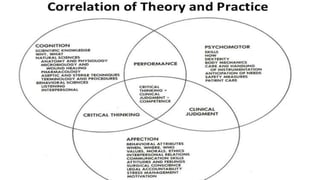
Domains involved in integrating nursing
education & practice:
cognitive=
knowledge
Affective=
attitude
Psychomotor=
practice
Gaps between Nursing Education & Practice:
• Technological & medical advancement
• Graduate nurses are lacking in practical skills despite of nursing
knowledge.
• Less implementation of nursing research into practice
• Lack of organizational support
• Lack of resources
• Less chances of Continue Nursing Education
• Traditional procedures blocks spread of knowledge
• Nurses don’t ready to change the behavior.
Other gaps are:
 Nurse practitioners:
 Failure to update and apply their knowledge in their daily practice.
Don’t follow protocols, procedures. E.g. use of nursing process.
Little opportunity to attend CNE sessions.
Shortcut becomes habitual.
Failure to prioritize the importance of theoretical knowledge in
practice.
Under-stress- Stress –Demotivated
Contd…
 Nurse educators:
 Teach outdated knowledge.
Busy with academic life and research- not enough time to
go for clinical attachment
Lack of commitment on clinical placement to update self.
 Don’t know latest information on policies, protocols,
procedures etc.
Contd…
 Students:
Follow instructions but confused with the differences
between what were learned and practiced.
Failure to link between knowledge and practice.
How to narrow the
gap?
Reducing gap between Education & Practice:
Getting research into practice
Evidence based practice to be applied
Choose learning activity that is suitable
for learner.
Planning for improving practice
Contd….
Behavior modification
Matching learning needs of learners
High-tech high-touch approach
Application of new technology into practice
Performance appraisal
Contd…..
Clinical placement of students
Update knowledge and practice
Leadership role
High quality patient centered care
Continuing Nursing Education
Tertiary education for nurses
Clinical attachment for nurse educators
Collaboration between nurse
practitioner & educators
Performance assessment
Relationship between Student, Nursing
Educator & Clinical Facilitator
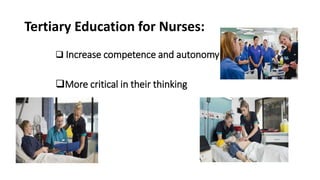
Tertiary Education for Nurses:
 Increase competence and autonomy
More critical in their thinking
Teaching-learning Approaches:
Lectures Tutorials Discussion
Problem
based
learning
E- learning
Self-
directed
learning
Contd…..
Simulation
Field visits
Clinical
teaching
Practice
skill
Seminar Role-play
Clinical placement of students:
• It helps to apply theory into practice.
• Communicate effectively
• Help to perform safe therapeutic interventions.
• Exhibits caring behavior.
Extracurricular activities:
It covers the student’s physical, mental & social
well-being.
Continue Nursing Education:
• Opportunities for learning new knowledge.
• Lifelong learning is an essential part of professionalism.
• To maintain competencies
• To enhance quality of care.
• For self-advancement
Collaboration :
• Between nurse practitioners and educators
• Co-organize workshops, seminars, conferences & research
Attachment of Nurse Educator:
• At the clinical settings, i.e. hospital, clinic etc.
• Get updates on the latest policies, procedures and protocols.
Performance Assessment:
• To evaluate standard of performance.
• To assess the nurses competencies.
• Assess positive relationship between competency and
performance
There is global demand for nurses !
Extended role of nurse:
School-health
nurse
Occupational
health nurse
Hospice
nurse
Rehabilitation
nurse
Home-care
nurse
Disaster
nurse
Expanded role of nurse:
Having basic skills and knowledge
Team leader
Manager
Counselor and advocate
Contd..
Nurse as a teacher
Nurse as a caregiver
Nurse as a health educator
Nurse as a collaborator
Conclusion:
The gap can be narrowed if we
• Speak one common language
• Same thinking
• Same aspirations
• Same goals towards our profession
Bridging gap edu nsg

Bridging gap edu nsg

  • 1.
    Bridging the Gap betweenNursing Education and Practice
  • 2.
    Nursing: Definition • Nursingis learned humanistic and scientific discipline whereby a nurse assist the patient, sick or well in the performance of those activities contributing to his/her recovery or to a peaceful death. Virginia Henderson
  • 3.
    Nursing practice: • Itis defined as the range of roles, functions, responsibilities and activities which registered nurses are educated and authorized to perform.
  • 4.
    Nursing practice: Definition: Analyzing& synthesis of knowledge Understanding, interpreting & applying nursing theory & research Developing & advancing nursing knowledge & profession as whole
  • 5.
    Professional Nursing: Patients Competence Attribute of practice Theart of nursing Personal commitment Values Mission
  • 7.
    What are ourexpectations of nurses in 21st century? The 21st century nurse should be one that is equipped not only with the basic requisite knowledge and skill to function in the clinical aspects of health care provision, but must also possess the requisite knowledge and skill to function as a team leader, manager of resources, counsellors and advocate to patients.
  • 8.
    Challenges in NursingEducation & Practice :  Maintaining excellent standard of nurse education.  To improve nursing education to keep abreast with rapid changes in health care.  Understanding and meeting need of clients.  Keeping up with advancement of science and technology.  Applying appropriate knowledge-based skills.  Sustaining qualified, efficient and excellent nurses.
  • 9.
    Domains involved inintegrating nursing education & practice: cognitive= knowledge Affective= attitude Psychomotor= practice
  • 10.
    Gaps between NursingEducation & Practice: • Technological & medical advancement • Graduate nurses are lacking in practical skills despite of nursing knowledge. • Less implementation of nursing research into practice • Lack of organizational support • Lack of resources • Less chances of Continue Nursing Education • Traditional procedures blocks spread of knowledge • Nurses don’t ready to change the behavior.
  • 11.
    Other gaps are: Nurse practitioners:  Failure to update and apply their knowledge in their daily practice. Don’t follow protocols, procedures. E.g. use of nursing process. Little opportunity to attend CNE sessions. Shortcut becomes habitual. Failure to prioritize the importance of theoretical knowledge in practice. Under-stress- Stress –Demotivated
  • 12.
    Contd…  Nurse educators: Teach outdated knowledge. Busy with academic life and research- not enough time to go for clinical attachment Lack of commitment on clinical placement to update self.  Don’t know latest information on policies, protocols, procedures etc.
  • 13.
    Contd…  Students: Follow instructionsbut confused with the differences between what were learned and practiced. Failure to link between knowledge and practice.
  • 14.
    How to narrowthe gap?
  • 15.
    Reducing gap betweenEducation & Practice: Getting research into practice Evidence based practice to be applied Choose learning activity that is suitable for learner. Planning for improving practice
  • 16.
    Contd…. Behavior modification Matching learningneeds of learners High-tech high-touch approach Application of new technology into practice Performance appraisal
  • 17.
    Contd….. Clinical placement ofstudents Update knowledge and practice Leadership role High quality patient centered care
  • 18.
    Continuing Nursing Education Tertiaryeducation for nurses Clinical attachment for nurse educators Collaboration between nurse practitioner & educators Performance assessment
  • 19.
    Relationship between Student,Nursing Educator & Clinical Facilitator
  • 20.
    Tertiary Education forNurses:  Increase competence and autonomy More critical in their thinking
  • 21.
    Teaching-learning Approaches: Lectures TutorialsDiscussion Problem based learning E- learning Self- directed learning
  • 22.
  • 23.
    Clinical placement ofstudents: • It helps to apply theory into practice. • Communicate effectively • Help to perform safe therapeutic interventions. • Exhibits caring behavior.
  • 24.
    Extracurricular activities: It coversthe student’s physical, mental & social well-being.
  • 25.
    Continue Nursing Education: •Opportunities for learning new knowledge. • Lifelong learning is an essential part of professionalism. • To maintain competencies • To enhance quality of care. • For self-advancement
  • 26.
    Collaboration : • Betweennurse practitioners and educators • Co-organize workshops, seminars, conferences & research
  • 27.
    Attachment of NurseEducator: • At the clinical settings, i.e. hospital, clinic etc. • Get updates on the latest policies, procedures and protocols.
  • 28.
    Performance Assessment: • Toevaluate standard of performance. • To assess the nurses competencies. • Assess positive relationship between competency and performance
  • 29.
    There is globaldemand for nurses !
  • 30.
    Extended role ofnurse: School-health nurse Occupational health nurse Hospice nurse Rehabilitation nurse Home-care nurse Disaster nurse
  • 31.
    Expanded role ofnurse: Having basic skills and knowledge Team leader Manager Counselor and advocate
  • 32.
    Contd.. Nurse as ateacher Nurse as a caregiver Nurse as a health educator Nurse as a collaborator
  • 33.
    Conclusion: The gap canbe narrowed if we • Speak one common language • Same thinking • Same aspirations • Same goals towards our profession