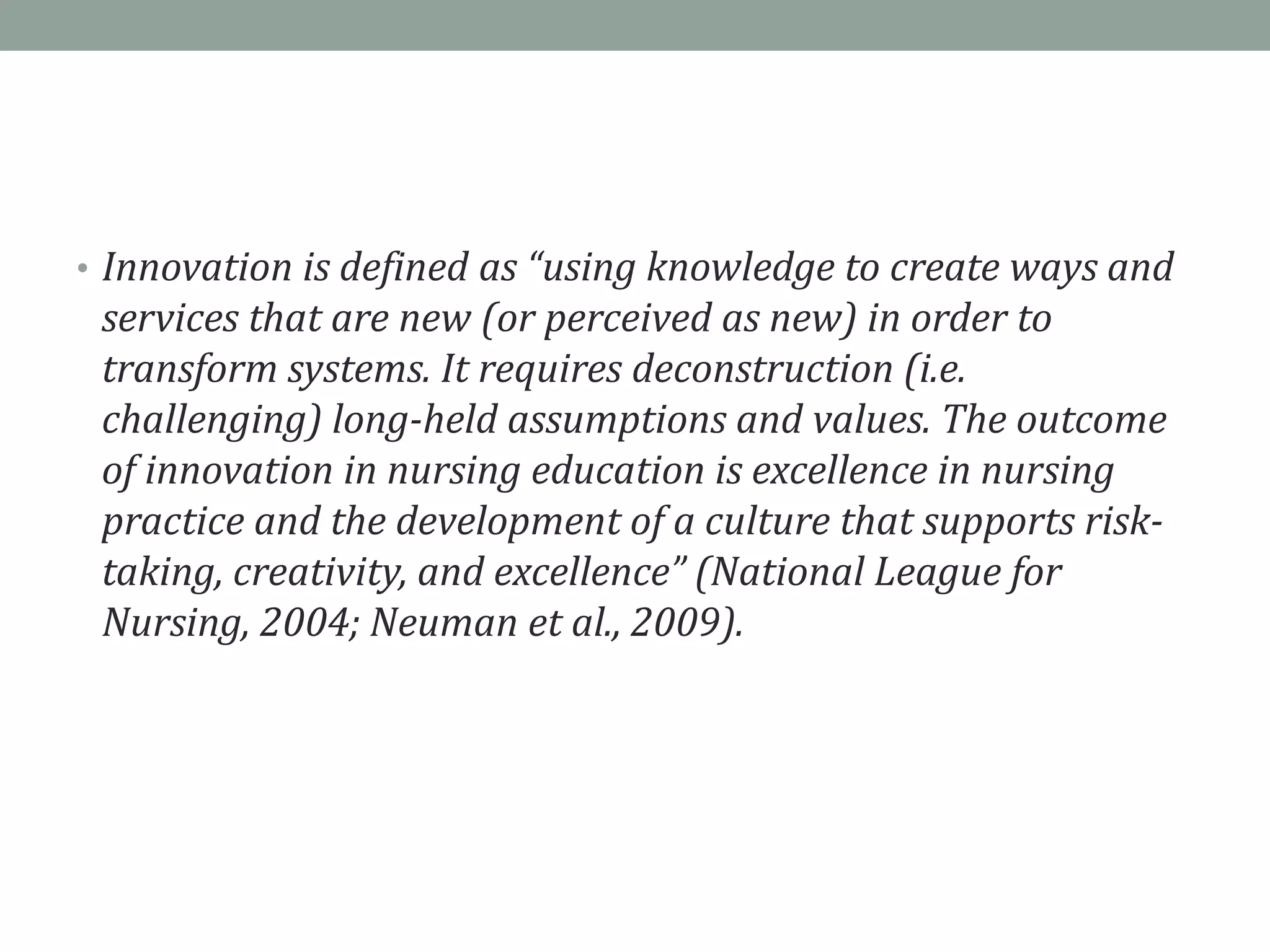
INNOVATIONS AND
RESEARCH IN NURSING
EDUCATION
• Innovation is defined as “using knowledge to create ways and
services that are new (or perceived as new) in order to
transform systems. It requires deconstruction (i.e.
challenging) long-held assumptions and values. The outcome
of innovation in nursing education is excellence in nursing
practice and the development of a culture that supports risk-
taking, creativity, and excellence” (National League for
Nursing, 2004; Neuman et al., 2009).
Need of innovation
• Maintaining and improving the quality of patient care.
• Growing demands in health care services.
• Global workforce shortage.
Types of innovation
Product innovation
It is the creation and
subsequent introduction
of a good or service that
is either new, or improved
on previous goods or
services.
Process Innovation
A process innovation is
the implementation of a
new way for significantly
improved production or
delivery method
Principles of innovation
Analyze the
opportunities or
sources.
Conceptual &
perceptual.
Simple & focused.
Starts from general
& they aim to one
specific thing.
Aims at being the
best from the very
beginning.
Characteristics of innovation
Relative
Advantage
Compatibility
ComplexityFeasibility
Observability
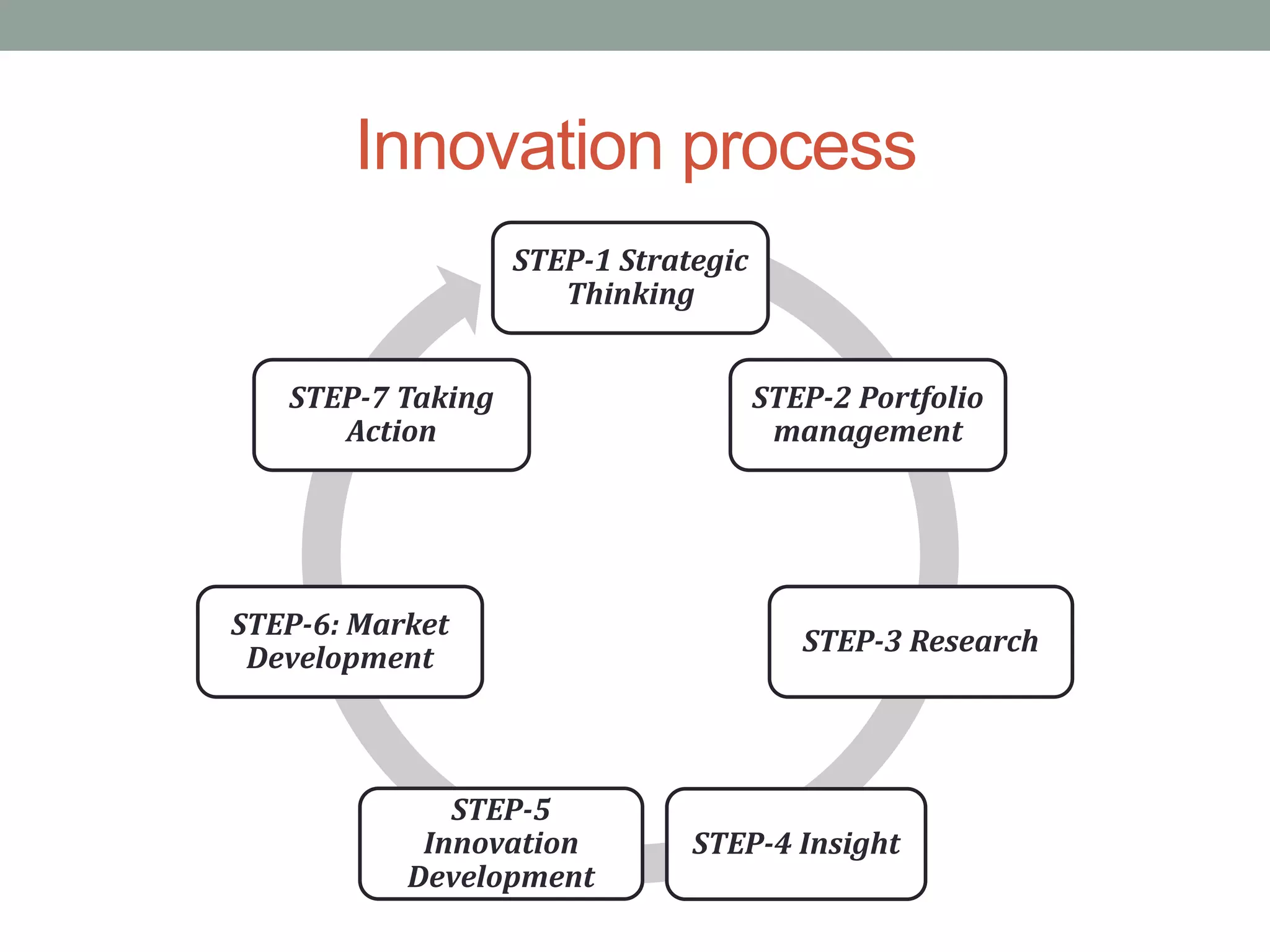
Innovation process
STEP-1 Strategic
Thinking
STEP-2 Portfolio
management
STEP-3 Research
STEP-4 Insight
STEP-5
Innovation
Development
STEP-6: Market
Development
STEP-7 Taking
Action
Innovations
in nursing
education
Handheld computers
First personal digital assistant in 1996
 According to ANA (2001) all nurses need to use nursing
informatics
Videoconferencing And Web Based
Conferencing
Connects students and educators across distance
Connects diverse student groups
Adaptation of different distance learning technologies
Self directed, active learning
Refocusing from educator to the subject
SERVICE-LEARNING
Structured learning experience that combines community
service with preparation and reflection
Achieves a balance between service and learning objective
HIGH FIDELITY PATIENT SIMULATOR
Help student practice decision making and problem solving
skill and to develop human interaction
Simulation is the third leg in the stool of education and
science
TELE TEACHING
Online model of education-learner directly interacts with
tutor
Learner oriented learning
Promotes discovery learning
MICRO TEACHING
Miniature classroom teaching
Small duration
Paying full attention to a particular unit and skill
Content reduced to one unit with a single concept
NURSING INFORMATICS
Integrates nursing science, computer science and information
science in identifying, collecting, processing and managing data
and information to support nursing practice, administration,
education, research
NURSING MOBILE LIBRARY
Access to health care information for nurses working in
remote area
To reduce the gap between the desperate need for nursing
information and its availability
STAFF AND STUDENT RECRUITMENT
New methods like OSCE & OSPE
Objective because examiner use a checklist for evaluating the
trainee
Structured, because every trainee sees the same problem and
performs the same task in same time frame
Clinical, because the task are representative of those faced in
real clinical situation
Research
priorities in
nursing
education
I. Build the science of nursing education through the
discovery and translation of innovative evidence-
based strategies
A. Research scholars
B. Research methodology
C. Education practice links
A. Research scholars
Impact of educational preparation to increase the capacity of
nurse scientists whose focus is the scientific and theoretical
basis for nursing education
Evaluation of effective faculty career development models for
diverse research scholars
B. Research methodology
Development and testing of instruments for nursing
education research to measure learning outcomes and
linkages to patient care
Creation of robust multi-site, multi-method research designs
that address critical education issues
CONT..
Meta-analysis and meta-synthesis informing the state of the
science
Translation of research outcomes into evidence-informed
educational practices
Evaluation of the impact of evidence generation and
translation on learner preparation and clinical practice
C. Education practice links
Leadership development for faculty and students
Mechanisms to build meaningful connections among the
science of learning, policy development, and patient care
outcomes
Examination and use of technology, simulation, informatics,
and virtual experiences on student learning affecting clinical
practice
CONT…
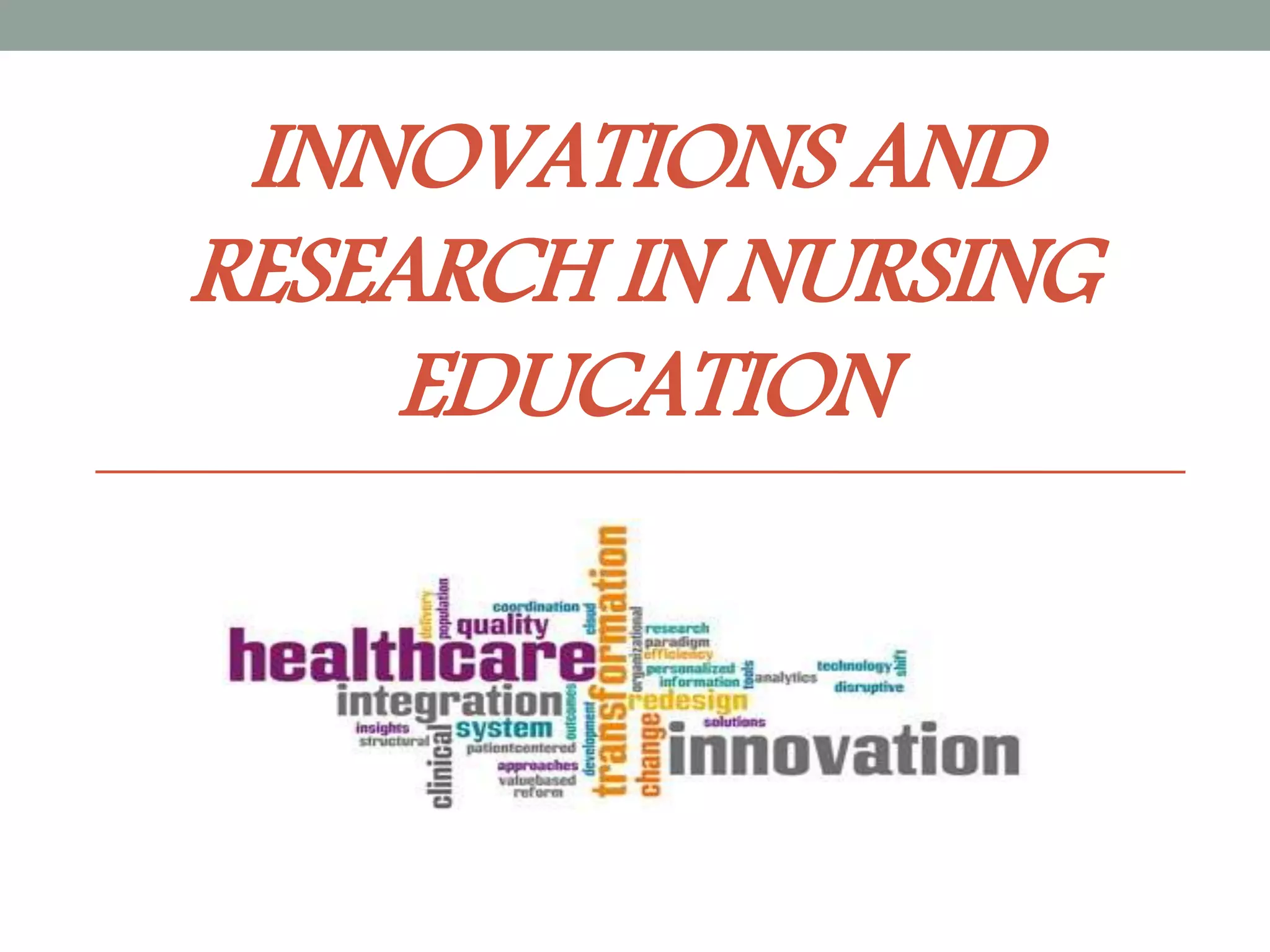
Conceptualization of integrative paths linking nursing
education research to systematic and inter-professional
health care
Integration of concepts of lifelong learning through inter-
professional collaborations
Pursuit of evidence-based outcomes that recognize the shift of
nursing education from episodic to transformative and
collaborative care
II.Linkstudentlearningtosentinelhealthindicatorsto
promotehealth,preventdisease,andmanagethe
symptomatologyofillness.
Identification of innovative approaches
Effective teaching strategies
Integration of differences
Links among learning, improved care delivery, and chronic
care management
III.Examinethe scienceof learning in the
academiccontextrelated to health transitions.
Caregiving and care givers in the provision of palliative care,
pain management, care of the aged, disabled, mentally
challenged
Grief, grieving, and loss as fundamental to transformative
community-based care
Community-based care transitions that recognize patient and
family options in decision-making, financing of care, and
planning for life-limiting situations
THANK YOU…!!

Innovations and research in nursing education

  • 1.
    INNOVATIONS AND RESEARCH INNURSING EDUCATION
  • 2.
    • Innovation isdefined as “using knowledge to create ways and services that are new (or perceived as new) in order to transform systems. It requires deconstruction (i.e. challenging) long-held assumptions and values. The outcome of innovation in nursing education is excellence in nursing practice and the development of a culture that supports risk- taking, creativity, and excellence” (National League for Nursing, 2004; Neuman et al., 2009).
  • 3.
    Need of innovation •Maintaining and improving the quality of patient care. • Growing demands in health care services. • Global workforce shortage.
  • 4.
    Types of innovation Productinnovation It is the creation and subsequent introduction of a good or service that is either new, or improved on previous goods or services. Process Innovation A process innovation is the implementation of a new way for significantly improved production or delivery method
  • 5.
    Principles of innovation Analyzethe opportunities or sources. Conceptual & perceptual. Simple & focused. Starts from general & they aim to one specific thing. Aims at being the best from the very beginning.
  • 6.
  • 7.
    Innovation process STEP-1 Strategic Thinking STEP-2Portfolio management STEP-3 Research STEP-4 Insight STEP-5 Innovation Development STEP-6: Market Development STEP-7 Taking Action
  • 8.
  • 9.
    Handheld computers First personaldigital assistant in 1996  According to ANA (2001) all nurses need to use nursing informatics
  • 10.
    Videoconferencing And WebBased Conferencing Connects students and educators across distance Connects diverse student groups
  • 11.
    Adaptation of differentdistance learning technologies Self directed, active learning Refocusing from educator to the subject
  • 12.
    SERVICE-LEARNING Structured learning experiencethat combines community service with preparation and reflection Achieves a balance between service and learning objective
  • 13.
    HIGH FIDELITY PATIENTSIMULATOR Help student practice decision making and problem solving skill and to develop human interaction Simulation is the third leg in the stool of education and science
  • 14.
    TELE TEACHING Online modelof education-learner directly interacts with tutor Learner oriented learning Promotes discovery learning
  • 15.
    MICRO TEACHING Miniature classroomteaching Small duration Paying full attention to a particular unit and skill Content reduced to one unit with a single concept
  • 16.
    NURSING INFORMATICS Integrates nursingscience, computer science and information science in identifying, collecting, processing and managing data and information to support nursing practice, administration, education, research
  • 17.
    NURSING MOBILE LIBRARY Accessto health care information for nurses working in remote area To reduce the gap between the desperate need for nursing information and its availability
  • 18.
    STAFF AND STUDENTRECRUITMENT New methods like OSCE & OSPE Objective because examiner use a checklist for evaluating the trainee Structured, because every trainee sees the same problem and performs the same task in same time frame Clinical, because the task are representative of those faced in real clinical situation
  • 19.
  • 20.
    I. Build thescience of nursing education through the discovery and translation of innovative evidence- based strategies A. Research scholars B. Research methodology C. Education practice links
  • 21.
    A. Research scholars Impactof educational preparation to increase the capacity of nurse scientists whose focus is the scientific and theoretical basis for nursing education Evaluation of effective faculty career development models for diverse research scholars
  • 22.
    B. Research methodology Developmentand testing of instruments for nursing education research to measure learning outcomes and linkages to patient care Creation of robust multi-site, multi-method research designs that address critical education issues
  • 23.
    CONT.. Meta-analysis and meta-synthesisinforming the state of the science Translation of research outcomes into evidence-informed educational practices Evaluation of the impact of evidence generation and translation on learner preparation and clinical practice
  • 24.
    C. Education practicelinks Leadership development for faculty and students Mechanisms to build meaningful connections among the science of learning, policy development, and patient care outcomes Examination and use of technology, simulation, informatics, and virtual experiences on student learning affecting clinical practice
  • 25.
    CONT… Conceptualization of integrativepaths linking nursing education research to systematic and inter-professional health care Integration of concepts of lifelong learning through inter- professional collaborations Pursuit of evidence-based outcomes that recognize the shift of nursing education from episodic to transformative and collaborative care
  • 26.
    II.Linkstudentlearningtosentinelhealthindicatorsto promotehealth,preventdisease,andmanagethe symptomatologyofillness. Identification of innovativeapproaches Effective teaching strategies Integration of differences Links among learning, improved care delivery, and chronic care management
  • 27.
    III.Examinethe scienceof learningin the academiccontextrelated to health transitions. Caregiving and care givers in the provision of palliative care, pain management, care of the aged, disabled, mentally challenged Grief, grieving, and loss as fundamental to transformative community-based care Community-based care transitions that recognize patient and family options in decision-making, financing of care, and planning for life-limiting situations
  • 28.