Breastfeeding
Breastfeeding
• Breastfeeding, also known as nursing, is the feeding of
babies and young children with milk from a woman's
breast.
• It is universally agreed that breast milk is the best food
for the new-born, because it provides numerous health
benefits to both a mother and an infant.
• WHO recommends the mother to start feeding the new-
born immediately after the birth in the first hours to get
the benefits of Colostrum.
2
• Breastfeeding recommended up to 6 months, after
that; breastfeeding should be continued with
appropriate foods up to two years of age or
beyond.
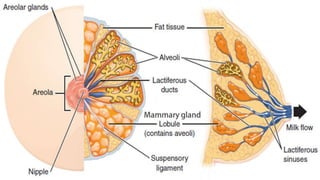
• Breast milk is formed in the alveolar cells of the
mammary glands with the stimulation of the
prolactin hormone
• The First milk is called Colostrum (thick, sticky and
yellowish) that is very important food for the new-
born baby. 3
• Colostrum is high in carbohydrates, high in protein,
high in antibodies, and low in fat (as human new-
borns may find fat difficult to digest).
• New-borns have very small digestive systems, and
colostrum delivers its nutrients in a very
concentrated low-volume form.
• The transition from colostrum to true mature milk
is a gradual process.
• The mature milk is the Foremilk and Hindmilk.
5
• In the 2-3 weeks following delivery, the milk will
become thinner, less yellow which is called
Foremilk.
• Hindmilk is the milk which follows foremilk during a
feeding. It is richer in fat content and is high in
calories more the foremilk
• The mother should be ensure that the baby drain
one breast before moving onto the other, to ensure
that he receives all the benefits of both foremilk
and hindmilk.
6
7
Breastfeeding Benefits
Mother:
• It is clean, cheap, and always available
• It makes the uterus contract. This helps the placenta
come out, and it may help prevent heavy bleeding
• Reduces the risk of breast and ovarian cancer
• Delay a new pregnancy and menstruation
• Increase the bond between the mother and the
baby
• Helps a mother return to pre-pregnancy weight 8
Breastfeeding Benefits
Baby:
• It helps the new-born to clear fluid from his nose and mouth and
breathe more easily
• Breastmilk contains all the nutrients that the baby needs for the
first 6 months
• Developing the brain and other body systems
• Provides adequate water for hydration
• Protects against infection and allergies (develop the Immune
System of the baby)
• It is easily digested; no constipation, diarrhea or upset stomach.
• Promotes bonding between the baby and the mother
• It reduces the risk of obesity and diabetes later in life
9
Signs of Good Attachment
• Chin touching breast (or nearly so)
• Mouth wide open
• Lower lip turned outwards
• The baby mouth should cover the nipple and
most of the lower part of the black part (Areola)
• The nose should not be closed
• The cheeks are round and full
10
Good
Attachment
11
Breastfeeding Problems
Mother:
• Latching Pain
• Cracked nipples
• Clogged ducts
• Low milk supply
• Painful engorgement (too much milk)
• Mastitis
12
Breastfeeding Problems
Baby:
• Baby sleeps while nursing
• Doesn't get enough milk
• Baby Gas and tummy problems (mostly due
to mother’s diet, and the baby to swallow too
much air at feeding time)
• Reflux (spit up the milk)
13
Diet
• Breastfeeding mums need around 500 more
calories a day than non-breastfeeding mums
• Essential nutrition:
1. Water
2. Calcium and Vitamin D
3. Carbohydrates and Fibers
4. Healthy Fats
5. Iodine
14
Diet
• Essential nutrition:
6. Iron
7. Protein
8. Vitamins
9. Vitamin B6 & B12 (Very important for the
brain growth and formation of a baby's
red blood cells)
15
Diet
• Foods to limit:
1. Caffeine
2. Fish that contains mercury (Hg)
3. Parsley and Peppermint (decrease breast
milk production)
4. Spicy foods
5. Garlic
6. Oily food
16
Diet
7. Food cause allergy and digestion problem
for the baby as:
− Cow's milk
− Eggs
− Dairy
− Citrus
− Fish
17
Diet
• The foods that cause allergy may lead to:
1. Diarrhoea or constipation
2. Itchy skin
3. A red itchy rash around the baby's mouth.
4. Swollen eyes, face or lips
5. Vomiting
6. Eczema
7. Gas
18

Breastfeeding and Nursing

  • 2.
    Breastfeeding Breastfeeding • Breastfeeding, alsoknown as nursing, is the feeding of babies and young children with milk from a woman's breast. • It is universally agreed that breast milk is the best food for the new-born, because it provides numerous health benefits to both a mother and an infant. • WHO recommends the mother to start feeding the new- born immediately after the birth in the first hours to get the benefits of Colostrum. 2
  • 3.
    • Breastfeeding recommendedup to 6 months, after that; breastfeeding should be continued with appropriate foods up to two years of age or beyond. • Breast milk is formed in the alveolar cells of the mammary glands with the stimulation of the prolactin hormone • The First milk is called Colostrum (thick, sticky and yellowish) that is very important food for the new- born baby. 3
  • 5.
    • Colostrum ishigh in carbohydrates, high in protein, high in antibodies, and low in fat (as human new- borns may find fat difficult to digest). • New-borns have very small digestive systems, and colostrum delivers its nutrients in a very concentrated low-volume form. • The transition from colostrum to true mature milk is a gradual process. • The mature milk is the Foremilk and Hindmilk. 5
  • 6.
    • In the2-3 weeks following delivery, the milk will become thinner, less yellow which is called Foremilk. • Hindmilk is the milk which follows foremilk during a feeding. It is richer in fat content and is high in calories more the foremilk • The mother should be ensure that the baby drain one breast before moving onto the other, to ensure that he receives all the benefits of both foremilk and hindmilk. 6
  • 7.
  • 8.
    Breastfeeding Benefits Mother: • Itis clean, cheap, and always available • It makes the uterus contract. This helps the placenta come out, and it may help prevent heavy bleeding • Reduces the risk of breast and ovarian cancer • Delay a new pregnancy and menstruation • Increase the bond between the mother and the baby • Helps a mother return to pre-pregnancy weight 8
  • 9.
    Breastfeeding Benefits Baby: • Ithelps the new-born to clear fluid from his nose and mouth and breathe more easily • Breastmilk contains all the nutrients that the baby needs for the first 6 months • Developing the brain and other body systems • Provides adequate water for hydration • Protects against infection and allergies (develop the Immune System of the baby) • It is easily digested; no constipation, diarrhea or upset stomach. • Promotes bonding between the baby and the mother • It reduces the risk of obesity and diabetes later in life 9
  • 10.
    Signs of GoodAttachment • Chin touching breast (or nearly so) • Mouth wide open • Lower lip turned outwards • The baby mouth should cover the nipple and most of the lower part of the black part (Areola) • The nose should not be closed • The cheeks are round and full 10
  • 11.
  • 12.
    Breastfeeding Problems Mother: • LatchingPain • Cracked nipples • Clogged ducts • Low milk supply • Painful engorgement (too much milk) • Mastitis 12
  • 13.
    Breastfeeding Problems Baby: • Babysleeps while nursing • Doesn't get enough milk • Baby Gas and tummy problems (mostly due to mother’s diet, and the baby to swallow too much air at feeding time) • Reflux (spit up the milk) 13
  • 14.
    Diet • Breastfeeding mumsneed around 500 more calories a day than non-breastfeeding mums • Essential nutrition: 1. Water 2. Calcium and Vitamin D 3. Carbohydrates and Fibers 4. Healthy Fats 5. Iodine 14
  • 15.
    Diet • Essential nutrition: 6.Iron 7. Protein 8. Vitamins 9. Vitamin B6 & B12 (Very important for the brain growth and formation of a baby's red blood cells) 15
  • 16.
    Diet • Foods tolimit: 1. Caffeine 2. Fish that contains mercury (Hg) 3. Parsley and Peppermint (decrease breast milk production) 4. Spicy foods 5. Garlic 6. Oily food 16
  • 17.
    Diet 7. Food causeallergy and digestion problem for the baby as: − Cow's milk − Eggs − Dairy − Citrus − Fish 17
  • 18.
    Diet • The foodsthat cause allergy may lead to: 1. Diarrhoea or constipation 2. Itchy skin 3. A red itchy rash around the baby's mouth. 4. Swollen eyes, face or lips 5. Vomiting 6. Eczema 7. Gas 18