Anemia in Pregnancy
Anemia generally is a medical condition in which there is not enough
healthy red blood cells to carry oxygen to the tissues in the body.
Anemia in pregnancy (according to WHO) as:
Hemoglobin (Hb) levels of < 11 g/dl in the first and last trimesters
and <10.5 g/dl in the second trimester
Or
Hematocrit (Hct) levels of < 33%
• Hematocrit is the percentage of red blood cells (RBC's) in the blood.
• Hemoglobin is the protein in red blood cells that carries oxygen from
lung to other cells in the body.
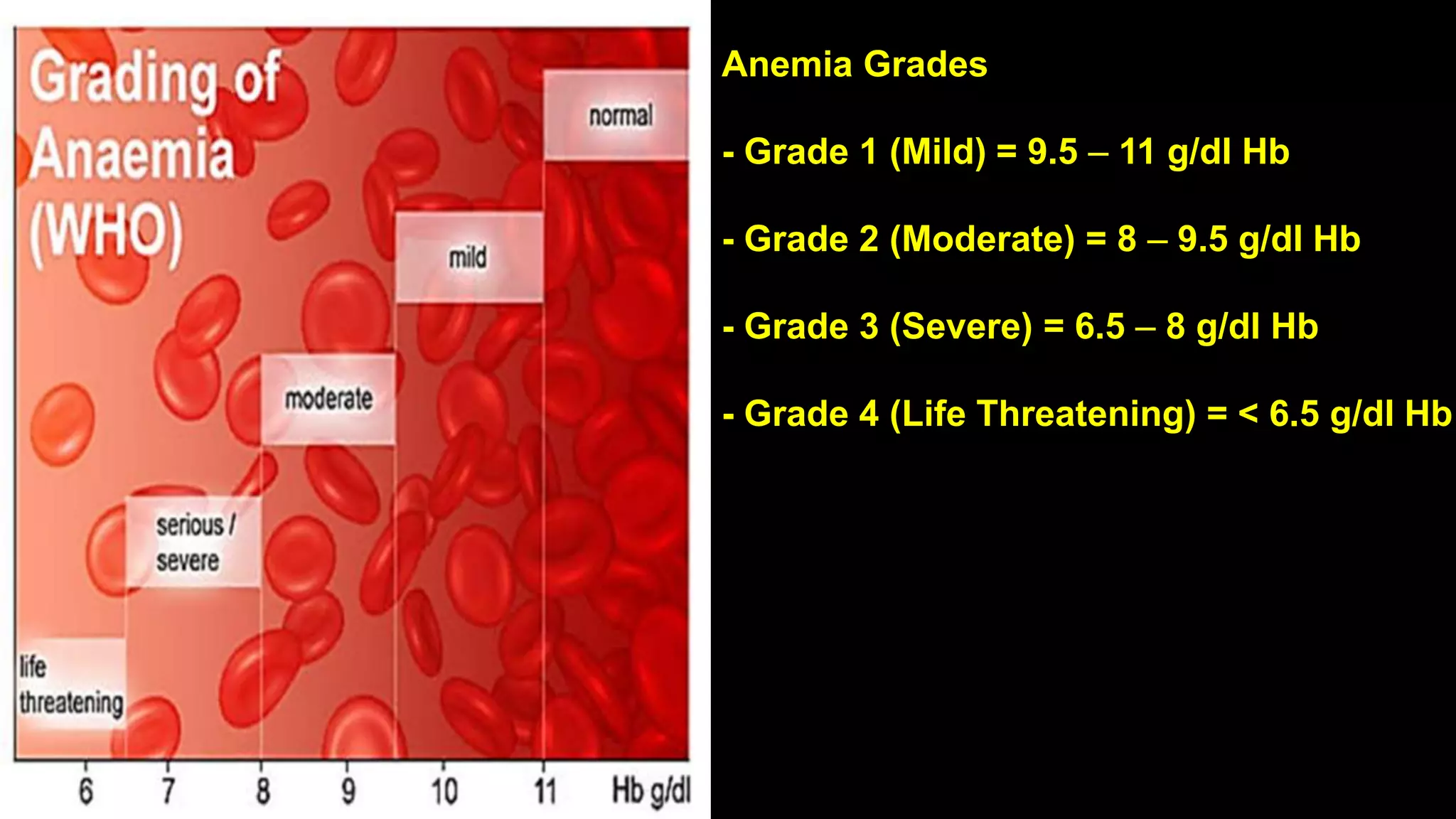
Anemia Grades
- Grade 1 (Mild) = 9.5 – 11 g/dl Hb
- Grade 2 (Moderate) = 8 – 9.5 g/dl Hb
- Grade 3 (Severe) = 6.5 – 8 g/dl Hb
- Grade 4 (Life Threatening) = < 6.5 g/dl Hb
- Non pregnant females: 12 – 15 g/dl = 38% – 46% Hct
- Pregnant: 11 – 12 g/dl = 35 – 44 % Hct
- Newborn: 14 – 24 g/dl = 55% – 68% Hct
Normal hemoglobin and Hematocrit values are:
Anemia increase the maternal and perinatal mortality and morbidity
• On Mother:
- Abortion
- Postpartum depression
- Increased risk of infections
- Heart and lung problems
• On Baby:
- Neural tube defects (a birth defect involving incomplete development of the brain and spinal
cord)
- Mental problems
- Low birth weight
- Pre-term birth
- Delayed growth in Infants and Children
Effects of Anemia on Pregnancy:
The most common symptoms of anemia during pregnancy
usually appears in severe anemia;
- Pale skin, lips, and nails
- Feeling tired or weak
- Dizziness
- Shortness of breath
- Rapid and irregular heartbeat
- Headache
- Low blood temperature
- Cold hands and feet
Symptoms of Anemia During Pregnancy
All pregnant women are at risk for becoming anemic. That's
because they need more iron and folic acid than usual to feed
the fetus. But the risk is higher if:
- Are pregnant with multiples (more than one child)
- Have had two pregnancies close together (in less than a year)
- Vomit a lot because of morning sickness
- Teenager pregnant
- No enough iron in the nutrition.
- Had anemia before the pregnancy
Risk Factors for Anemia in Pregnancy
- Anemia caused by decreased in red blood cell production
• Iron-deficiency anemia
• Folate-deficiency anemia
• Vitamin B12 deficiency
- Anemia caused by destruction of red blood cells
• Hemolytic anemia or Rhesus disease (In Fetus)
- Anemia caused by blood cell loss
• Hemorrhage (Bleeding)
Types of anemia during pregnancy:
Iron-Deficiency Anemia
Iron deficiency is the most common cause of anemia in pregnancy. It is
about 75 – 95% of the cases of anemia in pregnant women.
This type of anemia occurs when the body doesn't have enough iron to
produce hemoglobin; so the blood cannot carry enough oxygen to tissues
throughout the body.
Total body iron requirement is increased by 1000mg in pregnancy:
- 300 gm for fetus and placenta.
- 250 gm lost at delivery.
- 450 gm to increase red blood cell mass.
Management of Iron-deficiency:
- Pregnant without anemia should take a dosage of 30 – 65mg of iron
once daily (Just one time per a day to prevent constipation).
- Anemic pregnant should take 120 – 240 mg per day
- Iron Supplements:
• Parenteral Fe
• Oral Fe
- Blood transfusion; if the anemia is severe.
- Diet: red meat, liver, egg, dark green and leafy vegetables, dried fruits,
nuts, cauliflower, Broccoli.
- Additionally; vitamin C helps the body absorb iron, the Fe tablets
should be taken with a source of vitamin C, like a glass of orange juice.
- Fibers: to prevent constipation.
Iron supplement side effects:
• Oral therapy
- Constipation
- Diarrhea
- Nausea and vomiting
• Parenteral therapy
- Skin discoloration
- Local abscess
- Allergic reaction
- Fe over loaded
Folate-Deficiency Anemia
- Not very common as Iron-deficiency anemia.
- Folic acid (folate) is a type of B vitamin (B9) and is needed to make
new cells in the body, including red blood cells.
- It is very important for the health of the baby’s brain and spinal cord.
- Folic acid helps prevent neural tube defects (NTDs) .
- The usual cause is not eating enough foods which contain folic acid. It
is treated easily by taking folic acid tablets.
Neural Tube Defects
(NTDs)
Management of Folate-deficiency:
- The daily folic acid requirements for not
anemic pregnant is 0.4 mg
- Anemic pregnant should have 4 mg.
- Folate Supplements (folic acid oral
tablets)
- Diet: Green leafy vegetables and Citrus
Fruits, Cauliflower, Broccoli, Nuts,
Legumes, Banana.
- V. B 12 deficiency is very easy to treat with diet or
supplements.
- Most people can prevent vitamin B12 deficiency by
eating enough meat, seafood, dairy products, and eggs.
Vitamin B 12 Deficiency Anemia
Hemolytic Anemia
- It is a Destruction of red blood cells.
- It may cause Spleen enlargement.
- Causes:
• Cancers; as leukemia
• Infections; as malaria
• Medicines; as penicillin
• Viruses; as HIV, and hepatitis
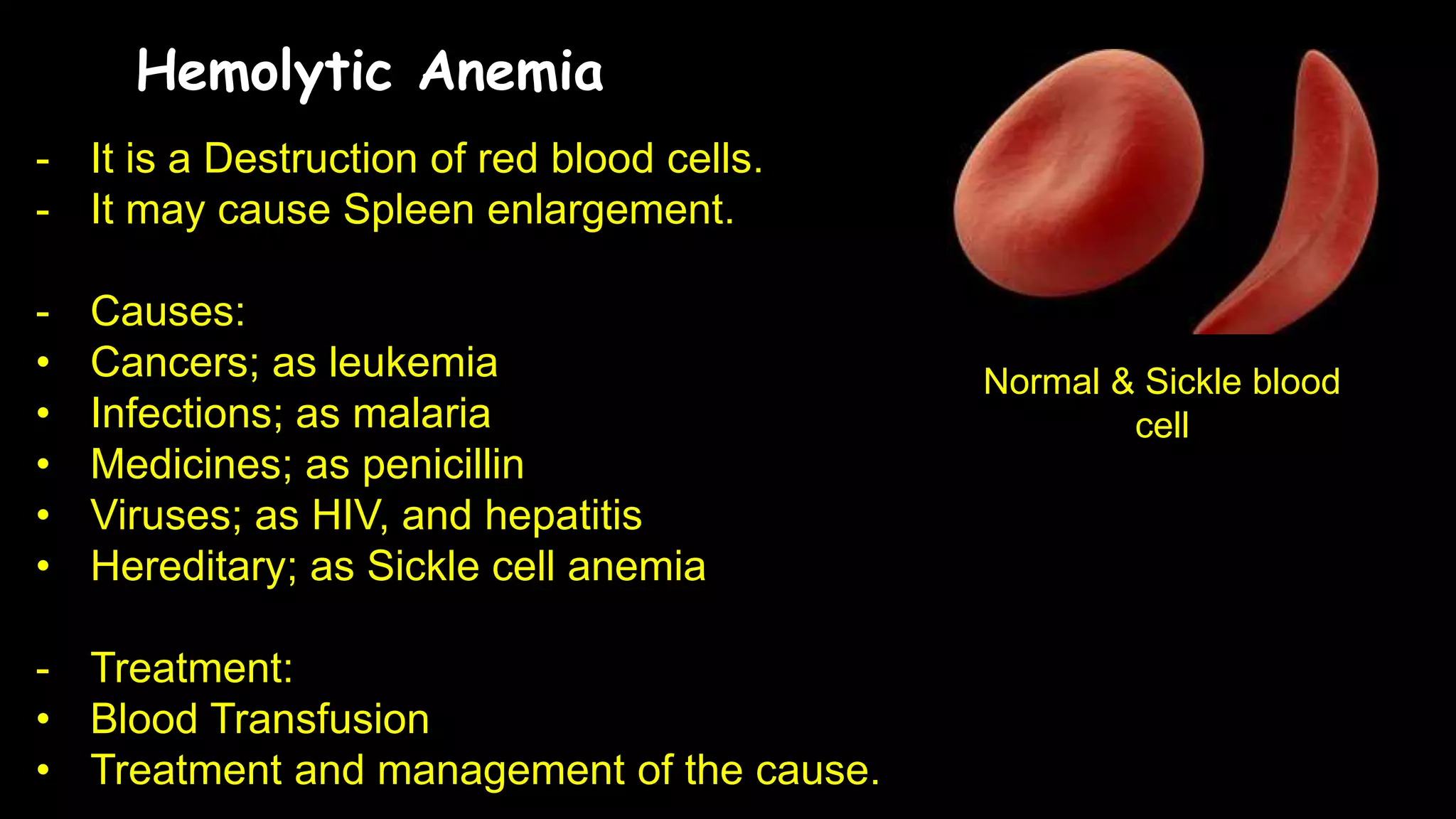
• Hereditary; as Sickle cell anemia
- Treatment:
• Blood Transfusion
• Treatment and management of the cause.
Normal & Sickle blood
cell
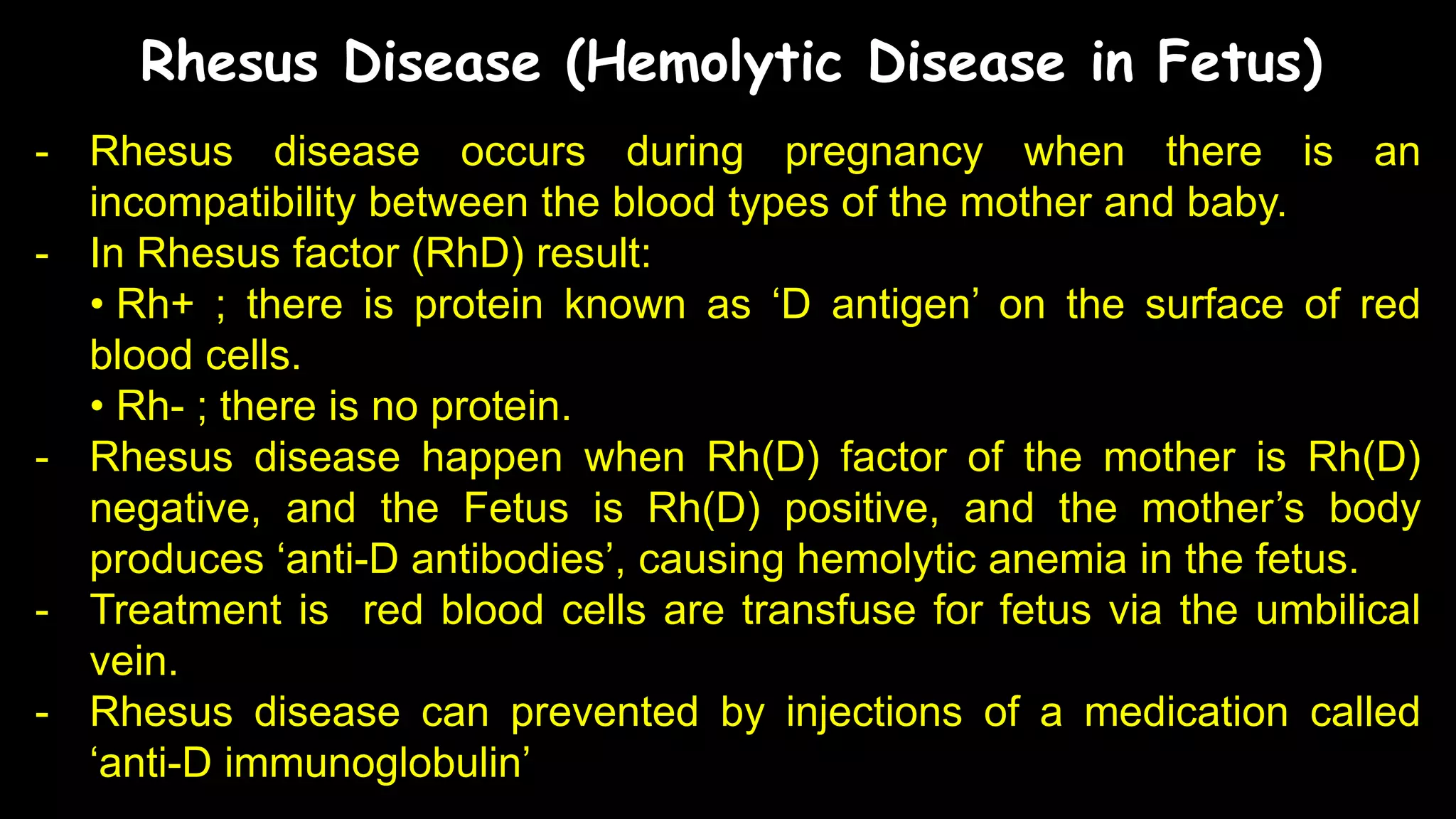
Rhesus Disease (Hemolytic Disease in Fetus)
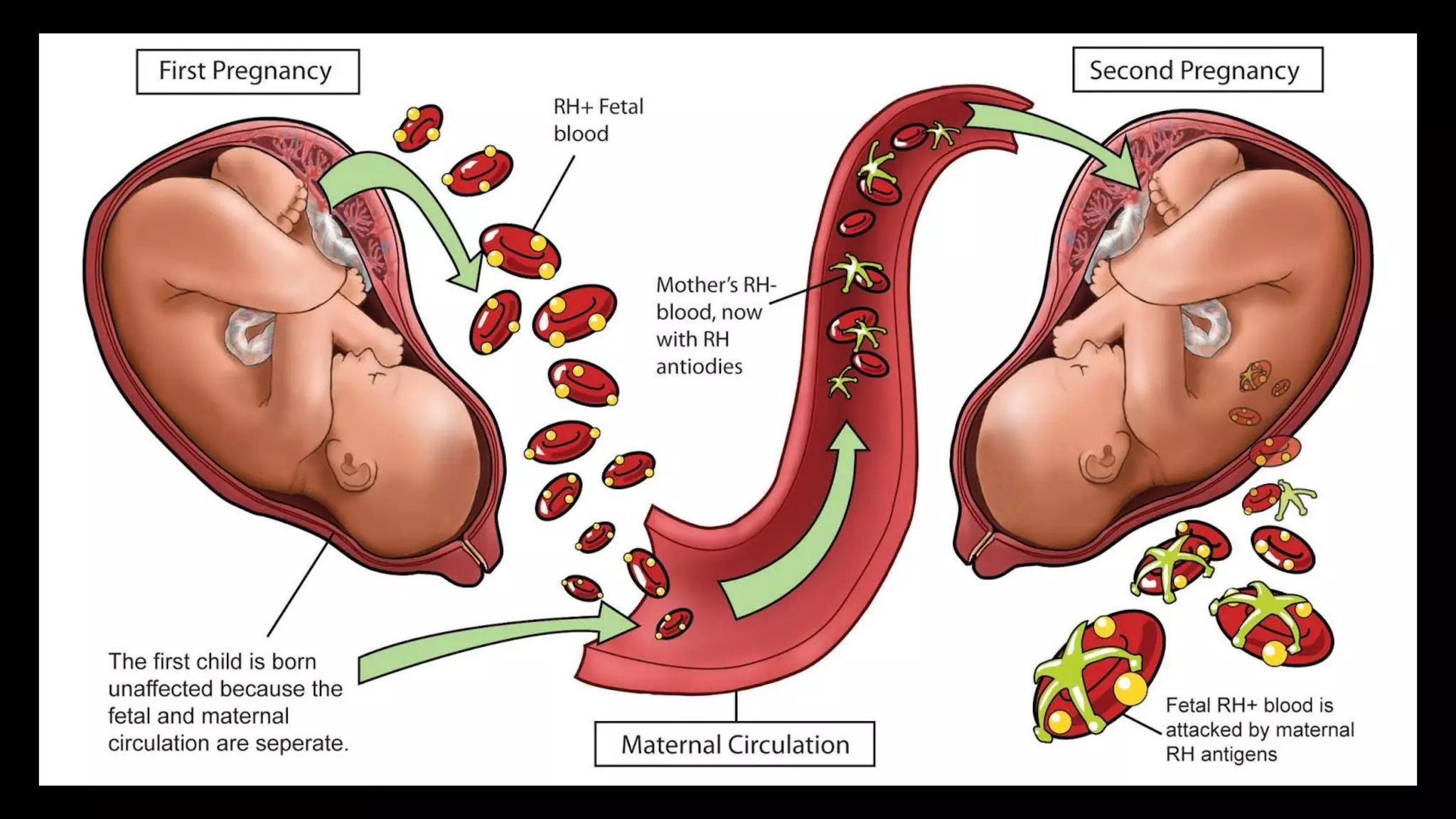
- Rhesus disease occurs during pregnancy when there is an
incompatibility between the blood types of the mother and baby.
- In Rhesus factor (RhD) result:
• Rh+ ; there is protein known as ‘D antigen’ on the surface of red
blood cells.
• Rh- ; there is no protein.
- Rhesus disease happen when Rh(D) factor of the mother is Rh(D)
negative, and the Fetus is Rh(D) positive, and the mother’s body
produces ‘anti-D antibodies’, causing hemolytic anemia in the fetus.
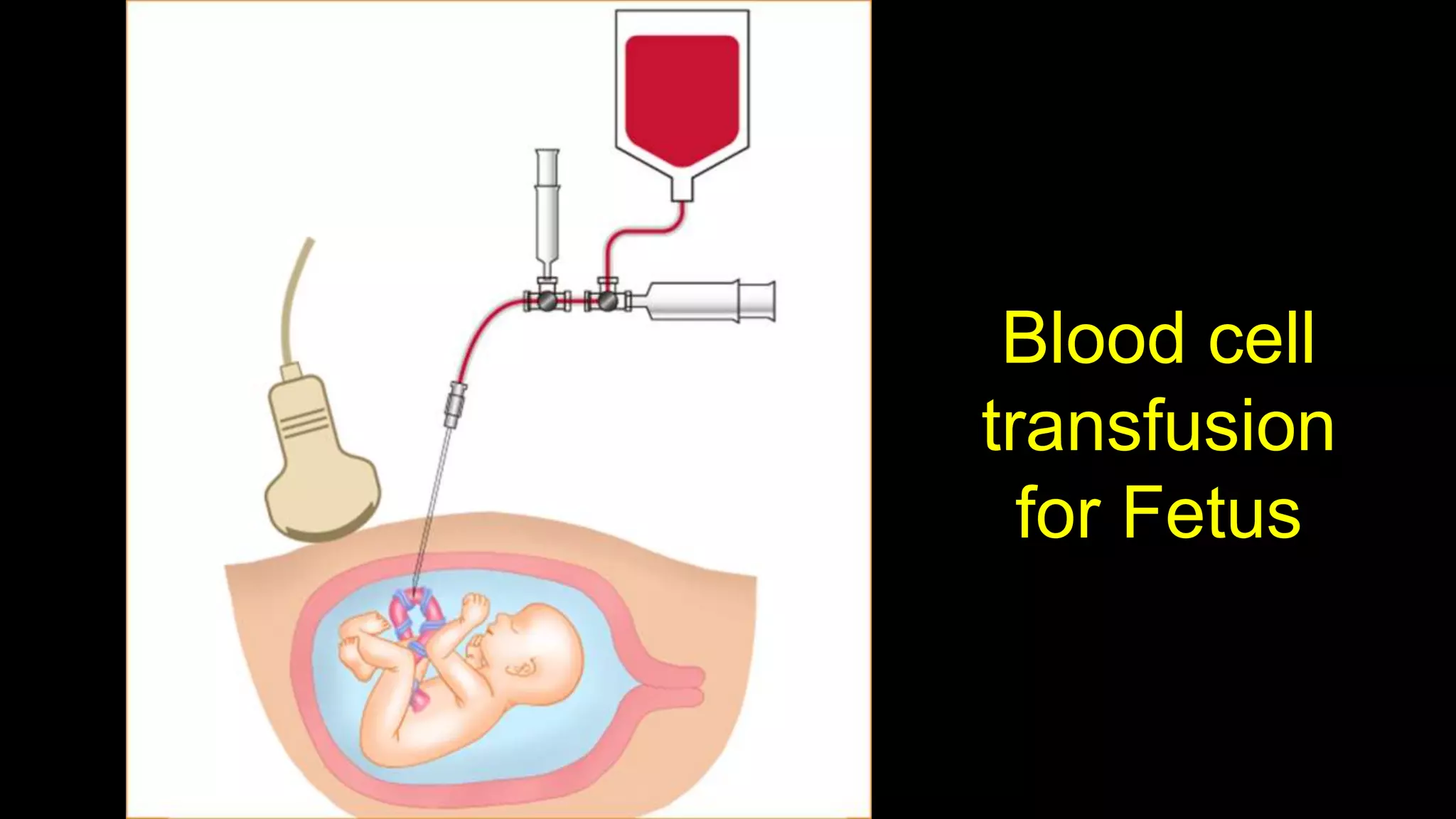
- Treatment is red blood cells are transfuse for fetus via the umbilical
vein.
- Rhesus disease can prevented by injections of a medication called
‘anti-D immunoglobulin’
Blood cell
transfusion
for Fetus
Blood cell
transfusion
for Fetus

Anemia in Pregnancy (more information)

  • 2.
    Anemia in Pregnancy Anemiagenerally is a medical condition in which there is not enough healthy red blood cells to carry oxygen to the tissues in the body. Anemia in pregnancy (according to WHO) as: Hemoglobin (Hb) levels of < 11 g/dl in the first and last trimesters and <10.5 g/dl in the second trimester Or Hematocrit (Hct) levels of < 33% • Hematocrit is the percentage of red blood cells (RBC's) in the blood. • Hemoglobin is the protein in red blood cells that carries oxygen from lung to other cells in the body.
  • 3.
    Anemia Grades - Grade1 (Mild) = 9.5 – 11 g/dl Hb - Grade 2 (Moderate) = 8 – 9.5 g/dl Hb - Grade 3 (Severe) = 6.5 – 8 g/dl Hb - Grade 4 (Life Threatening) = < 6.5 g/dl Hb
  • 4.
    - Non pregnantfemales: 12 – 15 g/dl = 38% – 46% Hct - Pregnant: 11 – 12 g/dl = 35 – 44 % Hct - Newborn: 14 – 24 g/dl = 55% – 68% Hct Normal hemoglobin and Hematocrit values are:
  • 5.
    Anemia increase thematernal and perinatal mortality and morbidity • On Mother: - Abortion - Postpartum depression - Increased risk of infections - Heart and lung problems • On Baby: - Neural tube defects (a birth defect involving incomplete development of the brain and spinal cord) - Mental problems - Low birth weight - Pre-term birth - Delayed growth in Infants and Children Effects of Anemia on Pregnancy:
  • 6.
    The most commonsymptoms of anemia during pregnancy usually appears in severe anemia; - Pale skin, lips, and nails - Feeling tired or weak - Dizziness - Shortness of breath - Rapid and irregular heartbeat - Headache - Low blood temperature - Cold hands and feet Symptoms of Anemia During Pregnancy
  • 7.
    All pregnant womenare at risk for becoming anemic. That's because they need more iron and folic acid than usual to feed the fetus. But the risk is higher if: - Are pregnant with multiples (more than one child) - Have had two pregnancies close together (in less than a year) - Vomit a lot because of morning sickness - Teenager pregnant - No enough iron in the nutrition. - Had anemia before the pregnancy Risk Factors for Anemia in Pregnancy
  • 8.
    - Anemia causedby decreased in red blood cell production • Iron-deficiency anemia • Folate-deficiency anemia • Vitamin B12 deficiency - Anemia caused by destruction of red blood cells • Hemolytic anemia or Rhesus disease (In Fetus) - Anemia caused by blood cell loss • Hemorrhage (Bleeding) Types of anemia during pregnancy:
  • 9.
    Iron-Deficiency Anemia Iron deficiencyis the most common cause of anemia in pregnancy. It is about 75 – 95% of the cases of anemia in pregnant women. This type of anemia occurs when the body doesn't have enough iron to produce hemoglobin; so the blood cannot carry enough oxygen to tissues throughout the body. Total body iron requirement is increased by 1000mg in pregnancy: - 300 gm for fetus and placenta. - 250 gm lost at delivery. - 450 gm to increase red blood cell mass.
  • 10.
    Management of Iron-deficiency: -Pregnant without anemia should take a dosage of 30 – 65mg of iron once daily (Just one time per a day to prevent constipation). - Anemic pregnant should take 120 – 240 mg per day - Iron Supplements: • Parenteral Fe • Oral Fe - Blood transfusion; if the anemia is severe. - Diet: red meat, liver, egg, dark green and leafy vegetables, dried fruits, nuts, cauliflower, Broccoli. - Additionally; vitamin C helps the body absorb iron, the Fe tablets should be taken with a source of vitamin C, like a glass of orange juice. - Fibers: to prevent constipation.
  • 11.
    Iron supplement sideeffects: • Oral therapy - Constipation - Diarrhea - Nausea and vomiting • Parenteral therapy - Skin discoloration - Local abscess - Allergic reaction - Fe over loaded
  • 12.
    Folate-Deficiency Anemia - Notvery common as Iron-deficiency anemia. - Folic acid (folate) is a type of B vitamin (B9) and is needed to make new cells in the body, including red blood cells. - It is very important for the health of the baby’s brain and spinal cord. - Folic acid helps prevent neural tube defects (NTDs) . - The usual cause is not eating enough foods which contain folic acid. It is treated easily by taking folic acid tablets.
  • 13.
  • 14.
    Management of Folate-deficiency: -The daily folic acid requirements for not anemic pregnant is 0.4 mg - Anemic pregnant should have 4 mg. - Folate Supplements (folic acid oral tablets) - Diet: Green leafy vegetables and Citrus Fruits, Cauliflower, Broccoli, Nuts, Legumes, Banana.
  • 15.
    - V. B12 deficiency is very easy to treat with diet or supplements. - Most people can prevent vitamin B12 deficiency by eating enough meat, seafood, dairy products, and eggs. Vitamin B 12 Deficiency Anemia
  • 16.
    Hemolytic Anemia - Itis a Destruction of red blood cells. - It may cause Spleen enlargement. - Causes: • Cancers; as leukemia • Infections; as malaria • Medicines; as penicillin • Viruses; as HIV, and hepatitis • Hereditary; as Sickle cell anemia - Treatment: • Blood Transfusion • Treatment and management of the cause. Normal & Sickle blood cell
  • 17.
    Rhesus Disease (HemolyticDisease in Fetus) - Rhesus disease occurs during pregnancy when there is an incompatibility between the blood types of the mother and baby. - In Rhesus factor (RhD) result: • Rh+ ; there is protein known as ‘D antigen’ on the surface of red blood cells. • Rh- ; there is no protein. - Rhesus disease happen when Rh(D) factor of the mother is Rh(D) negative, and the Fetus is Rh(D) positive, and the mother’s body produces ‘anti-D antibodies’, causing hemolytic anemia in the fetus. - Treatment is red blood cells are transfuse for fetus via the umbilical vein. - Rhesus disease can prevented by injections of a medication called ‘anti-D immunoglobulin’
  • 18.
  • 19.