BREAST
DISORDERS
Dr. Mohammed Niyaz
MEM RESIDENT
MIMS-K
Common breast complaints
 Breast pain
 Breast mass
 Nipple discharge
 Infection
 Postoperative complications
Pathophysiology
 Normal breast tissue – glandular tissue
 Anterior chest wall
 Sternocostal junction  Midaxillary line
 2nd to 6th ribs in midclavicular line
 Arterial supply – internal mammary, lateral thoracic,
thoracodorsal and subscapular arteries
History
 Onset of mass or pain, location and duation
 Complaints varying with menses – benign
 Presence of symptoms on contralateral side – benign
 Colour and consistency of nipple discharge
 Family history
 50 % breast cancers - age > 65 years
Physical examination
 Supine position with ipsilateral hand behind the head.
 Upper outer quadrant – origin of half of breast Ca
 Asymmetry in glandular consistency, nodules
 Nipple areolar complex, axilla , anterior and posterior neck
PHYSIOLOGY AND
DISORDERS OF LACTATING
BREAST
ABNORMAL LACTATION
 Inappropriate secretion of milky discharge – Galactorrhea
 Prolactinomas- galactorrhoea, amenorrhea, hirsuitism, facial
acne , visual defects , headache
Complications of Lactation
 Breast engorgment – 3rd to 5th postpartum day
 Carbohydrate rich milk  bacterial overgrowth
colonization of Candida in lactiferous ducts Obstruction of
flow
 Topical application - Nystatin
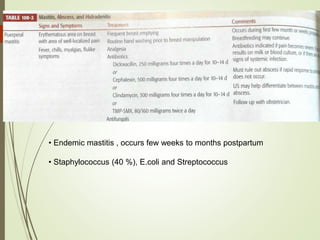
• Endemic mastitis , occurs few weeks to months postpartum
• Staphylococcus (40 %), E.coli and Streptococcus
INFLAMMATORY BREAST
CONDITIONS
Differential Diagnosis
 Infectious Mastitis
 Ruptured breast cyst
 Inflammatory neoplasm
 Metastatic cancer
 Tuberculosis
 Paget disease
MASTITIS
Signs and Symtoms
 Erythematous area on breast with well localized pain
 Fever, chills , myalgias, flu like symptoms
 Investigatiions : Ultrasound to r/o abscess
 Treatment : Analgesia and antibiotics, Surgery follow up
BREAST ABSCESS
Signs and Symtoms
 Erythematous area on breast with well localized pain
 Fever, chills , myalgias, flu like symptoms
Treatment :
 US guided needle aspiration for abscesses < 3 cm
 Analgesia and antibiotics
 General anesthesia for larger periareolar or retroareolar
abscess.
PERIDUCTAL MASTITIS
 Plasma cell mastitis or Mammary duct ectasia
 Benign disorder with dilated or ectatic ducts with retained
secretions
Signs and symptoms :
 Younger women – cellulitis or recurrent subareolar abscesses
 Perimenopausal and post menopausal – nipple discharge,
nipple retraction or subareolar mass
Treatment : Analgesia, antibiotics and follow up with surgeon
HYDRADENTIS
SUPPURATIVA
 Chronic inflammatory disease involving obstruction of sweat
glands
 Recurrent multiple abscesses, sinsus tracts and scarring of
breast folds
 Treatment : Incision and drainage
ANTIBIOTICS
 Dicloxacillin 250 mg four times a day x 10-14 days
Or
 Cephalexin 500 mg four times a day x 10-14 days
Or
 Clindamycin 300 mg four times a day x 10-14 days
Or
 TMP-SMX , 80/160 mg twice a day
INFLAMMATORY BREAST
CANCER
 Highest mortality and longest delay from initial presentation
 Breast enlargement , warmth, tenderness, edema, eythema
and discolouration of overlying skin
 Erythema and edema – Peau d’ orange appearance
 Mammography and biopsy
NON INFLAMMATORY
PAINFUL BREAST
DISORDERSMASTODYNIA :
 Discomfort- cyclic , waxing or waning with menstrual cycle
 Pain – bilateral and more in upper outer quadrant
 Examination – tender, nodular breasts
Treatment :
 Reassurance and supportive measures.
 Reduction in dosage of HRT
 Flaxseed oil and diclofenac 2 % topical gel
 Persistent pain – increased risk for breast cancer
Nipple Discharge
 Purulent : Infection, Periductal mastitis
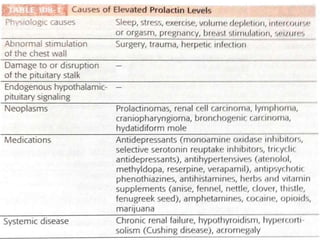
 Milky (Galactorrhea) : Pregnancy, Prolactinoma, Pituitary
adenoma, Drugs- hormones, Psychotropics phenothiazines),
antiemetics, antihypertensives
 Serous or serosanguinous : Intraduct papilloma, Ductal
ectasia, cancer
 Watery : Papilloma, Cancer
 Green, gray, black or tan : Duct ectasia
SKIN AND NIPPLE
ABNORMALITIES
MONDOR DISEASE :
 Thrombophlebitis of superficial thoracoepigastric vein
 Cord like mass in the breast, common in lower quadrant
 Breast pain, skin changes
 Treatment – NSAIDs
 NIPPLE IRRITATION :
 Repeated friction from clothing or sun burn
 Indicative of atopic dermatitis , erosive adenomatosis or
Pagets disease
 Petroleum jelly or use of protective pads
 FIBROCSTIC DISEASE :
 Breast nodularity and tenderness
 Mammography and follow up
 Recurrent symptoms, skin changes, solid masses, nipple
abnormalities- Possibility of cancer
 Family history, endogenous estrogens, nulliparity or biopsy
confirmed atypical hyperplasia- increase risk of cancer
PERIOPERATIVE AND POST
OPERATIVE COMPLICATIONS
 BREAST HEMATOMA :
 1.5 L of blood can extravasate
 Expanding hematoma – evacuation or ligation of vessels
 Late presentation – conservative management
 WOUND INFECTION :
 First generation cephalosporins

Breast disorders

  • 1.
  • 2.
    Common breast complaints Breast pain  Breast mass  Nipple discharge  Infection  Postoperative complications
  • 3.
    Pathophysiology  Normal breasttissue – glandular tissue  Anterior chest wall  Sternocostal junction  Midaxillary line  2nd to 6th ribs in midclavicular line  Arterial supply – internal mammary, lateral thoracic, thoracodorsal and subscapular arteries
  • 4.
    History  Onset ofmass or pain, location and duation  Complaints varying with menses – benign  Presence of symptoms on contralateral side – benign  Colour and consistency of nipple discharge  Family history  50 % breast cancers - age > 65 years
  • 5.
    Physical examination  Supineposition with ipsilateral hand behind the head.  Upper outer quadrant – origin of half of breast Ca  Asymmetry in glandular consistency, nodules  Nipple areolar complex, axilla , anterior and posterior neck
  • 6.
  • 7.
    ABNORMAL LACTATION  Inappropriatesecretion of milky discharge – Galactorrhea  Prolactinomas- galactorrhoea, amenorrhea, hirsuitism, facial acne , visual defects , headache
  • 9.
    Complications of Lactation Breast engorgment – 3rd to 5th postpartum day  Carbohydrate rich milk  bacterial overgrowth colonization of Candida in lactiferous ducts Obstruction of flow  Topical application - Nystatin
  • 10.
    • Endemic mastitis, occurs few weeks to months postpartum • Staphylococcus (40 %), E.coli and Streptococcus
  • 11.
    INFLAMMATORY BREAST CONDITIONS Differential Diagnosis Infectious Mastitis  Ruptured breast cyst  Inflammatory neoplasm  Metastatic cancer  Tuberculosis  Paget disease
  • 12.
    MASTITIS Signs and Symtoms Erythematous area on breast with well localized pain  Fever, chills , myalgias, flu like symptoms  Investigatiions : Ultrasound to r/o abscess  Treatment : Analgesia and antibiotics, Surgery follow up
  • 13.
    BREAST ABSCESS Signs andSymtoms  Erythematous area on breast with well localized pain  Fever, chills , myalgias, flu like symptoms Treatment :  US guided needle aspiration for abscesses < 3 cm  Analgesia and antibiotics  General anesthesia for larger periareolar or retroareolar abscess.
  • 14.
    PERIDUCTAL MASTITIS  Plasmacell mastitis or Mammary duct ectasia  Benign disorder with dilated or ectatic ducts with retained secretions Signs and symptoms :  Younger women – cellulitis or recurrent subareolar abscesses  Perimenopausal and post menopausal – nipple discharge, nipple retraction or subareolar mass Treatment : Analgesia, antibiotics and follow up with surgeon
  • 15.
    HYDRADENTIS SUPPURATIVA  Chronic inflammatorydisease involving obstruction of sweat glands  Recurrent multiple abscesses, sinsus tracts and scarring of breast folds  Treatment : Incision and drainage
  • 16.
    ANTIBIOTICS  Dicloxacillin 250mg four times a day x 10-14 days Or  Cephalexin 500 mg four times a day x 10-14 days Or  Clindamycin 300 mg four times a day x 10-14 days Or  TMP-SMX , 80/160 mg twice a day
  • 17.
    INFLAMMATORY BREAST CANCER  Highestmortality and longest delay from initial presentation  Breast enlargement , warmth, tenderness, edema, eythema and discolouration of overlying skin  Erythema and edema – Peau d’ orange appearance  Mammography and biopsy
  • 18.
    NON INFLAMMATORY PAINFUL BREAST DISORDERSMASTODYNIA:  Discomfort- cyclic , waxing or waning with menstrual cycle  Pain – bilateral and more in upper outer quadrant  Examination – tender, nodular breasts Treatment :  Reassurance and supportive measures.  Reduction in dosage of HRT  Flaxseed oil and diclofenac 2 % topical gel  Persistent pain – increased risk for breast cancer
  • 19.
    Nipple Discharge  Purulent: Infection, Periductal mastitis  Milky (Galactorrhea) : Pregnancy, Prolactinoma, Pituitary adenoma, Drugs- hormones, Psychotropics phenothiazines), antiemetics, antihypertensives  Serous or serosanguinous : Intraduct papilloma, Ductal ectasia, cancer  Watery : Papilloma, Cancer  Green, gray, black or tan : Duct ectasia
  • 20.
    SKIN AND NIPPLE ABNORMALITIES MONDORDISEASE :  Thrombophlebitis of superficial thoracoepigastric vein  Cord like mass in the breast, common in lower quadrant  Breast pain, skin changes  Treatment – NSAIDs
  • 21.
     NIPPLE IRRITATION:  Repeated friction from clothing or sun burn  Indicative of atopic dermatitis , erosive adenomatosis or Pagets disease  Petroleum jelly or use of protective pads  FIBROCSTIC DISEASE :  Breast nodularity and tenderness  Mammography and follow up  Recurrent symptoms, skin changes, solid masses, nipple abnormalities- Possibility of cancer  Family history, endogenous estrogens, nulliparity or biopsy confirmed atypical hyperplasia- increase risk of cancer
  • 22.
    PERIOPERATIVE AND POST OPERATIVECOMPLICATIONS  BREAST HEMATOMA :  1.5 L of blood can extravasate  Expanding hematoma – evacuation or ligation of vessels  Late presentation – conservative management  WOUND INFECTION :  First generation cephalosporins