What is BPR?
Business Process Re-engineering or BPR is
the analysis and redesign of workflow and processes within and between
Organizations.
BPR is the Fundamental rethinking and Radical (fundamental) redesign of
Business Processes to achieve Dramatic improvements in critical measures of
performance
Such as Cost, Quality, Service and Speed.
Why BPR?
Why Reengineer?
• Customers
– Demanding
– Sophistication
– Changing Needs
• Competition
– Local
– Global
• Change
– Technology
– Customer Preferences
Increase Performance
– Cost
– Quality
– Service
– Speed
The Problem is that we are in the 21st
century with Processes and Organizations
designed in the 19th
Century to work well in the 20th
Century!
We need entirely different PROCESSES for ORGANIZATIONS in the 21st
Century.
Processes become complex & inefficient with passage of time
• with addition of sub-processes to handle exceptions
• with changes in environment and
• with increase in customer expectations
IS IT USEABLE/BENEFICIAL/EFFECTIVE FOR
ORGANIZATION?
High Performing Organization improved operational performance (e.g.,
effectiveness and efficiency), through evaluation and improvement of its business
management and human capital practices & with the help of BPR ().
3 Goals of BPR
• Customer Friendliness
o Meeting customer requirements closely
o Providing convenience
• Effectiveness
o Outcome-based approach
o Gaining loyalty of customers
o Image and branding
• Efficiency
o Cost
o Time
o Effort
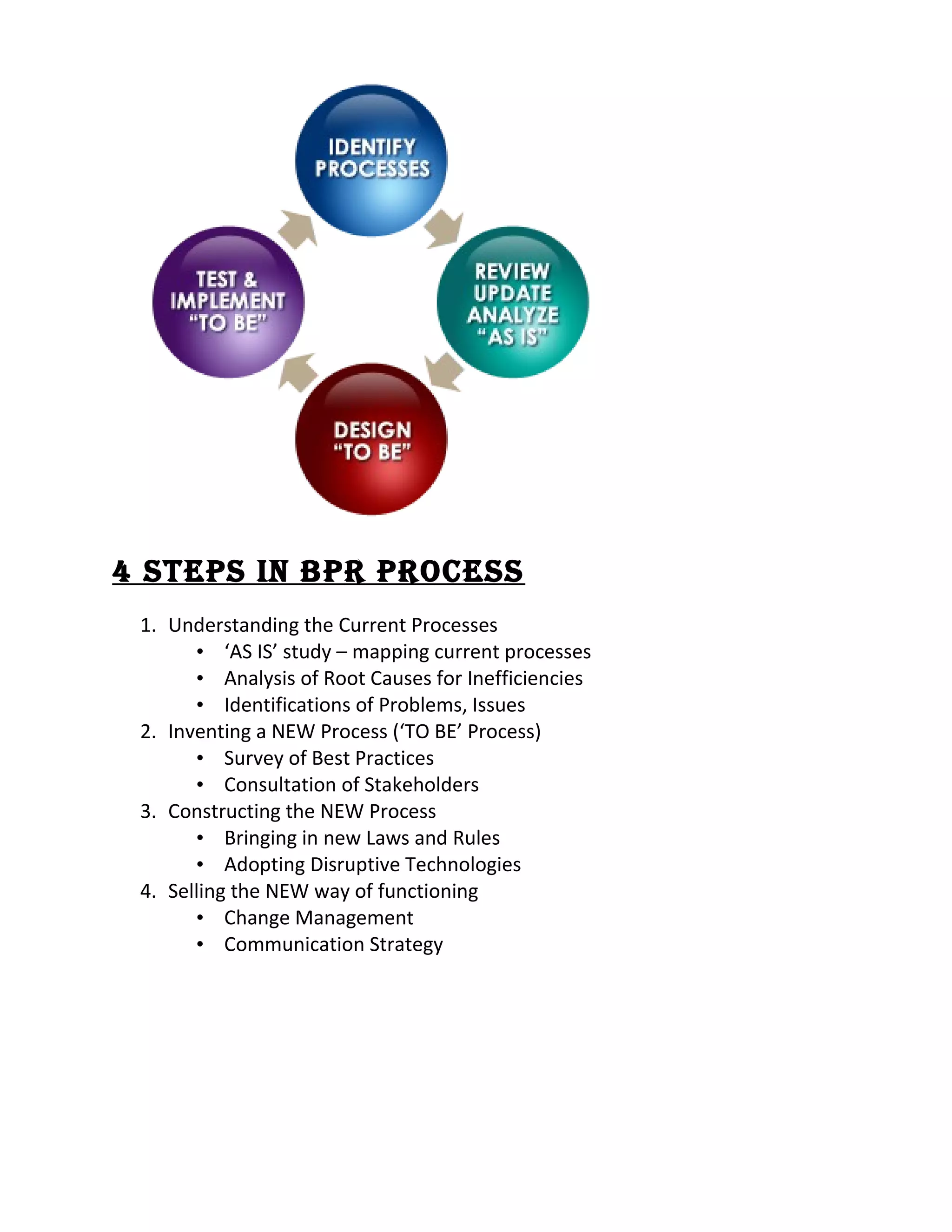
4 stePs in BPR PRocess
1. Understanding the Current Processes
• ‘AS IS’ study – mapping current processes
• Analysis of Root Causes for Inefficiencies
• Identifications of Problems, Issues
2. Inventing a NEW Process (‘TO BE’ Process)
• Survey of Best Practices
• Consultation of Stakeholders
3. Constructing the NEW Process
• Bringing in new Laws and Rules
• Adopting Disruptive Technologies
4. Selling the NEW way of functioning
• Change Management
• Communication Strategy
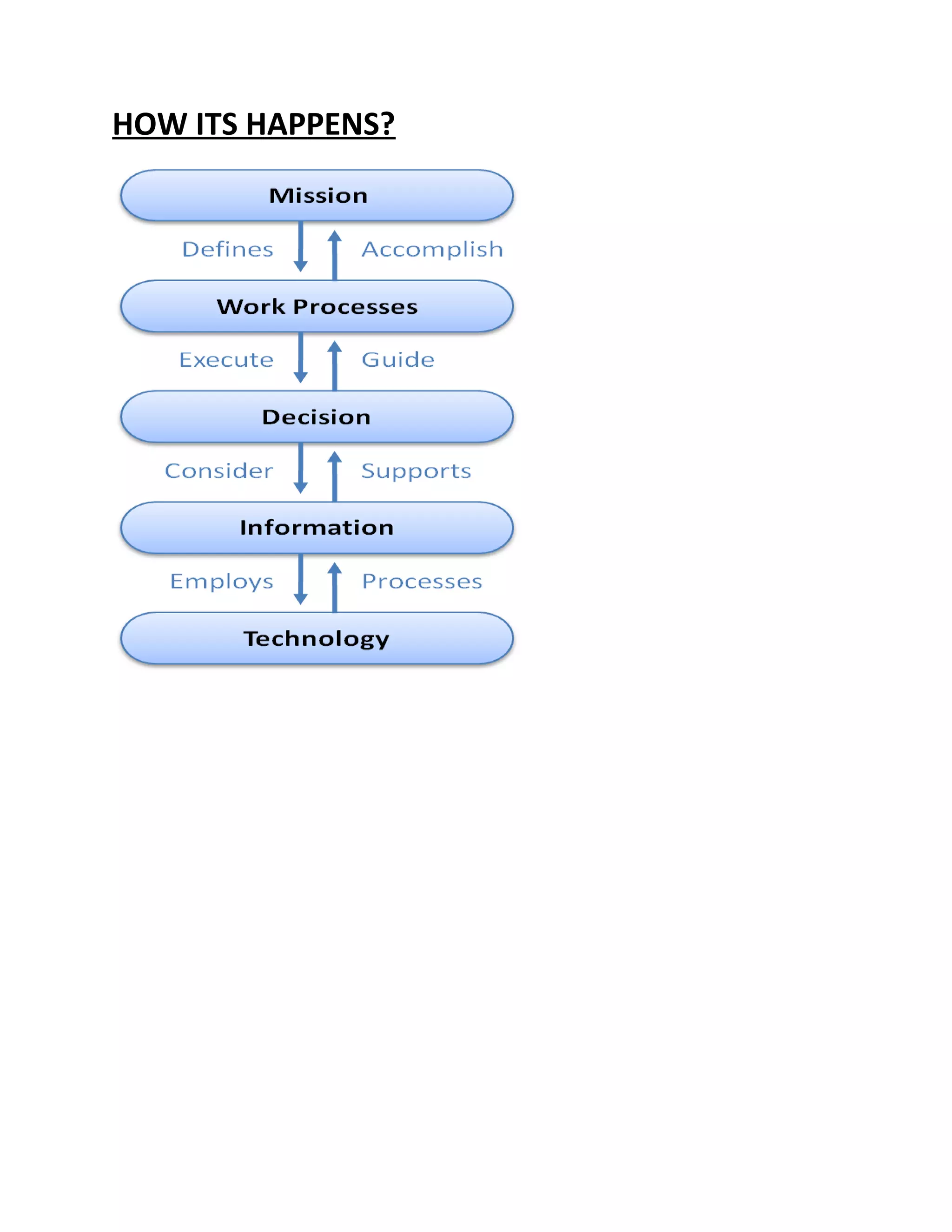
HOW ITS HAPPENS?
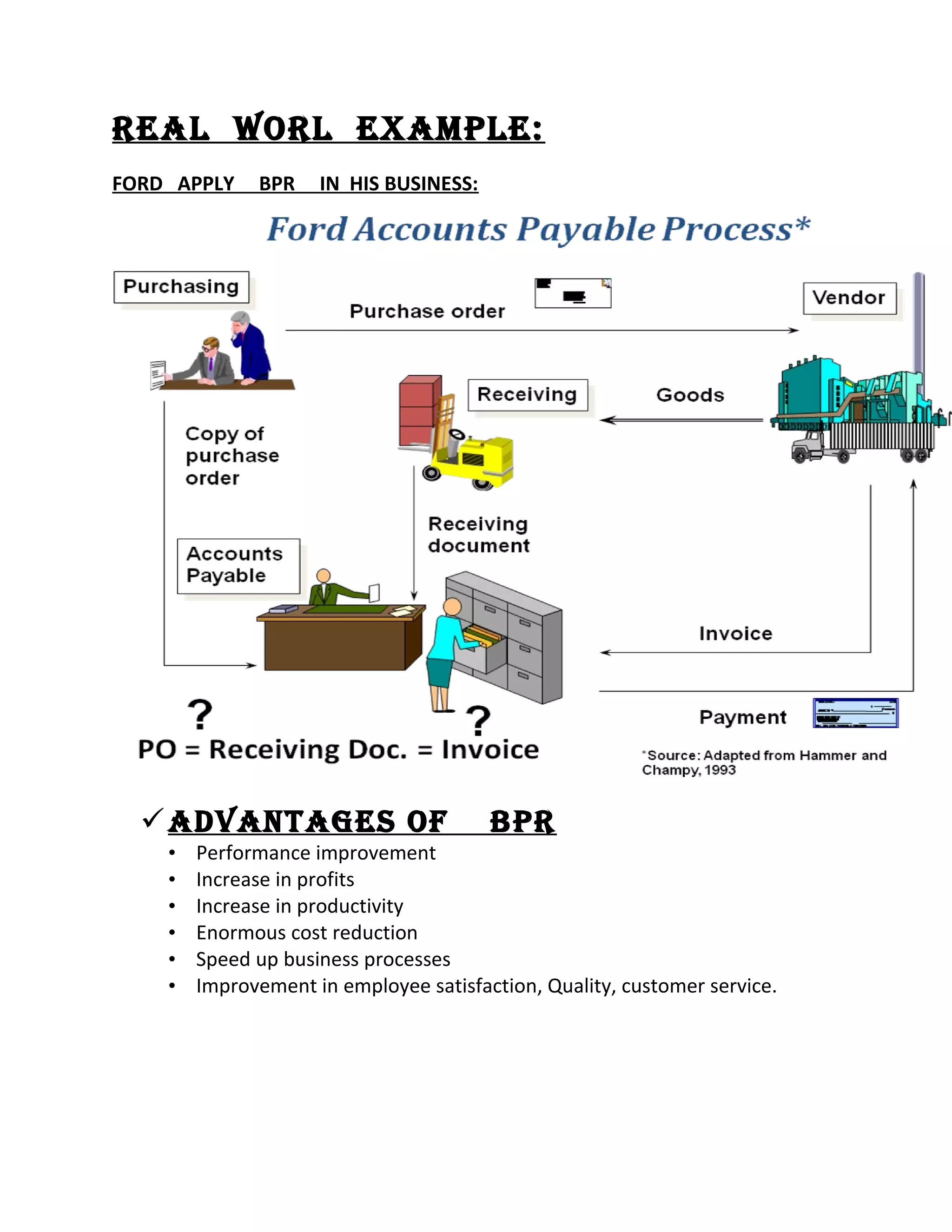
REAL WORL EXAMPLE:
FORD APPLY BPR IN HIS BUSINESS:
AdvAntAgEs Of BPR
• Performance improvement
• Increase in profits
• Increase in productivity
• Enormous cost reduction
• Speed up business processes
• Improvement in employee satisfaction, Quality, customer service.
DisaDvantages of BPR
• It never change management thinking.
• Lack of management support for the initiative and thus poor acceptance
in organization.
• Exaggerated (overstate) expectations regarding the benefits of BPR
• Underestimation of resistance to change within organization.
• Implementation of generic best practices that do not fit specific
company needs.
• Over-trust in technology solutions.
ConClusion
• BPR is about Radical Redesign of business processes
• BPR brings Efficiency, Effectiveness & Customer-friendliness
• BPR needs adoption of a structured methodology
• Top management commitment & Change Management are critical to
success

Bpr asignment

  • 1.
    What is BPR? BusinessProcess Re-engineering or BPR is the analysis and redesign of workflow and processes within and between Organizations. BPR is the Fundamental rethinking and Radical (fundamental) redesign of Business Processes to achieve Dramatic improvements in critical measures of performance Such as Cost, Quality, Service and Speed. Why BPR? Why Reengineer? • Customers – Demanding – Sophistication – Changing Needs • Competition – Local – Global • Change – Technology – Customer Preferences Increase Performance – Cost – Quality – Service – Speed
  • 2.
    The Problem isthat we are in the 21st century with Processes and Organizations designed in the 19th Century to work well in the 20th Century! We need entirely different PROCESSES for ORGANIZATIONS in the 21st Century. Processes become complex & inefficient with passage of time • with addition of sub-processes to handle exceptions • with changes in environment and • with increase in customer expectations IS IT USEABLE/BENEFICIAL/EFFECTIVE FOR ORGANIZATION? High Performing Organization improved operational performance (e.g., effectiveness and efficiency), through evaluation and improvement of its business management and human capital practices & with the help of BPR ().
  • 3.
    3 Goals ofBPR • Customer Friendliness o Meeting customer requirements closely o Providing convenience • Effectiveness o Outcome-based approach o Gaining loyalty of customers o Image and branding • Efficiency o Cost o Time o Effort
  • 4.
    4 stePs inBPR PRocess 1. Understanding the Current Processes • ‘AS IS’ study – mapping current processes • Analysis of Root Causes for Inefficiencies • Identifications of Problems, Issues 2. Inventing a NEW Process (‘TO BE’ Process) • Survey of Best Practices • Consultation of Stakeholders 3. Constructing the NEW Process • Bringing in new Laws and Rules • Adopting Disruptive Technologies 4. Selling the NEW way of functioning • Change Management • Communication Strategy
  • 5.
  • 6.
    REAL WORL EXAMPLE: FORDAPPLY BPR IN HIS BUSINESS: AdvAntAgEs Of BPR • Performance improvement • Increase in profits • Increase in productivity • Enormous cost reduction • Speed up business processes • Improvement in employee satisfaction, Quality, customer service.
  • 7.
    DisaDvantages of BPR •It never change management thinking. • Lack of management support for the initiative and thus poor acceptance in organization. • Exaggerated (overstate) expectations regarding the benefits of BPR • Underestimation of resistance to change within organization. • Implementation of generic best practices that do not fit specific company needs. • Over-trust in technology solutions. ConClusion • BPR is about Radical Redesign of business processes • BPR brings Efficiency, Effectiveness & Customer-friendliness • BPR needs adoption of a structured methodology • Top management commitment & Change Management are critical to success