
XEROX NPP BPR CASE
Abhijeet Dash UM14001
Abhinaba De UM14002
Abhineet Sudhendra UM14003
Abinash Mallick UM14004
Abul Zaidi UM14005
Aditi Sahu UM14006
PROBLEM IDENTIFICATION
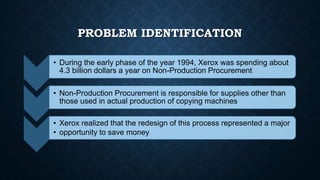
• During the early phase of the year 1994, Xerox was spending about
4.3 billion dollars a year on Non-Production Procurement
• Non-Production Procurement is responsible for supplies other than
those used in actual production of copying machines
• Xerox realized that the redesign of this process represented a major
• opportunity to save money
BUSINESS PROCESS REENGINEERING
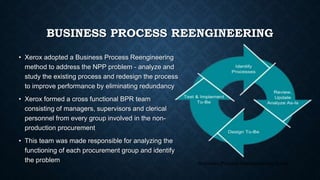
• Xerox adopted a Business Process Reengineering
method to address the NPP problem - analyze and
study the existing process and redesign the process
to improve performance by eliminating redundancy
• Xerox formed a cross functional BPR team
consisting of managers, supervisors and clerical
personnel from every group involved in the non-
production procurement
• This team was made responsible for analyzing the
functioning of each procurement group and identify
the problem
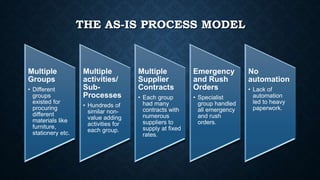
THE AS-IS PROCESS MODEL
Multiple
Groups
• Different
groups
existed for
procuring
different
materials like
furniture,
stationery etc.
Multiple
activities/
Sub-
Processes
• Hundreds of
similar non-
value adding
activities for
each group.
Multiple
Supplier
Contracts
• Each group
had many
contracts with
numerous
suppliers to
supply at fixed
rates.
Emergency
and Rush
Orders
• Specialist
group handled
all emergency
and rush
orders.
No
automation
• Lack of
automation
led to heavy
paperwork.
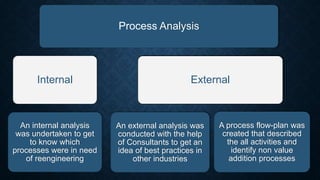
Process Analysis
Internal
An internal analysis
was undertaken to get
to know which
processes were in need
of reengineering
External
An external analysis was
conducted with the help
of Consultants to get an
idea of best practices in
other industries
A process flow-plan was
created that described
the all activities and
identify non value
addition processes
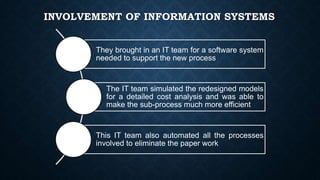
INVOLVEMENT OF INFORMATION SYSTEMS
They brought in an IT team for a software system
needed to support the new process
The IT team simulated the redesigned models
for a detailed cost analysis and was able to
make the sub-process much more efficient
This IT team also automated all the processes
involved to eliminate the paper work
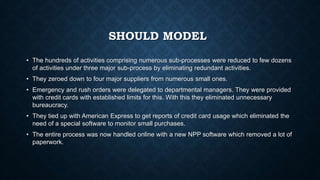
SHOULD MODEL
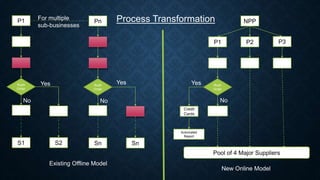
• The hundreds of activities comprising numerous sub-processes were reduced to few dozens
of activities under three major sub-process by eliminating redundant activities.
• They zeroed down to four major suppliers from numerous small ones.
• Emergency and rush orders were delegated to departmental managers. They were provided
with credit cards with established limits for this. With this they eliminated unnecessary
bureaucracy.
• They tied up with American Express to get reports of credit card usage which eliminated the
need of a special software to monitor small purchases.
• The entire process was now handled online with a new NPP software which removed a lot of
paperwork.
P1
Rush
Order
S1 S2
Pn
Rush
Order
Sn Sn
For multiple
sub-businesses
Existing Offline Model
NPP
P1 P2 P3
Rush
Order
Credit
Cards
Automated
Report
Yes
No
Yes
No
Pool of 4 Major Suppliers
New Online Model
Yes
No
Process Transformation
THANK YOU

Xerox npp bpr case (1)

  • 1.
    XEROX NPP BPRCASE Abhijeet Dash UM14001 Abhinaba De UM14002 Abhineet Sudhendra UM14003 Abinash Mallick UM14004 Abul Zaidi UM14005 Aditi Sahu UM14006
  • 2.
    PROBLEM IDENTIFICATION • Duringthe early phase of the year 1994, Xerox was spending about 4.3 billion dollars a year on Non-Production Procurement • Non-Production Procurement is responsible for supplies other than those used in actual production of copying machines • Xerox realized that the redesign of this process represented a major • opportunity to save money
  • 3.
    BUSINESS PROCESS REENGINEERING •Xerox adopted a Business Process Reengineering method to address the NPP problem - analyze and study the existing process and redesign the process to improve performance by eliminating redundancy • Xerox formed a cross functional BPR team consisting of managers, supervisors and clerical personnel from every group involved in the non- production procurement • This team was made responsible for analyzing the functioning of each procurement group and identify the problem
  • 4.
    THE AS-IS PROCESSMODEL Multiple Groups • Different groups existed for procuring different materials like furniture, stationery etc. Multiple activities/ Sub- Processes • Hundreds of similar non- value adding activities for each group. Multiple Supplier Contracts • Each group had many contracts with numerous suppliers to supply at fixed rates. Emergency and Rush Orders • Specialist group handled all emergency and rush orders. No automation • Lack of automation led to heavy paperwork.
  • 5.
    Process Analysis Internal An internalanalysis was undertaken to get to know which processes were in need of reengineering External An external analysis was conducted with the help of Consultants to get an idea of best practices in other industries A process flow-plan was created that described the all activities and identify non value addition processes
  • 6.
    INVOLVEMENT OF INFORMATIONSYSTEMS They brought in an IT team for a software system needed to support the new process The IT team simulated the redesigned models for a detailed cost analysis and was able to make the sub-process much more efficient This IT team also automated all the processes involved to eliminate the paper work
  • 7.
    SHOULD MODEL • Thehundreds of activities comprising numerous sub-processes were reduced to few dozens of activities under three major sub-process by eliminating redundant activities. • They zeroed down to four major suppliers from numerous small ones. • Emergency and rush orders were delegated to departmental managers. They were provided with credit cards with established limits for this. With this they eliminated unnecessary bureaucracy. • They tied up with American Express to get reports of credit card usage which eliminated the need of a special software to monitor small purchases. • The entire process was now handled online with a new NPP software which removed a lot of paperwork.
  • 8.
    P1 Rush Order S1 S2 Pn Rush Order Sn Sn Formultiple sub-businesses Existing Offline Model NPP P1 P2 P3 Rush Order Credit Cards Automated Report Yes No Yes No Pool of 4 Major Suppliers New Online Model Yes No Process Transformation
  • 9.