MAHARAJA INSTITUTE
OF
MANGEMENT & TECHNOLOGY
Given By :
DEEPAK CHOUMAL
Submitted To :
SHIVANGI DHAMIJA
A human resource information system (HRIS) is an
information system or managed service that provides
a single, centralized view of the data that a human
resource management (HRM) or human capital
management (HCM) group requires for completing
human resource (HR) processes.
A HRIS, which is also known as a human resource
information system or human resource management
system (HRMS), is basically an intersection of human
resources and information technology through HR
software. This allows HR activities and processes to
occur electronically.
What Is HRIS ?
HRIS – Why It Is Needed?
* Formulation of policies and programs related to human
resource.
* Facilitating decision making in areas like promotion,
transfer, nomination, setting employees provident funds,
retirement, gratuity, leave travel concession and earned leave
compensation.
* Supplying data and submitting returns to government and
other statutory agencies.
* Increase competitiveness by Reengineering human resource
processes and functions.
* Improving employee satisfaction by delivering human
resource services more quickly and accurately.
Human Resource Information Systems (HRIS) is a
process that utilizes the information technology for
the effective management of human resource
functions and applications. It is a computerized
system typically comprising a data base or inter
related data base that track employees and their
employment specific information (Gill and Johnson,
2010). It can be briefly defined as integrated
systems used to gather, store and analyze
information regarding an organizations human
resources (Hendrickson 2003).
HRIS DEFINED:-
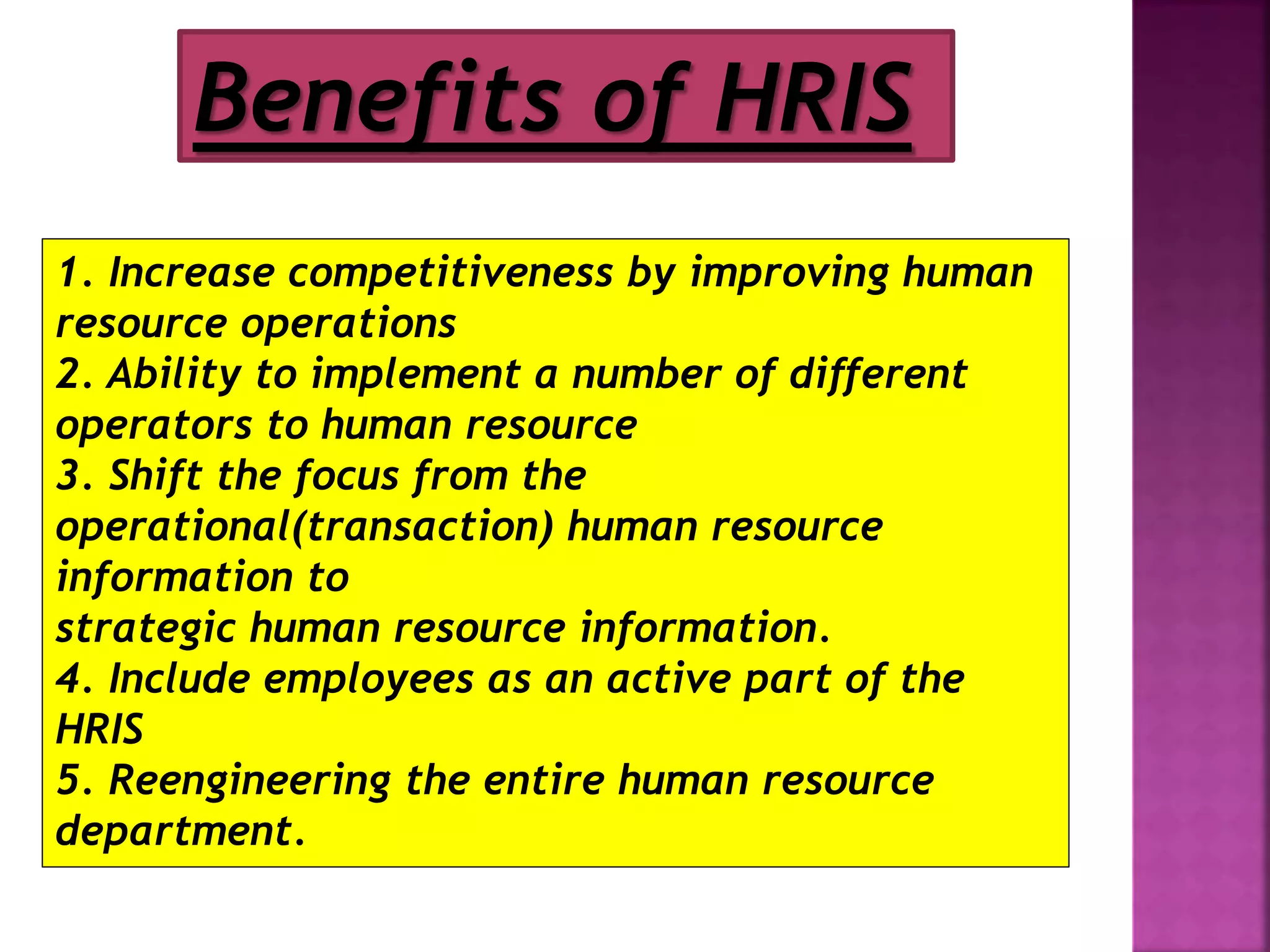
Benefits of HRIS
1. Increase competitiveness by improving human
resource operations
2. Ability to implement a number of different
operators to human resource
3. Shift the focus from the
operational(transaction) human resource
information to
strategic human resource information.
4. Include employees as an active part of the
HRIS
5. Reengineering the entire human resource
department.
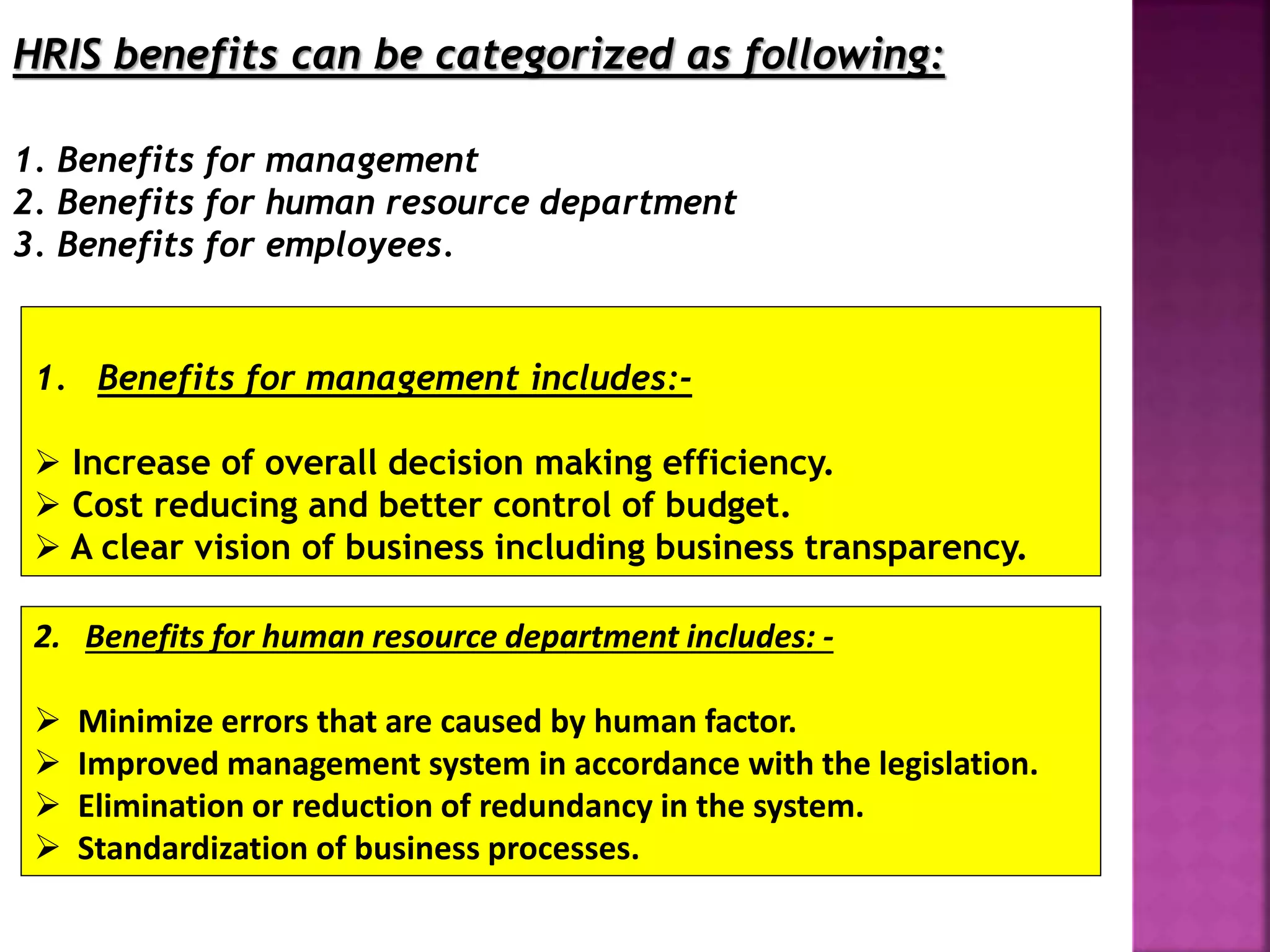
1. Benefits for management includes:-
 Increase of overall decision making efficiency.
 Cost reducing and better control of budget.
 A clear vision of business including business transparency.
HRIS benefits can be categorized as following:
1. Benefits for management
2. Benefits for human resource department
3. Benefits for employees.
2. Benefits for human resource department includes: -
 Minimize errors that are caused by human factor.
 Improved management system in accordance with the legislation.
 Elimination or reduction of redundancy in the system.
 Standardization of business processes.
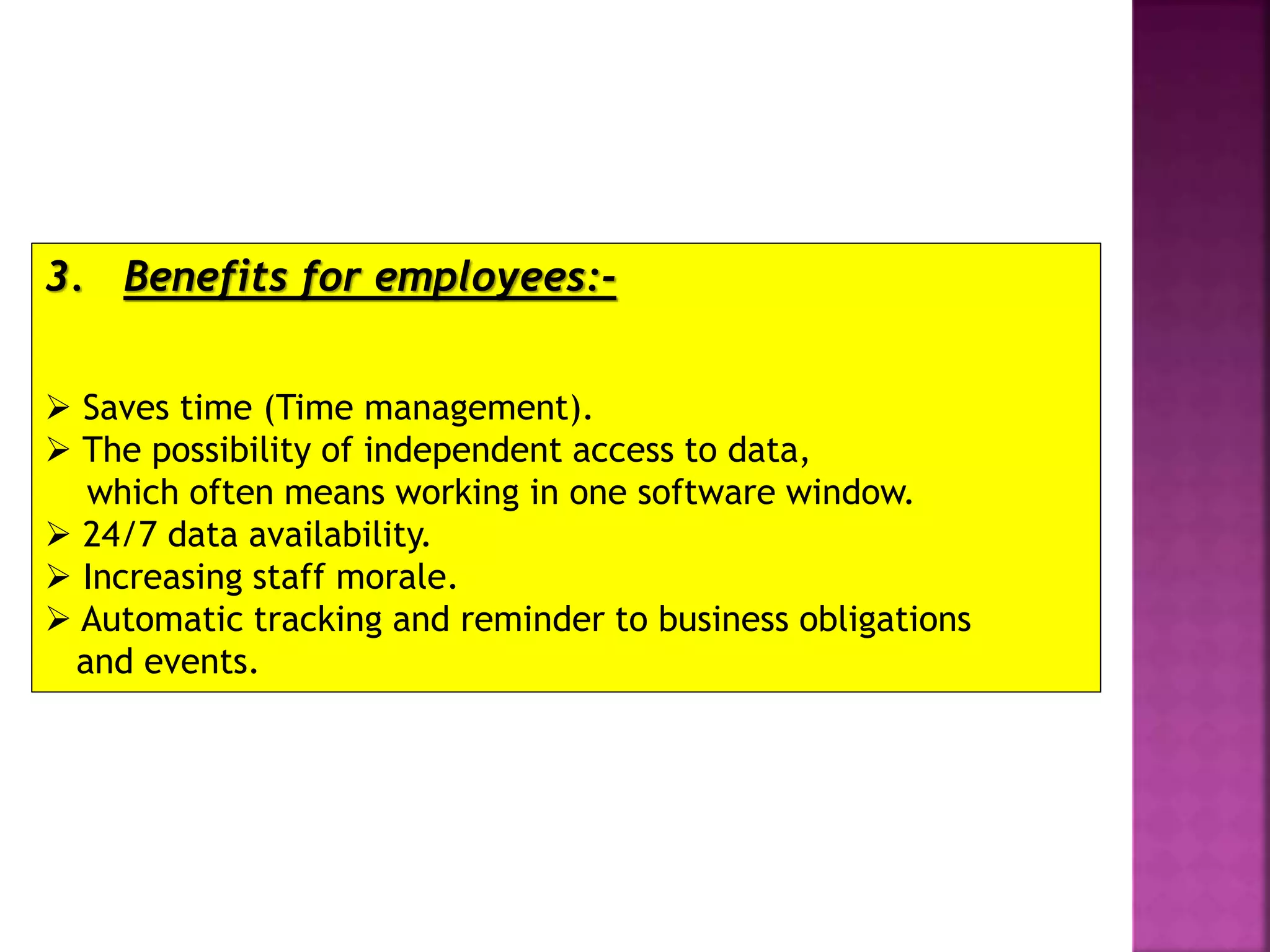
3. Benefits for employees:-
 Saves time (Time management).
 The possibility of independent access to data,
which often means working in one software window.
 24/7 data availability.
 Increasing staff morale.
 Automatic tracking and reminder to business obligations
and events.
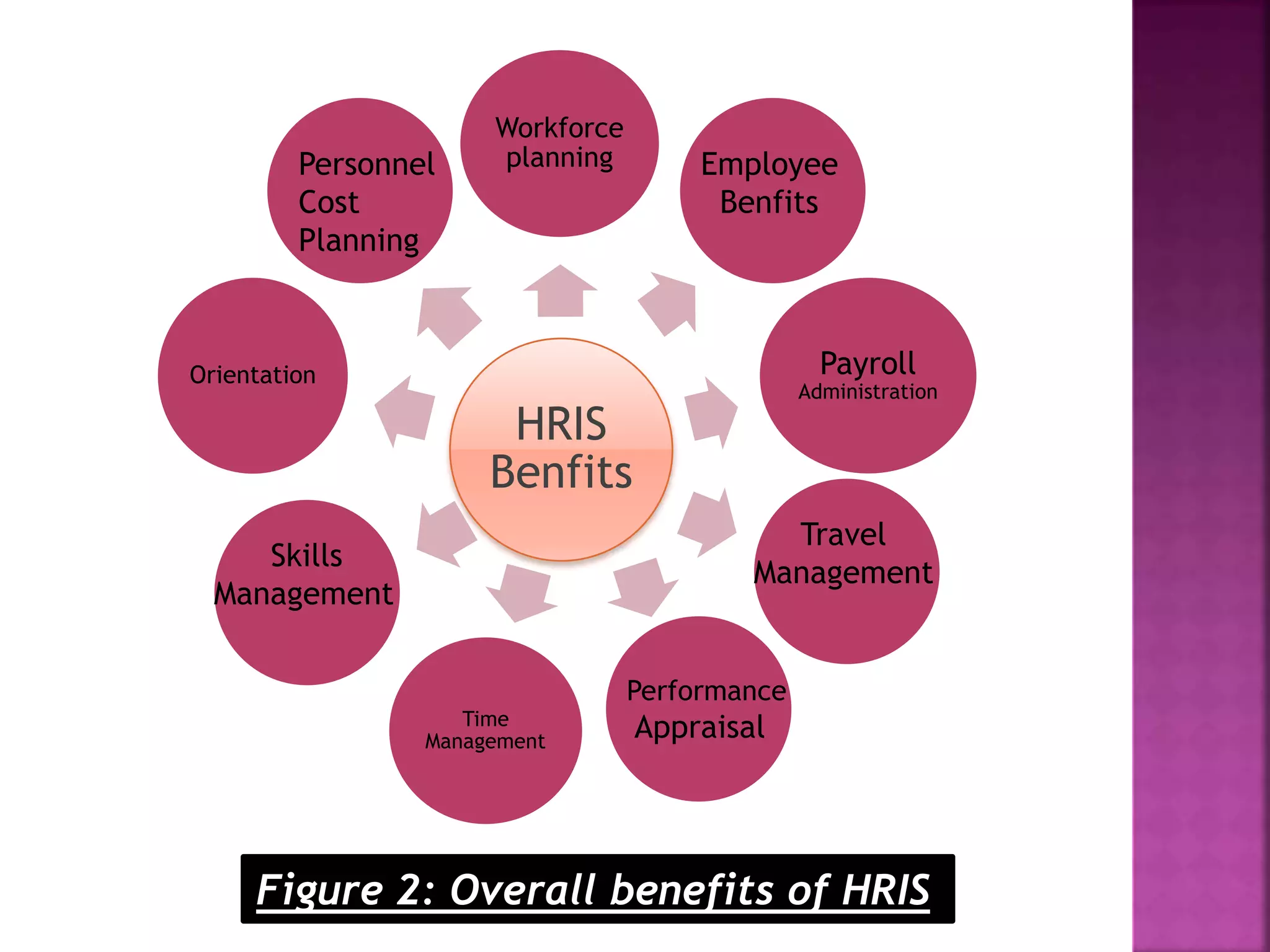
Figure 2: Overall benefits of HRIS
HRIS
Benfits
Workforce
planning
Payroll
Administration
Time
Management
Orientation
Performance
Appraisal
Skills
Management
Personnel
Cost
Planning
Employee
Benfits
Travel
Management
:
Functions of HRIS :-
1. Create and maintain employee record.
2. Ensure legal compliance.
3. Human resource planning and forecasting.
4. Talent management/Knowledge management.
5. Strategic alignment.
6. Enhanced decision making.
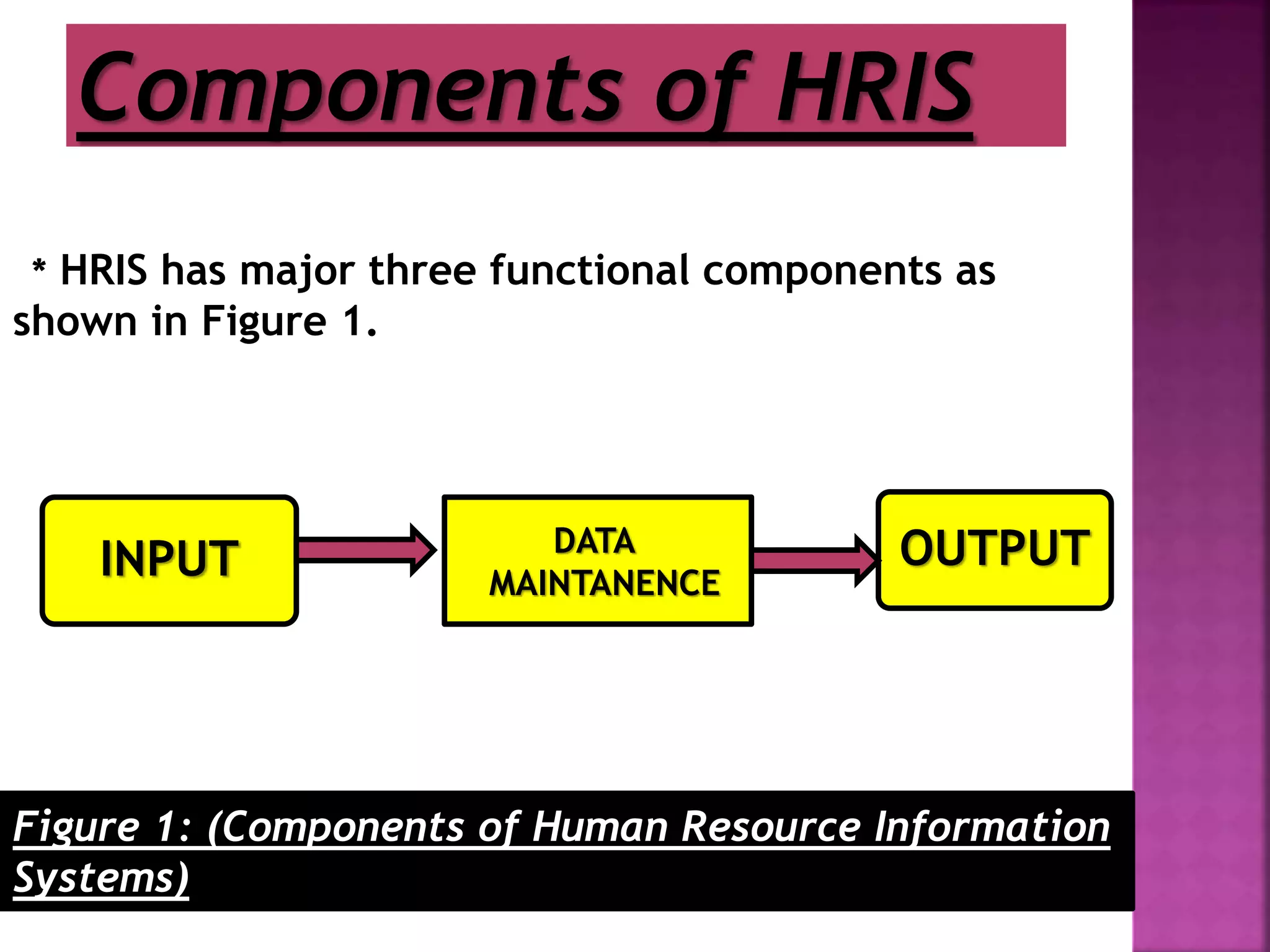
* HRIS has major three functional components as
shown in Figure 1.
INPUT DATA
MAINTANENCE
OUTPUT
Components of HRIS
Figure 1: (Components of Human Resource Information
Systems)
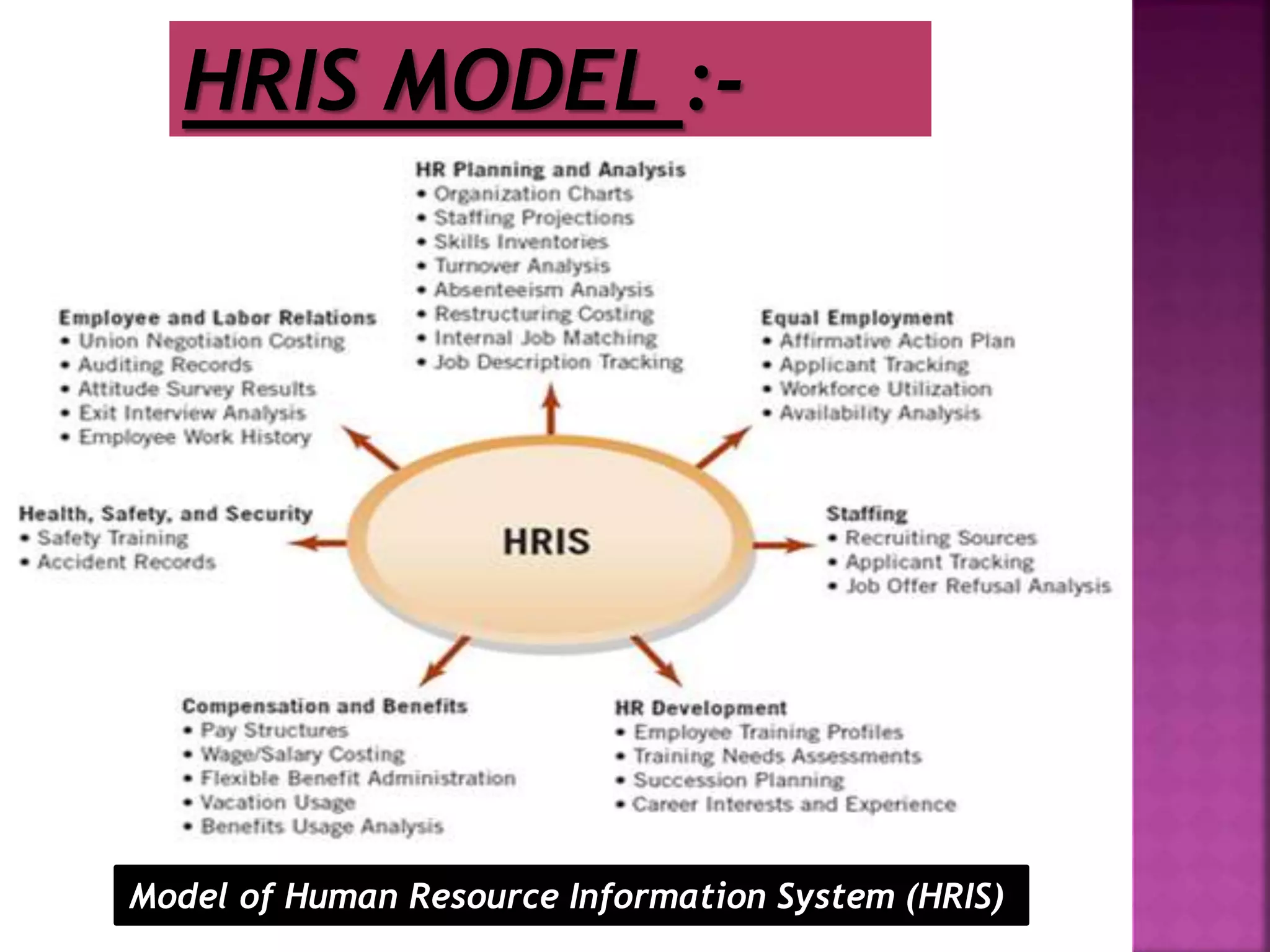
HRIS MODEL :-
Model of Human Resource Information System (HRIS)
The combination of Human resources and
information technology known as HRIS are being
implemented by many firms as strategic weapons
towards the uprising business Competitiveness.
Firms are increasingly moving beyond manual
human resource system today, by computerizing
individual human resource tasks, installing HRIS and
using the internets and intranet use of its human
resources and maintain competitiveness in its
market. HRIS can be seen as a spine of the company
and vital in meeting the needs of all stakeholders in
the company.
Conclusion :-
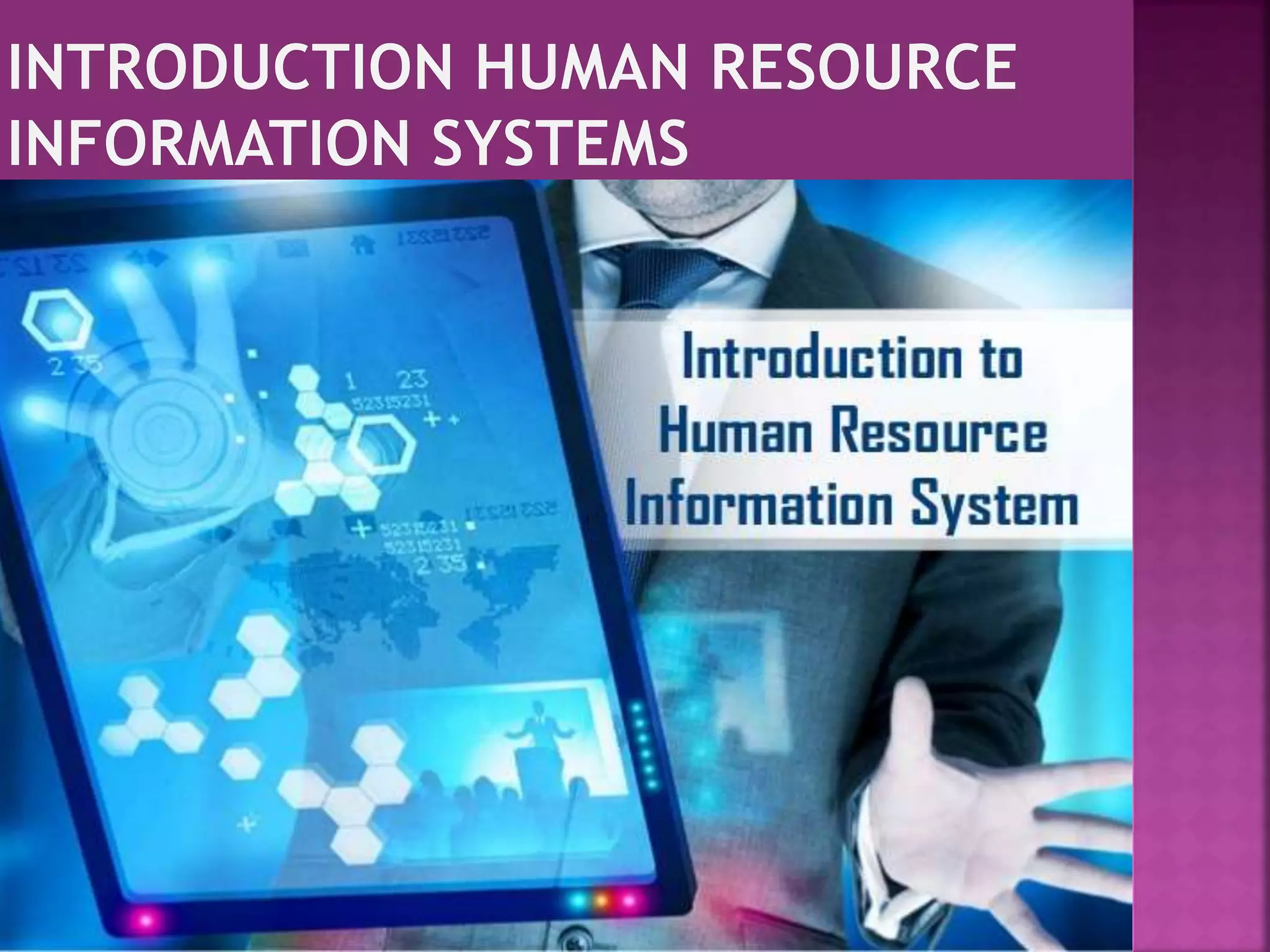
Introduction human resource information systems

Introduction human resource information systems

  • 2.
  • 3.
    Given By : DEEPAKCHOUMAL Submitted To : SHIVANGI DHAMIJA
  • 4.
    A human resourceinformation system (HRIS) is an information system or managed service that provides a single, centralized view of the data that a human resource management (HRM) or human capital management (HCM) group requires for completing human resource (HR) processes. A HRIS, which is also known as a human resource information system or human resource management system (HRMS), is basically an intersection of human resources and information technology through HR software. This allows HR activities and processes to occur electronically. What Is HRIS ?
  • 5.
    HRIS – WhyIt Is Needed? * Formulation of policies and programs related to human resource. * Facilitating decision making in areas like promotion, transfer, nomination, setting employees provident funds, retirement, gratuity, leave travel concession and earned leave compensation. * Supplying data and submitting returns to government and other statutory agencies. * Increase competitiveness by Reengineering human resource processes and functions. * Improving employee satisfaction by delivering human resource services more quickly and accurately.
  • 6.
    Human Resource InformationSystems (HRIS) is a process that utilizes the information technology for the effective management of human resource functions and applications. It is a computerized system typically comprising a data base or inter related data base that track employees and their employment specific information (Gill and Johnson, 2010). It can be briefly defined as integrated systems used to gather, store and analyze information regarding an organizations human resources (Hendrickson 2003). HRIS DEFINED:-
  • 7.
    Benefits of HRIS 1.Increase competitiveness by improving human resource operations 2. Ability to implement a number of different operators to human resource 3. Shift the focus from the operational(transaction) human resource information to strategic human resource information. 4. Include employees as an active part of the HRIS 5. Reengineering the entire human resource department.
  • 8.
    1. Benefits formanagement includes:-  Increase of overall decision making efficiency.  Cost reducing and better control of budget.  A clear vision of business including business transparency. HRIS benefits can be categorized as following: 1. Benefits for management 2. Benefits for human resource department 3. Benefits for employees. 2. Benefits for human resource department includes: -  Minimize errors that are caused by human factor.  Improved management system in accordance with the legislation.  Elimination or reduction of redundancy in the system.  Standardization of business processes.
  • 9.
    3. Benefits foremployees:-  Saves time (Time management).  The possibility of independent access to data, which often means working in one software window.  24/7 data availability.  Increasing staff morale.  Automatic tracking and reminder to business obligations and events.
  • 10.
    Figure 2: Overallbenefits of HRIS HRIS Benfits Workforce planning Payroll Administration Time Management Orientation Performance Appraisal Skills Management Personnel Cost Planning Employee Benfits Travel Management
  • 11.
    : Functions of HRIS:- 1. Create and maintain employee record. 2. Ensure legal compliance. 3. Human resource planning and forecasting. 4. Talent management/Knowledge management. 5. Strategic alignment. 6. Enhanced decision making.
  • 12.
    * HRIS hasmajor three functional components as shown in Figure 1. INPUT DATA MAINTANENCE OUTPUT Components of HRIS Figure 1: (Components of Human Resource Information Systems)
  • 13.
    HRIS MODEL :- Modelof Human Resource Information System (HRIS)
  • 14.
    The combination ofHuman resources and information technology known as HRIS are being implemented by many firms as strategic weapons towards the uprising business Competitiveness. Firms are increasingly moving beyond manual human resource system today, by computerizing individual human resource tasks, installing HRIS and using the internets and intranet use of its human resources and maintain competitiveness in its market. HRIS can be seen as a spine of the company and vital in meeting the needs of all stakeholders in the company. Conclusion :-