Cost Benefit Analysis


                  Prepared By
              Lekshmi Krishna M.R
Contents
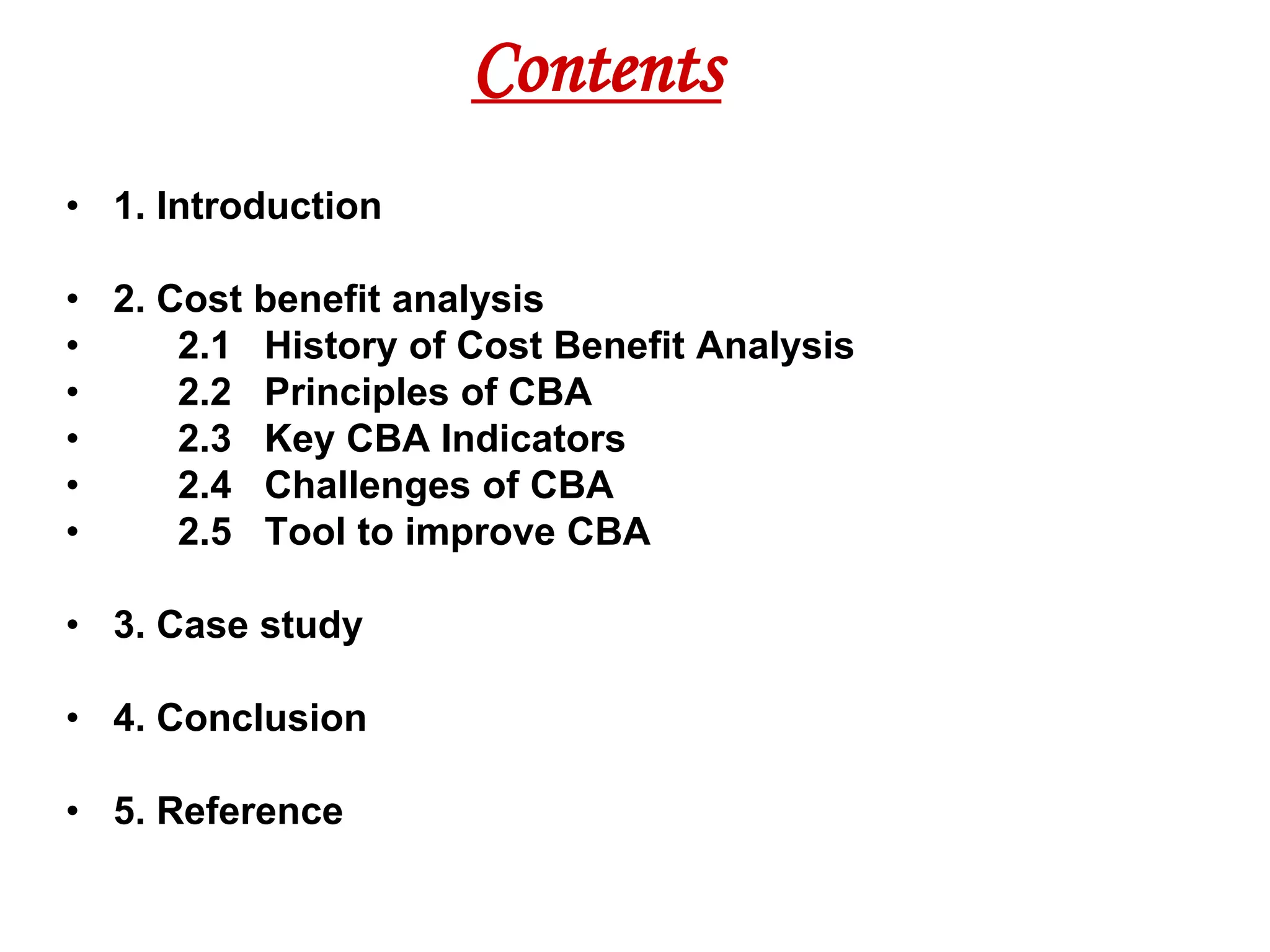
• 1. Introduction

• 2. Cost benefit analysis
•     2.1 History of Cost Benefit Analysis
•     2.2 Principles of CBA
•     2.3 Key CBA Indicators
•     2.4 Challenges of CBA
•     2.5 Tool to improve CBA

• 3. Case study

• 4. Conclusion

• 5. Reference
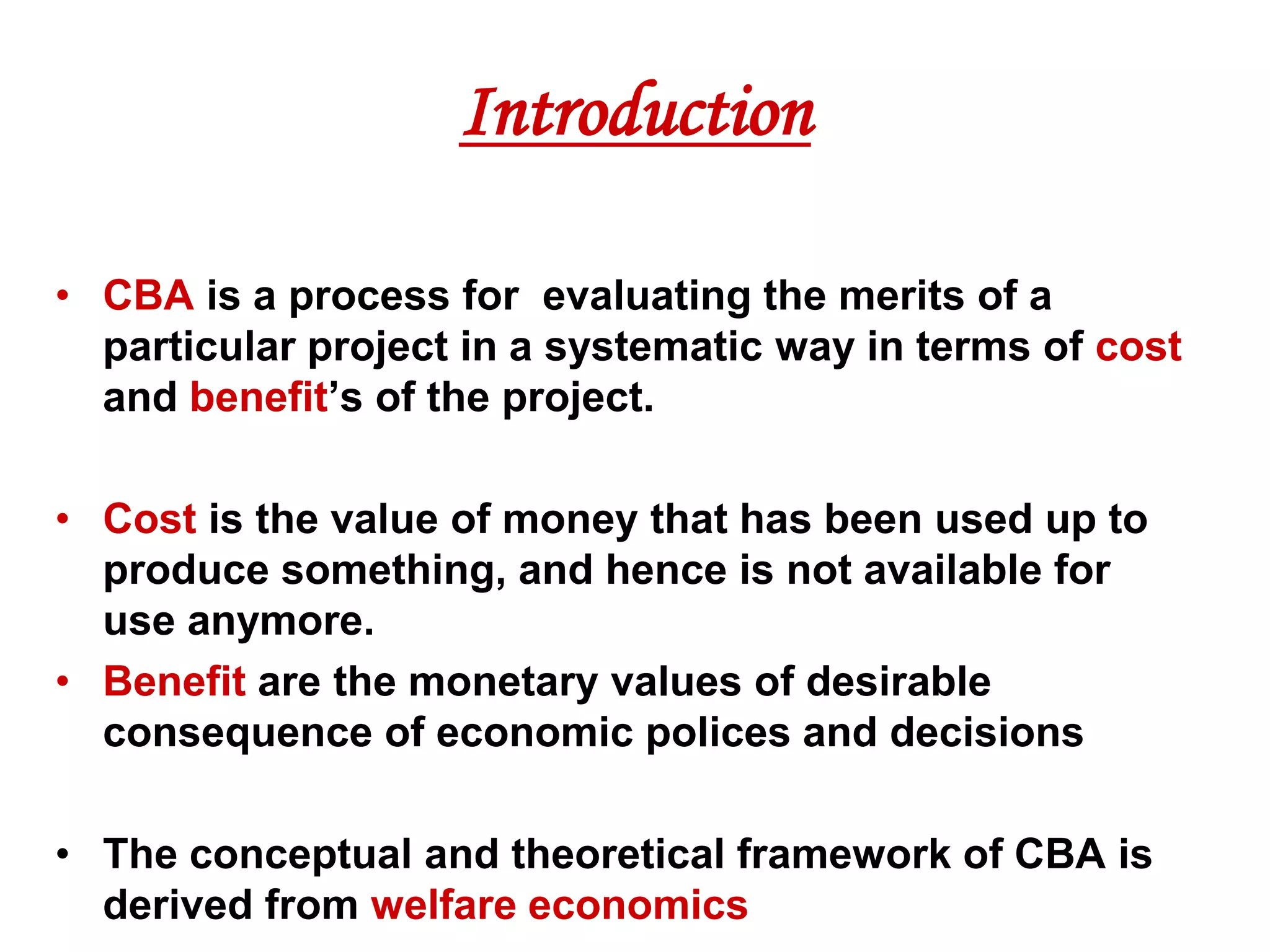
Introduction

• CBA is a process for evaluating the merits of a
  particular project in a systematic way in terms of cost
  and benefit’s of the project.

• Cost is the value of money that has been used up to
  produce something, and hence is not available for
  use anymore.
• Benefit are the monetary values of desirable
  consequence of economic polices and decisions

• The conceptual and theoretical framework of CBA is
  derived from welfare economics
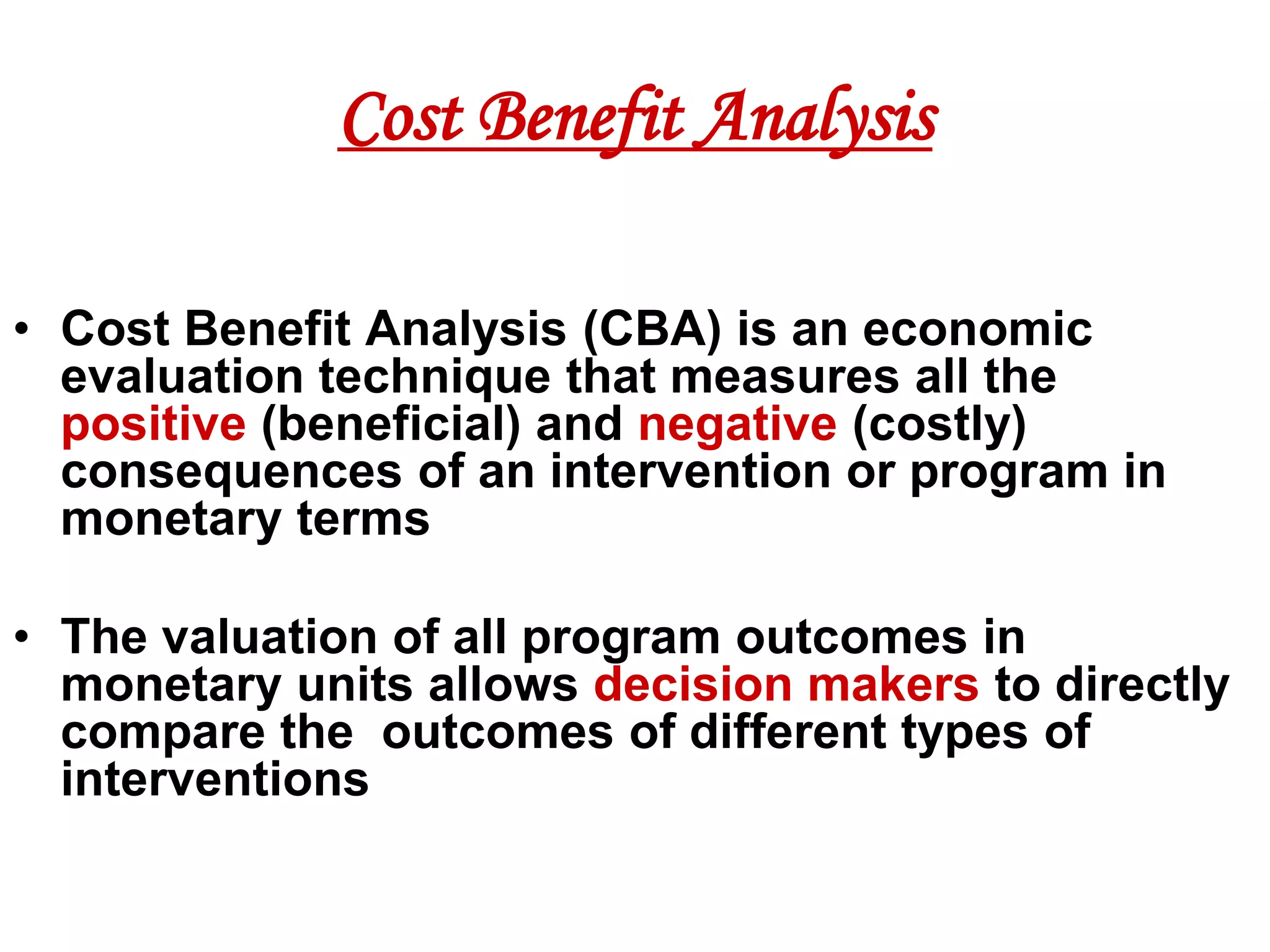
Cost Benefit Analysis

• Cost Benefit Analysis (CBA) is an economic
  evaluation technique that measures all the
  positive (beneficial) and negative (costly)
  consequences of an intervention or program in
  monetary terms

• The valuation of all program outcomes in
  monetary units allows decision makers to directly
  compare the outcomes of different types of
  interventions
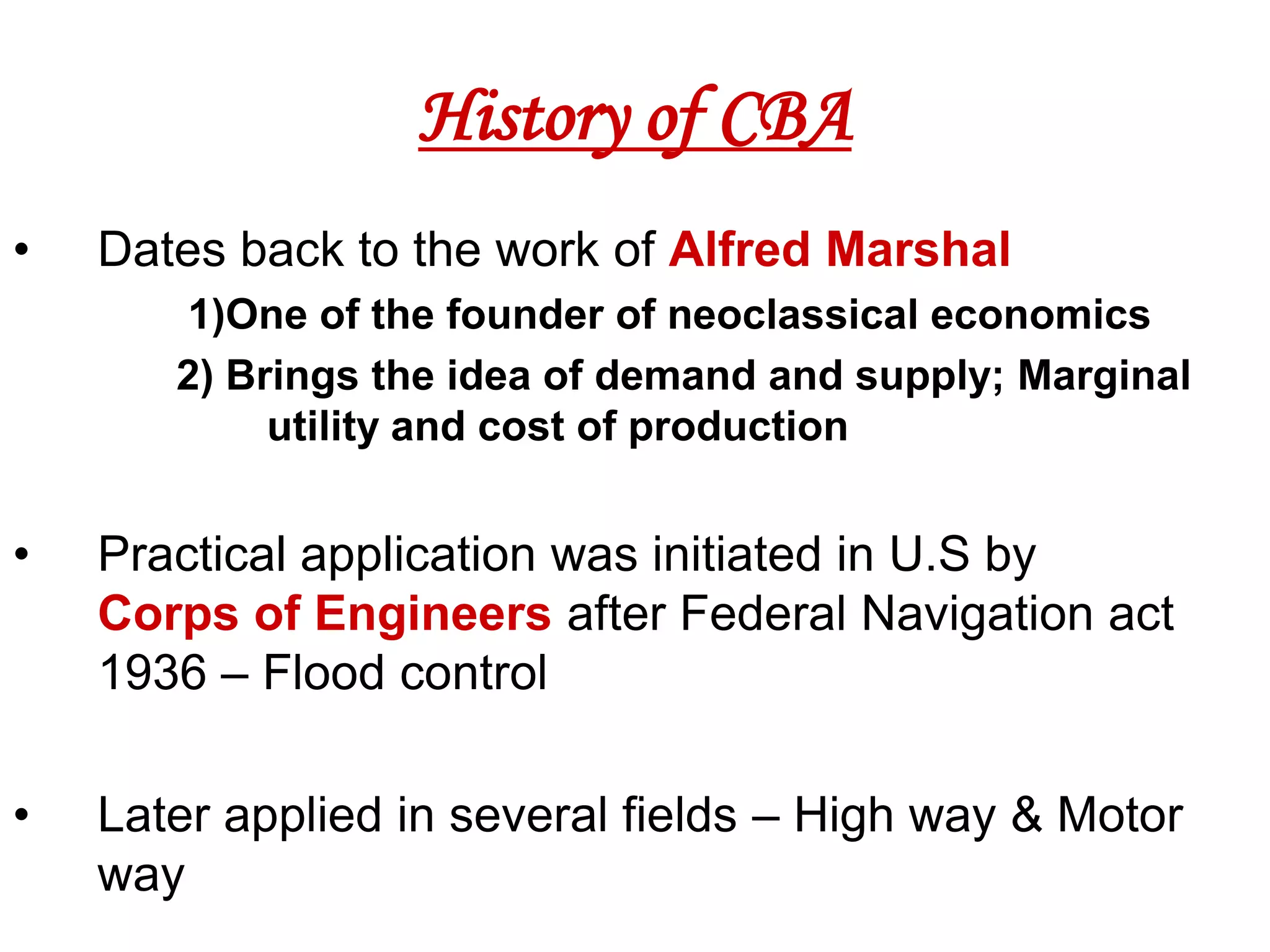
History of CBA
•   Dates back to the work of Alfred Marshal
       1)One of the founder of neoclassical economics
       2) Brings the idea of demand and supply; Marginal
            utility and cost of production


•   Practical application was initiated in U.S by
    Corps of Engineers after Federal Navigation act
    1936 – Flood control

•   Later applied in several fields – High way & Motor
    way
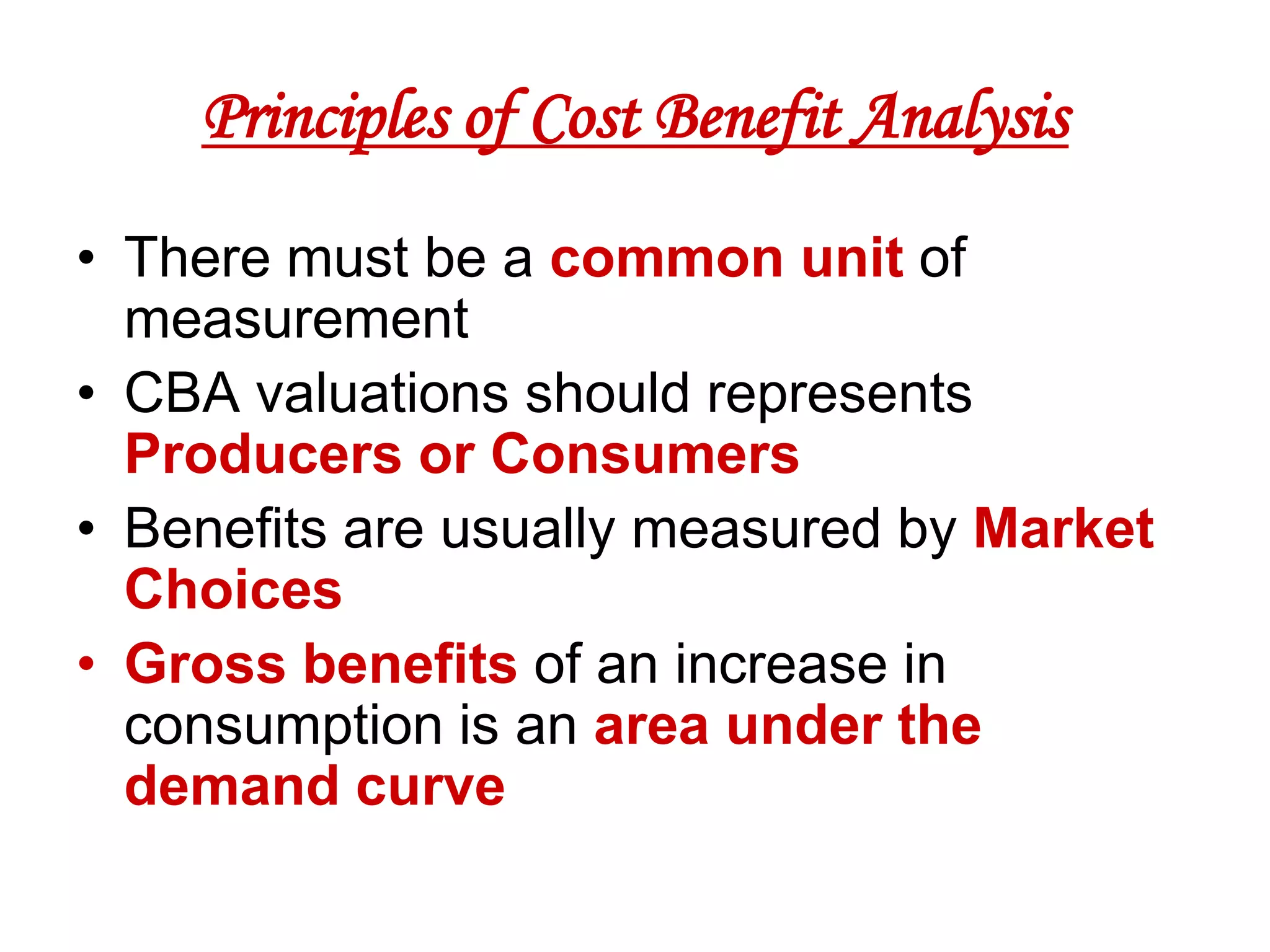
Principles of Cost Benefit Analysis
• There must be a common unit of
  measurement
• CBA valuations should represents
  Producers or Consumers
• Benefits are usually measured by Market
  Choices
• Gross benefits of an increase in
  consumption is an area under the
  demand curve
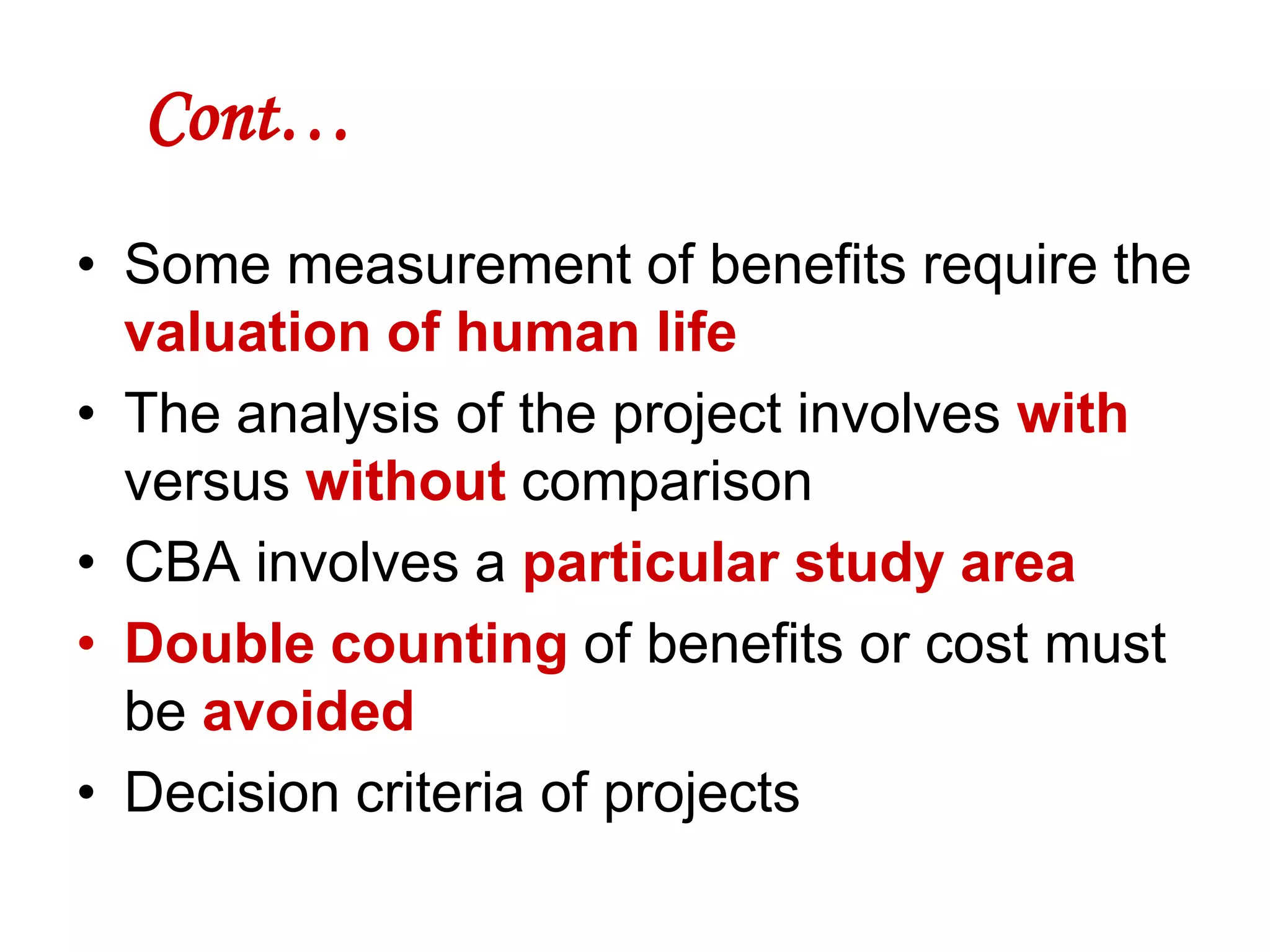
Cont…
• Some measurement of benefits require the
  valuation of human life
• The analysis of the project involves with
  versus without comparison
• CBA involves a particular study area
• Double counting of benefits or cost must
  be avoided
• Decision criteria of projects
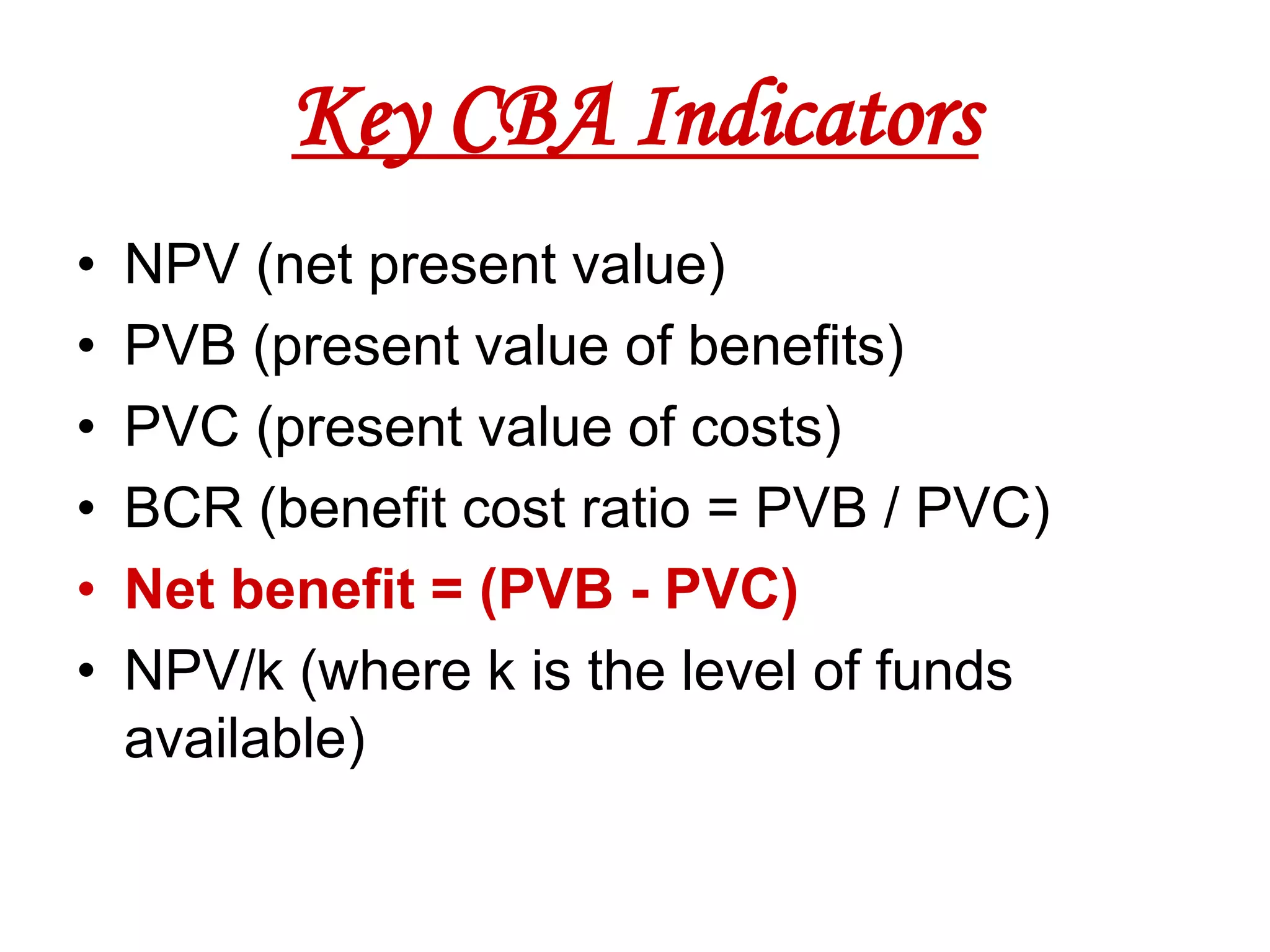
Key CBA Indicators
•   NPV (net present value)
•   PVB (present value of benefits)
•   PVC (present value of costs)
•   BCR (benefit cost ratio = PVB / PVC)
•   Net benefit = (PVB - PVC)
•   NPV/k (where k is the level of funds
    available)
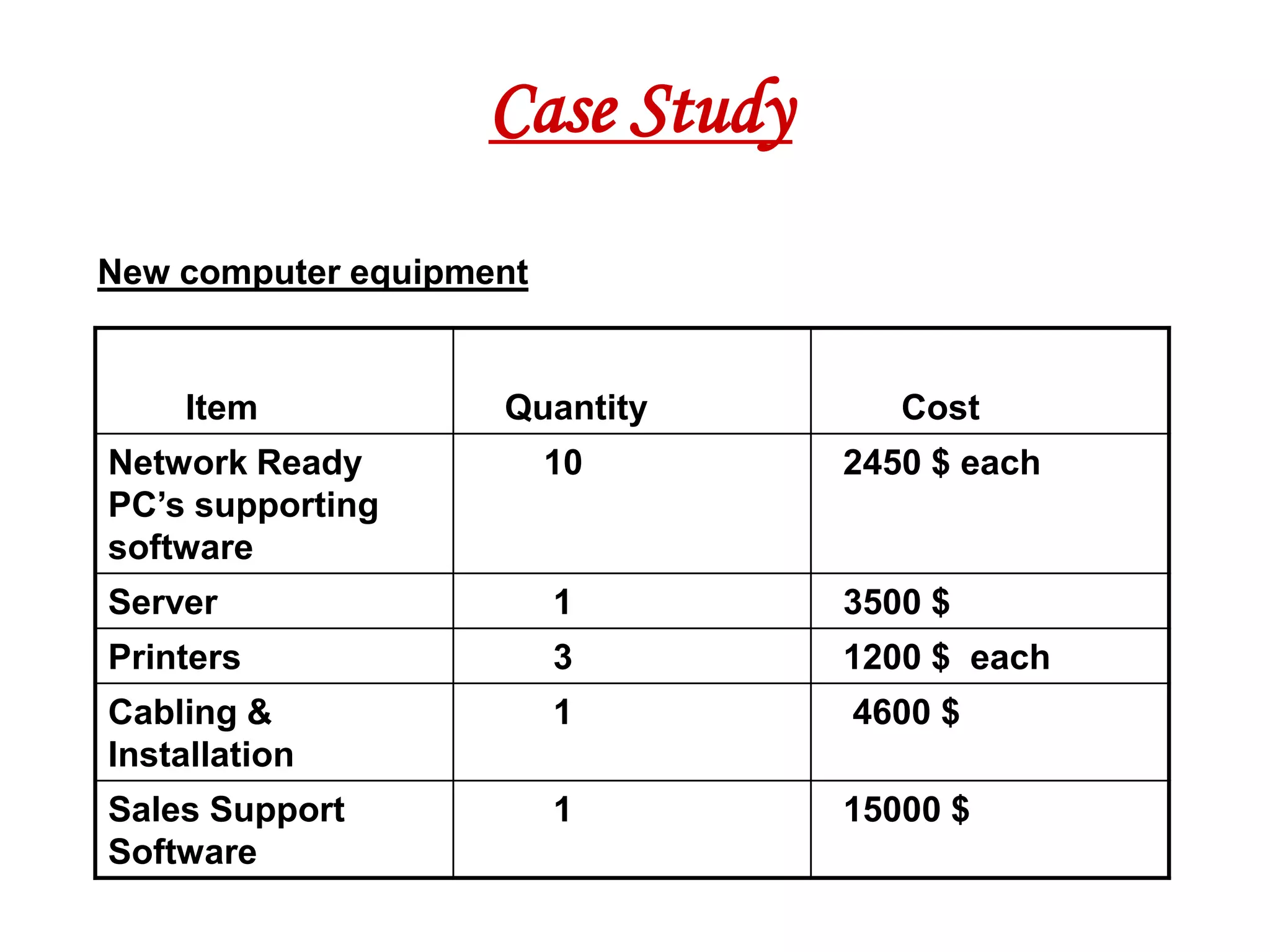
Case Study
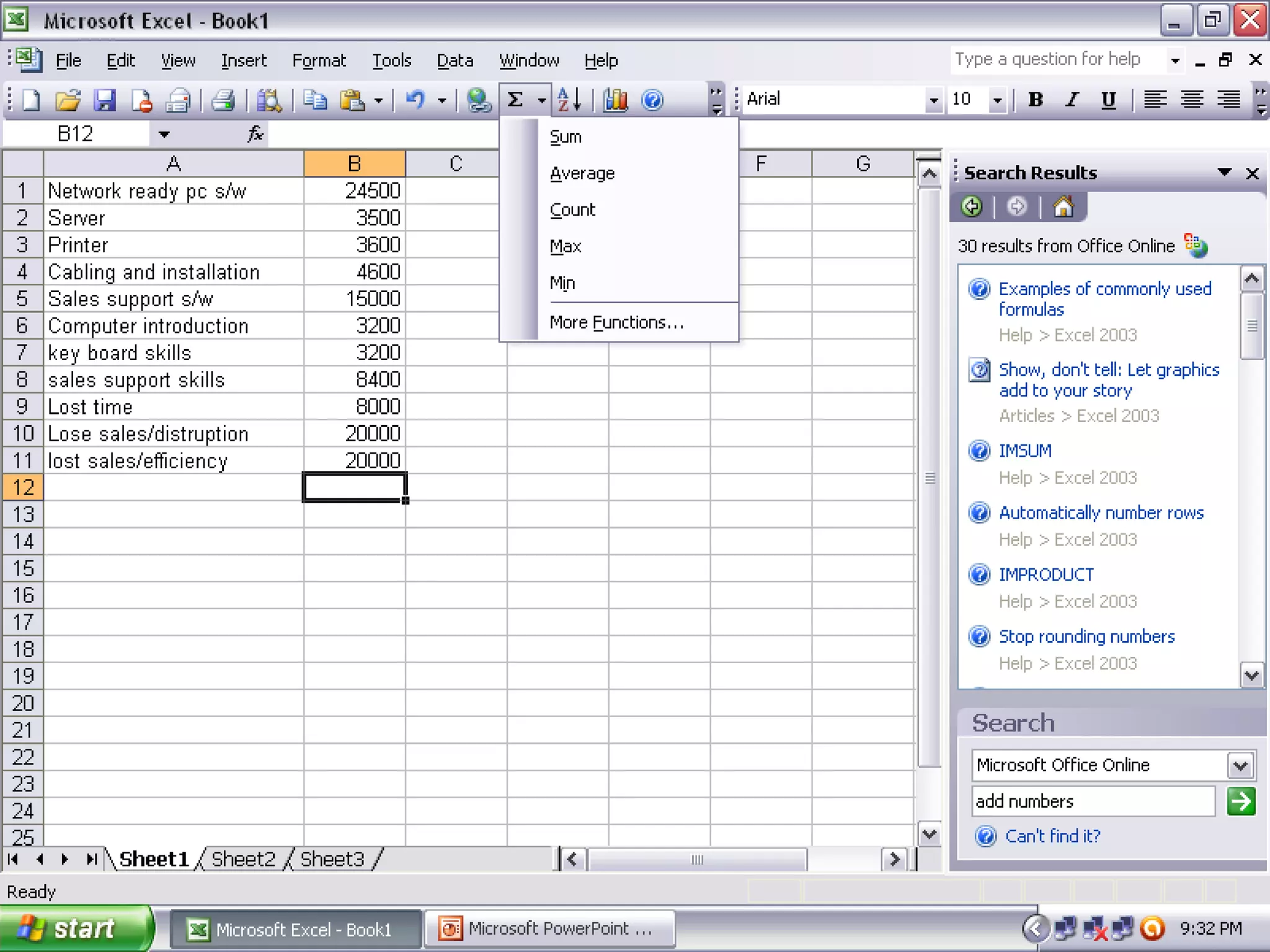
New computer equipment


    Item            Quantity       Cost
Network Ready            10     2450 $ each
PC’s supporting
software
Server                   1      3500 $
Printers                 3      1200 $ each
Cabling &                1      4600 $
Installation
Sales Support            1      15000 $
Software
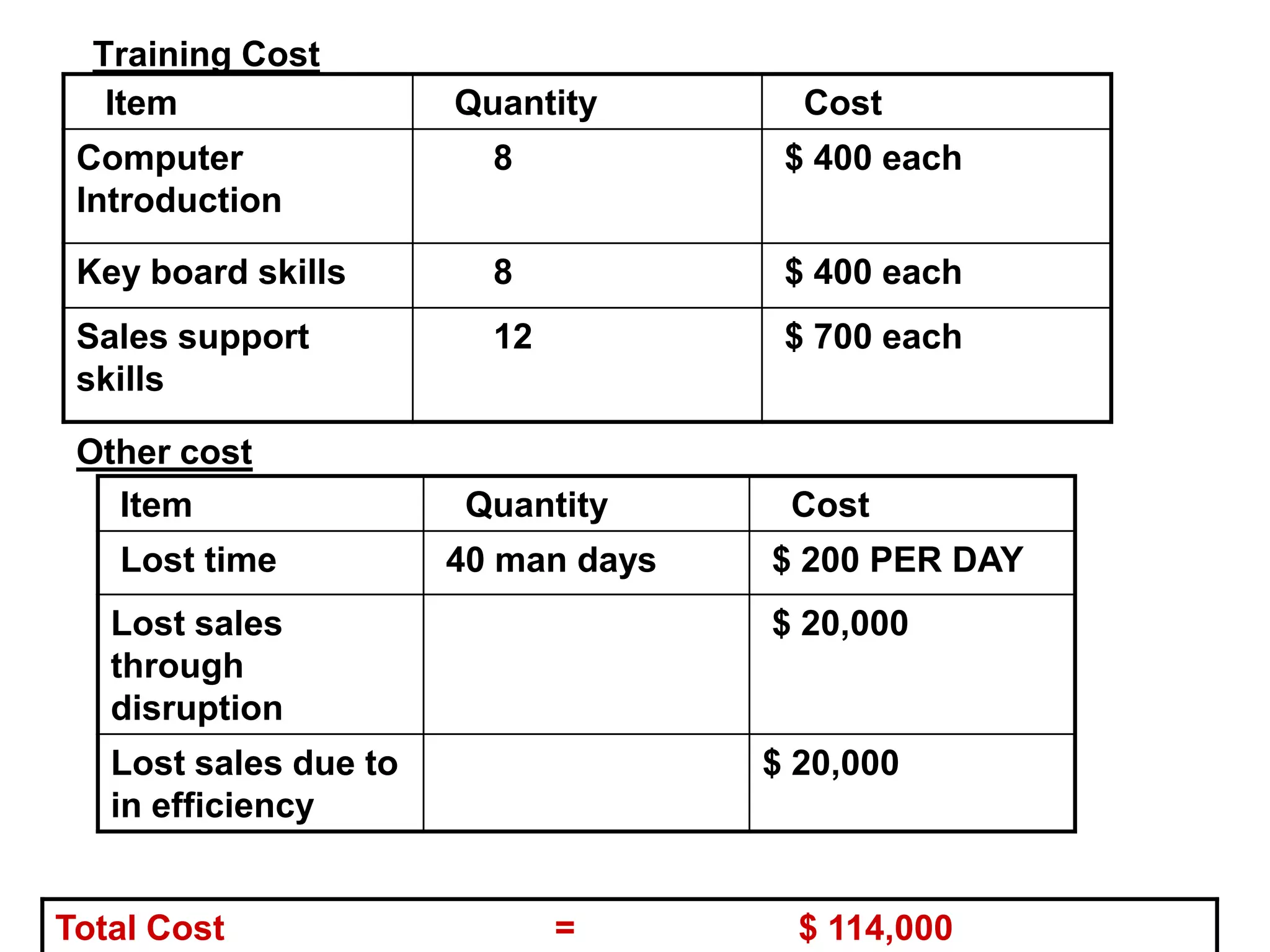
Training Cost
   Item                Quantity        Cost
 Computer                8            $ 400 each
 Introduction

 Key board skills        8            $ 400 each
 Sales support           12           $ 700 each
 skills

 Other cost
   Item                 Quantity      Cost
   Lost time           40 man days   $ 200 PER DAY
   Lost sales                        $ 20,000
   through
   disruption
   Lost sales due to                 $ 20,000
   in efficiency


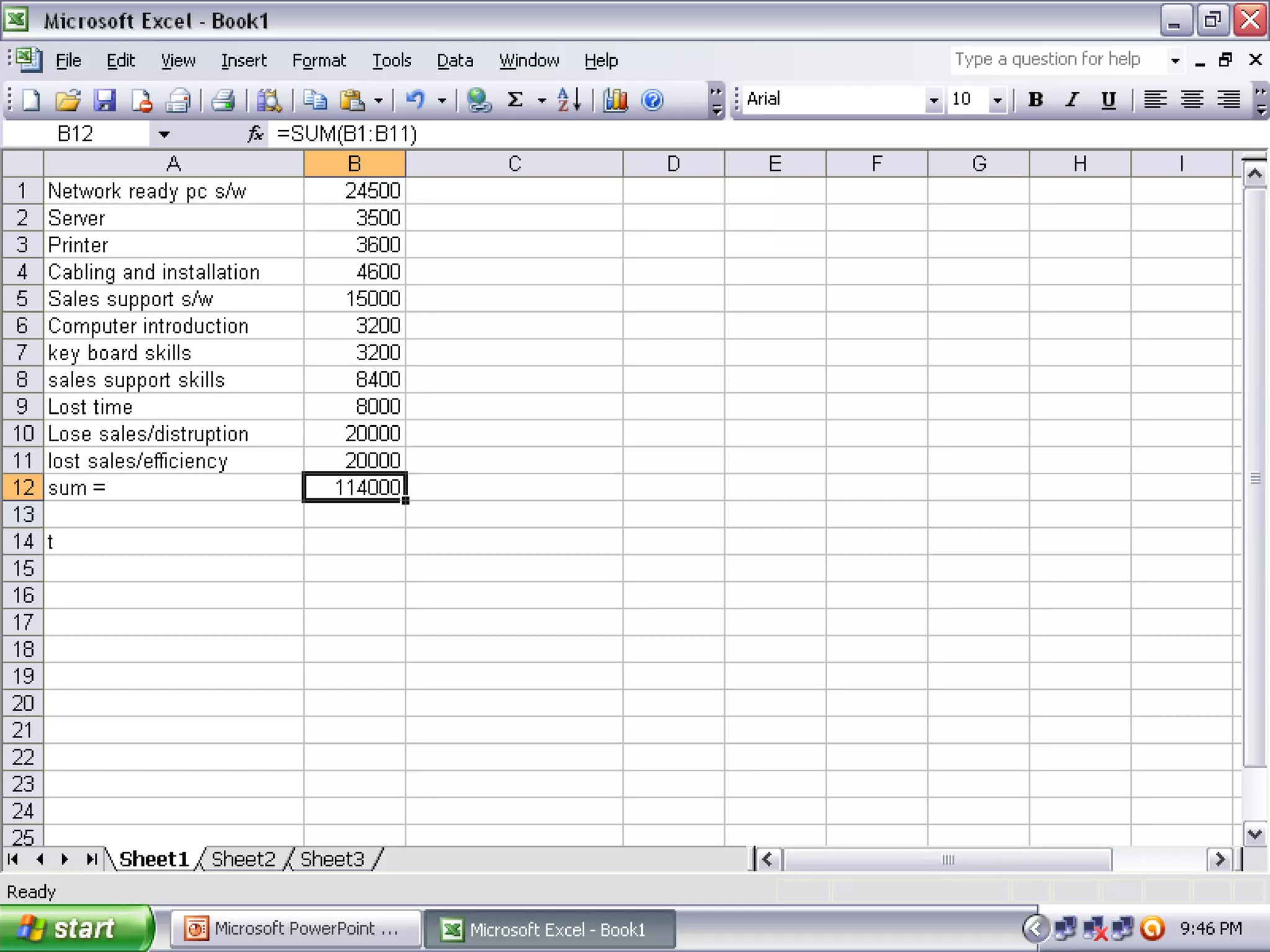
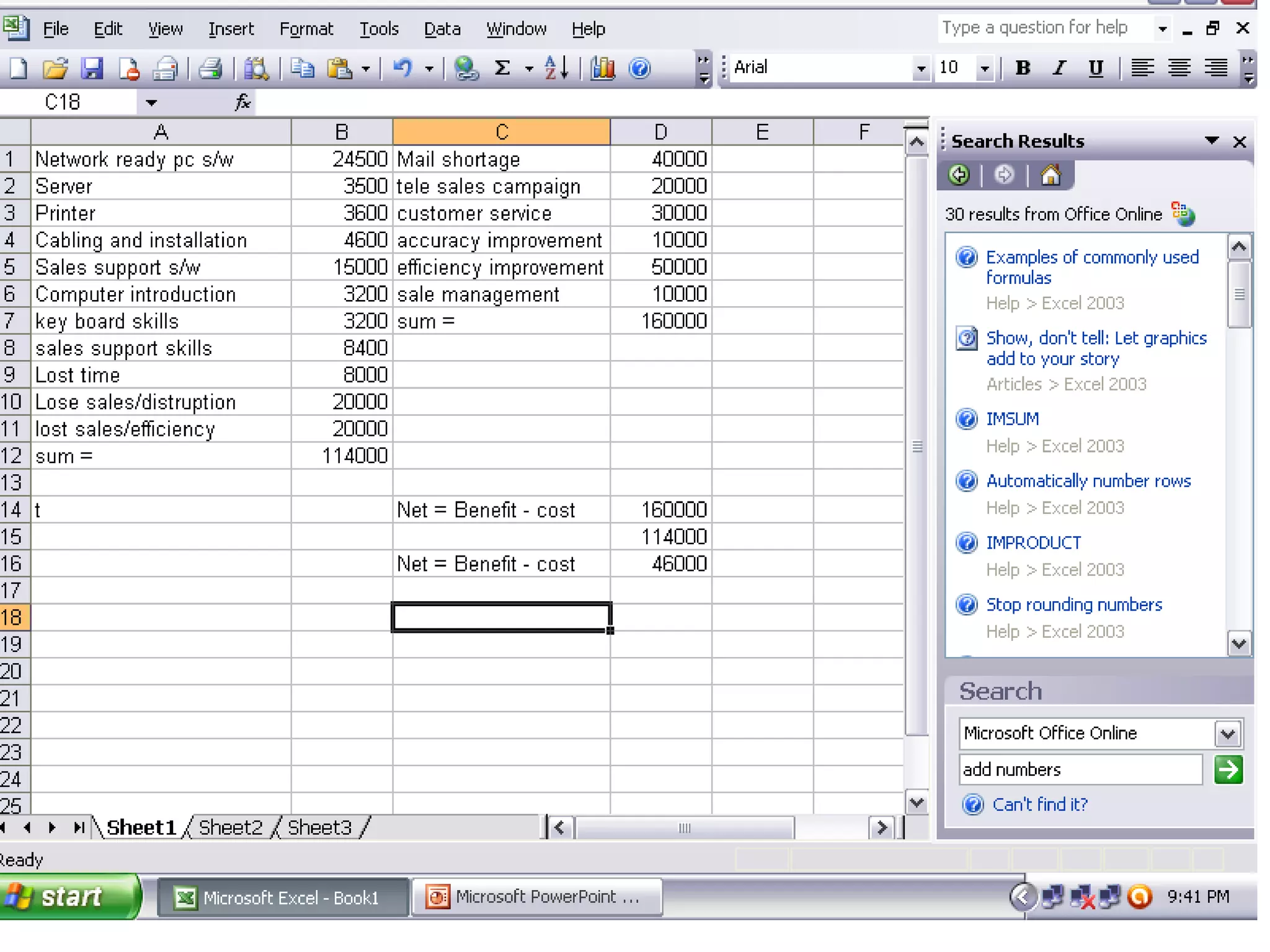
Total Cost                    =        $ 114,000
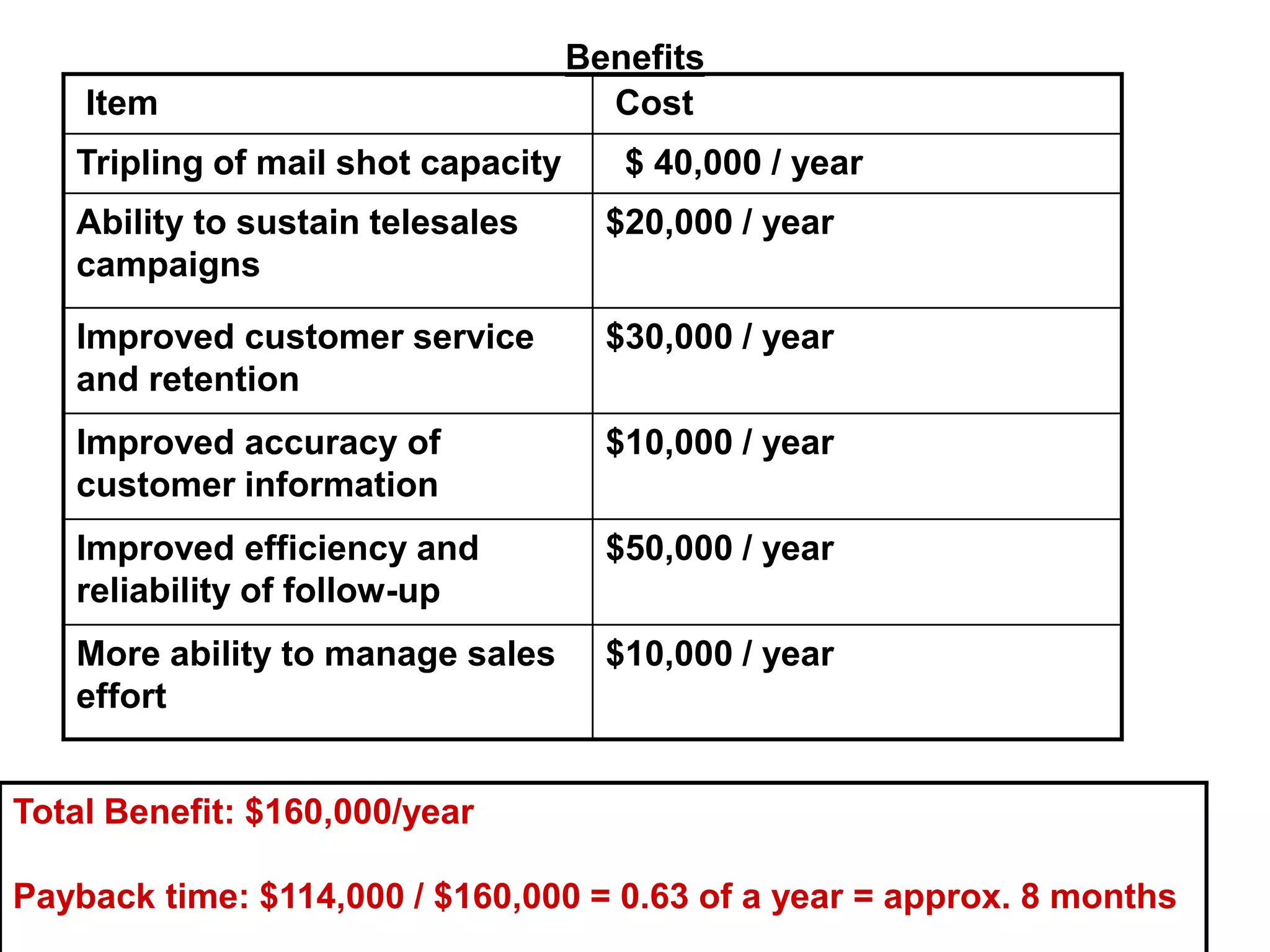
Benefits
    Item                              Cost
   Tripling of mail shot capacity      $ 40,000 / year
   Ability to sustain telesales       $20,000 / year
   campaigns

   Improved customer service          $30,000 / year
   and retention
   Improved accuracy of               $10,000 / year
   customer information
   Improved efficiency and            $50,000 / year
   reliability of follow-up
   More ability to manage sales       $10,000 / year
   effort


Total Benefit: $160,000/year

Payback time: $114,000 / $160,000 = 0.63 of a year = approx. 8 months
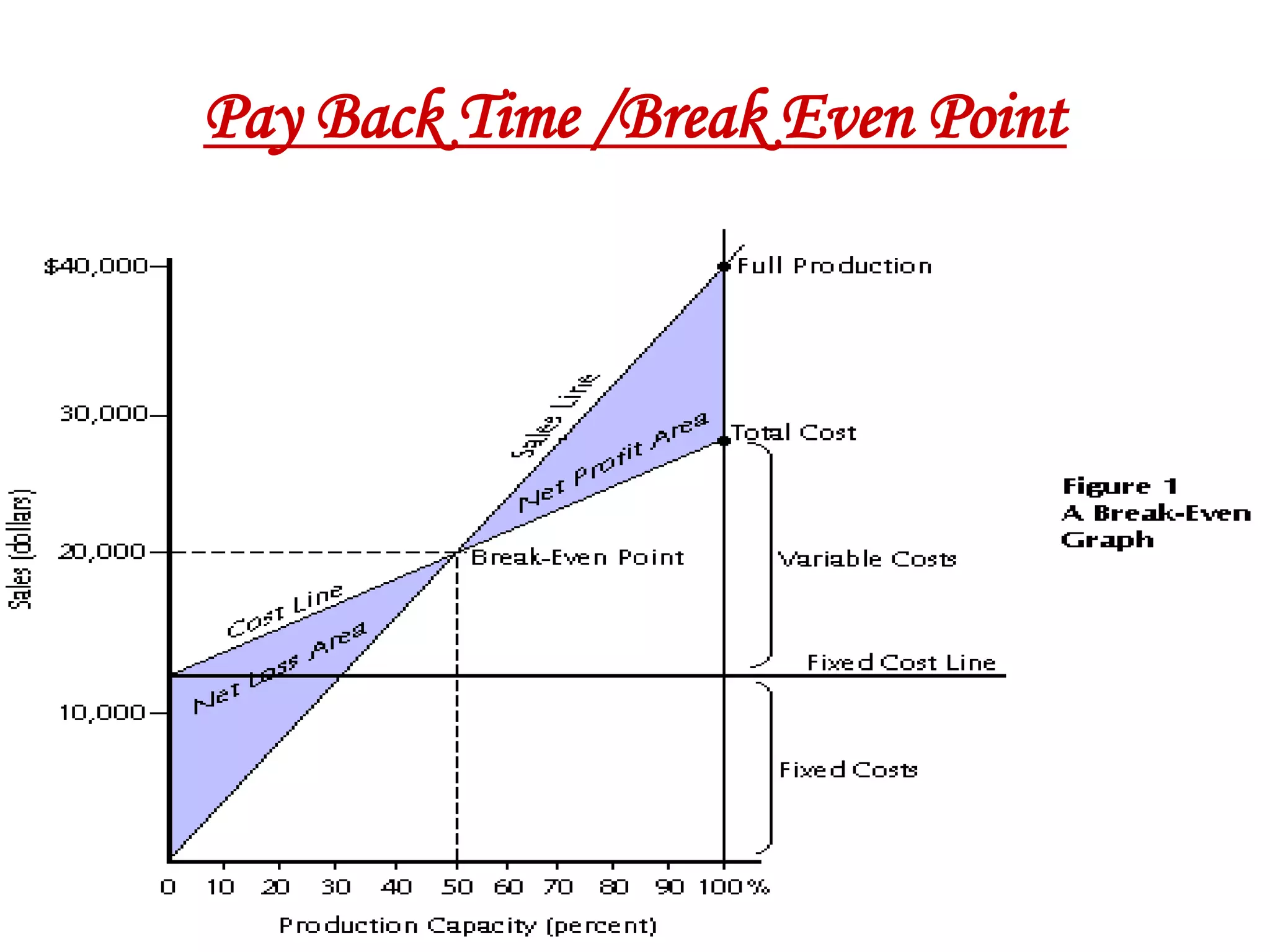
Pay Back Time /Break Even Point
Challenges of CBA
• Accuracy problem

1) Inaccurate cost and benefit estimation
2) Rely heavily on similar projects of past
3) Rely heavily on project members
4) Cant avoid the unconscious bias of team
  members


• Determination of which cost to include in the
  analysis
Tool to Improve the Accuracy of
                 CBA
•   Reference class forecasting
                             Three steps:
•   Identify a reference class of past, similar projects
•   Establish a probability distribution for the selected
    reference class for the parameter that is being
    forecast.
•   Compare the specific project with the reference
    class distribution, in order to establish the most
    likely outcome for the specific project.
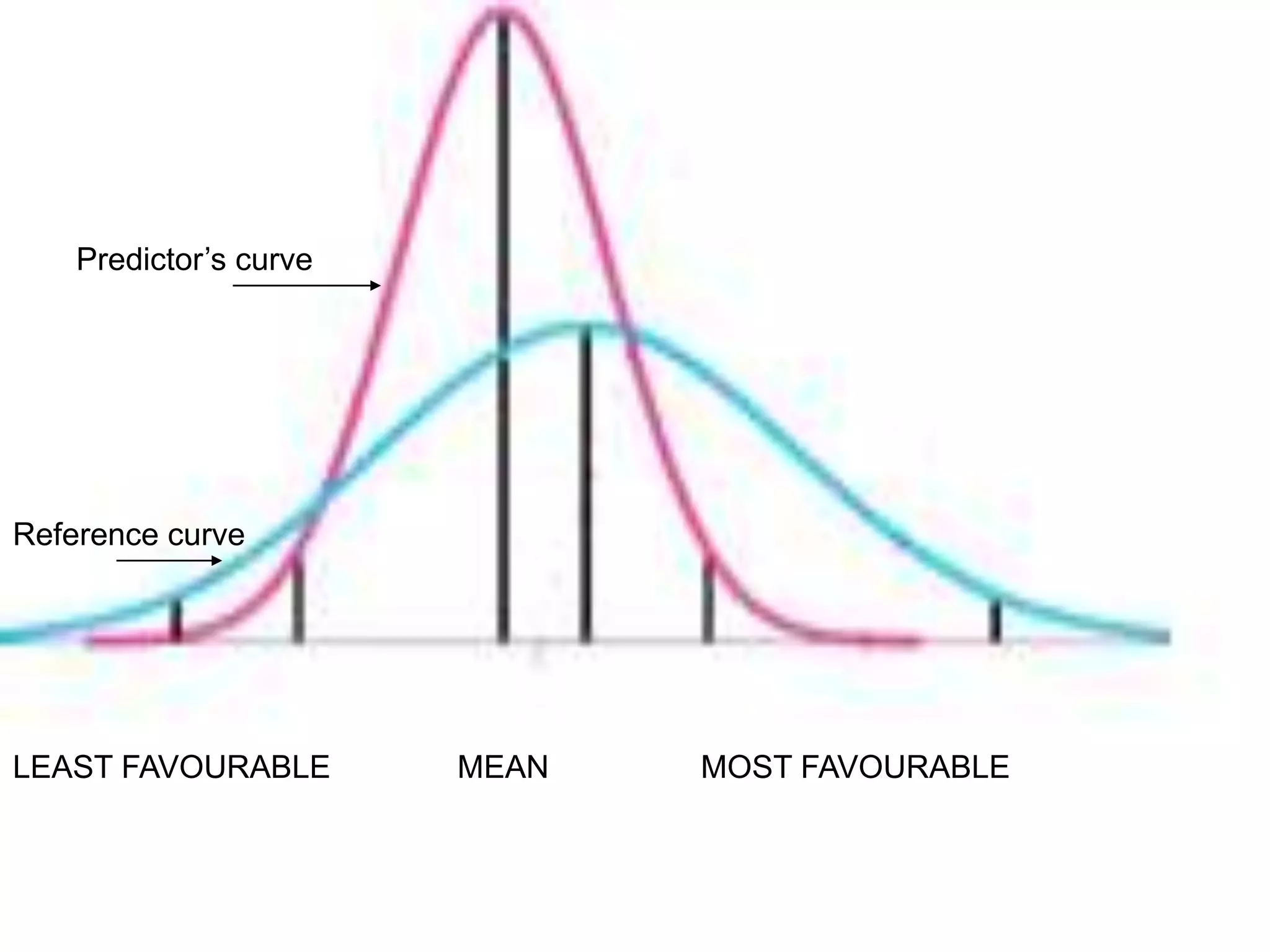
Predictor’s curve


Reference curve


LEAST FAVOURABLE        MEAN   MOST FAVOURABLE
Conclusion
• Performing a Cost-Benefit Analysis is
  critical to the continuation of a
  development product
• Superficial attention to its development
  may result in erroneous conclusions
  which will lead a company down a path
  to disaster
• It is important that both costs and
  benefits be thoroughly defined and
  scrutinized
Q &A
Reference
Web reference

•   http://www.sjsu.edu/faculty/watkins/cba.htm
•   http://www.solutionmatrix.com/cost-benefit-analysis.html
•   http://en.wikipedia.org/wiki/Cost-benefit_analysis
•   http://www.mindtools.com/pages/article/newTED_08.htm
•   http://www.cdc.gov/owcd/eet/CBA/fixed/1.html
•   http://www.cdc.gov/owcd/eet/CBA/fixed/2.html#framingacba
•   http://www.econweb.com/MacroWelcome/sandd/notes.html

Book Reference

•   An introduction to cost benefit analysis by Thayer Watkins & Tornado
    Alley
•   Applied Cost Benefit Analysis by Robert . J . Brent
THANK YOU !!!
lekshmi.uce05@gmail.com

Cost benefit analysis

  • 1.
    Cost Benefit Analysis Prepared By Lekshmi Krishna M.R
  • 2.
    Contents • 1. Introduction •2. Cost benefit analysis • 2.1 History of Cost Benefit Analysis • 2.2 Principles of CBA • 2.3 Key CBA Indicators • 2.4 Challenges of CBA • 2.5 Tool to improve CBA • 3. Case study • 4. Conclusion • 5. Reference
  • 3.
    Introduction • CBA isa process for evaluating the merits of a particular project in a systematic way in terms of cost and benefit’s of the project. • Cost is the value of money that has been used up to produce something, and hence is not available for use anymore. • Benefit are the monetary values of desirable consequence of economic polices and decisions • The conceptual and theoretical framework of CBA is derived from welfare economics
  • 4.
    Cost Benefit Analysis •Cost Benefit Analysis (CBA) is an economic evaluation technique that measures all the positive (beneficial) and negative (costly) consequences of an intervention or program in monetary terms • The valuation of all program outcomes in monetary units allows decision makers to directly compare the outcomes of different types of interventions
  • 5.
    History of CBA • Dates back to the work of Alfred Marshal 1)One of the founder of neoclassical economics 2) Brings the idea of demand and supply; Marginal utility and cost of production • Practical application was initiated in U.S by Corps of Engineers after Federal Navigation act 1936 – Flood control • Later applied in several fields – High way & Motor way
  • 6.
    Principles of CostBenefit Analysis • There must be a common unit of measurement • CBA valuations should represents Producers or Consumers • Benefits are usually measured by Market Choices • Gross benefits of an increase in consumption is an area under the demand curve
  • 7.
    Cont… • Some measurementof benefits require the valuation of human life • The analysis of the project involves with versus without comparison • CBA involves a particular study area • Double counting of benefits or cost must be avoided • Decision criteria of projects
  • 8.
    Key CBA Indicators • NPV (net present value) • PVB (present value of benefits) • PVC (present value of costs) • BCR (benefit cost ratio = PVB / PVC) • Net benefit = (PVB - PVC) • NPV/k (where k is the level of funds available)
  • 9.
    Case Study New computerequipment Item Quantity Cost Network Ready 10 2450 $ each PC’s supporting software Server 1 3500 $ Printers 3 1200 $ each Cabling & 1 4600 $ Installation Sales Support 1 15000 $ Software
  • 10.
    Training Cost Item Quantity Cost Computer 8 $ 400 each Introduction Key board skills 8 $ 400 each Sales support 12 $ 700 each skills Other cost Item Quantity Cost Lost time 40 man days $ 200 PER DAY Lost sales $ 20,000 through disruption Lost sales due to $ 20,000 in efficiency Total Cost = $ 114,000
  • 11.
    Benefits Item Cost Tripling of mail shot capacity $ 40,000 / year Ability to sustain telesales $20,000 / year campaigns Improved customer service $30,000 / year and retention Improved accuracy of $10,000 / year customer information Improved efficiency and $50,000 / year reliability of follow-up More ability to manage sales $10,000 / year effort Total Benefit: $160,000/year Payback time: $114,000 / $160,000 = 0.63 of a year = approx. 8 months
  • 12.
    Pay Back Time/Break Even Point
  • 17.
    Challenges of CBA •Accuracy problem 1) Inaccurate cost and benefit estimation 2) Rely heavily on similar projects of past 3) Rely heavily on project members 4) Cant avoid the unconscious bias of team members • Determination of which cost to include in the analysis
  • 18.
    Tool to Improvethe Accuracy of CBA • Reference class forecasting Three steps: • Identify a reference class of past, similar projects • Establish a probability distribution for the selected reference class for the parameter that is being forecast. • Compare the specific project with the reference class distribution, in order to establish the most likely outcome for the specific project.
  • 19.
    Predictor’s curve Reference curve LEASTFAVOURABLE MEAN MOST FAVOURABLE
  • 20.
    Conclusion • Performing aCost-Benefit Analysis is critical to the continuation of a development product • Superficial attention to its development may result in erroneous conclusions which will lead a company down a path to disaster • It is important that both costs and benefits be thoroughly defined and scrutinized
  • 21.
  • 22.
    Reference Web reference • http://www.sjsu.edu/faculty/watkins/cba.htm • http://www.solutionmatrix.com/cost-benefit-analysis.html • http://en.wikipedia.org/wiki/Cost-benefit_analysis • http://www.mindtools.com/pages/article/newTED_08.htm • http://www.cdc.gov/owcd/eet/CBA/fixed/1.html • http://www.cdc.gov/owcd/eet/CBA/fixed/2.html#framingacba • http://www.econweb.com/MacroWelcome/sandd/notes.html Book Reference • An introduction to cost benefit analysis by Thayer Watkins & Tornado Alley • Applied Cost Benefit Analysis by Robert . J . Brent
  • 23.