BUSINESS PROCESS
CHANGE
PROCESS CHANGE
 It means interconnections of the members in the
organization.
 It includes all the steps how to do, what to do and
when it should be done.
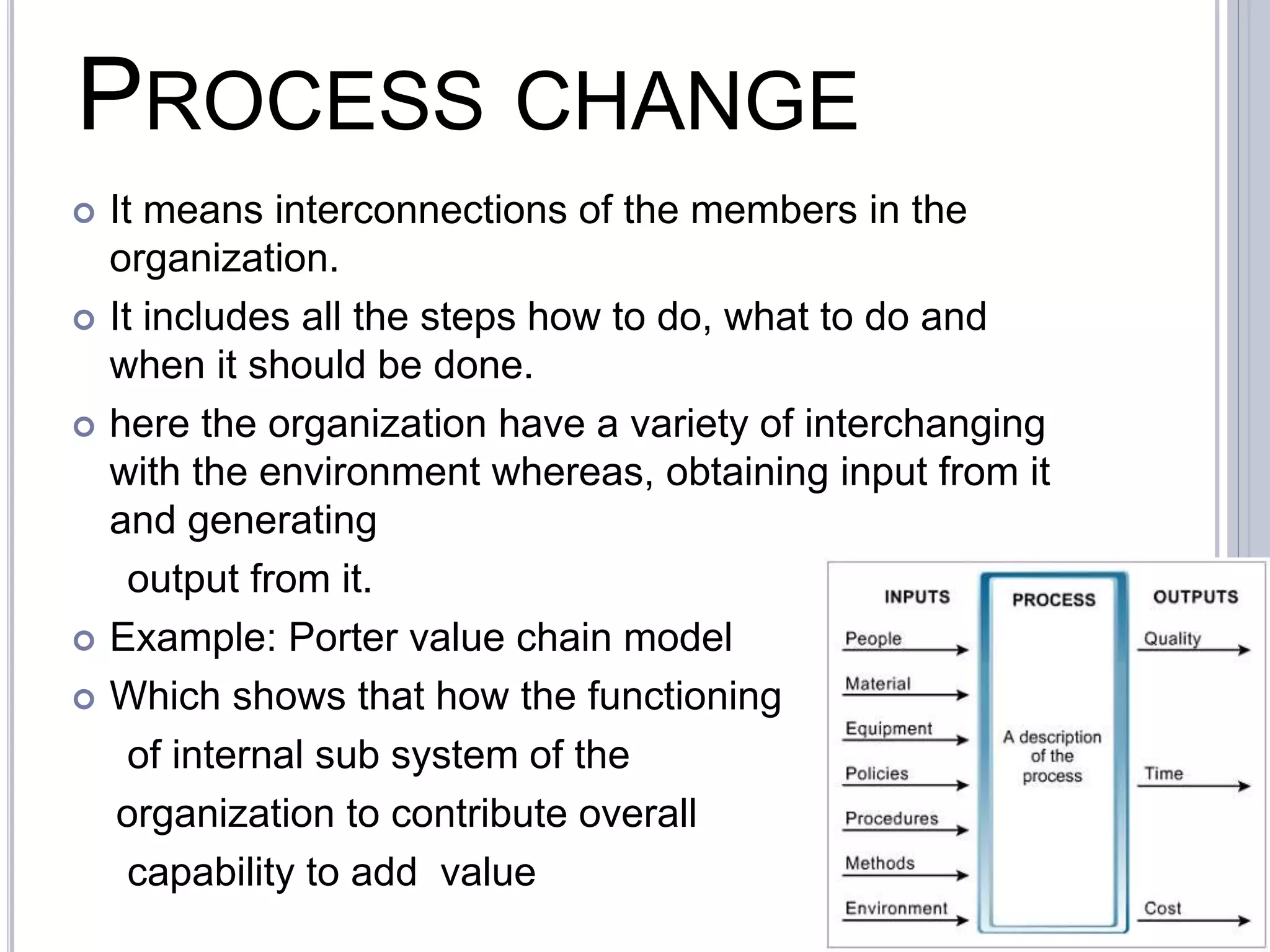
 here the organization have a variety of interchanging
with the environment whereas, obtaining input from it
and generating
output from it.
 Example: Porter value chain model
 Which shows that how the functioning
of internal sub system of the
organization to contribute overall
capability to add value
BUSINESS CHANGE LIFECYCLE…
 The business lifecycle provides a framework for
assessing the key stages involved in understanding a
business change project.
 It provides a framework from which different process
change methodologies can operate
 It consists of five stages and it is cycle that means if
you reached the end of it you start back at the very
beginning and repeat this .
 It ensures that the business is constantly appraising
itself against the external environment to remain
relevant and in touch with the market
1.ALIGNMENT
 External environment
Business needs to align with the external environment so as to grab
the first mover advantage . For this they need analyze :-
 Customer habits
 PESTLE
 Porter’s five forces
 Bottom up change
 It states that any organization who wants to bring a change
should look out to change the internal environment as well .
 But the change in internal organization should be brought
consciously with careful planning .
 Employees view point must be considered while bringing any
change.
2. DEFINITION
 Forming the business case
 once there is need for change , a project team is
established to explore and evaluate the desired
outcome of the project .
 The evaluation will include the gap analysis tool.
 Gap analysis
 Under this the project team assess the organisation’s
current position & the processes.
 This help the team to analyse the type of change to be
implemented successfully in the organisation.
 Gap analysis gives particular consideration to the
organisation’s core resources .
 Need a holistic view
 understand all the different aspects of the business change
 As most of the biz. Change will effect more than one area of
the organisation .
 Contents of the business case
 Includes the proposal of the change
 Supporting recommendation
 Associated cost of change
 Benefit of the change
 Sets the improved objective which the desired change will
bring
 Appoints benefit owner who assess the benefits of change
and he is the one who is closely connected with the project
3.DESIGN.
Popit model:
 This model focuses on 4 interrelated areas when
undertaking a business change.
 Some analysts argues that project team focuses on too
much change on processes and information and
technological aspects of biz. Change
 And ignore the impact the change has over people and
the organization
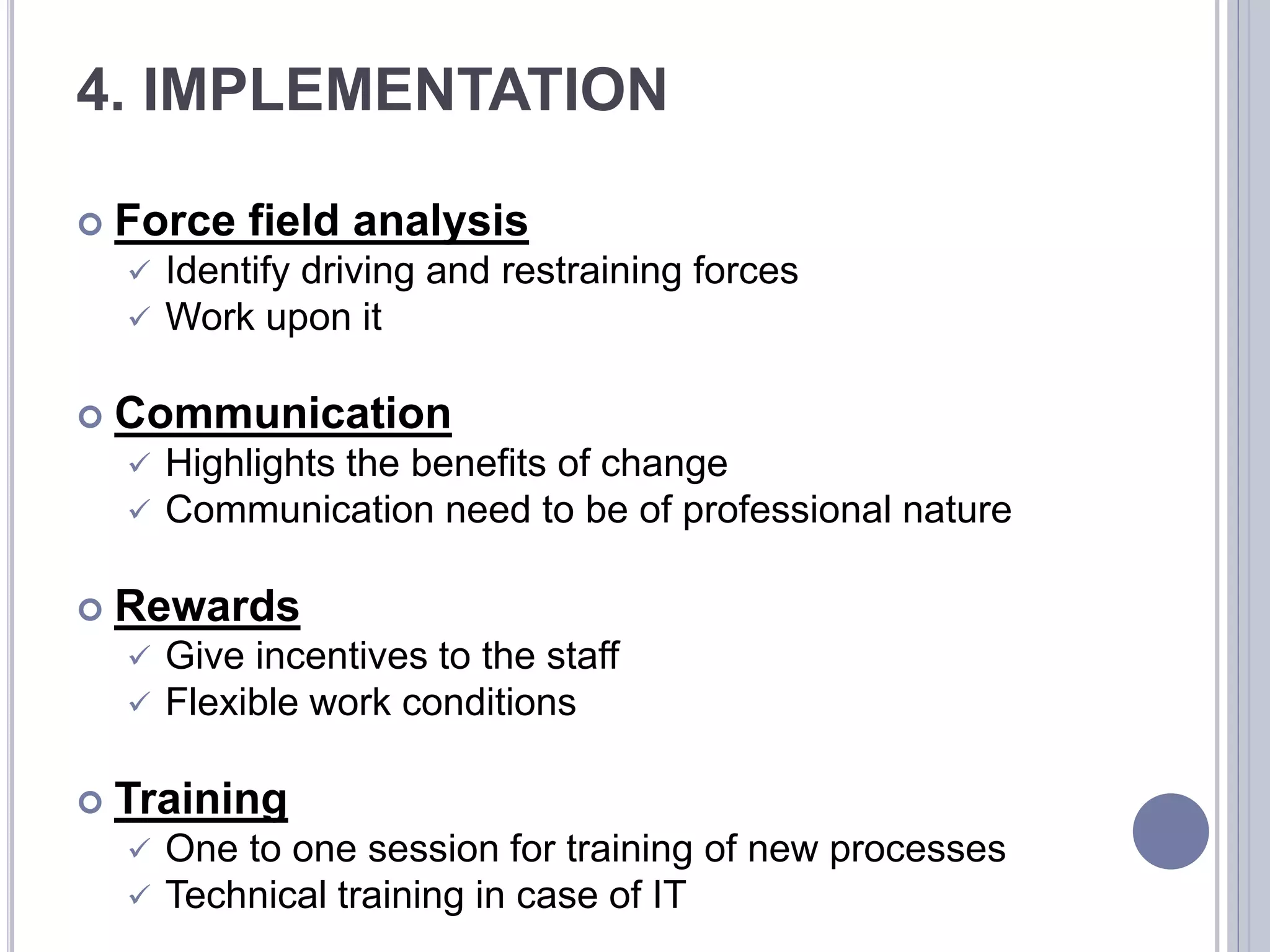
4. IMPLEMENTATION
 Force field analysis
 Identify driving and restraining forces
 Work upon it
 Communication
 Highlights the benefits of change
 Communication need to be of professional nature
 Rewards
 Give incentives to the staff
 Flexible work conditions
 Training
 One to one session for training of new processes
 Technical training in case of IT
 Systems
 Testing of the system
 change Structure
5. REALISATION
 Benefit owner
 assess the benefits of the change by evaluating the
performance whether the desired performance is
achieved or not
 Adoption of Key performance indicators and balanced
scoreboard
 Financial and non- financial benefits
 Assess whether there is any profit after the business
process change
 Using ROI , payback period , NPV
 Holistic approach
 Need to review the benefits whether positive or
negative
 Each stakeholder is benefitted
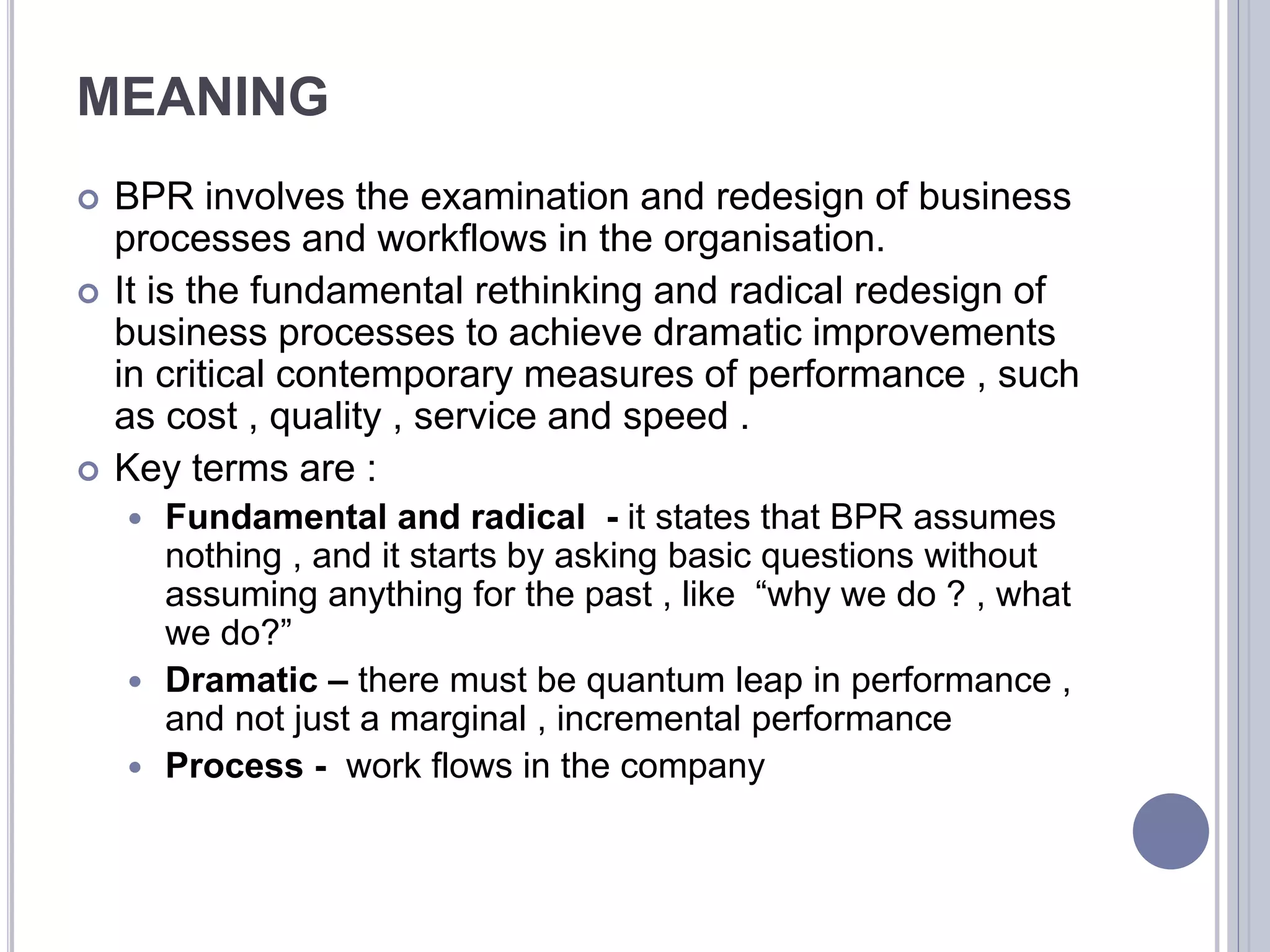
MEANING
 BPR involves the examination and redesign of business
processes and workflows in the organisation.
 It is the fundamental rethinking and radical redesign of
business processes to achieve dramatic improvements
in critical contemporary measures of performance , such
as cost , quality , service and speed .
 Key terms are :
 Fundamental and radical - it states that BPR assumes
nothing , and it starts by asking basic questions without
assuming anything for the past , like “why we do ? , what
we do?”
 Dramatic – there must be quantum leap in performance ,
and not just a marginal , incremental performance
 Process - work flows in the company
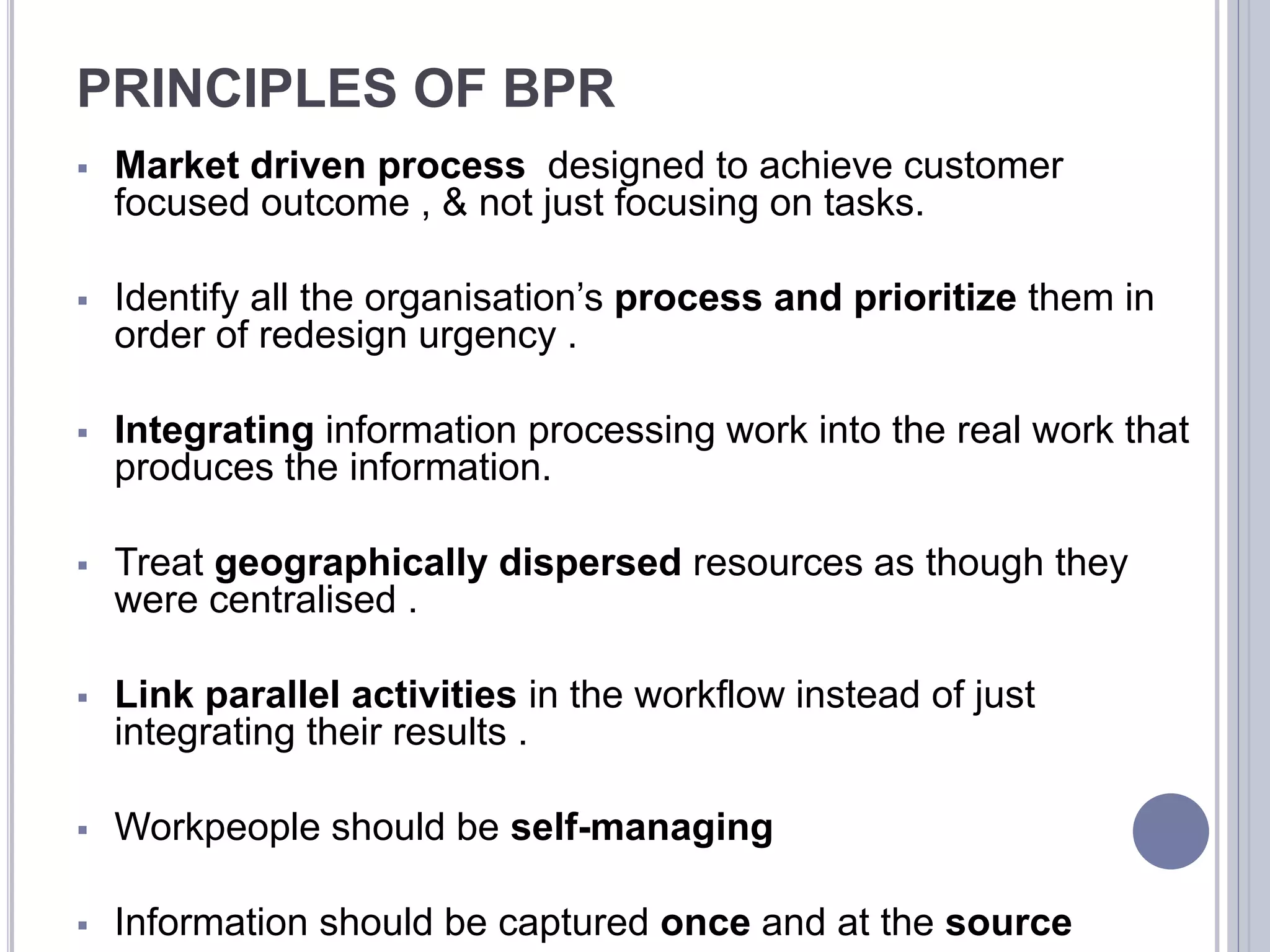
PRINCIPLES OF BPR
 Market driven process designed to achieve customer
focused outcome , & not just focusing on tasks.
 Identify all the organisation’s process and prioritize them in
order of redesign urgency .
 Integrating information processing work into the real work that
produces the information.
 Treat geographically dispersed resources as though they
were centralised .
 Link parallel activities in the workflow instead of just
integrating their results .
 Workpeople should be self-managing
 Information should be captured once and at the source
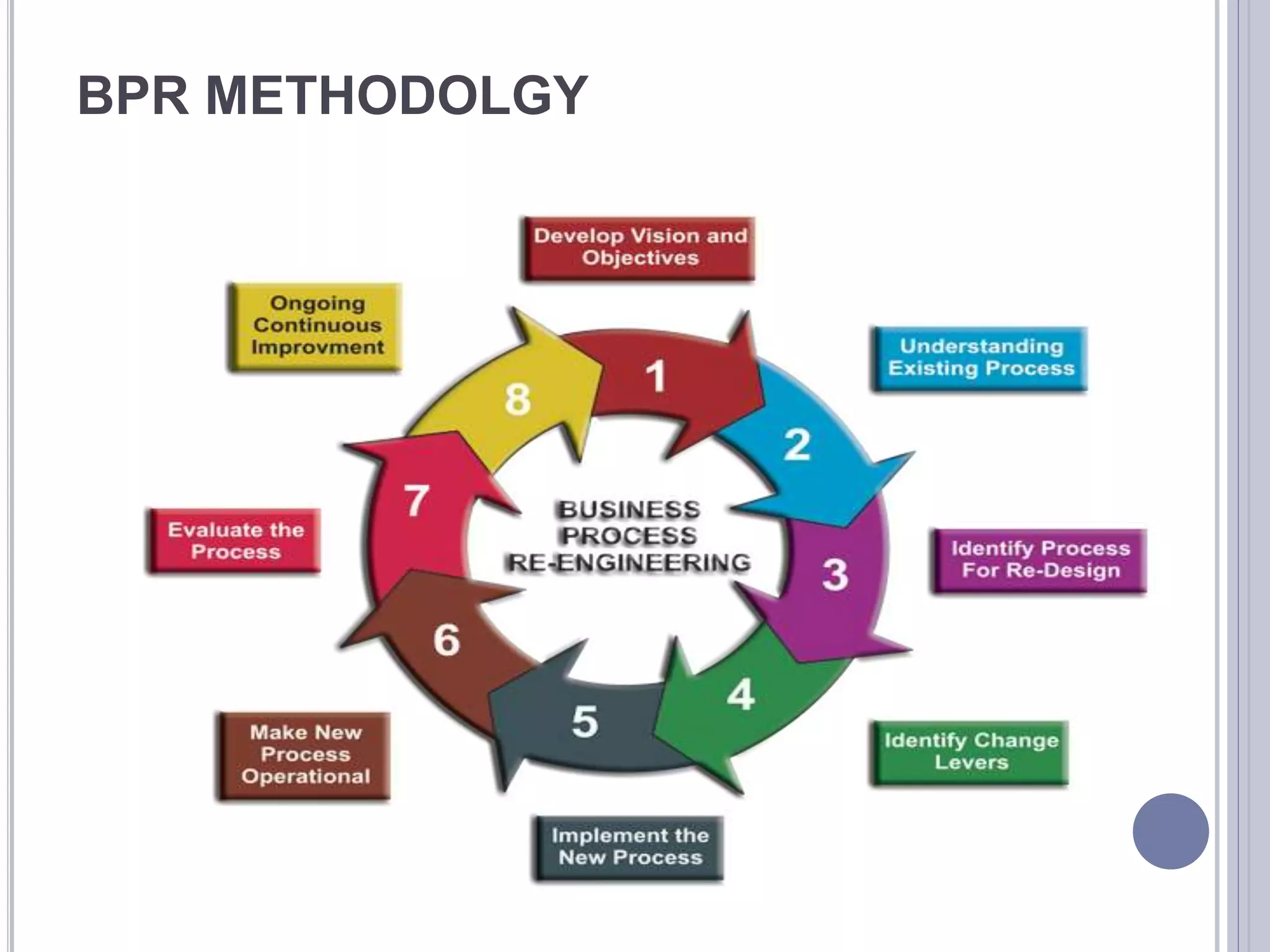
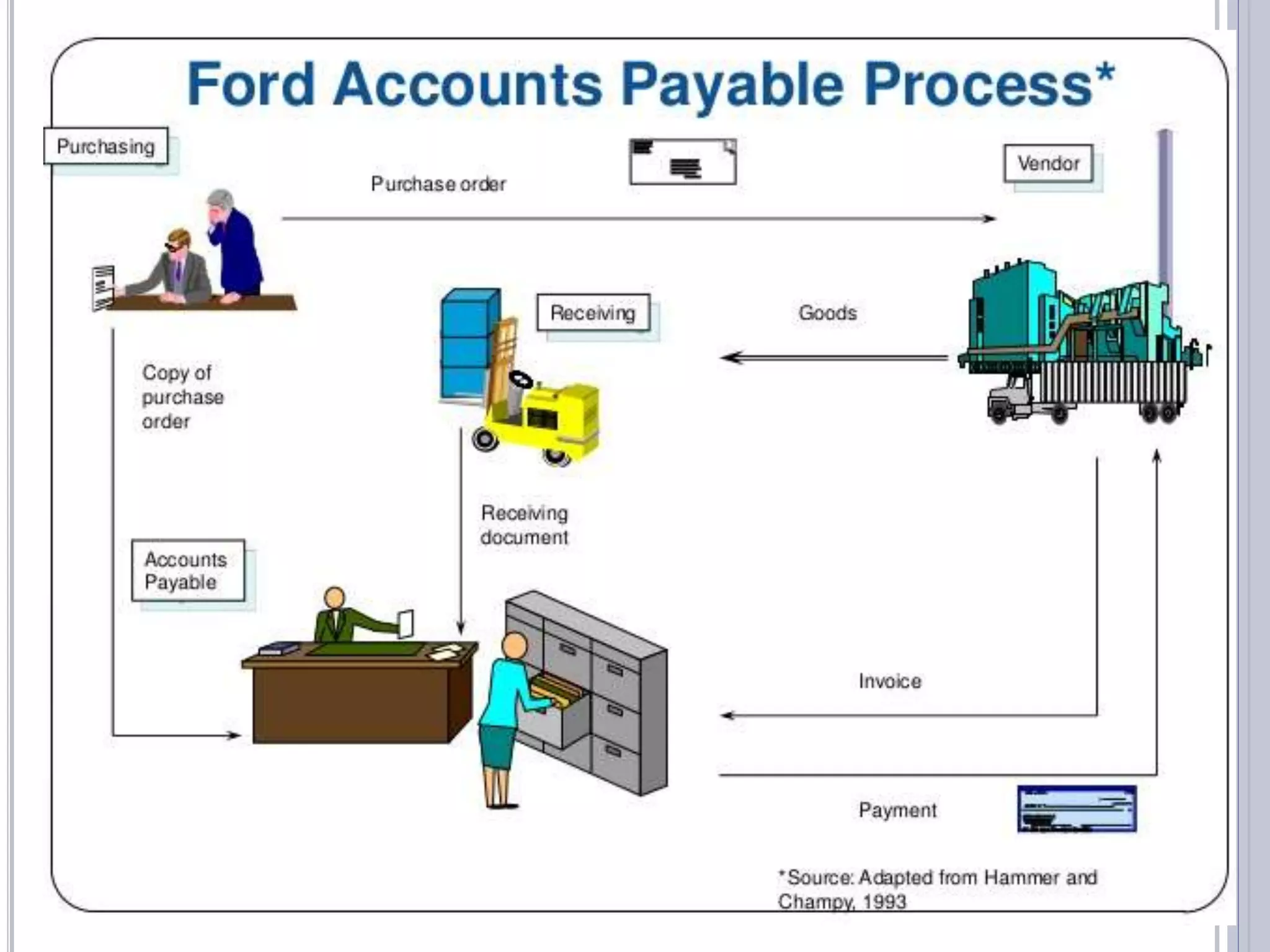
BPR METHODOLGY
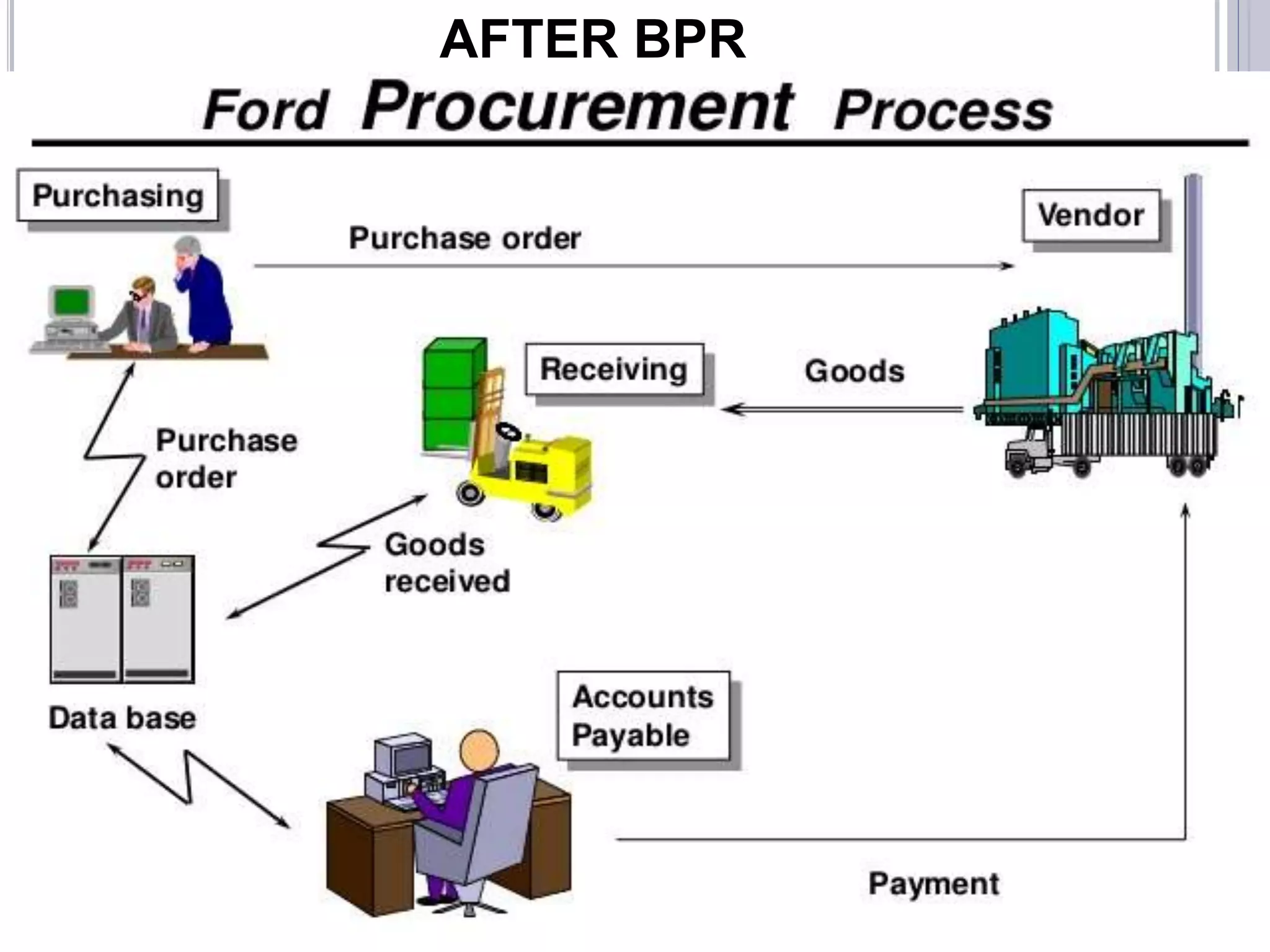
AFTER BPR
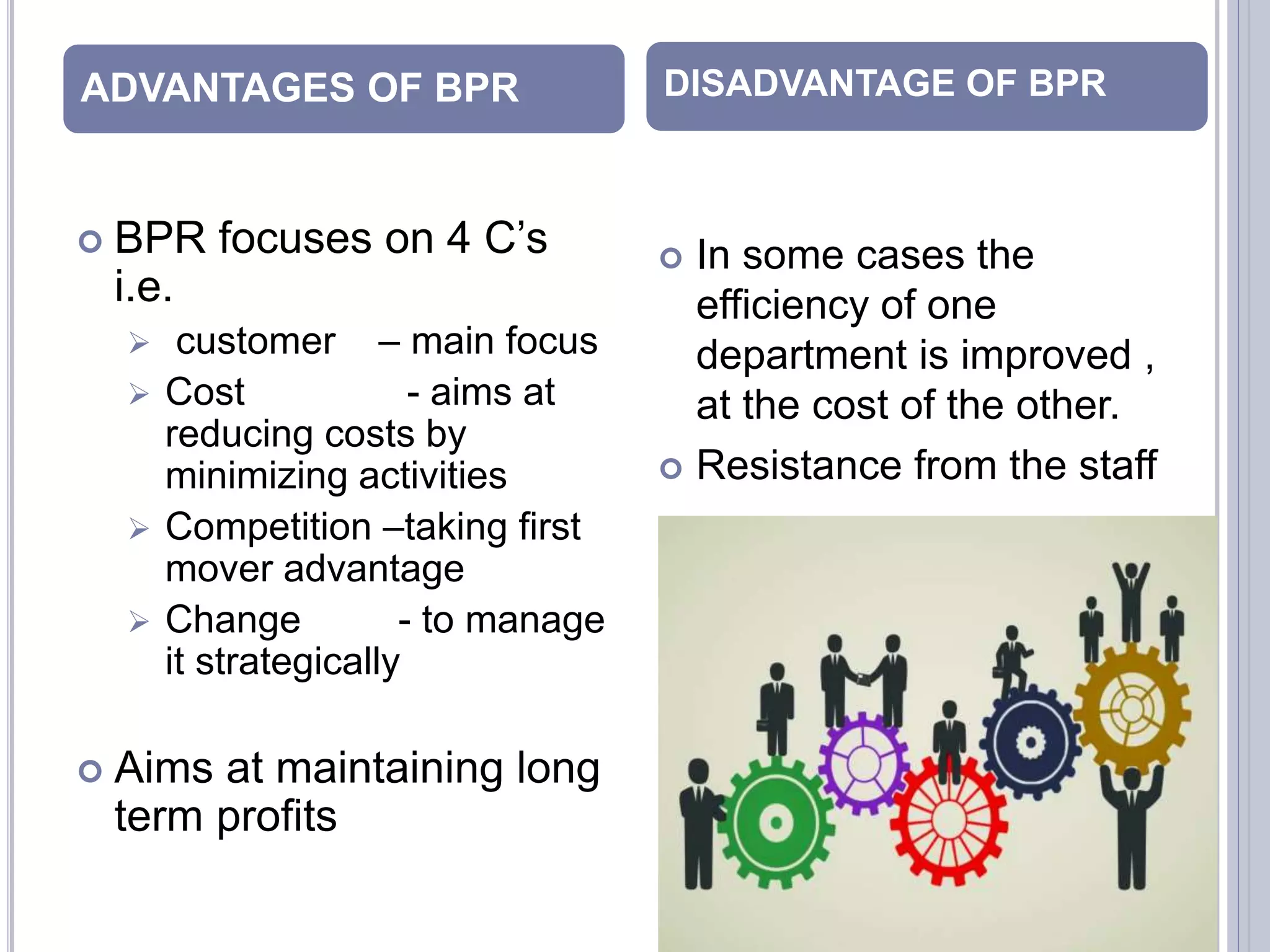
 BPR focuses on 4 C’s
i.e.
 customer – main focus
 Cost - aims at
reducing costs by
minimizing activities
 Competition –taking first
mover advantage
 Change - to manage
it strategically
 Aims at maintaining long
term profits
 In some cases the
efficiency of one
department is improved ,
at the cost of the other.
 Resistance from the staff
ADVANTAGES OF BPR DISADVANTAGE OF BPR
Business change lifecycle and Business Process Reengineering

Business change lifecycle and Business Process Reengineering

  • 1.
  • 2.
    PROCESS CHANGE  Itmeans interconnections of the members in the organization.  It includes all the steps how to do, what to do and when it should be done.  here the organization have a variety of interchanging with the environment whereas, obtaining input from it and generating output from it.  Example: Porter value chain model  Which shows that how the functioning of internal sub system of the organization to contribute overall capability to add value
  • 3.
    BUSINESS CHANGE LIFECYCLE… The business lifecycle provides a framework for assessing the key stages involved in understanding a business change project.  It provides a framework from which different process change methodologies can operate  It consists of five stages and it is cycle that means if you reached the end of it you start back at the very beginning and repeat this .  It ensures that the business is constantly appraising itself against the external environment to remain relevant and in touch with the market
  • 5.
    1.ALIGNMENT  External environment Businessneeds to align with the external environment so as to grab the first mover advantage . For this they need analyze :-  Customer habits  PESTLE  Porter’s five forces  Bottom up change  It states that any organization who wants to bring a change should look out to change the internal environment as well .  But the change in internal organization should be brought consciously with careful planning .  Employees view point must be considered while bringing any change.
  • 6.
    2. DEFINITION  Formingthe business case  once there is need for change , a project team is established to explore and evaluate the desired outcome of the project .  The evaluation will include the gap analysis tool.  Gap analysis  Under this the project team assess the organisation’s current position & the processes.  This help the team to analyse the type of change to be implemented successfully in the organisation.  Gap analysis gives particular consideration to the organisation’s core resources .
  • 7.
     Need aholistic view  understand all the different aspects of the business change  As most of the biz. Change will effect more than one area of the organisation .  Contents of the business case  Includes the proposal of the change  Supporting recommendation  Associated cost of change  Benefit of the change  Sets the improved objective which the desired change will bring  Appoints benefit owner who assess the benefits of change and he is the one who is closely connected with the project
  • 8.
    3.DESIGN. Popit model:  Thismodel focuses on 4 interrelated areas when undertaking a business change.  Some analysts argues that project team focuses on too much change on processes and information and technological aspects of biz. Change  And ignore the impact the change has over people and the organization
  • 10.
    4. IMPLEMENTATION  Forcefield analysis  Identify driving and restraining forces  Work upon it  Communication  Highlights the benefits of change  Communication need to be of professional nature  Rewards  Give incentives to the staff  Flexible work conditions  Training  One to one session for training of new processes  Technical training in case of IT
  • 11.
     Systems  Testingof the system  change Structure 5. REALISATION  Benefit owner  assess the benefits of the change by evaluating the performance whether the desired performance is achieved or not  Adoption of Key performance indicators and balanced scoreboard
  • 12.
     Financial andnon- financial benefits  Assess whether there is any profit after the business process change  Using ROI , payback period , NPV  Holistic approach  Need to review the benefits whether positive or negative  Each stakeholder is benefitted
  • 14.
    MEANING  BPR involvesthe examination and redesign of business processes and workflows in the organisation.  It is the fundamental rethinking and radical redesign of business processes to achieve dramatic improvements in critical contemporary measures of performance , such as cost , quality , service and speed .  Key terms are :  Fundamental and radical - it states that BPR assumes nothing , and it starts by asking basic questions without assuming anything for the past , like “why we do ? , what we do?”  Dramatic – there must be quantum leap in performance , and not just a marginal , incremental performance  Process - work flows in the company
  • 15.
    PRINCIPLES OF BPR Market driven process designed to achieve customer focused outcome , & not just focusing on tasks.  Identify all the organisation’s process and prioritize them in order of redesign urgency .  Integrating information processing work into the real work that produces the information.  Treat geographically dispersed resources as though they were centralised .  Link parallel activities in the workflow instead of just integrating their results .  Workpeople should be self-managing  Information should be captured once and at the source
  • 16.
  • 18.
  • 19.
     BPR focuseson 4 C’s i.e.  customer – main focus  Cost - aims at reducing costs by minimizing activities  Competition –taking first mover advantage  Change - to manage it strategically  Aims at maintaining long term profits  In some cases the efficiency of one department is improved , at the cost of the other.  Resistance from the staff ADVANTAGES OF BPR DISADVANTAGE OF BPR