Boundaries and Ethics in Residential SettingsA presentation by Sue Kucklick. PCCWith the assistance of clients who provided their valuable input
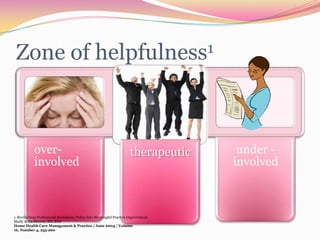
Zone of helpfulness11. Revitalizing Professional Boundaries Policy Into Meaningful Practice ImprovementShelly Bolin Morton, RN, BSNHome Health Care Management & Practice / June 2004 / Volume 16, Number 4, 255-260
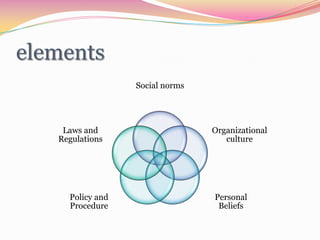
elements
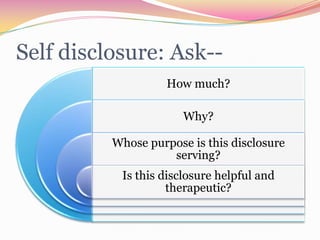
Self disclosure: Ask--
what others sayI’ve worked for years in home health care and neverthought about why we should not share personal informationwith patients. Now I realize the safety ramificationsand the fact that I’m meeting my own needs bytelling them my story and not keeping it on a therapeuticlevel.Now I have some suggestions for how to honor thepatient by suggesting they donate the heartwarmingafghan they’ve been knitting to the shelter in needrather than to me!I’ve become too comfortable with my patients attimes, and it is sure helpful to be reminded that we areprofessionals in their homes.11. Revitalizing Professional Boundaries Policy Into Meaningful Practice ImprovementShelly Bolin Morton, RN, BSNHome Health Care Management & Practice / June 2004 / Volume 16, Number 4, 255-260
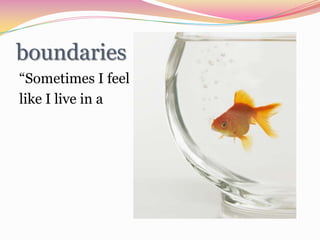
boundaries “Sometimes I feel like I live in a
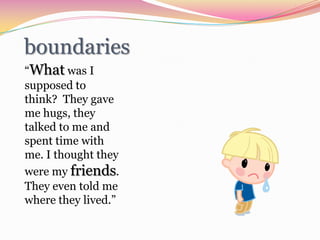
boundaries“What was I supposed to think?  They gave me hugs, they talked to me and spent time with me. I thought they were my friends. They even told me where they lived.”
boundaries and confidentiality“There are no secrets here in this building.” “I don’t expect to tell a staff member something in confidence and then be confronted with it by another staff member the next day.”										“I don’t think staff knows how much we hear when they’re talking loudabout us.”
guidanceSometimes we all need a little bit of light!
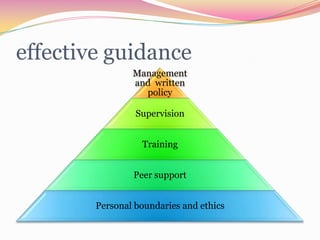
effective guidance
“Case managers and other staff should feel free to be confused and toseek counsel from their supervisors and peers. The multidisciplinaryteam approach may mitigate boundary violations and guide successfulinteractions by offering support, insight, practical assistance, andtraining.”22. Community Mental Health Journal, Vol. 34, No. 3, June 1998Case Managers and BoundariesRobert E. Drake, M.D.Nina Marlowe, M.D.
role playWhat religion are you?Have you ever been depressed?Where do you live?Do you have children?Are you married?Can I buy you lunch?Did you ever do drugs?
dual relationships-appropriateness andrisk of exploitation3Dual relationships often exist in one way or anotherCannot sell items to, or buy items from clientsCannot request or accept compensation in addition to pay from clientsCannot engage in relationships outside work with clients3. Community Mental Health Journal, Vol. 33, No. 6, December 1997ETHICS IN COMMUNITYMENTALHEALTHCARECan We Bridge the Gap BETWEEN theActual Lives of Persons withSerious Mental Disorders andthe Therapeutic Goals ofTheir Providers?Patricia Backlar, EditorPortland, Oregon
small group discussionClient Carl is short on funds and sells his gently-used flat screen TV to Staff Celia for an excellent price so he can attend his sister’s wedding.Staff Sara wants to help a resident who has no income gain job skills. She has Resident Randy to do some yard work at her home and pays him in cash.Staff Stefan is short on cash for gas and borrows some money from Resident Ralph until day after tomorrow.Staff Stan has a store and hires some clients to work there so they can get some job skills.
What would you change?Protecting health informationInteraction with staffInteraction with clients

Boundaries And Ethics In Residential Settings 2

  • 1.
    Boundaries and Ethicsin Residential SettingsA presentation by Sue Kucklick. PCCWith the assistance of clients who provided their valuable input
  • 2.
    Zone of helpfulness11.Revitalizing Professional Boundaries Policy Into Meaningful Practice ImprovementShelly Bolin Morton, RN, BSNHome Health Care Management & Practice / June 2004 / Volume 16, Number 4, 255-260
  • 3.
  • 4.
  • 5.
    what others sayI’veworked for years in home health care and neverthought about why we should not share personal informationwith patients. Now I realize the safety ramificationsand the fact that I’m meeting my own needs bytelling them my story and not keeping it on a therapeuticlevel.Now I have some suggestions for how to honor thepatient by suggesting they donate the heartwarmingafghan they’ve been knitting to the shelter in needrather than to me!I’ve become too comfortable with my patients attimes, and it is sure helpful to be reminded that we areprofessionals in their homes.11. Revitalizing Professional Boundaries Policy Into Meaningful Practice ImprovementShelly Bolin Morton, RN, BSNHome Health Care Management & Practice / June 2004 / Volume 16, Number 4, 255-260
  • 6.
    boundaries “Sometimes Ifeel like I live in a
  • 7.
    boundaries“What was Isupposed to think? They gave me hugs, they talked to me and spent time with me. I thought they were my friends. They even told me where they lived.”
  • 8.
    boundaries and confidentiality“Thereare no secrets here in this building.” “I don’t expect to tell a staff member something in confidence and then be confronted with it by another staff member the next day.” “I don’t think staff knows how much we hear when they’re talking loudabout us.”
  • 9.
    guidanceSometimes we allneed a little bit of light!
  • 10.
  • 11.
    “Case managers andother staff should feel free to be confused and toseek counsel from their supervisors and peers. The multidisciplinaryteam approach may mitigate boundary violations and guide successfulinteractions by offering support, insight, practical assistance, andtraining.”22. Community Mental Health Journal, Vol. 34, No. 3, June 1998Case Managers and BoundariesRobert E. Drake, M.D.Nina Marlowe, M.D.
  • 12.
    role playWhat religionare you?Have you ever been depressed?Where do you live?Do you have children?Are you married?Can I buy you lunch?Did you ever do drugs?
  • 13.
    dual relationships-appropriateness andriskof exploitation3Dual relationships often exist in one way or anotherCannot sell items to, or buy items from clientsCannot request or accept compensation in addition to pay from clientsCannot engage in relationships outside work with clients3. Community Mental Health Journal, Vol. 33, No. 6, December 1997ETHICS IN COMMUNITYMENTALHEALTHCARECan We Bridge the Gap BETWEEN theActual Lives of Persons withSerious Mental Disorders andthe Therapeutic Goals ofTheir Providers?Patricia Backlar, EditorPortland, Oregon
  • 14.
    small group discussionClientCarl is short on funds and sells his gently-used flat screen TV to Staff Celia for an excellent price so he can attend his sister’s wedding.Staff Sara wants to help a resident who has no income gain job skills. She has Resident Randy to do some yard work at her home and pays him in cash.Staff Stefan is short on cash for gas and borrows some money from Resident Ralph until day after tomorrow.Staff Stan has a store and hires some clients to work there so they can get some job skills.
  • 15.
    What would youchange?Protecting health informationInteraction with staffInteraction with clients