

Professional Boundaries
Pestalozzi International Village Trust
Thursday February 12th 2015
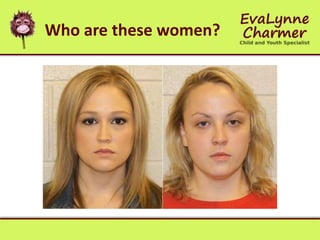
Who are these women?
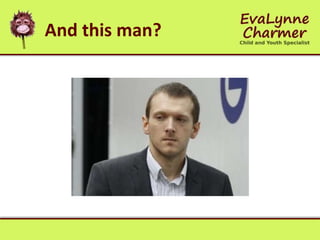
And this man?
Positions of Trust
In line with the England and Wales Sexual Offences Act 2003:
Abusing a position of trust is a criminal offence and includes all
sexual activity with 16 & 17 year olds, above the age of
consent – and covers inciting/encouraging a young person to
engage in, watch or take part in any sexual activity
Discussion: Consider how to respond when you know that a
student is having sexual relations with another young person,
over the age of consent
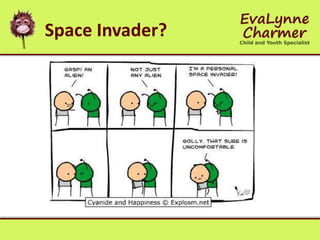
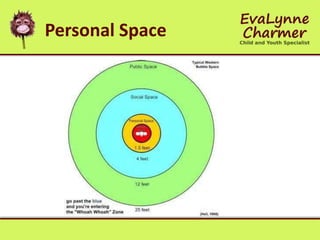
Space Invader?
Personal Space
Ethics: More Than A
Code
Personal Space & Touch
Use of language / cursing / nicknames
Gift-giving / loans/ favours
Favouritism & singling-out
Self-disclosure & over sharing
Collusion and ‘blind eye’ behaviour
Social contact and online relationships
Loco Parentis role & responsibilities
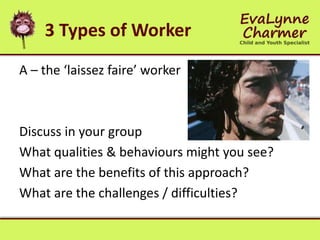
3 Types of Worker
A – the ‘laissez faire’ worker
Discuss in your group
What qualities & behaviours might you see?
What are the benefits of this approach?
What are the challenges / difficulties?
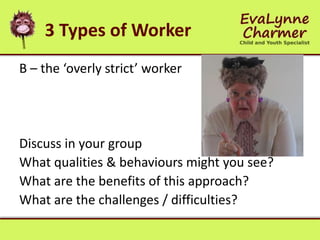
3 Types of Worker
B – the ‘overly strict’ worker
Discuss in your group
What qualities & behaviours might you see?
What are the benefits of this approach?
What are the challenges / difficulties?
3 Types of Worker
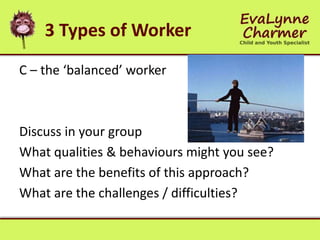
C – the ‘balanced’ worker
Discuss in your group
What qualities & behaviours might you see?
What are the benefits of this approach?
What are the challenges / difficulties?
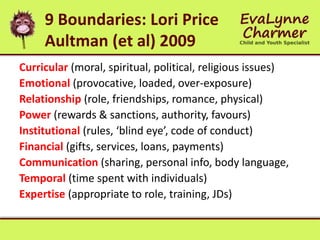
9 Boundaries: Lori Price
Aultman (et al) 2009
Curricular (moral, spiritual, political, religious issues)
Emotional (provocative, loaded, over-exposure)
Relationship (role, friendships, romance, physical)
Power (rewards & sanctions, authority, favours)
Institutional (rules, ‘blind eye’, code of conduct)
Financial (gifts, services, loans, payments)
Communication (sharing, personal info, body language,
Temporal (time spent with individuals)
Expertise (appropriate to role, training, JDs)
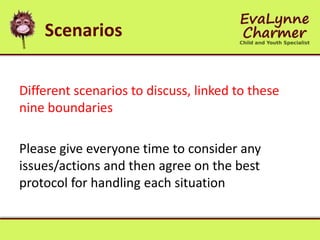
Scenarios
Different scenarios to discuss, linked to these
nine boundaries
Please give everyone time to consider any
issues/actions and then agree on the best
protocol for handling each situation
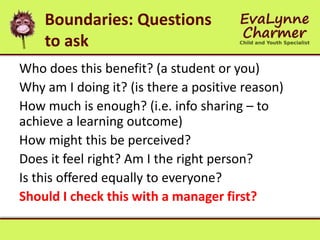
Boundaries: Questions
to ask
Who does this benefit? (a student or you)
Why am I doing it? (is there a positive reason)
How much is enough? (i.e. info sharing – to
achieve a learning outcome)
How might this be perceived?
Does it feel right? Am I the right person?
Is this offered equally to everyone?
Should I check this with a manager first?
TOP TIPS: know your
limits hand-out
Source: Bryn Melyn
This article is published in the 19 November
2009 edition of Community Care under the
headline “Boundaries – not barriers”
Social Media
Social Media
Consider:
1) How do you use social media in your
personal life
2) How do you use it in your work
3) How do you use it with students
4) How do the students use it with each other
5) What are the benefits and the risks?
Conclusion
Q&A

Professional Boundaries

  • 1.
    Professional Boundaries Pestalozzi InternationalVillage Trust Thursday February 12th 2015
  • 2.
  • 3.
  • 4.
    Positions of Trust Inline with the England and Wales Sexual Offences Act 2003: Abusing a position of trust is a criminal offence and includes all sexual activity with 16 & 17 year olds, above the age of consent – and covers inciting/encouraging a young person to engage in, watch or take part in any sexual activity Discussion: Consider how to respond when you know that a student is having sexual relations with another young person, over the age of consent
  • 5.
  • 6.
  • 7.
    Ethics: More ThanA Code Personal Space & Touch Use of language / cursing / nicknames Gift-giving / loans/ favours Favouritism & singling-out Self-disclosure & over sharing Collusion and ‘blind eye’ behaviour Social contact and online relationships Loco Parentis role & responsibilities
  • 8.
    3 Types ofWorker A – the ‘laissez faire’ worker Discuss in your group What qualities & behaviours might you see? What are the benefits of this approach? What are the challenges / difficulties?
  • 9.
    3 Types ofWorker B – the ‘overly strict’ worker Discuss in your group What qualities & behaviours might you see? What are the benefits of this approach? What are the challenges / difficulties?
  • 10.
    3 Types ofWorker C – the ‘balanced’ worker Discuss in your group What qualities & behaviours might you see? What are the benefits of this approach? What are the challenges / difficulties?
  • 11.
    9 Boundaries: LoriPrice Aultman (et al) 2009 Curricular (moral, spiritual, political, religious issues) Emotional (provocative, loaded, over-exposure) Relationship (role, friendships, romance, physical) Power (rewards & sanctions, authority, favours) Institutional (rules, ‘blind eye’, code of conduct) Financial (gifts, services, loans, payments) Communication (sharing, personal info, body language, Temporal (time spent with individuals) Expertise (appropriate to role, training, JDs)
  • 12.
    Scenarios Different scenarios todiscuss, linked to these nine boundaries Please give everyone time to consider any issues/actions and then agree on the best protocol for handling each situation
  • 13.
    Boundaries: Questions to ask Whodoes this benefit? (a student or you) Why am I doing it? (is there a positive reason) How much is enough? (i.e. info sharing – to achieve a learning outcome) How might this be perceived? Does it feel right? Am I the right person? Is this offered equally to everyone? Should I check this with a manager first?
  • 14.
    TOP TIPS: knowyour limits hand-out Source: Bryn Melyn This article is published in the 19 November 2009 edition of Community Care under the headline “Boundaries – not barriers”
  • 15.
  • 16.
    Social Media Consider: 1) Howdo you use social media in your personal life 2) How do you use it in your work 3) How do you use it with students 4) How do the students use it with each other 5) What are the benefits and the risks?
  • 17.

Editor's Notes

  • #3 Shelley Dufresne and Rachel Respesse, Louisiana teachers jailed for sex with a 16 year old student. The age of consent is 17 in Louisiana
  • #4 Jeremy Forest, jailed for 5 and a half years for the abduction of Megan Stammers, and conducting a sexual relationship while in a position of trust
  • #6 Personal Space game – need large flat card and a clear space
  • #7 Personal Space game – need large flat card and a clear space
  • #12 Handout