Boundaries Issues
Team D
February 18, 2014
Beatriz Zayas
Introduction
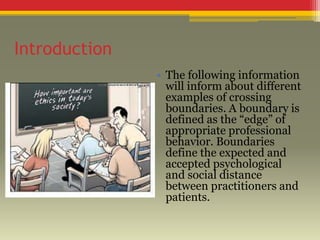
• The following information
will inform about different
examples of crossing
boundaries. A boundary is
defined as the “edge” of
appropriate professional
behavior. Boundaries
define the expected and
accepted psychological
and social distance
between practitioners and
patients.
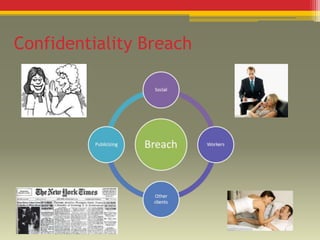
Confidentiality Breach
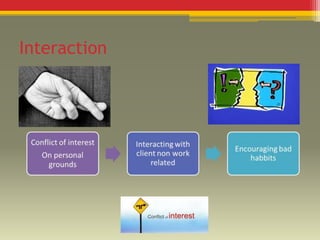
Interaction
Crossing Boundaries
• Marissa Sturm has been giving counseling services to
her client Ray approximately a year now. Ray has
been in constant depression with constant suicidal
thoughts due to his divorce and other personal issues.
Client has shown tremendous improvement and is
extremely grateful to counselor for her help.
Valentines Day comes and client sends counselor a
beautiful flower arrangement with a letter expressing
how thankful and in debt he feels towards her, for, he
feels she saved and changed his life for good. He
concludes his letter by inviting counselor out to
dinner, he writes down the time and place of a
restaurant reservation. Counselor accepts the flowers
and attends dinner.
Crossing Boundaries.
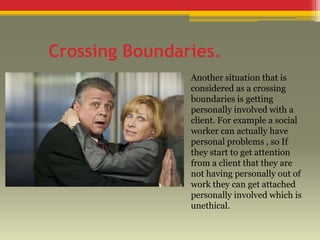
Another situation that is
considered as a crossing
boundaries is getting
personally involved with a
client. For example a social
worker can actually have
personal problems , so If
they start to get attention
from a client that they are
not having personally out of
work they can get attached
personally involved which is
unethical.
Self-Disclosure
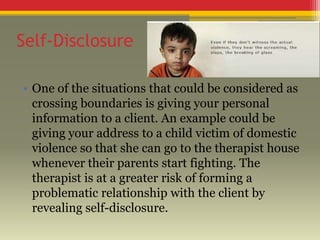
• One of the situations that could be considered as
crossing boundaries is giving your personal
information to a client. An example could be
giving your address to a child victim of domestic
violence so that she can go to the therapist house
whenever their parents start fighting. The
therapist is at a greater risk of forming a
problematic relationship with the client by
revealing self-disclosure.
Boundaries Issues
• Being a counselor to patients does have it’s tolls
on the relationship between the Pt./Counselor.
▫ The time that they spend together.
▫ The private consultations.
▫ It is hard for a Pt./Counselor to not grow feelings
towards another.
▫ A perfect example of this “crossing the boundaries
between Pt. and Counselor.
Video
• http://www.youtube.com/watch?v=jmjcKSMwC
1Y
Conclusion
• One way professional associations help their members
to be mindful of the importance of professional ethics
and to avoid ethical conflicts is through a commitment
to a robust code of ethics. Such a document is an open
disclosure of the way an organization operates. They
also offer an invaluable opportunity for responsible
organizations to create a positive public identity for
themselves and an increased level of public confidence.
Today is the creation of codes of ethical conduct in
recognition that these documents are more important
than ever in today’s environment for establishing the
publics trust.
References
•
•

American Association of Marriage and Family Therapists (2012). AAMFT Code of Ethics.
Retrieved from http://www.aamft.org/imis15/content/legal_ethics/code_of_ethics.aspx
Youtube. (2014, February 18). Retrieved from http://www.youtube.com/watch?v=jmjcKSMwC1Y

Boundaries Issues

  • 1.
    Boundaries Issues Team D February18, 2014 Beatriz Zayas
  • 2.
    Introduction • The followinginformation will inform about different examples of crossing boundaries. A boundary is defined as the “edge” of appropriate professional behavior. Boundaries define the expected and accepted psychological and social distance between practitioners and patients.
  • 3.
  • 4.
  • 5.
    Crossing Boundaries • MarissaSturm has been giving counseling services to her client Ray approximately a year now. Ray has been in constant depression with constant suicidal thoughts due to his divorce and other personal issues. Client has shown tremendous improvement and is extremely grateful to counselor for her help. Valentines Day comes and client sends counselor a beautiful flower arrangement with a letter expressing how thankful and in debt he feels towards her, for, he feels she saved and changed his life for good. He concludes his letter by inviting counselor out to dinner, he writes down the time and place of a restaurant reservation. Counselor accepts the flowers and attends dinner.
  • 6.
    Crossing Boundaries. Another situationthat is considered as a crossing boundaries is getting personally involved with a client. For example a social worker can actually have personal problems , so If they start to get attention from a client that they are not having personally out of work they can get attached personally involved which is unethical.
  • 7.
    Self-Disclosure • One ofthe situations that could be considered as crossing boundaries is giving your personal information to a client. An example could be giving your address to a child victim of domestic violence so that she can go to the therapist house whenever their parents start fighting. The therapist is at a greater risk of forming a problematic relationship with the client by revealing self-disclosure.
  • 8.
    Boundaries Issues • Beinga counselor to patients does have it’s tolls on the relationship between the Pt./Counselor. ▫ The time that they spend together. ▫ The private consultations. ▫ It is hard for a Pt./Counselor to not grow feelings towards another. ▫ A perfect example of this “crossing the boundaries between Pt. and Counselor.
  • 9.
  • 10.
    Conclusion • One wayprofessional associations help their members to be mindful of the importance of professional ethics and to avoid ethical conflicts is through a commitment to a robust code of ethics. Such a document is an open disclosure of the way an organization operates. They also offer an invaluable opportunity for responsible organizations to create a positive public identity for themselves and an increased level of public confidence. Today is the creation of codes of ethical conduct in recognition that these documents are more important than ever in today’s environment for establishing the publics trust.
  • 11.
    References • • American Association ofMarriage and Family Therapists (2012). AAMFT Code of Ethics. Retrieved from http://www.aamft.org/imis15/content/legal_ethics/code_of_ethics.aspx Youtube. (2014, February 18). Retrieved from http://www.youtube.com/watch?v=jmjcKSMwC1Y