WelcomeHelping Your Clients Survive Hard TimesJune 23, 2011
What I am expecting today…Learning new information to help clientsKnow how to deal with participants Help low-income seniors, especially with discrimination Reminded to keep compassion What’s available to help new clientsTips for working with clientsLearn more about 211infoUnderstanding impact on staffTips for decreasing burn out and compassion fatigue Hear about agencies and resourcesHow to best understand and help callers, especially those in crisis Tools to help those seeking work for someone new to social services
Help clients facing rental assistance challenges Learning about handling difficult conversations and how to help staffTips for being a better advocateTips for effective communication
Group ThemesChallenges of having people in personal lives facing challenges and then speaking with people with similar issues at workHarder not to take difficult situations home – “ticker tape mind”, practicing mindfulnessTell the truth compassionately and be a good listenerOpen compassion beyond fieldPeople are giving up because of the economyHow can we empower people to find different solutions?The ability to say “no” is important, and keep larger context in mindSpread the word to many different groups about people who need help
Group Themes (2/2)Have to deal with clients who are impacted by circumstances beyond our controlServing generational poverty and “new poor”More emotions and feelings behind issues  Complex needs are the norm- need for creative problem solvingFeels like we aren’t doing our jobs properly
Tips for working w/ clientsBuild emotional muscles The answer isn’t just “no”Be honest and listenDe-escalate and reinforce what can be donePrioritize – “you’ve done enough today”Help clients remember self careIdea: training for supervisors
Taking care of yourselfDevelop support systems outside of social service – when you leave work have something to go to Let yourself tantrum when you need to, let yourself have the feeling you haveAudience Idea: powerful to trust that we don’t have to have all the answers“Do no harm”
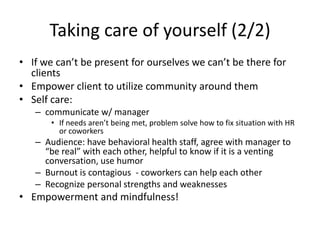
Taking care of yourself (2/2)If we can’t be present for ourselves we can’t be there for clientsEmpower client to utilize community around them Self care: communicate w/ managerIf needs aren’t being met, problem solve how to fix situation with HR or coworkers Audience: have behavioral health staff, agree with manager to “be real” with each other, helpful to know if it is a venting conversation, use humorBurnout is contagious  - coworkers can help each other Recognize personal strengths and weaknesses Empowerment and mindfulness!
HandoutsRescue triangleActive listeningOther toolsemily@211info.org
WelcomeHelping Your Clients Survive Hard TimesJune 28, 2011
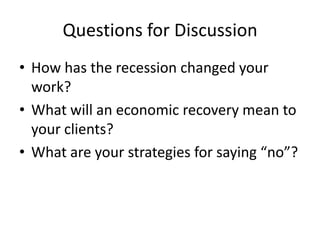
Questions for DiscussionHow has the recession changed your work?What will an economic recovery mean to your clients?What are your strategies for saying “no”?
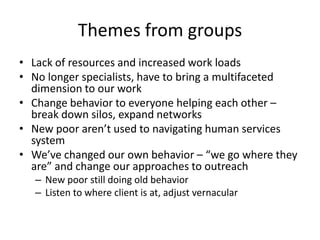
Themes from groupsLack of resources and increased work loadsNo longer specialists, have to bring a multifaceted dimension to our workChange behavior to everyone helping each other – break down silos, expand networksNew poor aren’t used to navigating human services system We’ve changed our own behavior – “we go where they are” and change our approaches to outreachNew poor still doing old behavior Listen to where client is at, adjust vernacular
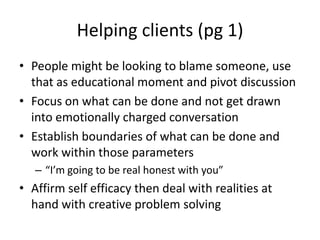
Helping clients (pg 1) People might be looking to blame someone, use that as educational moment and pivot discussionFocus on what can be done and not get drawn into emotionally charged conversationEstablish boundaries of what can be done and work within those parameters “I’m going to be real honest with you”  Affirm self efficacy then deal with realities at hand with creative problem solving
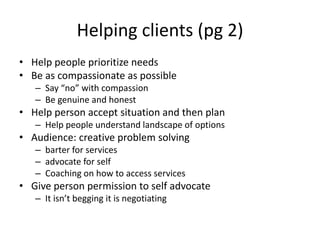
Helping clients (pg 2)Help people prioritize needsBe as compassionate as possibleSay “no” with compassionBe genuine and honest Help person accept situation and then plan Help people understand landscape of optionsAudience: creative problem solvingbarter for servicesadvocate for self Coaching on how to access services Give person permission to self advocateIt isn’t begging it is negotiating
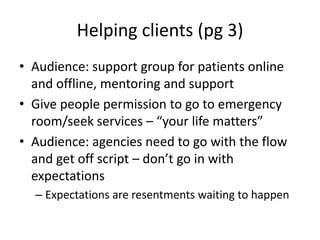
Helping clients (pg 3)Audience: support group for patients online and offline, mentoring and supportGive people permission to go to emergency room/seek services – “your life matters” Audience: agencies need to go with the flow and get off script – don’t go in with expectations Expectations are resentments waiting to happen
Helping yourselfProcess feelings and let your self “throw tantrum” Have to accept that you will take things home, choice is how to manage that Audience: Start with self, clear everything
Helping Yourself: Audience GroupsWhat do you do at your agency to help staff stay healthy?Always go to lunch/tea togetherWalk to the post office Recognize “this isn’t normal” and we chose this profession Set time limits on talking about day, then move onHave activities outside work about non-work related topicsWhat would you like to have that would help improve staff health?
Helping yourselfSelf care, boundaries, compassion fatigue One person makes a huge difference Be mindful and present about what’s going on inside yourselfRecognize compassion fatigueGetting angry and impatient at clientThinking “My job is pointless”Hold leadership accountable – ask for help an any time
Helping yourselfAt the workplace Add 15 mins to end of day to extend lunchYumm, cheese! Outside of work activities with coworkers and understanding each other    Though, limit amount of coworker interaction Keep going to managers and talk with them Focus on and understand what can/can’t change (i.e. staff won’t increase) Hold managers accountable Audience: how to deal with stress of constant sarcasm?This is a red flag for compassion fatigue, be aware and try to cut down on it – can erode compassion   Talk with leadership about cultural competency reminder training Focus on strengths perspective, normalize experience, reinforce positivity
Helping yourselfAudience: Spend time highlighting success stories Send emails to staff of storiesBe good example of positivity    Audience: “beyond the bubble bath” – help yourself thrive with training opportunities – talk with manager Audience: Interact with others in field to gain perspectiveAudience: Respect position you are in and always be proud of what you are achieving Relish the impact you are making on people’s livesHave frank conversation with staff about whether this position is still right for them if you see them getting burned out Explore strength-based counseling Be willing to change the game to bring enjoyment to changing responsibilityBe a clown!

Helping Your Clients Survive Hard TImes

  • 1.
    WelcomeHelping Your ClientsSurvive Hard TimesJune 23, 2011
  • 2.
    What I amexpecting today…Learning new information to help clientsKnow how to deal with participants Help low-income seniors, especially with discrimination Reminded to keep compassion What’s available to help new clientsTips for working with clientsLearn more about 211infoUnderstanding impact on staffTips for decreasing burn out and compassion fatigue Hear about agencies and resourcesHow to best understand and help callers, especially those in crisis Tools to help those seeking work for someone new to social services
  • 3.
    Help clients facingrental assistance challenges Learning about handling difficult conversations and how to help staffTips for being a better advocateTips for effective communication
  • 4.
    Group ThemesChallenges ofhaving people in personal lives facing challenges and then speaking with people with similar issues at workHarder not to take difficult situations home – “ticker tape mind”, practicing mindfulnessTell the truth compassionately and be a good listenerOpen compassion beyond fieldPeople are giving up because of the economyHow can we empower people to find different solutions?The ability to say “no” is important, and keep larger context in mindSpread the word to many different groups about people who need help
  • 5.
    Group Themes (2/2)Haveto deal with clients who are impacted by circumstances beyond our controlServing generational poverty and “new poor”More emotions and feelings behind issues Complex needs are the norm- need for creative problem solvingFeels like we aren’t doing our jobs properly
  • 6.
    Tips for workingw/ clientsBuild emotional muscles The answer isn’t just “no”Be honest and listenDe-escalate and reinforce what can be donePrioritize – “you’ve done enough today”Help clients remember self careIdea: training for supervisors
  • 7.
    Taking care ofyourselfDevelop support systems outside of social service – when you leave work have something to go to Let yourself tantrum when you need to, let yourself have the feeling you haveAudience Idea: powerful to trust that we don’t have to have all the answers“Do no harm”
  • 8.
    Taking care ofyourself (2/2)If we can’t be present for ourselves we can’t be there for clientsEmpower client to utilize community around them Self care: communicate w/ managerIf needs aren’t being met, problem solve how to fix situation with HR or coworkers Audience: have behavioral health staff, agree with manager to “be real” with each other, helpful to know if it is a venting conversation, use humorBurnout is contagious - coworkers can help each other Recognize personal strengths and weaknesses Empowerment and mindfulness!
  • 9.
  • 10.
    WelcomeHelping Your ClientsSurvive Hard TimesJune 28, 2011
  • 11.
    Questions for DiscussionHowhas the recession changed your work?What will an economic recovery mean to your clients?What are your strategies for saying “no”?
  • 12.
    Themes from groupsLackof resources and increased work loadsNo longer specialists, have to bring a multifaceted dimension to our workChange behavior to everyone helping each other – break down silos, expand networksNew poor aren’t used to navigating human services system We’ve changed our own behavior – “we go where they are” and change our approaches to outreachNew poor still doing old behavior Listen to where client is at, adjust vernacular
  • 13.
    Helping clients (pg1) People might be looking to blame someone, use that as educational moment and pivot discussionFocus on what can be done and not get drawn into emotionally charged conversationEstablish boundaries of what can be done and work within those parameters “I’m going to be real honest with you” Affirm self efficacy then deal with realities at hand with creative problem solving
  • 14.
    Helping clients (pg2)Help people prioritize needsBe as compassionate as possibleSay “no” with compassionBe genuine and honest Help person accept situation and then plan Help people understand landscape of optionsAudience: creative problem solvingbarter for servicesadvocate for self Coaching on how to access services Give person permission to self advocateIt isn’t begging it is negotiating
  • 15.
    Helping clients (pg3)Audience: support group for patients online and offline, mentoring and supportGive people permission to go to emergency room/seek services – “your life matters” Audience: agencies need to go with the flow and get off script – don’t go in with expectations Expectations are resentments waiting to happen
  • 16.
    Helping yourselfProcess feelingsand let your self “throw tantrum” Have to accept that you will take things home, choice is how to manage that Audience: Start with self, clear everything
  • 17.
    Helping Yourself: AudienceGroupsWhat do you do at your agency to help staff stay healthy?Always go to lunch/tea togetherWalk to the post office Recognize “this isn’t normal” and we chose this profession Set time limits on talking about day, then move onHave activities outside work about non-work related topicsWhat would you like to have that would help improve staff health?
  • 18.
    Helping yourselfSelf care,boundaries, compassion fatigue One person makes a huge difference Be mindful and present about what’s going on inside yourselfRecognize compassion fatigueGetting angry and impatient at clientThinking “My job is pointless”Hold leadership accountable – ask for help an any time
  • 19.
    Helping yourselfAt theworkplace Add 15 mins to end of day to extend lunchYumm, cheese! Outside of work activities with coworkers and understanding each other Though, limit amount of coworker interaction Keep going to managers and talk with them Focus on and understand what can/can’t change (i.e. staff won’t increase) Hold managers accountable Audience: how to deal with stress of constant sarcasm?This is a red flag for compassion fatigue, be aware and try to cut down on it – can erode compassion Talk with leadership about cultural competency reminder training Focus on strengths perspective, normalize experience, reinforce positivity
  • 20.
    Helping yourselfAudience: Spendtime highlighting success stories Send emails to staff of storiesBe good example of positivity Audience: “beyond the bubble bath” – help yourself thrive with training opportunities – talk with manager Audience: Interact with others in field to gain perspectiveAudience: Respect position you are in and always be proud of what you are achieving Relish the impact you are making on people’s livesHave frank conversation with staff about whether this position is still right for them if you see them getting burned out Explore strength-based counseling Be willing to change the game to bring enjoyment to changing responsibilityBe a clown!