




John D. Gavazzi, PsyD ABPP
Baltimore County Department of Health
June 2014
Ethics in Practice:
Mandated Reporting, Professional
Boundaries, and Ethical Decision-
making
 List the differences between ethical, legal,
and risk management concerns
 Outline a model for integrating professional
ethics with personal values
 Use one decision-making model to work
through an ethical vignette
The process is often ambiguous
1. Move away from the “ethical” versus
“unethical” decision.
2. In some ethical decisions, there is not
“right” or “correct” answer for everyone.
3. Most clinicians make ethical decisions on a
daily basis
Having an ethics code or attending
lectures on ethics codes are among
the least effective ways to ensure
ethical behavior.
People should not act on principle
(standing on principle can be an unprincipled stand)
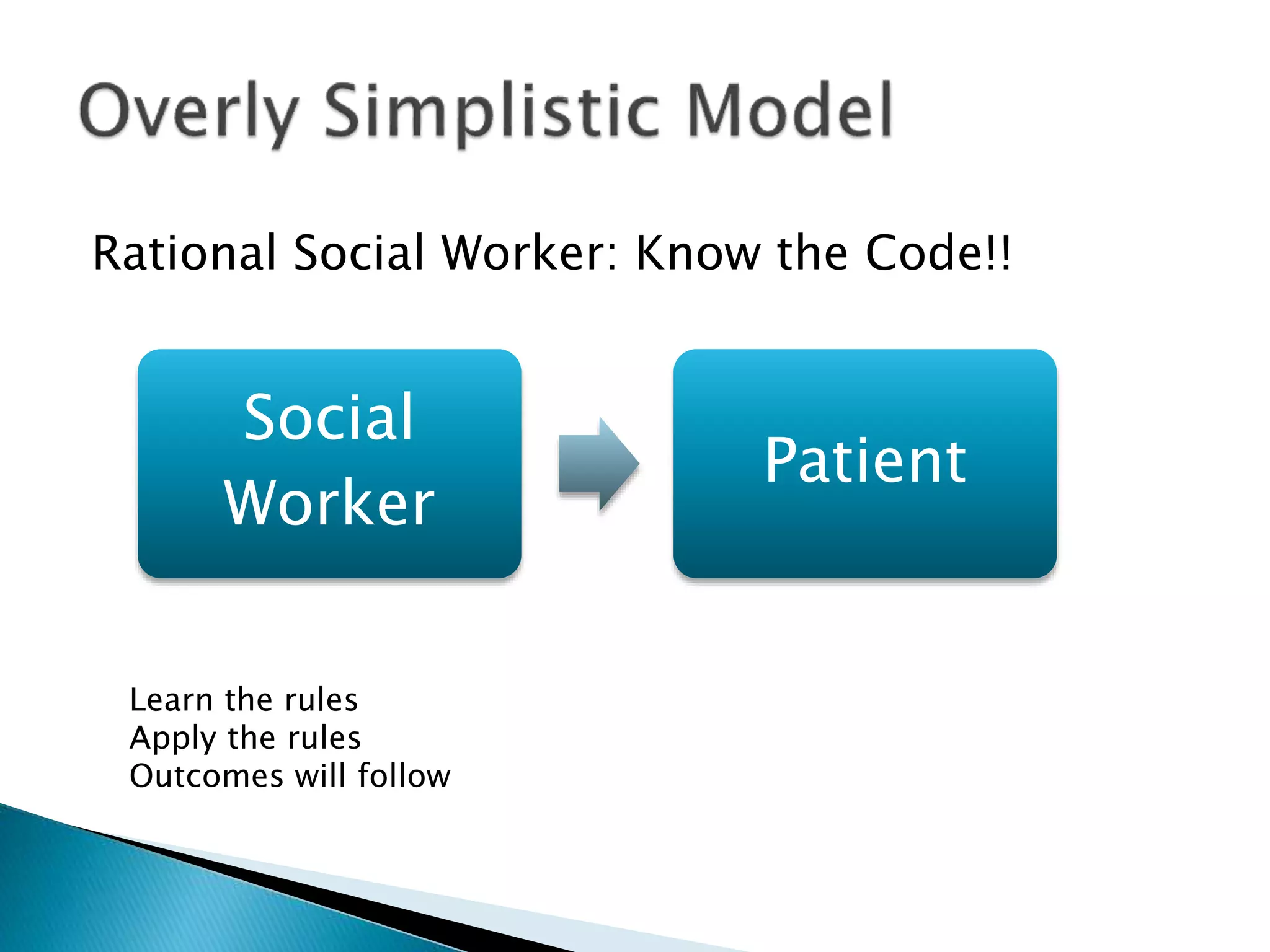
Rational Social Worker: Know the Code!!
Social
Worker
Patient
Learn the rules
Apply the rules
Outcomes will follow
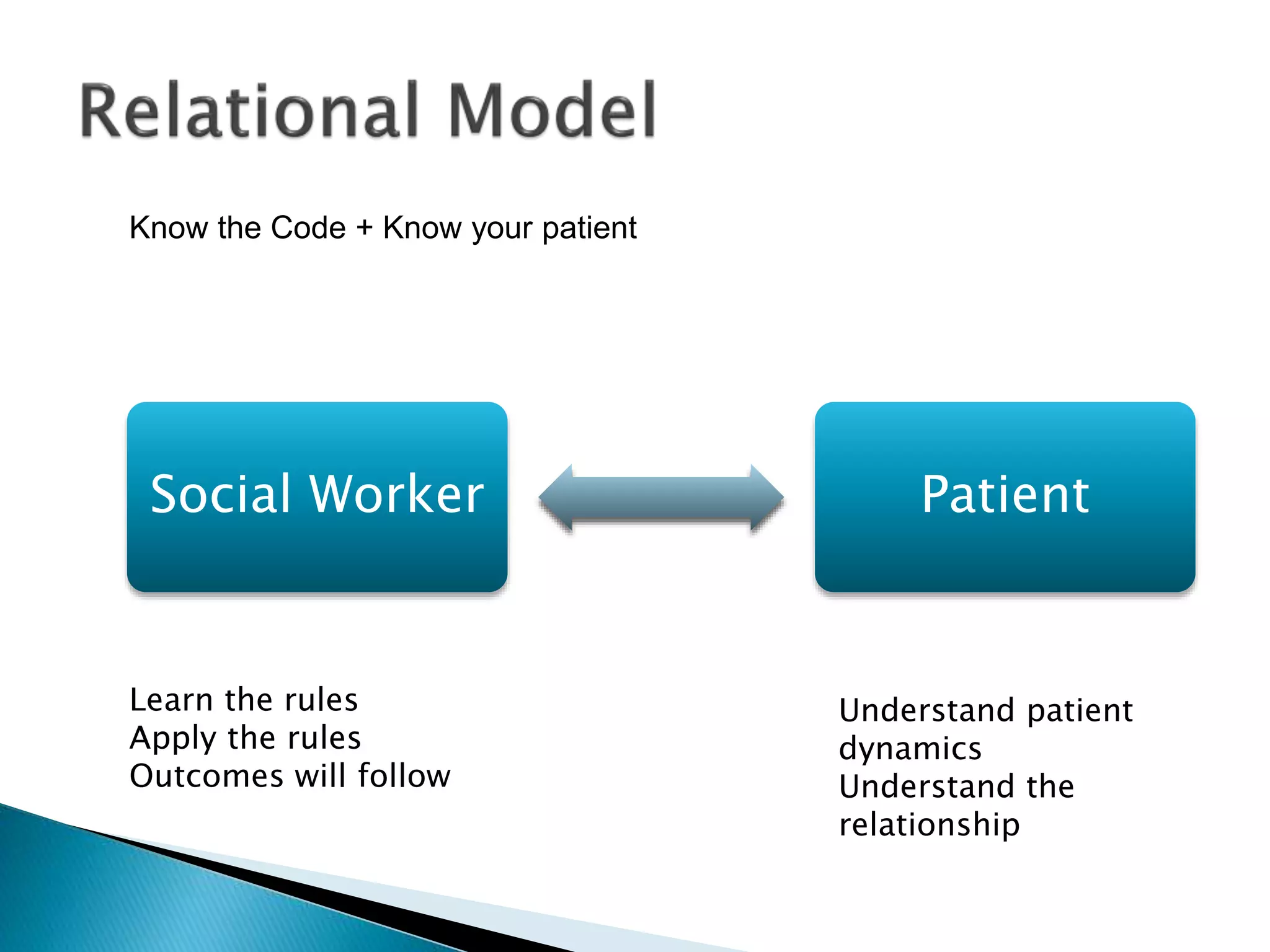
PatientSocial Worker
Learn the rules
Apply the rules
Outcomes will follow
Understand patient
dynamics
Understand the
relationship
Know the Code + Know your patient
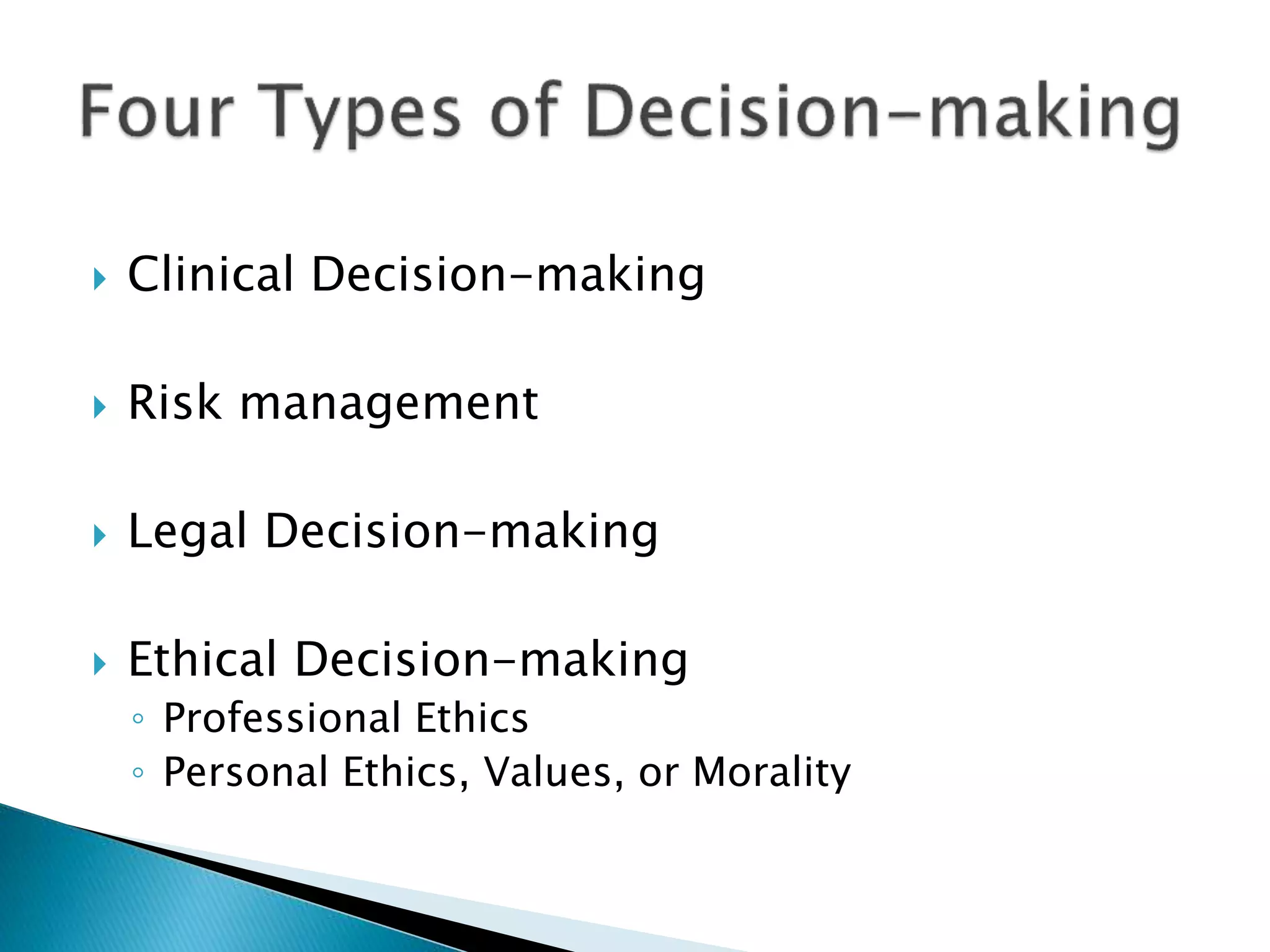
 Clinical Decision-making
 Risk management
 Legal Decision-making
 Ethical Decision-making
◦ Professional Ethics
◦ Personal Ethics, Values, or Morality
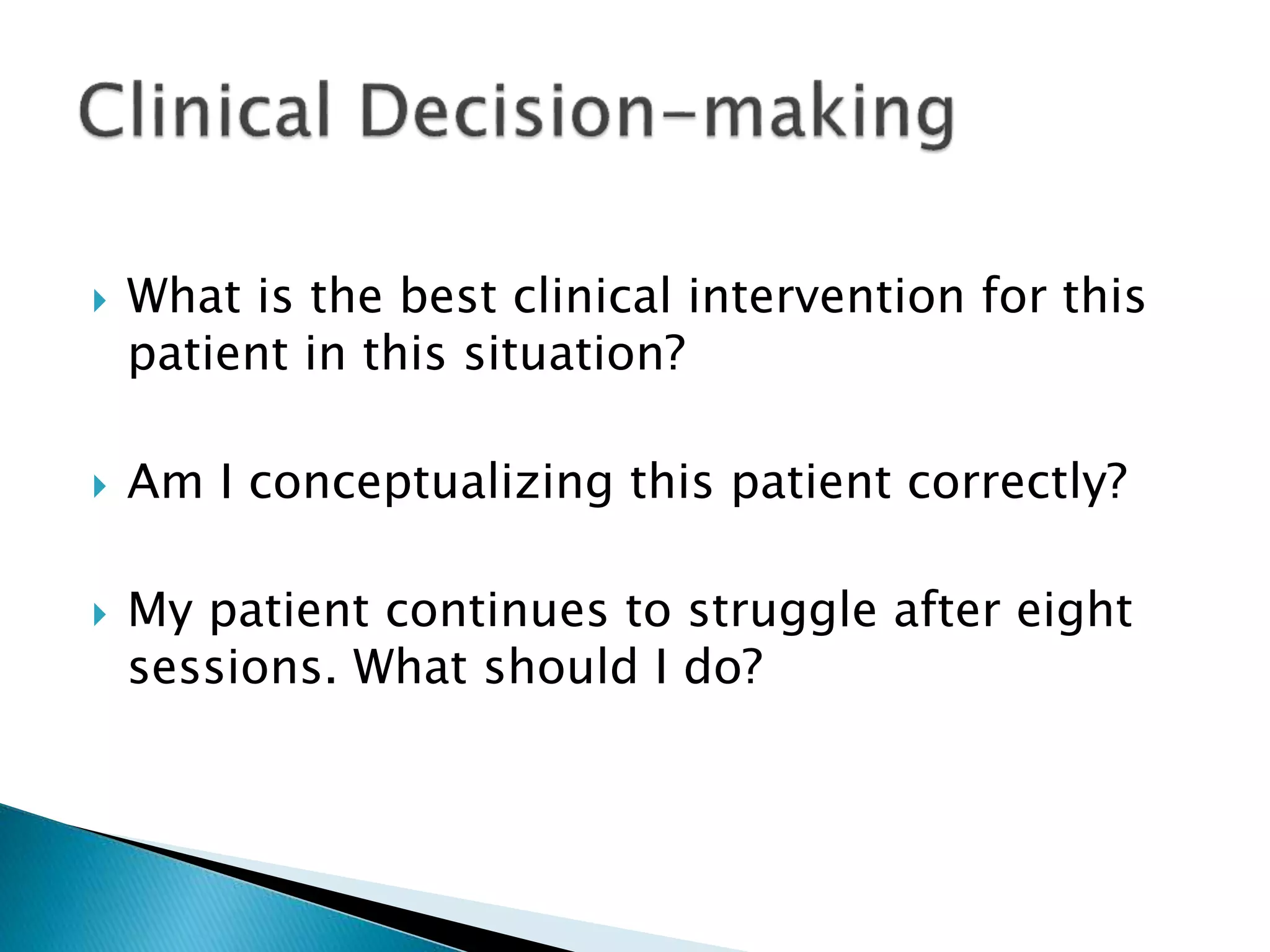
 What is the best clinical intervention for this
patient in this situation?
 Am I conceptualizing this patient correctly?
 My patient continues to struggle after eight
sessions. What should I do?
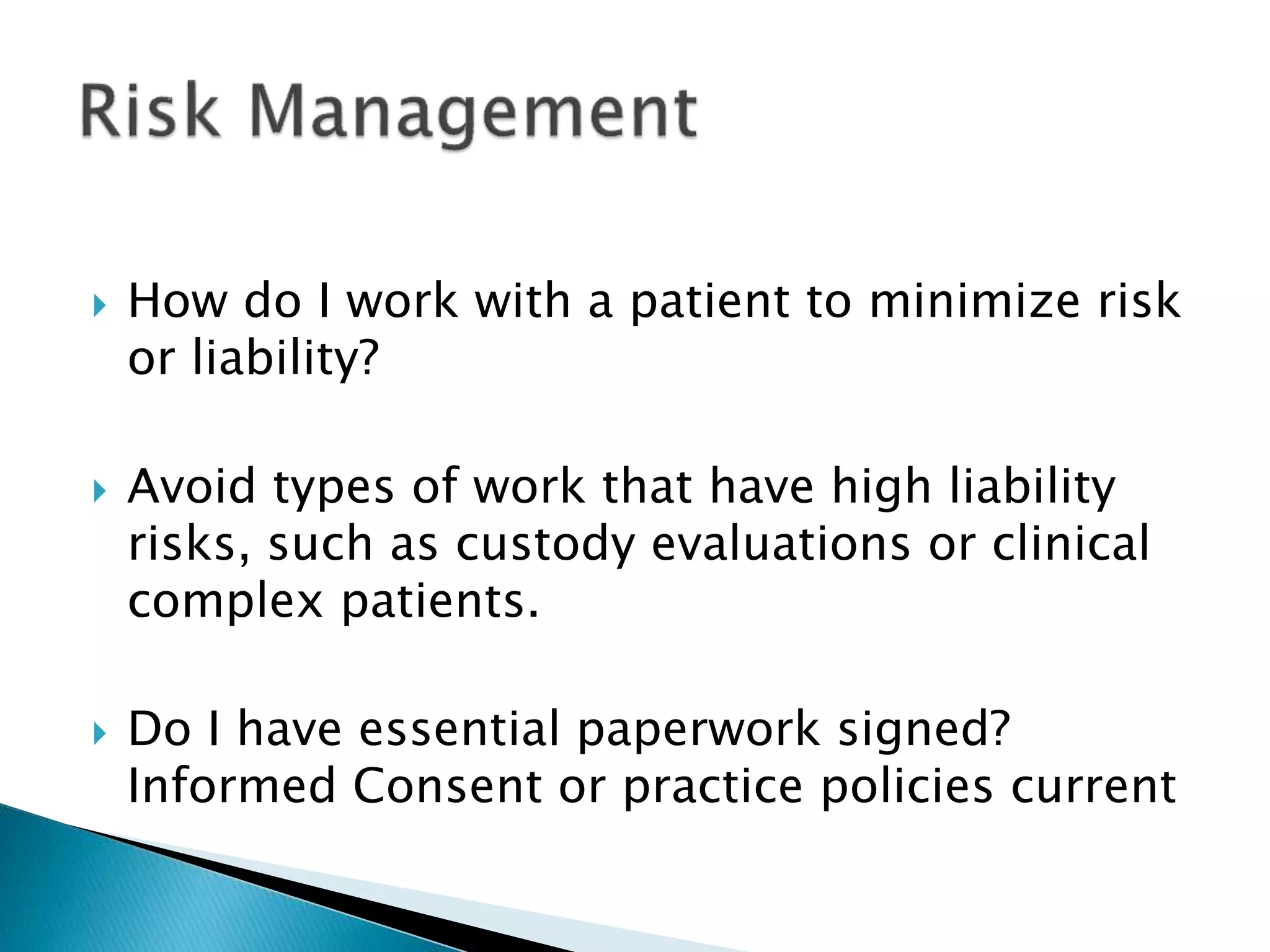
 How do I work with a patient to minimize risk
or liability?
 Avoid types of work that have high liability
risks, such as custody evaluations or clinical
complex patients.
 Do I have essential paperwork signed?
Informed Consent or practice policies current
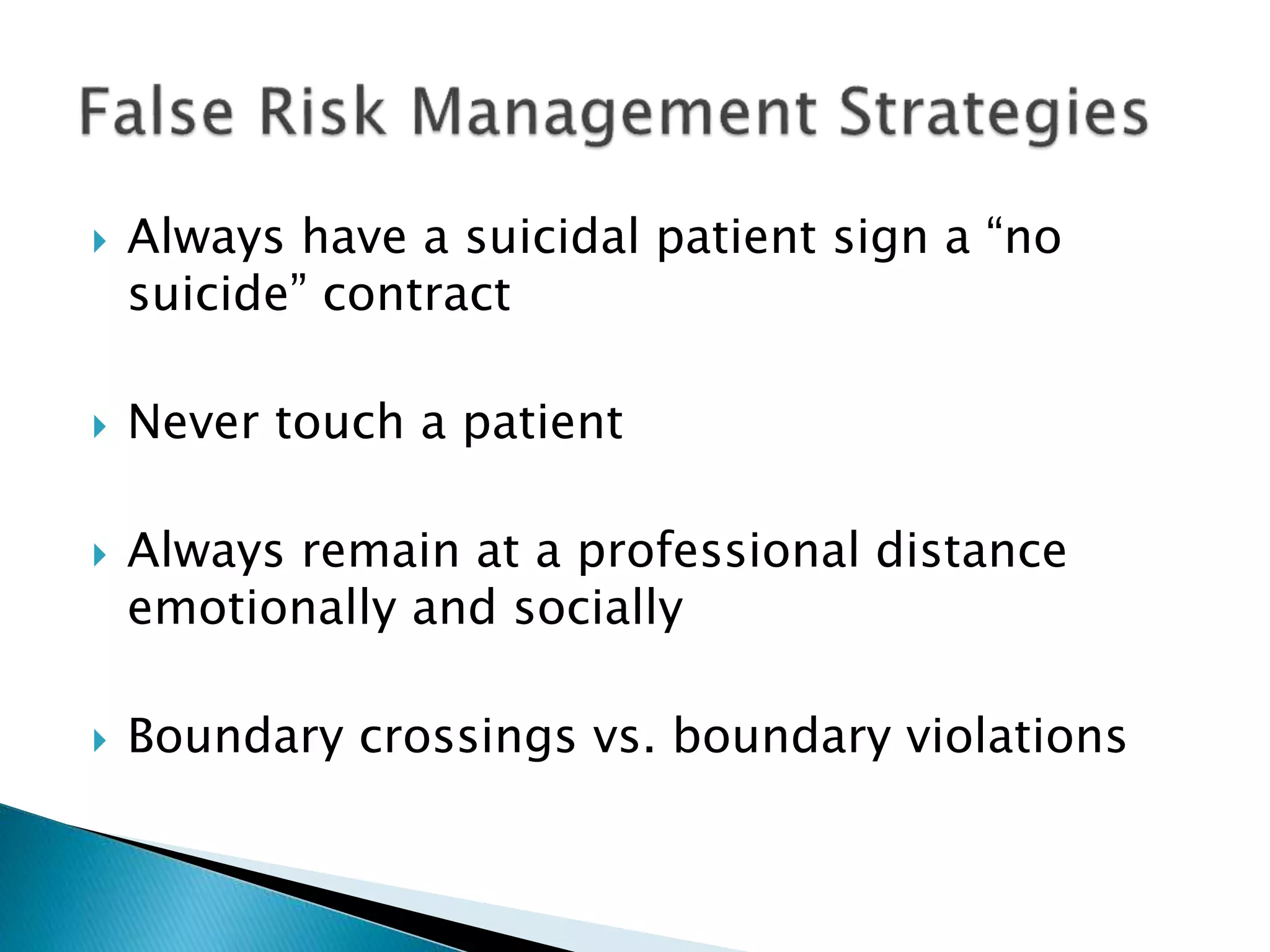
 Always have a suicidal patient sign a “no
suicide” contract
 Never touch a patient
 Always remain at a professional distance
emotionally and socially
 Boundary crossings vs. boundary violations
 Am I compliant with state laws and
regulations?
 Is my practice HIPAA compliant?
 Am I aware of relevant case law in my state?
 Questions are usually asked of an attorney
Professional Ethics
 Do I follow the NASW’s Code of Conduct?
 Am I performing at the minimum or reaching
for the aspirational ceiling?
 Is my behavior linked to a foundational
principle?
Personal values, ethics, and morality
 Is what I am doing consistent with my values?
 What is my emotional response to the patient,
lifestyle, or behavioral issue?
1. Religion/Family of Origin
2. Education: College and CE
3. Personal Education: Reading and Experience
4. Honest self-reflection
 How did it develop?
 How often do you use it to reflect on
professional life?
 How often do you use it to reflect on personal
life?
 How do you integrate morals into ethics?
 Do you use it “before the fact”?
 Is it intuitive and unconscious?
 Is it more cognitive?
 Is it written down?
 Is it acceptance of another person’s code in
full?
 If yes, why?
 If not, why?
 Do you use it “after the fact”?
 Fundamental Attribution Error
 Actor-Observer Bias
 Motivated Moral Reasoning
 Looking at how well a social worker
integrates his/her values and behaviors into
the ethical culture of social workers
 Social Work has a set of normative principles
and behaviors related to ethical behavior and
appropriate conduct
 One way of remaining a life-long
learner
 Provides another way to discuss
ethical behaviors and decisions
A process to change the cultural behavior of an
individual through contact with another
culture.
The process of acculturation occurs when there
is an adaptation into an organization or
society.
 An outgrowth of positive ethics that
integrates personal ethics and professional
obligations.
 Social Work has a system of shared and
distinctive norms, beliefs, and traditions.
 This set of beliefs is reflected in the ethics
code.
 Can be a complex process
 Some parts of a social worker’s practice
and lifestyle may be easily acculturated
while others not
 Process that will likely continue throughout
the education or career as a social worker
Identification with personal value system
(higher vs. lower)
Identification with value system of psychology
(higher vs. lower)
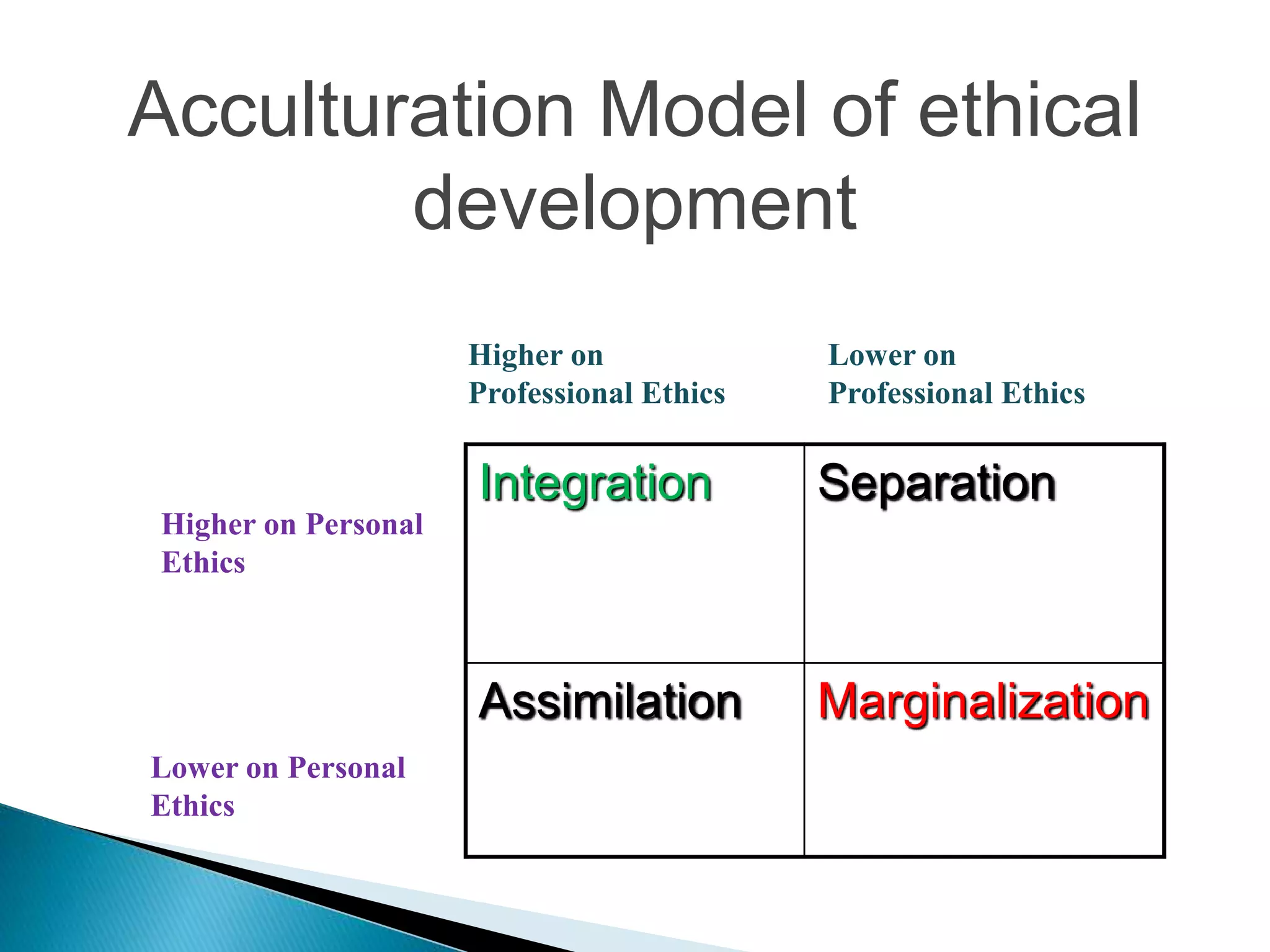
Acculturation Model of ethical
development
Integration Separation
Assimilation Marginalization
Higher on
Professional Ethics
Higher on Personal
Ethics
Lower on Personal
Ethics
Lower on
Professional Ethics
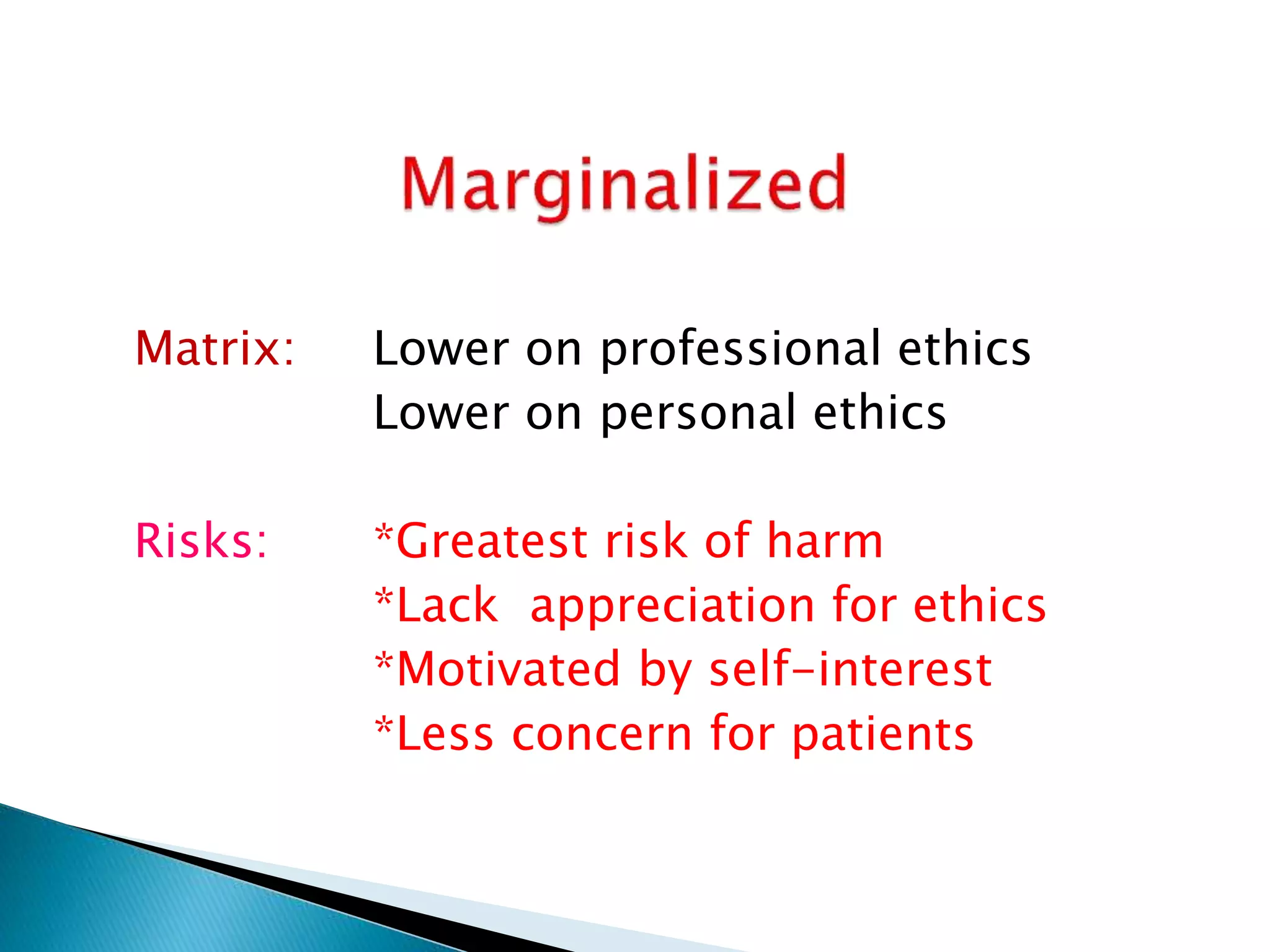
Matrix: Lower on professional ethics
Lower on personal ethics
Risks: *Greatest risk of harm
*Lack appreciation for ethics
*Motivated by self-interest
*Less concern for patients
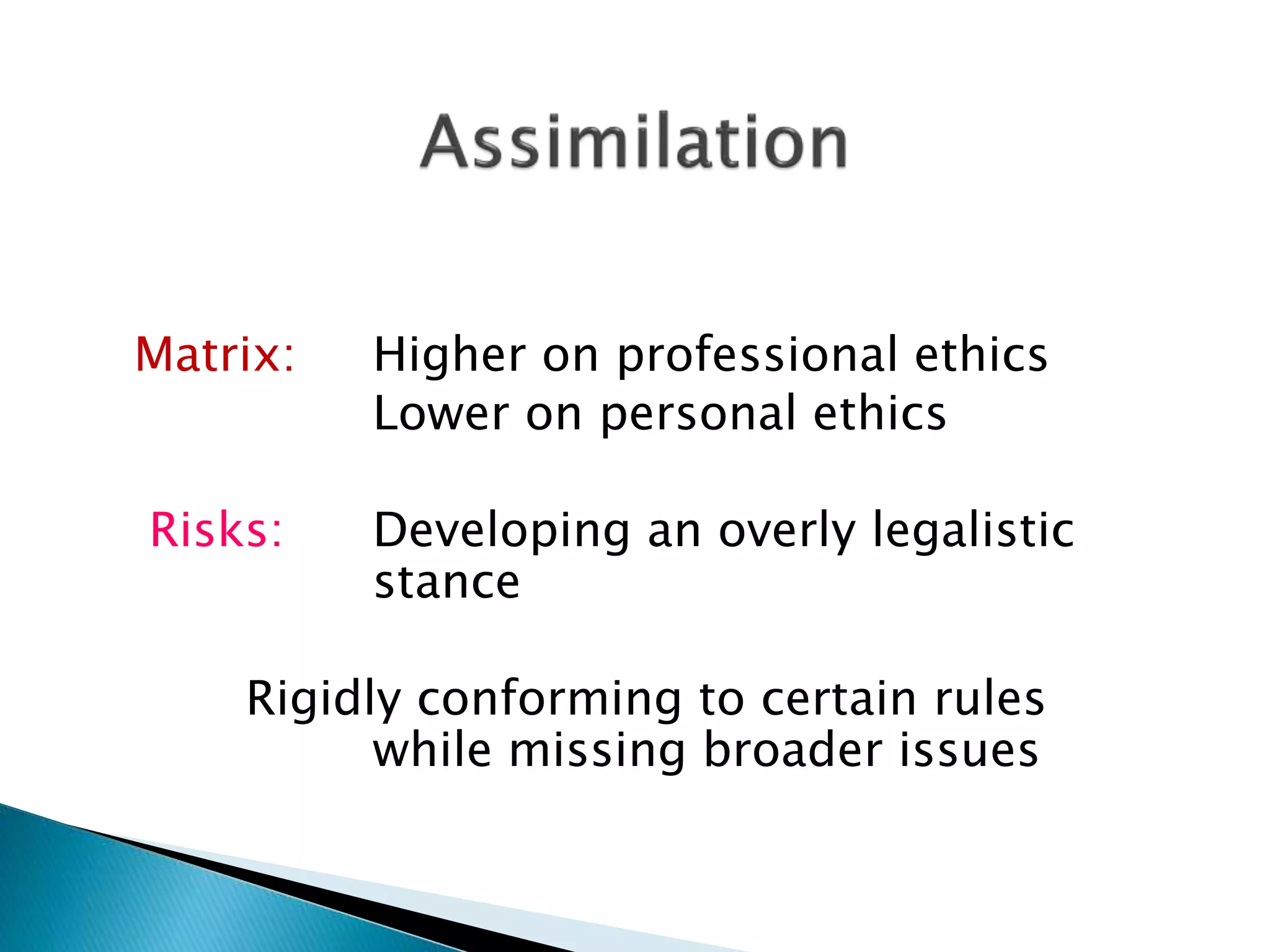
Matrix: Higher on professional ethics
Lower on personal ethics
Risks: Developing an overly legalistic
stance
Rigidly conforming to certain rules
while missing broader issues
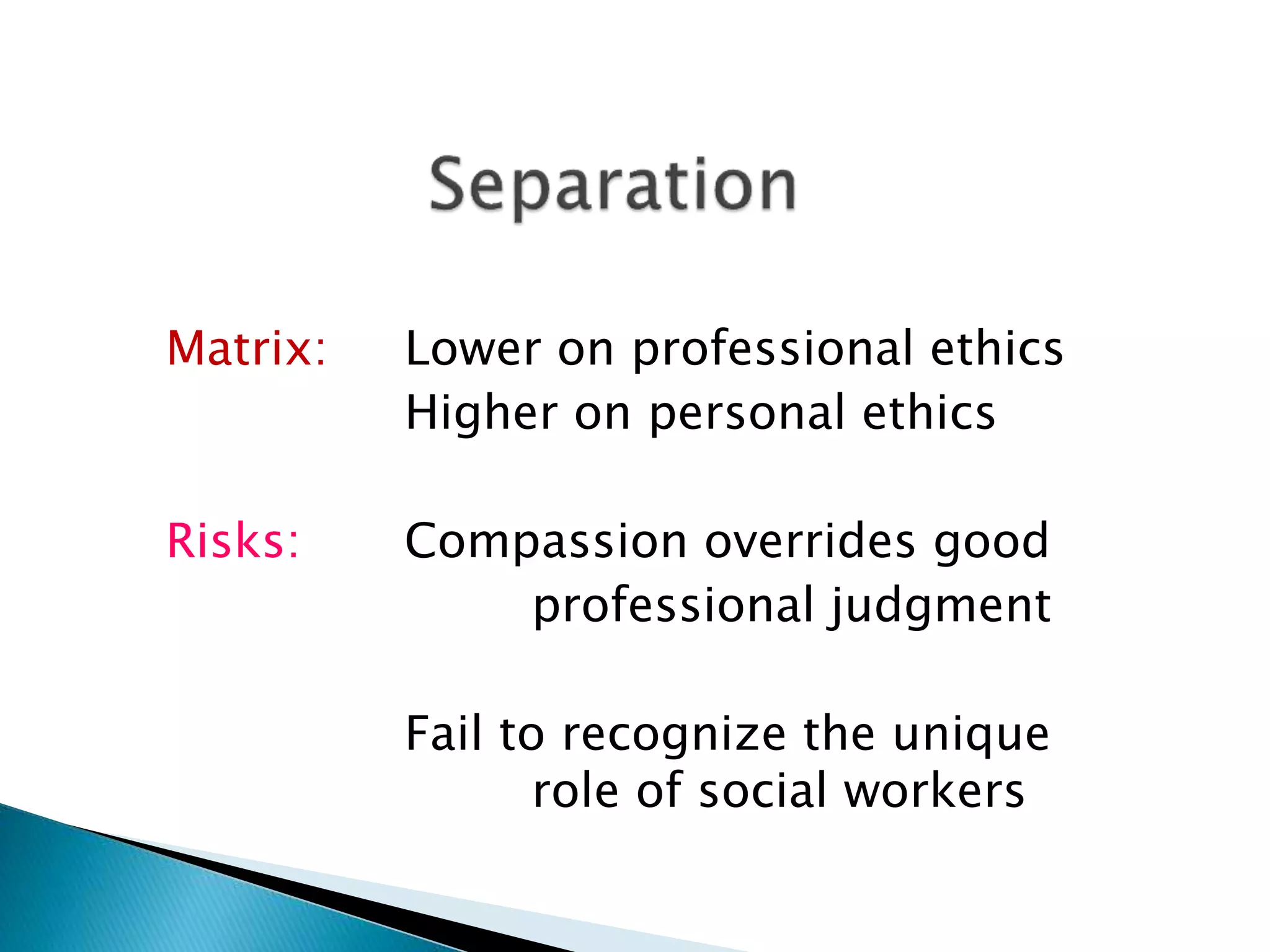
Matrix: Lower on professional ethics
Higher on personal ethics
Risks: Compassion overrides good
professional judgment
Fail to recognize the unique
role of social workers
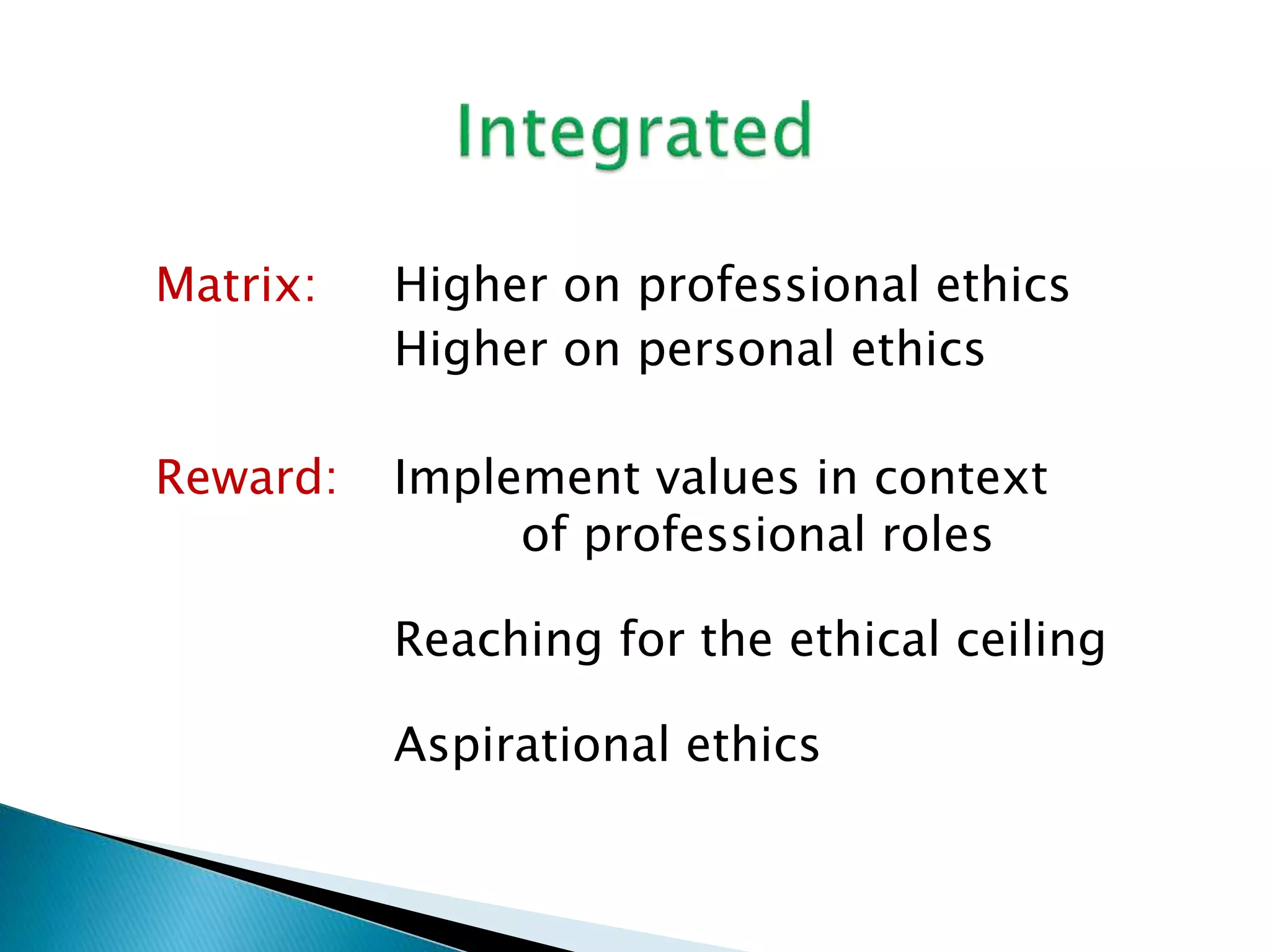
Matrix: Higher on professional ethics
Higher on personal ethics
Reward: Implement values in context
of professional roles
Reaching for the ethical ceiling
Aspirational ethics
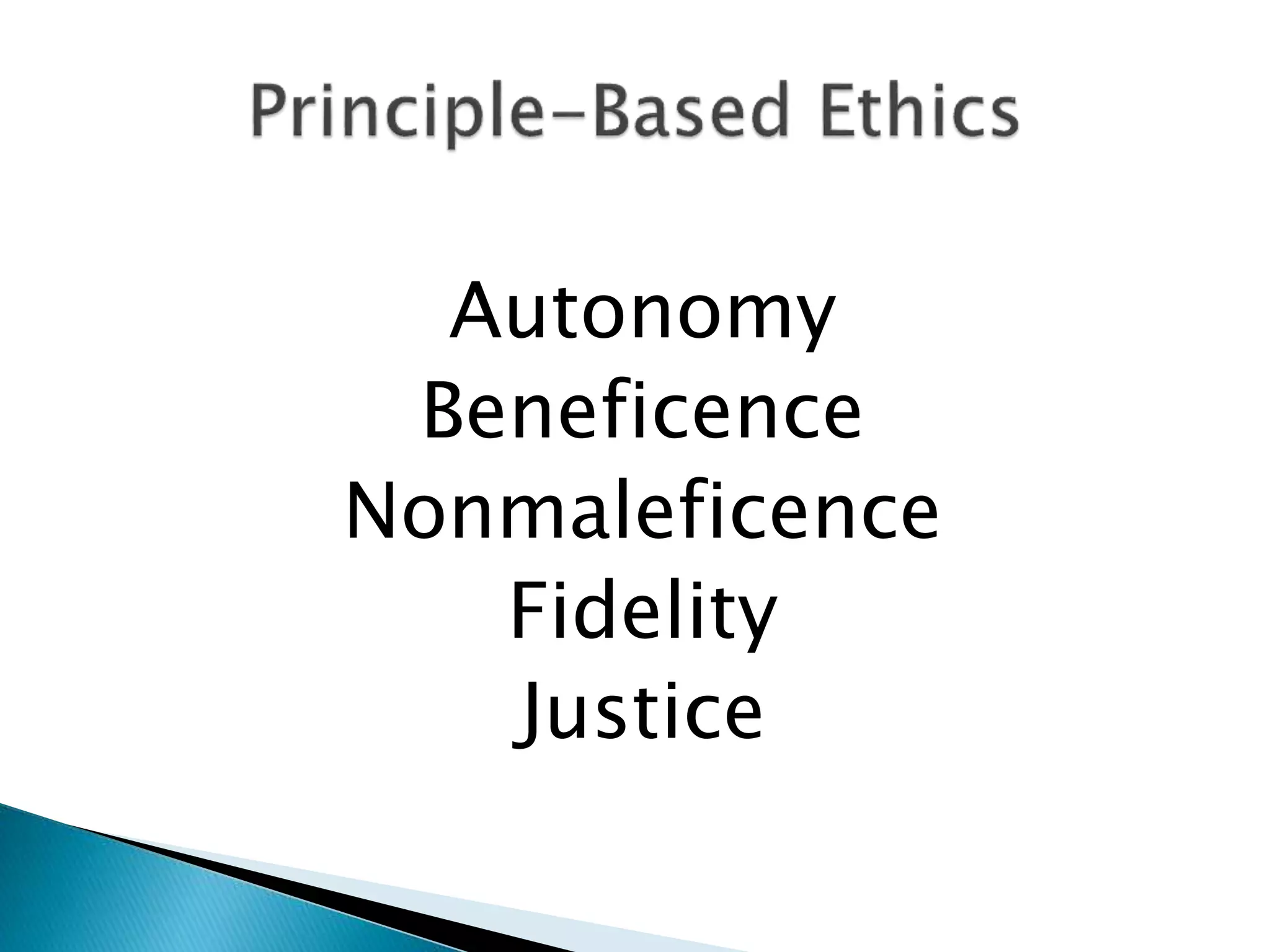
Autonomy
Beneficence
Nonmaleficence
Fidelity
Justice
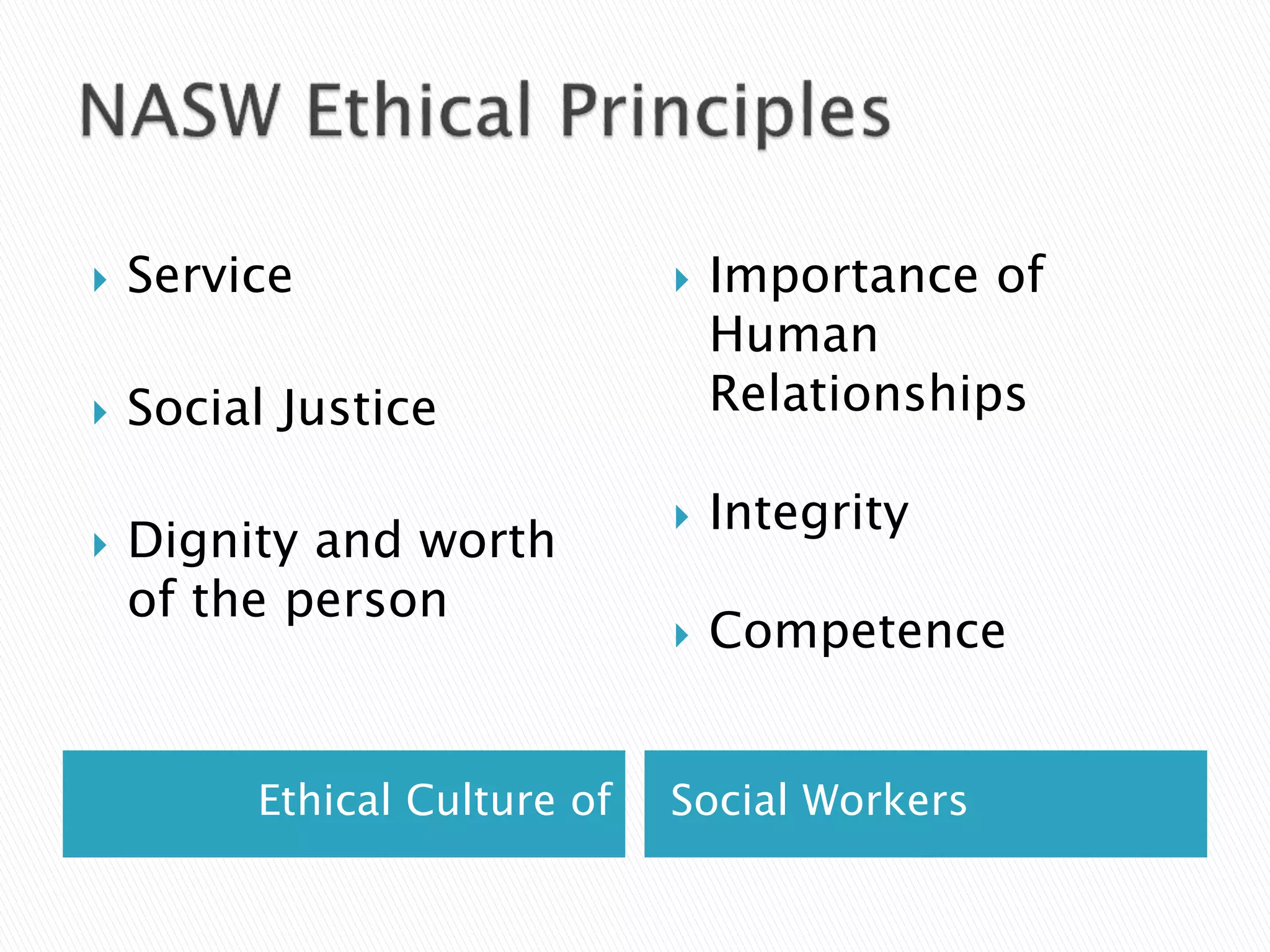
Ethical Culture of Social Workers
 Service
 Social Justice
 Dignity and worth
of the person
 Importance of
Human
Relationships
 Integrity
 Competence
 Social workers elevate service to others above self
interest.
 Social workers draw on their knowledge, values,
and skills to help people in need and to address
social problems.
 Social workers are encouraged to volunteer some
portion of their professional skills with no
expectation of significant financial return (pro bono
service).
 Social workers pursue social change,
particularly with and on behalf of vulnerable
and oppressed individuals and groups of
people.
 Social workers’ social change efforts are
focused primarily on issues of poverty,
unemployment, discrimination, and other
forms of social injustice.
 These activities seek to promote sensitivity to
and knowledge about oppression and cultural
and ethnic diversity.
 Social workers strive to ensure access to
needed information, services, and resources;
equality of opportunity; and meaningful
participation in decision making for all
people.
 Social workers treat each person in a caring
and respectful fashion, mindful of individual
differences and cultural and ethnic diversity.
Social workers promote clients’ socially
responsible self determination.
 Social workers seek to enhance clients’
capacity and opportunity to change and to
address their own needs.
 Social workers are cognizant of their dual
responsibility to clients and to the broader
society.
 They seek to resolve conflicts between
clients’ interests and the broader society’s
interests in a socially responsible manner
consistent with the values, ethical principles,
and ethical standards of the profession.
 Social workers understand that relationships between
and among people are an important vehicle for
change.
 Social workers engage people as partners in the
helping process.
 Social workers seek to strengthen relationships
among people in a purposeful effort to promote,
restore, maintain, and enhance the wellbeing of
individuals, families, social groups, organizations,
and communities.
 Social workers are continually aware of the
profession’s mission, values, ethical
principles, and ethical standards and practice
in a manner consistent with them.
 Social workers act honestly and responsibly
and promote ethical practices on the part of
the organizations with which they are
affiliated.
 Social workers continually strive to increase their
professional knowledge and skills and to apply
them in practice.
 Social workers should aspire to contribute to the
knowledge base of the profession.
 The means to comply with a standard may
not always be readily apparent
 Two seemingly competing standards may
appear equally appropriate
 Application with of a single standard or set of
standards appear consistent with one or more
aspirational principle, but not another
 The social worker is the expert and has
greater power in the relationship
 Patient is vulnerable
 The social worker is ultimately responsible for
what happens in treatment
 Identify the competing ethical principles
 Help to determine which principle has
precedence and why
 The importance of emotion in ethical
decision-making and moral judgments
 Cognitive biases are also important to
consider
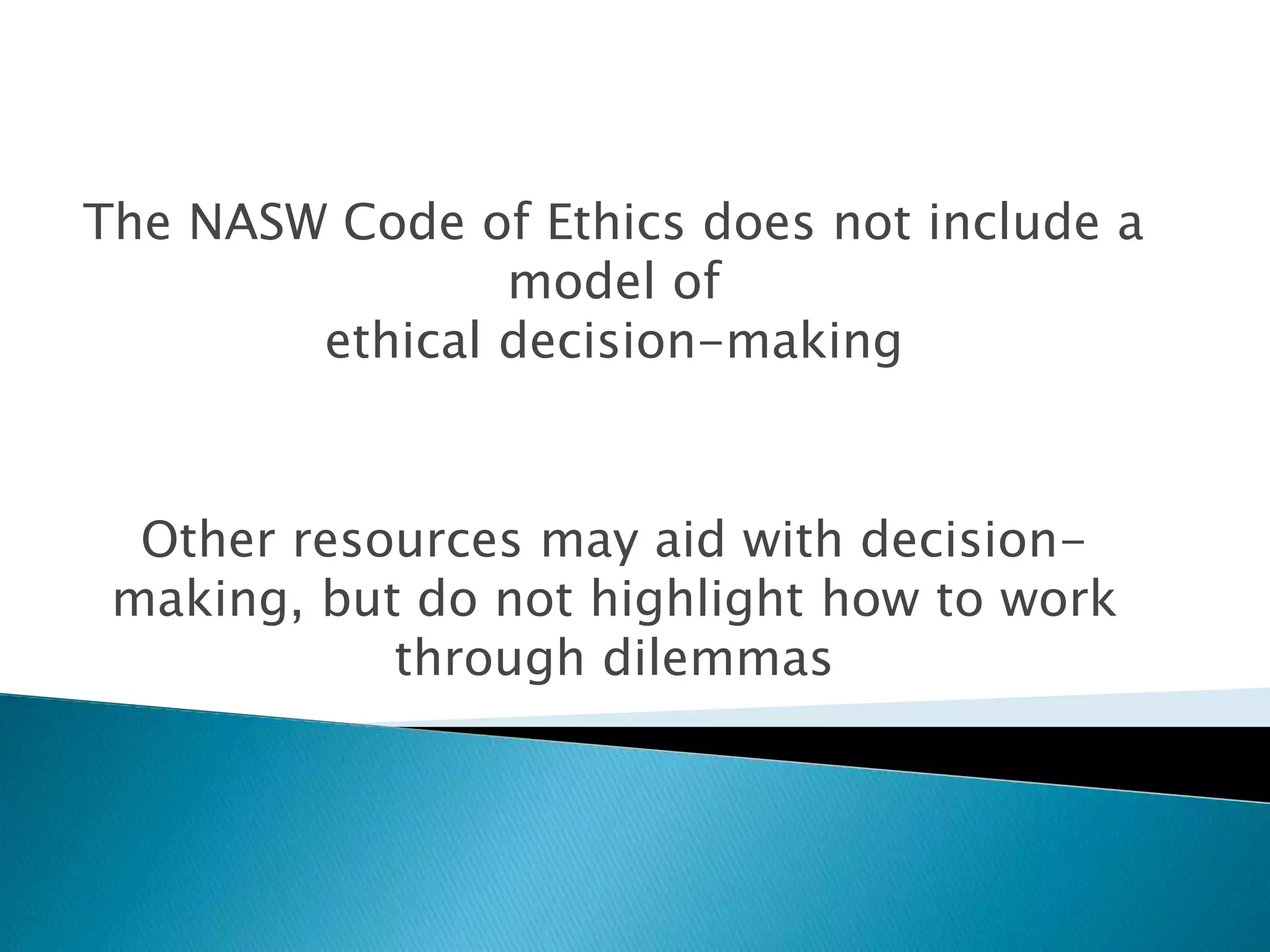
The NASW Code of Ethics does not include a
model of
ethical decision-making
Other resources may aid with decision-
making, but do not highlight how to work
through dilemmas
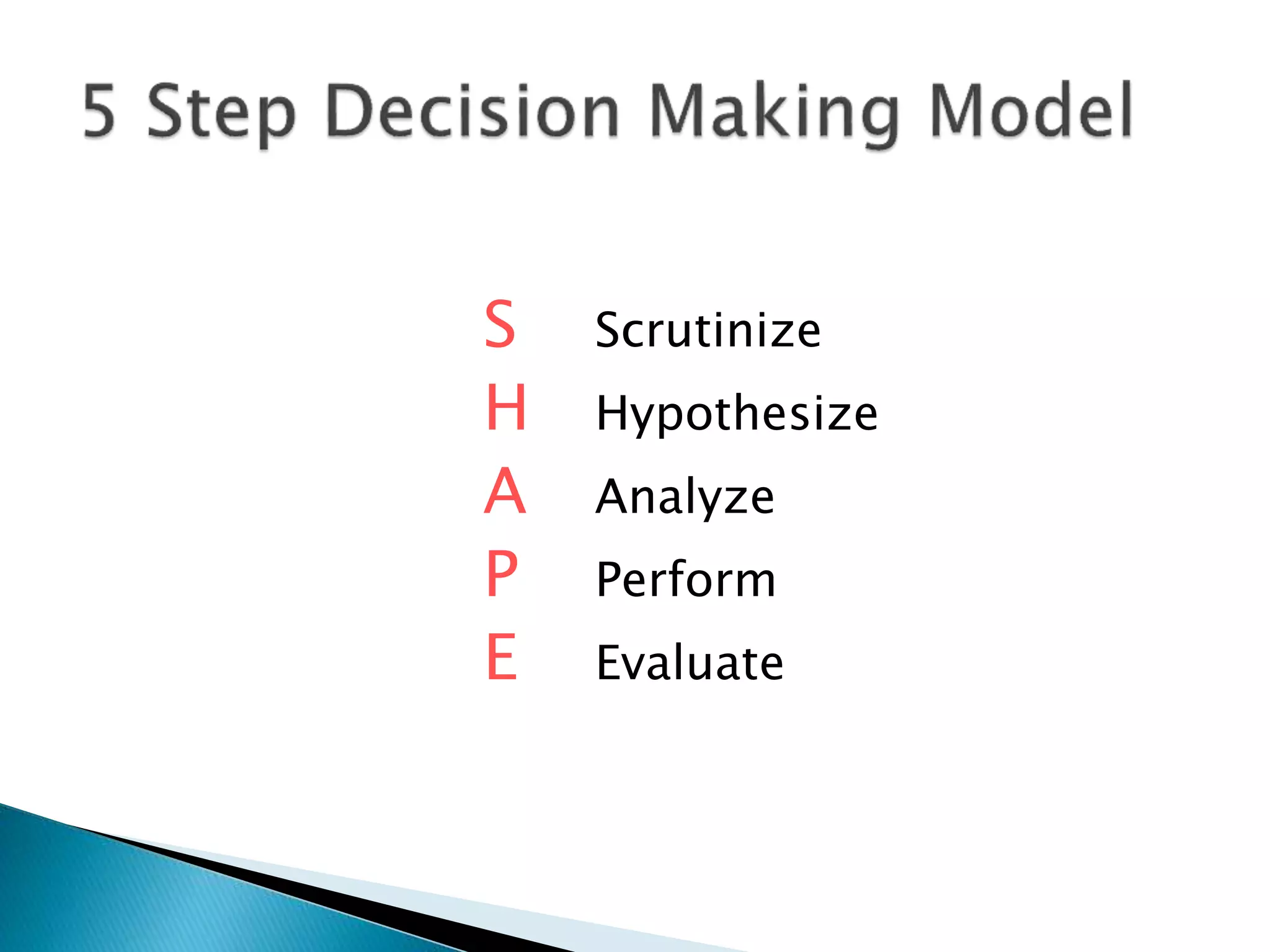
S Scrutinize
H Hypothesize
A Analyze
P Perform
E Evaluate
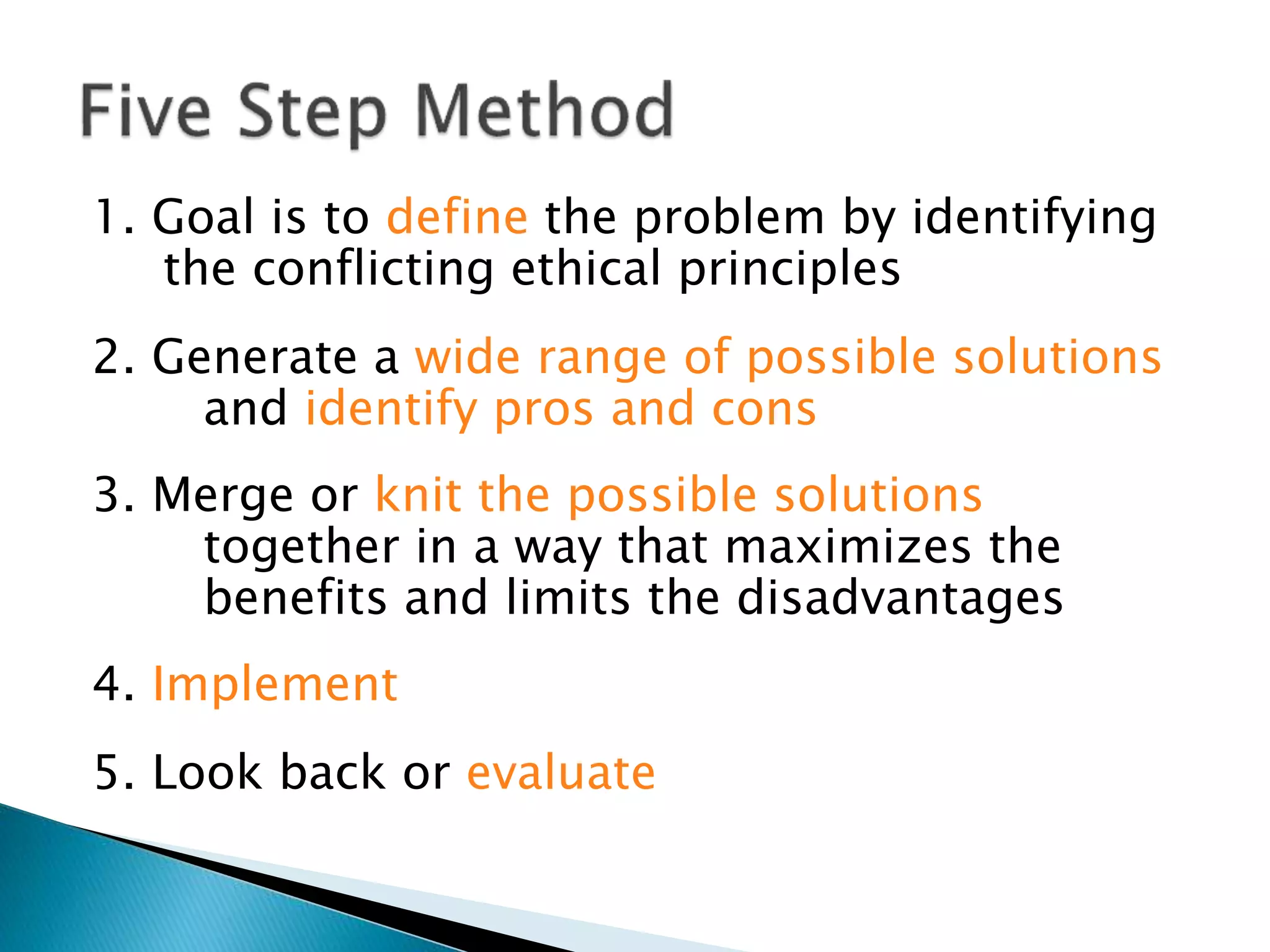
1. Goal is to define the problem by identifying
the conflicting ethical principles
2. Generate a wide range of possible solutions
and identify pros and cons
3. Merge or knit the possible solutions
together in a way that maximizes the
benefits and limits the disadvantages
4. Implement
5. Look back or evaluate
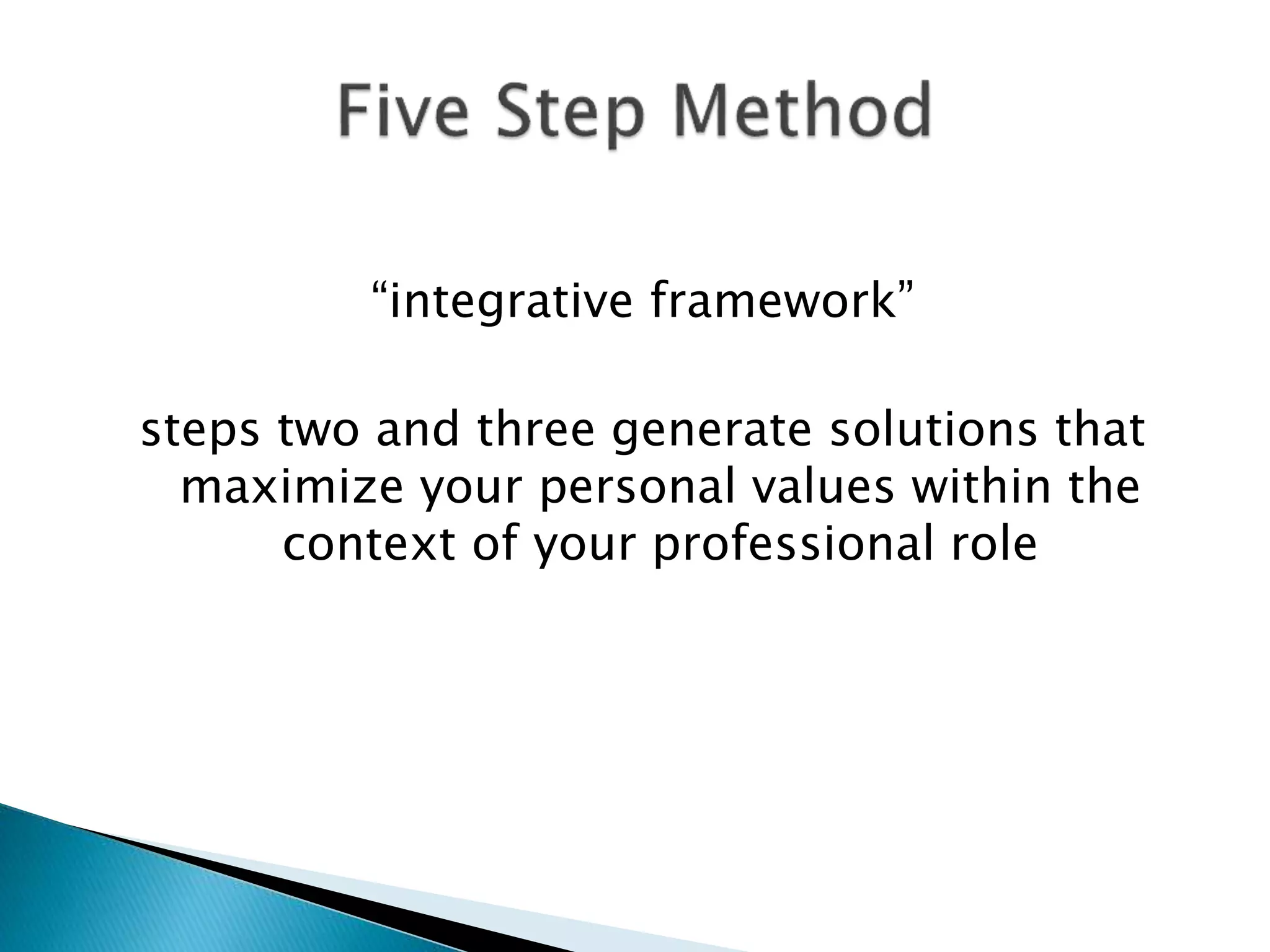
“integrative framework”
steps two and three generate solutions that
maximize your personal values within the
context of your professional role
Avoid dichotomous thinking– either I have to
do x or y.
Duty to Warn example: either I have to warn
the potential victim of a threat or I have to
protect confidentiality.
1. We have to train ourselves to think about
larger ethical principles first
2. We need to have the ability to slow
ourselves down prior to making good,
ethical decisions
Why?
 Malcolm Gladwell’s book “Blink”
 Jonathan Haidt’s book on Moral Intuition
 David Pizarro’s work on motivated moral
reasoning
 Top down approach
 Start with ethical principles
 Work from those principles to make good
decisions about our work
 Intuitive
 Automatic
 Emotional
 Rapid
Why do psychologists (still and continue to) have
sex with their patients?
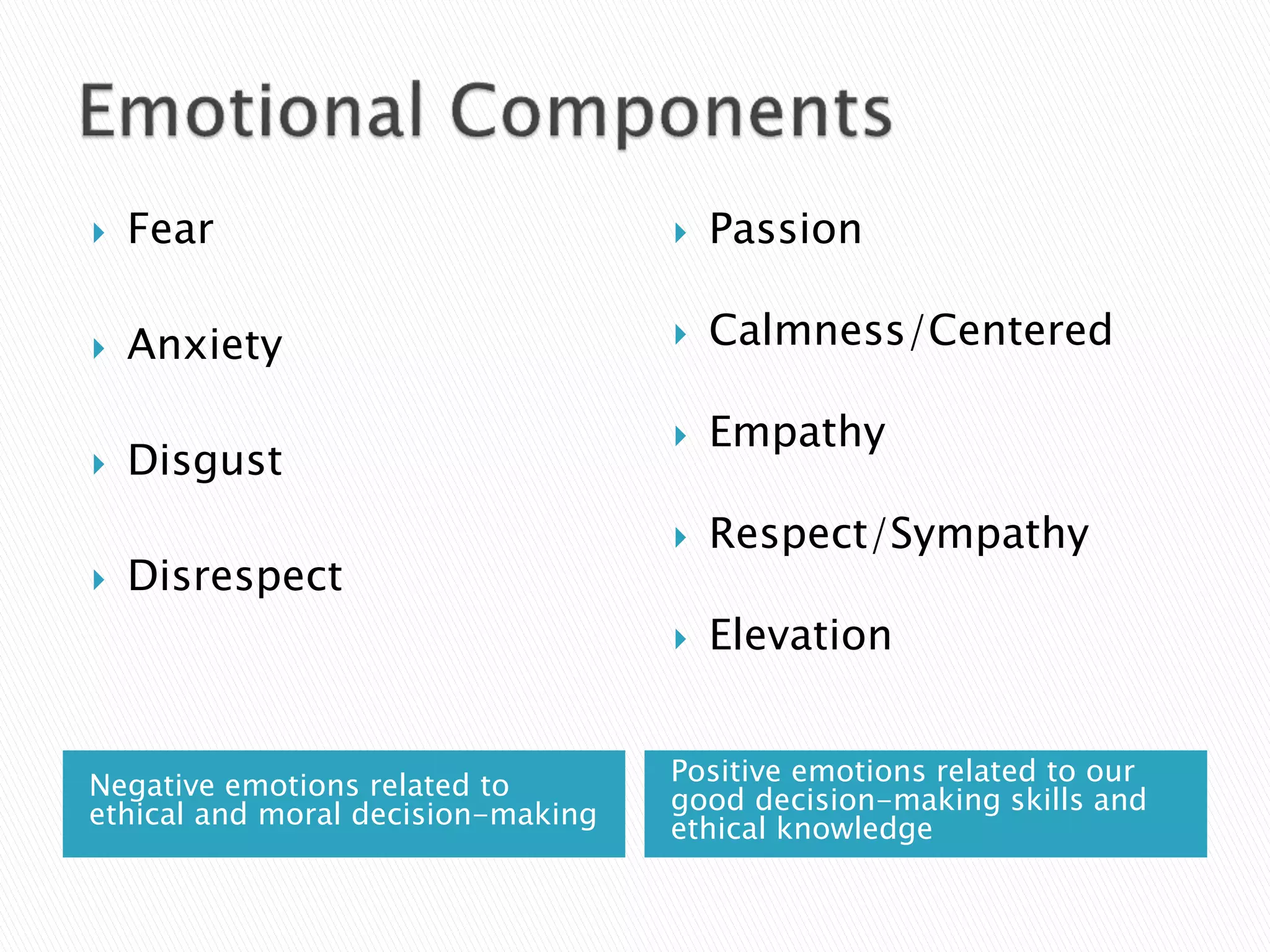
Negative emotions related to
ethical and moral decision-making
Positive emotions related to our
good decision-making skills and
ethical knowledge
 Fear
 Anxiety
 Disgust
 Disrespect
 Passion
 Calmness/Centered
 Empathy
 Respect/Sympathy
 Elevation
 The Fundamental Attribution Error
 Actor Observer Bias
 Availability Heuristic
 Trait Negativity Bias
 Confirmation Bias
 Competence Bias
 This cognitive style places an undue
emphasis on the patient’s behavior in the
therapeutic relationship
 Overemphasis on the patient
 Psychologist may lack insight into what s/he
is doing to promote those responses
 This cognitive style places an undue
emphasis on external factors for the
psychologist’s behavior
 In an attempt to avoid responsibility, the
psychologist can overemphasize the patient’s
role in the ethical dilemma.
 This cognitive error leads one to use
information that readily comes to mind or
easiest to access
 Easiest to go with that which is most
representative of the patient or scenario
 When the psychologist more readily recalls
unpleasant characteristics of the patient as
compared with positive characteristics of the
patient
 It is common for psychologists to work with
individuals they do not like or enjoy
 The cognitive style in which psychologists
look for evidence to confirm their beliefs
about the patient or the situation.
 Motivated moral reasoning
 Dunning-Kruger Effect: a cognitive bias in
which unskilled individuals suffer from
illusory superiority, mistakenly rating their
ability as much higher than average.
 Poor performers fail to learn from their
mistakes.
 And, they fail to internalize direct feedback
from others.
 Length of time in treatment
 Patient complexity
 Emotional intensity/therapeutic relationship
 Current focus (or lack thereof) in treatment
A Brief Review
 Knowledge base: NASW code, foundational
principles, state law, regulation, case law
 Become aware of emotional factors
 Remain aware of cognitive biases/situational
factors
 Patient/relationship factors
 Outcomes are uncertain – Ambiguity remains
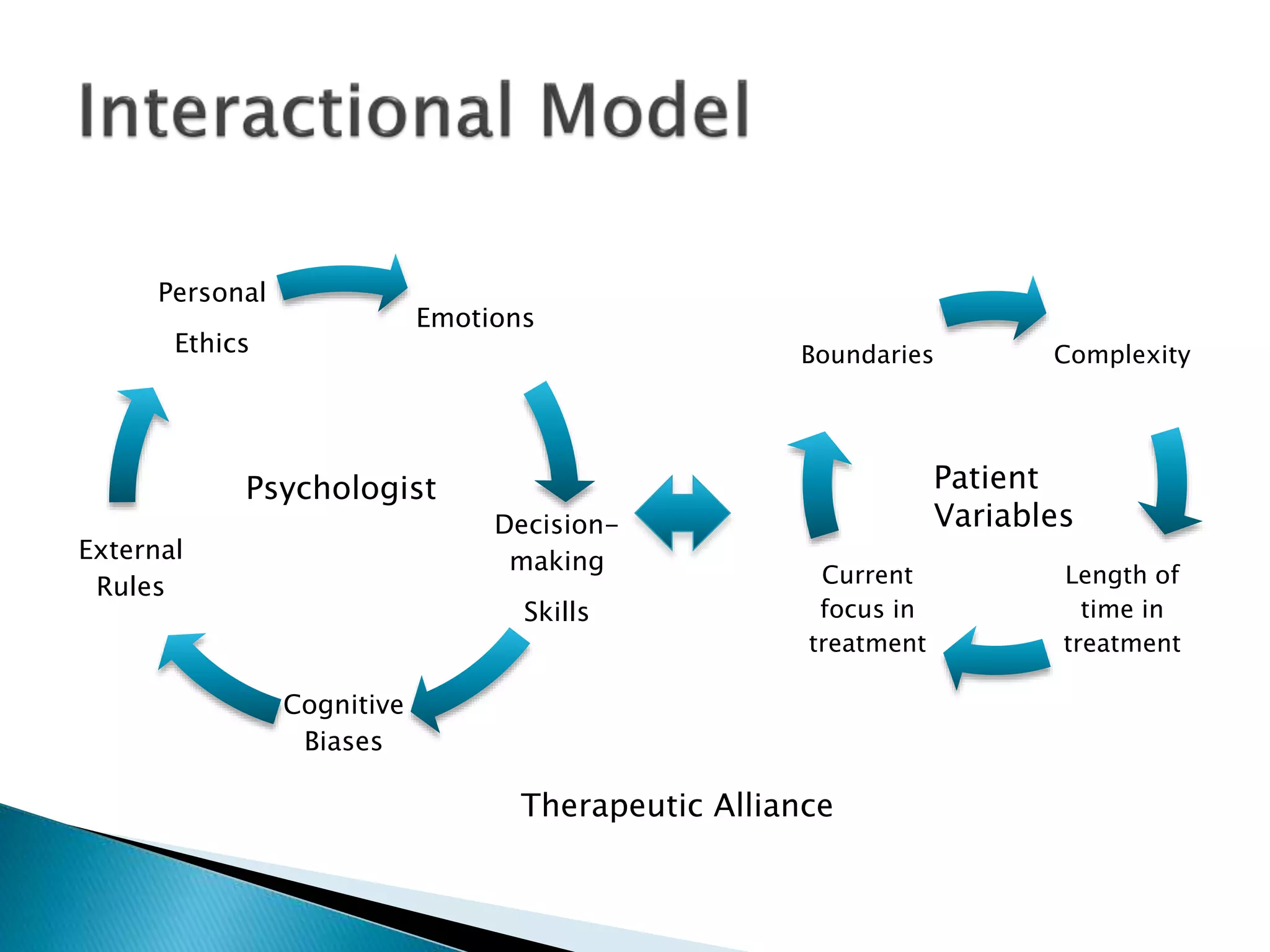
Emotions
Decision-
making
Skills
Cognitive
Biases
External
Rules
Personal
Ethics
Psychologist
Complexity
Length of
time in
treatment
Current
focus in
treatment
Boundaries
Patient
Variables
Therapeutic Alliance
Why study ethics and ethical decision-making
as a part of clinical practice?
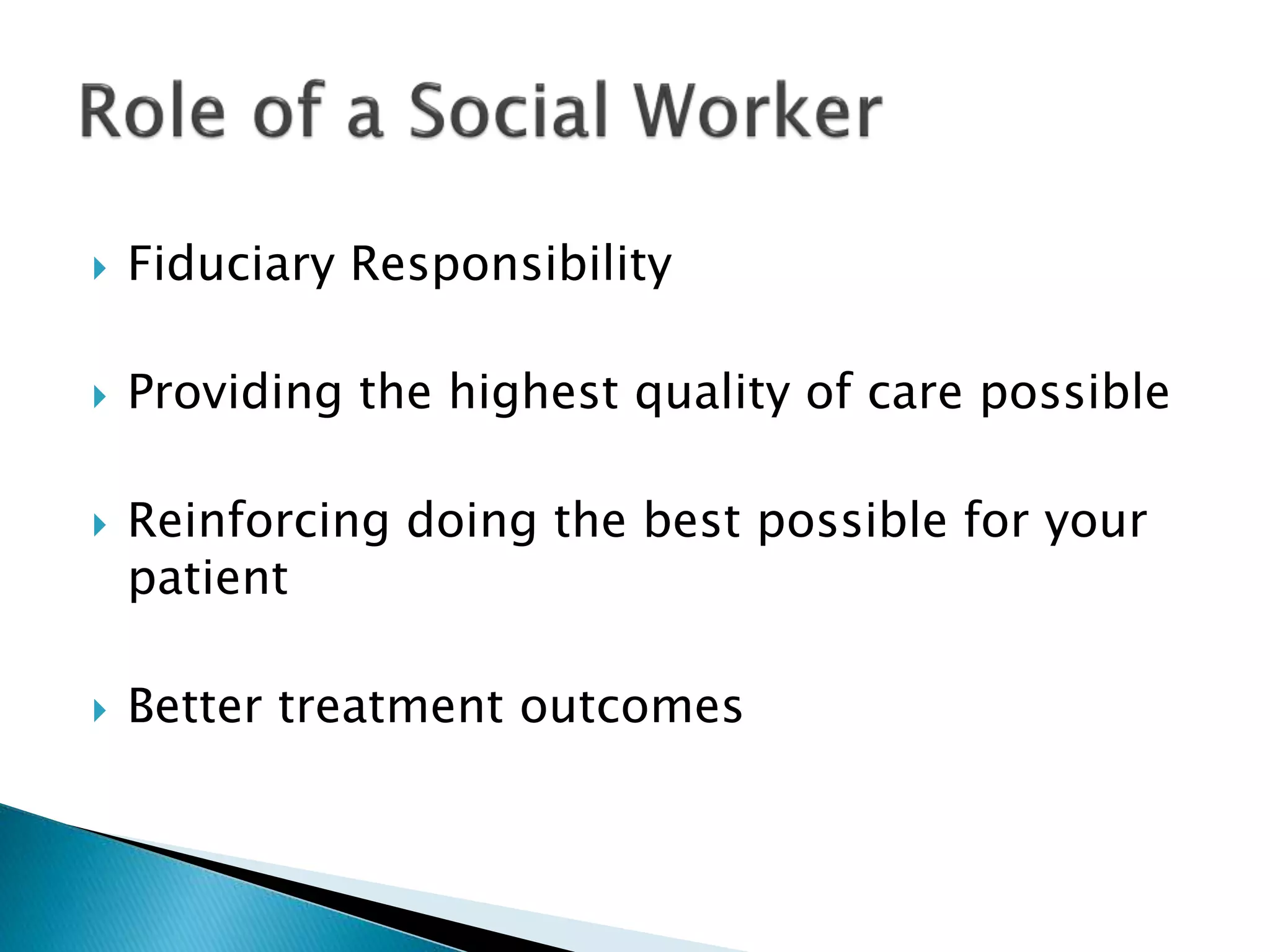
 Fiduciary Responsibility
 Providing the highest quality of care possible
 Reinforcing doing the best possible for your
patient
 Better treatment outcomes
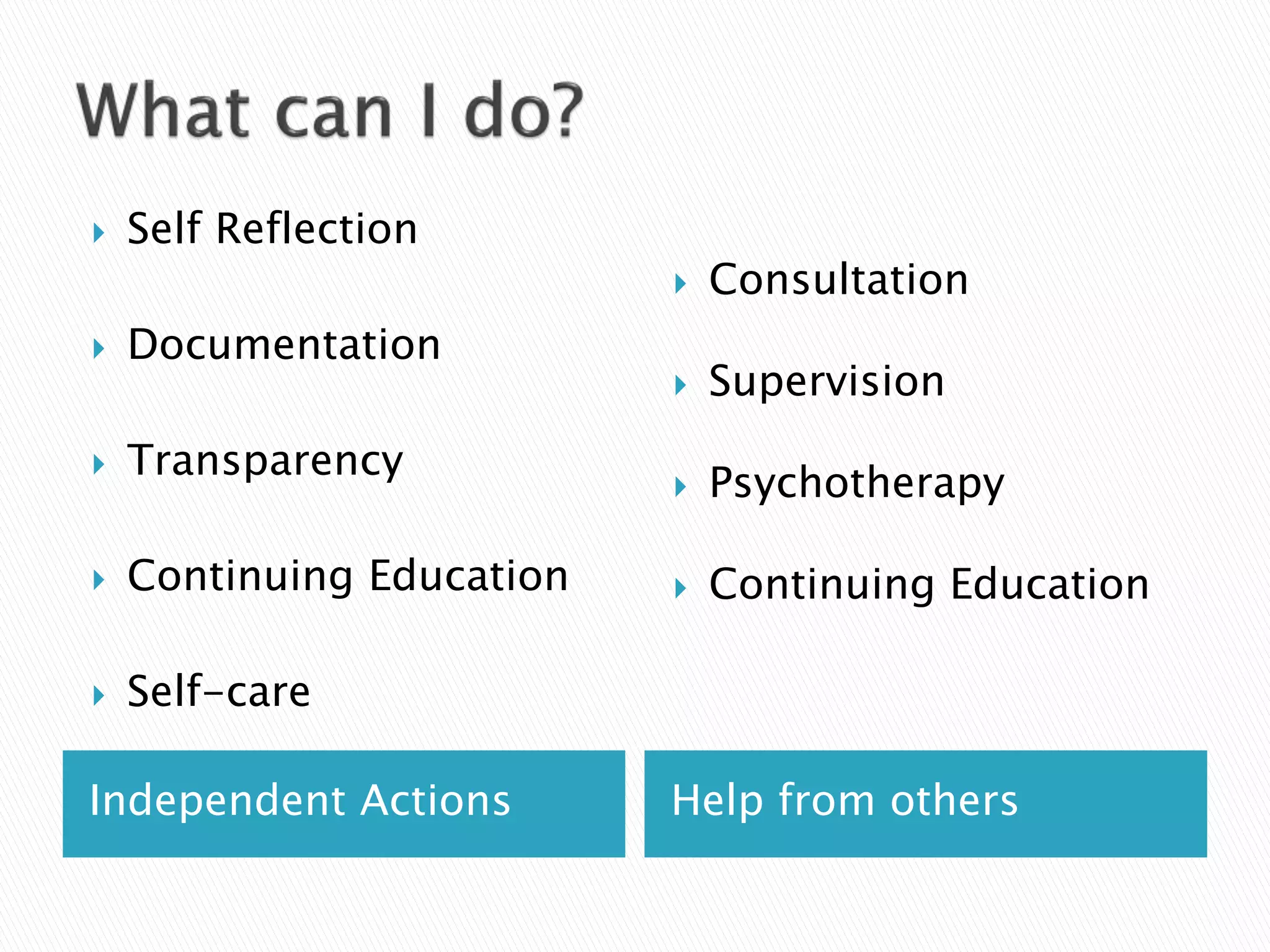
Independent Actions Help from others
 Self Reflection
 Documentation
 Transparency
 Continuing Education
 Self-care
 Consultation
 Supervision
 Psychotherapy
 Continuing Education
 Good general basis to contemplate and
discuss ethical issues in psychological
practice
 Look at vignettes as training tools
 Remain aware of ethical issues in your
practice and work on skill building
The need for informed consent
Not just for the beginning of psychotherapy
 What does the law say?
 What do the ethical principles suggest?
 Usually a conflict between confidentiality and
(community) beneficence
 Child abuse reporting guidelines
What is the difference between a boundary
crossing and a boundary violation?
 Sexual prohibitions
 Physical prohibitions
 Self-disclosure
 The treatment frame
 Between session contacts
 Digital boundaries and virtual ethics
 Multiple roles (therapist, customer, etc.)
Ethics and Psychology
www.papsyblog.org

Ethics in Practice: Mandated Reporting, Boundaries, and Decision-making

  • 1.
    John D. Gavazzi,PsyD ABPP Baltimore County Department of Health June 2014 Ethics in Practice: Mandated Reporting, Professional Boundaries, and Ethical Decision- making
  • 2.
     List thedifferences between ethical, legal, and risk management concerns  Outline a model for integrating professional ethics with personal values  Use one decision-making model to work through an ethical vignette
  • 3.
    The process isoften ambiguous
  • 4.
    1. Move awayfrom the “ethical” versus “unethical” decision. 2. In some ethical decisions, there is not “right” or “correct” answer for everyone. 3. Most clinicians make ethical decisions on a daily basis
  • 5.
    Having an ethicscode or attending lectures on ethics codes are among the least effective ways to ensure ethical behavior.
  • 6.
    People should notact on principle (standing on principle can be an unprincipled stand)
  • 7.
    Rational Social Worker:Know the Code!! Social Worker Patient Learn the rules Apply the rules Outcomes will follow
  • 8.
    PatientSocial Worker Learn therules Apply the rules Outcomes will follow Understand patient dynamics Understand the relationship Know the Code + Know your patient
  • 9.
     Clinical Decision-making Risk management  Legal Decision-making  Ethical Decision-making ◦ Professional Ethics ◦ Personal Ethics, Values, or Morality
  • 11.
     What isthe best clinical intervention for this patient in this situation?  Am I conceptualizing this patient correctly?  My patient continues to struggle after eight sessions. What should I do?
  • 12.
     How doI work with a patient to minimize risk or liability?  Avoid types of work that have high liability risks, such as custody evaluations or clinical complex patients.  Do I have essential paperwork signed? Informed Consent or practice policies current
  • 13.
     Always havea suicidal patient sign a “no suicide” contract  Never touch a patient  Always remain at a professional distance emotionally and socially  Boundary crossings vs. boundary violations
  • 14.
     Am Icompliant with state laws and regulations?  Is my practice HIPAA compliant?  Am I aware of relevant case law in my state?  Questions are usually asked of an attorney
  • 15.
    Professional Ethics  DoI follow the NASW’s Code of Conduct?  Am I performing at the minimum or reaching for the aspirational ceiling?  Is my behavior linked to a foundational principle?
  • 16.
    Personal values, ethics,and morality  Is what I am doing consistent with my values?  What is my emotional response to the patient, lifestyle, or behavioral issue?
  • 17.
    1. Religion/Family ofOrigin 2. Education: College and CE 3. Personal Education: Reading and Experience 4. Honest self-reflection
  • 18.
     How didit develop?  How often do you use it to reflect on professional life?  How often do you use it to reflect on personal life?  How do you integrate morals into ethics?
  • 19.
     Do youuse it “before the fact”?  Is it intuitive and unconscious?  Is it more cognitive?  Is it written down?
  • 20.
     Is itacceptance of another person’s code in full?  If yes, why?  If not, why?
  • 21.
     Do youuse it “after the fact”?  Fundamental Attribution Error  Actor-Observer Bias  Motivated Moral Reasoning
  • 22.
     Looking athow well a social worker integrates his/her values and behaviors into the ethical culture of social workers  Social Work has a set of normative principles and behaviors related to ethical behavior and appropriate conduct
  • 23.
     One wayof remaining a life-long learner  Provides another way to discuss ethical behaviors and decisions
  • 24.
    A process tochange the cultural behavior of an individual through contact with another culture. The process of acculturation occurs when there is an adaptation into an organization or society.
  • 25.
     An outgrowthof positive ethics that integrates personal ethics and professional obligations.  Social Work has a system of shared and distinctive norms, beliefs, and traditions.  This set of beliefs is reflected in the ethics code.
  • 26.
     Can bea complex process  Some parts of a social worker’s practice and lifestyle may be easily acculturated while others not  Process that will likely continue throughout the education or career as a social worker
  • 27.
    Identification with personalvalue system (higher vs. lower) Identification with value system of psychology (higher vs. lower)
  • 28.
    Acculturation Model ofethical development Integration Separation Assimilation Marginalization Higher on Professional Ethics Higher on Personal Ethics Lower on Personal Ethics Lower on Professional Ethics
  • 29.
    Matrix: Lower onprofessional ethics Lower on personal ethics Risks: *Greatest risk of harm *Lack appreciation for ethics *Motivated by self-interest *Less concern for patients
  • 30.
    Matrix: Higher onprofessional ethics Lower on personal ethics Risks: Developing an overly legalistic stance Rigidly conforming to certain rules while missing broader issues
  • 31.
    Matrix: Lower onprofessional ethics Higher on personal ethics Risks: Compassion overrides good professional judgment Fail to recognize the unique role of social workers
  • 32.
    Matrix: Higher onprofessional ethics Higher on personal ethics Reward: Implement values in context of professional roles Reaching for the ethical ceiling Aspirational ethics
  • 33.
  • 34.
    Ethical Culture ofSocial Workers  Service  Social Justice  Dignity and worth of the person  Importance of Human Relationships  Integrity  Competence
  • 35.
     Social workerselevate service to others above self interest.  Social workers draw on their knowledge, values, and skills to help people in need and to address social problems.  Social workers are encouraged to volunteer some portion of their professional skills with no expectation of significant financial return (pro bono service).
  • 36.
     Social workerspursue social change, particularly with and on behalf of vulnerable and oppressed individuals and groups of people.  Social workers’ social change efforts are focused primarily on issues of poverty, unemployment, discrimination, and other forms of social injustice.
  • 37.
     These activitiesseek to promote sensitivity to and knowledge about oppression and cultural and ethnic diversity.  Social workers strive to ensure access to needed information, services, and resources; equality of opportunity; and meaningful participation in decision making for all people.
  • 38.
     Social workerstreat each person in a caring and respectful fashion, mindful of individual differences and cultural and ethnic diversity. Social workers promote clients’ socially responsible self determination.  Social workers seek to enhance clients’ capacity and opportunity to change and to address their own needs.
  • 39.
     Social workersare cognizant of their dual responsibility to clients and to the broader society.  They seek to resolve conflicts between clients’ interests and the broader society’s interests in a socially responsible manner consistent with the values, ethical principles, and ethical standards of the profession.
  • 40.
     Social workersunderstand that relationships between and among people are an important vehicle for change.  Social workers engage people as partners in the helping process.  Social workers seek to strengthen relationships among people in a purposeful effort to promote, restore, maintain, and enhance the wellbeing of individuals, families, social groups, organizations, and communities.
  • 41.
     Social workersare continually aware of the profession’s mission, values, ethical principles, and ethical standards and practice in a manner consistent with them.  Social workers act honestly and responsibly and promote ethical practices on the part of the organizations with which they are affiliated.
  • 42.
     Social workerscontinually strive to increase their professional knowledge and skills and to apply them in practice.  Social workers should aspire to contribute to the knowledge base of the profession.
  • 43.
     The meansto comply with a standard may not always be readily apparent  Two seemingly competing standards may appear equally appropriate  Application with of a single standard or set of standards appear consistent with one or more aspirational principle, but not another
  • 44.
     The socialworker is the expert and has greater power in the relationship  Patient is vulnerable  The social worker is ultimately responsible for what happens in treatment
  • 45.
     Identify thecompeting ethical principles  Help to determine which principle has precedence and why  The importance of emotion in ethical decision-making and moral judgments  Cognitive biases are also important to consider
  • 47.
    The NASW Codeof Ethics does not include a model of ethical decision-making Other resources may aid with decision- making, but do not highlight how to work through dilemmas
  • 48.
    S Scrutinize H Hypothesize AAnalyze P Perform E Evaluate
  • 49.
    1. Goal isto define the problem by identifying the conflicting ethical principles 2. Generate a wide range of possible solutions and identify pros and cons 3. Merge or knit the possible solutions together in a way that maximizes the benefits and limits the disadvantages 4. Implement 5. Look back or evaluate
  • 50.
    “integrative framework” steps twoand three generate solutions that maximize your personal values within the context of your professional role
  • 51.
    Avoid dichotomous thinking–either I have to do x or y. Duty to Warn example: either I have to warn the potential victim of a threat or I have to protect confidentiality.
  • 52.
    1. We haveto train ourselves to think about larger ethical principles first 2. We need to have the ability to slow ourselves down prior to making good, ethical decisions Why?
  • 53.
     Malcolm Gladwell’sbook “Blink”  Jonathan Haidt’s book on Moral Intuition  David Pizarro’s work on motivated moral reasoning
  • 54.
     Top downapproach  Start with ethical principles  Work from those principles to make good decisions about our work
  • 55.
  • 56.
    Why do psychologists(still and continue to) have sex with their patients?
  • 57.
    Negative emotions relatedto ethical and moral decision-making Positive emotions related to our good decision-making skills and ethical knowledge  Fear  Anxiety  Disgust  Disrespect  Passion  Calmness/Centered  Empathy  Respect/Sympathy  Elevation
  • 58.
     The FundamentalAttribution Error  Actor Observer Bias  Availability Heuristic  Trait Negativity Bias  Confirmation Bias  Competence Bias
  • 59.
     This cognitivestyle places an undue emphasis on the patient’s behavior in the therapeutic relationship  Overemphasis on the patient  Psychologist may lack insight into what s/he is doing to promote those responses
  • 60.
     This cognitivestyle places an undue emphasis on external factors for the psychologist’s behavior  In an attempt to avoid responsibility, the psychologist can overemphasize the patient’s role in the ethical dilemma.
  • 61.
     This cognitiveerror leads one to use information that readily comes to mind or easiest to access  Easiest to go with that which is most representative of the patient or scenario
  • 62.
     When thepsychologist more readily recalls unpleasant characteristics of the patient as compared with positive characteristics of the patient  It is common for psychologists to work with individuals they do not like or enjoy
  • 63.
     The cognitivestyle in which psychologists look for evidence to confirm their beliefs about the patient or the situation.  Motivated moral reasoning
  • 64.
     Dunning-Kruger Effect:a cognitive bias in which unskilled individuals suffer from illusory superiority, mistakenly rating their ability as much higher than average.  Poor performers fail to learn from their mistakes.  And, they fail to internalize direct feedback from others.
  • 65.
     Length oftime in treatment  Patient complexity  Emotional intensity/therapeutic relationship  Current focus (or lack thereof) in treatment
  • 66.
  • 67.
     Knowledge base:NASW code, foundational principles, state law, regulation, case law  Become aware of emotional factors  Remain aware of cognitive biases/situational factors  Patient/relationship factors  Outcomes are uncertain – Ambiguity remains
  • 68.
  • 69.
    Why study ethicsand ethical decision-making as a part of clinical practice?
  • 70.
     Fiduciary Responsibility Providing the highest quality of care possible  Reinforcing doing the best possible for your patient  Better treatment outcomes
  • 71.
    Independent Actions Helpfrom others  Self Reflection  Documentation  Transparency  Continuing Education  Self-care  Consultation  Supervision  Psychotherapy  Continuing Education
  • 72.
     Good generalbasis to contemplate and discuss ethical issues in psychological practice  Look at vignettes as training tools  Remain aware of ethical issues in your practice and work on skill building
  • 73.
    The need forinformed consent Not just for the beginning of psychotherapy
  • 74.
     What doesthe law say?  What do the ethical principles suggest?  Usually a conflict between confidentiality and (community) beneficence  Child abuse reporting guidelines
  • 75.
    What is thedifference between a boundary crossing and a boundary violation?
  • 76.
     Sexual prohibitions Physical prohibitions  Self-disclosure  The treatment frame
  • 77.
     Between sessioncontacts  Digital boundaries and virtual ethics  Multiple roles (therapist, customer, etc.)
  • 78.