PURPOSE
• Detect fever.
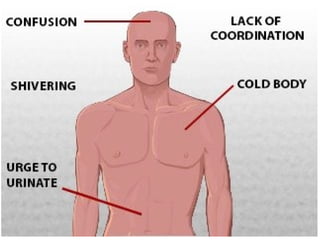
• Detect abnormally low body temperature
(hypothermia) in people who have been
exposed to cold.
• Detect abnormally high body temperature (
hyperthermia) in people who have been
exposed to heat.
• Help monitor the effectiveness of a fever-
reducing medicine.
• Help plan for pregnancy by determining if a
woman is ovulating
Celcius = °C
TEMPERATURE SCALE
Is measured in
36°C – 37.2 °C
NORMAL
TEMPERATURE
Is
THE MOST COMMON SITES OF
MEASURING BODY
TEMPERATURE
TYPES OF
THERMOMETE
R
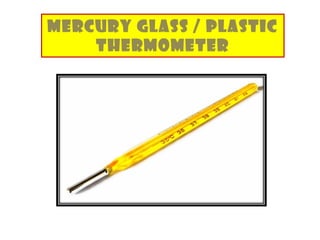
MERCURY GLASS / PLASTIC
THERMOMETER
ELECTRONIC / DIGITAL
THERMOMETER
CHEMICAL DISPOSABLE
THERMOMETER /
TEMPERATURE SENSITIVE
TAPE
INFRARED
THERMOMETER
( THERMOSCAN )
TEMPORAL ARTERY
THERMOMETER
PRE PROCEDURE
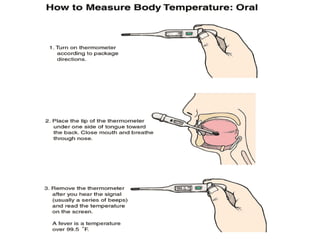
• Greet and explain procedure to the patient
PRE PROCEDURE
• Provide privacy and perform hand hygiene
PRE PROCEDURE
• Apply ear probe cover to thermoscan probe
PRE PROCEDURE
• Ensure the reading in degree Celcius
PRE PROCEDURE
• Inform patient to pull pinna, pull pinna
backward and downward and insert
thermoscan probe into ear cannal
PRE PROCEDURE
• Press ‘START’ button until heard ‘beep’
sound
PRE PROCEDURE
• Remove probe from ear and inform patient
reading
PRE PROCEDURE
• Remove ear probe cover and discard
appropraitely
POST PROCEDURE
• Perform hand hygiene
POST PROCEDURE
• Inform SRN or doctor abnormal result
POST PROCEDURE
• Document reading
> 37.3 °C
ALSO CALLED
PYREXIA
Is a high temperature
above normal range :
41°C
HYPERPYREXIA
Is a very high
temperature above :
< 36°C
HYPOTHERMIA
Is low temperature
below normal range :
Body Temperature
Body Temperature
Body Temperature
Body Temperature

Body Temperature