BLOOD STREAM
INFECTIONS:Definitions and
Significance.

Dr Abhijit Chaudhury
Classical Terms
 Bacteremia: Presence of Bacteria in blood.
Transient: Manipulation/Surgery in
infected/colonized area

Intermittent: Abdominal/Pelvic abscess
Continuous: Endocarditis/Intravascular

infections/ First week of Typhoid , Brucellosis.

 Septicaemia:
toxins in blood.

Presence of microbes or their
Recently Introduced Terms
BLOOD STREAM INFECTION: Presence
and active multiplication of organisms
in blood.
 Primary: Point of entry or focus of
infection cannot be determined/
Originates from I/V catheters.
 Secondary: Distant site (focus) of
infection present.
 Community acquired BSI: Those
Detected within 48 hrs of admission
 Nosocomial BSI: Signs and
symptoms detected after 48 hrs of
admission
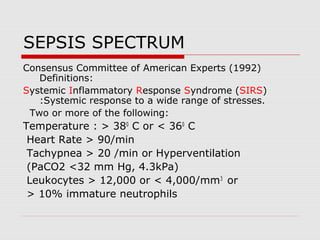
SEPSIS SPECTRUM
Consensus Committee of American Experts (1992)
Definitions:
Systemic Inflammatory Response Syndrome (SIRS)
:Systemic response to a wide range of stresses.
Two or more of the following:

Temperature : > 380 C or < 360 C
Heart Rate > 90/min
Tachypnea > 20 /min or Hyperventilation
(PaCO2 <32 mm Hg, 4.3kPa)
Leukocytes > 12,000 or < 4,000/mm3 or
> 10% immature neutrophils
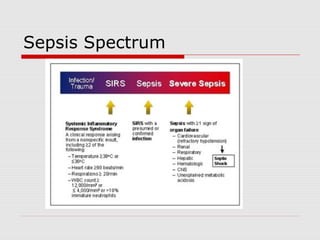
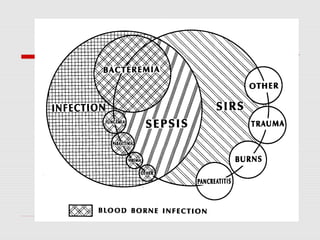
Sepsis Spectrum
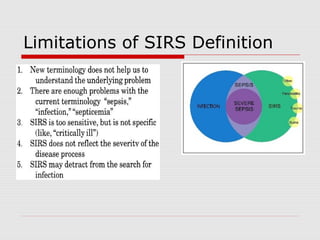
Limitations of SIRS Definition
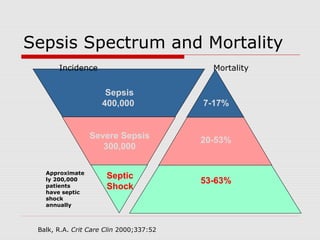
Sepsis Spectrum and Mortality
Incidence

Mortality

Sepsis
400,000

7-17%

Severe Sepsis
300,000
Approximate
ly 200,000
patients
have septic
shock
annually

20-53%

Septic
Shock

53-63%

Balk, R.A. Crit Care Clin 2000;337:52
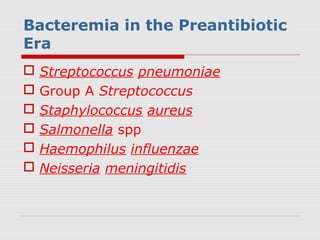
Bacteremia in the Preantibiotic
Era







Streptococcus pneumoniae
Group A Streptococcus
Staphylococcus aureus
Salmonella spp
Haemophilus influenzae
Neisseria meningitidis
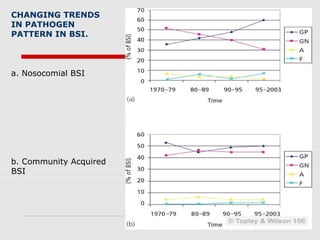
CHANGING TRENDS
IN PATHOGEN
PATTERN IN BSI.

a. Nosocomial BSI

b. Community Acquired
BSI
PRIMARY
BLOOD STREAM INFECTION
 In many cases the primary focus/ route of
entry remains unknown (Appx. 20%)
 Therapeutic/Diagnostic medical devices
coming in direct contact with blood(Device Related Bacteremia ,Maki 1977).
 Various types of venous catheters, arterial
lines - Catheter Related BSI (CR-BSI).
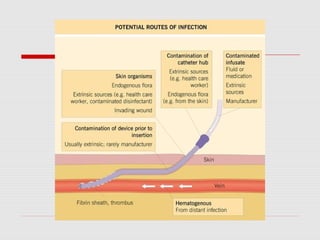
 Entry of organisms through:
1. Contamination of Infusate
2. Contamination of Catheter hub and lumen
3. Contamination of Skin at insertion site
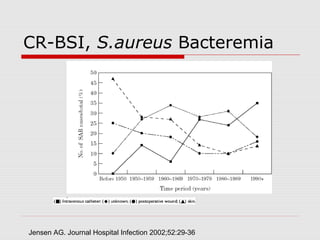
CR-BSI, S.aureus Bacteremia

Jensen AG. Journal Hospital Infection 2002;52:29-36
Secondary BSI
 Focus of Infection most commonly in
LUNGS, URINARY TRACT, ABDOMEN,
INFECTED SURGICAL SITE.
 Gram negative pathogens more
commonly involved.
 5-12% cases may be due to fungi,
particularly Candida.
Predisposing Conditions and Agents
in BSI.
GRAM NEGATIVE PATHOGENS:
 Diabetes mellitus
 Lymphoproliferative diseases
 Liver cirrhosis
 Burns
 Invasive procedures or devices
 Neutropenia
 Indwelling urinary catheter
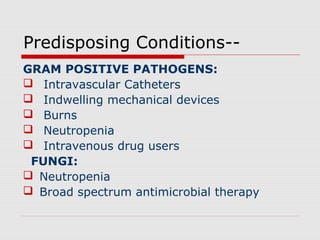
Predisposing Conditions-GRAM POSITIVE PATHOGENS:
 Intravascular Catheters
 Indwelling mechanical devices
 Burns
 Neutropenia
 Intravenous drug users
FUNGI:
 Neutropenia
 Broad spectrum antimicrobial therapy
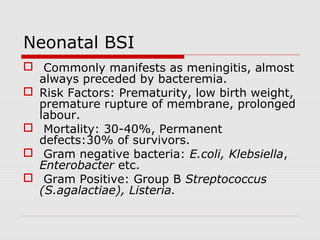
Neonatal BSI
 Commonly manifests as meningitis, almost
always preceded by bacteremia.
 Risk Factors: Prematurity, low birth weight,
premature rupture of membrane, prolonged
labour.
 Mortality: 30-40%, Permanent
defects:30% of survivors.
 Gram negative bacteria: E.coli, Klebsiella,
Enterobacter etc.
 Gram Positive: Group B Streptococcus
(S.agalactiae), Listeria.
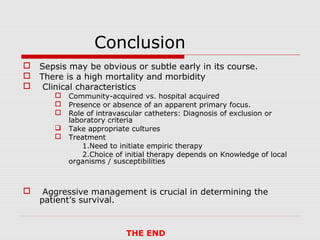
Conclusion




Sepsis may be obvious or subtle early in its course.
There is a high mortality and morbidity
Clinical characteristics








Community-acquired vs. hospital acquired
Presence or absence of an apparent primary focus.
Role of intravascular catheters: Diagnosis of exclusion or
laboratory criteria
Take appropriate cultures
Treatment
1.Need to initiate empiric therapy
2.Choice of initial therapy depends on Knowledge of local
organisms / susceptibilities

Aggressive management is crucial in determining the
patient’s survival.

THE END

Blood stream infections

  • 1.
  • 2.
    Classical Terms  Bacteremia:Presence of Bacteria in blood. Transient: Manipulation/Surgery in infected/colonized area Intermittent: Abdominal/Pelvic abscess Continuous: Endocarditis/Intravascular infections/ First week of Typhoid , Brucellosis.  Septicaemia: toxins in blood. Presence of microbes or their
  • 3.
    Recently Introduced Terms BLOODSTREAM INFECTION: Presence and active multiplication of organisms in blood.  Primary: Point of entry or focus of infection cannot be determined/ Originates from I/V catheters.  Secondary: Distant site (focus) of infection present.
  • 4.
     Community acquiredBSI: Those Detected within 48 hrs of admission  Nosocomial BSI: Signs and symptoms detected after 48 hrs of admission
  • 5.
    SEPSIS SPECTRUM Consensus Committeeof American Experts (1992) Definitions: Systemic Inflammatory Response Syndrome (SIRS) :Systemic response to a wide range of stresses. Two or more of the following: Temperature : > 380 C or < 360 C Heart Rate > 90/min Tachypnea > 20 /min or Hyperventilation (PaCO2 <32 mm Hg, 4.3kPa) Leukocytes > 12,000 or < 4,000/mm3 or > 10% immature neutrophils
  • 6.
  • 7.
  • 9.
    Sepsis Spectrum andMortality Incidence Mortality Sepsis 400,000 7-17% Severe Sepsis 300,000 Approximate ly 200,000 patients have septic shock annually 20-53% Septic Shock 53-63% Balk, R.A. Crit Care Clin 2000;337:52
  • 10.
    Bacteremia in thePreantibiotic Era       Streptococcus pneumoniae Group A Streptococcus Staphylococcus aureus Salmonella spp Haemophilus influenzae Neisseria meningitidis
  • 11.
    CHANGING TRENDS IN PATHOGEN PATTERNIN BSI. a. Nosocomial BSI b. Community Acquired BSI
  • 12.
    PRIMARY BLOOD STREAM INFECTION In many cases the primary focus/ route of entry remains unknown (Appx. 20%)  Therapeutic/Diagnostic medical devices coming in direct contact with blood(Device Related Bacteremia ,Maki 1977).  Various types of venous catheters, arterial lines - Catheter Related BSI (CR-BSI).  Entry of organisms through: 1. Contamination of Infusate 2. Contamination of Catheter hub and lumen 3. Contamination of Skin at insertion site
  • 14.
    CR-BSI, S.aureus Bacteremia JensenAG. Journal Hospital Infection 2002;52:29-36
  • 15.
    Secondary BSI  Focusof Infection most commonly in LUNGS, URINARY TRACT, ABDOMEN, INFECTED SURGICAL SITE.  Gram negative pathogens more commonly involved.  5-12% cases may be due to fungi, particularly Candida.
  • 16.
    Predisposing Conditions andAgents in BSI. GRAM NEGATIVE PATHOGENS:  Diabetes mellitus  Lymphoproliferative diseases  Liver cirrhosis  Burns  Invasive procedures or devices  Neutropenia  Indwelling urinary catheter
  • 17.
    Predisposing Conditions-GRAM POSITIVEPATHOGENS:  Intravascular Catheters  Indwelling mechanical devices  Burns  Neutropenia  Intravenous drug users FUNGI:  Neutropenia  Broad spectrum antimicrobial therapy
  • 18.
    Neonatal BSI  Commonlymanifests as meningitis, almost always preceded by bacteremia.  Risk Factors: Prematurity, low birth weight, premature rupture of membrane, prolonged labour.  Mortality: 30-40%, Permanent defects:30% of survivors.  Gram negative bacteria: E.coli, Klebsiella, Enterobacter etc.  Gram Positive: Group B Streptococcus (S.agalactiae), Listeria.
  • 19.
    Conclusion    Sepsis may beobvious or subtle early in its course. There is a high mortality and morbidity Clinical characteristics       Community-acquired vs. hospital acquired Presence or absence of an apparent primary focus. Role of intravascular catheters: Diagnosis of exclusion or laboratory criteria Take appropriate cultures Treatment 1.Need to initiate empiric therapy 2.Choice of initial therapy depends on Knowledge of local organisms / susceptibilities Aggressive management is crucial in determining the patient’s survival. THE END