Group B
and Group D
Streptococci
Streptococcus
• Gram + Ve cocci
• Arranged in chains/pairs
• Important human pathogens: pyogenic
infection
• Tendency to spread
• Acute rheumatic fever; Glomerulonephritis
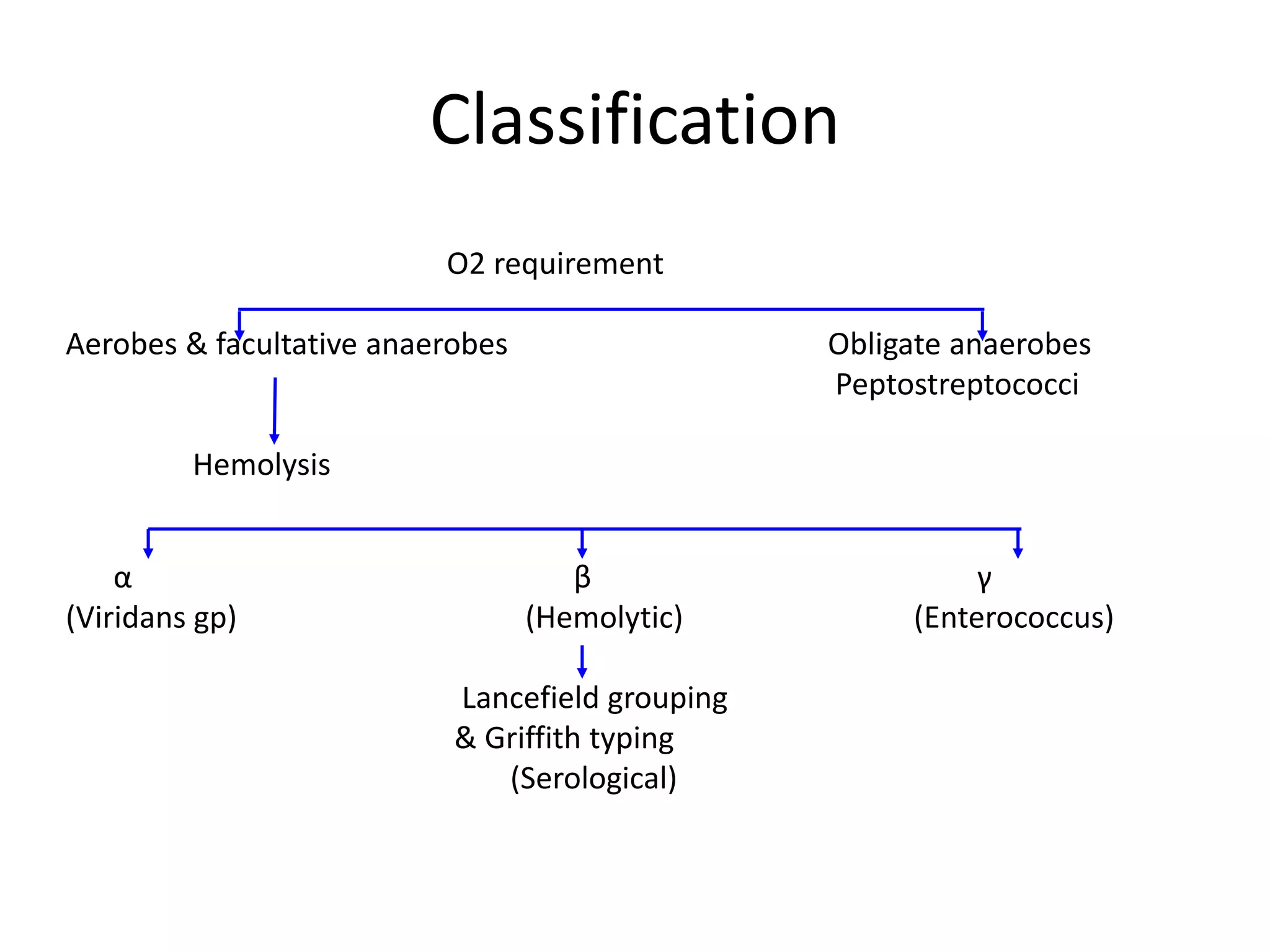
Classification
O2 requirement
Aerobes & facultative anaerobes Obligate anaerobes
Peptostreptococci
Hemolysis
α β γ
(Viridans gp) (Hemolytic) (Enterococcus)
Lancefield grouping
& Griffith typing
(Serological)
Beta hemolysis
Alpha hemolysis No hemolysis
Hemolysis Patterns of Streptococci
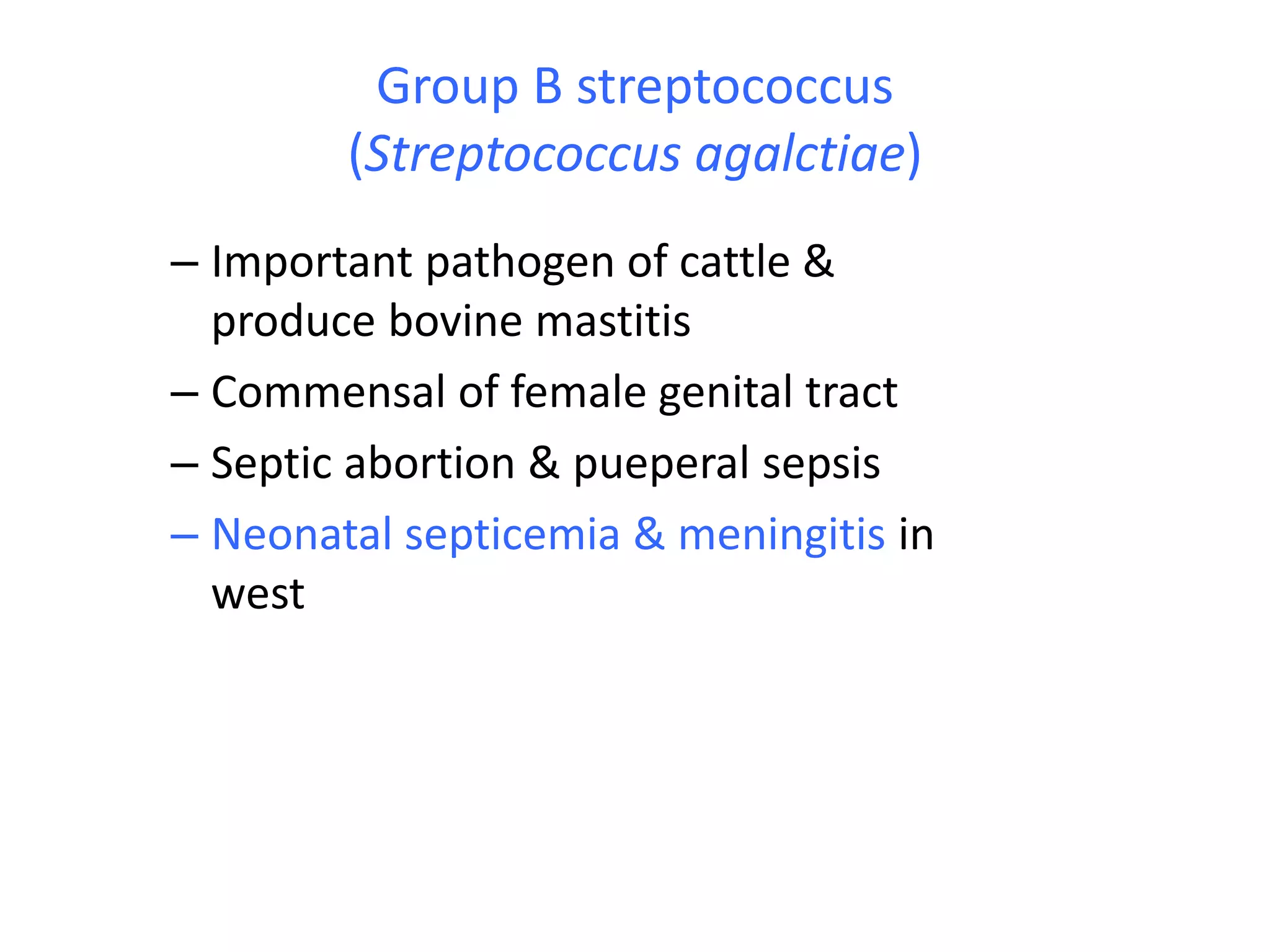
Group B streptococcus
(Streptococcus agalctiae)
– Important pathogen of cattle &
produce bovine mastitis
– Commensal of female genital tract
– Septic abortion & pueperal sepsis
– Neonatal septicemia & meningitis in
west
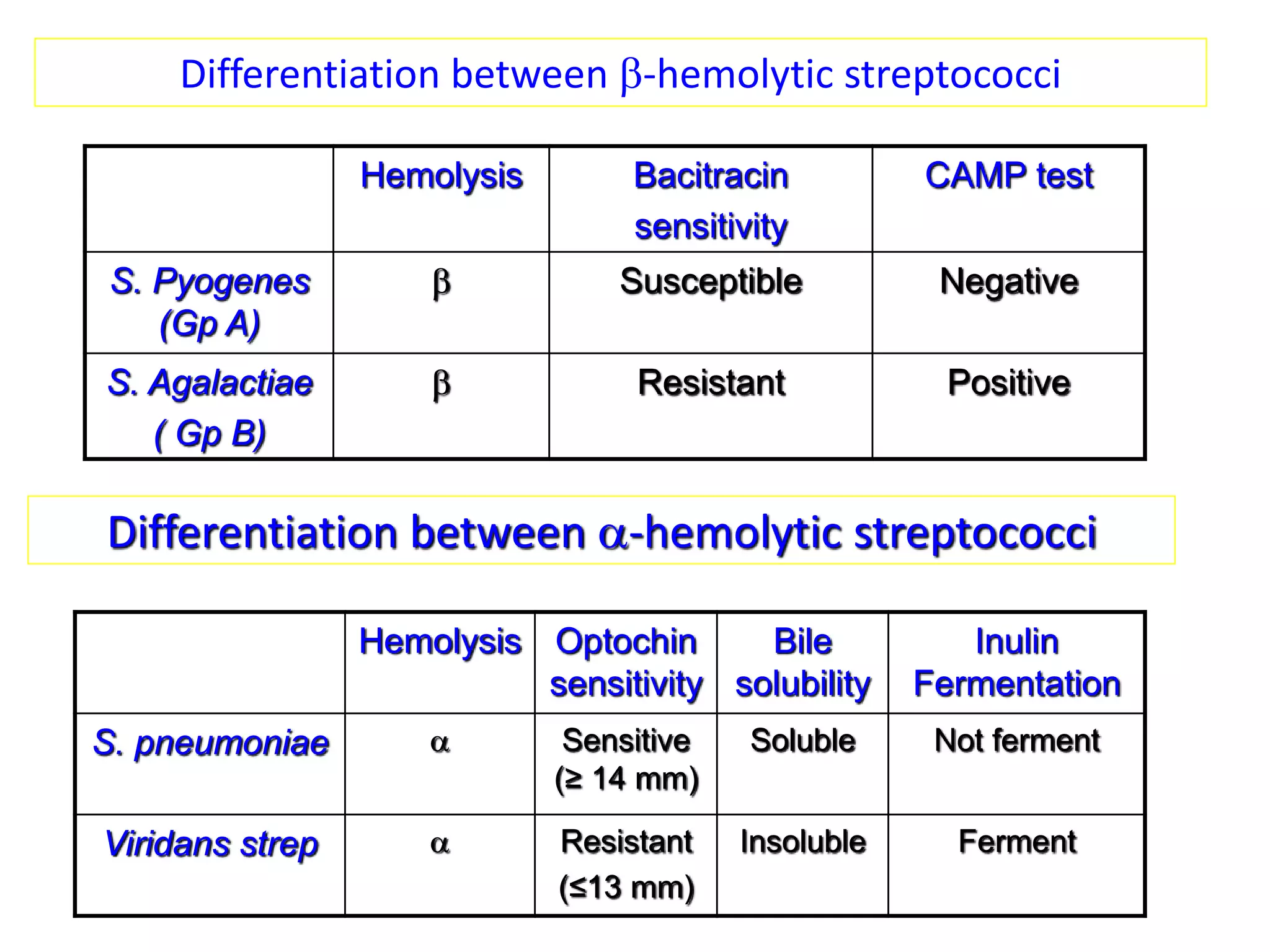
Differentiation between -hemolytic streptococci
CAMP test
Bacitracin
sensitivity
Hemolysis
Negative
Susceptible

S. Pyogenes
(Gp A)
Positive
Resistant

S. Agalactiae
( Gp B)
Inulin
Fermentation
Bile
solubility
Optochin
sensitivity
Hemolysis
Not ferment
Soluble
Sensitive
(≥ 14 mm)

S. pneumoniae
Ferment
Insoluble
Resistant
(≤13 mm)

Viridans strep
Differentiation between -hemolytic streptococci
Streptococcus agalctiae
• Gram-positive diplococcus
• Produces a narrow zone of -hemolysis on
blood agar
• Most strains are bacitracin resistant
• Positive CAMP test
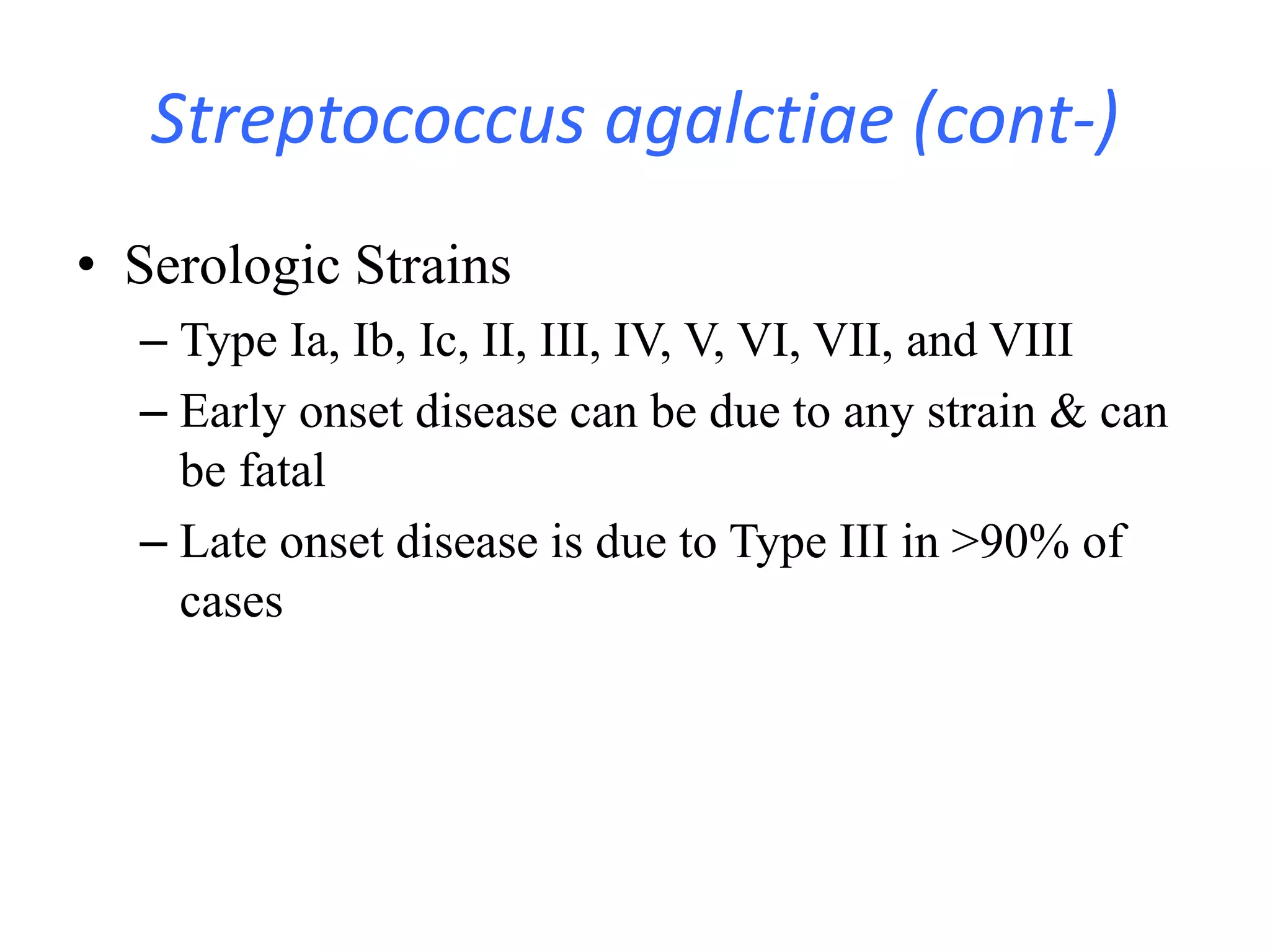
Streptococcus agalctiae (cont-)
• Serologic Strains
– Type Ia, Ib, Ic, II, III, IV, V, VI, VII, and VIII
– Early onset disease can be due to any strain & can
be fatal
– Late onset disease is due to Type III in >90% of
cases
Epidemiology
• Colonizes ~20% of pregnant women
– Usually asymptomatic but can have UTIs,
chorioamnionitis, or endometritis
• 40-70% of infants born to colonized mothers are
colonized
• Nearly 50% of sexual partners of colonized women
are colonized 0.2-3.7/1000 live births
– Rates are diminishing with prophylaxis
• 0.5-2% of newborn infants born to colonized mothers
• Gets colonized.
Maternal Risk Factors
• Preterm labour < 37 weeks
• Preterm prom at 37 weeks
• Fever during labor
• Previous delivery of sibling with invasive gbs
disease
• Multiple births
11
GBS COLONIZATION
• IN MOTHER
• LOWER GENITAL TRACT
• ANORECTUM
• URINARY TRACT
• IN NEONATES
• EXTERNAL EAR (IN FIRST 24 H )
• ANTERIOR NARES, THROAT
• ANORECTUM
• UMBILICUS
12
Risk Factors for Colonization
• Heavily colonized mothers
• Mothers younger than 20
• African Americans
• Lower socioeconomic groups
• PROM
• Prolonged labor
• Maternal Chorioamnionitis
• Previous delivery with GBS disease
Early Onset v. Late Onset
• Occurs within the 1st
week of life (usually
<72 hours)
• Attack rate more in low
birth weight
• Accounts for 20%
• Cases appearing up to 6
months of age
• Cases after 1 month of
age occur primarily in
premature and
immunodeficient infants
Early Onset v. Late Onset
• Vertical transmission
• Ascending infection
(duration of ROM 
incidence of infection)
• During passage through
a colonized birth canal
• Maternal transmission
• Nonmaternal sites:
– Nursery
– Personnel
– Community
• Pathophysiology due to
weakened host defense
Early Onset v. Late Onset
• Pneumonia with
bacteremia
• Pulmonary HTN
Meningitis
• Bacteremia without a
focus (55%)
• Meningitis (35%)
• Osteomyelitis and
arthritis
Laboratory Findings
• Isolation and identification from normally
sterile sites
– CSF
– Gastric or tracheal aspirates
– Skin or mucous membranes
CAMP test
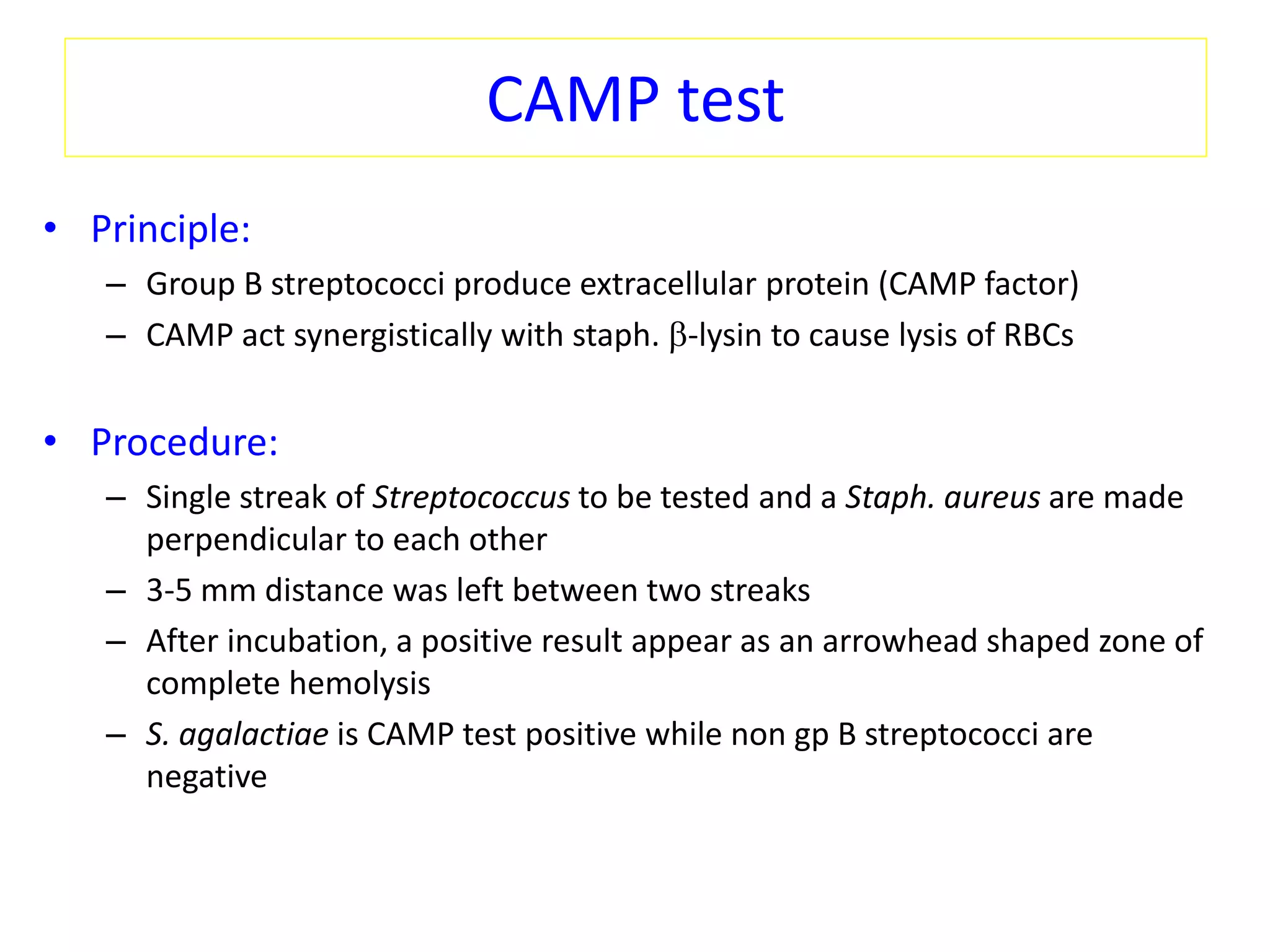
• Principle:
– Group B streptococci produce extracellular protein (CAMP factor)
– CAMP act synergistically with staph. -lysin to cause lysis of RBCs
• Procedure:
– Single streak of Streptococcus to be tested and a Staph. aureus are made
perpendicular to each other
– 3-5 mm distance was left between two streaks
– After incubation, a positive result appear as an arrowhead shaped zone of
complete hemolysis
– S. agalactiae is CAMP test positive while non gp B streptococci are
negative
Hemolysis on Blood agar
-hemolysis
-hemolysis
-hemolysis
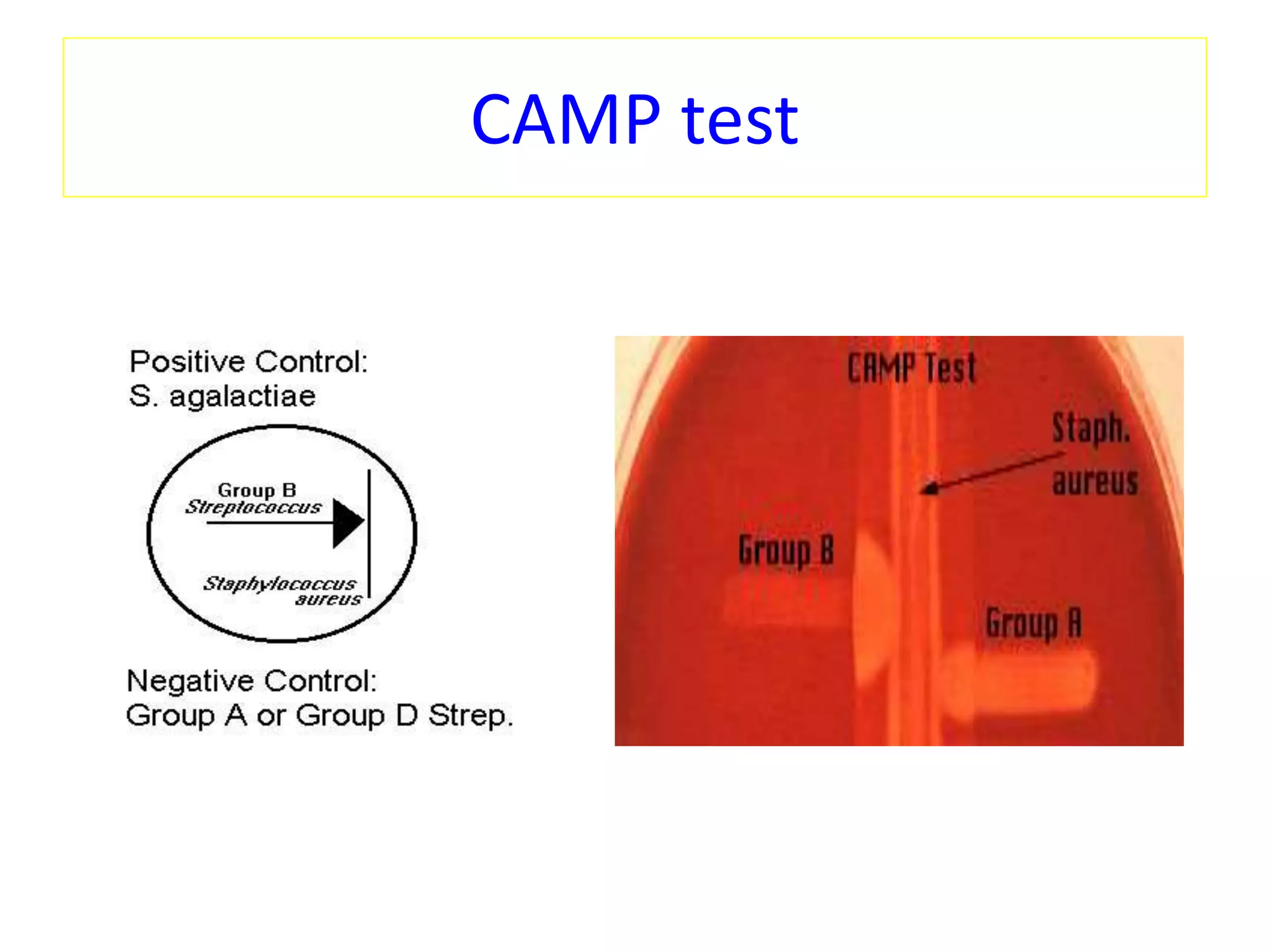
CAMP test
CAMP test
Staph. aureus
Gp B
Streptococcus
Gp A
Streptococcus
GBS MENINGITIS
• MORTALITY RATE 50 - 75 %
• 21 % OF SURVIVORS HAVE MAJOR
PERMANENT NEUROLOGIC SEQUELAE
– MENTAL RETARDATION (USUALLY PROFOUND)
– SPASTIC QUADRIPLEGIA
– CORTICAL BLINDNESS
– DEAFNESS
– UNCONTROLLED SEIZURES
– HYDROCEPHALUS
– HYPOTHALAMIC DYSFUNCTION
22
GBS MENINGITIS
• 20 % OF SURVIVORS HAVE MILD TO
MODERATE NEUROLOGIC SEQUELAE
• BORDERLINE MENTAL RETARDATION
• LANGUAGE DELAY
• UNILATERAL HEARING LOSS
23
GBS BACTEREMIA WITHOUT FOCUS
• LATE ONSET DISEASE
• UNCOMPLICATED PERINATAL COURSE
• NON-SPECIFIC SIGNS IN FIRST FEW WEEKS OF
LIFE
– FEVER
– POOR FEEDING
– IRRITABILITY
– RINORRHEA
• “R/O SEPSIS” WORKUP
24
PREVENTION OF GBS INFECTION
• CHEMOPROPHYLAXIS
• IMMUNOPROPHYLAXIS
25
Bacitracin sensitivity
• Principle:
– Bacitracin test is used for presumptive
identification of group A
– To distinguish between S. pyogenes
(susceptible to B) & non group A such as S.
agalactiae (Resistant to B)
– Bacitracin will inhibit the growth of gp A Strep.
pyogenes giving zone of inhibition around the
disk
• Procedure:
– Inoculate BAP with heavy suspension of tested
organism
– Bacitracin disk (0.04 U) is applied to inoculated
BAP
– After incubation, any zone of inhibition around
the disk is considered as susceptible
Differentiation between -hemolytic streptococci
CAMP test
Bacitracin
sensitivity
Hemolysis
Negative
Susceptible

S. pyogenes
Positive
Resistant

S. agalactiae
Inulin
Fermentation
Bile
solubility
Optochin
sensitivity
Hemolysis
ferment
Soluble
Sensitive
(≥ 14 mm)

S. pneumoniae
Not-fermented
Insoluble
Resistant
(≤13 mm)

Viridans strep
Differentiation between -hemolytic streptococci
Enterococcus: Microbiological
Properties
• Gram-positive cocci (round to oval-shaped,
occasionally elongated)
• Catalase negative
• Growth on 5% sheep blood agar with optimal
growth for occasional strains in the presence
of 5-10% CO2
• -hemolysis (E. faecium) and no hemolysis or
narrow zone of  hemolysis (E. faecalis)
• Most strains are bacitracin resistant
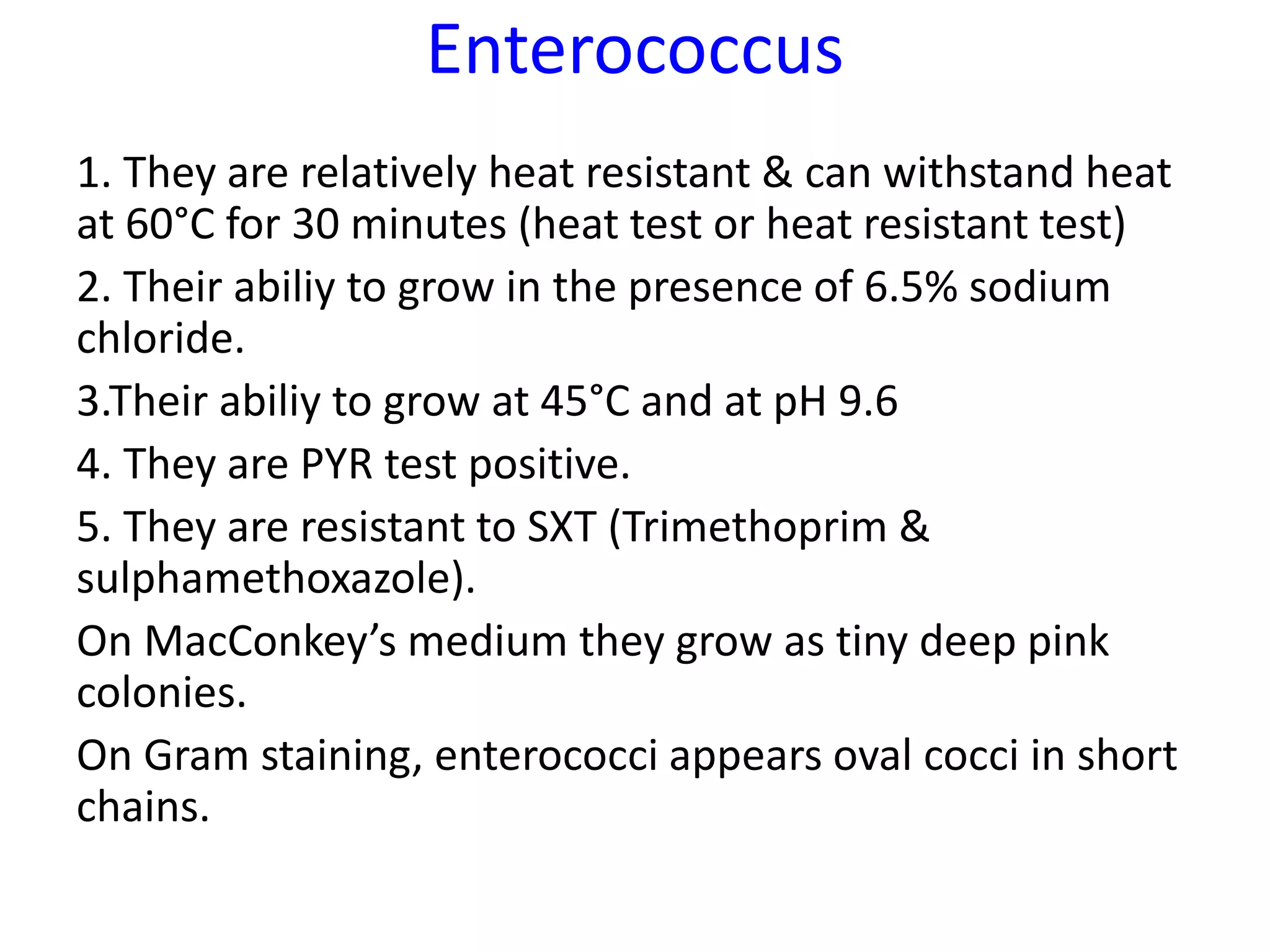
Enterococcus
1. They are relatively heat resistant & can withstand heat
at 60°C for 30 minutes (heat test or heat resistant test)
2. Their abiliy to grow in the presence of 6.5% sodium
chloride.
3.Their abiliy to grow at 45°C and at pH 9.6
4. They are PYR test positive.
5. They are resistant to SXT (Trimethoprim &
sulphamethoxazole).
On MacConkey’s medium they grow as tiny deep pink
colonies.
On Gram staining, enterococci appears oval cocci in short
chains.
Enterococcus ( Cont-)
• The identification of the species is based on
biochemical reactions. E. faecalis is the most
commonly isolated enterococcus from human
sources.
• Other enterococci are E. faecium & E. durans
E. faecalis can be identified by fermentation of
mannitol, sucrose, aesculin & sorbitol, and by
producing black colonies when grown on tellurite
blood agar.
-Sub acute bacterial endocarditis
-Septicaemia, biliary tract infection
-peritonitis
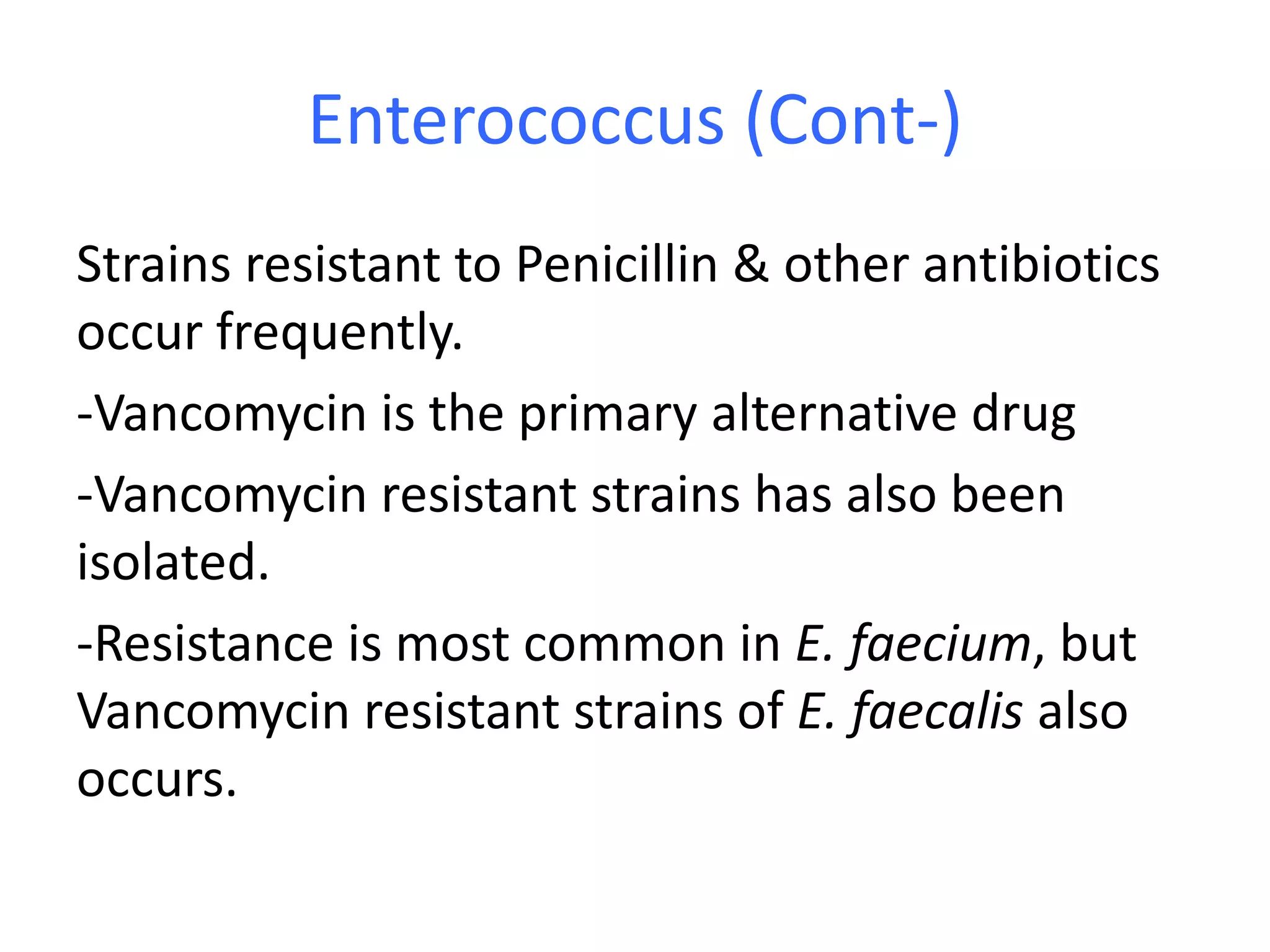
Enterococcus (Cont-)
Strains resistant to Penicillin & other antibiotics
occur frequently.
-Vancomycin is the primary alternative drug
-Vancomycin resistant strains has also been
isolated.
-Resistance is most common in E. faecium, but
Vancomycin resistant strains of E. faecalis also
occurs.
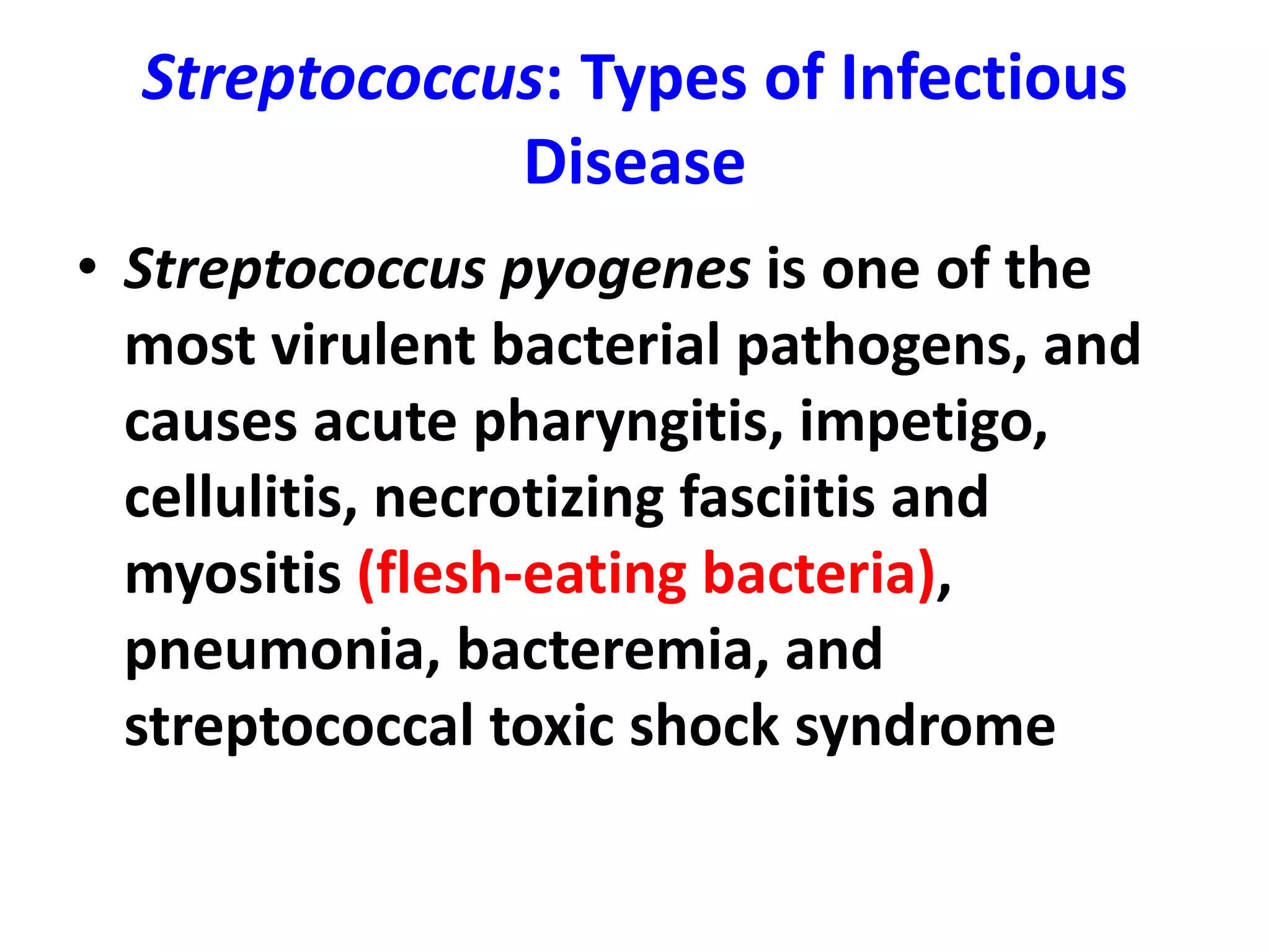
Streptococcus: Types of Infectious
Disease
• Streptococcus pyogenes is one of the
most virulent bacterial pathogens, and
causes acute pharyngitis, impetigo,
cellulitis, necrotizing fasciitis and
myositis (flesh-eating bacteria),
pneumonia, bacteremia, and
streptococcal toxic shock syndrome
Enterococcus: Types of Infectious Disease
• High-level vancomycin resistance results from vanA gene
coding for abnormal peptidoglycan precursors having
terminal D-alanyl-D-lactate (normal = D-alanyl-D-alanine)
with decreased vancomycin binding affinity and diminshed
inhibition by vancomycin of cell wall peptidoglycan synthesis
for VRE strains (VRE=vancomycin-resistant enterococci)
• Associated with resistance to high concentrations of
vancomycin (vancomycin minimal inhibitory concentrations
> 256-µg/ml) and treatment failure in VRE infection
• Prevalent with Enterococcus faecium, unusual for
Enterococcus faecalis
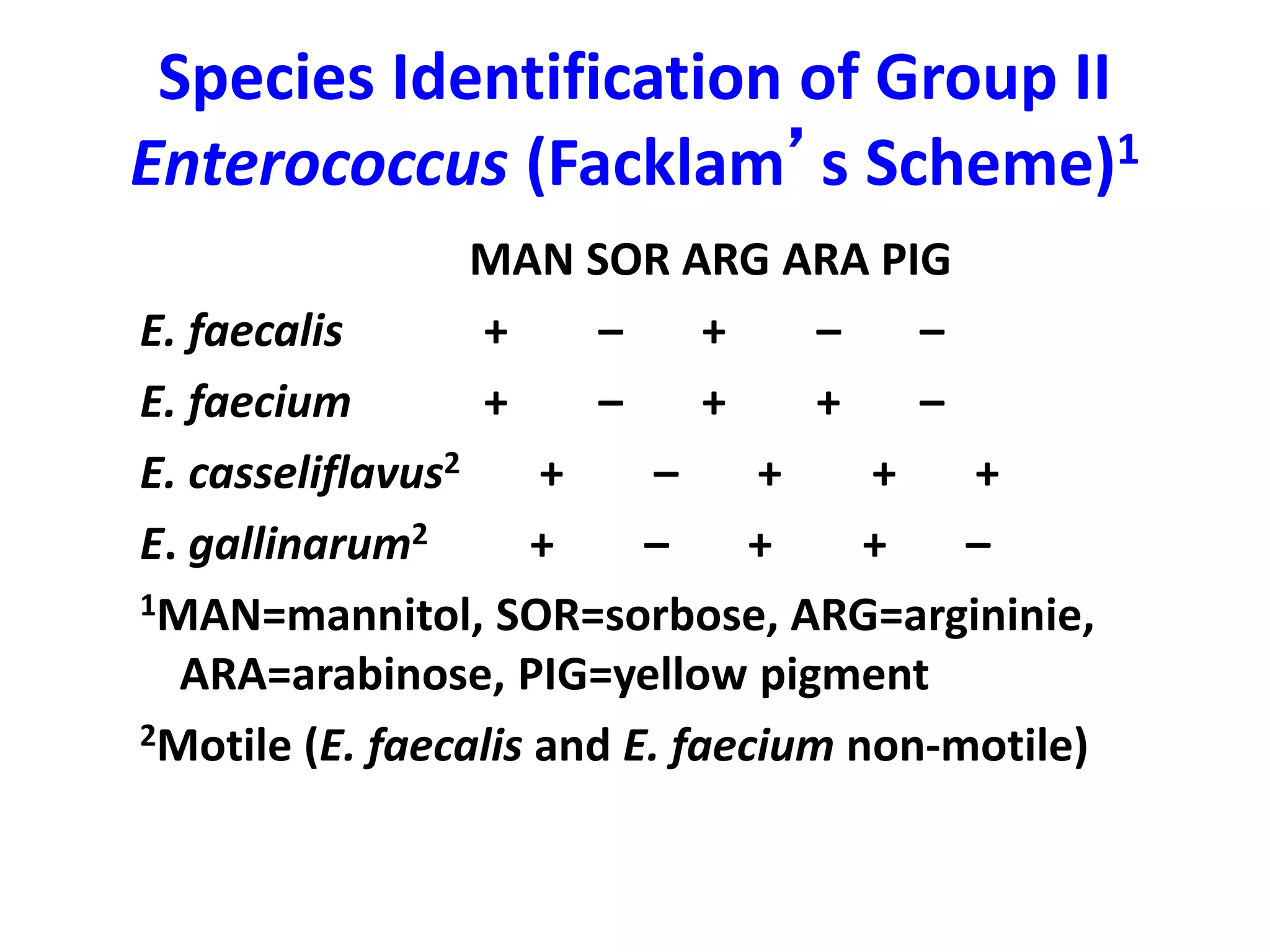
Species Identification of Group II
Enterococcus (Facklam’s Scheme)1
MAN SOR ARG ARA PIG
E. faecalis + – + – –
E. faecium + – + + –
E. casseliflavus2 + – + + +
E. gallinarum2 + – + + –
1MAN=mannitol, SOR=sorbose, ARG=argininie,
ARA=arabinose, PIG=yellow pigment
2Motile (E. faecalis and E. faecium non-motile)
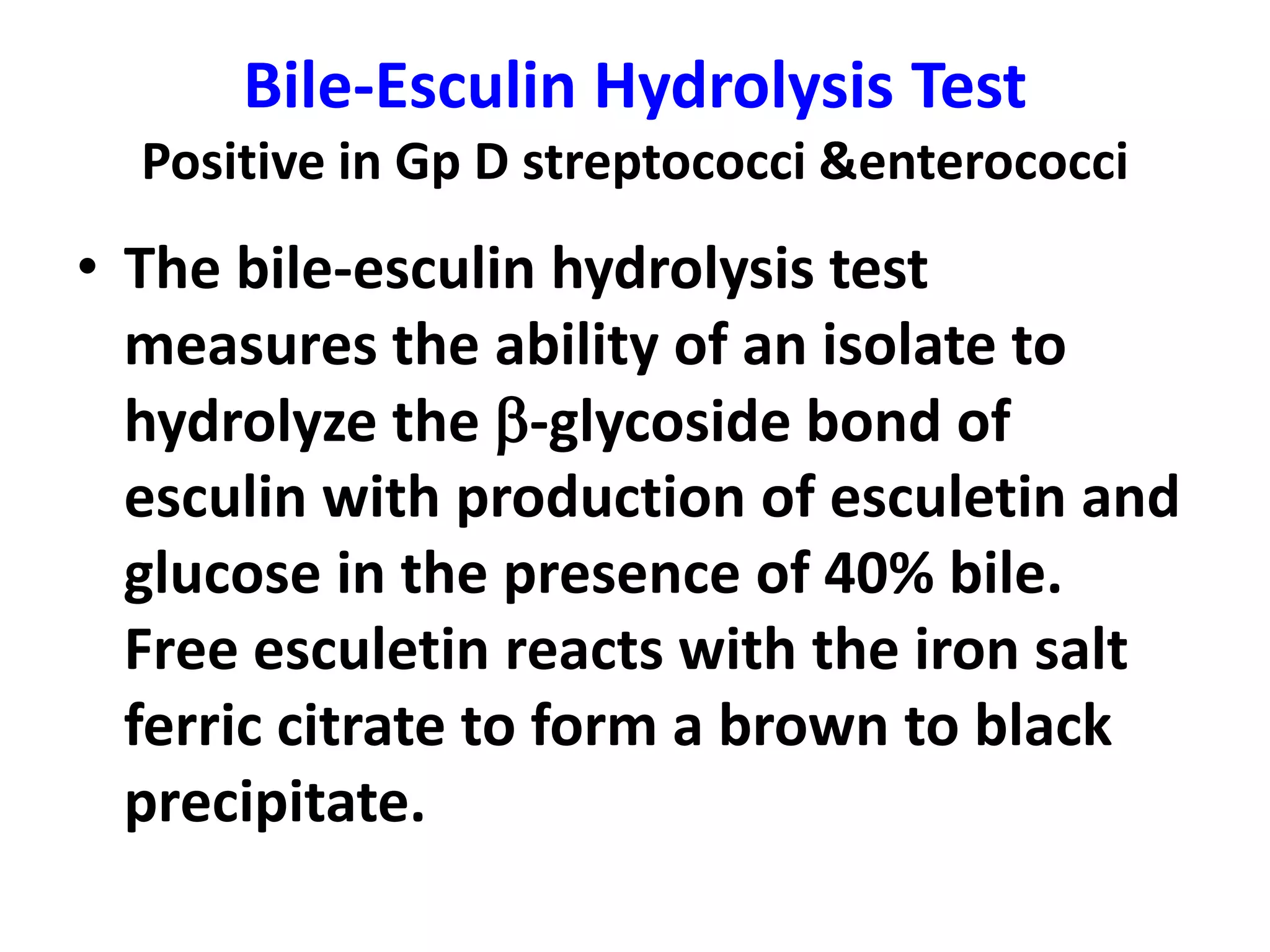
Bile-Esculin Hydrolysis Test
Positive in Gp D streptococci &enterococci
• The bile-esculin hydrolysis test
measures the ability of an isolate to
hydrolyze the -glycoside bond of
esculin with production of esculetin and
glucose in the presence of 40% bile.
Free esculetin reacts with the iron salt
ferric citrate to form a brown to black
precipitate.
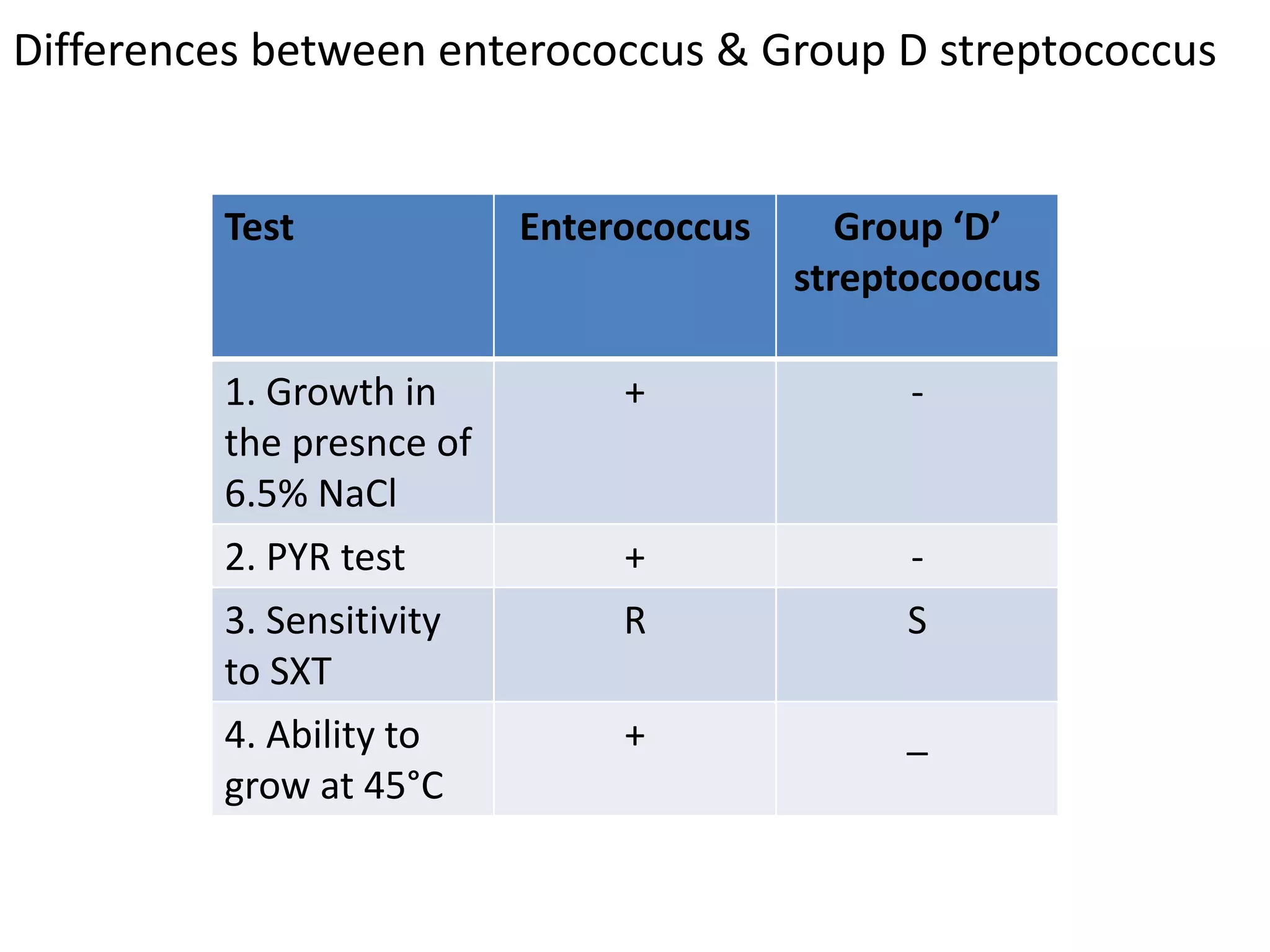
Test Enterococcus Group ‘D’
streptocoocus
1. Growth in
the presnce of
6.5% NaCl
+ -
2. PYR test + -
3. Sensitivity
to SXT
R S
4. Ability to
grow at 45°C
+ _
Differences between enterococcus & Group D streptococcus
Some characteristic features of
different groups of streptococci
Lancefiel
d group
Species or common
name
Diagnostic test Diseases caused
A Str. Pyogenes Bacitracin sensitive, PYR
positive, resistant to SXT
Upper respiratory tract
infections, skin
infections, Ac
Rheumatic fever, Ac
glomerulonephritis
B Str. agalactiae CAMP test positive, hippurate
hydrolysis positive, resistant to
SXT
Neonatal septicaemia &
meningitis
C Str. equisimilis Ribose fermented, trehalose
fermented
Pharyngitis,
endocarditis
D (i) Enterococcus sp. ( E.
faecalis & other
enterococci)
Heat test positive, growth in
the presence of 6.5% NaCl, PYR
negative, Sensitive to SXT
Urinary tract infections,
woun infections
(ii)
Non-enterococcal
No growth in 6.5%, PYR
negative, Sensitive to SXT
Genitourinary infections
Not
typed
Viridans streptococci( Str.
Salivarius, Str. Mutans &
Optochin resitant, species
differentiation on biochemical
Endocarditis, dental
caries

Group b& d streptococci

  • 1.
    Group B and GroupD Streptococci
  • 2.
    Streptococcus • Gram +Ve cocci • Arranged in chains/pairs • Important human pathogens: pyogenic infection • Tendency to spread • Acute rheumatic fever; Glomerulonephritis
  • 3.
    Classification O2 requirement Aerobes &facultative anaerobes Obligate anaerobes Peptostreptococci Hemolysis α β γ (Viridans gp) (Hemolytic) (Enterococcus) Lancefield grouping & Griffith typing (Serological)
  • 4.
  • 5.
  • 6.
    Group B streptococcus (Streptococcusagalctiae) – Important pathogen of cattle & produce bovine mastitis – Commensal of female genital tract – Septic abortion & pueperal sepsis – Neonatal septicemia & meningitis in west
  • 7.
    Differentiation between -hemolyticstreptococci CAMP test Bacitracin sensitivity Hemolysis Negative Susceptible  S. Pyogenes (Gp A) Positive Resistant  S. Agalactiae ( Gp B) Inulin Fermentation Bile solubility Optochin sensitivity Hemolysis Not ferment Soluble Sensitive (≥ 14 mm)  S. pneumoniae Ferment Insoluble Resistant (≤13 mm)  Viridans strep Differentiation between -hemolytic streptococci
  • 8.
    Streptococcus agalctiae • Gram-positivediplococcus • Produces a narrow zone of -hemolysis on blood agar • Most strains are bacitracin resistant • Positive CAMP test
  • 9.
    Streptococcus agalctiae (cont-) •Serologic Strains – Type Ia, Ib, Ic, II, III, IV, V, VI, VII, and VIII – Early onset disease can be due to any strain & can be fatal – Late onset disease is due to Type III in >90% of cases
  • 10.
    Epidemiology • Colonizes ~20%of pregnant women – Usually asymptomatic but can have UTIs, chorioamnionitis, or endometritis • 40-70% of infants born to colonized mothers are colonized • Nearly 50% of sexual partners of colonized women are colonized 0.2-3.7/1000 live births – Rates are diminishing with prophylaxis • 0.5-2% of newborn infants born to colonized mothers • Gets colonized.
  • 11.
    Maternal Risk Factors •Preterm labour < 37 weeks • Preterm prom at 37 weeks • Fever during labor • Previous delivery of sibling with invasive gbs disease • Multiple births 11
  • 12.
    GBS COLONIZATION • INMOTHER • LOWER GENITAL TRACT • ANORECTUM • URINARY TRACT • IN NEONATES • EXTERNAL EAR (IN FIRST 24 H ) • ANTERIOR NARES, THROAT • ANORECTUM • UMBILICUS 12
  • 13.
    Risk Factors forColonization • Heavily colonized mothers • Mothers younger than 20 • African Americans • Lower socioeconomic groups • PROM • Prolonged labor • Maternal Chorioamnionitis • Previous delivery with GBS disease
  • 14.
    Early Onset v.Late Onset • Occurs within the 1st week of life (usually <72 hours) • Attack rate more in low birth weight • Accounts for 20% • Cases appearing up to 6 months of age • Cases after 1 month of age occur primarily in premature and immunodeficient infants
  • 15.
    Early Onset v.Late Onset • Vertical transmission • Ascending infection (duration of ROM  incidence of infection) • During passage through a colonized birth canal • Maternal transmission • Nonmaternal sites: – Nursery – Personnel – Community • Pathophysiology due to weakened host defense
  • 16.
    Early Onset v.Late Onset • Pneumonia with bacteremia • Pulmonary HTN Meningitis • Bacteremia without a focus (55%) • Meningitis (35%) • Osteomyelitis and arthritis
  • 17.
    Laboratory Findings • Isolationand identification from normally sterile sites – CSF – Gastric or tracheal aspirates – Skin or mucous membranes
  • 18.
    CAMP test • Principle: –Group B streptococci produce extracellular protein (CAMP factor) – CAMP act synergistically with staph. -lysin to cause lysis of RBCs • Procedure: – Single streak of Streptococcus to be tested and a Staph. aureus are made perpendicular to each other – 3-5 mm distance was left between two streaks – After incubation, a positive result appear as an arrowhead shaped zone of complete hemolysis – S. agalactiae is CAMP test positive while non gp B streptococci are negative
  • 19.
    Hemolysis on Bloodagar -hemolysis -hemolysis -hemolysis
  • 20.
  • 21.
    CAMP test Staph. aureus GpB Streptococcus Gp A Streptococcus
  • 22.
    GBS MENINGITIS • MORTALITYRATE 50 - 75 % • 21 % OF SURVIVORS HAVE MAJOR PERMANENT NEUROLOGIC SEQUELAE – MENTAL RETARDATION (USUALLY PROFOUND) – SPASTIC QUADRIPLEGIA – CORTICAL BLINDNESS – DEAFNESS – UNCONTROLLED SEIZURES – HYDROCEPHALUS – HYPOTHALAMIC DYSFUNCTION 22
  • 23.
    GBS MENINGITIS • 20% OF SURVIVORS HAVE MILD TO MODERATE NEUROLOGIC SEQUELAE • BORDERLINE MENTAL RETARDATION • LANGUAGE DELAY • UNILATERAL HEARING LOSS 23
  • 24.
    GBS BACTEREMIA WITHOUTFOCUS • LATE ONSET DISEASE • UNCOMPLICATED PERINATAL COURSE • NON-SPECIFIC SIGNS IN FIRST FEW WEEKS OF LIFE – FEVER – POOR FEEDING – IRRITABILITY – RINORRHEA • “R/O SEPSIS” WORKUP 24
  • 25.
    PREVENTION OF GBSINFECTION • CHEMOPROPHYLAXIS • IMMUNOPROPHYLAXIS 25
  • 26.
    Bacitracin sensitivity • Principle: –Bacitracin test is used for presumptive identification of group A – To distinguish between S. pyogenes (susceptible to B) & non group A such as S. agalactiae (Resistant to B) – Bacitracin will inhibit the growth of gp A Strep. pyogenes giving zone of inhibition around the disk • Procedure: – Inoculate BAP with heavy suspension of tested organism – Bacitracin disk (0.04 U) is applied to inoculated BAP – After incubation, any zone of inhibition around the disk is considered as susceptible
  • 27.
    Differentiation between -hemolyticstreptococci CAMP test Bacitracin sensitivity Hemolysis Negative Susceptible  S. pyogenes Positive Resistant  S. agalactiae Inulin Fermentation Bile solubility Optochin sensitivity Hemolysis ferment Soluble Sensitive (≥ 14 mm)  S. pneumoniae Not-fermented Insoluble Resistant (≤13 mm)  Viridans strep Differentiation between -hemolytic streptococci
  • 28.
    Enterococcus: Microbiological Properties • Gram-positivecocci (round to oval-shaped, occasionally elongated) • Catalase negative • Growth on 5% sheep blood agar with optimal growth for occasional strains in the presence of 5-10% CO2 • -hemolysis (E. faecium) and no hemolysis or narrow zone of  hemolysis (E. faecalis) • Most strains are bacitracin resistant
  • 29.
    Enterococcus 1. They arerelatively heat resistant & can withstand heat at 60°C for 30 minutes (heat test or heat resistant test) 2. Their abiliy to grow in the presence of 6.5% sodium chloride. 3.Their abiliy to grow at 45°C and at pH 9.6 4. They are PYR test positive. 5. They are resistant to SXT (Trimethoprim & sulphamethoxazole). On MacConkey’s medium they grow as tiny deep pink colonies. On Gram staining, enterococci appears oval cocci in short chains.
  • 30.
    Enterococcus ( Cont-) •The identification of the species is based on biochemical reactions. E. faecalis is the most commonly isolated enterococcus from human sources. • Other enterococci are E. faecium & E. durans E. faecalis can be identified by fermentation of mannitol, sucrose, aesculin & sorbitol, and by producing black colonies when grown on tellurite blood agar. -Sub acute bacterial endocarditis -Septicaemia, biliary tract infection -peritonitis
  • 31.
    Enterococcus (Cont-) Strains resistantto Penicillin & other antibiotics occur frequently. -Vancomycin is the primary alternative drug -Vancomycin resistant strains has also been isolated. -Resistance is most common in E. faecium, but Vancomycin resistant strains of E. faecalis also occurs.
  • 33.
    Streptococcus: Types ofInfectious Disease • Streptococcus pyogenes is one of the most virulent bacterial pathogens, and causes acute pharyngitis, impetigo, cellulitis, necrotizing fasciitis and myositis (flesh-eating bacteria), pneumonia, bacteremia, and streptococcal toxic shock syndrome
  • 34.
    Enterococcus: Types ofInfectious Disease • High-level vancomycin resistance results from vanA gene coding for abnormal peptidoglycan precursors having terminal D-alanyl-D-lactate (normal = D-alanyl-D-alanine) with decreased vancomycin binding affinity and diminshed inhibition by vancomycin of cell wall peptidoglycan synthesis for VRE strains (VRE=vancomycin-resistant enterococci) • Associated with resistance to high concentrations of vancomycin (vancomycin minimal inhibitory concentrations > 256-µg/ml) and treatment failure in VRE infection • Prevalent with Enterococcus faecium, unusual for Enterococcus faecalis
  • 35.
    Species Identification ofGroup II Enterococcus (Facklam’s Scheme)1 MAN SOR ARG ARA PIG E. faecalis + – + – – E. faecium + – + + – E. casseliflavus2 + – + + + E. gallinarum2 + – + + – 1MAN=mannitol, SOR=sorbose, ARG=argininie, ARA=arabinose, PIG=yellow pigment 2Motile (E. faecalis and E. faecium non-motile)
  • 36.
    Bile-Esculin Hydrolysis Test Positivein Gp D streptococci &enterococci • The bile-esculin hydrolysis test measures the ability of an isolate to hydrolyze the -glycoside bond of esculin with production of esculetin and glucose in the presence of 40% bile. Free esculetin reacts with the iron salt ferric citrate to form a brown to black precipitate.
  • 38.
    Test Enterococcus Group‘D’ streptocoocus 1. Growth in the presnce of 6.5% NaCl + - 2. PYR test + - 3. Sensitivity to SXT R S 4. Ability to grow at 45°C + _ Differences between enterococcus & Group D streptococcus
  • 39.
    Some characteristic featuresof different groups of streptococci Lancefiel d group Species or common name Diagnostic test Diseases caused A Str. Pyogenes Bacitracin sensitive, PYR positive, resistant to SXT Upper respiratory tract infections, skin infections, Ac Rheumatic fever, Ac glomerulonephritis B Str. agalactiae CAMP test positive, hippurate hydrolysis positive, resistant to SXT Neonatal septicaemia & meningitis C Str. equisimilis Ribose fermented, trehalose fermented Pharyngitis, endocarditis D (i) Enterococcus sp. ( E. faecalis & other enterococci) Heat test positive, growth in the presence of 6.5% NaCl, PYR negative, Sensitive to SXT Urinary tract infections, woun infections (ii) Non-enterococcal No growth in 6.5%, PYR negative, Sensitive to SXT Genitourinary infections Not typed Viridans streptococci( Str. Salivarius, Str. Mutans & Optochin resitant, species differentiation on biochemical Endocarditis, dental caries