PATHOPHYSIOLOGY AND CLINICAL APPROACH
DEFINITION
 An a.m. temperature of >37.2°C (>98.9°F) or a p.m.
temperature of >37.7°C (>99.9°F) measured in the oral
cavity defines a fever.
 The normal daily temperature variation is typically
0.5°C (0.9°F).
 Rectal temperatures are generally 0.4°C (0.7°F) higher
than oral readings.
 A fever of >41.5°C (>106.7°F) is called hyperpyrexia
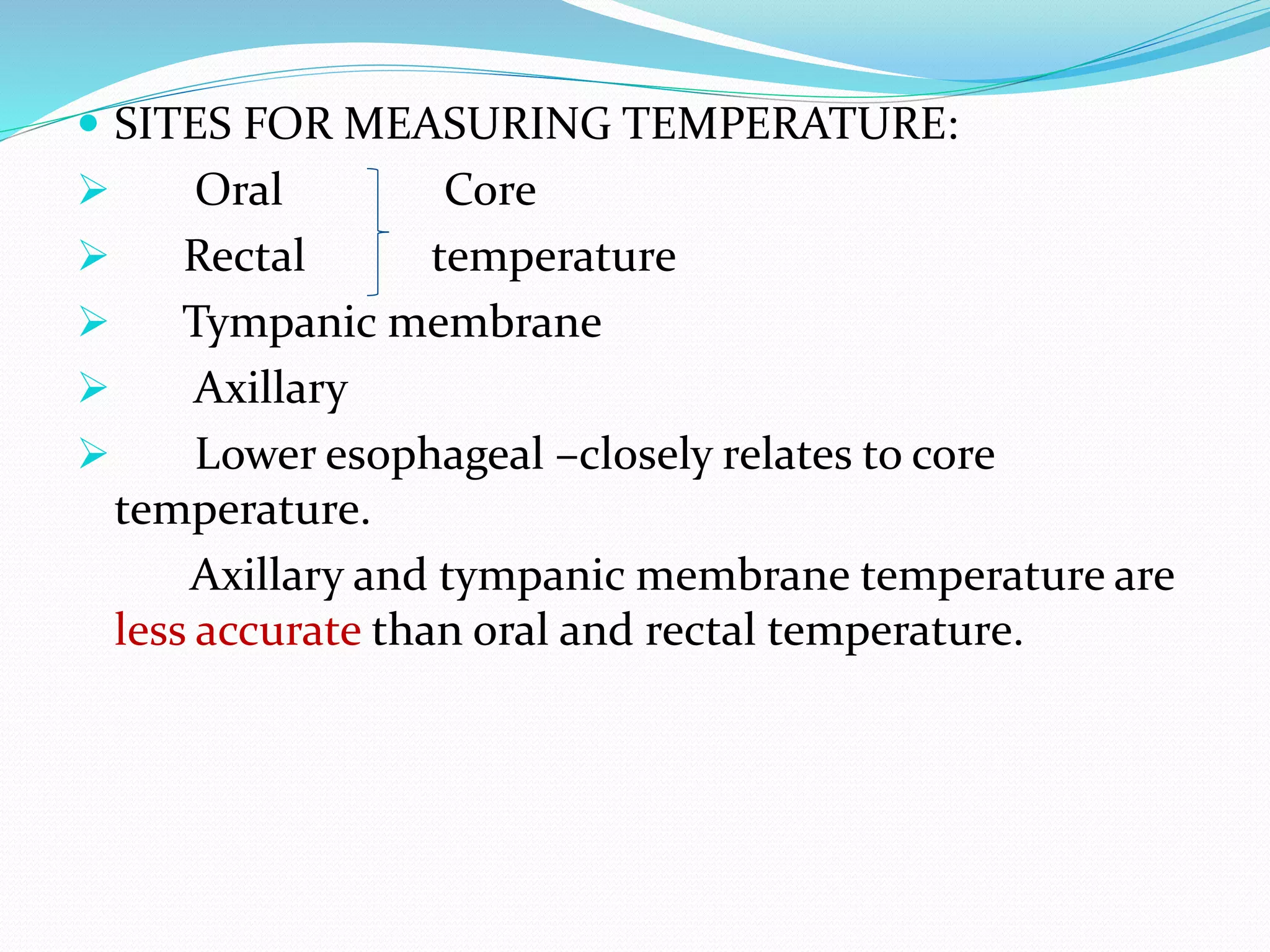
 SITES FOR MEASURING TEMPERATURE:
 Oral Core
 Rectal temperature
 Tympanic membrane
 Axillary
 Lower esophageal –closely relates to core
temperature.
Axillary and tympanic membrane temperature are
less accurate than oral and rectal temperature.
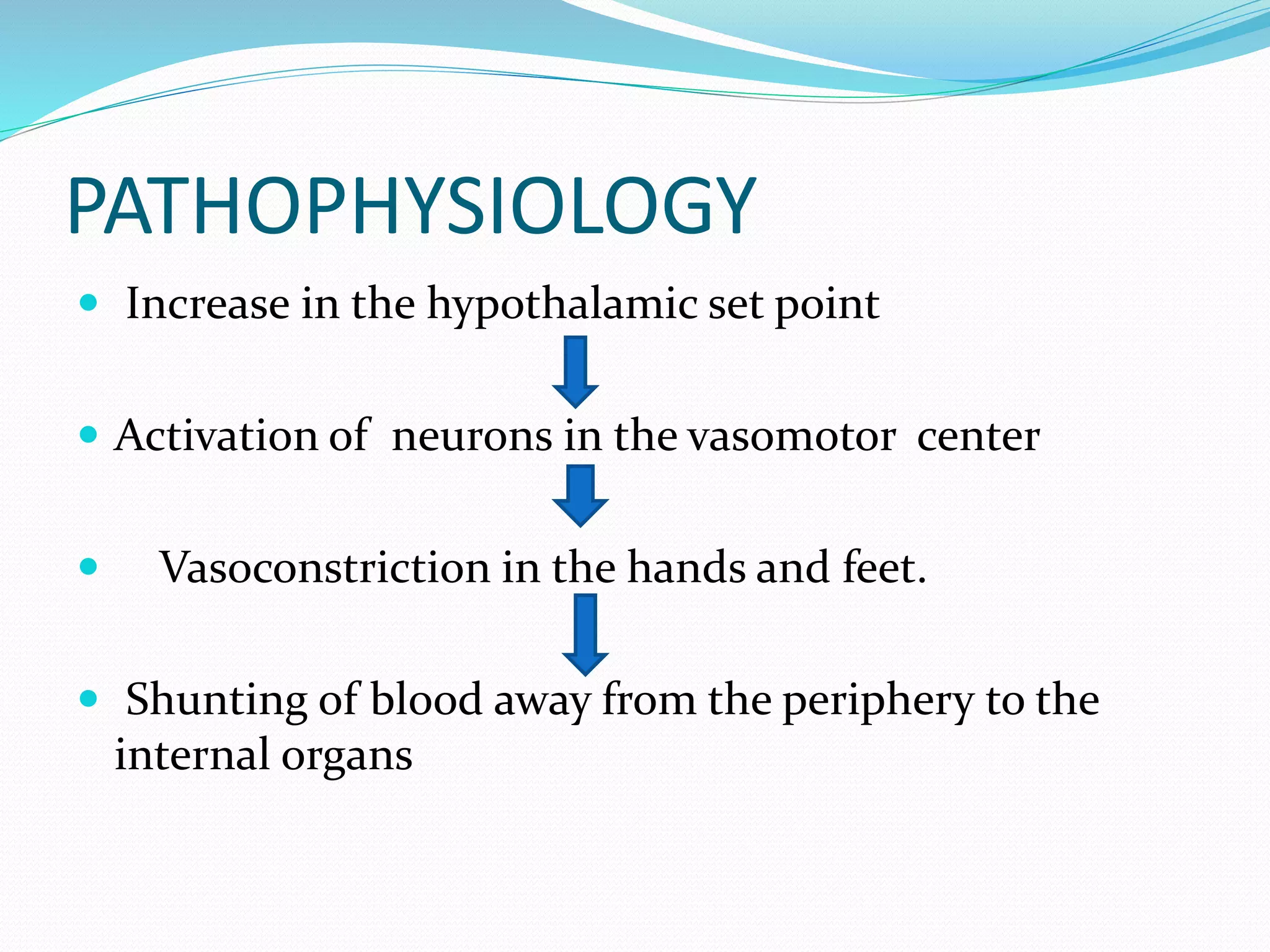
PATHOPHYSIOLOGY
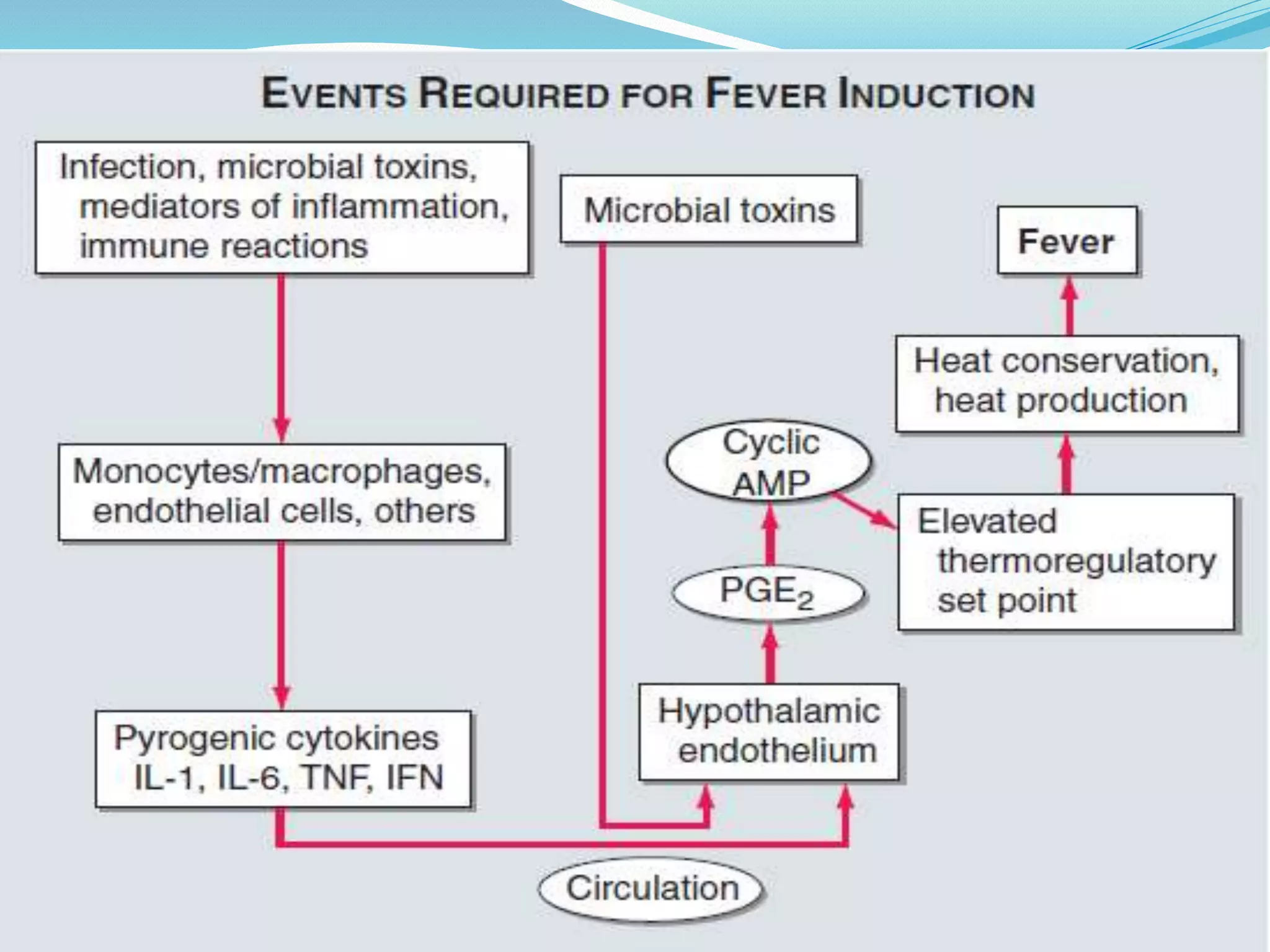
 Increase in the hypothalamic set point
 Activation of neurons in the vasomotor center
 Vasoconstriction in the hands and feet.
 Shunting of blood away from the periphery to the
internal organs
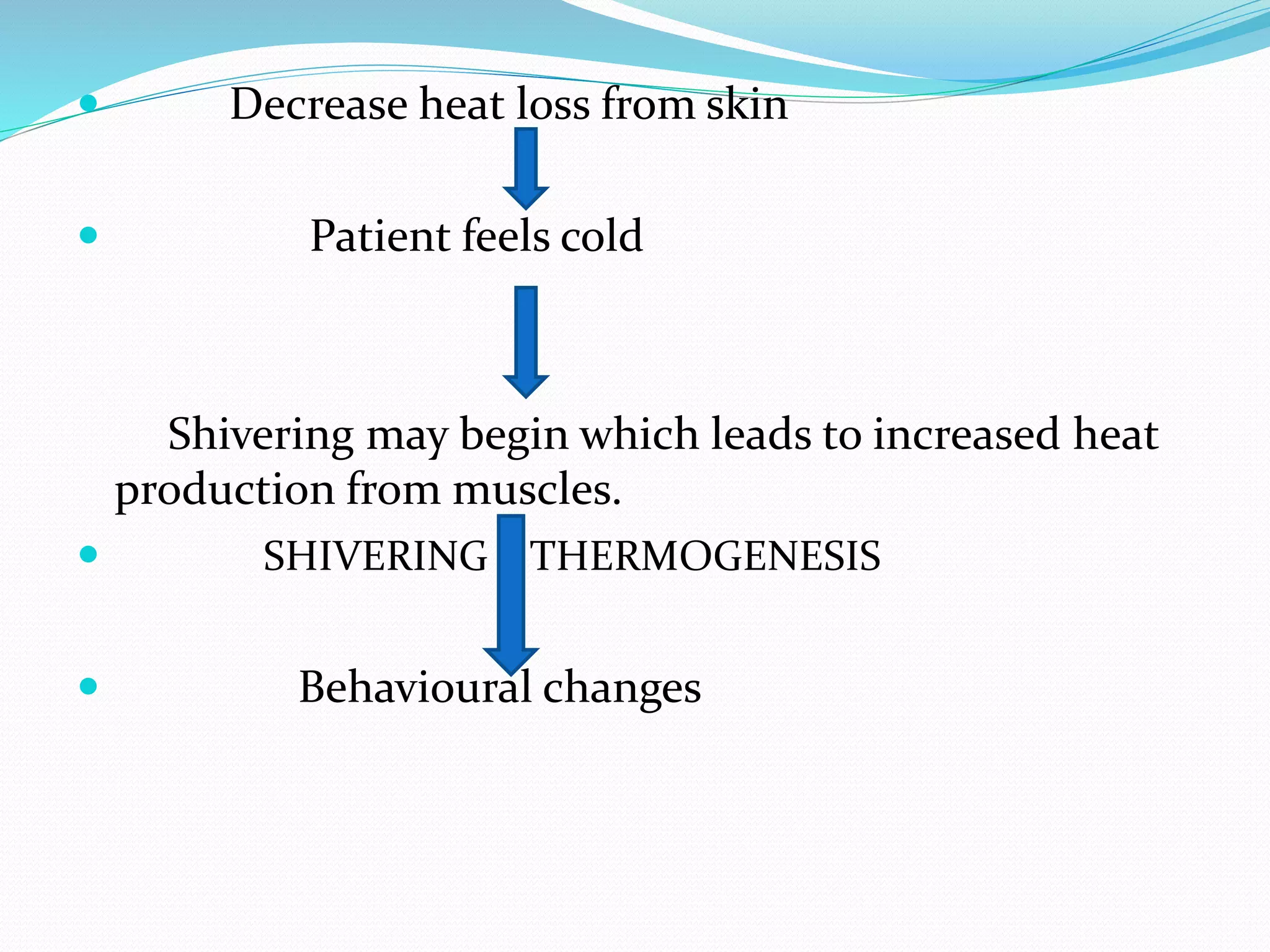
 Decrease heat loss from skin
 Patient feels cold
Shivering may begin which leads to increased heat
production from muscles.
 SHIVERING THERMOGENESIS
 Behavioural changes
 The processes of heat conservation and heat
production continue until the temperature of the
blood bathing the hypothalamic neurons matches the
new thermostat setting.
 Once that point is reached, the hypothalamus
maintains the temperature at the febrile level by the
same mechanisms of heat balance that function in the
afebrile state.
 When the hypothalamic set point is again reset
downward (in response to either a reduction in the
concentration of pyrogens or the use of antipyretics),
the processes of heat loss through vasodilation and
sweating are initiated.
 Loss of heat by sweating and vasodilation continues
until the blood temperature at the hypothalamic level
matches the lower setting.
PATHOGENESIS OF FEVER
Pyrogens
 The term pyrogen is used to describe any substance
that causes fever.
 Exogenous pyrogens are derived from outside the
patient; most are microbial products, microbial toxins,
or whole microorganisms.
Eg.lipopolysaccharide (endotoxin) produced by all gram-
negative bacteria,
enterotoxins of Staphylococcus aureus , streptococcal
toxins.
Pyrogenic Cytokines
 Cytokines are small proteins (molecular mass, 10,000–
20,000 Da) that regulate immune, inflammatory, and
hematopoietic processes.
 Previously called Endogenous pyrogens.
 The pyrogenic cytokines include IL-1, IL-6, tumor
necrosis factor (TNF), ciliary neurotropic factor
(CNTF), and interferon (IFN) .
 A wide spectrum of bacterial ,viral, fungal products
induce the synthesis and release of pyrogenic
cytokines.
Approach to the Patient
 The chronology of events preceding the fever
 Physical examination:
 Vitals: pulse,blood pressure,respiratory
rate,temperature
 General physical examination:
palor,edema,cyanosis,clubbing,icterus,lympadenopath
y,rashes.
 Systemic examination
 Temperature-pulse dissociation (relative bradycardia)
occurs in typhoid fever, brucellosis, leptospirosis,
some drug-induced fevers, and factitious fever.
 In newborns, the elderly, patients with chronic
hepatic or renal failure, and patients taking
glucocorticoids, fever may not be present despite
infection.
 Hypothermia can be observed in patients with septic
shock
 Laboratory Tests
 The workup should include a
 complete blood count,
 a differential count : performed manually or with an
instrument sensitive to the identification of band
forms, toxic granulations, and Döhle bodies, which are
suggestive of bacterial infection.
 Neutropenia may be present with some viral diseases
 ESR
 C-Reactive proteins
 Urine examination
Treatment
Antipyretics:
Acetaminophen is preferred as an
antipyretic.
Oral aspirin and NSAIDs effectively
reduce fever but can adversely affect platelets
and the gastrointestinal tract.
In children, acetaminophen or oral
ibuprofen must be used because aspirin
increases the risk of Reye's syndrome.
 Mechanism of action of antipyretics
Inhibition of cycloxygenase
The synthesis of PGE2 depends on the
constitutively expressed enzyme cyclooxygenase.
Hence synthesis of PGE2 from arachidonic acid
by cycloxgenase is inhibited by antipyretics.
The reduction of fever by lowering of the elevated
hypothalamic set point is a direct function of reducing
the level of PGE2 in the thermoregulatory center.
Hyperthermia
 Hyperthermia is characterized by an
uncontrolled increase in body temperature
that exceeds the body's ability to lose heat.
 The setting of the hypothalamic
thermoregulatory center is unchanged.
 In contrast to fever in infections, hyperthermia
does not involve pyrogenic molecules.
 Exogenous heat exposure and endogenous
heat production are two mechanisms by which
hyperthermia can result in dangerously high
internal temperatures.
 Antipyretics are of no use in treating
hyperthermia. Physical cooling with sponging,
fans, cooling blankets, and even ice baths
should be initiated immediately in conjunction
with the administration of IV fluids and
appropriate pharmacologic agents .
 If sufficient cooling is not achieved by external
means, internal cooling can be achieved by
gastric or peritoneal lavage with iced saline.
 In extreme circumstances, hemodialysis or
even cardiopulmonary bypass with cooling of
blood may be performed.
 Malignant hyperthermia should be treated
immediately with cessation of anesthesia and
IV administration of dantrolene sodium.
 Dantrolene is indicated in the neuroleptic
malignant syndrome and in drug-induced
hyperthermia and may even be useful in the
hyperthermia of the serotonin syndrome and
thyrotoxicosis.
 The neuroleptic malignant syndrome also may
be treated with bromocriptine, levodopa,
amantadine, or nifedipine or by induction of
muscle paralysis with curare and pancuronium.
 Tricyclic antidepressant overdose may be
treated with physostigmine.

Fever-Pathophysiology and Clinical approach.

  • 1.
  • 2.
    DEFINITION  An a.m.temperature of >37.2°C (>98.9°F) or a p.m. temperature of >37.7°C (>99.9°F) measured in the oral cavity defines a fever.  The normal daily temperature variation is typically 0.5°C (0.9°F).  Rectal temperatures are generally 0.4°C (0.7°F) higher than oral readings.  A fever of >41.5°C (>106.7°F) is called hyperpyrexia
  • 3.
     SITES FORMEASURING TEMPERATURE:  Oral Core  Rectal temperature  Tympanic membrane  Axillary  Lower esophageal –closely relates to core temperature. Axillary and tympanic membrane temperature are less accurate than oral and rectal temperature.
  • 4.
    PATHOPHYSIOLOGY  Increase inthe hypothalamic set point  Activation of neurons in the vasomotor center  Vasoconstriction in the hands and feet.  Shunting of blood away from the periphery to the internal organs
  • 5.
     Decrease heatloss from skin  Patient feels cold Shivering may begin which leads to increased heat production from muscles.  SHIVERING THERMOGENESIS  Behavioural changes
  • 6.
     The processesof heat conservation and heat production continue until the temperature of the blood bathing the hypothalamic neurons matches the new thermostat setting.  Once that point is reached, the hypothalamus maintains the temperature at the febrile level by the same mechanisms of heat balance that function in the afebrile state.
  • 7.
     When thehypothalamic set point is again reset downward (in response to either a reduction in the concentration of pyrogens or the use of antipyretics), the processes of heat loss through vasodilation and sweating are initiated.  Loss of heat by sweating and vasodilation continues until the blood temperature at the hypothalamic level matches the lower setting.
  • 8.
    PATHOGENESIS OF FEVER Pyrogens The term pyrogen is used to describe any substance that causes fever.  Exogenous pyrogens are derived from outside the patient; most are microbial products, microbial toxins, or whole microorganisms. Eg.lipopolysaccharide (endotoxin) produced by all gram- negative bacteria, enterotoxins of Staphylococcus aureus , streptococcal toxins.
  • 9.
    Pyrogenic Cytokines  Cytokinesare small proteins (molecular mass, 10,000– 20,000 Da) that regulate immune, inflammatory, and hematopoietic processes.  Previously called Endogenous pyrogens.  The pyrogenic cytokines include IL-1, IL-6, tumor necrosis factor (TNF), ciliary neurotropic factor (CNTF), and interferon (IFN) .  A wide spectrum of bacterial ,viral, fungal products induce the synthesis and release of pyrogenic cytokines.
  • 11.
    Approach to thePatient  The chronology of events preceding the fever  Physical examination:  Vitals: pulse,blood pressure,respiratory rate,temperature  General physical examination: palor,edema,cyanosis,clubbing,icterus,lympadenopath y,rashes.  Systemic examination
  • 12.
     Temperature-pulse dissociation(relative bradycardia) occurs in typhoid fever, brucellosis, leptospirosis, some drug-induced fevers, and factitious fever.  In newborns, the elderly, patients with chronic hepatic or renal failure, and patients taking glucocorticoids, fever may not be present despite infection.  Hypothermia can be observed in patients with septic shock
  • 13.
     Laboratory Tests The workup should include a  complete blood count,  a differential count : performed manually or with an instrument sensitive to the identification of band forms, toxic granulations, and Döhle bodies, which are suggestive of bacterial infection.  Neutropenia may be present with some viral diseases  ESR  C-Reactive proteins  Urine examination
  • 14.
    Treatment Antipyretics: Acetaminophen is preferredas an antipyretic. Oral aspirin and NSAIDs effectively reduce fever but can adversely affect platelets and the gastrointestinal tract. In children, acetaminophen or oral ibuprofen must be used because aspirin increases the risk of Reye's syndrome.
  • 15.
     Mechanism ofaction of antipyretics Inhibition of cycloxygenase The synthesis of PGE2 depends on the constitutively expressed enzyme cyclooxygenase. Hence synthesis of PGE2 from arachidonic acid by cycloxgenase is inhibited by antipyretics. The reduction of fever by lowering of the elevated hypothalamic set point is a direct function of reducing the level of PGE2 in the thermoregulatory center.
  • 16.
    Hyperthermia  Hyperthermia ischaracterized by an uncontrolled increase in body temperature that exceeds the body's ability to lose heat.  The setting of the hypothalamic thermoregulatory center is unchanged.  In contrast to fever in infections, hyperthermia does not involve pyrogenic molecules.
  • 17.
     Exogenous heatexposure and endogenous heat production are two mechanisms by which hyperthermia can result in dangerously high internal temperatures.
  • 19.
     Antipyretics areof no use in treating hyperthermia. Physical cooling with sponging, fans, cooling blankets, and even ice baths should be initiated immediately in conjunction with the administration of IV fluids and appropriate pharmacologic agents .  If sufficient cooling is not achieved by external means, internal cooling can be achieved by gastric or peritoneal lavage with iced saline.  In extreme circumstances, hemodialysis or even cardiopulmonary bypass with cooling of blood may be performed.
  • 20.
     Malignant hyperthermiashould be treated immediately with cessation of anesthesia and IV administration of dantrolene sodium.  Dantrolene is indicated in the neuroleptic malignant syndrome and in drug-induced hyperthermia and may even be useful in the hyperthermia of the serotonin syndrome and thyrotoxicosis.
  • 21.
     The neurolepticmalignant syndrome also may be treated with bromocriptine, levodopa, amantadine, or nifedipine or by induction of muscle paralysis with curare and pancuronium.  Tricyclic antidepressant overdose may be treated with physostigmine.