Downloaded 778 times

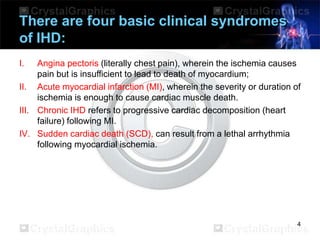
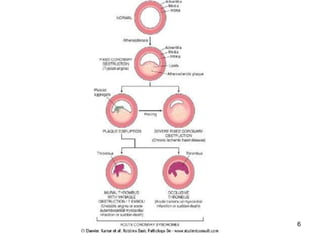

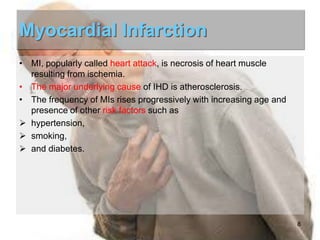
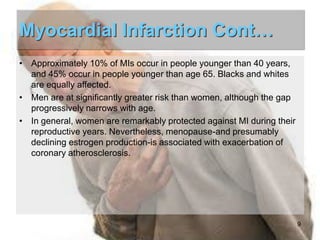

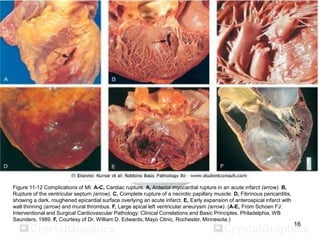


Ischemic heart disease (IHD) results from inadequate blood flow to the heart muscle. There are four main clinical syndromes: angina, myocardial infarction (MI), chronic IHD, and sudden cardiac death. MI, also called a heart attack, is caused by necrosis of heart muscle due to ischemia. It is usually the result of a coronary artery becoming blocked by a blood clot, causing severe chest pain and potential heart damage or death if not promptly treated. Complications of MI can include cardiac rupture, arrhythmias, heart failure, and aneurysm formation. The risk of complications depends on infarct size, location, and thickness of the damaged heart muscle.


