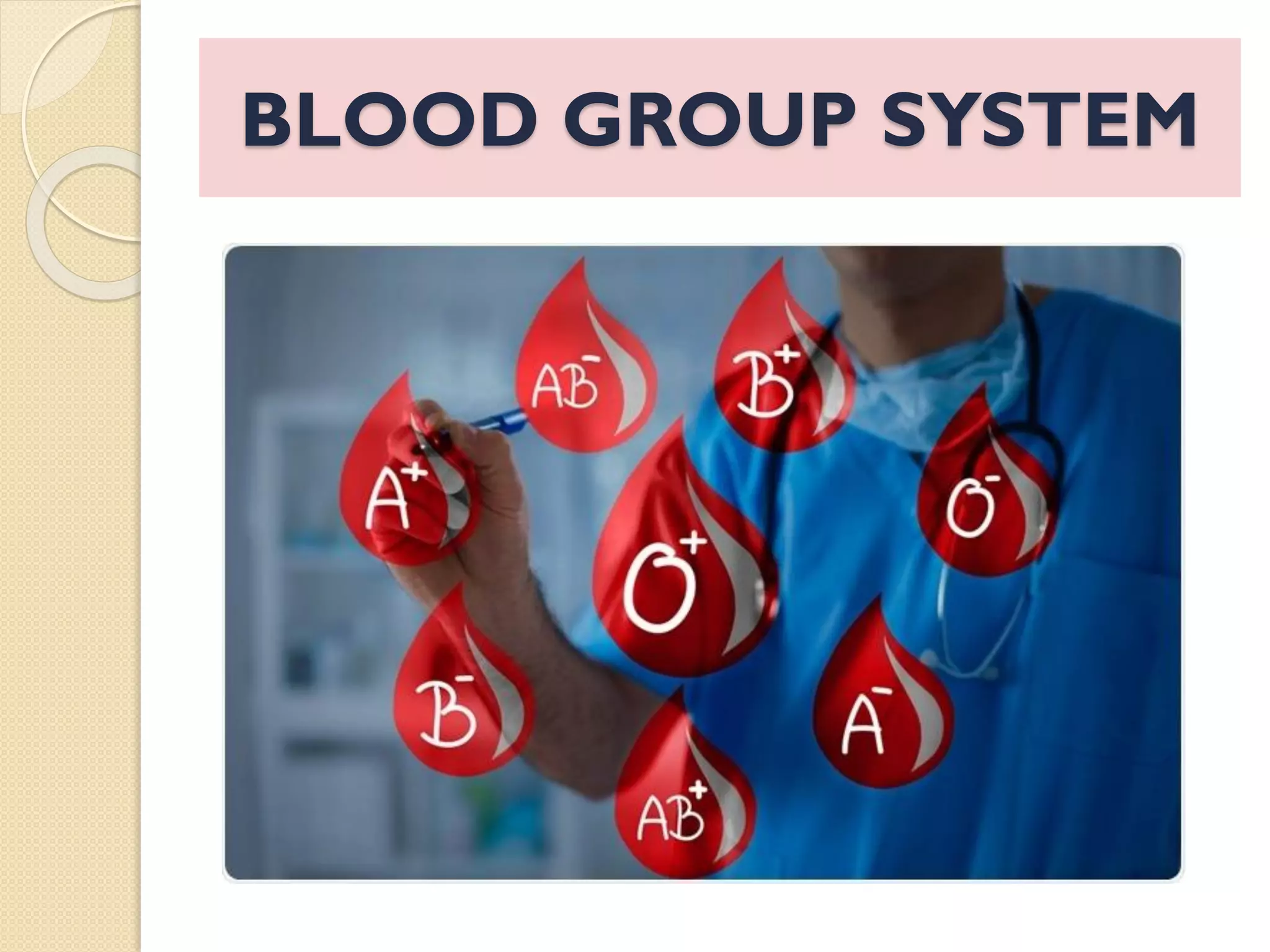
BLOOD GROUP SYSTEM
Introduction
 A blood group also called a Blood Type
 Classification of blood is based on the
presence or absence of inherited
antigenic substances on the surface of red
blood cells (RBCs).
 Blood group systems
◦ ABO blood group system
◦ Rh blood group system
Introduction
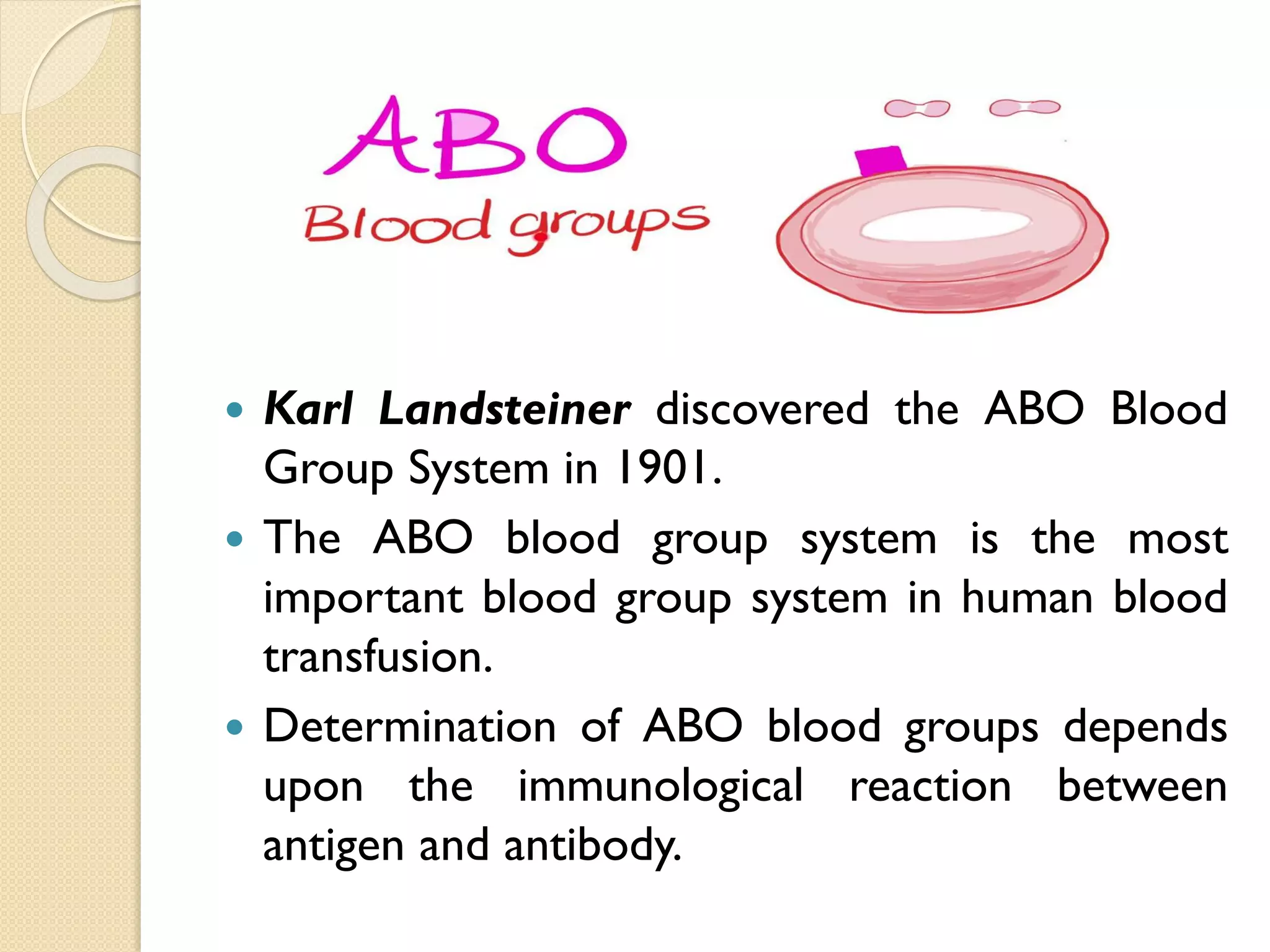
 Karl Landsteiner discovered the ABO Blood
Group System in 1901.
 The ABO blood group system is the most
important blood group system in human blood
transfusion.
 Determination of ABO blood groups depends
upon the immunological reaction between
antigen and antibody.
Landsteiner Rule:
 If an antigen is present on a patients red
blood cells (RBCs) the corresponding
antibody will NOT be present in the
patients plasma, under ‘normal
conditions’.
Based on the presence or absence of
antigen A and antigen B, blood is divided
into four groups:
1. A
2. B
3. AB
4. O
Cont..
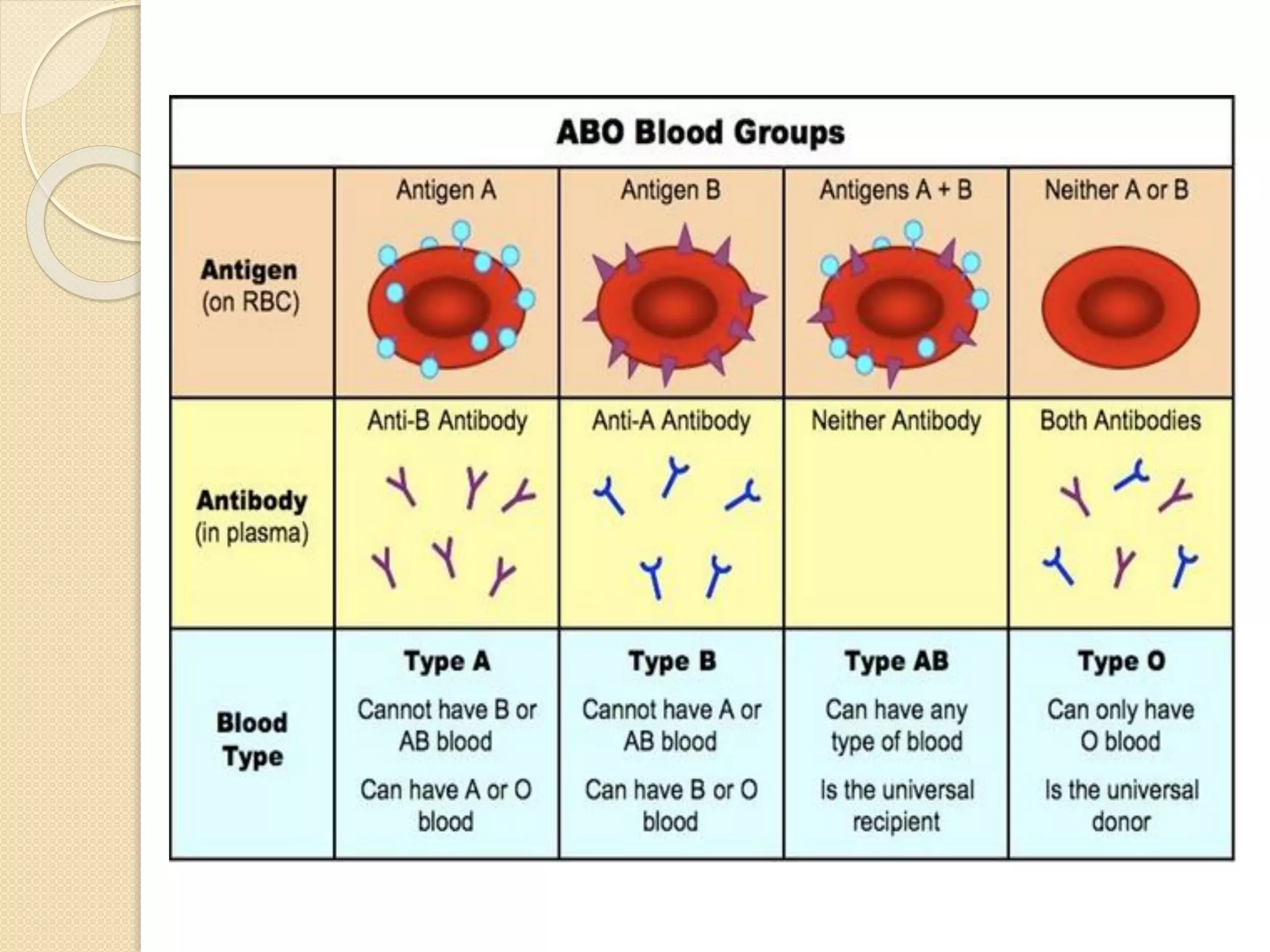
 Blood having antigen A belongs to ‘A’
group. This blood has β-antibody in the
serum.
 Blood with antigen B and α-antibody
belongs to ‘B’ group.
 If both the antigens are present, blood
group is called ‘AB’ group and serum of
this group does not contain any antibody.
 If both antigens are absent, the blood
group is called ‘O’ group and both α and β
antibodies are present in the serum.
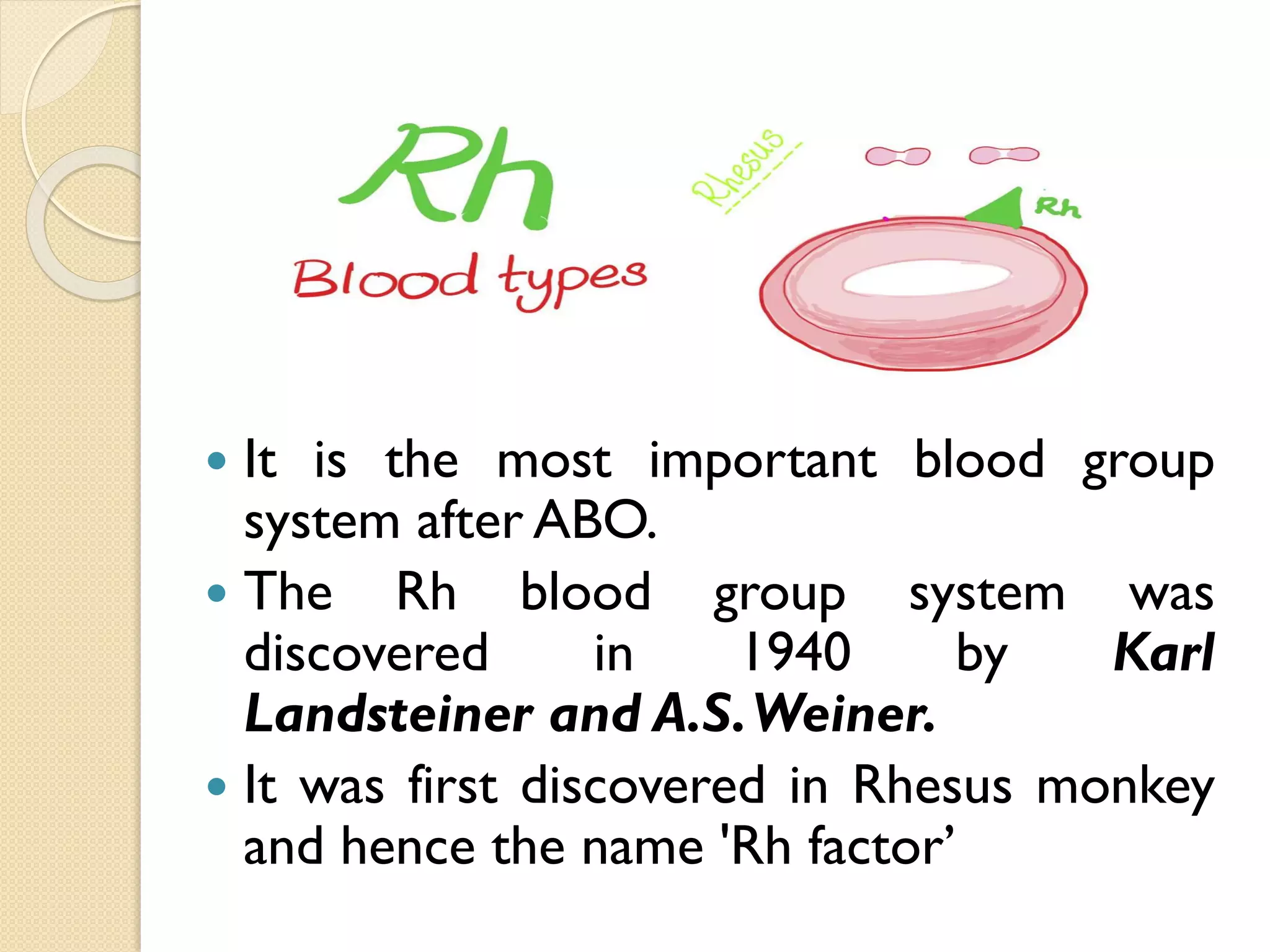
 It is the most important blood group
system after ABO.
 The Rh blood group system was
discovered in 1940 by Karl
Landsteiner and A.S.Weiner.
 It was first discovered in Rhesus monkey
and hence the name 'Rh factor’
Cont..
 The Rh blood group system consists of 49
defined blood group antigens among
which the five antigens D, C, c, E, and e are
the most important.
 The type D antigen is widely prevalent in
the population.
 Anyone who has this type of antigen is
said to be Rh positive, whereas a person
who does not have type D antigen is said
to be Rh negative.
Rh Incompatibility
Erythroblastosis fetalis
 Mother Rh negative and fetus Rh positive
 RBCs from the fetus can go into mothers
bloodstream through the placenta
 Rh negative mothers immune system treats
the Rh positive fetal cells as a foreign
substance and makes antibodies against them
 Theses anti Rh antibodies may cross the
placenta into the fetus where they destroy
the fetus’s circulation RBCs.
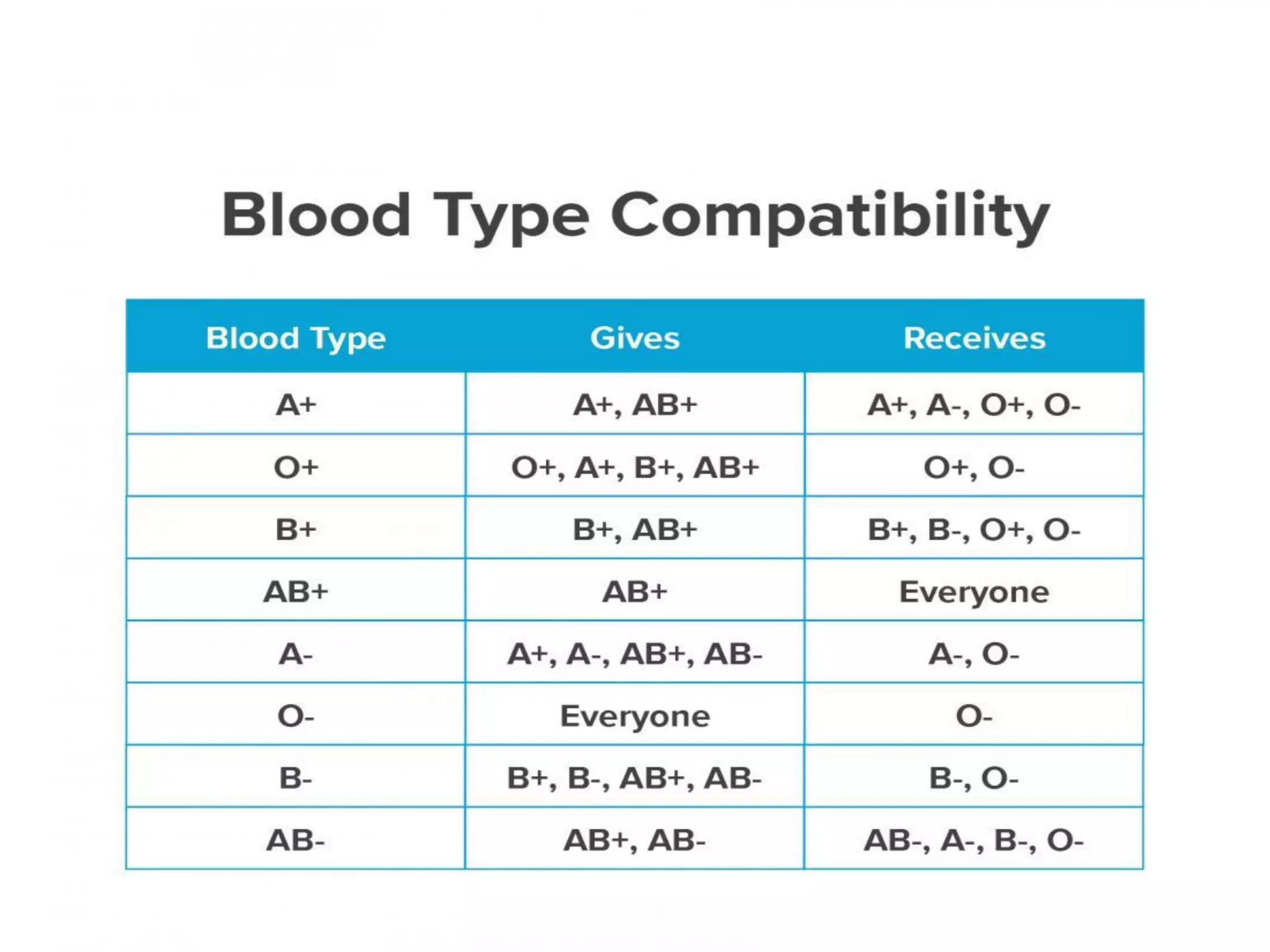
Blood Groups Compatibility
Blood grouping.pdf

Blood grouping.pdf

  • 1.
  • 2.
    Introduction  A bloodgroup also called a Blood Type  Classification of blood is based on the presence or absence of inherited antigenic substances on the surface of red blood cells (RBCs).  Blood group systems ◦ ABO blood group system ◦ Rh blood group system
  • 3.
    Introduction  Karl Landsteinerdiscovered the ABO Blood Group System in 1901.  The ABO blood group system is the most important blood group system in human blood transfusion.  Determination of ABO blood groups depends upon the immunological reaction between antigen and antibody.
  • 4.
    Landsteiner Rule:  Ifan antigen is present on a patients red blood cells (RBCs) the corresponding antibody will NOT be present in the patients plasma, under ‘normal conditions’.
  • 5.
    Based on thepresence or absence of antigen A and antigen B, blood is divided into four groups: 1. A 2. B 3. AB 4. O
  • 6.
    Cont..  Blood havingantigen A belongs to ‘A’ group. This blood has β-antibody in the serum.  Blood with antigen B and α-antibody belongs to ‘B’ group.  If both the antigens are present, blood group is called ‘AB’ group and serum of this group does not contain any antibody.  If both antigens are absent, the blood group is called ‘O’ group and both α and β antibodies are present in the serum.
  • 8.
     It isthe most important blood group system after ABO.  The Rh blood group system was discovered in 1940 by Karl Landsteiner and A.S.Weiner.  It was first discovered in Rhesus monkey and hence the name 'Rh factor’
  • 9.
    Cont..  The Rhblood group system consists of 49 defined blood group antigens among which the five antigens D, C, c, E, and e are the most important.  The type D antigen is widely prevalent in the population.  Anyone who has this type of antigen is said to be Rh positive, whereas a person who does not have type D antigen is said to be Rh negative.
  • 10.
    Rh Incompatibility Erythroblastosis fetalis Mother Rh negative and fetus Rh positive  RBCs from the fetus can go into mothers bloodstream through the placenta  Rh negative mothers immune system treats the Rh positive fetal cells as a foreign substance and makes antibodies against them  Theses anti Rh antibodies may cross the placenta into the fetus where they destroy the fetus’s circulation RBCs.
  • 13.