Blast Furnace
Content
Blast Furnace
Structure and
Components of Blast
Furnace
2.0
Reactions & Summary
Reactions involved in
the Blast Furnace and
overview of the process
3.0
Introduction
Introduction about the
Blast Furnace
1.0
Introduction
● The purpose of a blast furnace is to reduce and convert
iron oxides into liquid iron called "hot metal".
● The blast furnace is a huge, steel stack lined with
refractory brick.
● Iron ore, coke and limestone are put into the top, and
preheated air is blown into the bottom.
Blast Furnace
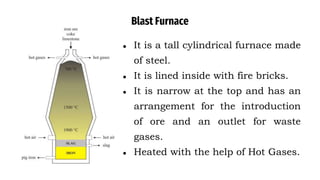
● It is a tall cylindrical furnace made
of steel.
● It is lined inside with fire bricks.
● It is narrow at the top and has an
arrangement for the introduction
of ore and an outlet for waste
gases.
● Heated with the help of Hot Gases.
Blast Furnace
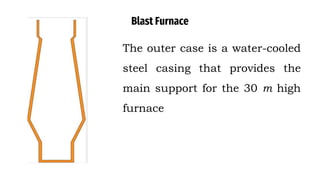
The outer case is a water-cooled
steel casing that provides the
main support for the 30 m high
furnace
Blast Furnace
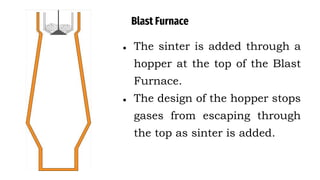
● The sinter is added through a
hopper at the top of the Blast
Furnace.
● The design of the hopper stops
gases from escaping through
the top as sinter is added.
Blast Furnace
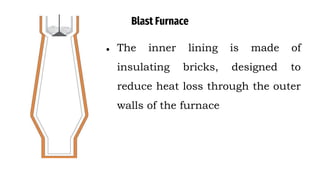
● The inner lining is made of
insulating bricks, designed to
reduce heat loss through the outer
walls of the furnace
Blast Furnace
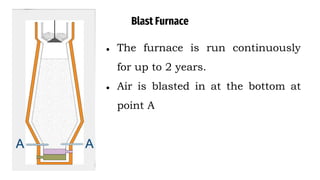
● The furnace is run continuously
for up to 2 years.
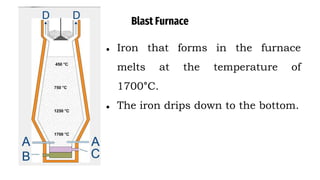
● Air is blasted in at the bottom at
point A
Blast Furnace
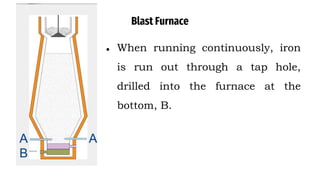
● When running continuously, iron
is run out through a tap hole,
drilled into the furnace at the
bottom, B.
Blast Furnace
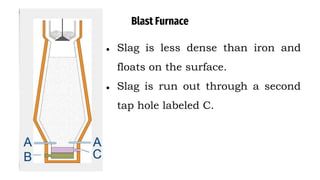
● Slag is less dense than iron and
floats on the surface.
● Slag is run out through a second
tap hole labeled C.
Blast Furnace
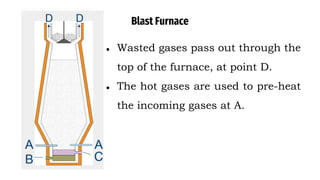
● Wasted gases pass out through the
top of the furnace, at point D.
● The hot gases are used to pre-heat
the incoming gases at A.
Blast Furnace
● Iron that forms in the furnace
melts at the temperature of
1700°C.
● The iron drips down to the bottom.
Summary
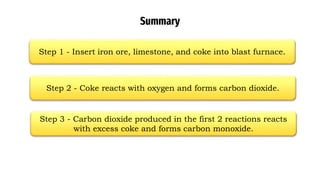
Step 1 - Insert iron ore, limestone, and coke into blast furnace.
Step 2 - Coke reacts with oxygen and forms carbon dioxide.
Step 3 - Carbon dioxide produced in the first 2 reactions reacts
with excess coke and forms carbon monoxide.
Summary
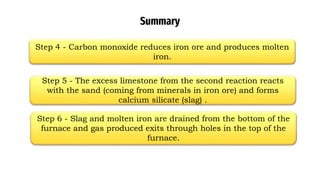
Step 4 - Carbon monoxide reduces iron ore and produces molten
iron.
Step 5 - The excess limestone from the second reaction reacts
with the sand (coming from minerals in iron ore) and forms
calcium silicate (slag) .
Step 6 - Slag and molten iron are drained from the bottom of the
furnace and gas produced exits through holes in the top of the
furnace.
Products Formed
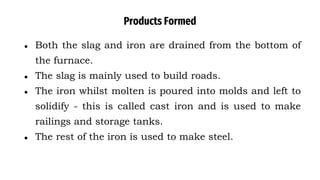
● Both the slag and iron are drained from the bottom of
the furnace.
● The slag is mainly used to build roads.
● The iron whilst molten is poured into molds and left to
solidify - this is called cast iron and is used to make
railings and storage tanks.
● The rest of the iron is used to make steel.
Thank You

blast furnace.pptx

  • 1.
  • 2.
    Content Blast Furnace Structure and Componentsof Blast Furnace 2.0 Reactions & Summary Reactions involved in the Blast Furnace and overview of the process 3.0 Introduction Introduction about the Blast Furnace 1.0
  • 3.
    Introduction ● The purposeof a blast furnace is to reduce and convert iron oxides into liquid iron called "hot metal". ● The blast furnace is a huge, steel stack lined with refractory brick. ● Iron ore, coke and limestone are put into the top, and preheated air is blown into the bottom.
  • 4.
    Blast Furnace ● Itis a tall cylindrical furnace made of steel. ● It is lined inside with fire bricks. ● It is narrow at the top and has an arrangement for the introduction of ore and an outlet for waste gases. ● Heated with the help of Hot Gases.
  • 5.
    Blast Furnace The outercase is a water-cooled steel casing that provides the main support for the 30 m high furnace
  • 6.
    Blast Furnace ● Thesinter is added through a hopper at the top of the Blast Furnace. ● The design of the hopper stops gases from escaping through the top as sinter is added.
  • 7.
    Blast Furnace ● Theinner lining is made of insulating bricks, designed to reduce heat loss through the outer walls of the furnace
  • 8.
    Blast Furnace ● Thefurnace is run continuously for up to 2 years. ● Air is blasted in at the bottom at point A
  • 9.
    Blast Furnace ● Whenrunning continuously, iron is run out through a tap hole, drilled into the furnace at the bottom, B.
  • 10.
    Blast Furnace ● Slagis less dense than iron and floats on the surface. ● Slag is run out through a second tap hole labeled C.
  • 11.
    Blast Furnace ● Wastedgases pass out through the top of the furnace, at point D. ● The hot gases are used to pre-heat the incoming gases at A.
  • 12.
    Blast Furnace ● Ironthat forms in the furnace melts at the temperature of 1700°C. ● The iron drips down to the bottom.
  • 13.
    Summary Step 1 -Insert iron ore, limestone, and coke into blast furnace. Step 2 - Coke reacts with oxygen and forms carbon dioxide. Step 3 - Carbon dioxide produced in the first 2 reactions reacts with excess coke and forms carbon monoxide.
  • 14.
    Summary Step 4 -Carbon monoxide reduces iron ore and produces molten iron. Step 5 - The excess limestone from the second reaction reacts with the sand (coming from minerals in iron ore) and forms calcium silicate (slag) . Step 6 - Slag and molten iron are drained from the bottom of the furnace and gas produced exits through holes in the top of the furnace.
  • 15.
    Products Formed ● Boththe slag and iron are drained from the bottom of the furnace. ● The slag is mainly used to build roads. ● The iron whilst molten is poured into molds and left to solidify - this is called cast iron and is used to make railings and storage tanks. ● The rest of the iron is used to make steel.
  • 16.