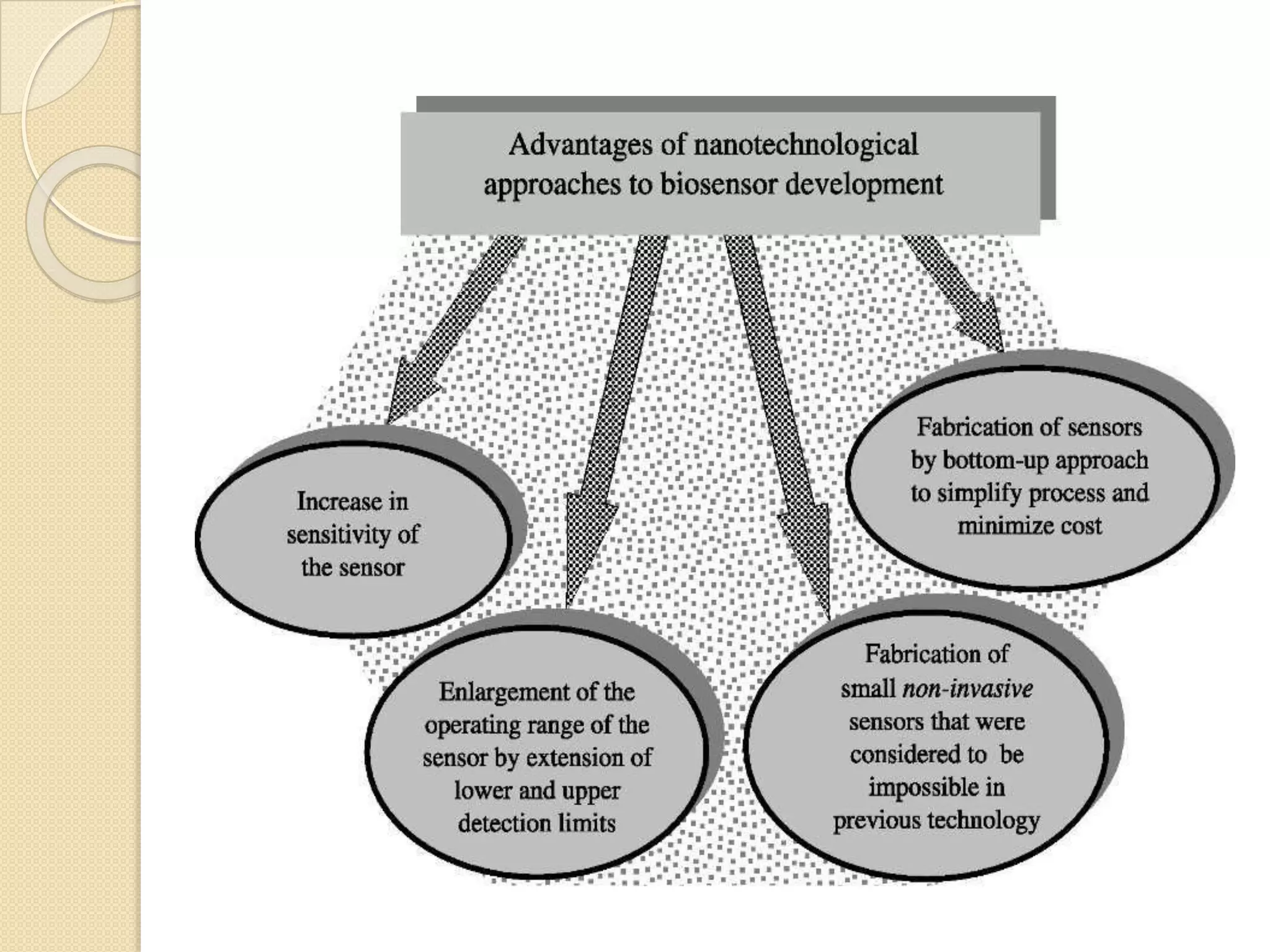

BIOSENSORS
DEFINITION
 Self-contained integrated device that is
capable of providing specific qualitative or
semi-quantitative analytical information using
a biological recognition element which is in
direct-spatial contact with a transduction
element. (IUPAC,1998)
 A sensor that integrates a biological element
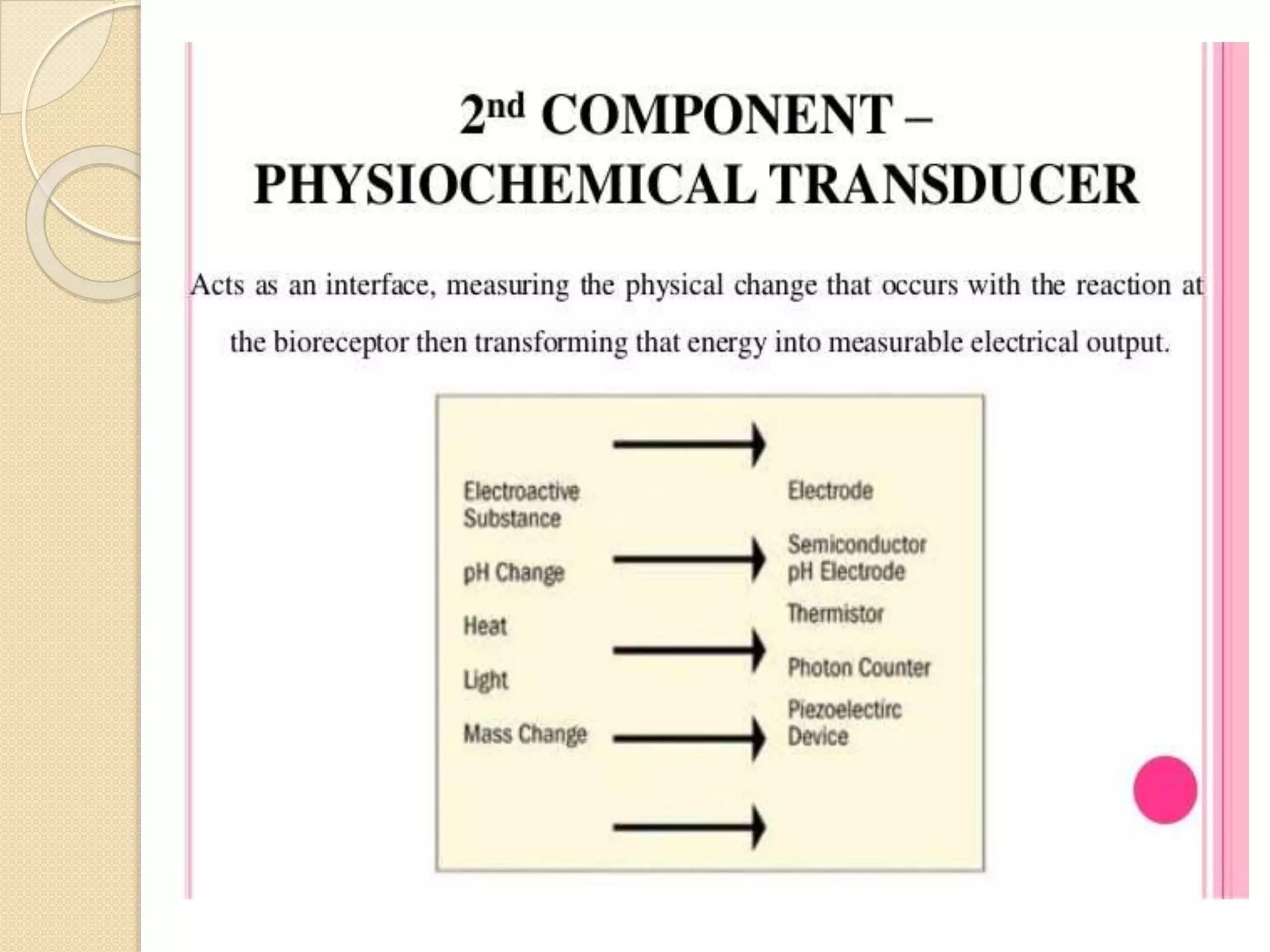
with a physiochemical transducer to produce
an electronic signal proportional to a single
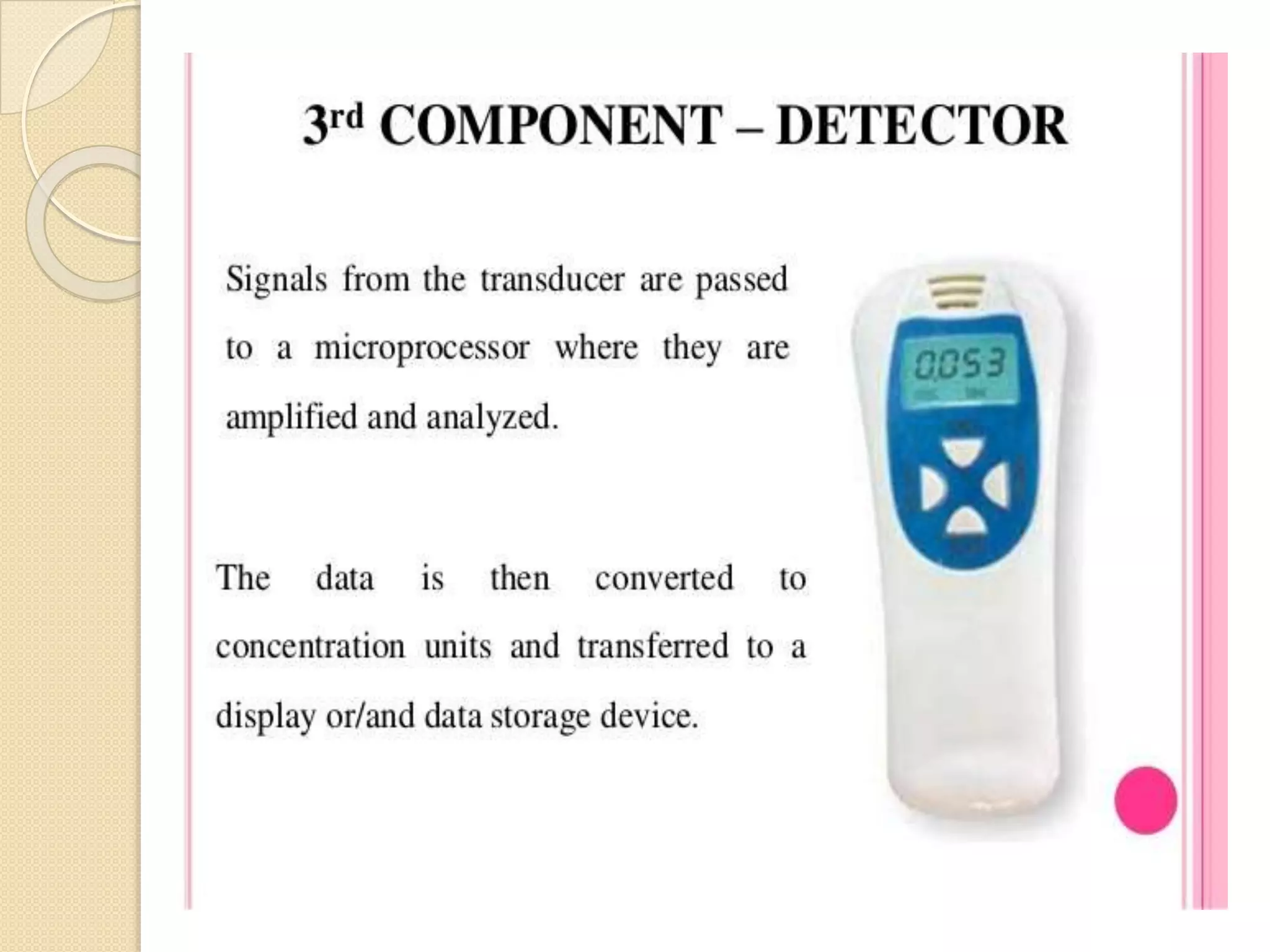
analyte which is then conveyed to a detector
• What Is a Biosensor?
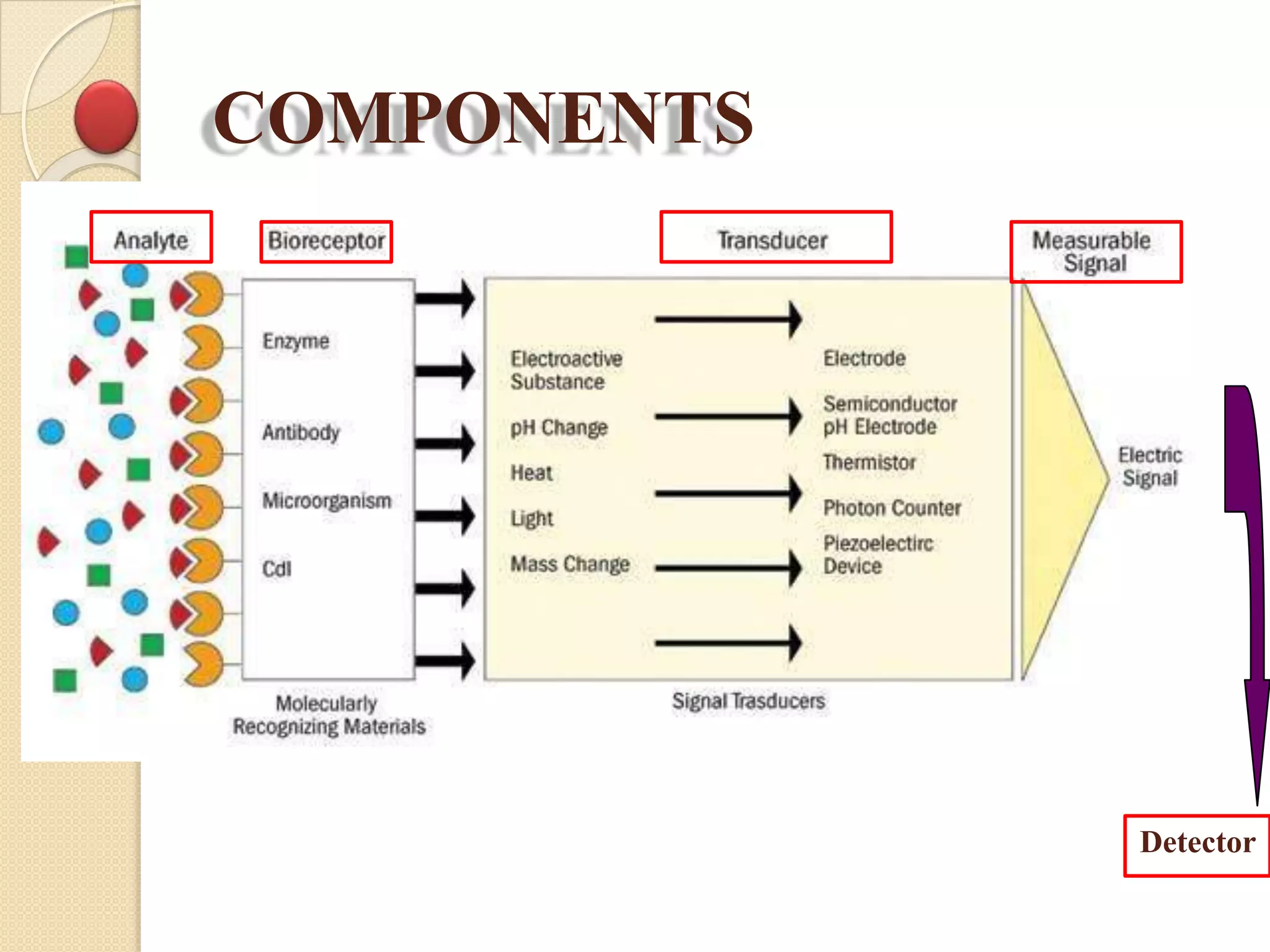
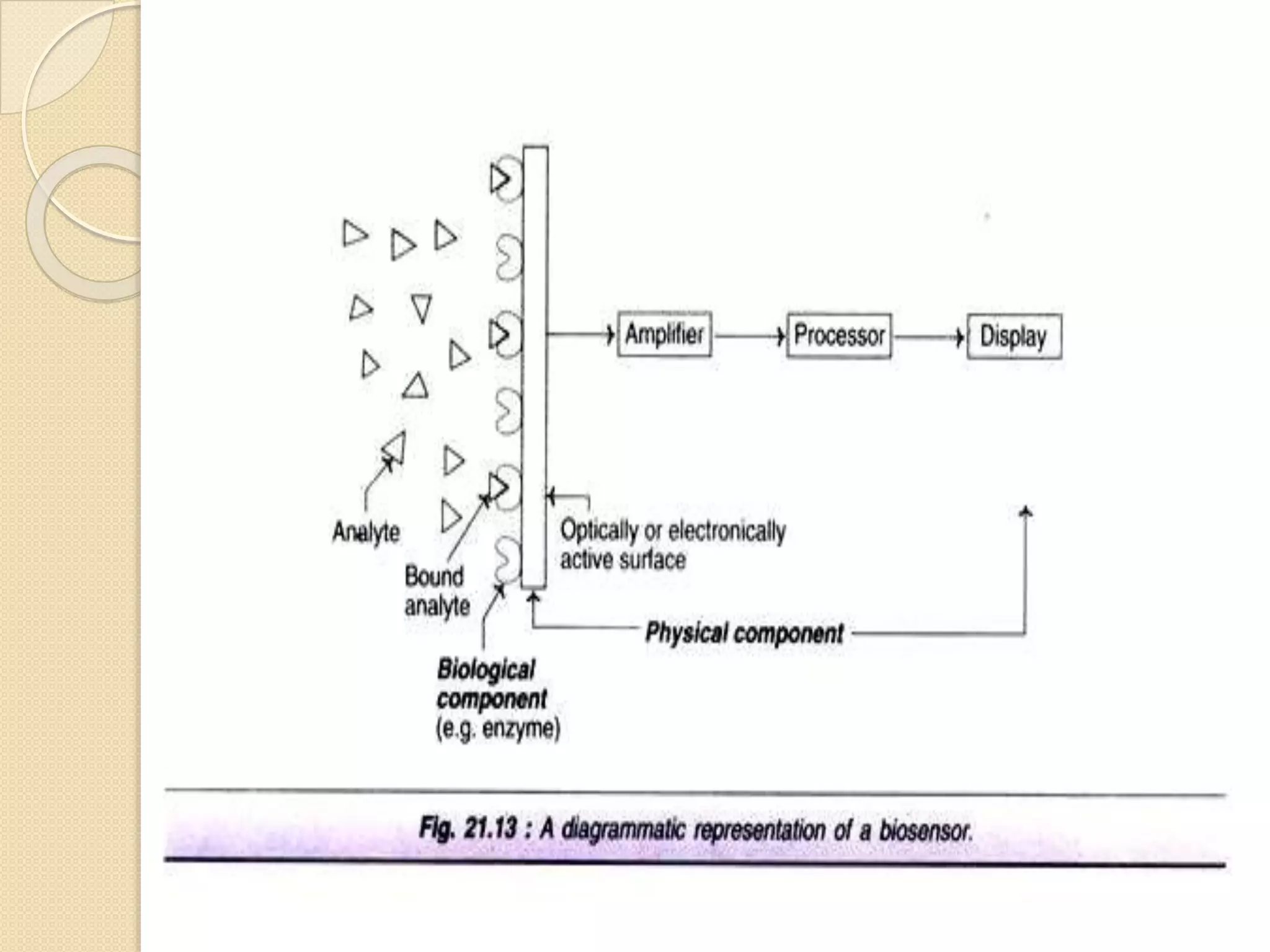
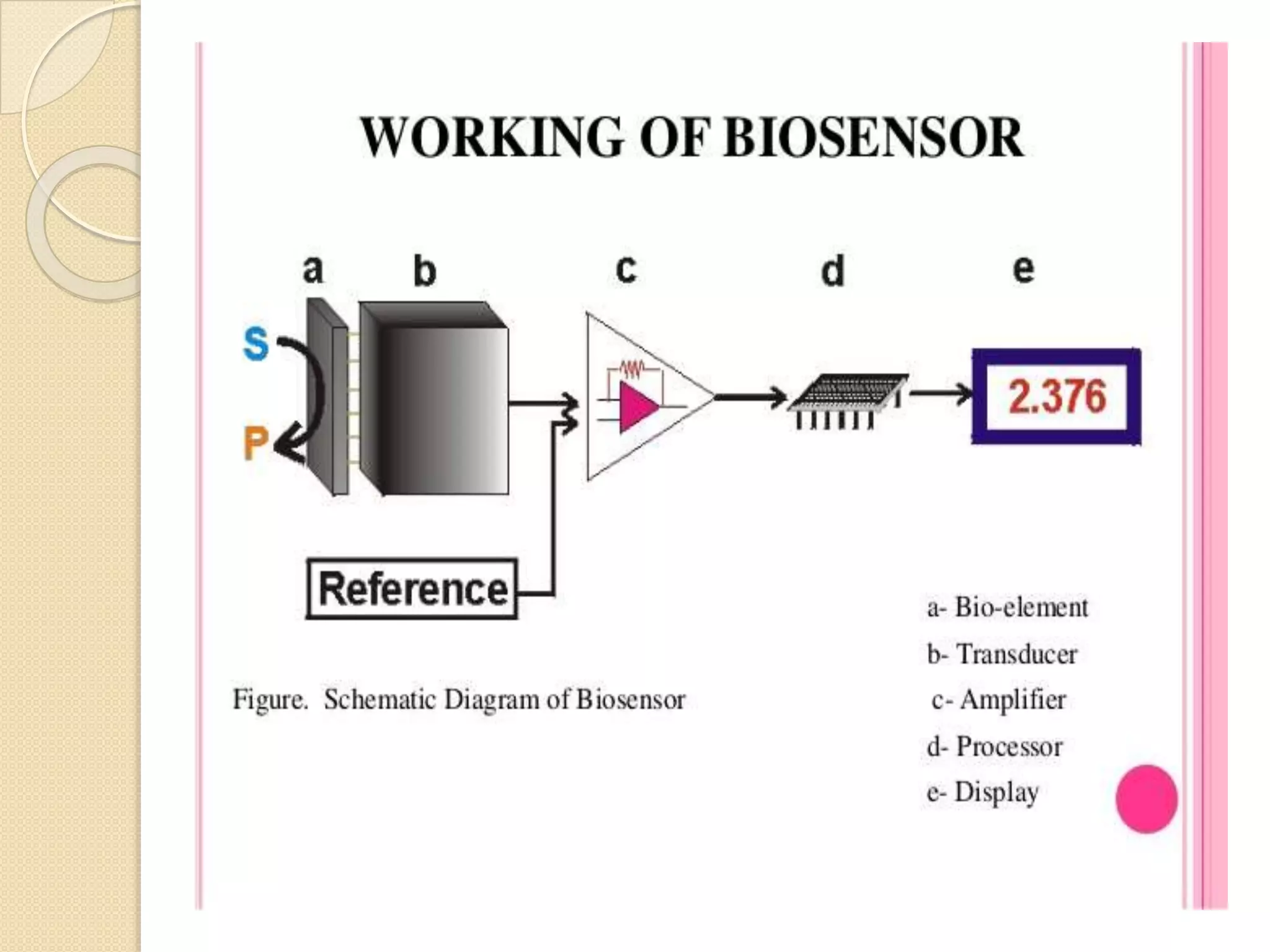
• Biosensor = bioreceptor + transducer
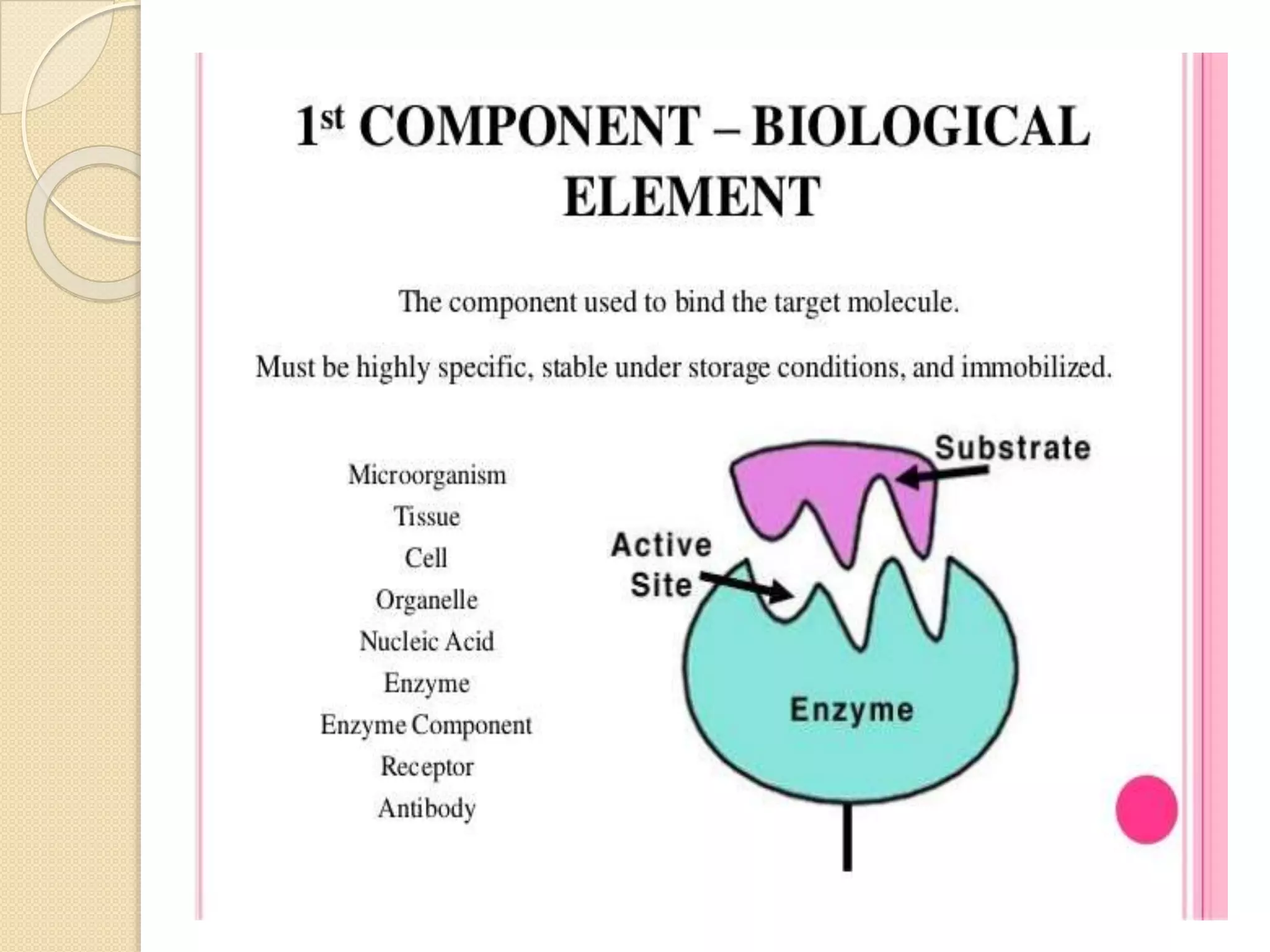
• The bioreceptor is a biomolecule that recognizes the target analyte whereas the
transducer converts the recognition event into a measurable signal.
• Enzyme is a Bioreceptor
Need ofbiosensor
• Diagnostic Market
• Clinical Testing
• clinical testing is one of the biggest diagnostic markets
• clinical testing products market in excess of 4000 million US$ in the 1990s
Specificity
• With biosensors, it is possible to measure specific analytes with
great accuracy.
Speed
• analyte tracers or catalytic products can be directly and instantaneously
measured
Simplicity
• receptor and transducer are integrated into one single sensor& the measurement of
target analytes without using reagents is possible
Continuous monitoring capability
• Biosensors regenerate and reuse the immobilized biological recognition
element
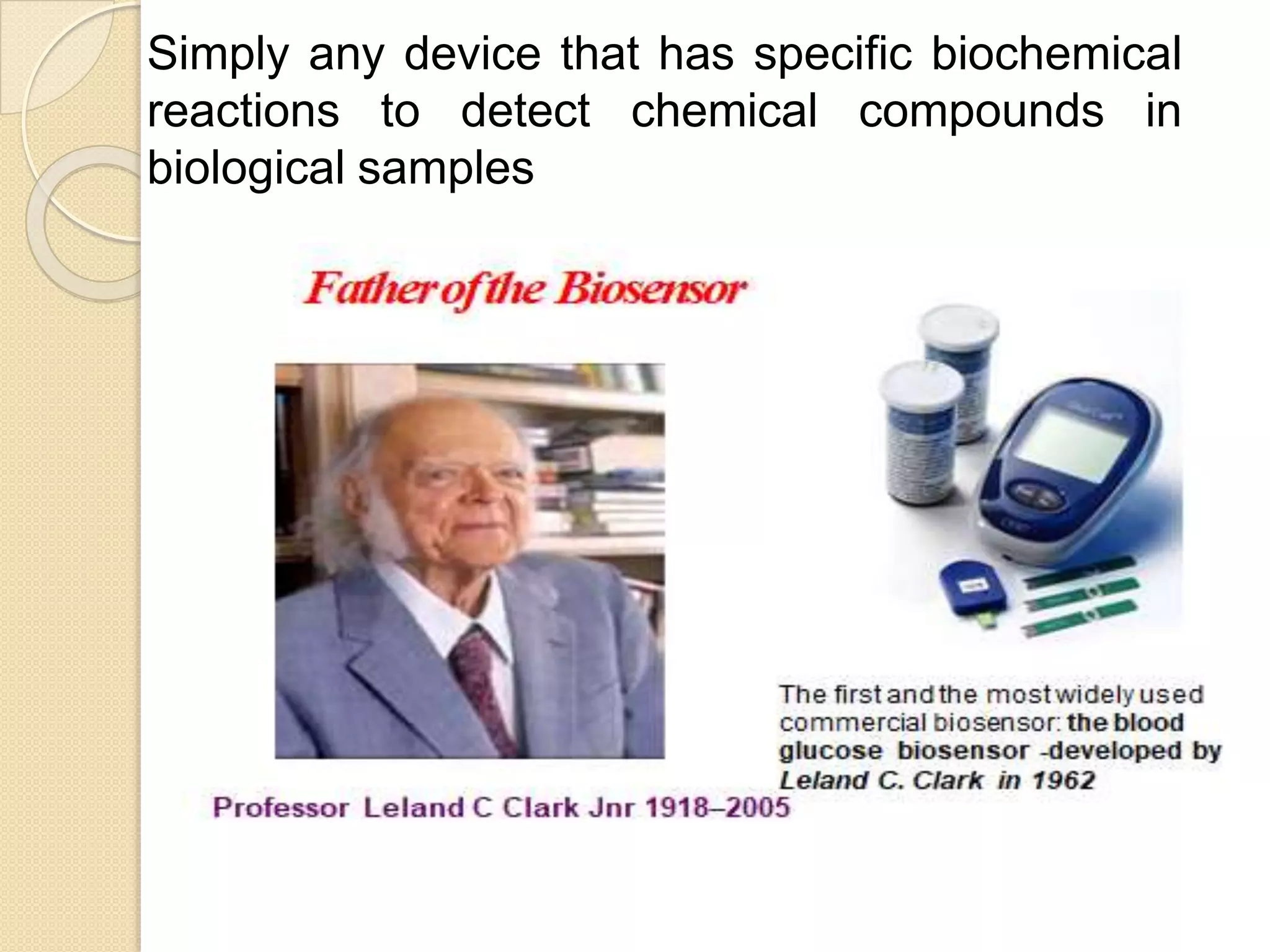
Simply any device that has specific biochemical
reactions to detect chemical compounds in
biological samples
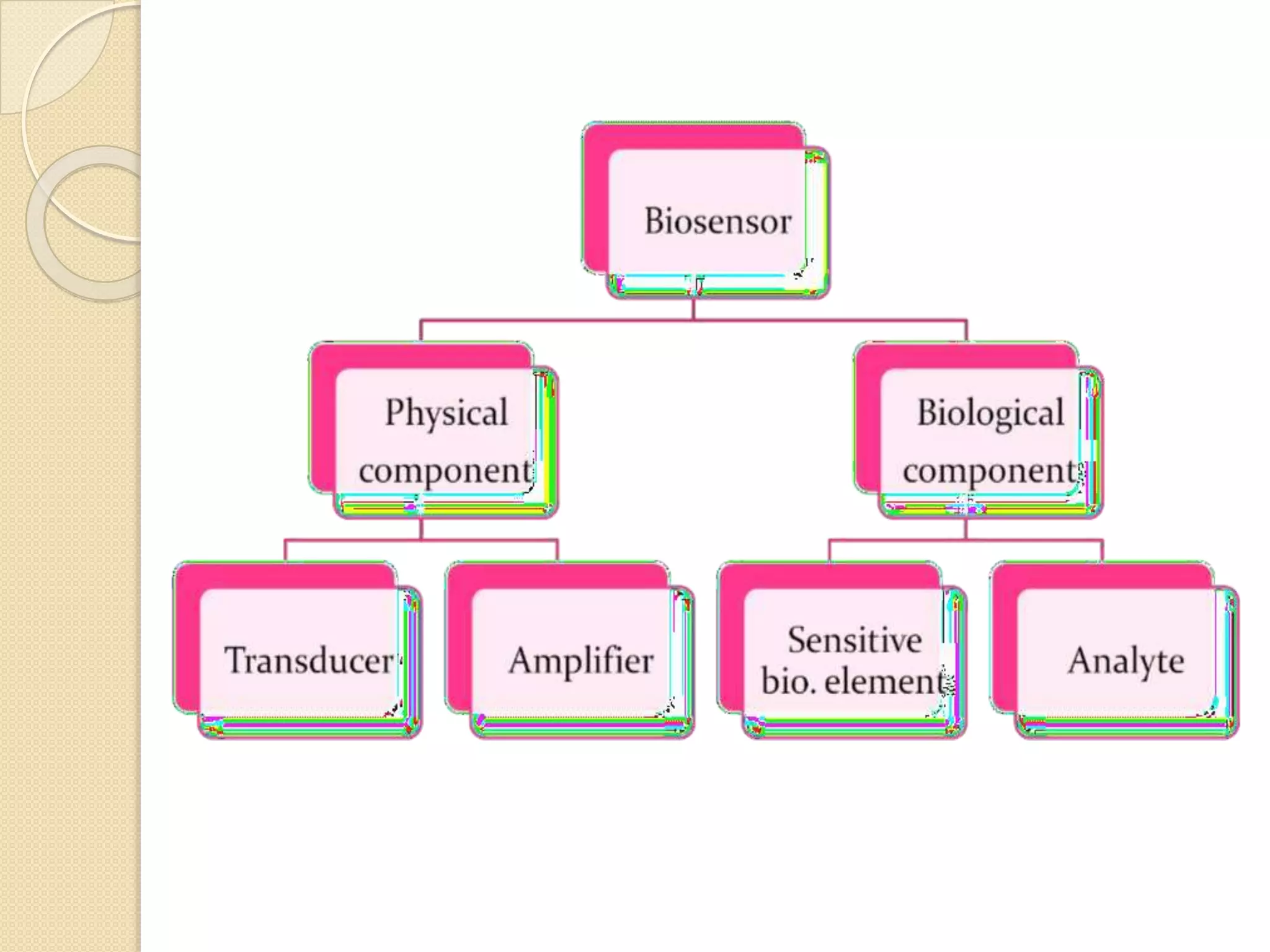
COMPONENTS
Detector
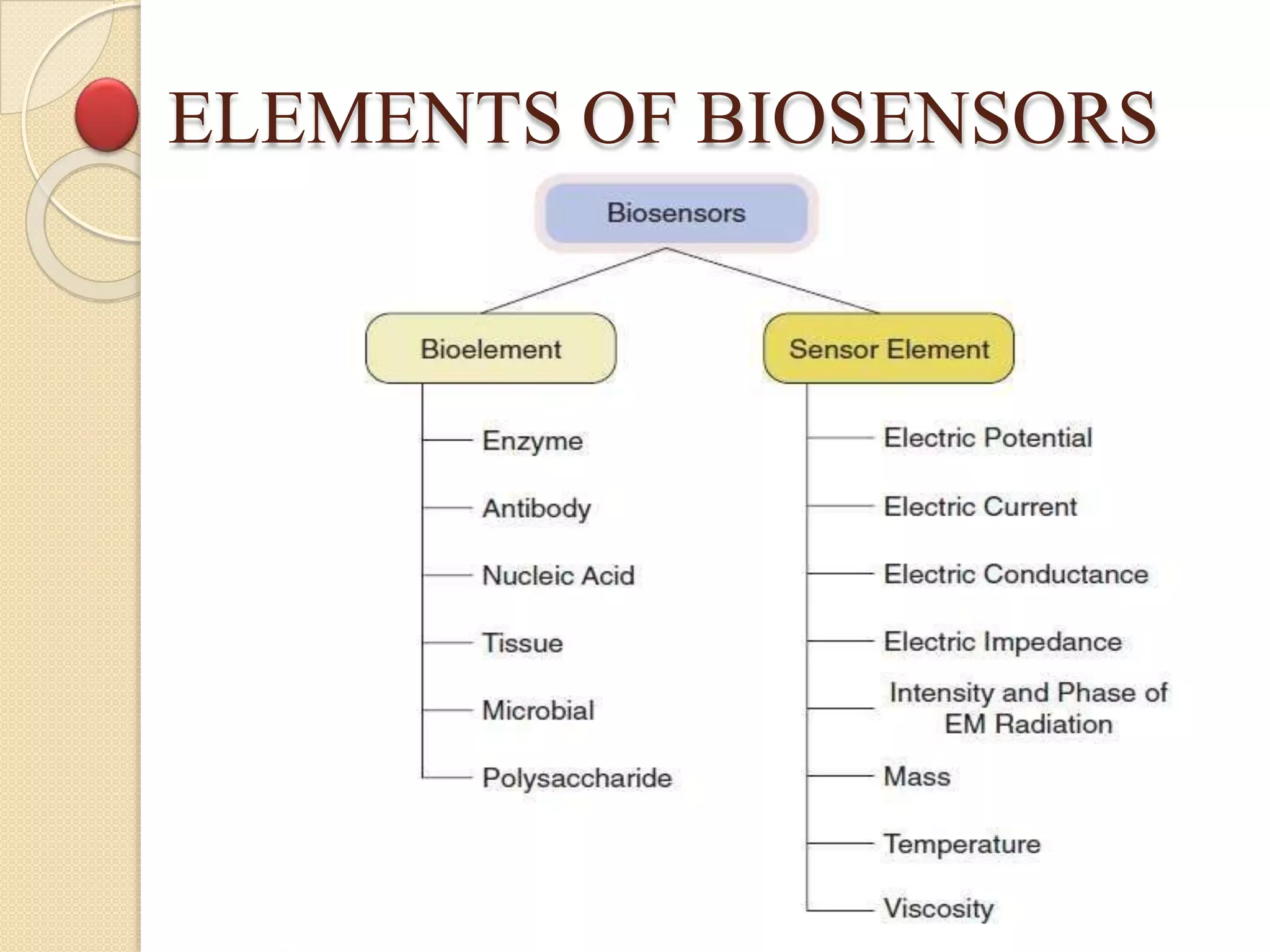
ELEMENTS OF BIOSENSORS
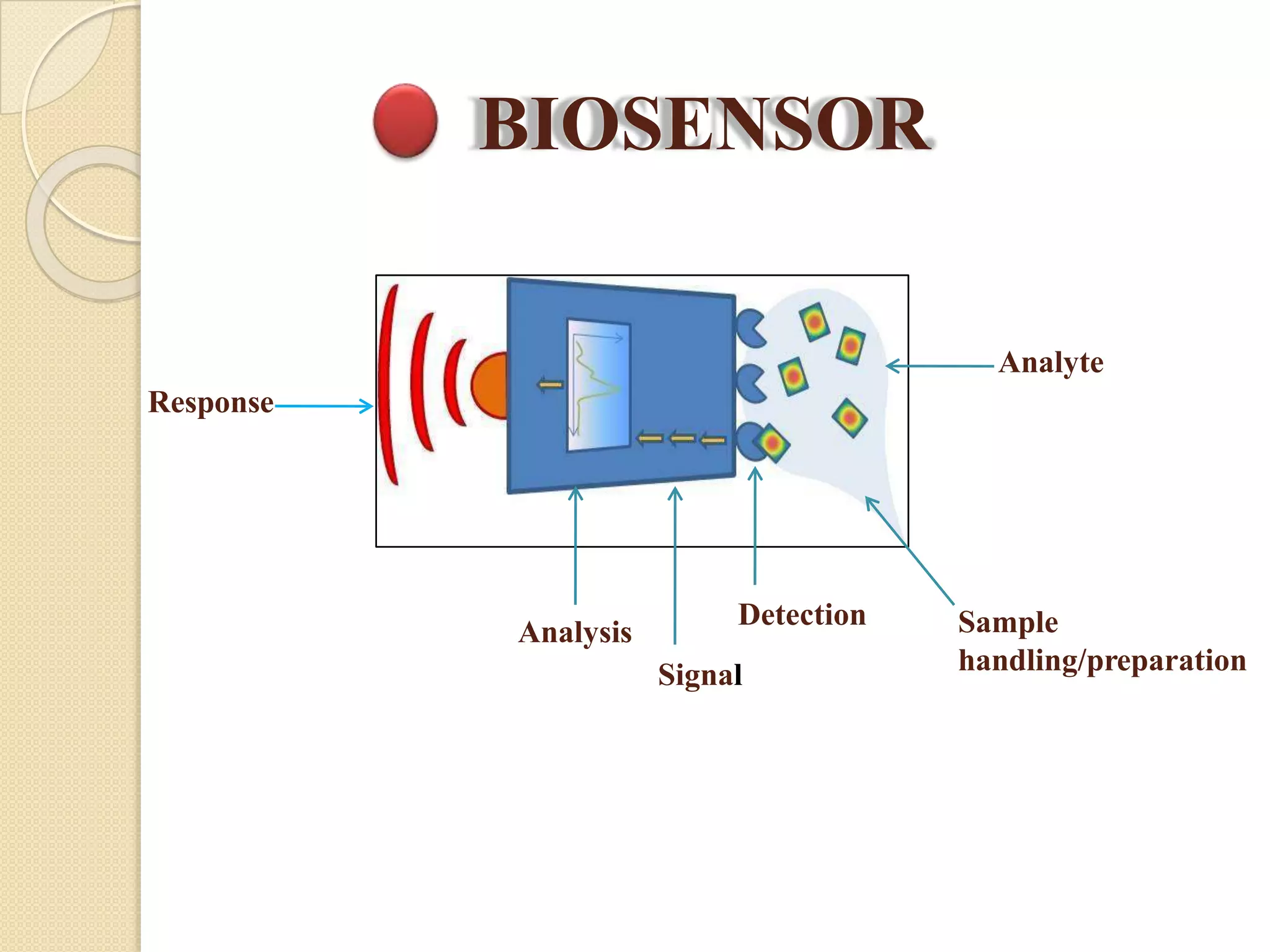
BIOSENSOR
Analyte
Sample
handling/preparation
Detection
Signal
Analysis
Response
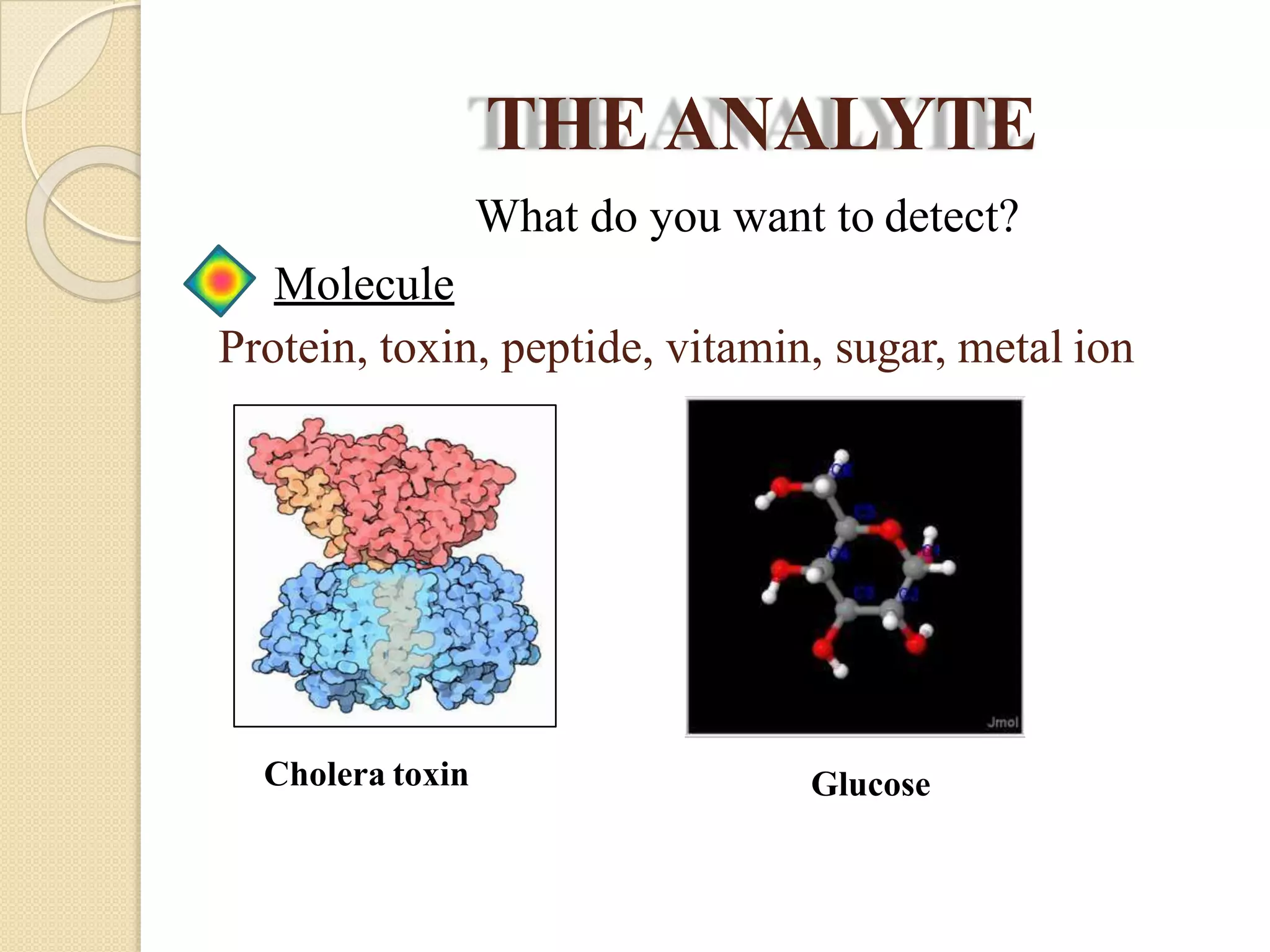
THE ANALYTE
What do you want to detect?
Molecule
Protein, toxin, peptide, vitamin, sugar, metal ion
Cholera toxin Glucose
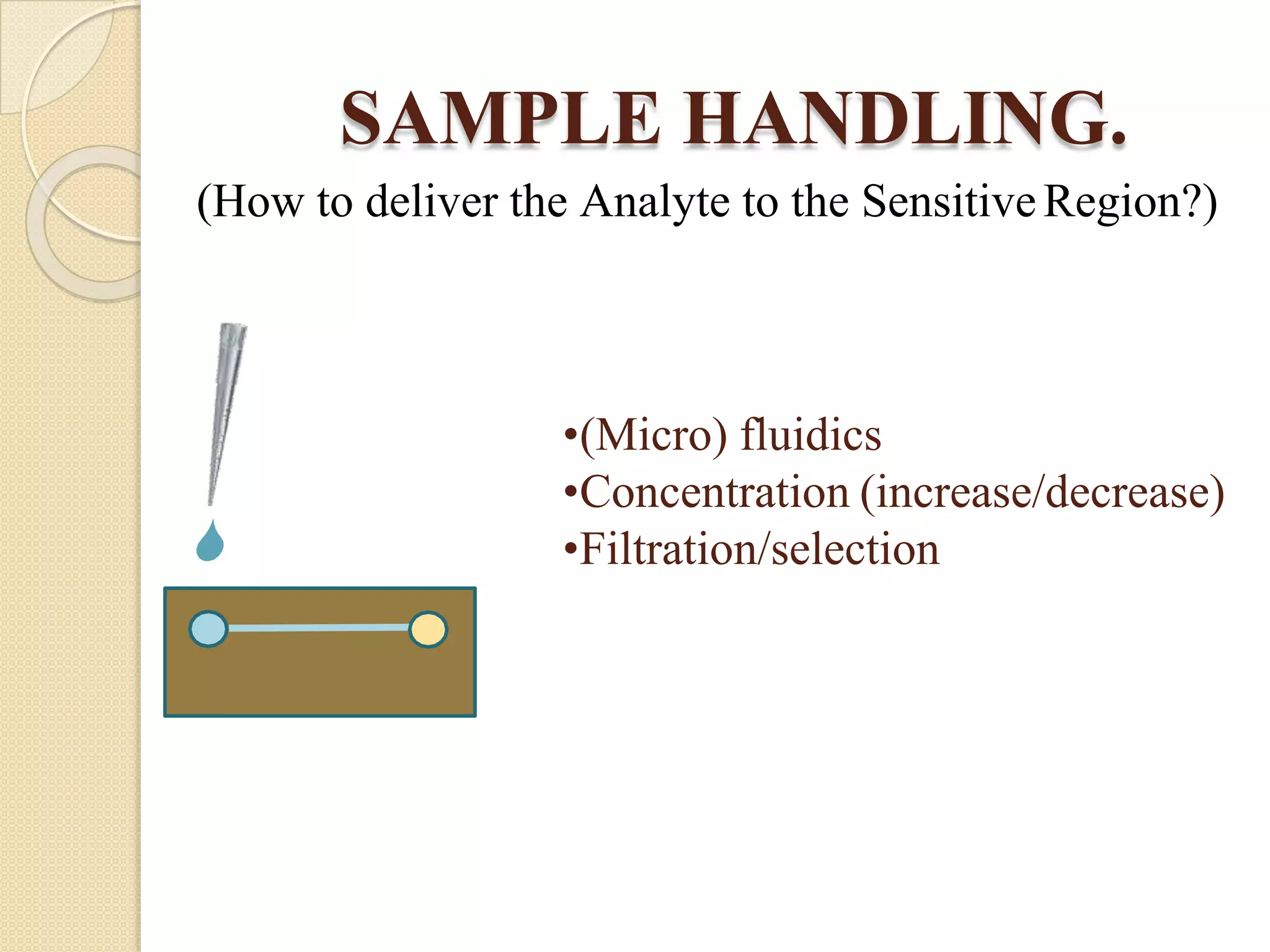
SAMPLE HANDLING.
(How to deliver the Analyte to the SensitiveRegion?)
•(Micro) fluidics
•Concentration (increase/decrease)
•Filtration/selection
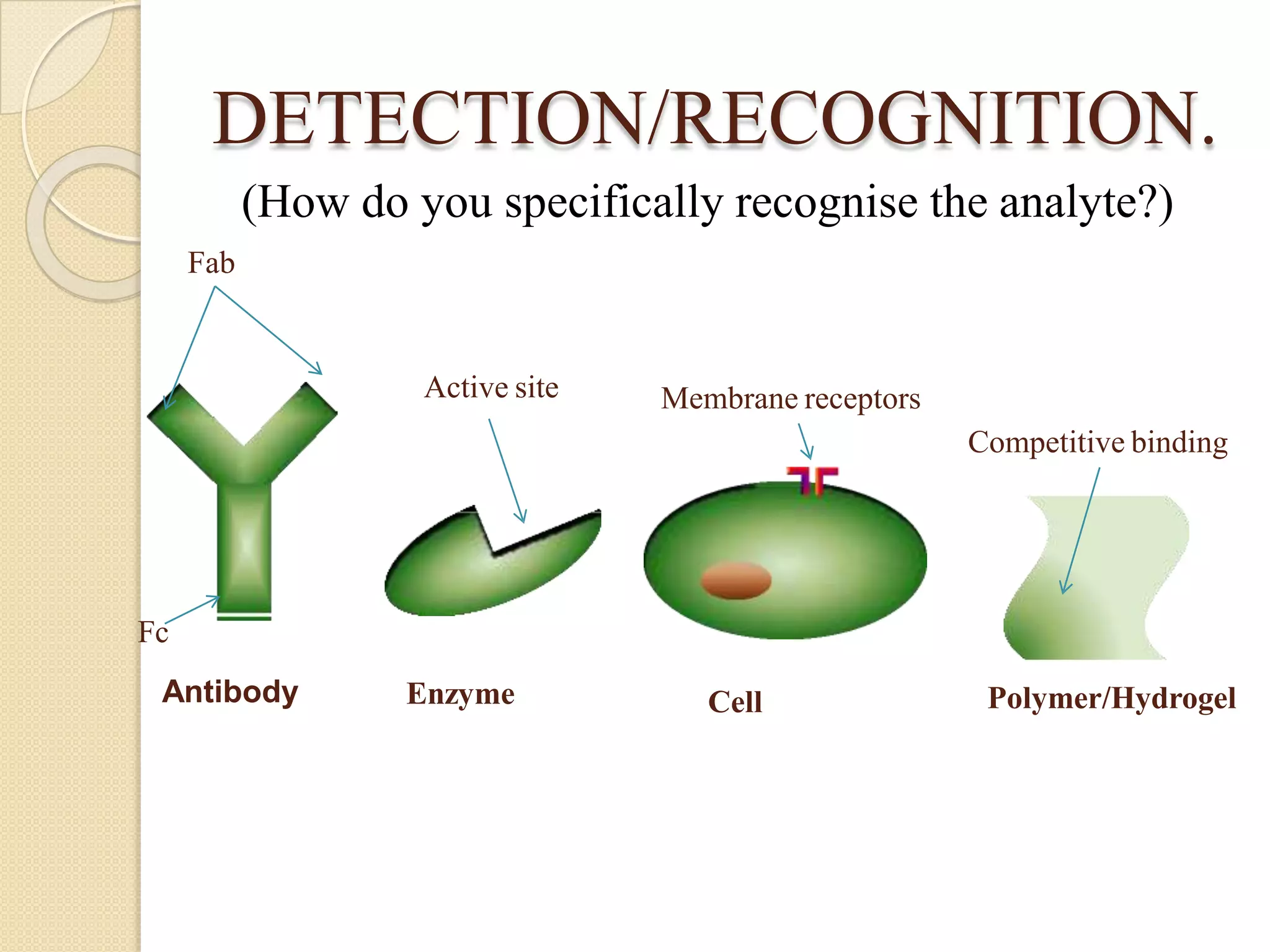
DETECTION/RECOGNITION.
Antibody Enzyme
Active site
Fc
Cell
Membrane receptors
Polymer/Hydrogel
Competitive binding
(How do you specifically recognise the analyte?)
Fab
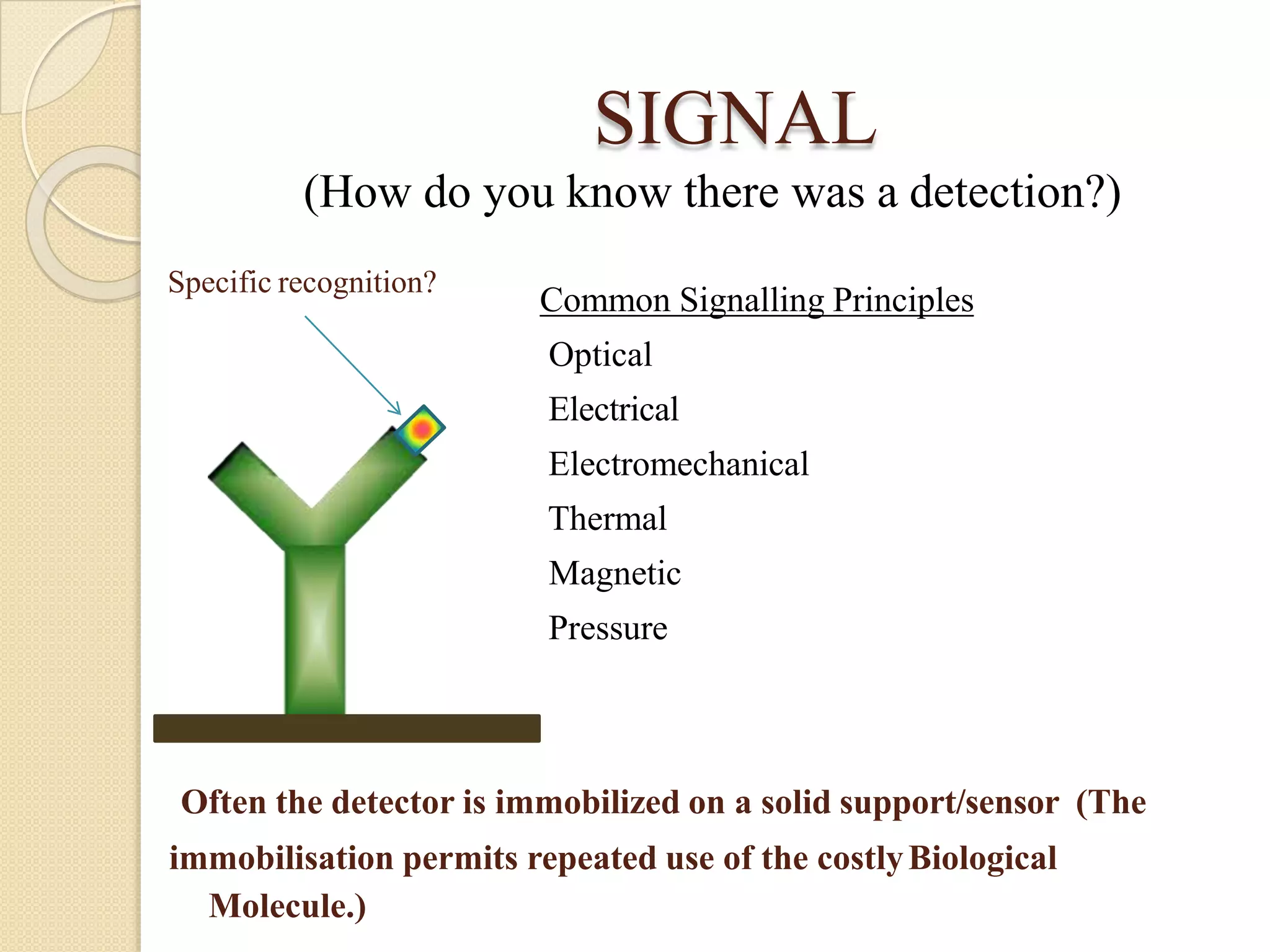
SIGNAL
(How do you know there was a detection?)
Common Signalling Principles
Optical
Electrical
Electromechanical
Thermal
Magnetic
Pressure
Often the detector is immobilized on a solid support/sensor (The
immobilisation permits repeated use of the costlyBiological
Molecule.)
Specific recognition?
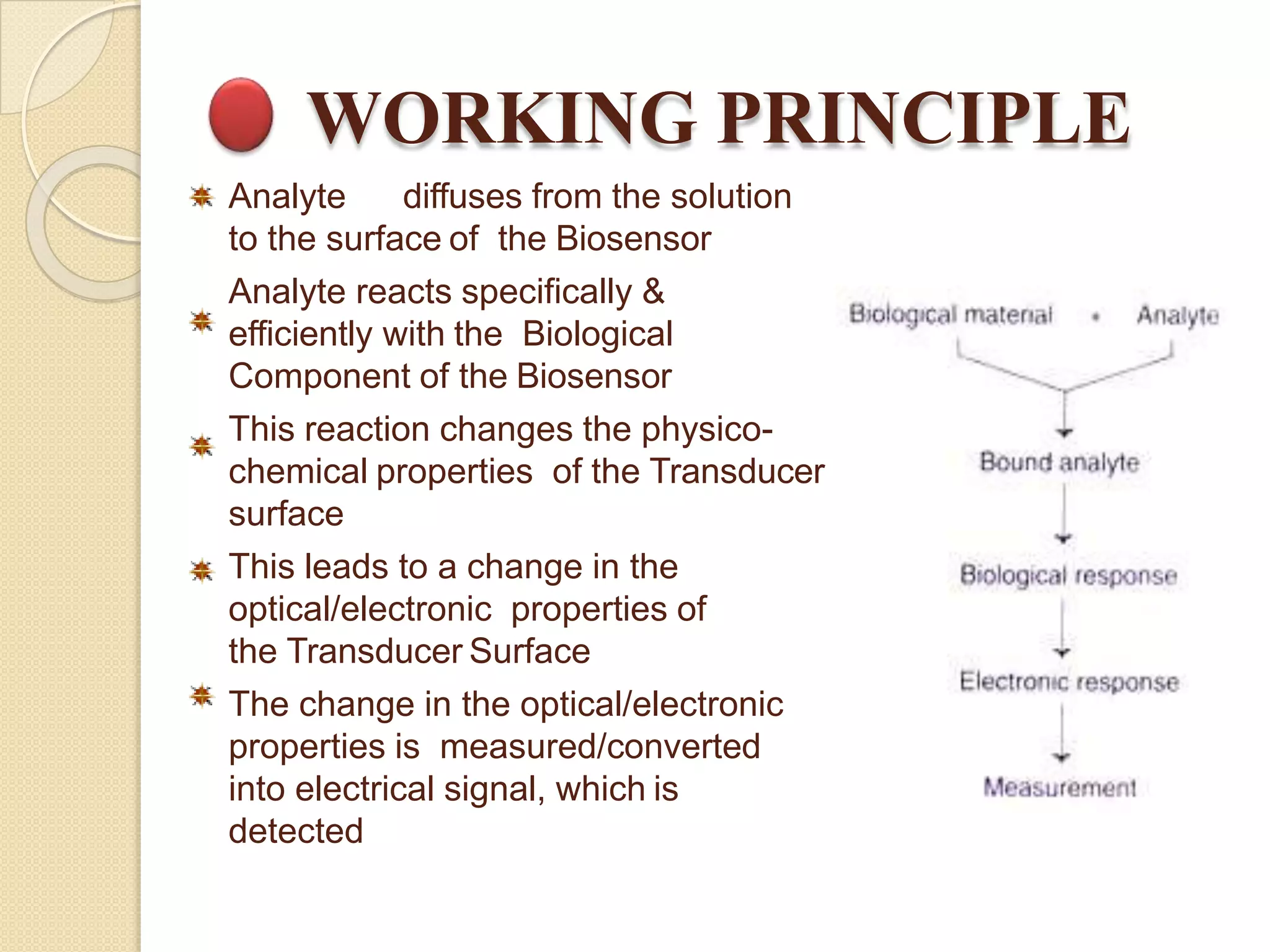
WORKING PRINCIPLE
Analyte diffuses from the solution
to the surface of the Biosensor
Analyte reacts specifically &
efficiently with the Biological
Component of the Biosensor
This reaction changes the physico-
chemical properties of the Transducer
surface
This leads to a change in the
optical/electronic properties of
the Transducer Surface
The change in the optical/electronic
properties is measured/converted
into electrical signal, which is
detected
BASIC CHARACTERESTICS
 LINEARITY - Should be High – For the
detection of High Substrate Concentration.
 SENSITIVITY - Value of Electrode Response
per Substrate Concentration.
 SELECTIVITY - Chemical Interference must be
minimised for obtaining Correct Result.
 RESPONSE TIME – Time necessary for having
95% of the Response.
ADVANTAGES
Highly Specific
Independent of Factors like stirring, pH, etc.
Linear response, Tiny & Biocompatible
Easy to Use, Durable
Require only Small Sample Volume
Rapid, Accurate, Stable & Sterilizable
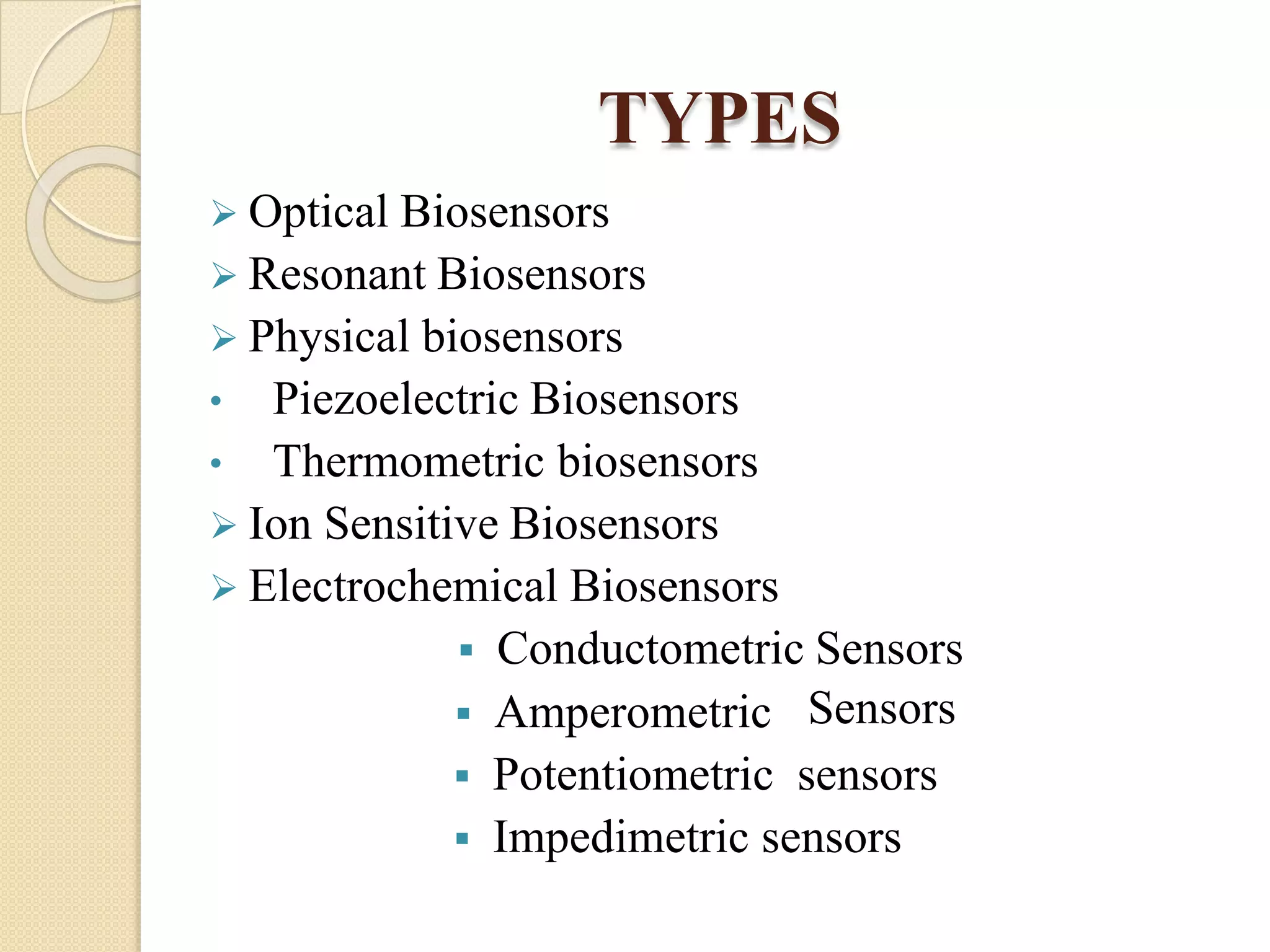
TYPES
 Optical Biosensors
 Resonant Biosensors
 Physical biosensors
• Piezoelectric Biosensors
• Thermometric biosensors
 Ion Sensitive Biosensors
 Electrochemical Biosensors
 Conductometric Sensors
 Amperometric
 Potentiometric sensors
 Impedimetric sensors
Sensors
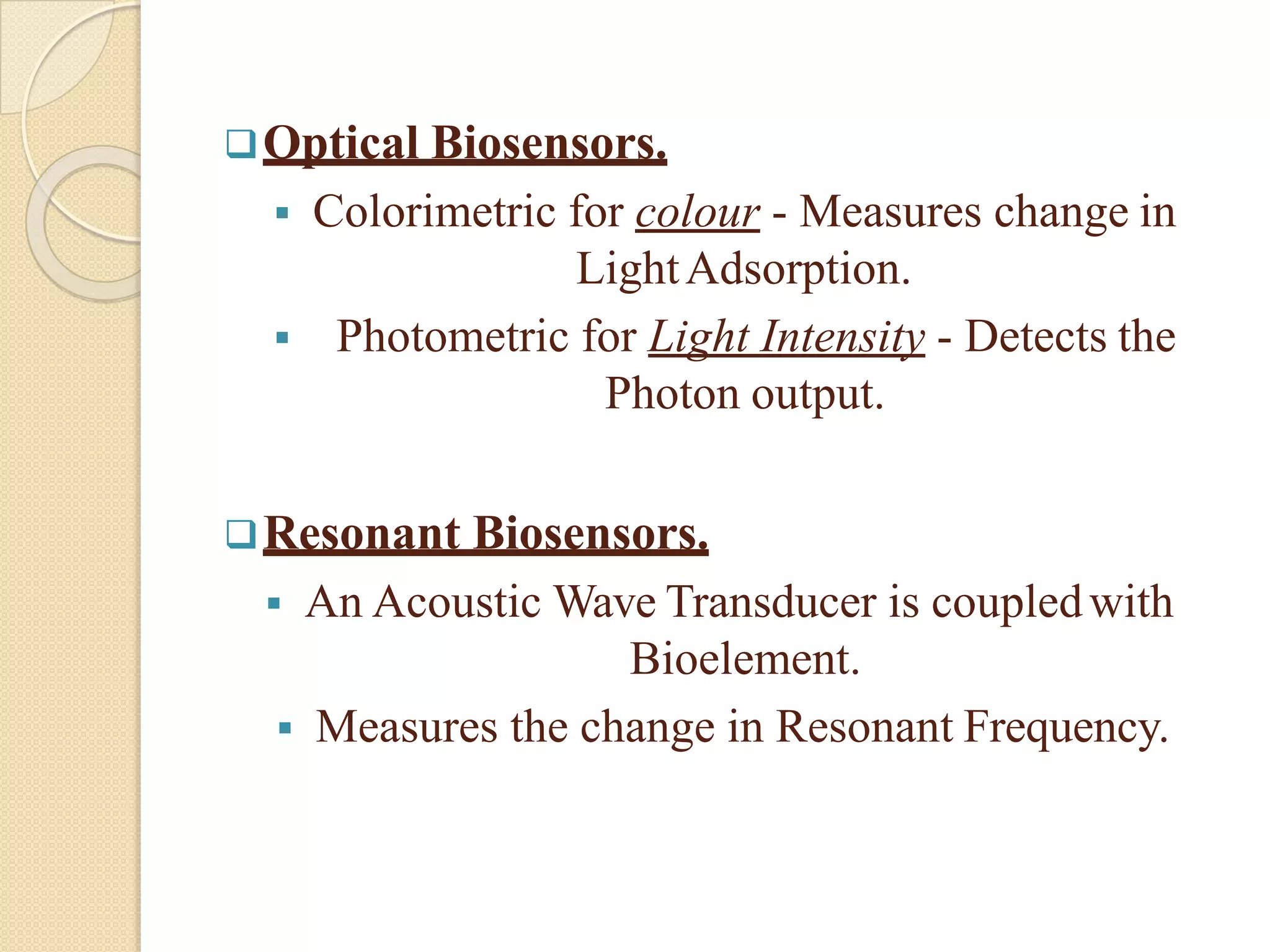
Optical Biosensors.
 Colorimetric for colour - Measures change in
LightAdsorption.
 Photometric for Light Intensity - Detects the
Photon output.
Resonant Biosensors.
 An Acoustic Wave Transducer is coupledwith
Bioelement.
 Measures the change in Resonant Frequency.
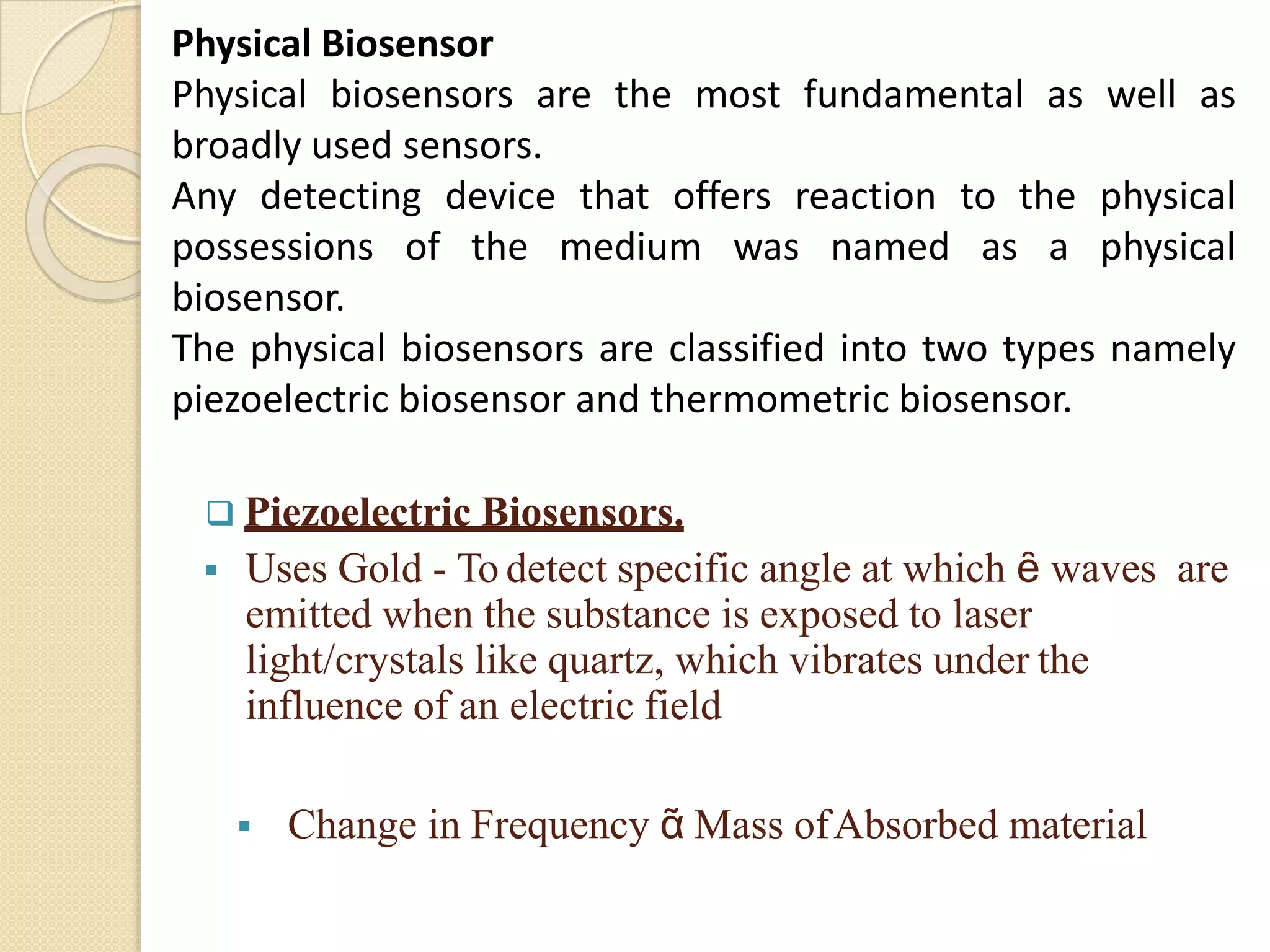
Physical Biosensor
Physical biosensors are the most fundamental as well as
broadly used sensors.
Any detecting device that offers reaction to the physical
possessions of the medium was named as a physical
biosensor.
The physical biosensors are classified into two types namely
piezoelectric biosensor and thermometric biosensor.
 Piezoelectric Biosensors.
 Uses Gold - To detect specific angle at which ȇ waves are
emitted when the substance is exposed to laser
light/crystals like quartz, which vibrates under the
influence of an electric field
 Change in Frequency ᾶ Mass ofAbsorbed material
Calorimetric / Thermal Detection Biosensors.
 Uses Absorption / Production of Heat.
Total heat produced/absorbed is ᾶ Molar
Enthalpy/Total No. of molecules in the rn.
 Temp. measured by Enzyme Thermistors.
Advantages:
• No need of Frequent recalibration.
• Insensitive to the Optical & Electrochemical
Properties of the sample.
Uses:
Detection of: (1) Pesticides .
(2) Pathogenic Bacteria.
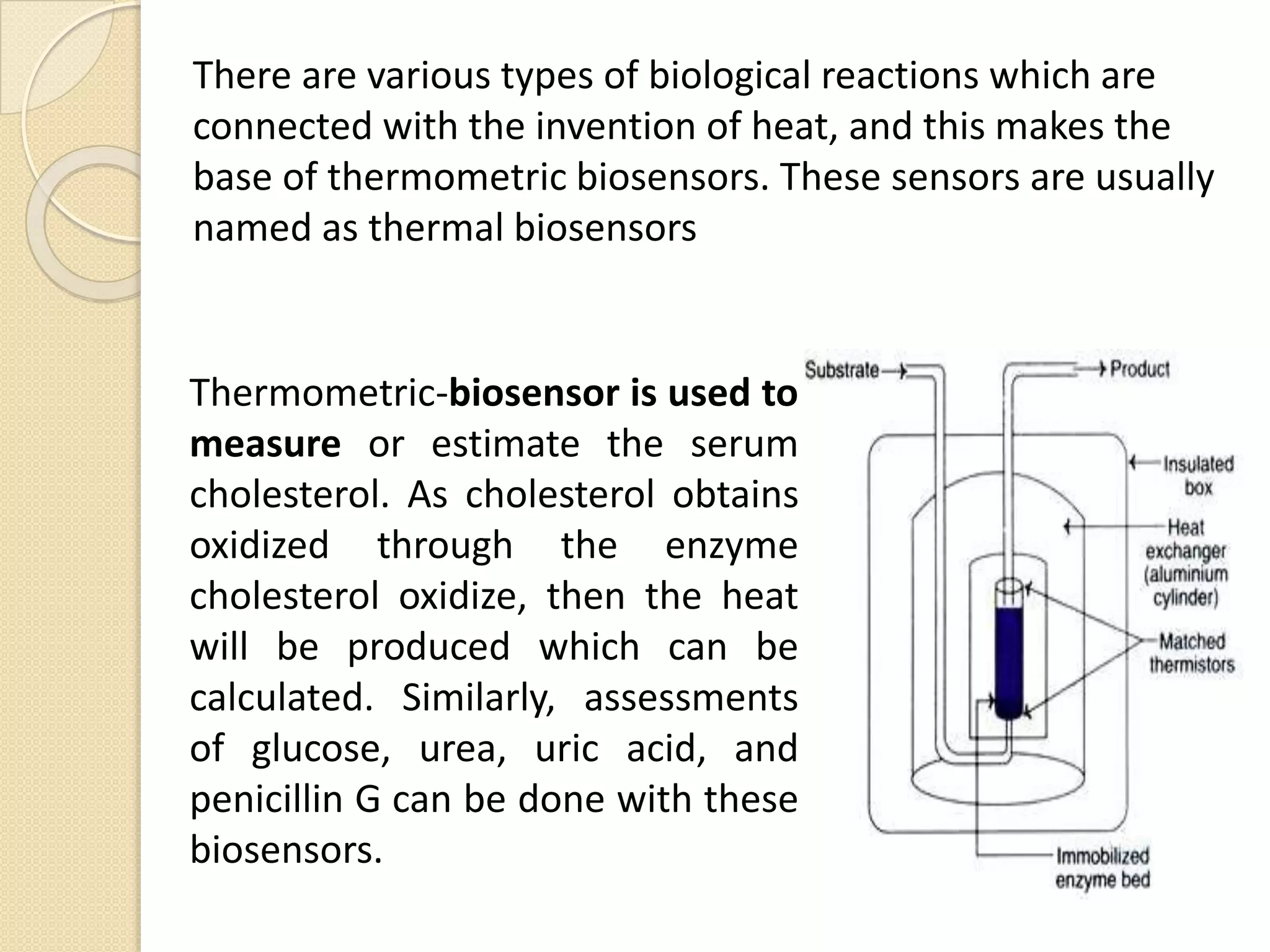
There are various types of biological reactions which are
connected with the invention of heat, and this makes the
base of thermometric biosensors. These sensors are usually
named as thermal biosensors
Thermometric-biosensor is used to
measure or estimate the serum
cholesterol. As cholesterol obtains
oxidized through the enzyme
cholesterol oxidize, then the heat
will be produced which can be
calculated. Similarly, assessments
of glucose, urea, uric acid, and
penicillin G can be done with these
biosensors.
Ion Sensitive Biosensors.
 Are semiconductor FETs with ion-
sensitive surface.
 Surface Electrical Potential changes
when the ions & semiconductors
interact.
 Measures the Change in
Potential.
Uses:
o pH Detection.
Electrochemical Biosensors.
Underlying Principle – Many chem.rns produce or
consume ions or ȇs causing some change in the
elctrical properties of the solution that can be
sensed out & used as a measuring parameter.
Uses:
Detection of :
o Hybridized DNA
o DNA- binding Drugs &
o Glucose Concentration.
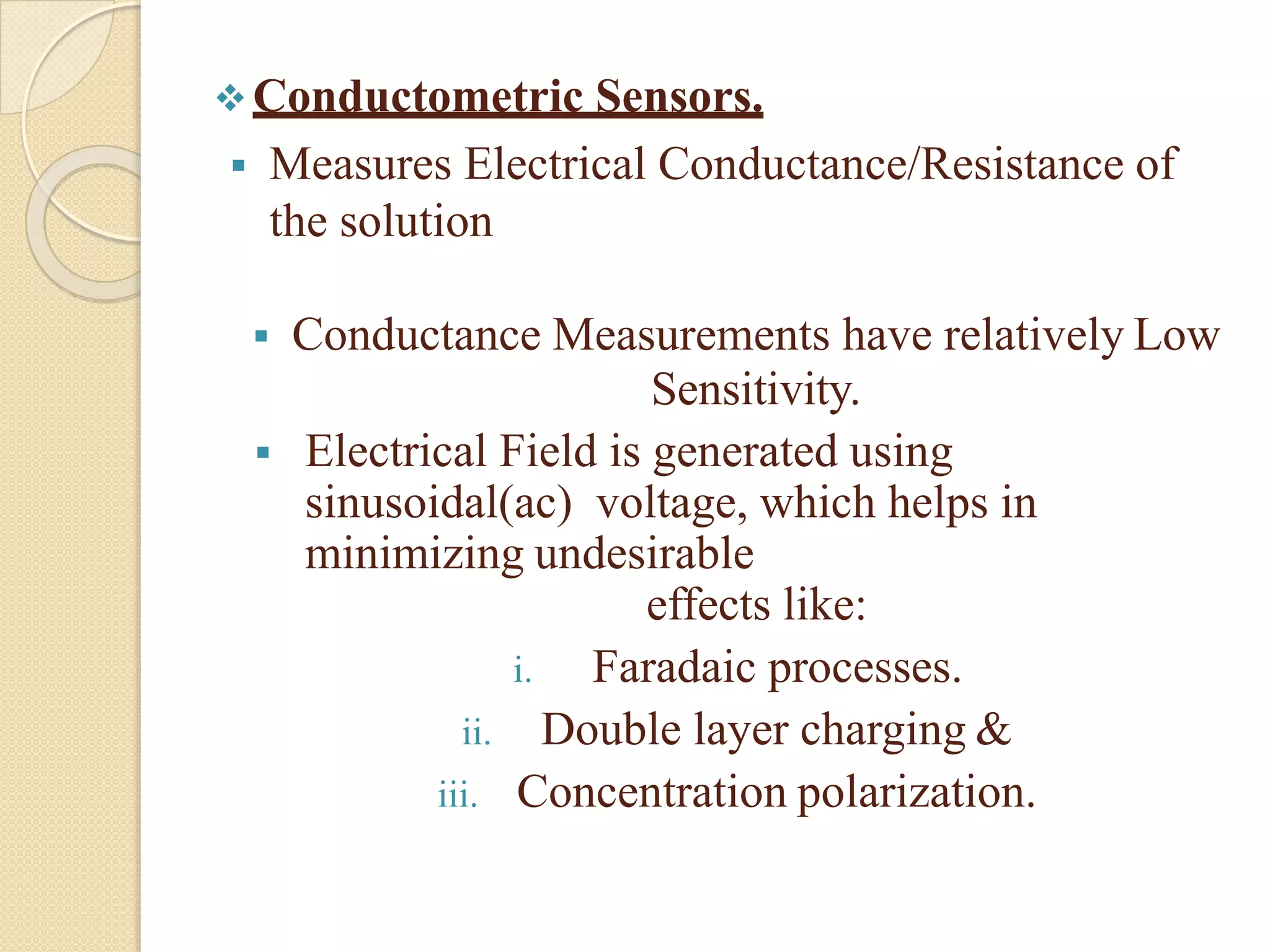
Conductometric Sensors.
 Measures Electrical Conductance/Resistance of
the solution
 Conductance Measurements have relatively Low
Sensitivity.
 Electrical Field is generated using
sinusoidal(ac) voltage, which helps in
minimizing undesirable
effects like:
i. Faradaic processes.
ii. Double layer charging &
iii. Concentration polarization.
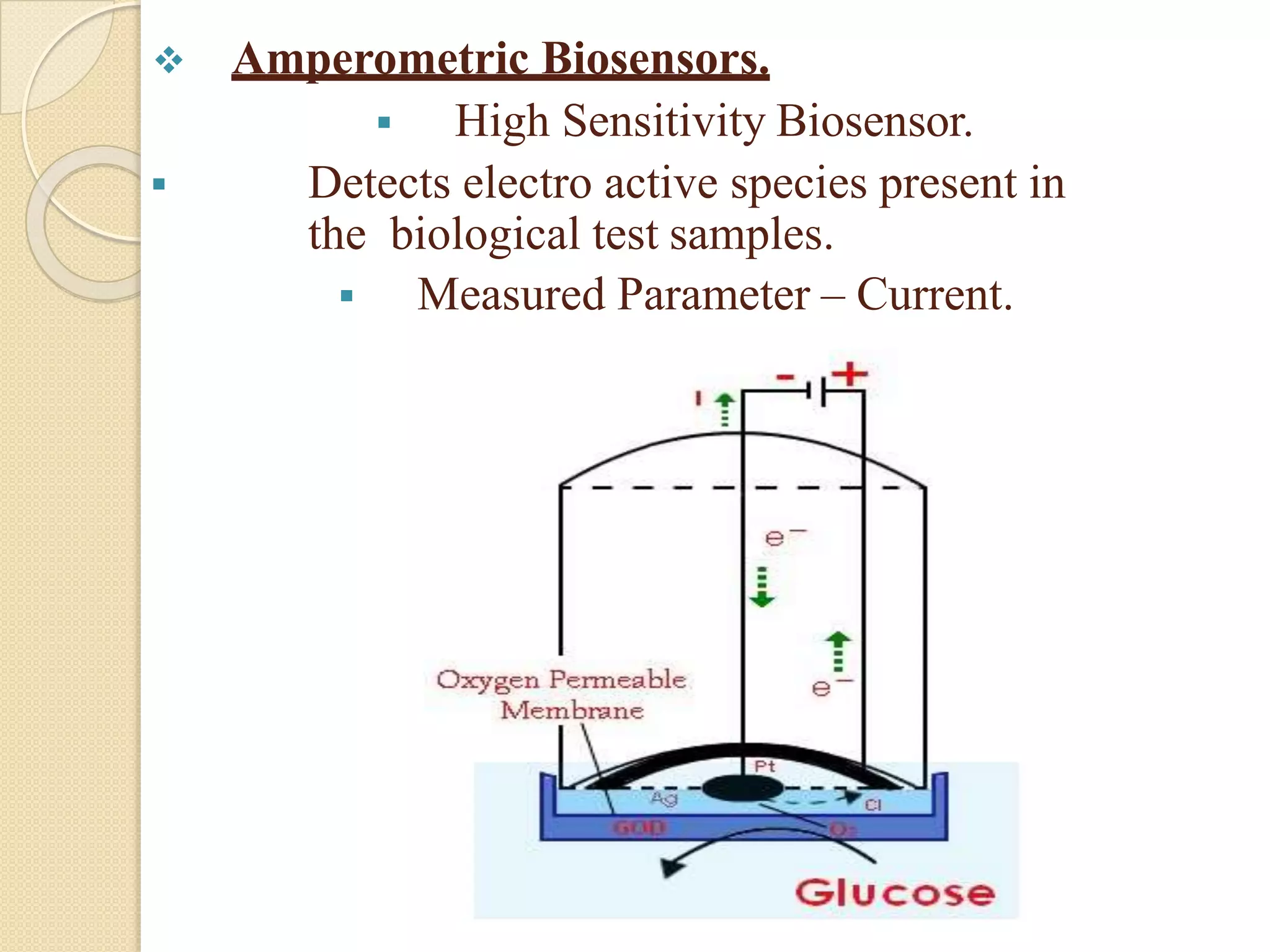
 Amperometric Biosensors.
 High Sensitivity Biosensor.
 Detects electro active species present in
the biological test samples.
 Measured Parameter – Current.
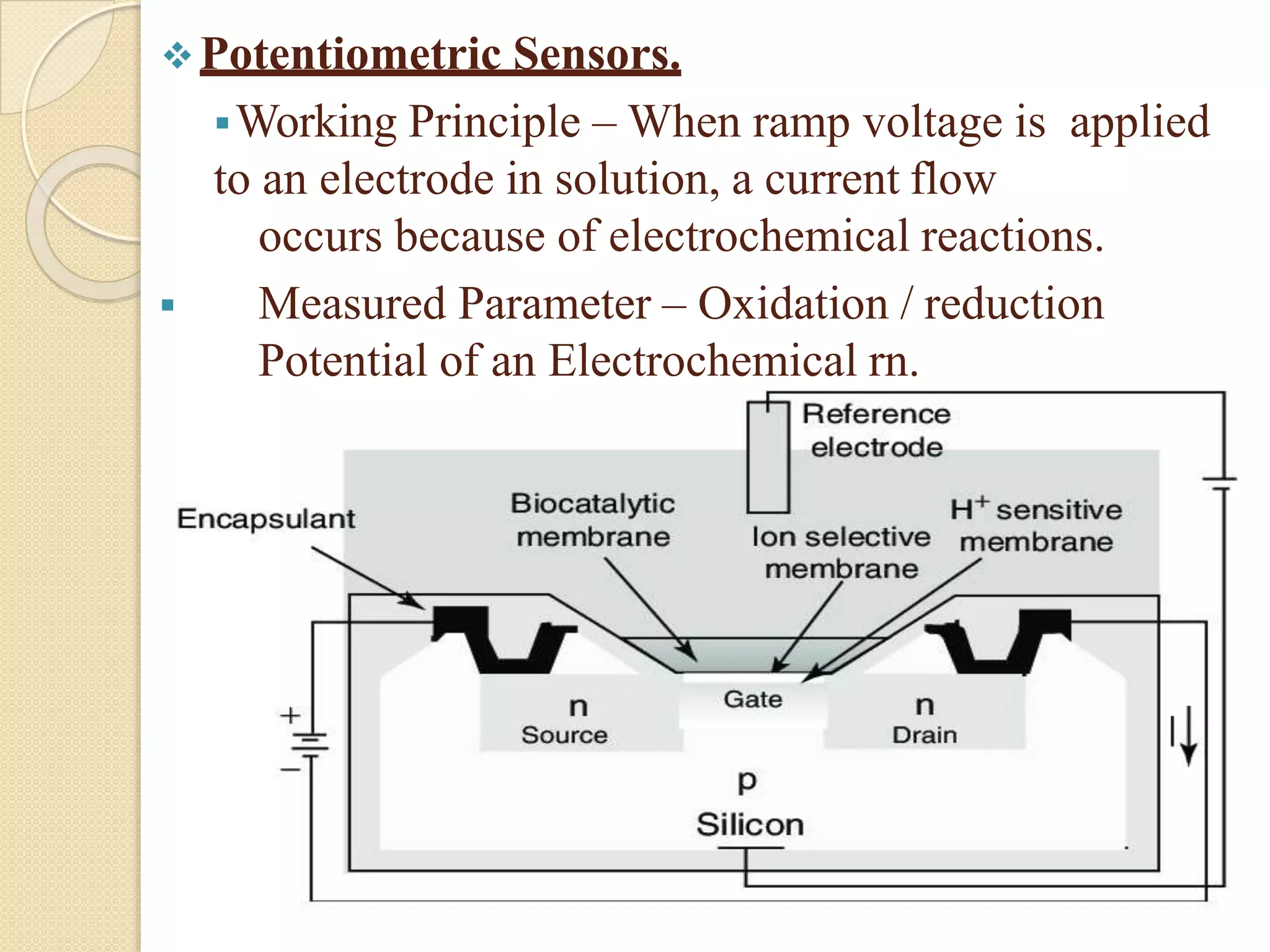
Potentiometric Sensors.
Working Principle – When ramp voltage is applied
to an electrode in solution, a current flow
occurs because of electrochemical reactions.
 Measured Parameter – Oxidation / reduction
Potential of an Electrochemical rn.
4. Impedimetric Biosensors
The EIS (Electrochemical impedance
spectroscopy) is a responsive indicator for
a broad range of physical as well as
chemical properties.
A rising trend towards the expansion of
Impedimetric-biosensors is being presently
observed.
The techniques of Impedimetric have been
executed to differentiate the invention of
the biosensors as well as to examine the
catalyzed responses of enzymes lectins,
nucleic acids, receptors, whole cells, and
antibodies.
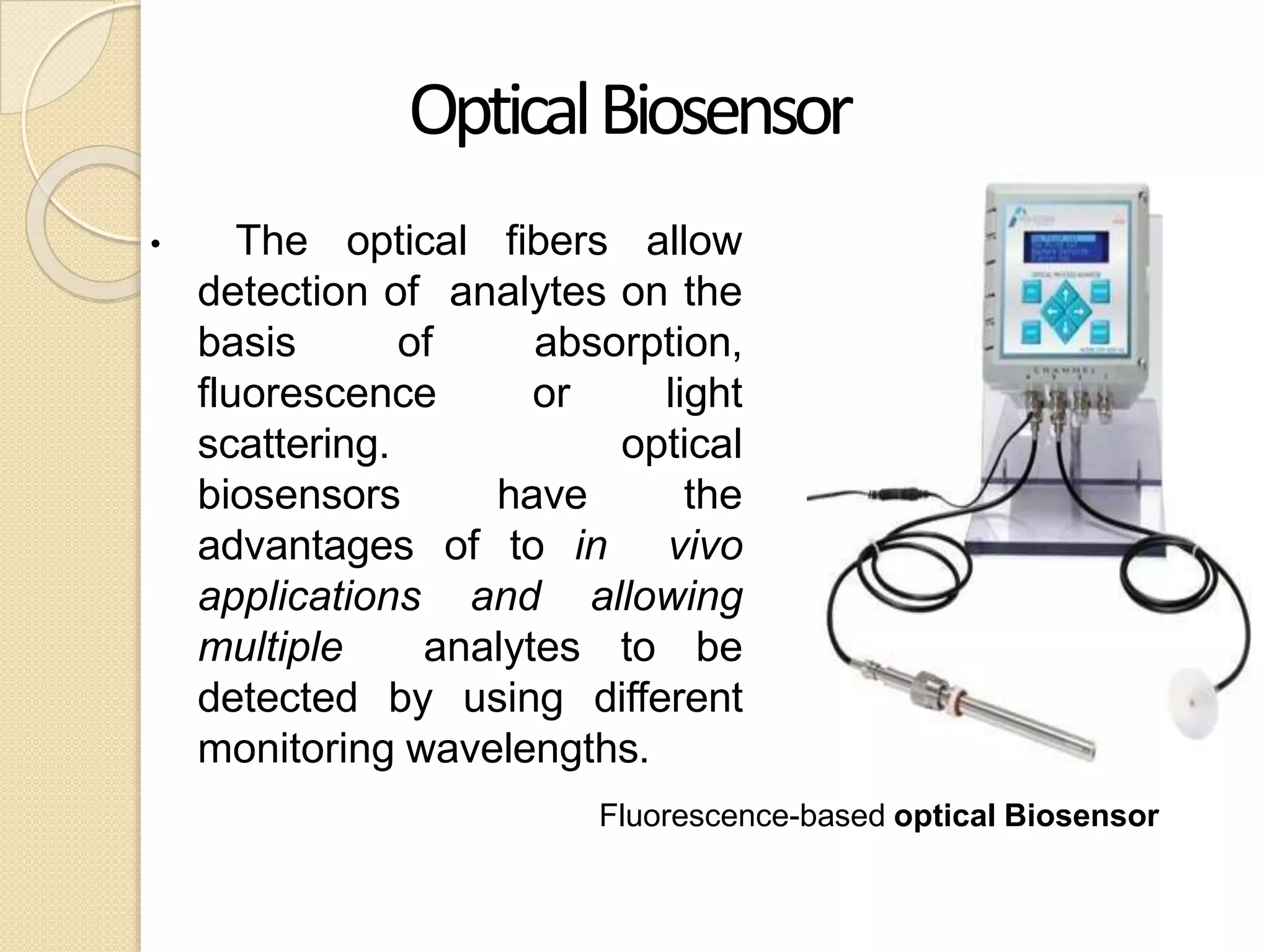
OpticalBiosensor
• The optical fibers allow
detection of analytes on the
basis of absorption,
fluorescence or light
scattering. optical
biosensors have the
advantages of to in vivo
applications and allowing
multiple analytes to be
detected by using different
monitoring wavelengths.
Fluorescence-based optical Biosensor
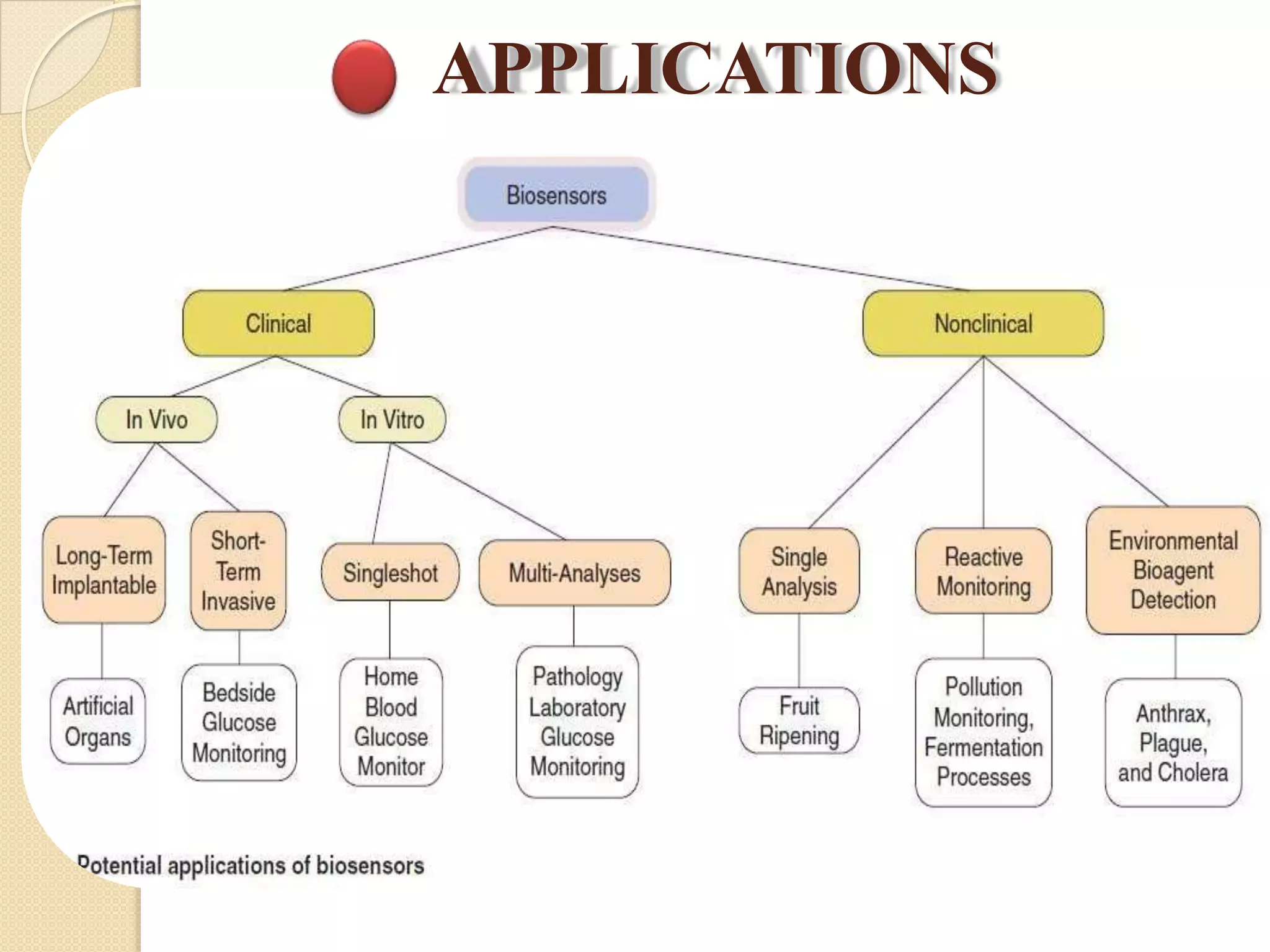
APPLICATIONS
FoodAnalysis.
Study of Biomolecules & their Interaction.
Drug Development.
Crime Detection.
Medical Diagnosis (Clin&Lab).
Environmental Field Monitoring.
Quality Control.
Industrial Process Control.
Detection Systems for Biological Warfare Agents.
Manf. Of Pharmaceuticals & Replacement organs.
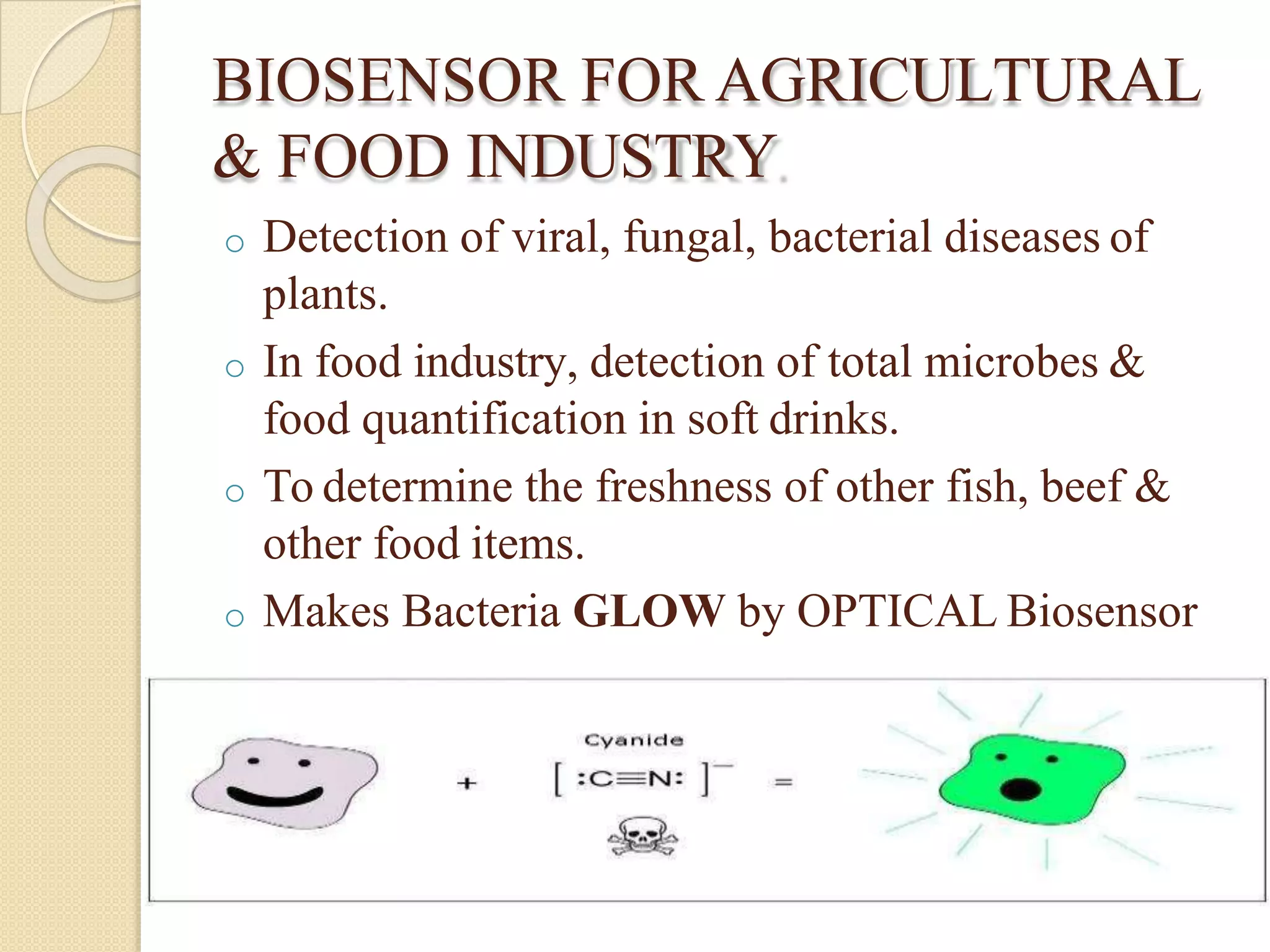
BIOSENSOR FOR AGRICULTURAL
& FOOD INDUSTRY
o Detection of viral, fungal, bacterial diseases of
plants.
o In food industry, detection of total microbes &
food quantification in soft drinks.
o To determine the freshness of other fish, beef &
other food items.
o Makes Bacteria GLOW by OPTICAL Biosensor
ApplicationsofBiosensor
continue…….
• Biosensor can be used for many analytical
problems, ranging from detection of industrial
toxins and food contamination to monitoring the
density of microbes in an industry and medical
diagnostics.
• Biosensor for medical diagnostics.
• Biosensor for agriculture and food industry.
• Biosensor for environment monitoring.
• Toxicology tests using biosensor.
• Biosensor for general industry.
• Biosensor for military and defense industry.
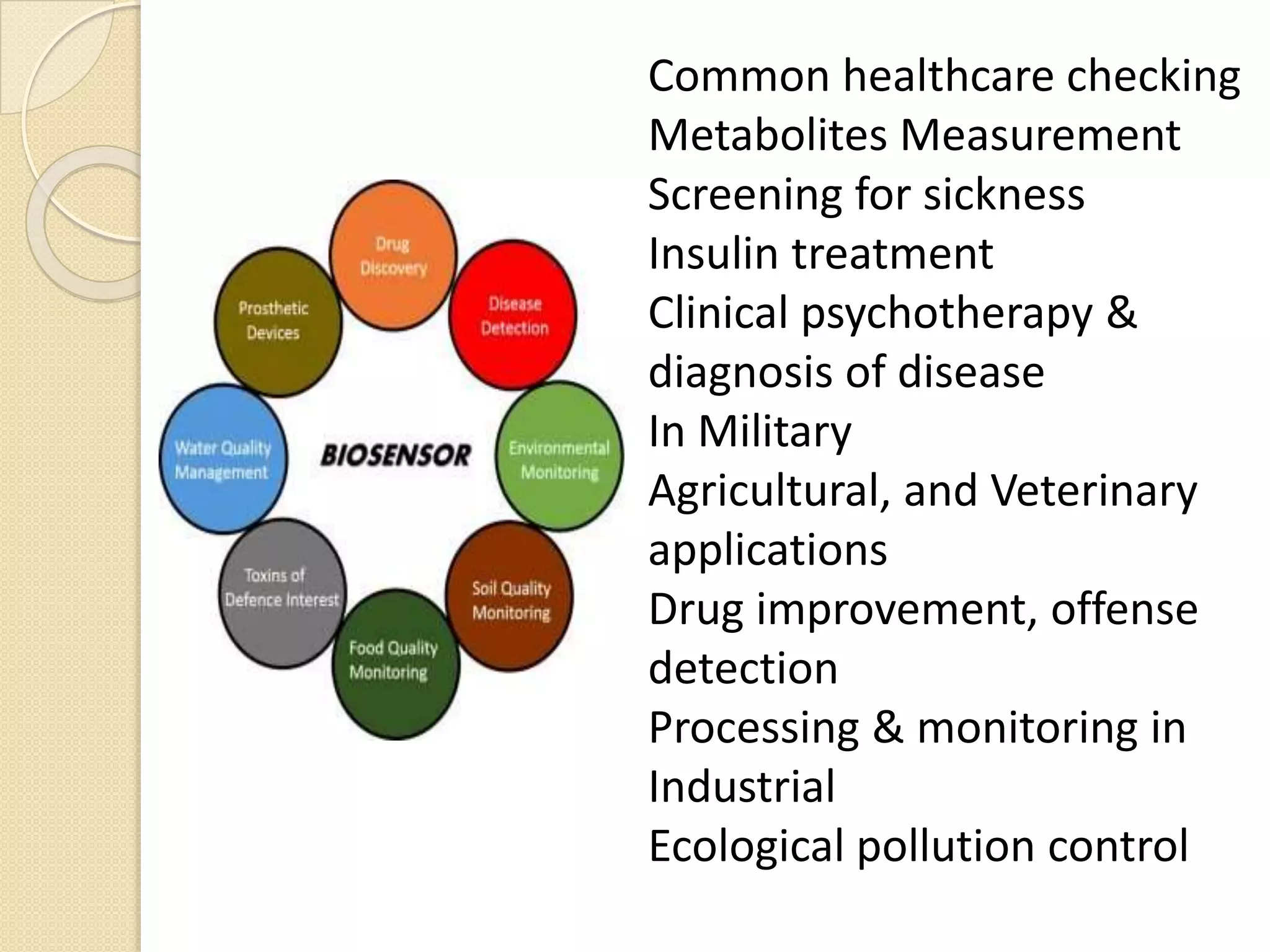
Common healthcare checking
Metabolites Measurement
Screening for sickness
Insulin treatment
Clinical psychotherapy &
diagnosis of disease
In Military
Agricultural, and Veterinary
applications
Drug improvement, offense
detection
Processing & monitoring in
Industrial
Ecological pollution control
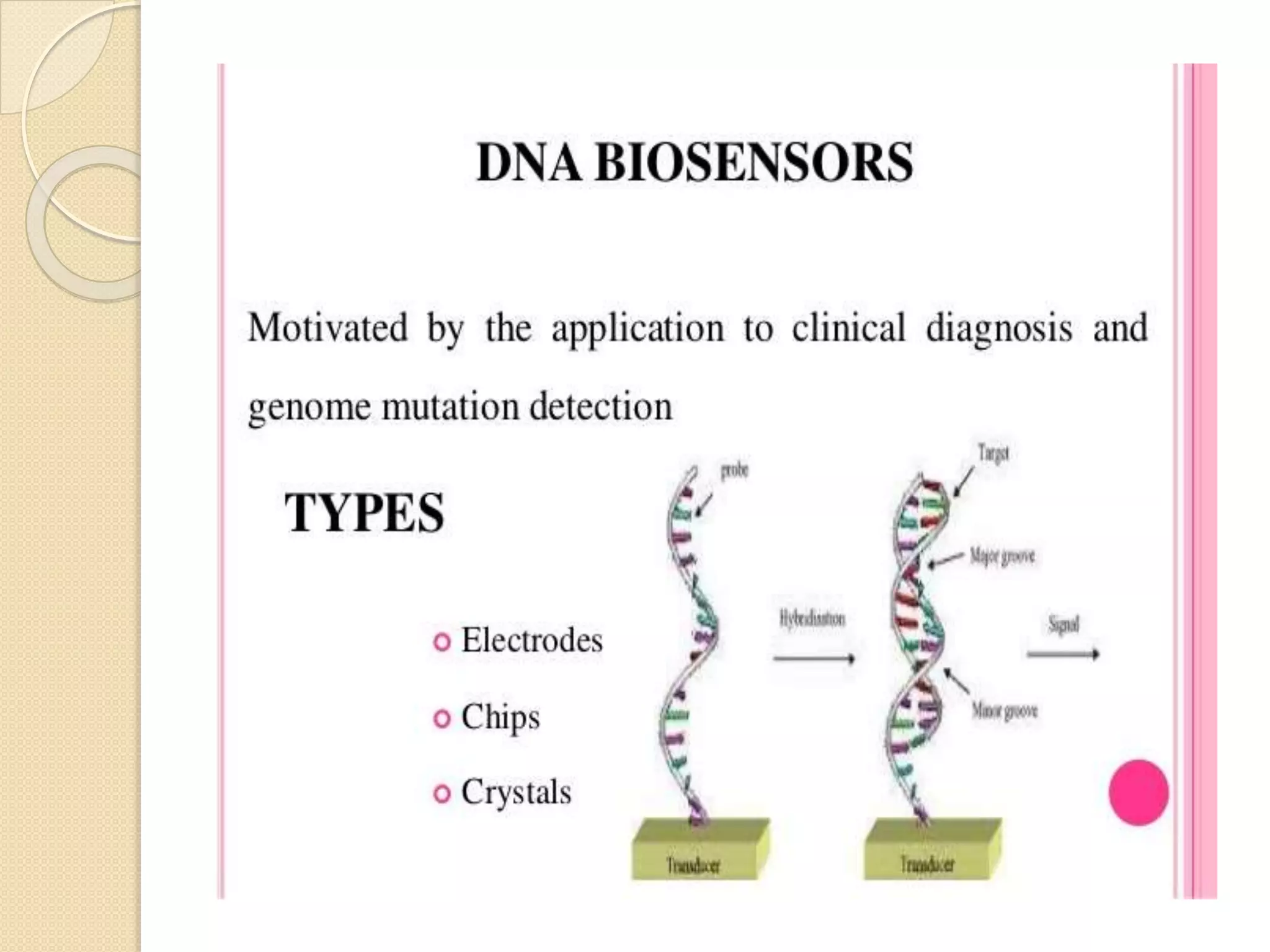
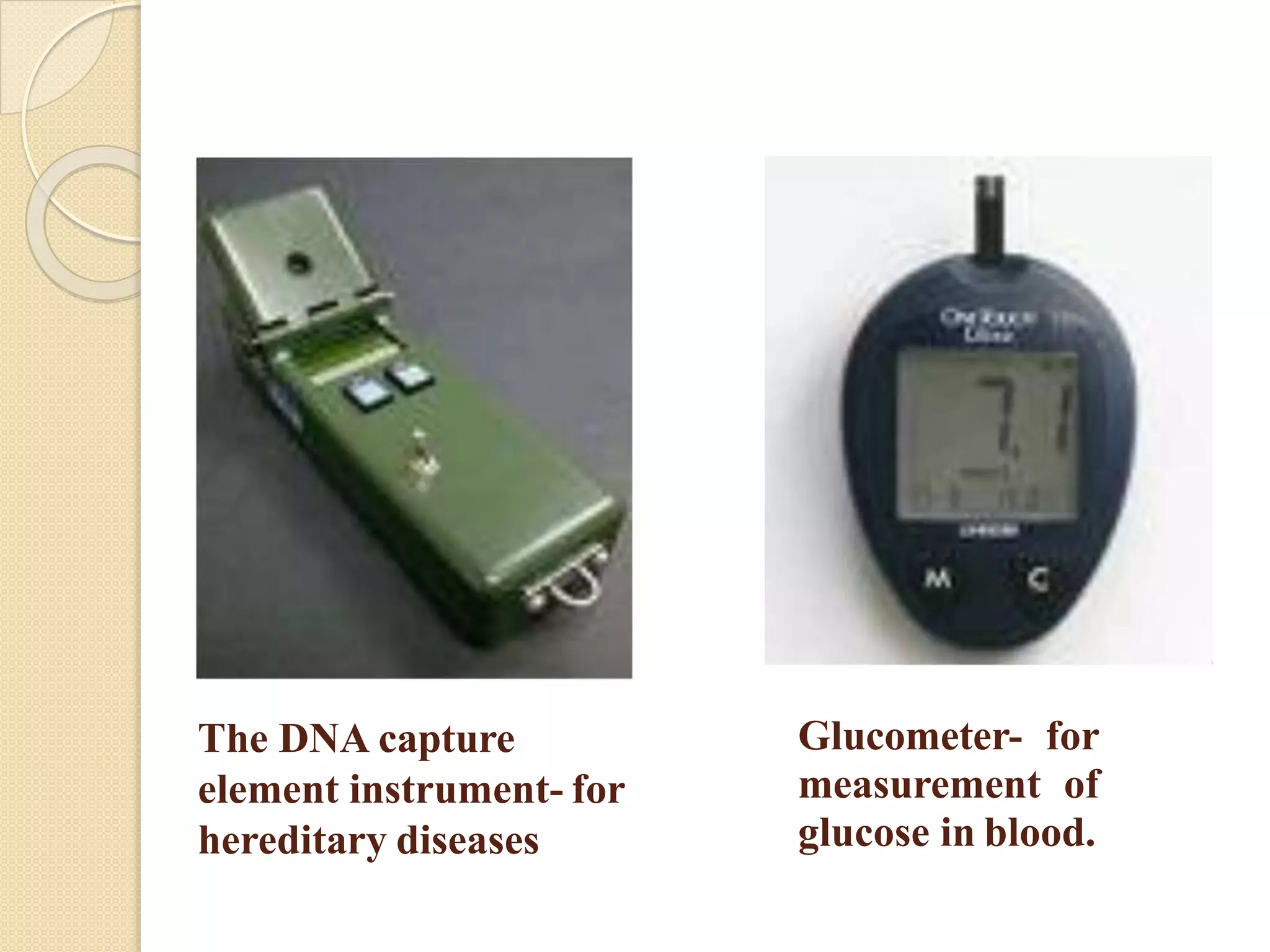
The DNA capture
element instrument- for
hereditary diseases
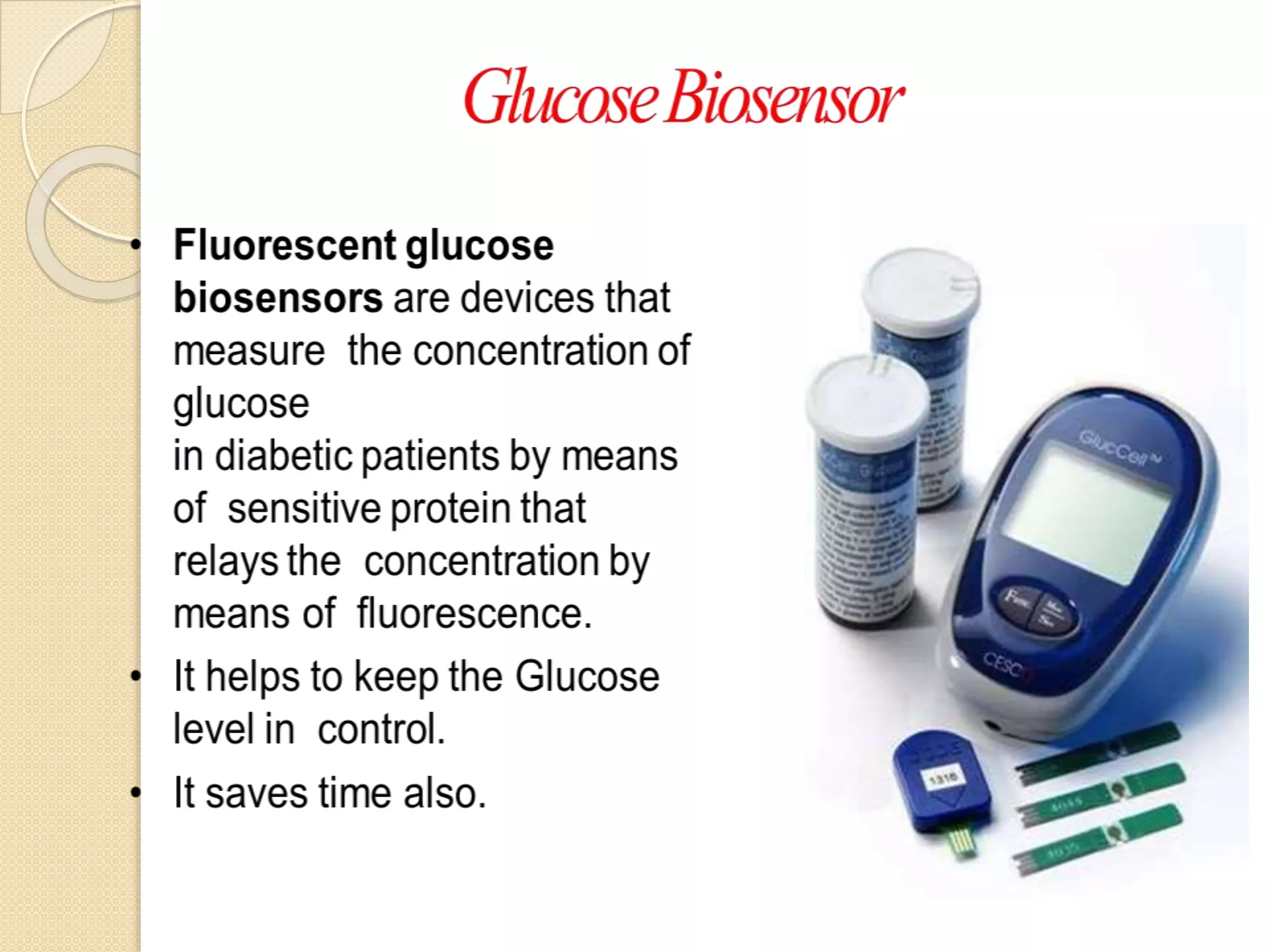
Glucometer- for
measurement of
glucose in blood.
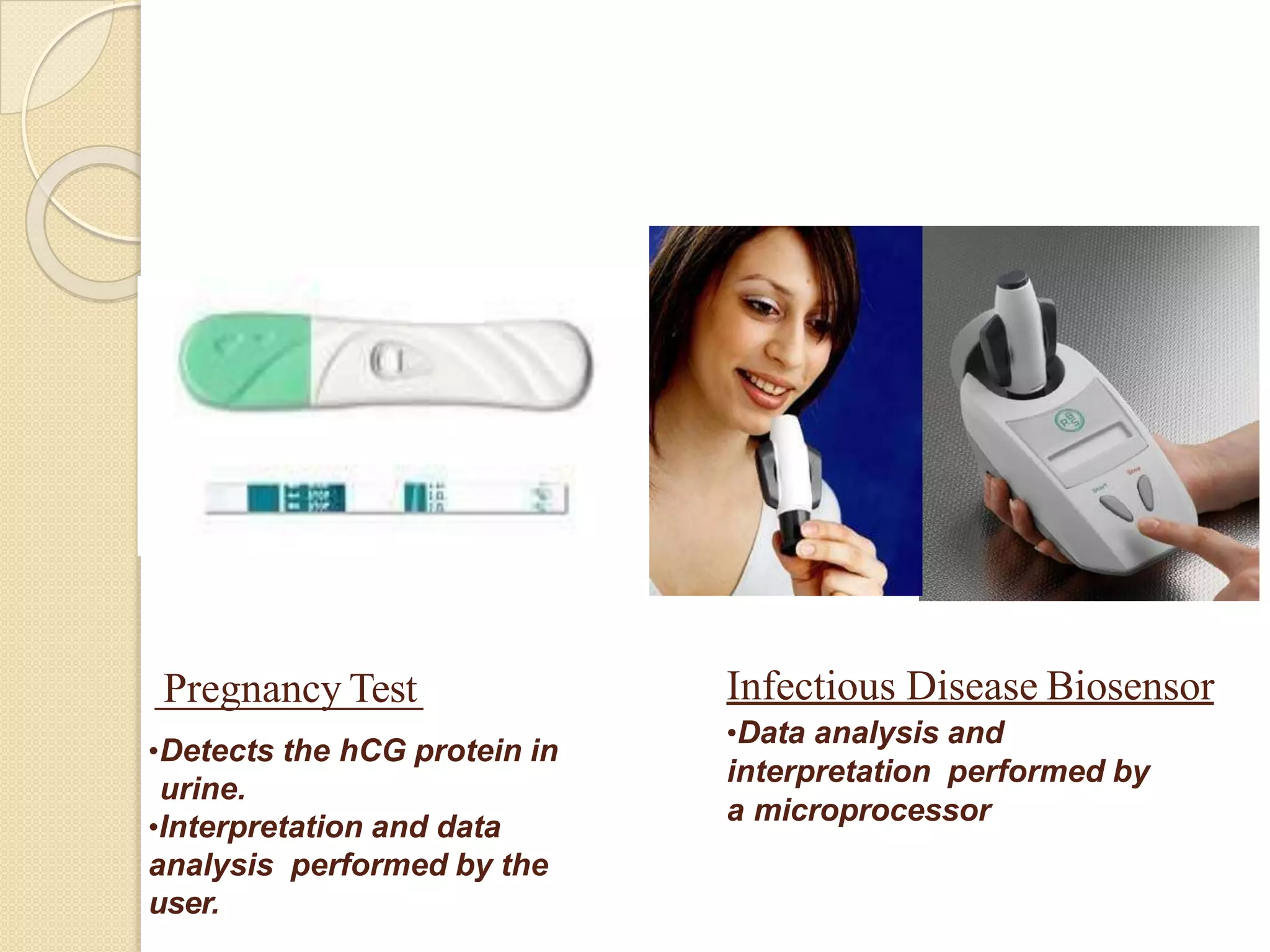
Pregnancy Test
•Detects the hCG protein in
urine.
•Interpretation and data
analysis performed by the
user.
Infectious Disease Biosensor
•Data analysis and
interpretation performed by
a microprocessor
THA K YOU

Biosensors An analytical Device

  • 1.
  • 5.
    DEFINITION  Self-contained integrateddevice that is capable of providing specific qualitative or semi-quantitative analytical information using a biological recognition element which is in direct-spatial contact with a transduction element. (IUPAC,1998)  A sensor that integrates a biological element with a physiochemical transducer to produce an electronic signal proportional to a single analyte which is then conveyed to a detector
  • 6.
    • What Isa Biosensor? • Biosensor = bioreceptor + transducer • The bioreceptor is a biomolecule that recognizes the target analyte whereas the transducer converts the recognition event into a measurable signal. • Enzyme is a Bioreceptor Need ofbiosensor • Diagnostic Market • Clinical Testing • clinical testing is one of the biggest diagnostic markets • clinical testing products market in excess of 4000 million US$ in the 1990s Specificity • With biosensors, it is possible to measure specific analytes with great accuracy. Speed • analyte tracers or catalytic products can be directly and instantaneously measured Simplicity • receptor and transducer are integrated into one single sensor& the measurement of target analytes without using reagents is possible Continuous monitoring capability • Biosensors regenerate and reuse the immobilized biological recognition element
  • 7.
    Simply any devicethat has specific biochemical reactions to detect chemical compounds in biological samples
  • 8.
  • 10.
  • 11.
  • 13.
    THE ANALYTE What doyou want to detect? Molecule Protein, toxin, peptide, vitamin, sugar, metal ion Cholera toxin Glucose
  • 16.
    SAMPLE HANDLING. (How todeliver the Analyte to the SensitiveRegion?) •(Micro) fluidics •Concentration (increase/decrease) •Filtration/selection
  • 19.
    DETECTION/RECOGNITION. Antibody Enzyme Active site Fc Cell Membranereceptors Polymer/Hydrogel Competitive binding (How do you specifically recognise the analyte?) Fab
  • 20.
    SIGNAL (How do youknow there was a detection?) Common Signalling Principles Optical Electrical Electromechanical Thermal Magnetic Pressure Often the detector is immobilized on a solid support/sensor (The immobilisation permits repeated use of the costlyBiological Molecule.) Specific recognition?
  • 21.
    WORKING PRINCIPLE Analyte diffusesfrom the solution to the surface of the Biosensor Analyte reacts specifically & efficiently with the Biological Component of the Biosensor This reaction changes the physico- chemical properties of the Transducer surface This leads to a change in the optical/electronic properties of the Transducer Surface The change in the optical/electronic properties is measured/converted into electrical signal, which is detected
  • 23.
    BASIC CHARACTERESTICS  LINEARITY- Should be High – For the detection of High Substrate Concentration.  SENSITIVITY - Value of Electrode Response per Substrate Concentration.  SELECTIVITY - Chemical Interference must be minimised for obtaining Correct Result.  RESPONSE TIME – Time necessary for having 95% of the Response.
  • 24.
    ADVANTAGES Highly Specific Independent ofFactors like stirring, pH, etc. Linear response, Tiny & Biocompatible Easy to Use, Durable Require only Small Sample Volume Rapid, Accurate, Stable & Sterilizable
  • 30.
    TYPES  Optical Biosensors Resonant Biosensors  Physical biosensors • Piezoelectric Biosensors • Thermometric biosensors  Ion Sensitive Biosensors  Electrochemical Biosensors  Conductometric Sensors  Amperometric  Potentiometric sensors  Impedimetric sensors Sensors
  • 31.
    Optical Biosensors.  Colorimetricfor colour - Measures change in LightAdsorption.  Photometric for Light Intensity - Detects the Photon output. Resonant Biosensors.  An Acoustic Wave Transducer is coupledwith Bioelement.  Measures the change in Resonant Frequency.
  • 32.
    Physical Biosensor Physical biosensorsare the most fundamental as well as broadly used sensors. Any detecting device that offers reaction to the physical possessions of the medium was named as a physical biosensor. The physical biosensors are classified into two types namely piezoelectric biosensor and thermometric biosensor.  Piezoelectric Biosensors.  Uses Gold - To detect specific angle at which ȇ waves are emitted when the substance is exposed to laser light/crystals like quartz, which vibrates under the influence of an electric field  Change in Frequency ᾶ Mass ofAbsorbed material
  • 33.
    Calorimetric / ThermalDetection Biosensors.  Uses Absorption / Production of Heat. Total heat produced/absorbed is ᾶ Molar Enthalpy/Total No. of molecules in the rn.  Temp. measured by Enzyme Thermistors. Advantages: • No need of Frequent recalibration. • Insensitive to the Optical & Electrochemical Properties of the sample. Uses: Detection of: (1) Pesticides . (2) Pathogenic Bacteria.
  • 34.
    There are varioustypes of biological reactions which are connected with the invention of heat, and this makes the base of thermometric biosensors. These sensors are usually named as thermal biosensors Thermometric-biosensor is used to measure or estimate the serum cholesterol. As cholesterol obtains oxidized through the enzyme cholesterol oxidize, then the heat will be produced which can be calculated. Similarly, assessments of glucose, urea, uric acid, and penicillin G can be done with these biosensors.
  • 35.
    Ion Sensitive Biosensors. Are semiconductor FETs with ion- sensitive surface.  Surface Electrical Potential changes when the ions & semiconductors interact.  Measures the Change in Potential. Uses: o pH Detection.
  • 36.
    Electrochemical Biosensors. Underlying Principle– Many chem.rns produce or consume ions or ȇs causing some change in the elctrical properties of the solution that can be sensed out & used as a measuring parameter. Uses: Detection of : o Hybridized DNA o DNA- binding Drugs & o Glucose Concentration.
  • 38.
    Conductometric Sensors.  MeasuresElectrical Conductance/Resistance of the solution  Conductance Measurements have relatively Low Sensitivity.  Electrical Field is generated using sinusoidal(ac) voltage, which helps in minimizing undesirable effects like: i. Faradaic processes. ii. Double layer charging & iii. Concentration polarization.
  • 39.
     Amperometric Biosensors. High Sensitivity Biosensor.  Detects electro active species present in the biological test samples.  Measured Parameter – Current.
  • 40.
    Potentiometric Sensors. Working Principle– When ramp voltage is applied to an electrode in solution, a current flow occurs because of electrochemical reactions.  Measured Parameter – Oxidation / reduction Potential of an Electrochemical rn.
  • 41.
    4. Impedimetric Biosensors TheEIS (Electrochemical impedance spectroscopy) is a responsive indicator for a broad range of physical as well as chemical properties. A rising trend towards the expansion of Impedimetric-biosensors is being presently observed. The techniques of Impedimetric have been executed to differentiate the invention of the biosensors as well as to examine the catalyzed responses of enzymes lectins, nucleic acids, receptors, whole cells, and antibodies.
  • 43.
    OpticalBiosensor • The opticalfibers allow detection of analytes on the basis of absorption, fluorescence or light scattering. optical biosensors have the advantages of to in vivo applications and allowing multiple analytes to be detected by using different monitoring wavelengths. Fluorescence-based optical Biosensor
  • 45.
  • 46.
    FoodAnalysis. Study of Biomolecules& their Interaction. Drug Development. Crime Detection. Medical Diagnosis (Clin&Lab). Environmental Field Monitoring. Quality Control. Industrial Process Control. Detection Systems for Biological Warfare Agents. Manf. Of Pharmaceuticals & Replacement organs.
  • 47.
    BIOSENSOR FOR AGRICULTURAL &FOOD INDUSTRY o Detection of viral, fungal, bacterial diseases of plants. o In food industry, detection of total microbes & food quantification in soft drinks. o To determine the freshness of other fish, beef & other food items. o Makes Bacteria GLOW by OPTICAL Biosensor
  • 48.
    ApplicationsofBiosensor continue……. • Biosensor canbe used for many analytical problems, ranging from detection of industrial toxins and food contamination to monitoring the density of microbes in an industry and medical diagnostics. • Biosensor for medical diagnostics. • Biosensor for agriculture and food industry. • Biosensor for environment monitoring. • Toxicology tests using biosensor. • Biosensor for general industry. • Biosensor for military and defense industry.
  • 49.
    Common healthcare checking MetabolitesMeasurement Screening for sickness Insulin treatment Clinical psychotherapy & diagnosis of disease In Military Agricultural, and Veterinary applications Drug improvement, offense detection Processing & monitoring in Industrial Ecological pollution control
  • 50.
    The DNA capture elementinstrument- for hereditary diseases Glucometer- for measurement of glucose in blood.
  • 51.
    Pregnancy Test •Detects thehCG protein in urine. •Interpretation and data analysis performed by the user. Infectious Disease Biosensor •Data analysis and interpretation performed by a microprocessor
  • 56.