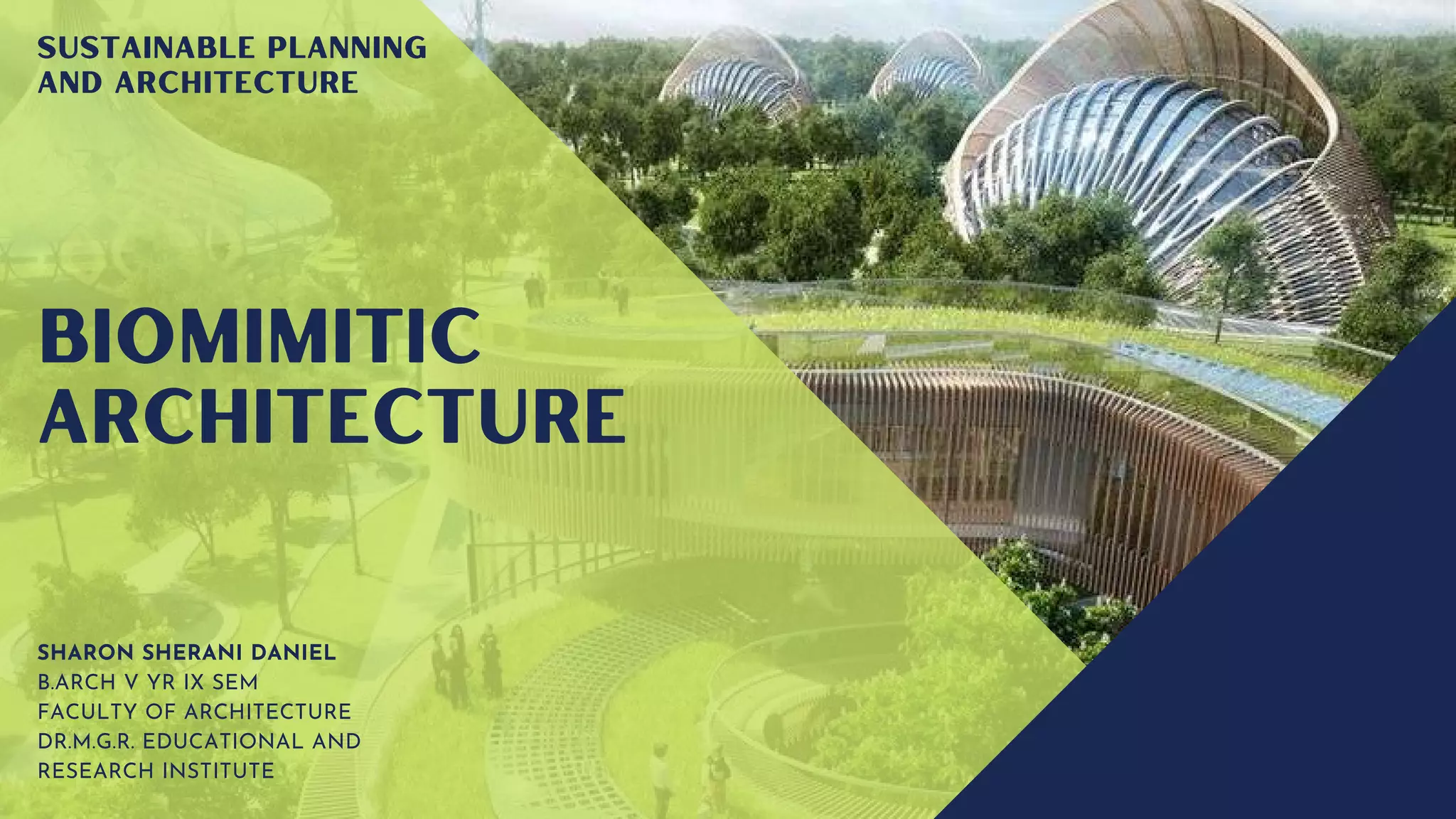
BIOMIMITIC

ARCHITECTURE
Sustainable planning

and Architecture
SHARON SHERANI DANIEL
B.ARCH V YR IX SEM
FACULTY OF ARCHITECTURE
DR.M.G.R. EDUCATIONAL AND

RESEARCH INSTITUTE
Biomimetic architecture seeks solutions for building
sustainability present in nature.
It is a technical approach to analyzing, observing, and
taking inspiration from nature to create designs in
architecture.
The terms biomimicry come from the Greek words 'bios',
meaning life, and 'mimesis', meaning to imitate.
Concept of taking inspiration from nature, imitating and
replicating the behavior of biological organisms, was
popularized by Janine Benyus in her book Biomimicry -
Innovation Inspired by Nature (1997)
Introduction
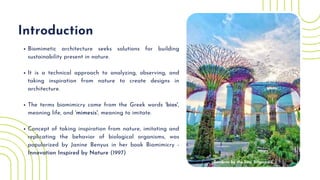
Gardens by the bay, Singapore
Nature as Model - Biomimicry is a new science that
studies nature’s models and then emulates these forms,
processes, systems, and strategies to solve human
problems – sustainably.
Nature as Measure - Biomimicry uses an ecological
standard to judge the sustainability of our innovations.
After 3.8 billion years of evolution, nature has learned
what works and what lasts.
Nature as Mentor - Biomimicry is a new way of viewing
and valuing nature.
What is Biomimetic

Architecture?
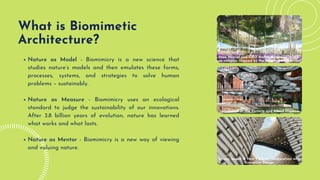
Jean Nouvel and OXO Architects design mixed-

use complex inspired by the shape of a mountain.
Installation at the Victoria and Albert Museum
Living, based in New York, in collaboration with

Ecovative Design
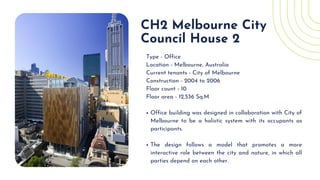
Office building was designed in collaboration with City of
Melbourne to be a holistic system with its occupants as
participants.
The design follows a model that promotes a more
interactive role between the city and nature, in which all
parties depend on each other.
Type - Office
Location - Melbourne, Australia
Current tenants - City of Melbourne
Construction - 2004 to 2006
Floor count - 10
Floor area - 12,536 Sq.M
CH2 Melbourne City

Council House 2
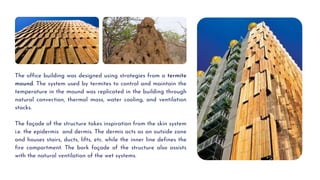
The office building was designed using strategies from a termite
mound. The system used by termites to control and maintain the
temperature in the mound was replicated in the building through
natural convection, thermal mass, water cooling, and ventilation
stacks.
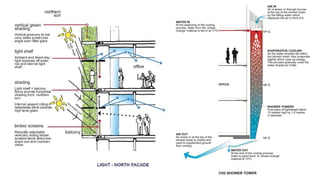
The façade of the structure takes inspiration from the skin system
i.e. the epidermis and dermis. The dermis acts as an outside zone
and houses stairs, ducts, lifts, etc. while the inner line defines the
fire compartment. The bark façade of the structure also assists
with the natural ventilation of the wet systems.
reduce electricity consumption by 85%
reduce gas consumption by 87%
produce only 13% of the emissions
reduce water mains supply by 72%
The City of Melbourne aims to achieve zero emissions for the
municipality by 2020. A major contribution to this strategy is
the reduction in energy consumption of commercial buildings
by 50%. CH2 was piloted in an effort to be relied on passive
energy systems while producing a premium grade building.
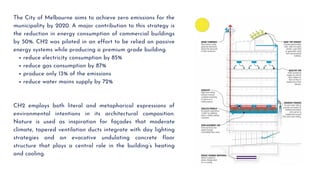
CH2 employs both literal and metaphorical expressions of
environmental intentions in its architectural composition.
Nature is used as inspiration for façades that moderate
climate, tapered ventilation ducts integrate with day lighting
strategies and an evocative undulating concrete floor
structure that plays a central role in the building’s heating
and cooling.
Thermal Comfort: Thermal dissatisfaction ratings should be below 10% in most locations of the building. The
perceived overall thermal comfort is also good but the airflow is perceived to be to low.
Air Quality:The air quality of CH2 is excellent in terms of measured pollutant levels. The occupants also
perceive the air quality to be better. The formaldehyde concentrations are much lower than compared to
common office buildings. The overall air quality is excellent due to the 100% fresh air intake and the use of
low toxicity materials used in all furnishings and finishes as well as an extensive use of indoor plants.
Lighting: The background lighting levels are sufficient, and the recommended task illuminances could be
achieved if personal task lighting was switched on. Occupant satisfaction for lighting is average to poor in
CH2 and is worse than some Building Uses Studies benchmarks (BUS).
Perceived Productivity: Three-quarters of CH2 occupants rate the building as having a positive or neutral
effect on productivity, compared to 39% in the original Council House. CH2 is rated in the top 20% of
Australian buildings for perceived productivity.
Perceived Worker Health: CH2 is rated very highly for perceived healthiness, and is considered to have low
levels of occupant reported rates for building related health symptoms. Absenteeism and staff turnover has
not changed but more time must pass to have conclusive data.
Overall: 80% of occupants prefer CH2 to their previous accommodation. It was also seen that the staff
productivity improved 10.9% resulting in a cost savings of over two million dollars. The improvement results
in a seven-year payback period for the buildings environmental features, three years ahead of the
suspected schedule of ten years.
YOU
THANK
- SHARON SHERANI DANIEL

BIOMIMITIC ARCHITECTURE

  • 1.
    BIOMIMITIC ARCHITECTURE Sustainable planning and Architecture SHARONSHERANI DANIEL B.ARCH V YR IX SEM FACULTY OF ARCHITECTURE DR.M.G.R. EDUCATIONAL AND RESEARCH INSTITUTE
  • 2.
    Biomimetic architecture seekssolutions for building sustainability present in nature. It is a technical approach to analyzing, observing, and taking inspiration from nature to create designs in architecture. The terms biomimicry come from the Greek words 'bios', meaning life, and 'mimesis', meaning to imitate. Concept of taking inspiration from nature, imitating and replicating the behavior of biological organisms, was popularized by Janine Benyus in her book Biomimicry - Innovation Inspired by Nature (1997) Introduction Gardens by the bay, Singapore
  • 3.
    Nature as Model- Biomimicry is a new science that studies nature’s models and then emulates these forms, processes, systems, and strategies to solve human problems – sustainably. Nature as Measure - Biomimicry uses an ecological standard to judge the sustainability of our innovations. After 3.8 billion years of evolution, nature has learned what works and what lasts. Nature as Mentor - Biomimicry is a new way of viewing and valuing nature. What is Biomimetic Architecture? Jean Nouvel and OXO Architects design mixed- use complex inspired by the shape of a mountain. Installation at the Victoria and Albert Museum Living, based in New York, in collaboration with Ecovative Design
  • 4.
    Office building wasdesigned in collaboration with City of Melbourne to be a holistic system with its occupants as participants. The design follows a model that promotes a more interactive role between the city and nature, in which all parties depend on each other. Type - Office Location - Melbourne, Australia Current tenants - City of Melbourne Construction - 2004 to 2006 Floor count - 10 Floor area - 12,536 Sq.M CH2 Melbourne City Council House 2
  • 5.
    The office buildingwas designed using strategies from a termite mound. The system used by termites to control and maintain the temperature in the mound was replicated in the building through natural convection, thermal mass, water cooling, and ventilation stacks. The façade of the structure takes inspiration from the skin system i.e. the epidermis and dermis. The dermis acts as an outside zone and houses stairs, ducts, lifts, etc. while the inner line defines the fire compartment. The bark façade of the structure also assists with the natural ventilation of the wet systems.
  • 7.
    reduce electricity consumptionby 85% reduce gas consumption by 87% produce only 13% of the emissions reduce water mains supply by 72% The City of Melbourne aims to achieve zero emissions for the municipality by 2020. A major contribution to this strategy is the reduction in energy consumption of commercial buildings by 50%. CH2 was piloted in an effort to be relied on passive energy systems while producing a premium grade building. CH2 employs both literal and metaphorical expressions of environmental intentions in its architectural composition. Nature is used as inspiration for façades that moderate climate, tapered ventilation ducts integrate with day lighting strategies and an evocative undulating concrete floor structure that plays a central role in the building’s heating and cooling.
  • 8.
    Thermal Comfort: Thermaldissatisfaction ratings should be below 10% in most locations of the building. The perceived overall thermal comfort is also good but the airflow is perceived to be to low. Air Quality:The air quality of CH2 is excellent in terms of measured pollutant levels. The occupants also perceive the air quality to be better. The formaldehyde concentrations are much lower than compared to common office buildings. The overall air quality is excellent due to the 100% fresh air intake and the use of low toxicity materials used in all furnishings and finishes as well as an extensive use of indoor plants. Lighting: The background lighting levels are sufficient, and the recommended task illuminances could be achieved if personal task lighting was switched on. Occupant satisfaction for lighting is average to poor in CH2 and is worse than some Building Uses Studies benchmarks (BUS). Perceived Productivity: Three-quarters of CH2 occupants rate the building as having a positive or neutral effect on productivity, compared to 39% in the original Council House. CH2 is rated in the top 20% of Australian buildings for perceived productivity. Perceived Worker Health: CH2 is rated very highly for perceived healthiness, and is considered to have low levels of occupant reported rates for building related health symptoms. Absenteeism and staff turnover has not changed but more time must pass to have conclusive data. Overall: 80% of occupants prefer CH2 to their previous accommodation. It was also seen that the staff productivity improved 10.9% resulting in a cost savings of over two million dollars. The improvement results in a seven-year payback period for the buildings environmental features, three years ahead of the suspected schedule of ten years.
  • 9.