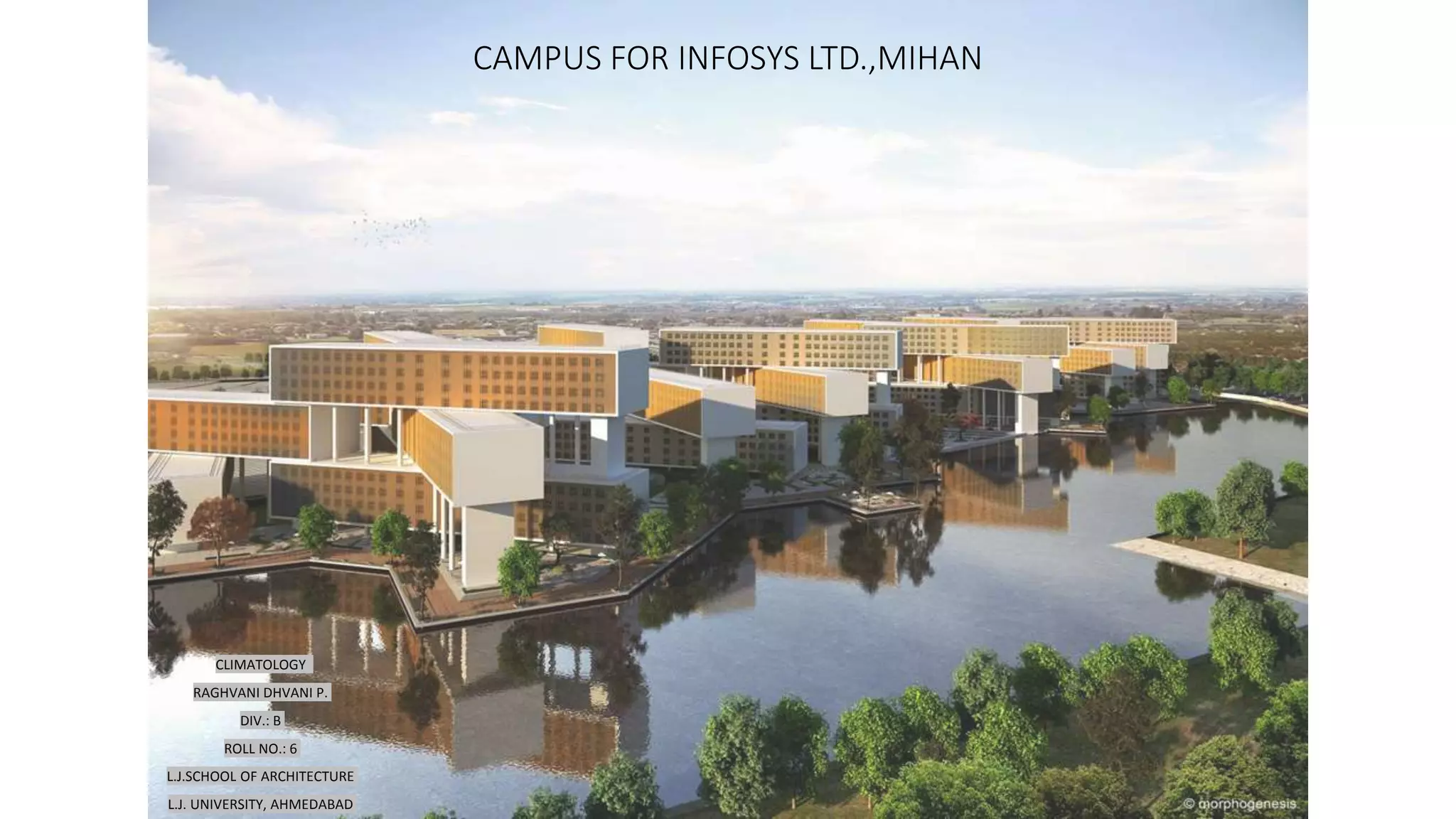
CAMPUS FOR INFOSYS LTD.,MIHAN
CLIMATOLOGY
RAGHVANI DHVANI P.
DIV.: B
ROLL NO.: 6
L.J.SCHOOL OF ARCHITECTURE
L.J. UNIVERSITY, AHMEDABAD
INTRODUCTION:
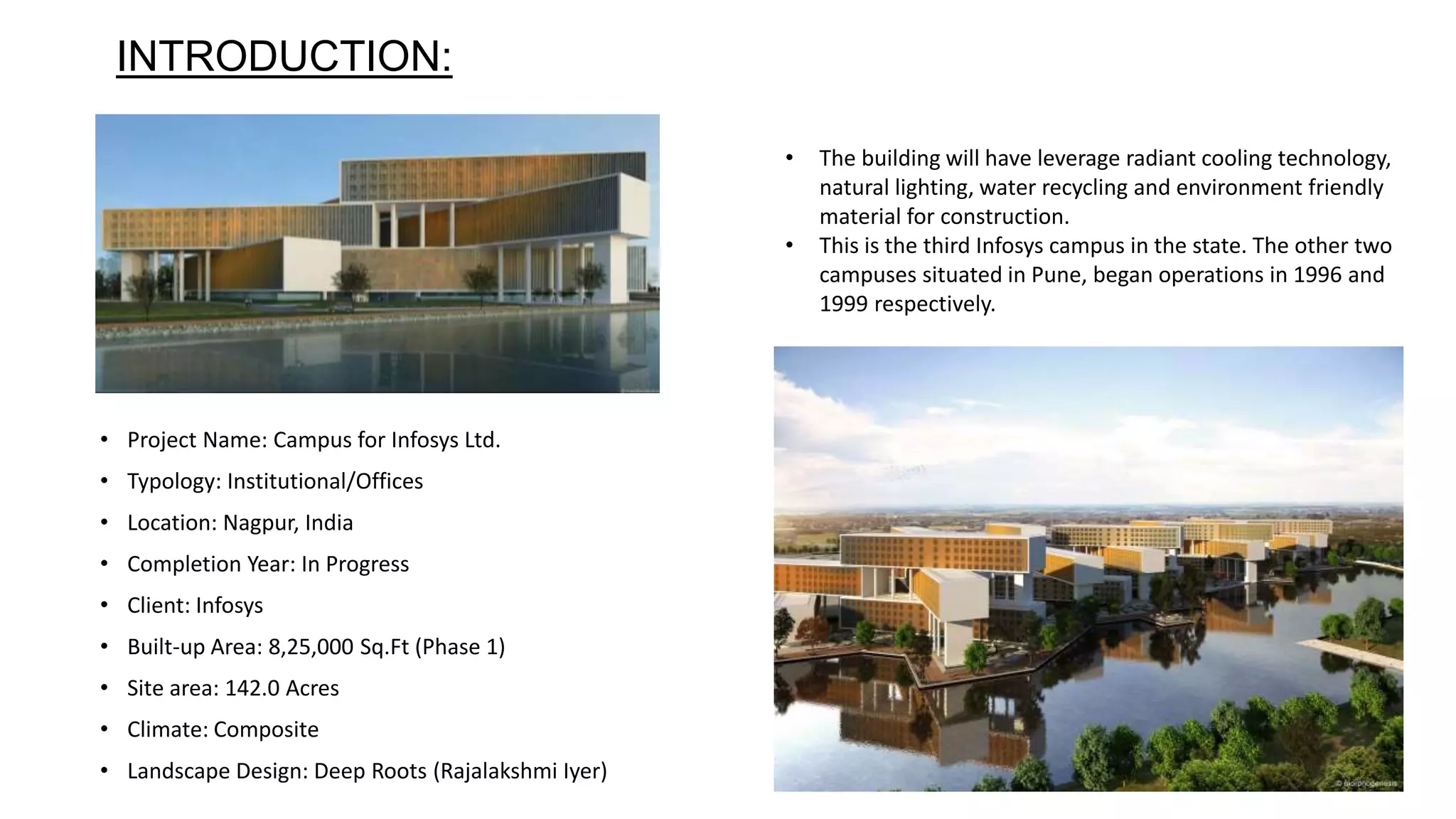
• Project Name: Campus for Infosys Ltd.
• Typology: Institutional/Offices
• Location: Nagpur, India
• Completion Year: In Progress
• Client: Infosys
• Built-up Area: 8,25,000 Sq.Ft (Phase 1)
• Site area: 142.0 Acres
• Climate: Composite
• Landscape Design: Deep Roots (Rajalakshmi Iyer)
• The building will have leverage radiant cooling technology,
natural lighting, water recycling and environment friendly
material for construction.
• This is the third Infosys campus in the state. The other two
campuses situated in Pune, began operations in 1996 and
1999 respectively.
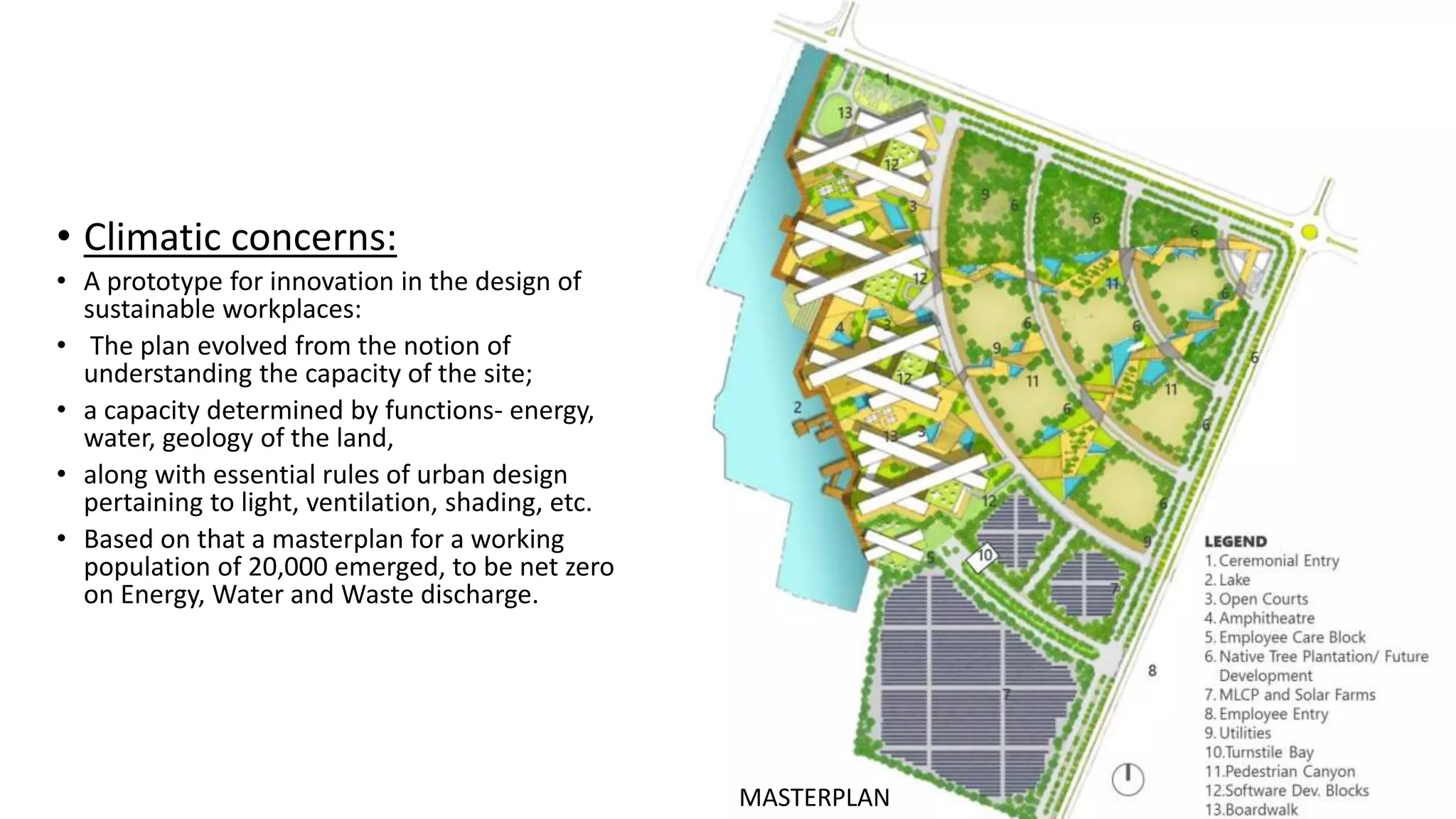
• Climatic concerns:
• A prototype for innovation in the design of
sustainable workplaces:
• The plan evolved from the notion of
understanding the capacity of the site;
• a capacity determined by functions- energy,
water, geology of the land,
• along with essential rules of urban design
pertaining to light, ventilation, shading, etc.
• Based on that a masterplan for a working
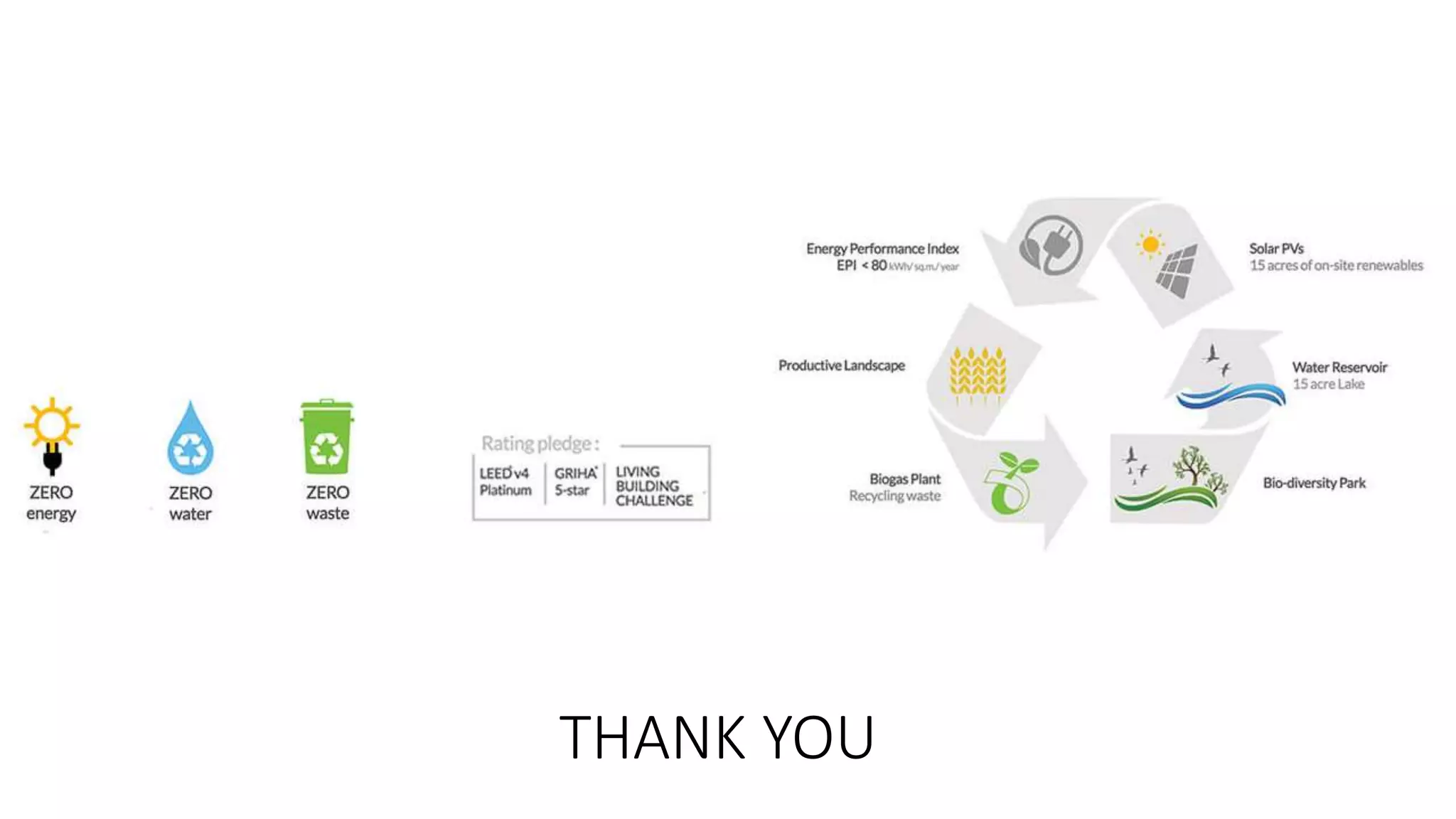
population of 20,000 emerged, to be net zero
on Energy, Water and Waste discharge.
MASTERPLAN
BUILDING LAYOUT AND ORIENTATION:
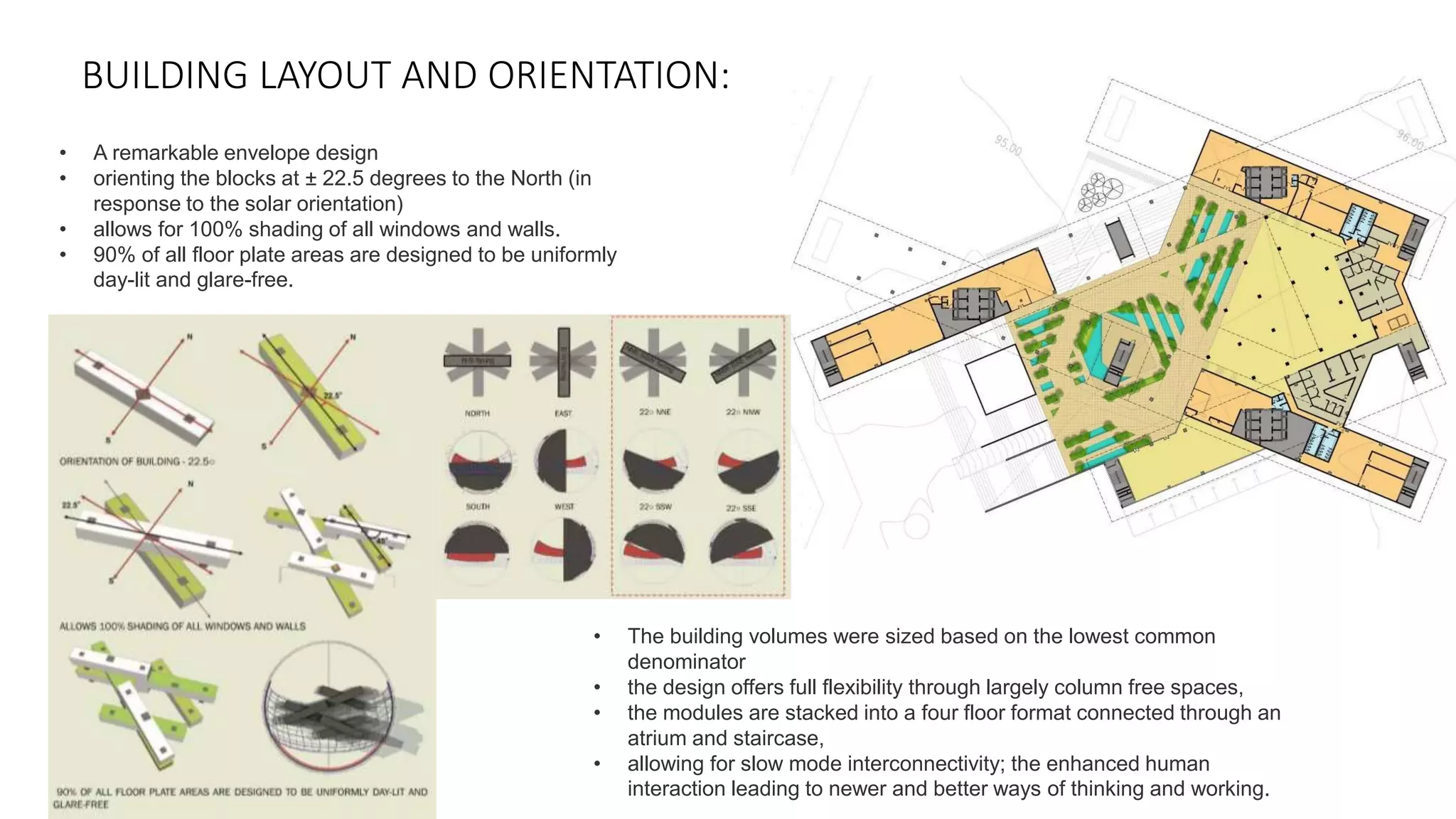
• A remarkable envelope design
• orienting the blocks at ± 22.5 degrees to the North (in
response to the solar orientation)
• allows for 100% shading of all windows and walls.
• 90% of all floor plate areas are designed to be uniformly
day-lit and glare-free.
• The building volumes were sized based on the lowest common
denominator
• the design offers full flexibility through largely column free spaces,
• the modules are stacked into a four floor format connected through an
atrium and staircase,
• allowing for slow mode interconnectivity; the enhanced human
interaction leading to newer and better ways of thinking and working.
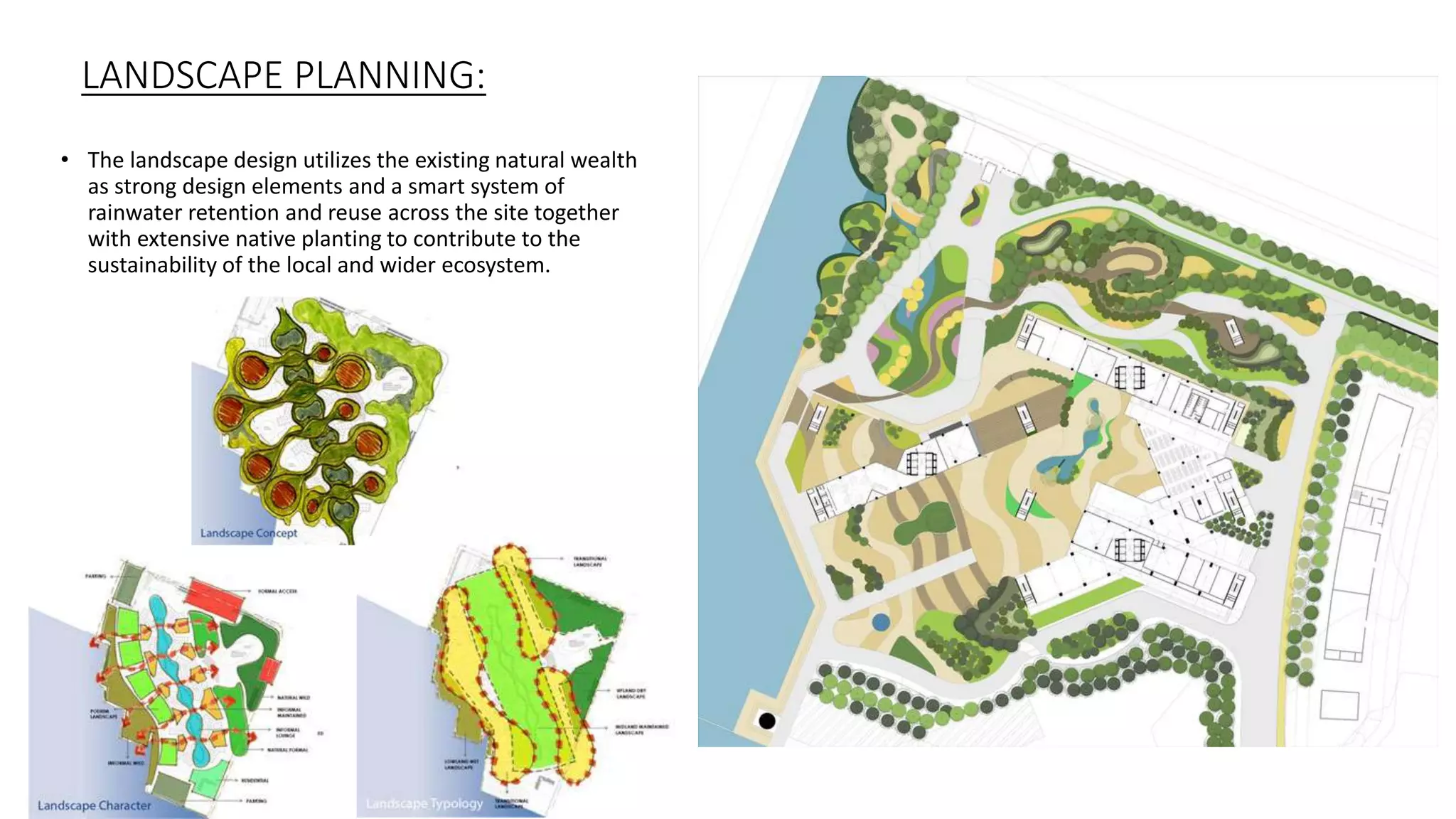
• The landscape design utilizes the existing natural wealth
as strong design elements and a smart system of
rainwater retention and reuse across the site together
with extensive native planting to contribute to the
sustainability of the local and wider ecosystem.
LANDSCAPE PLANNING:
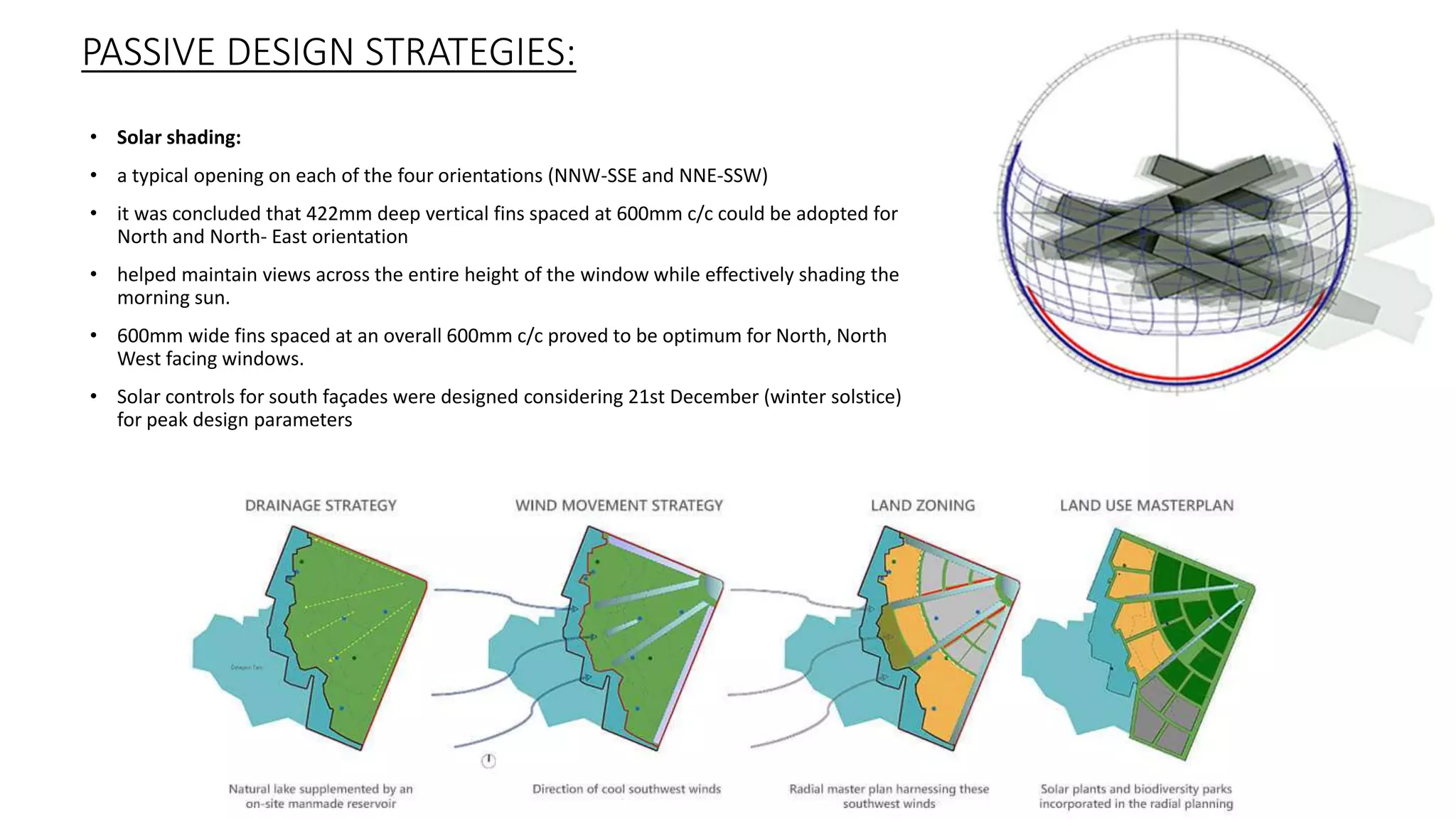
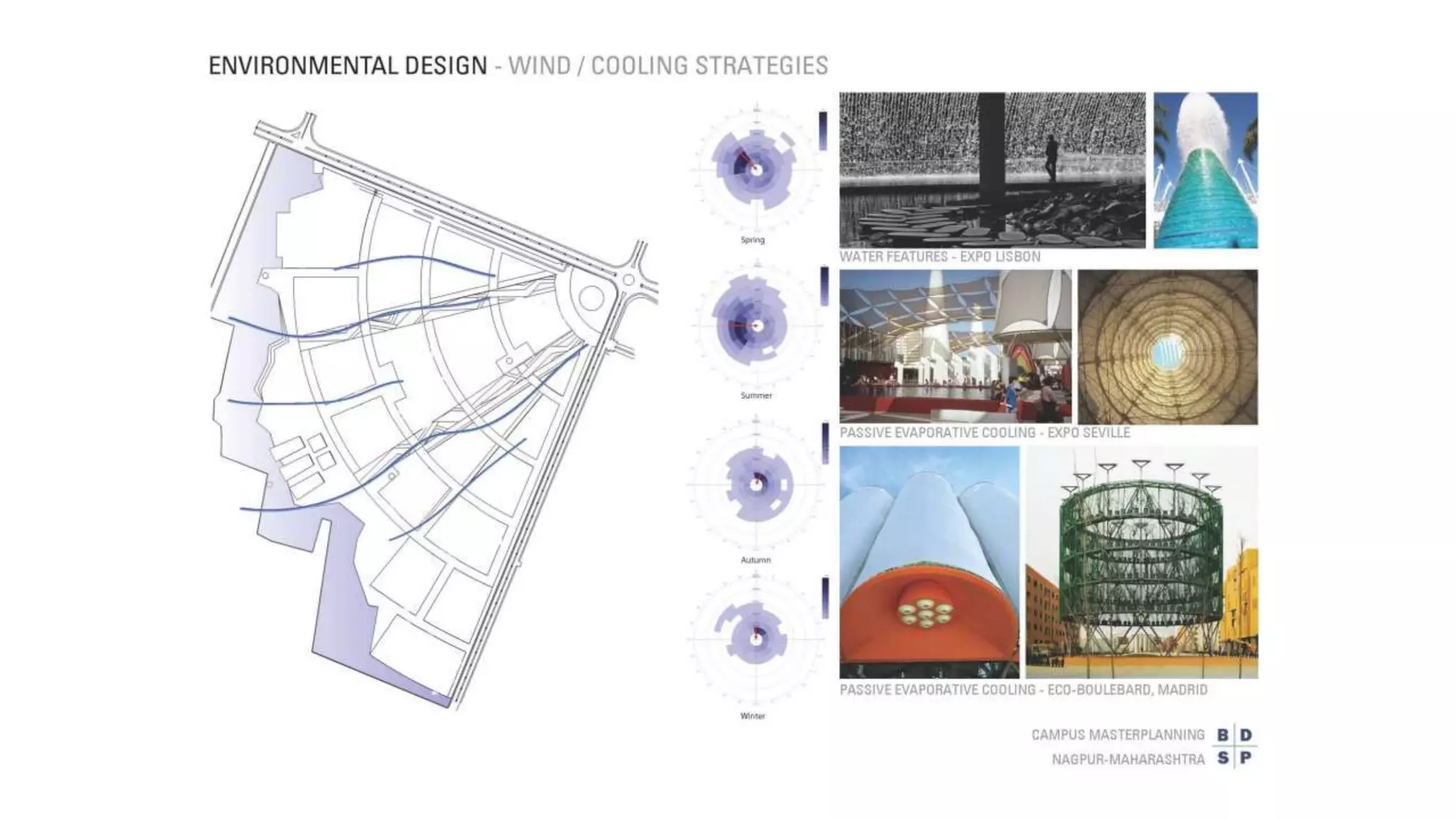
PASSIVE DESIGN STRATEGIES:
• Solar shading:
• a typical opening on each of the four orientations (NNW-SSE and NNE-SSW)
• it was concluded that 422mm deep vertical fins spaced at 600mm c/c could be adopted for
North and North- East orientation
• helped maintain views across the entire height of the window while effectively shading the
morning sun.
• 600mm wide fins spaced at an overall 600mm c/c proved to be optimum for North, North
West facing windows.
• Solar controls for south façades were designed considering 21st December (winter solstice)
for peak design parameters
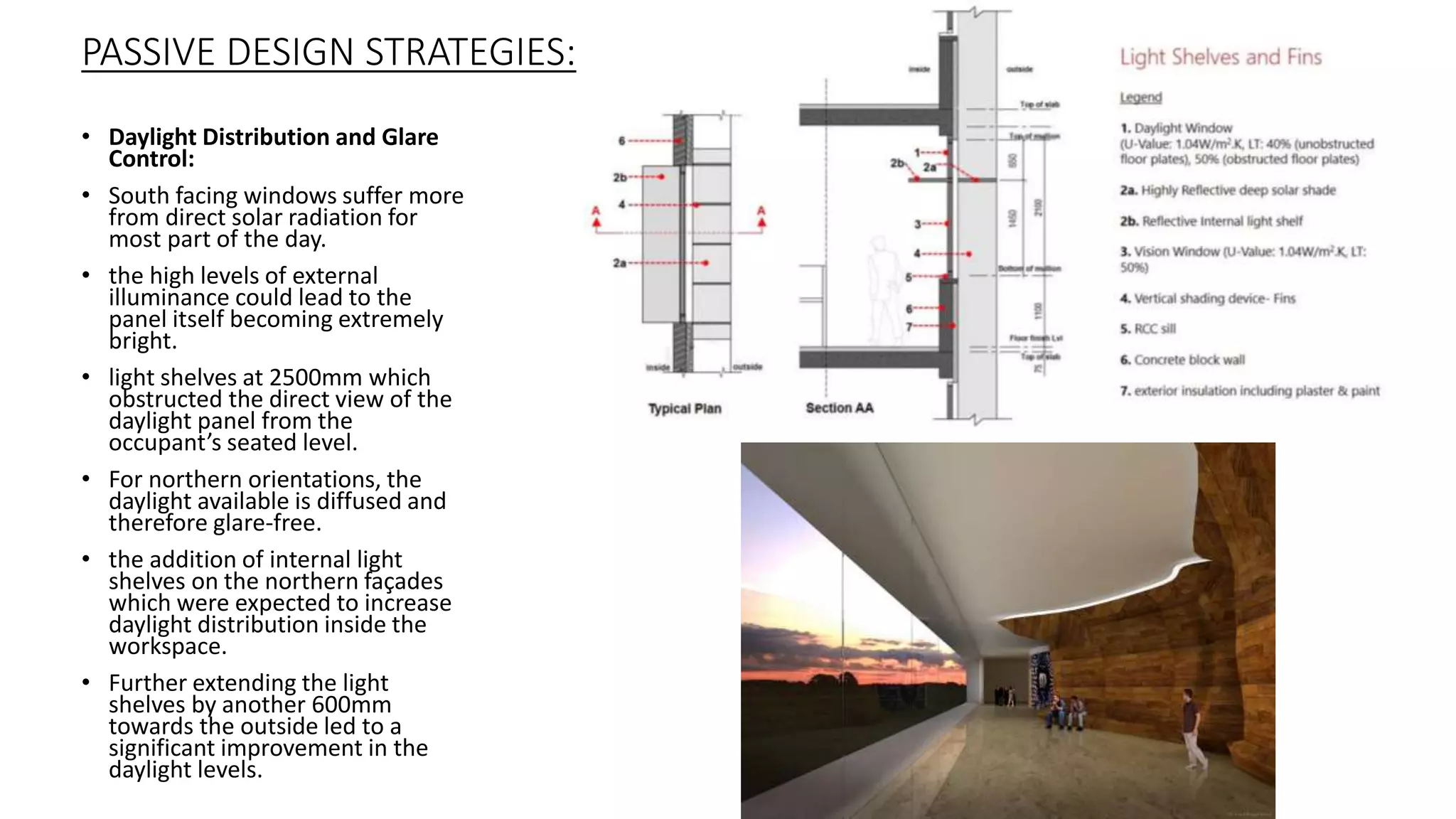
• Daylight Distribution and Glare
Control:
• South facing windows suffer more
from direct solar radiation for
most part of the day.
• the high levels of external
illuminance could lead to the
panel itself becoming extremely
bright.
• light shelves at 2500mm which
obstructed the direct view of the
daylight panel from the
occupant’s seated level.
• For northern orientations, the
daylight available is diffused and
therefore glare-free.
• the addition of internal light
shelves on the northern façades
which were expected to increase
daylight distribution inside the
workspace.
• Further extending the light
shelves by another 600mm
towards the outside led to a
significant improvement in the
daylight levels.
PASSIVE DESIGN STRATEGIES:
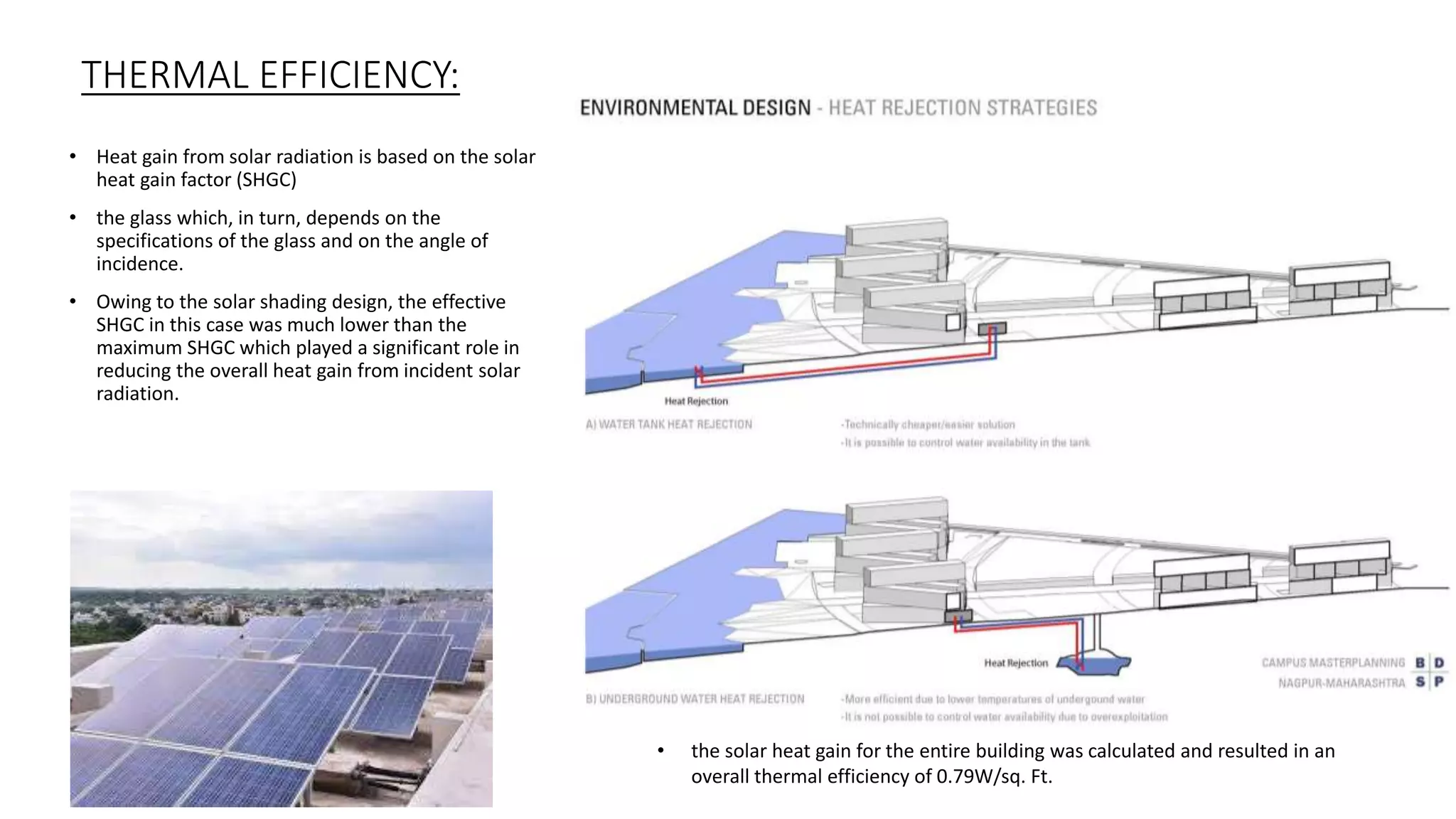
• Heat gain from solar radiation is based on the solar
heat gain factor (SHGC)
• the glass which, in turn, depends on the
specifications of the glass and on the angle of
incidence.
• Owing to the solar shading design, the effective
SHGC in this case was much lower than the
maximum SHGC which played a significant role in
reducing the overall heat gain from incident solar
radiation.
THERMAL EFFICIENCY:
• the solar heat gain for the entire building was calculated and resulted in an
overall thermal efficiency of 0.79W/sq. Ft.
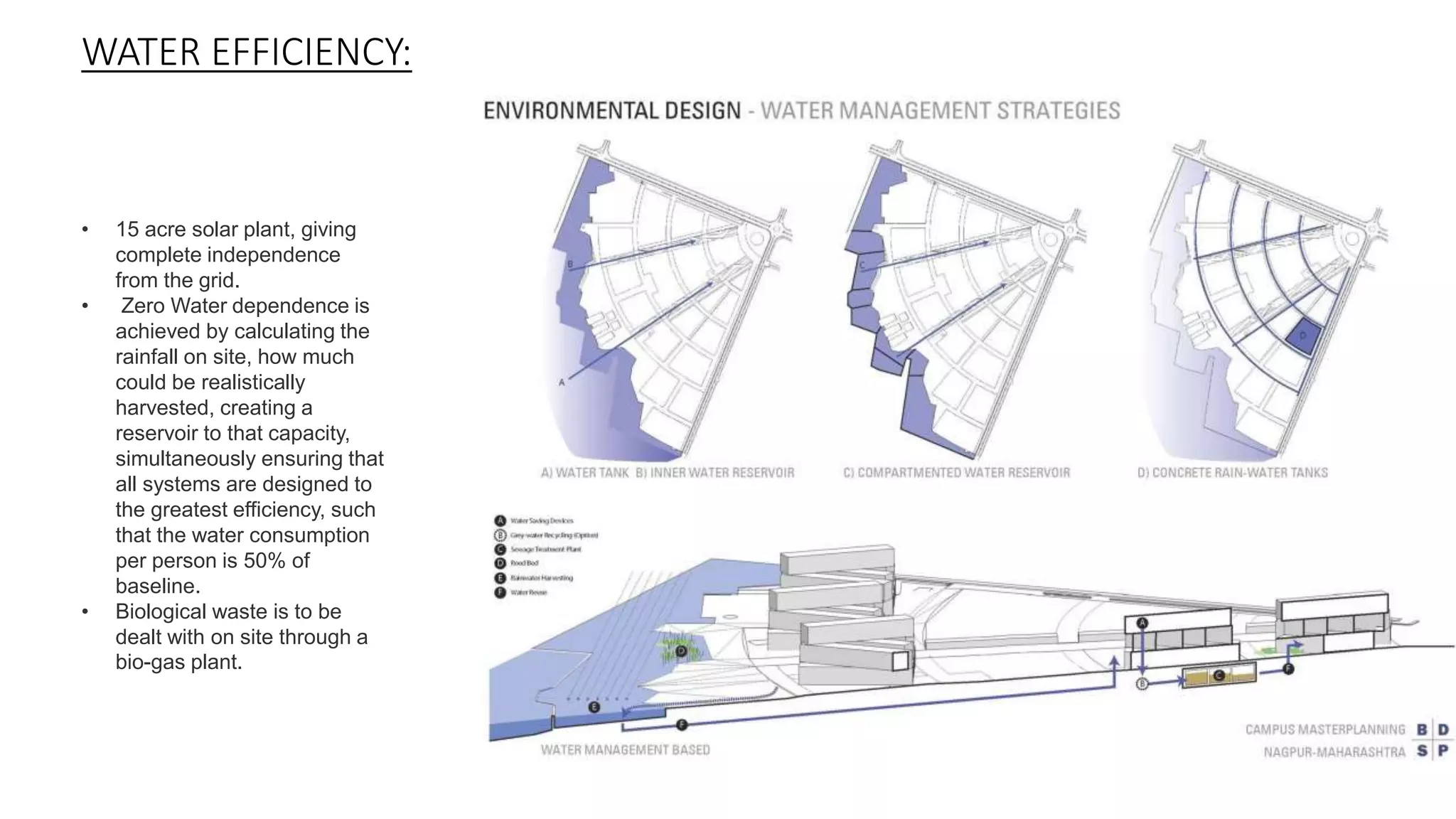
• 15 acre solar plant, giving
complete independence
from the grid.
• Zero Water dependence is
achieved by calculating the
rainfall on site, how much
could be realistically
harvested, creating a
reservoir to that capacity,
simultaneously ensuring that
all systems are designed to
the greatest efficiency, such
that the water consumption
per person is 50% of
baseline.
• Biological waste is to be
dealt with on site through a
bio-gas plant.
WATER EFFICIENCY:
THANK YOU

case study of INFOSYS MIHAN

  • 1.
    CAMPUS FOR INFOSYSLTD.,MIHAN CLIMATOLOGY RAGHVANI DHVANI P. DIV.: B ROLL NO.: 6 L.J.SCHOOL OF ARCHITECTURE L.J. UNIVERSITY, AHMEDABAD
  • 2.
    INTRODUCTION: • Project Name:Campus for Infosys Ltd. • Typology: Institutional/Offices • Location: Nagpur, India • Completion Year: In Progress • Client: Infosys • Built-up Area: 8,25,000 Sq.Ft (Phase 1) • Site area: 142.0 Acres • Climate: Composite • Landscape Design: Deep Roots (Rajalakshmi Iyer) • The building will have leverage radiant cooling technology, natural lighting, water recycling and environment friendly material for construction. • This is the third Infosys campus in the state. The other two campuses situated in Pune, began operations in 1996 and 1999 respectively.
  • 3.
    • Climatic concerns: •A prototype for innovation in the design of sustainable workplaces: • The plan evolved from the notion of understanding the capacity of the site; • a capacity determined by functions- energy, water, geology of the land, • along with essential rules of urban design pertaining to light, ventilation, shading, etc. • Based on that a masterplan for a working population of 20,000 emerged, to be net zero on Energy, Water and Waste discharge. MASTERPLAN
  • 4.
    BUILDING LAYOUT ANDORIENTATION: • A remarkable envelope design • orienting the blocks at ± 22.5 degrees to the North (in response to the solar orientation) • allows for 100% shading of all windows and walls. • 90% of all floor plate areas are designed to be uniformly day-lit and glare-free. • The building volumes were sized based on the lowest common denominator • the design offers full flexibility through largely column free spaces, • the modules are stacked into a four floor format connected through an atrium and staircase, • allowing for slow mode interconnectivity; the enhanced human interaction leading to newer and better ways of thinking and working.
  • 5.
    • The landscapedesign utilizes the existing natural wealth as strong design elements and a smart system of rainwater retention and reuse across the site together with extensive native planting to contribute to the sustainability of the local and wider ecosystem. LANDSCAPE PLANNING:
  • 6.
    PASSIVE DESIGN STRATEGIES: •Solar shading: • a typical opening on each of the four orientations (NNW-SSE and NNE-SSW) • it was concluded that 422mm deep vertical fins spaced at 600mm c/c could be adopted for North and North- East orientation • helped maintain views across the entire height of the window while effectively shading the morning sun. • 600mm wide fins spaced at an overall 600mm c/c proved to be optimum for North, North West facing windows. • Solar controls for south façades were designed considering 21st December (winter solstice) for peak design parameters
  • 8.
    • Daylight Distributionand Glare Control: • South facing windows suffer more from direct solar radiation for most part of the day. • the high levels of external illuminance could lead to the panel itself becoming extremely bright. • light shelves at 2500mm which obstructed the direct view of the daylight panel from the occupant’s seated level. • For northern orientations, the daylight available is diffused and therefore glare-free. • the addition of internal light shelves on the northern façades which were expected to increase daylight distribution inside the workspace. • Further extending the light shelves by another 600mm towards the outside led to a significant improvement in the daylight levels. PASSIVE DESIGN STRATEGIES:
  • 9.
    • Heat gainfrom solar radiation is based on the solar heat gain factor (SHGC) • the glass which, in turn, depends on the specifications of the glass and on the angle of incidence. • Owing to the solar shading design, the effective SHGC in this case was much lower than the maximum SHGC which played a significant role in reducing the overall heat gain from incident solar radiation. THERMAL EFFICIENCY: • the solar heat gain for the entire building was calculated and resulted in an overall thermal efficiency of 0.79W/sq. Ft.
  • 10.
    • 15 acresolar plant, giving complete independence from the grid. • Zero Water dependence is achieved by calculating the rainfall on site, how much could be realistically harvested, creating a reservoir to that capacity, simultaneously ensuring that all systems are designed to the greatest efficiency, such that the water consumption per person is 50% of baseline. • Biological waste is to be dealt with on site through a bio-gas plant. WATER EFFICIENCY:
  • 11.