P R E P A R E D B Y : S H A N T I M A Y A T A M A N G
: B A R S H A N E U P A N E
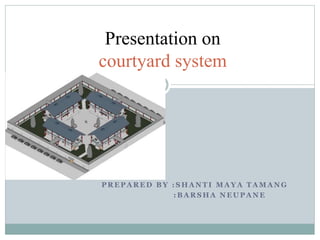
Presentation on
courtyard system
1
Contents
 Introduction
 Plan
 Historic use
 Comparison throughout the world
 Uses/advantages
 Conclusion
2
Introduction
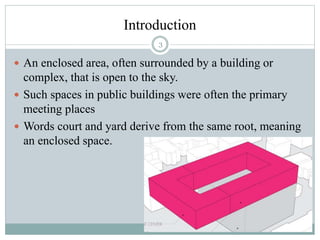
 An enclosed area, often surrounded by a building or
complex, that is open to the sky.
 Such spaces in public buildings were often the primary
meeting places
 Words court and yard derive from the same root, meaning
an enclosed space.
3
4
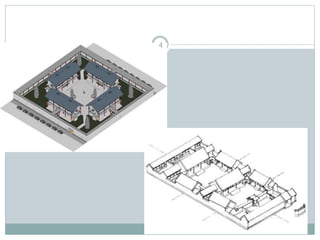
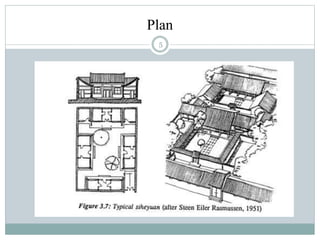
Plan
5
History
 first appearance at 6400–6000 BC ,in
the NeolithicYarmukian site at Sha'ar HaGolan, in the
central Jordan Valley
 Been used for many purposes
 Before courtyards, open fires were kept burning in a
central place within a home, with only a small hole in
the ceiling overhead to allow smoke to escape.
 Over time, these small openings were enlarged and
eventually led to the development of the centralized open
courtyard we know today.
6
Continued….
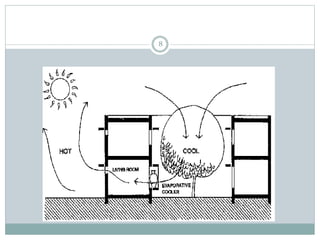
 More prevalent in temperate climates
 Have been found in harsher climates as well for centuries
 The comforts offered : air, light, privacy and security.
7
8
ADVANTAGES
 Proper air circulation
 Maintains thermal comfort
 More eco friendly
9
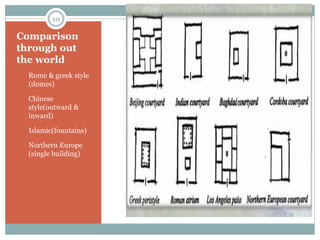
Comparison
through out
the world
• Rome & greek style
(domes)
• Chinese
style(outward &
inward)
• Islamic(fountains)
• Northern Europe
(single building)
10
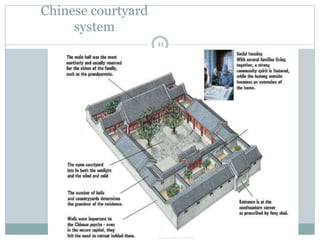
Chinese courtyard
system
11
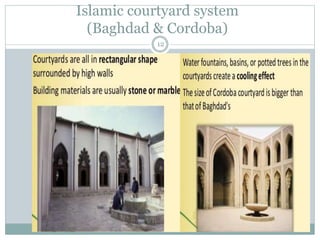
Islamic courtyard system
(Baghdad & Cordoba)
12
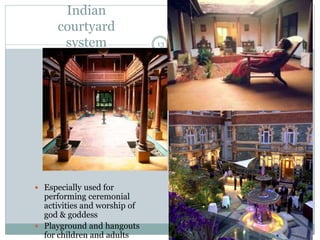
Indian
courtyard
system
 Especially used for
performing ceremonial
activities and worship of
god & goddess
 Playground and hangouts
for children and adults
13
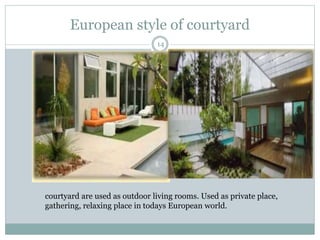
European style of courtyard
courtyard are used as outdoor living rooms. Used as private place,
gathering, relaxing place in todays European world.
14
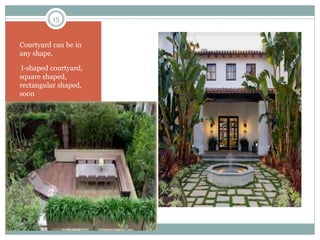
Courtyard can be in
any shape,
l-shaped courtyard,
square shaped,
rectangular shaped,
soon
15
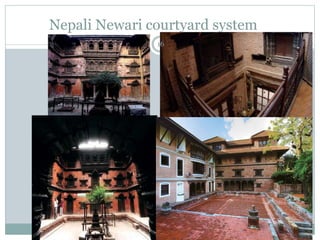
Nepali Newari courtyard system
16
CONCLUSION
17
 Courtyard system gives thermal comfort
 It maintains temperature
 Courtyard system has been developing
 Today most of the people uses it
 It is mostly used in temperate climates

courtyard system

  • 1.
    P R EP A R E D B Y : S H A N T I M A Y A T A M A N G : B A R S H A N E U P A N E Presentation on courtyard system 1
  • 2.
    Contents  Introduction  Plan Historic use  Comparison throughout the world  Uses/advantages  Conclusion 2
  • 3.
    Introduction  An enclosedarea, often surrounded by a building or complex, that is open to the sky.  Such spaces in public buildings were often the primary meeting places  Words court and yard derive from the same root, meaning an enclosed space. 3
  • 4.
  • 5.
  • 6.
    History  first appearanceat 6400–6000 BC ,in the NeolithicYarmukian site at Sha'ar HaGolan, in the central Jordan Valley  Been used for many purposes  Before courtyards, open fires were kept burning in a central place within a home, with only a small hole in the ceiling overhead to allow smoke to escape.  Over time, these small openings were enlarged and eventually led to the development of the centralized open courtyard we know today. 6
  • 7.
    Continued….  More prevalentin temperate climates  Have been found in harsher climates as well for centuries  The comforts offered : air, light, privacy and security. 7
  • 8.
  • 9.
    ADVANTAGES  Proper aircirculation  Maintains thermal comfort  More eco friendly 9
  • 10.
    Comparison through out the world •Rome & greek style (domes) • Chinese style(outward & inward) • Islamic(fountains) • Northern Europe (single building) 10
  • 11.
  • 12.
  • 13.
    Indian courtyard system  Especially usedfor performing ceremonial activities and worship of god & goddess  Playground and hangouts for children and adults 13
  • 14.
    European style ofcourtyard courtyard are used as outdoor living rooms. Used as private place, gathering, relaxing place in todays European world. 14
  • 15.
    Courtyard can bein any shape, l-shaped courtyard, square shaped, rectangular shaped, soon 15
  • 16.
  • 17.
    CONCLUSION 17  Courtyard systemgives thermal comfort  It maintains temperature  Courtyard system has been developing  Today most of the people uses it  It is mostly used in temperate climates